标签: North America

北美洲

  • ‘Pictures don’t do it justice’ – Giant ice chunks ram into Michigan homes

    ‘Pictures don’t do it justice’ – Giant ice chunks ram into Michigan homes

    Residents of lakeside neighborhoods near Michigan’s Black Lake are confronting unprecedented damage this spring, as unseasonably large ice chunks propelled by rising floodwaters have slammed into waterfront properties, leaving destruction that photographs cannot fully capture.

    The crisis began when a combination of sustained heavy spring rainfall and rapid snowmelt triggered a sharp rise in Black Lake’s water levels. As the ice covering the lake broke up, the swollen currents carried massive blocks of ice toward the shore, where they crashed into residential structures with enormous force.

    Local residents report that the sheer size and momentum of the ice chunks have caused structural damage to foundations, siding, and waterfront infrastructure that is far more severe than typical annual ice movement. Many homeowners have been forced to evacuate temporarily as floodwaters continue to surround their properties, while assessment teams work to document the full scope of the damage.

    Meteorologists link the event to this year’s late-season temperature swings, which kept the lake frozen longer than average before a sudden warm spell accelerated melting alongside spring rainstorms. Local emergency management officials have issued warnings for other waterfront communities across the region, urging residents to monitor water levels and prepare for potential evacuations if flooding and ice movement continue.

  • Trump tells BBC that King’s visit could ‘absolutely’ help repair relations with UK

    Trump tells BBC that King’s visit could ‘absolutely’ help repair relations with UK

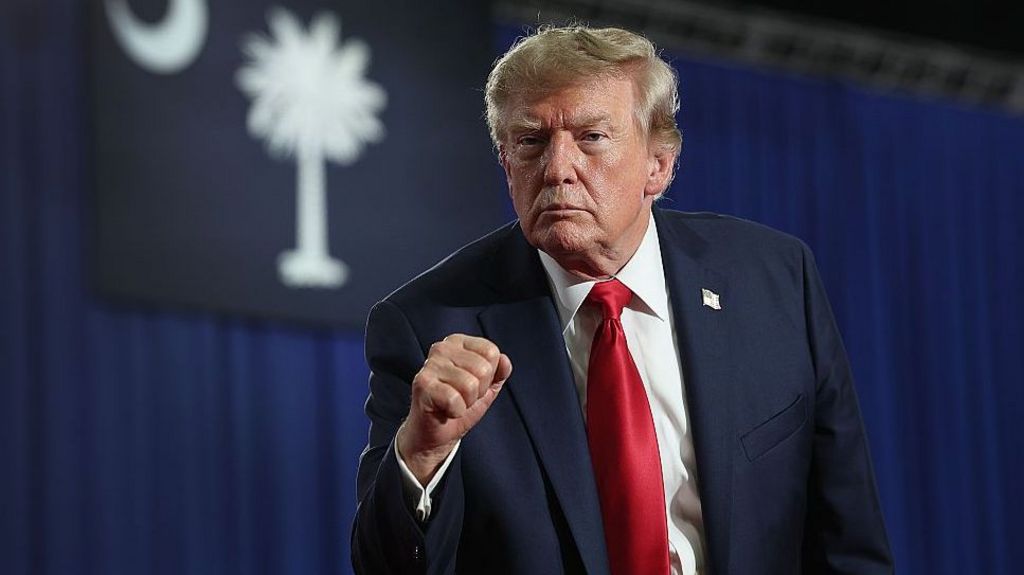
    In an exclusive phone interview with the BBC that was first reported by Reuters, U.S. President Donald Trump has expressed confidence that next week’s landmark four-day state visit by King Charles III and Queen Camilla will go a long way toward mending any recent strains in the bilateral relationship between the United States and the United Kingdom.

    When asked directly if the high-profile royal trip could help reset transatlantic ties, Trump offered an unreservedly positive response. “Absolutely. He’s fantastic. He’s a fantastic man. Absolutely the answer is yes,” the president told reporters, noting that he has built a long-standing personal rapport with the British monarch over many years. Calling Charles a brave and outstanding leader, Trump emphasized that the visit would without a doubt deliver positive outcomes for both nations.

    The royal tour is scheduled to kick off this coming Monday, with the King and Queen set to hold a private audience with President Trump at the White House shortly after their arrival in Washington D.C. Beyond the bilateral meeting, King Charles will also deliver a historic address to a joint session of the U.S. Congress, a rare honor reserved for visiting heads of state and global leaders. After wrapping up two days of engagements in the U.S. capital, the royal couple will travel onward to New York, Virginia, and Bermuda before returning to the United Kingdom at the end of the trip. According to the UK Foreign Office, the visit is timed to coincide with the 250th anniversary of U.S. independence, and is designed to celebrate the deep, long-standing partnership between the two countries rooted in shared history, mutual prosperity, and collective security.

    Beyond the royal visit, Trump also opened up about his tense relationship with UK Prime Minister Keir Starmer in the interview, conducted on Thursday. The two leaders have publicly clashed in recent weeks over multiple policy issues, most notably the ongoing conflict in Iran. Starmer has also faced growing domestic political pressure after his controversial appointment of Lord Mandelson as the new UK ambassador to the United States. Earlier this week, Trump took to his social platform Truth Social to slam the pick as “a really bad pick”, but added that Starmer still had “plenty of time to recover” his standing with the White House.

    Clarifying that comment during the BBC interview, Trump outlined the conditions under which he believes the UK prime minister can repair relations: Starmer would need to open up further North Sea oil and gas extraction for development – a policy Trump has repeatedly pushed for – and enact much stricter immigration controls, which Trump argued are currently lacking. “If he opened the North Sea and if his immigration policies became strong, which right now they’re not, he can recover, but if he doesn’t, I don’t think he has a chance,” Trump said.

    The president also addressed ongoing tensions over the Iran war, where he has openly criticized the UK and other U.S. allies for their limited level of military support. Starmer has repeatedly ruled out deploying UK troops to avoid expanding the conflict into a wider regional war. When asked why he had pushed allies to join the conflict, Trump pushed back on the idea that the U.S. needed additional military backing. “I didn’t need them at all but they should’ve been there. I didn’t need them, obviously,” he said. “We’ve wiped Iran’s military out. I didn’t need anybody. I wanted to see whether or not they would be involved,” Trump added, framing his repeated calls for allied support as “more of a test” of alliance commitments.

    Finally, Trump addressed widespread international backlash over his controversial threat earlier this month, when he warned that “a whole civilisation will die tonight” unless Iran agreed to a negotiated settlement. The comment drew widespread global condemnation, including public criticism from the Pope and the United Nations Secretary-General, with many observers speculating the comment referred to a potential nuclear strike. When asked if the threat was referencing nuclear weapons, Trump did not directly answer, instead arguing that his hardline rhetoric was yielding results. “The other side is dying to make a deal. So whatever I’m saying or whatever I’m doing, it seems to be working very well,” he concluded.

  • Warner Bros shareholders approve Paramount’s $111bn takeover

    Warner Bros shareholders approve Paramount’s $111bn takeover

    In a pivotal move that stands to reshape the global media and entertainment landscape, shareholders of Warner Bros Discovery have formally approved an $111 billion acquisition by Paramount, the media enterprise controlled by Skydance owner David Ellison. Once finalized, the merger will place Warner Bros Discovery’s unparalleled roster of iconic intellectual property and major media assets—including blockbuster franchises *Harry Potter* and *Game of Thrones*, influential cable news network CNN, streaming platform HBO Max, Food Network, Discovery Channel and an extensive lineup of sports content—under Paramount’s expanding corporate umbrella.

    The approval caps a chaotic multi-month bidding process that saw streaming giant Netflix first launch a takeover offer for Warner Bros Discovery, only to step aside after Paramount tabled a higher, competing bid that won over Warner Bros Discovery leadership. In a statement following the shareholder vote, Warner Bros Discovery chair Samuel DiPiazza framed the merger as a transformative step for both companies. “With Paramount, we look forward to creating an exceptional combined company that will expand consumer choice and benefit the global creative talent community,” DiPiazza said, adding that the deal will “unlock the full value of our world-class entertainment portfolio.”

    Paramount, which already boasts a stable of established media brands including Nickelodeon, CBS and Comedy Central, has positioned the merger as a critical step in its evolution into a major Hollywood powerhouse. The company is backed by tech billionaire Larry Ellison, founder of Oracle, and led by his son David Ellison, who serves as CEO and chairman of Paramount. David Ellison, a prominent Republican donor, is set to host a high-profile dinner for former president and 2024 presidential candidate Donald Trump Thursday at the U.S. Institute of Peace in Washington D.C., a gathering that has already drawn intense backlash from critics and protesters.

    A-list actor Mark Ruffalo is scheduled to join demonstrators outside the venue, who have labeled the event a “corruption gala” over the merger’s ongoing regulatory review and concerns about the Ellison family’s control of CNN. Donald Trump, who has repeatedly attacked CNN’s coverage of his political career and called for the network to be sold off amid the takeover, has previously described CNN’s leadership as “corrupt or incompetent” and argued they should not retain control of the network. These concerns have resonated with critics, who worry that the new ownership could compromise CNN’s journalistic independence.

    The merger has also sparked broad opposition across the creative community, with hundreds of prominent industry figures warning that the consolidation will deepen existing struggles in the entertainment sector. In April, more than 1,400 actors, directors and filmmakers—including Oscar winners Emma Thompson and Javier Bardem, and comedy star Ben Stiller—signed an open letter outlining their opposition. The letter argued the merger would lead to “fewer opportunities for creators, fewer jobs across the production ecosystem, higher costs, and less choice for audiences in the United States and around the world.”

    Paramount has pushed back against these criticisms, issuing a public pledge to support creative talent and expand opportunities for content creators. The company says the combined entity will open more distribution avenues for creators’ work, rather than reducing access.

    Despite shareholder backing, the merger still faces a critical regulatory hurdle: it must earn approval from both the U.S. Department of Justice and European Union competition watchdogs before it can move forward. Paramount has said it expects the merger to be finalized by September, pending the required regulatory clearances. If approved, the company plans to integrate Warner Bros Discovery’s HBO Max subscriber base into its existing streaming portfolio, creating one of the largest combined media companies in the world.

  • Trump administration reclassifies cannabis as less dangerous

    Trump administration reclassifies cannabis as less dangerous

    After months of anticipation, the United States Department of Justice has finalized a landmark reclassification of cannabis, marking one of the most significant overhauls to American federal drug policy in modern history. This long-awaited policy change moves cannabis, commonly referred to as marijuana, from its decades-long placement as a Schedule I controlled substance — a category reserved for drugs with no accepted medical use and high abuse potential — to Schedule III, placing it in the same regulatory grouping as prescription Tylenol with codeine.

    The process for this change was first set in motion last year, when former President Donald Trump issued an executive order directing his administration to launch the reclassification review. The core goal of that directive was to expand both public access to cannabis for medical use and create clearer pathways for academic and clinical research into the drug’s therapeutic properties. Even with this reclassification, cannabis remains prohibited for non-medical recreational use at the federal level, a legal contradiction that has defined American cannabis regulation for decades. This conflict persists even as a strong majority of U.S. states have already moved to legalize cannabis for either medical use, adult recreational use, or both, with state-licensed retail dispensaries operating legally across much of the country.

    On Thursday, Acting Attorney General Todd Blanche signed off on the formal reclassification, which applies to two broad groups of cannabis products: those regulated by the federal Food and Drug Administration, and products sold through providers that hold valid state-issued medical marijuana licenses. While the final announcement of the reclassification came this week, the move has been widely expected since December, when Trump first initiated the administrative review process.

    The policy change will not go into effect immediately. Once the new rule is published in the Federal Register, a mandatory 30-day public comment and waiting period will begin before it takes legal effect. Legal challenges to the reclassification are widely expected during this window, and analysts note that such challenges could delay full implementation of the change for months, or even multiple years. The U.S. Drug Enforcement Administration is scheduled to hold a public hearing on the regulatory change in late June to address stakeholder input and procedural requirements.

    This reclassification is the second major shift in federal drug policy that the Trump administration has advanced in less than a week. Just five days before announcing the cannabis reclassification, Trump signed a separate executive order aimed at expanding access to psychedelic substances for clinical research and experimental medical treatment, signaling a broader push to relax long-standing federal restrictions on mind-altering substances with emerging therapeutic potential.

  • ‘Storage Wars’ star Darrell Sheets dies age 67 – reports

    ‘Storage Wars’ star Darrell Sheets dies age 67 – reports

    Beloved reality television personality Darrell Sheets, widely recognized for his decades-long run on the hit A&E series *Storage Wars*, has passed away at the age of 67, law enforcement officials have confirmed.

    The Lake Havasu City Police Department in Arizona confirmed that officers responded to a 911 call at a local residence at 2 a.m. local time on April 22, discovering a body that was later formally identified as Sheets. In an official statement released Wednesday, and obtained by entertainment industry outlet Variety, police reported that Sheets appeared to have died from a self-inflicted gunshot wound to the head.

    Nicknamed “the Gambler” for his willingness to place big bets on unseen storage units, Sheets was a core cast member of *Storage Wars* from the show’s debut in 2010 through his exit in 2023. The popular reality series follows a group of professional buyers who bid on abandoned self-storage units at auction, without being allowed to inspect the contents inside before placing their offers. Sheets often appeared on the series alongside his son Brandon, with the pair building a fan-favorite dynamic over the show’s run.

    Following news of Sheets’s death, his long-time *Storage Wars* co-star and on-screen competitor Rene Nezhoda shared an emotional public tribute to the late actor on social media platform X. Nezhoda pushed back on the common fan assumption that the two men harbored real-life animosity from their on-screen competitions, noting “Deep down me and Darrell were friends, we talked every now and then.” He also praised Sheets’s relentless work ethic and deep devotion to his family, calling him one of the most family-focused people he had ever met.

    In his tribute, Nezhoda also revealed that Sheets had been the target of persistent online harassment in the weeks leading up to his death. “He had a guy really, really, tormenting him lately on cyberbullying,” Nezhoda said, addressing viewers who forget that reality TV stars are private people with real emotional vulnerabilities. “Just because you watch us on television doesn’t mean you know us. It doesn’t mean you know what we’re about. Also, it doesn’t entitle you to bully somebody … you shouldn’t cyberbully at all.” Nezhoda has called on law enforcement to investigate the alleged harassment as part of the ongoing probe into Sheets’s death.

    As of Wednesday, police confirmed that Sheets’s next of kin have been notified of his passing, and the death remains under active investigation. For anyone experiencing thoughts of self-harm or emotional distress, support services are available through global and regional mental health organizations. The BBC Action Line maintains a public directory of support resources for those in crisis.

  • US Senate clears key hurdle in bid to fund two immigration agencies

    US Senate clears key hurdle in bid to fund two immigration agencies

    A months-long partial shutdown of the U.S. Department of Homeland Security moved one step closer to resolution early Thursday, after Senate Republicans pushed through a procedural vote to advance funding for two of the department’s core immigration enforcement agencies without Democratic support. The late-night session stretched until roughly 3:30 a.m. local time, dragged out by a series of Democratic amendments in a tactic commonly referred to as “vote-a-rama,” and ultimately passed by a narrow 50-48 margin.

    Republicans opted to use a special legislative rule that allowed the spending measure to pass with a simple majority, after weeks of negotiations with Democrats collapsed over Democratic demands for agency reforms. Two Senate Republicans who have frequently broken with former President Donald Trump’s policy positions joined all voting Democrats in opposing the measure, while one Democrat and one Republican abstained from the vote entirely.

    The approved measure would allocate funding for U.S. Immigration and Customs Enforcement (ICE) and U.S. Customs and Border Protection (CBP) through the end of Donald Trump’s presidential term. A separate bipartisan bill that would fund the remainder of DHS, the parent department of both agencies, previously passed the Senate, but both pieces of legislation now need approval from the U.S. House of Representatives before they can be sent to the president’s desk for signature. It remains unclear when House lawmakers will bring either measure up for a vote, as House Republicans have often diverged from their Senate counterparts on immigration and spending policy in recent months.

    Senate Majority Whip John Thune, the chamber’s top Republican, praised the outcome of Thursday’s vote but acknowledged that the legislative process is far from over. “We still have a multi-step process ahead of us,” Thune told reporters Thursday morning.

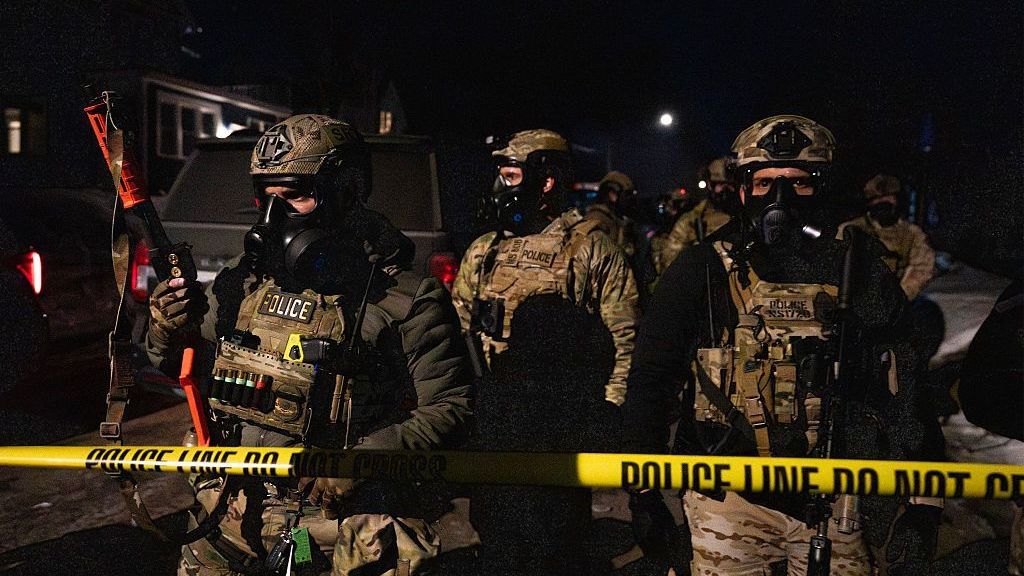
    The partial government shutdown, which has left DHS without formal appropriations since February 14, is the longest partial shutdown in U.S. history. The current impasse grew out of a Democratic refusal to approve new funding for ICE and CBP until the agencies adopt major reforms, a response to two fatal shootings of Minneapolis residents Alex Pretti and Renee Good by agency operatives during a January immigration raid in Minnesota.

    As the standoff stretched into March, the funding gap began to directly impact everyday Americans: widespread staff shortages among DHS airport security officers led to travel chaos across the country, with security queues stretching from terminal checkpoints all the way to airport parking lots. Hundreds of officers resigned or skipped shifts after going weeks without pay amid the shutdown. Trump temporarily alleviated the crisis by signing an executive order that redirected existing departmental funds to pay security personnel, easing immediate pressure on congressional negotiators. But that pressure has rapidly built back up in recent weeks.

    Homeland Security Secretary Mark Mullin warned this week in an interview with Fox News that the department will exhaust all available emergency funding to cover employee salaries by the first week of May. “I’ve got one payroll left and there is no more emergency funds, so the president can’t do another executive order because there’s no more money there,” Mullin said. Trump has set a firm deadline of June 1 for a full budget package to reach his desk for signature, leaving congressional negotiators with a narrow window to resolve the months-long standoff.

  • Skyrocketing diesel costs squeezing US truckers

    Skyrocketing diesel costs squeezing US truckers

    A months-long military conflict in the Middle East, launched by the United States and Israel against Iran in late February 2026, has sent diesel prices soaring across the United States, creating unprecedented financial strain for an industry that underpins the entire domestic supply chain: trucking. From independent owner-operators to large national fleet operators, businesses across the sector are being forced to rewrite operating plans, rethink pricing structures, and even abandon previously profitable routes entirely. The ripple effects of this crisis are already spreading beyond truck stops and fueling stations, dragging down presidential economic approval ratings and stoking fears of broader economic disruption.

    Diesel is the literal lifeblood of American freight transportation. More than 3.5 million truck drivers move more than 70 percent of all goods consumed and distributed across the United States, meaning any shock to fuel prices hits trucking first, and the rest of the national economy feels the impact shortly after. As of April 21, 2026, data from the American Automobile Association puts the national average price of diesel at $5.53 per gallon. That spike is far more acute in California, the nation’s largest state economy, where preexisting strict air quality regulations already kept fuel prices above the national average. On the same date, the average diesel price in California hit $7.53 per gallon, a burden that industry leaders call the most severe they have ever seen.

    For drivers on the ground, the price surge has turned once-profitable runs into money-losing propositions. At a Los Angeles-area truck stop, independent operator T. Stromsted summed up the widespread frustration in an interview with Xinhua, noting, “With these diesel prices, we’re all in for a world of hurt.” Another unnamed driver at a fuel station in Monrovia, Los Angeles County, shared that just two and a half months prior, a full tank for his rig cost roughly $700. Today, that same fill-up runs to more than $1,100. Like many drivers, he blames the ongoing military conflict in Iran for the sudden cost shock, saying, “It’s hard to make a run, but there’s no money in it. It’s all because of the war.”

    Eric Sauer, chief executive of the California Trucking Association, confirmed that the current crisis is the most widespread and damaging the industry has faced in his decades of work. “This is the worst I’ve seen nationwide since I’ve been here,” Sauer said. “The war in the Middle East is creating real hardship for our members, and that trickles down to everyone.”

    Data from industry analysts underscores the severity of the crisis. A March 2026 poll from DAT Freight & Analytics found that 18 percent of all surveyed trucking companies have already paused operations entirely, driven directly by the unanticipated spike in fuel costs. For smaller, independent operators that lack the financial buffer of large national fleets, the choices are increasingly bleak. Sauer explains that many small business owners are forced to turn down higher-weight loads that consume more fuel, cut back on the total number of miles they drive each month, or park their trucks entirely and stop working until prices retreat to sustainable levels.

    The crisis is already spilling over into national politics and the broader U.S. economy. A new poll from the AP-NORC Center for Public Affairs Research shows that President Donald Trump’s economic approval rating has slumped sharply over the past month, dropping from 38 percent in March to 30 percent in April. That drop tracks directly with the volatility caused by the Iran conflict, which has disrupted global energy markets, particularly around the critical Strait of Hormuz. During the April 16-20 polling period, Iran first reopened the key shipping lane, then closed it again, a pattern of whiplash that has become a defining characteristic of the ongoing conflict and amplified uncertainty in global energy markets.

    Longer-term metrics already showed weakening U.S. standing even before the conflict began. A January 2026 report from global brand consultancy Brand Finance found that U.S. soft power scores dropped a steep 4.6 points to 74.9 in its annual Global Soft Power Index, one of the sharpest declines recorded in the survey. Many analysts argue the conflict has accelerated that decline. In a New York Times analysis titled “Four Ways Trump’s War is Weakening America”, the outlet noted that one of the most significant losses has been U.S. moral authority on the global stage.

    That assessment is shared by Jeffrey Taliaferro, chair of the political science department at Tufts University. In an analysis of how the Iran conflict has eroded U.S. global standing, Taliaferro wrote, “Trump’s willingness to abandon talks to go to war, and the contradictory rhetoric he has employed throughout the Iran conflict, have weakened the perception of the US as an honest broker.”

    Industry leaders warn that if elevated diesel prices persist, the economic damage will deepen for all Americans, as higher transportation costs are eventually passed through to consumers in the form of higher prices for food, consumer goods, and nearly every product that travels to market via truck. Reporting for this story was contributed by May Zhou in Houston, Texas.

  • UN Chinese Language Day 2026: showcasing the charm of the Chinese language from multiple dimensions

    UN Chinese Language Day 2026: showcasing the charm of the Chinese language from multiple dimensions

    The 2026 iteration of UN Chinese Language Day was officially celebrated with a grand gala held at the United Nations Headquarters in New York this Monday, gathering attendees to highlight the profound cultural and historical value of one of the world’s most widely spoken languages.

    During the event, Sun Lei, Deputy Permanent Representative of China to the United Nations, delivered remarks that centered on the unique role the Chinese language has played across human history. He emphasized that the language carries the accumulated wisdom of more than 5,000 years of Chinese civilization, and has stood as a silent witness to the sweeping changes and evolution of global human society over millennia.

    First established by the United Nations Department of Public Information in 2010, UN Language Days were created to celebrate linguistic diversity, promote multilingualism, and raise awareness of the six official UN languages—Chinese, English, French, Russian, Spanish, and Arabic—across the global community. UN Chinese Language Day is annually held around April 20, to tie in with the traditional Chinese festival of Guyu, the Grain Rain, which honors Cang Jie, the legendary figure credited with the creation of Chinese characters.

    This year’s event continues the UN’s long-running commitment to honoring cultural exchange through language, creating a platform for delegates and attendees from around the world to engage with the depth and richness of Chinese language and culture.

  • Canada ‘limits’ US defense ties

    Canada ‘limits’ US defense ties

    Canada’s decision to curtail its decades-long dependence on the United States for defense procurement represents a quiet but meaningful shift in the bilateral alliance, with experts noting the move stems from eroding trust in Washington — even as structural ties between the two neighboring nations remain deeply entrenched.

    Earlier in April 2026, Prime Minister Mark Carney used the stage of the Liberal Party national convention to announce the policy reorientation. Carney framed the change as a long-overdue step toward sovereign defense strategy, declaring that the era when 70 cents of every Canadian defense dollar flowed to U.S. suppliers has come to an end. His administration has laid out two core priorities to advance this goal: expanding Canada’s domestic defense manufacturing base, and forging deeper security partnerships with a broader range of global actors.

    Alistair Edgar, an associate professor of political science at Ontario’s Wilfrid Laurier University, called Carney’s announcement a pivotal shift that carries weight both for the North American alliance and practical military operations. For Edgar, the policy change is not merely a reaction to the current U.S. administration, but part of a broader, cross-national reassessment of Washington’s reliability as an ally. He argues that this shift amounts to a fundamental rupture in the longstanding dynamic between the two nations, one that will reshape political, economic and security ties far beyond the defense sector.

    “The United States can no longer be counted on as a reliable, trusted partner,” Edgar stated. He acknowledged that geographic realities will continue to anchor Canada’s security cooperation with the U.S., particularly through long-standing integrated defense frameworks such as the North American Aerospace Defense Command (NORAD). Even so, the nature of that cooperation is already changing, he explained: Deep bilateral integration is being replaced by looser coordination, as Canada invests in independent, sovereign defense capabilities, and in some cases, may even take steps to protect its own interests that diverge from Washington’s.

    While Carney has pledged to expand defense collaboration with European allies and other global partners, Edgar noted that these new ties will never fully replace the U.S. as a security partner. Instead, Canada is pursuing a deliberately diversified procurement strategy that includes mixed fighter jet fleets sourced from multiple suppliers and ramping up domestic defense production. Already, the country has directed new investments into domestic small arms manufacturing, munitions production, drone development and cyber defense capabilities to strengthen its homegrown defense industrial base.

    The pivot away from heavy reliance on the U.S. does not come without risks, Edgar cautioned. Ottawa could face significant political and economic backlash from Washington, including the imposition of retaliatory tariffs on Canadian goods. Even so, he argued that these very risks reinforce the case for diversification: “In the end, that is more of a reason to take these necessary measures.”

    Edgar also connected Canada’s policy shift to growing unease among U.S. allies worldwide about Washington’s approach to global diplomacy. A growing number of allies, from Canada to European capitals, now view the U.S.-led international order as defined by bullying, transactional deal-making and unpredictable, untrustworthy behavior, he said.

    Not all experts frame the shift as a fundamental rupture, however. Erika Simpson, an associate professor of international relations at Western University in Ontario, argues that Canada’s plan is best understood as a cautious strategic recalibration rather than a clean break from its long-standing alliance with the U.S.

    Simpson explained that the shift serves both strategic and symbolic purposes: it addresses long-standing domestic and policy concerns about overreliance on a single major power, while also sending a clear signal that Ottawa wants to claim greater sovereignty over its defense purchasing decisions. At the same time, she warned against overstating the scale of the change, emphasizing that “this should be understood as recalibration rather than rupture.”

    Canada remains deeply embedded in U.S.-led defense architecture, Simpson noted, and any meaningful reduction in reliance on Washington will necessarily be a gradual, multi-year process constrained by long-standing structural ties. A rapid shift could also introduce unforeseen operational risks if not managed carefully, she added.

    In Simpson’s framing, Canada’s new defense strategy is a pragmatic hedging approach. “Canada is maintaining its core alliance with the United States while cautiously expanding its range of partners,” she said, noting that the strategy improves Canada’s strategic flexibility and long-term security resilience.

  • Who are the players to watch at the NFL Draft?

    Who are the players to watch at the NFL Draft?

    The annual NFL Draft, one of American football’s most anticipated off-season events, rarely lacks unscripted drama – and the 2026 iteration, kicking off this week, is already shaping up to deliver plenty of twists alongside the high-stakes roster moves. Coming off 2025’s shocking draft slide of pre-draft favorite Shedeur Sanders, who tumbled from projected first overall to a fifth-round selection, this year’s event is already centered on a clear frontrunner for the top pick, with plenty of compelling storylines unfolding beyond that first selection.

    Spanning three days across seven rounds, the 2026 draft will see 257 collegiate and international prospects selected by the league’s 32 franchises. Selection order is determined by reversing the previous season’s win-loss standings, giving the club with the worst record the first pick, while the defending Super Bowl champion Seattle Seahawks claim the final selection in every round. This year, four teams finished the 2025 campaign with identical 3-14 records, and the Las Vegas Raiders claimed the first overall pick via a strength-of-schedule tiebreaker – a rule that slots the New York Jets, Arizona Cardinals, and Tennessee Titans in the next three spots after the Raiders.

    The Raiders hold a clear positional need at quarterback, and all signs point to them selecting Heisman Trophy winner Fernando Mendoza with the top pick. The 22-year-old signal-caller, who completed three seasons at the University of California before transferring to Indiana ahead of the 2025 collegiate season, led the Hoosiers to their first-ever national championship and capped his season with college football’s highest individual honor. If selected first overall, Mendoza will join an elite club of players that includes Cam Newton (2011) and Joe Burrow (2020), who earned Heisman honors, a national title, and the first overall draft selection in the same calendar year. Unlike last year’s draft, which saw six quarterbacks taken in the first 12 picks, 2026’s prospect class is shallow at the position. Analysts widely project Mendoza could be the only quarterback selected on the first day of the draft, with Alabama’s Ty Simpson the only other signal-caller seen as a possible first-round pick. Other notable QB prospects include Georgia transfer Carson Beck, who boosted his stock after leading Miami to the national championship game after a lackluster regular season, athletic standout Cole Payton, who is drawing comparisons to utility hybrid Taysom Hill, and 5-foot-10 Diego Pavia, who defied expectations as Vanderbilt’s Heisman Trophy runner-up and is projected as a promising late-round gamble. Unlike many top prospects, Mendoza has chosen to forgo the on-stage green room experience in Pittsburgh to celebrate the milestone with his family in Miami.

    Beyond quarterback, the 2026 draft class is deepest along the defensive front, where a host of elite prospects are expected to be selected early. Pass rushers Arvell Reese, David Bailey, and Rueben Bain Jr are all projected to come off the board within the first 10 picks, while defensive tackle Lee Hunter – nicknamed “The Fridge 2.0” – has seen his draft stock skyrocket after a strong performance and impressive interviews at the NFL Combine. The Ohio State Buckeyes, 2024 national champions, send five prospects to the top of this year’s draft board, with four expected to land in the first round. The class also features solid depth at wide receiver, led by Makai Lemon and Jordyn Tyson, while Jeremiyah Love – one of Mendoza’s fellow 2025 Heisman finalists – is the highest-rated running back available. This year’s draft also includes two pairs of non-twin brothers (Lorenzo Styles Jr and Sonny Styles, plus Logan and Spencer Fano) that could both hear their names called over the three-day event.

    A feel-good underdog story highlights this year’s international prospect cohort, which enters the draft via the NFL’s International Player Pathway (IPP) program, launched in 2017 to give non-collegiate prospects from around the globe a shot at the league. Twenty-two-year-old offensive tackle Max Iheanachor, who moved to the U.S. from Nigeria at age 13, only began playing organized football five years ago, but has already developed into a 6-foot-6, 321-pound prospect with a pre-printed tattoo of the NFL logo on his body, and is projected to sneak into the first round. Fellow Nigerian prospect Uar Bernand, a 21-year-old defensive player, also turned heads through the IPP’s 10-week training camp, posting elite testing numbers that have left scouts impressed; though he remains raw and inexperienced, one franchise is expected to take a late-round flier on him, following in the footsteps of successful IPP alums like Jordan Mailata and Travis Clayton.

    For the first time since 1948, the 2026 NFL Draft is hosted by Pittsburgh, Pennsylvania, which has rebranded itself “Picksburgh” for the week-long celebration of football. Up to 700,000 fans are expected to attend the free public event, which will host activities across the city, with the main draft stage and selection theater set up on the North Shore outside Acrisure Stadium, the home of the Pittsburgh Steelers. The first round kicks off Thursday at 8 p.m. ET (1 a.m. BST Friday), with a new rule shaving two minutes off the first-round selection clock, dropping it from 10 minutes to eight to speed up play. Rounds two and three will be held Friday, with the final four rounds concluding Saturday.