标签: North America

北美洲

  • ‘Missing scientist’ cases have stoked wild speculation. For loved ones, the theories are hurtful

    ‘Missing scientist’ cases have stoked wild speculation. For loved ones, the theories are hurtful

    In recent months, a loose collection of deaths and disappearances of roughly 10 people linked to U.S. scientific and national security work has ignited a firestorm of baseless conspiracy theorizing across social media, drawing official scrutiny from federal investigators and congressional oversight bodies while inflicting unnecessary additional pain on grieving families who have repeatedly tried to set the record straight.

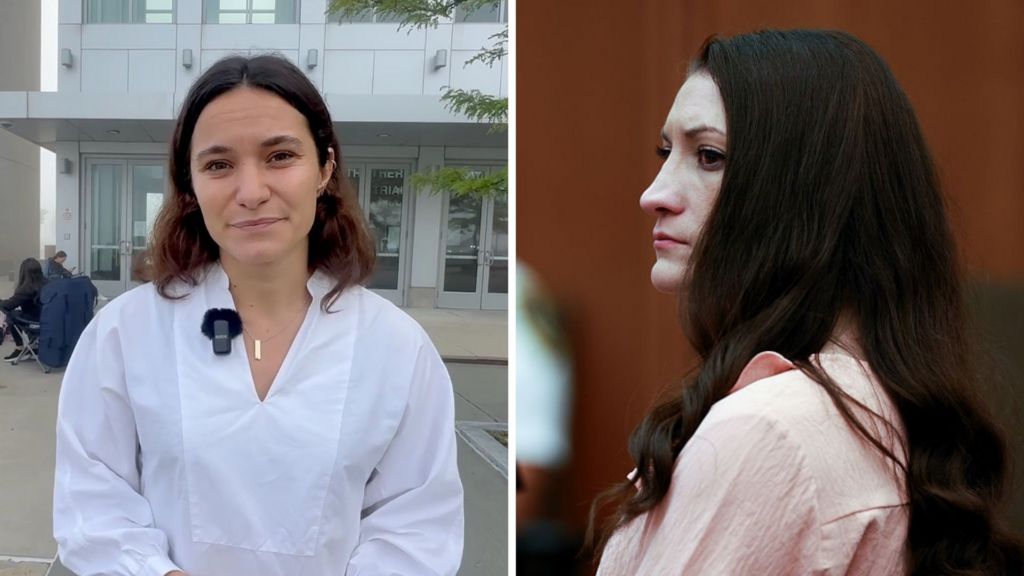
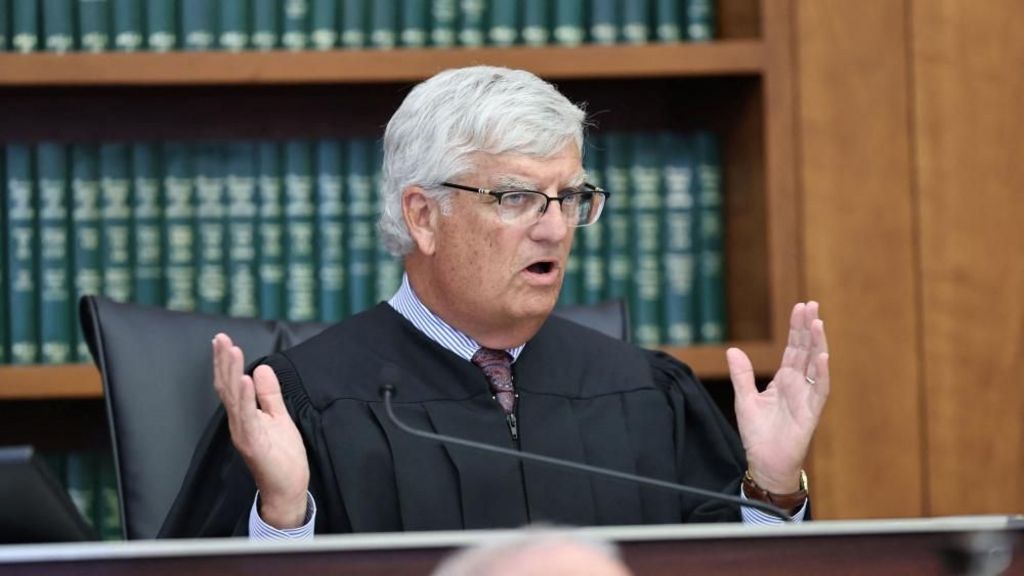
    Among the cases at the center of the online speculation is the February killing of 67-year-old Carl Grillmair, a respected astronomer at the California Institute of Technology’s IPAC science and data center, who was shot and killed at his rural Llano, California, property. A local 29-year-old man named Freddy Snyder has been charged with murder and burglary in the case, and is scheduled for arraignment next week. Despite an arrest and a clear, publicly outlined motive from the victim’s family, Grillmair’s name has become a centerpiece of unsubstantiated online narratives that frame the 10 cases as part of a coordinated, hidden plot tied to classified research.

    According to Grillmair’s widow, Louise, the killing was the result of a misplaced revenge plot, not a targeted assassination tied to her husband’s work on exoplanets and astronomy. Months before the shooting, Snyder had trespassed on the couple’s land while claiming to hunt coyotes, and later escalated disruptive behavior across the neighborhood. When a local resident called 911 to report Snyder’s activity, the suspect incorrectly blamed Grillmair for the call, Louise explained. After returning to the property with a baseball bat two weeks prior to the killing, Snyder came back armed on February 16 and fatally shot Grillmair.

    Louise Grillmair has dismissed the online conspiracies as utter nonsense, noting that her late husband — a kind, morally grounded man who regularly helped others and refused to pursue legal action even when he was not at fault in car accidents — would laugh off the wild claims and use statistical reasoning to debunk them. She called the unfounded speculation denigrating to the memory of those who have died or gone missing, a sentiment echoed by other grieving relatives who have described the theorizing as disgusting and disrespectful, compounding the pain of their loss.

    Other cases included in the online conspiracy lists equally straightforward explanations that theorists routinely ignore. Retired Air Force General William Neil McCasland, the highest-profile person on the list, disappeared from his New Mexico home in February, with his wife Susan McCasland Wilkerson quickly clarifying that all evidence points to a deliberate departure driven by declining health. McCasland, who had retired nearly 13 years prior and only held routine clearances, had recently struggled with anxiety, memory loss, and insomnia, and had told his wife he did not want to live if his physical and mental health continued to deteriorate. He left his phone behind and took only his gun, leading Susan to note that he planned not to be found. Even dryly addressing the conspiracies, she joked that if there was no evidence of any foul play, the only outlandish hypothesis left was that aliens had beamed him to a mothership — a claim she noted had no supporting evidence.

    Eight months before McCasland’s disappearance, Melissa Casias, an administrative assistant at Los Alamos National Laboratory, vanished from Taos, New Mexico, with her family confirming she left deliberately. Even with that public statement, conspiracy theorists continue to fixate on her case. MIT physicist Nuno Loureiro was murdered by a former classmate, who confessed to the killing on video and was arrested for additional homicides at Brown University. Another researcher died by suicide after suffering devastating grief following the loss of both of his parents in a single day, his body later recovered from a local lake, while another death was officially ruled the result of cardiovascular disease by a coroner.

    Mick West, a well-known science writer and debunker of pseudoscience, has pushed back against the conspiracy claims, pointing out that statistical probability explains the small number of deaths among the hundreds of thousands of people with security clearances in the U.S. aerospace and nuclear sectors. Over a 22-month period, ordinary mortality would predict roughly 4,000 deaths, 70 homicides, and 180 suicides among that population, West noted, making the 10 cases cited by conspiracy theorists entirely unremarkable.

    Despite the clear explanations and family members’ repeated attempts to quell the hysteria, the conspiracy theories have gained enough traction online that both the FBI and the U.S. House Oversight Committee have launched formal investigations. For Louise Grillmair, the attention would be better focused on celebrating her husband’s legacy: groundbreaking scientific research, a commitment to helping others, and a quiet life spent enjoying flying, outdoor work, and astronomy from the small observatory he built at his home.

  • Trump says Israel-Lebanon ceasefire to be extended by three weeks

    Trump says Israel-Lebanon ceasefire to be extended by three weeks

    A new chapter of diplomatic engagement between longtime adversaries Israel and Lebanon has resulted in a three-week extension of their fragile ceasefire, U.S. President Donald Trump announced this week, following a fresh round of high-level talks between the two nations’ envoys hosted in Washington. The initial ceasefire, brokered last week after the first direct high-level negotiations between the sides in 30 years, was scheduled to expire Sunday, and its extension keeps open the window for de-escalation after more than seven weeks of open conflict between Israel and the Iran-aligned militant group Hezbollah.

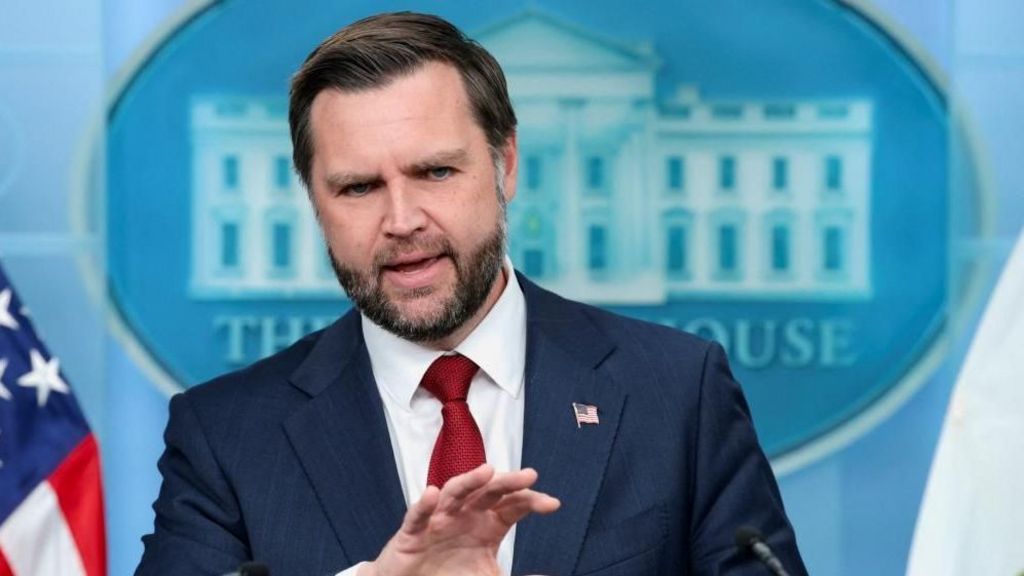
    Trump made the announcement first on his social platform Truth Social, noting the Washington-based meeting between envoys “went very well.” Speaking alongside U.S. Senate lawmakers JD Vance and Marco Rubio in the Oval Office, the president added that the U.S. will deepen cooperation with Lebanon to secure its borders against Hezbollah, and confirmed that both Lebanese President Joseph Aoun and Israeli Prime Minister Benjamin Netanyahu have been invited to visit the White House in the coming weeks to continue negotiations. “They do have Hezbollah to think about,” Trump said. “We are going to be working with Lebanon to get things straightened out in that country. I think it will be a wonderful thing to get this worked out simultaneously with what we are doing in Iran.”

    Lebanese Ambassador Nada Hamadeh Moawad and Israeli Ambassador Yechiel Leiter joined Trump for the Oval Office remarks, and both diplomats commended the U.S. leader for his hands-on role in advancing the talks. Leiter emphasized that both nations share a core goal of eliminating what he described as Hezbollah’s “malign influence” from Lebanese territory.

    Despite the diplomatic breakthrough for a ceasefire extension, violence has continued to plague the border region, with both sides trading accusations of ceasefire violations in the days leading up to this week’s talks. On Thursday evening local time, just as negotiations were getting underway in Washington, Hezbollah announced it had launched a rocket barrage against northern Israel in retaliation for what it called an Israeli breach of the truce. The Israel Defense Forces (IDF) confirmed it intercepted all incoming projectiles.

    A day earlier, Lebanon filed formal accusations of war crimes against Israel after an Israeli airstrike in southern Lebanon killed one journalist and injured a second. The IDF has denied it intentionally targeted media personnel.

    The current round of conflict erupted in early March, after Hezbollah launched a large-scale drone and rocket attack on Israel in retaliation for the killing of Iran’s supreme leader in a joint U.S.-Israeli strike on Iran on February 28. In response, Israel launched intense airstrikes across Lebanon, concentrated in the southern part of the country and the capital Beirut, and reintroduced ground troops into southern Lebanon, where it has maintained an occupation of 10 kilometers (6.2 miles) of Lebanese territory ever since.

    Humanitarian costs of the conflict have been catastrophic, according to official data. Lebanon’s health ministry reports at least 2,294 people have been killed in Israeli attacks across the country since the outbreak of the latest war, a toll that includes 274 women and 177 children. On the Israeli side, Israeli authorities confirm Hezbollah attacks have killed two civilians, while 15 Israeli soldiers have died in combat operations inside Lebanon. United Nations data indicates more than one million Lebanese people — roughly one out of every five residents of the country — have been displaced by the fighting, most from southern Lebanon, where entire villages and residential areas have been destroyed by Israeli bombardment.

    A major sticking point in long-term peace talks remains the future of Hezbollah, a Shia Muslim organization that operates as both a militant militia and a mainstream political party within Lebanon. The U.S., Israel, and many Lebanese political factions have demanded Hezbollah fully disarm, but the group has refused to enter any discussions about the status of its weapons. Lebanese President Aoun has repeatedly warned that forcing disarmament through military action would trigger internal Lebanese violence, arguing any resolution on the issue must come through negotiated dialogue with the group. For Hezbollah’s supporters, the group remains the only credible defense force for southern Lebanon amid the country’s weak central state institutions, a position that has been reinforced by the ongoing conflict.

  • Singer D4vd had ‘significant amount’ of child sex abuse images when arrested, prosecutors say

    Singer D4vd had ‘significant amount’ of child sex abuse images when arrested, prosecutors say

    The American music industry and online fan communities have been rocked by the unfolding of a horrific criminal case that has gripped Los Angeles: rising TikTok star D4vd, best known for his viral 2020s hits *Romantic Homicide* and *Here With Me*, stands accused of the brutal murder, sexual abuse, and dismemberment of 14-year-old Celeste Rivas Hernandez. Court proceedings this week have brought previously unreported, disturbing details to light, peeling back the curtain on a months-long investigation that spawned widespread online speculation after the teen’s body was discovered.

    The case dates back to September 2025, when workers at a Hollywood towing yard responded to complaints of a foul odor coming from a parked Tesla, registered to D4vd, whose legal name is David Anthony Burke. Inside the vehicle’s front trunk, investigators found Rivas Hernandez’s dismembered remains sealed inside a black zipper bag. At the time of the discovery, Burke was mid-way through a planned worldwide tour; the tour was immediately scrapped following the find, and the artist withdrew almost entirely from public view and his social media platforms, which had served as the launchpad for his rapid rise to fame.

    Rivas Hernandez had been reported missing by her family months earlier, after she was last seen leaving Burke’s Hollywood Hills home on April 3, 2025. For months after the discovery of her body, law enforcement released almost no details about the case, the nature of the relationship between the 14-year-old and the singer, or the progress of the investigation. That information vacuum fueled a wave of unfounded conspiracies across social media platforms, leaving the public and Rivas Hernandez’s family without clear answers.

    It was not until last week that Los Angeles law enforcement announced Burke’s arrest. The Los Angeles County District Attorney’s office officially filed seven criminal charges against the artist, including one count of murder, multiple counts of continuous sexual abuse of a minor, and charges for the mutilation of human remains. This week, prosecutors presented even more disturbing allegations during open court proceedings.

    Prosecutors told the court that during the execution of search warrants for Burke’s electronic devices, investigators recovered what they described as a “significant amount” of images depicting child sexual abuse on both his personal phone and linked iCloud account. Prosecutors further alleged that Burke repeatedly sexually assaulted Rivas Hernandez before killing her and dismembering her body, claiming he took these extreme steps to conceal the abuse and protect his fast-growing, profitable music career.

    On Wednesday, the Los Angeles County Medical Examiner released its long-withheld autopsy report, which had been kept from public disclosure at the request of investigating officers. The report officially ruled Rivas Hernandez’s death a homicide, caused by multiple penetrating injuries from an as-yet-unidentified weapon or weapons. It confirmed the body was heavily decomposed and had been dismembered, matching the initial observations of first responders.

    Burke has entered a formal plea of not guilty to all criminal charges brought against him. It is important to note that while prosecutors have alleged the possession of child sexual abuse material, no additional charges related to those claims have been filed against the singer to date. The BBC reached out to Burke’s legal team for comment on the new allegations, and the team has repeatedly stood by their client’s claim of innocence.

    “We will vigorously defend David’s innocence, and we are confident that evidence will ultimately prove David did not kill Celeste,” the defense team said in an earlier statement. They have also pushed back on the prosecution’s procedural approach, noting that three grand juries have reviewed evidence in the case so far, but no indictment has been returned. Instead, the district attorney chose to bring charges via a direct criminal complaint, a step the defense has questioned.

    “There has been no indictment returned by any grand jury in this case, and no finalized criminal complaint filed. David has only been detained under suspicion,” the defense team told the BBC.

    This week, Rivas Hernandez’s family broke their months-long silence to release their first public statement about the case, offering a tender portrait of the teen they lost and calling for accountability. “Celeste was a beautiful, strong girl who loved to sing and dance. Every Friday night was movie night and we spent wonderful times together,” her parents Jesus Rivas and Mercedes Martinez said. “We love her very much and she always told us that she loved us. We miss her deeply. All we want is justice for Celeste.”

    Two upcoming court hearings in the case are scheduled for next Wednesday and Friday, as the legal process moves forward and more details are expected to enter the public record. Law enforcement officials have said they have recovered and analyzed a substantial body of digital and forensic evidence to support their charges, setting the stage for a high-profile trial that will continue to draw national attention.

  • At least 10 injured in shooting at Louisiana shopping centre

    At least 10 injured in shooting at Louisiana shopping centre

    A midday argument between two rival groups erupted into a deadly shootout at a popular Louisiana shopping mall this week, leaving at least 10 people wounded — several of them innocent bystanders caught in the crossfire, local law enforcement confirmed Thursday. The violence unfolded at the Mall of Louisiana in Baton Rouge, starting in the facility’s busy food court before spreading through the common area, according to Baton Rouge Police Department officials.

    During an emergency press briefing shortly after the incident, Police Chief Thomas Morse Jr. confirmed that unintended casualties were among those hurt. “Unfortunately there were some innocent people in the area who might have also caught some rounds,” Morse told reporters. Of the 10 victims transported to area hospitals, at least two required urgent surgical intervention, he added. Crucially, no fatalities have been reported as of Thursday’s update, and authorities have already cleared the mall of any ongoing threat, declaring the active shooter situation resolved.

    Investigators have quickly ruled out random violence, framing the shooting as a targeted confrontation tied to a preexisting dispute between the two groups involved. “This was not a random act of violence, but a targeted disagreement between two groups of people,” Morse said, as law enforcement teams launched a manhunt for the at-large suspects. To aid the investigation, police have issued a public call for witnesses to share any cell phone footage or security recording of the incident that could help identify and track down the shooters.

    Local leaders have issued sharp statements condemning the violence and vowing to bring the perpetrators to justice. “To the thugs that did this, we’re going to catch you,” Baton Rouge Mayor Sid Edwards said in a public address. Louisiana Governor Jeff Landry also confirmed that his office is working in full coordination with state and local law enforcement to support the response and investigation, and urged local residents and visitors to avoid the mall area while the investigation proceeds. On social media, Landry shared a message of solidarity with those impacted: “I’m praying for those affected and am grateful for the quick response by our law enforcement officials,” he wrote.

    The shooting marks the latest high-profile incidence of gun violence flaring in a public crowded space in the United States, reigniting ongoing conversations around public safety and gun regulation across the country.

  • US boards ship carrying Iran oil as Trump threatens mine-laying vessels

    US boards ship carrying Iran oil as Trump threatens mine-laying vessels

    The United States has launched another provocative naval operation targeting Iran, with U.S. defense officials confirming that American forces have boarded the M/T Majestic X, a sanctioned vessel carrying Iranian crude oil, in the Indian Ocean as part of a widening maritime interdiction campaign. This interception marks the latest in a string of seizures implemented after the Trump administration imposed a full naval blockade on all maritime traffic entering and exiting Iranian ports on April 13.

    According to a public statement from the U.S. Department of Defense (DoD), the operation qualifies as a formal maritime interdiction – a military action where naval forces intercept and inspect vessels suspected of hostile activity or violations of international sanctions. U.S. Central Command (Centcom) reports that under the current blockade, it has already ordered 33 vessels to return to their ports of origin, and the DoD has pledged to continue intercepting any vessel suspected of providing material support to Iran, regardless of where the ships are operating in global waters.

    This latest interception comes on the heels of a dramatic order from President Donald Trump, who directed U.S. Navy forces to “shoot and kill” any boat caught laying mines in the Strait of Hormuz, the strategically critical global shipping chokepoint that connects the Persian Gulf to the Arabian Sea. Trump’s aggressive stance is part of a broader strategy to cripple Iran’s economy by cutting off the country’s core oil export revenues, as well as blocking toll revenues that Iran began collecting from commercial vessels passing through the Strait of Hormuz.

    Speaking at a White House event on Thursday, Trump claimed the blockade is already “100% effective” and asserted that Iran is currently “getting no business” from its oil exports. He also made the surprising announcement that he rejected a recent Iranian offer to reopen the Strait of Hormuz, stating that the waterway “will open when we make a deal” on a broader peace agreement.

    Iran has pushed back fiercely against U.S. operations, labeling an earlier U.S. interception of an Iranian-linked vessel this week as outright “piracy.” On Thursday, Hamidreza Haji Bababei, deputy speaker of the Iranian Parliament, claimed that the first batch of toll revenues collected from commercial vessels using the Strait of Hormuz had already been deposited with Iran’s Central Bank. No additional details have been released regarding the total amount of the toll, how it is being collected, or which shipping companies have paid, and the BBC has not been able to independently verify this claim.

    The heightened U.S. military activity comes even after Trump agreed to extend a temporary two-week ceasefire at the request of Pakistani mediators, raising questions about the sustainability of the truce. Mohammad Bagher Ghalibaf, who led Iran’s first round of peace negotiations with the U.S., stated that it is “not possible” for Iran to reopen the Strait of Hormuz under the current blockade, which Iran says already amounts to a ceasefire violation by the U.S.

    In a post to his Truth Social platform on Thursday, Trump claimed that U.S. military forces now hold “total control” over the Strait of Hormuz, and repeated a baseless claim that Iranian leaders are in disarray, saying Iranians are “having a very hard time figuring out who their leader is.” This comment references the fact that Mojtaba Khamenei, who succeeded his late father Ayatollah Ali Khamenei – Iran’s supreme leader of 34 years who was killed in the opening day of the U.S.-Israeli attack on Iran on February 28 – has not been seen in public since taking office on March 8.

    Just one day before Trump’s post, Iran’s navy announced it had seized two commercial cargo ships in the Strait of Hormuz and escorted them to Iranian territorial waters, following reports that three vessels had come under fire from Iranian forces. The Islamic Revolutionary Guard Corps (IRGC), Iran’s elite revolutionary military force, claimed responsibility for the seizures through its affiliated Fars News Agency. BBC Verify conducted an independent analysis of aerial footage released by the IRGC purporting to show the seizure, and confirmed that the two vessels – the MSC Francesca and the Epaminondas – are correctly identified, but found that the footage was filmed several hours after the reported initial attack. Greek authorities have denied that the Epaminondas was seized, saying the vessel’s captain remains in full control, though transponder signals for both ships have been switched off, an unusual move for commercial vessels operating in open waters.

    Expanding on his earlier order, Trump confirmed Thursday that he had issued a formal order to the U.S. Navy to “shoot and kill” any boats caught laying mines in the Strait of Hormuz, saying “There is to be no hesitation” in carrying out the order. He added that U.S. minesweepers are already actively clearing mines from the shipping lane “right now.” The order comes after unconfirmed reports suggested that U.S. military assessments estimated it could take up to six months to clear all mines from the strait if it were heavily mined, a claim the Pentagon has strongly rejected.

    “One assessment does not mean the assessment is plausible, and a six-month closure of the Strait of Hormuz is an impossibility and completely unacceptable to the Secretary,” Pentagon Chief Spokesman Sean Parnell told the BBC in a statement.

    In a nearly five-minute phone interview with the BBC’s North America editor Sarah Smith, Trump insisted that Iran is “dying to make a deal” and argued that his hardline approach “seems to be working very well.” He announced a two-week extension of the ceasefire earlier this week to give Iranian officials time to draft a “unified proposal” to end the ongoing conflict, but declined to specify how long the extended truce will remain in place. He also pushed back against reports that he is eager to wrap up the conflict quickly, writing on Truth Social that while he has “all the time in the World …Iran doesn’t – The clock is ticking!”

    Despite the severe economic pressure the conflict has placed on Iran, whose economy was already struggling before the war, and has now seen massive layoffs and a sharp collapse in consumer spending, Iranian officials have shown no public sign of backing down. Iranian Foreign Minister Abbas Araghchi said in a statement on X that the country is “united, more than ever before,” and Iranian President Masoud Pezeshkian and lead negotiator Ghalibaf echoed that claim, highlighting what they called Iran’s “iron unity” in the face of U.S. aggression.

    Israel, which joined the U.S. in launching the initial attack on Iran on February 28, has also maintained a hardline stance. Israeli Defense Minister Israel Katz said Thursday that his country stands ready to immediately resume hostilities and return Iran “to the dark and stone ages.” Katz added that Israel is “waiting for the green light from the US…to complete the elimination of the Khamenei dynasty.”

  • Canada’s US booze boycott could be resolved if Trump addresses tariffs, Carney says

    Canada’s US booze boycott could be resolved if Trump addresses tariffs, Carney says

    As the mandatory July 1 review of the United States-Mexico-Canada Agreement (USMCA) draws near, trade tensions between Canada and the United States have escalated sharply, centered on retaliatory Canadian provincial bans on U.S. alcohol imports imposed in response to sweeping Trump-era tariffs. Canadian Prime Minister Mark Carney has outlined a clear negotiating position: Ottawa is ready to begin detailed trade discussions with Washington immediately, but it will not rush an unfavorable deal and is prepared to wait for the right conditions if necessary.

    The current standoff traces back to 2025, when former U.S. President Donald Trump implemented new tariffs on key Canadian export sectors including steel, aluminum, automobiles and agricultural goods, a measure he claimed would protect American manufacturing and create U.S. jobs. In response, multiple Canadian provinces – led by Ontario, home to the world’s largest single alcohol purchaser, the Ontario Liquor Control Board – pulled all U.S.-produced alcoholic beverages from store shelves. Ontario Premier Doug Ford has remained unwavering in this policy, confirming that U.S. liquor will not return to shelves until the targeted tariffs are fully lifted.

    Carney confirmed Thursday that the reversal of provincial alcohol bans could happen rapidly once progress is made on resolving the core tariff dispute, telling reporters, “Issues such as decisions on which alcohol to put on the shelves – we can make progress very quickly on that with progress in other areas.” He emphasized that the Trump administration’s tariffs violate the terms of the existing USMCA free trade framework, and pushed back against U.S. demands for unilateral concessions, noting “We’re not sitting here taking notes and taking instruction from the U.S.”

    In recent days, senior U.S. officials have ramped up pressure on Canada over the alcohol ban. U.S. Commerce Secretary Howard Lutnick called the restriction “disrespectful” Wednesday, while U.S. Trade Representative Jamieson Greer threatened consequences if the issue is not resolved. Lutnick also dismissed Canada’s cautious, wait-and-see negotiating approach as “the worst strategy I’ve ever heard,” pointing to the vast size discrepancy between the U.S. and Canadian economies.

    Ford, speaking to CNN Thursday, countered that the U.S. is already suffering steep economic losses from the dispute, noting that Canadian consumer boycotts of U.S. goods and reduced cross-border travel are costing the American economy “tens of billions of dollars.” “This can come to a quick end, everyone can thrive and prosper,” Ford said, if Washington agrees to roll back the tariffs.

    Under Canadian law, liquor regulation falls under provincial rather than federal jurisdiction, meaning provincial leaders hold final authority over whether to restore U.S. alcohol sales. Candace Laing, newly appointed to Carney’s Canada-U.S. trade advisory committee and president and CEO of the Canadian Chamber of Commerce, confirmed that Canada is open to using the alcohol issue as negotiating leverage to secure tariff rollbacks, but will not make unilateral concessions outside of a balanced reciprocal agreement. “Canada is not going to give any concessions that aren’t in the context of a real negotiation,” Laing said.

    Many policy analysts argue that Canada’s negotiating position has strengthened considerably in recent months. Fen Hampson, a Carleton University international affairs professor and co-chair of the institution’s Canada-U.S. relations expert group, noted that Trump’s domestic political standing has eroded amid widespread public opposition to the U.S.-Israel military campaign in Iran, a factor that could shift control of Congress in upcoming midterm elections. At the same time, Carney has consolidated power, with recent special elections and parliamentary defections granting his government a stable majority in Parliament.

    Hampson argued that Canada’s willingness to wait is a deliberate, strategic choice that gives Ottawa a “last mover advantage,” allowing Canadian negotiators to see what terms Trump secures with Mexico and other trading partners before finalizing any agreement. He added that Canada also holds key structural advantages, as it supplies the U.S. with critical goods including energy, base metals and critical minerals that American industry depends on. “The Canadians are very smart here,” Hampson said. “They’re ragging the puck, they’re running the clock down.”

    Washington has identified a handful of ongoing trade irritants with Canada, including the alcohol ban and access to Canada’s protected dairy market, that it hopes to address during the upcoming USMCA review negotiations, which must conclude by July 1 under the terms of the existing agreement.

  • Hundreds of wildfires burn across Florida and Georgia

    Hundreds of wildfires burn across Florida and Georgia

    Two southeastern U.S. states, Florida and Georgia, are currently grappling with an extensive wildfire crisis that has left hundreds of blazes burning across their landscapes. Local emergency management officials from both states have identified a combination of extreme environmental factors that are turning this fire event into an increasingly challenging disaster to contain. Long-term drought has parched vegetation across large swathes of both regions, turning forests, grasslands and brush into tinder-dry fuel that ignites easily and spreads rapidly. Persistent high winds are further exacerbating the situation, carrying embers for miles to spark new blazes and pushing existing fires to expand at unpredictable speeds. These unfavorable dry weather conditions have created a persistent high-risk environment that has stretched firefighting resources thin across both states, as crews work around the clock to contain the hundreds of active fires and protect at-risk communities.

  • US government watchdog to investigate Epstein files release

    US government watchdog to investigate Epstein files release

    The internal watchdog of the United States Department of Justice (DOJ) has officially launched a formal investigation into whether the agency has met its legal obligations under a congressional mandate to declassify and release documents tied to the controversial Jeffrey Epstein case. The move from the DOJ’s Office of the Inspector General comes as bipartisan lawmakers have repeatedly slammed the agency for its slow, inconsistent rollout of records, with millions of documents still locked away from public view more than five months after the law took effect.

    In an official statement released Thursday, the inspector general’s office outlined that the probe will center on three core areas of scrutiny: how DOJ staff identify, collect, and turn over records that fall under the scope of the transparency law; whether the department’s internal rules and processes for redacting sensitive information and withholding documents align with the legal requirements set by Congress; and the agency’s overall adherence to the law’s timeline. The statement also noted that if unaddressed issues emerge during the audit, investigators will expand their review to cover those emerging concerns.

    The legal mandate at the center of this controversy, the Epstein Files Transparency Act, was signed into law by President Donald Trump in November 2025. Notably, Trump initially lobbied Congress to reject the bill before ultimately signing it after it passed with bipartisan support. The law requires the DOJ to release every existing document related to Jeffrey Epstein, the disgraced financier convicted of sex offenses, and his convicted co-conspirator Ghislaine Maxwell, within 30 days of the law’s enactment.

    Since the law took effect, the DOJ has released records in staggered, intermittent batches to its public online database. Officials confirm they have published more than three million files to date, but a recent analysis by CBS News, the BBC’s U.S. partner, found that roughly 300,000 of those files were later pulled offline following privacy complaints from Epstein’s survivors, leaving roughly 2.7 million records publicly available. Back in January, a senior DOJ official disclosed that the federal government holds an estimated six million total documents tied to the case, explaining that many records will remain sealed permanently to protect survivors’ personal identifying information or to preserve the integrity of ongoing active investigations.

    That explanation has done little to ease mounting public and congressional frustration. Critics have openly accused the DOJ of deliberately dragging its feet to conceal connections between Epstein and powerful political and celebrity figures, a claim the department has repeatedly denied. Just last month, the DOJ was forced to correct a major oversight when it released previously withheld interview summaries from a woman who had made unsubstantiated sexual assault claims against President Trump. The agency claimed the documents had been kept from public view by accident. Trump, whose name appears thousands of times throughout the released files, including in personal emails and correspondence written by Epstein, has repeatedly denied any wrongdoing connected to the case.

    The push for an independent inspector general review has long been led by two high-profile bipartisan lawmakers who spearheaded the push for the original transparency law: Democratic Congressman Ro Khanna and Republican Congressman Thomas Massie. In an interview with BBC Newsnight last month, Massie made clear he remained deeply unsatisfied with the DOJ’s handling of the file release, and called for greater accountability. “Men need to be perp-walked in handcuffs to the jail, and until we see that here in this country… we don’t have a system of justice that’s working,” Massie told the program.

  • Meta says it will cut 8,000 jobs as AI spending grows

    Meta says it will cut 8,000 jobs as AI spending grows

    Social media and technology conglomerate Meta is set to slash thousands of positions from its global workforce next month, as the company redirects massive financial resources toward its accelerated artificial intelligence development agenda. In an internal memo distributed to employees on Thursday, company leadership confirmed that the restructuring will eliminate approximately 10% of its current staff, equal to roughly 8,000 roles. In addition to the immediate layoffs, Meta will also scrap plans to fill thousands of additional open positions that were already posted as part of earlier hiring pipelines, according to the document.

    The primary driver behind the sweeping job cuts is a historic reallocation of corporate spending toward AI research and product development. Meta has projected that it will spend a total of $135 billion (equivalent to roughly £100 billion) on AI initiatives alone in 2026. Multiple sources familiar with the memo’s content confirm this annual spending figure matches the total amount Meta invested in AI over the entire previous three-year period combined. A Meta spokesperson officially confirmed the planned layoffs in a statement to media, but declined to offer additional commentary beyond the details included in the internal employee memo.

    The upcoming cuts do not come as a complete surprise to industry observers or Meta staff. In public remarks made back in January, Meta co-founder and chief executive officer Mark Zuckerberg already signaled that another round of workforce reduction would be coming in 2026. Zuckerberg emphasized in those comments that AI tools have dramatically boosted productivity for teams that integrate the technology heavily into their workflows, noting that a single employee can now deliver on complex projects that would have required an entire large team just a few years ago. “I think that 2026 is going to be the year that AI starts to dramatically change the way that we work,” Zuckerberg said in January.

    Last week, Reuters first reported that Meta was preparing to cut more than 10,000 jobs across the organization in 2026. Thursday’s internal memo was first reported to the public by Bloomberg News. Even before the official announcement, Meta employees had been anticipating deep cuts for weeks: the company has already eliminated around 2,000 positions in two smaller, earlier layoff rounds this year, and the BBC had previously reported widespread anxiety among staff over further restructuring.

    Over the past several months, Meta’s strategic focus and budget priorities have shifted sharply toward accelerating the development of competitive generative AI models and workplace tools, as the company races to keep up with rivals in the fast-growing global AI sector. In a related move that has sparked internal backlash, Meta notified employees just this week that it will begin tracking and logging all employee interactions with work-issued computers, with the collected data intended to be used to train and refine the company’s internal AI models. One anonymous Meta employee described the surveillance policy as “dystopian,” particularly coming at the same time that thousands of workers are facing imminent layoffs. “This company has become obsessed with AI,” the employee told the BBC.

    This upcoming round of layoffs is the latest in a series of workforce reductions that Meta has carried out since 2022. Across multiple restructuring rounds over the past three years, the company has already cut tens of thousands of positions from its payroll. After the initial 2022 and 2023 layoffs, Meta resumed hiring through 2025, and by the end of last year, the company’s total headcount was roughly back to the level it stood at before the first round of cuts. The upcoming cuts, when finalized next month, will be Meta’s largest single layoff since the major 2023 restructuring, underscoring the severity of the company’s strategic pivot toward AI.

  • My five-minute phone call with President Trump

    My five-minute phone call with President Trump

    In a brief but revealing five-minute phone interaction, former United States President Donald Trump fielded questions from journalist Sarah Smith on a trio of pressing international topics, offering quick insights into his perspectives on key transatlantic and Middle Eastern issues. The discussion opened with Smith querying Trump about the upcoming official visit of Britain’s King Charles III to the United States, a diplomatic engagement that carries significant weight for the long-standing partnership between the two nations. Moving beyond the scheduled royal trip, the conversation turned to the current state of what has long been termed the “special relationship” between Washington and London, a bond that has weathered shifting political landscapes and changing administrations on both sides of the Atlantic. The third and most geographically distant topic centered on the ongoing conflict involving Iran, a decades-long source of regional instability and a top foreign policy priority for successive U.S. administrations. While the full details of Trump’s responses were not laid out in the initial briefing, the short call touched on three of the most consequential threads in modern U.S. foreign policy, highlighting how these issues remain central to political discourse even outside of an active presidential term.