标签: North America

北美洲

  • Notorious drug cartel leader Ismael Zambada sentenced to life in US prison

    Notorious drug cartel leader Ismael Zambada sentenced to life in US prison

    Nearly two years after a complex cross-border sting operation pulled one of the world’s most infamous drug kingpins into US custody, a federal judge has handed down a permanent life sentence to Ismael “El Mayo” Zambada, co-founder of Mexico’s powerful Sinaloa Cartel. The 76-year-old defendant, who built one of the most expansive drug trafficking networks in modern history alongside the equally notorious Joaquin “El Chapo” Guzmán in the late 1980s, learned his fate during a sentencing hearing held Monday at Brooklyn federal court, overseen by US District Judge Brian Cogan.

    Zambada’s arrest, which unfolded in July 2024, was a carefully engineered operation led by Joaquin Guzmán López, El Chapo’s own son, who convinced the cartel leader they were traveling to northern Mexico to inspect secret airstrips for drug shipments. Instead, their aircraft diverted and landed in Texas, where US law enforcement immediately took Zambada into custody. Guzmán López was also arrested during the same operation, and has since entered a guilty plea on federal drug trafficking charges, though his sentencing has not yet been scheduled.

    Following his arrest, Zambada struck a plea deal with federal prosecutors in 2025, confessing to charges of drug smuggling and criminal conspiracy in exchange for the US government removing the possibility of a death penalty. Under the terms of his guilty plea, a mandatory life sentence was already required, a detail confirmed by Reuters reporting on the hearing. Through his plea agreement, Zambada formally acknowledged his central role in building the Sinaloa Cartel, a criminal enterprise that has flooded the United States with hundreds of tons of cocaine and other illicit narcotics for more than three decades.

    Prosecutors have described Zambada as one of the most prolific and powerful narcotraffickers to ever operate, according to statements shared by CBS News, the US partner of the British Broadcasting Corporation. His conviction and sentencing have already triggered massive upheaval in the criminal underworld he helped build. Since his arrest in 2024, the Sinaloa Cartel has fractured into warring factions, triggering a wave of deadly violence that has spread across the northwestern Mexican state of Sinaloa. Hundreds of people have been registered as missing amid ongoing factional fighting, a pattern that mirrors the chaos that erupted after El Chapo’s 2016 arrest and extradition to the US, where he is also serving a life sentence. That earlier power vacuum sparked bloody clashes between rival groups vying for control of lucrative smuggling routes and territory.

    A major unresolved question remains: where will Zambada serve his life sentence? The cartel leader has formally requested placement in a federal prison medical facility, arguing that his advanced age and age-related chronic health conditions require regular, specialized medical care. But federal prosecutors have pushed back against this request, urging authorities to place Zambada in a high-security federal correctional facility. They argue that even in incarceration, Zambada retains enough influence and connections to continue directing illegal drug operations from behind bars, posing a ongoing threat to public safety. The final decision on his placement will be made by the US Federal Bureau of Prisons.

    The conviction comes amid a sharp escalation of US pressure on Mexican drug cartels, enacted shortly after US President Donald Trump returned to office. Trump has announced new measures to increase pressure on both the Mexican government and cartel organizations, including a plan to formally designate these criminal groups as foreign terrorist organizations. The US administration has also leveled accusations of conspiracy with drug traffickers against the governor of Sinaloa state. In response to rising cross-border tensions and ongoing cartel violence, the Mexican government has also ramped up its own counter-cartel operations, deploying thousands of military troops to Sinaloa to regain control of unstable regions.

  • How Beckham became the advertising face of this World Cup

    How Beckham became the advertising face of this World Cup

    It has been more than ten years since David Beckham last laced up his boots to compete in a professional football match, yet across the United States, no other public figure commands the same branding power that has cemented the former England captain as the undisputed face of 2022 World Cup advertising campaigns.

    Long celebrated for more than just his on-pitch talent, Beckham built an unparalleled global brand over his decades in the public eye, combining his iconic sporting legacy with a carefully curated public image that blends charisma, style, and broad cross-cultural appeal. Unlike active players whose brand recognition can fluctuate based on recent match performance or team form, Beckham’s post-retirement career has only strengthened his standing as a dependable, recognizable asset for global brands looking to connect with diverse audiences during the world’s biggest sporting event.

    Even without stepping onto the World Cup pitch this tournament, his face dominates billboards, television commercials, and social media campaigns across North America, with marketers leaning into his decades-long reputation as a global cultural icon that resonates with both long-time football fans and casual viewers alike. This unusual position – a retired player outperforming active athletes as the face of the tournament’s advertising push – underscores the lasting power of Beckham’s personal brand, built over a career that transformed him from a sports star into a household name across every continent.

  • Oystercatchers, known for sharp bills and beady eyes, are making a comeback thanks to conservation

    Oystercatchers, known for sharp bills and beady eyes, are making a comeback thanks to conservation

    On a sun-dappled, untouched Rhode Island beach where seabirds call constantly over the sound of rolling waves, a team of conservation biologists crept quietly across warm sand in mid-June 2026, their nets ready to capture two young American oystercatchers at the Trustom Pond National Wildlife Refuge in South Kingstown.

    The chase nearly ended before it began: one chick, already the size of a football with the species’ signature bright-orange bill and long pale legs, bolted into the adjacent coastal salt pond, while the other burst into a short, awkward flight, sending the entire team sprinting across the refuge’s 2.4-kilometer shoreline. Senior conservation biologist Alan Kneidel, who works with Manomet Conservation Sciences, laughed as he watched the pursuit, noting a simple, unexpected hurdle: “There is a problem. They can fly.”

    After a determined hunt, biologists from the U.S. Fish and Wildlife Service secured both chicks, tucking each gently into soft white pillowcases to carry them to a sheltered sand dune. There, the team took detailed body measurements and clipped identifying metal bands to the birds’ peach-colored legs, part of a decades-long, cross-continental initiative to rebuild the American oystercatcher population across the coasts of the Americas.

    Once nearly eradicated from New England by the early 1900s due to unregulated hunting and widespread egg collection, the distinctive shorebirds are now staging a remarkable comeback. Over 10 years, the collaborative recovery campaign raised $10 million and brought together 35 coastal conservation organizations across 16 U.S. states to address the species’ unique needs.

    Much of the work has focused on public outreach, educating beachgoers about the quirky, charismatic birds—known for their piercing, sharp calls and the ability to use their razor-edged bills to pry open oysters and mussels. Teams have also implemented targeted protections for the birds’ ground-level nesting sites, which are typically located on beaches, sand dunes, salt marshes, and tide wrack deposits, shielding nests from predators and off-leash pets that frequently disturb breeding areas.

    The effort has delivered impressive results: between 2008 and 2023, the American oystercatcher population along the U.S. Atlantic and Gulf coasts grew by 45%. This recovery stands out as a rare conservation win, as a 2023 study found that the vast majority of North American shorebird populations are still in steady decline.

    “It’s amazing and it’s a great conservation success story,” said Maureen Durkin, a U.S. Fish and Wildlife Service wildlife biologist based at the Rhode Island National Wildlife Refuge Complex, who led the June banding effort. “It does really demonstrate how much you can accomplish when there is a dedicated group of partners that can come together, identify the needs of the species and implement conservation actions. It also shows that conserving imperiled species is not easy and takes a sustained and committed effort.”

    Kneidel explained that the campaign’s success grew from a key insight: researchers identified low chick survival as the primary driver of the species’ historic population decline. The work was spearheaded by Shiloh Schulte, a conservation biologist with the American Oystercatcher Working Group who died last year in a helicopter crash while conducting shorebird conservation research in Alaska. Schulte’s initial aerial surveys confirmed the species had experienced double-digit population declines, laying the groundwork for the targeted recovery strategy. Because threats vary widely across breeding sites, the working group developed customized plans for each region.

    “At one site, it might be recreational disturbance, at another site it might be predators, at another site it might be sea level rise or loss of dune structure that’s causing overwash events that are causing nest failure,” Kneidel explained during a walk along nearby Moonstone Beach, where flocks of squeaking least terns wheeled overhead.

    On Massachusetts’ Martha’s Vineyard, for example, teams install seasonal low fencing made of chicken wire at the entrance to key oystercatcher breeding grounds to keep egg-eating skunks and raccoons off the beach, while colorful educational signs teach visitors to avoid disturbing nesting areas. The island hosted the first documented returning nesting oystercatchers in Massachusetts as the species began to recover, and breeding pairs there have increased by 77% since 2009.

    The birds have also benefited from existing protections for piping plovers, a threatened shorebird that shares the same coastal nesting habitat. During plover nesting season, vehicle access and dog activity are restricted or banned entirely near nesting sites, creating a safe buffer that also protects oystercatcher nests.

    “With a little bit of focused effort and attention on this really charismatic bird, you can teach the public how to share the shore,” said Luanne Johnson, founder of the conservation nonprofit BiodiversityWorks, a key partner in the recovery effort.

    Further down the Atlantic coast, South Carolina has roped off nearly 30 dedicated breeding sites to protect nesting habitat. Georgia and North Carolina use similar roped-off protections, and also trap and remove invasive predators such as foxes, raccoons and coyotes during breeding season. North Carolina’s breeding population has grown by nearly 20% to 402 pairs, and some long-bandled individual birds have even become local minor celebrities among birdwatchers.

    Lindsay Addison, a coastal biologist with Audubon North Carolina, noted the project proves the value of proactive conservation: “If you focus conservation efforts on a species, especially before it becomes endangered to the point that you’re considering listing, you can actually sort of head off trouble at the pass.”

    Retired North Carolina State University emeritus professor Ted Simons, who began studying oystercatchers on the state’s Outer Banks in 1995, said the recovery is also a testament to the species’ own remarkable adaptability. Oystercatchers have been documented nesting on urban rooftops in the U.S., while related species in Europe nest in farm pastures and feed on worms, and one pair even nested in a bus station pothole in Iceland.

    “If these were really highly specialized birds that needed an exact prescription for survival, that would have been harder,” Simons said. “But what we found is that these birds are incredibly adaptive.”

    Despite the impressive progress, major threats to the species’ long-term survival remain. The most pressing challenge is climate change, which is driving sea level rise and coastal erosion that frequently flood and wash out oystercatcher ground nests. To counter this, coastal states have implemented creative solutions: Georgia has built elevated nesting platforms made of oyster shells, and uses dredged material from shipping channels to create and maintain new nesting islands, while Audubon North Carolina is replenishing shell rakes—old oyster shell beds that are the birds’ preferred nesting habitat—along the Cape Fear River.

    “Climate change, sea level rise, it’s a big challenge not only for oystercatchers but for all kinds of interests on the coast,” Addison said. “There’s going to be loss of habitat due to sea level rise so we have to make sure that we do what we can to provide the habitat that we can so they can get through this next bottleneck.”

    A second, more immediate threat has emerged from recent changes to the U.S. Endangered Species Act, which environmental groups say could weaken habitat protections, particularly in states with limited local safeguards. The new rules allow oil and gas drilling, mining, logging and other development in critical wildlife habitats as long as individual animals are not directly killed or injured. Environmental organizations filed a lawsuit June 2026 to block the changes, warning that the policy will open the door to widespread habitat destruction that could push already vulnerable species to extinction.

    “It’s a direct attack on the protections that have allowed many of these shorebird species to recover,” Kneidel said.

    This reporting is part of the Associated Press’ ongoing climate and environmental coverage, which receives financial support from multiple private foundations. AP maintains full editorial control over all content, with public standards for philanthropic partnership available on AP.org.

  • Will the Tate brothers be extradited from the US to the UK?

    Will the Tate brothers be extradited from the US to the UK?

    Controversial social media personalities Andrew and Tristan Tate have been taken into custody in Miami by U.S. Marshals, after Britain’s Crown Prosecution Service (CPS) brought 38 new criminal charges against the pair, launching a formal push to extradite them from the United States to the United Kingdom to face trial.

    The brothers, dual British-U.S. citizens who rose to global fame and notoriety through their polarizing social media content, have repeatedly denied all allegations of wrongdoing against them. They are scheduled to make their first appearance at a U.S. federal court this week as the extradition process moves forward.

    Andrew Tate, 39, first entered the public spotlight in 2016 as a contestant on the U.K. edition of the reality show *Big Brother*, where he was removed after just six days following the leak of a video appearing to show him assaulting a woman. Tate has long maintained the footage was selectively edited and fabricated to damage his reputation. A former professional kickboxer, he has since built a massive global online following, currently boasting more than 10 million followers on X (formerly Twitter). He became infamous for his openly misogynistic views, which got him banned from multiple major social media platforms for several years, though he has since been reinstated on X. He often flaunts an ultra-luxury lifestyle of private jets, high-end sports cars and yachts across his online content. Tristan Tate, 37, Andrew’s younger brother, has frequently appeared alongside his sibling in public and online content.

    Details of the new charges released by the CPS on Sunday show Andrew Tate faces seven additional counts of rape, three counts of arranging or facilitating trafficking for sexual exploitation, three counts of assault occasioning actual bodily harm, and 19 charges linked to indecent images of a child and extreme pornography. Tristan Tate faces two new counts of rape, one count of sexual assault, and three counts of arranging or facilitating trafficking for sexual exploitation. The alleged offenses are said to have occurred between July 2010 and August 2017. Combined with charges brought by the CPS last year, Andrew Tate now faces a total of 42 charges in the U.K., while Tristan Tate faces 17 total charges.

    Malcolm McHaffie, head of the CPS Special Crime Division, confirmed the new charging decision came after investigators received an additional evidence file from Bedfordshire Police, bringing the total number of alleged victims in the case to seven.

    The brothers have primarily been based in Romania since rising to fame, where they remain active in an ongoing local criminal investigation into similar allegations. In 2024, Bedfordshire Police obtained European arrest warrants for the pair, which will allow them to be extradited to the U.K. once Romanian legal proceedings conclude. Early this year, Romanian authorities lifted travel restrictions imposed on the brothers, allowing them to travel to the United States.

    A U.S. Department of Justice spokesperson confirmed the Saturday arrests were carried out in compliance with ongoing extradition proceedings. The U.K. and U.S. are bound by an extradition treaty that allows for the transfer of individuals accused of offenses that carry a minimum one-year prison sentence under both countries’ laws. Under the formal process, the CPS drafts the extradition request, which is first certified by a U.K. judge, reviewed and approved by the Home Office, then sent through official diplomatic channels to the U.S. Once received, the request undergoes judicial review in U.S. courts, and a final extradition decision rests with U.S. Secretary of State Marco Rubio.

    Joseph McBride, the lead attorney representing the Tate brothers, announced the pair would appear in court first thing Monday U.S. time. In a public statement posted to X shortly after the arrests, McBride insisted the brothers are innocent, and claimed the new U.K. charges amount to a political hit job targeting the pair. He further alleged the charges were filed to disrupt a defamation lawsuit the Tates have filed in the U.S. against their accusers. “We are confident that once a competent judge sees the facts, and once the Department of Justice confronts this egregious abuse of its own authority, Andrew and Tristan Tate will walk free,” McBride wrote. “America does not do Britain’s political dirty work.”

  • Utah firefighter and four family members killed in flash flooding

    Utah firefighter and four family members killed in flash flooding

    A devastating weekend flash flood has claimed the lives of five members of a Utah family during a planned day of hiking in the state’s southern region, local law enforcement officials have confirmed. Among the deceased is Captain Spencer Long, a serving member of Provo Fire & Rescue, alongside his wife and their three young sons. The only surviving immediate family member is a daughter who chose not to participate in the outdoor excursion, leaving her as the sole survivor of the immediate household.

    In an official statement, the Wayne County Sheriff’s Office confirmed that the tragedy is linked to sudden floodwaters triggered by days of heavy regional rainfall. The agency did not release the identities of the victims publicly, leaving that confirmation to Provo Fire & Rescue, which formally announced Captain Long’s passing in a separate public message.

    “The entire Provo Fire & Rescue community is absolutely heartbroken by the death of Captain Spencer Long and his entire family,” the department shared in its statement. “Our deepest thoughts and condolences are with his surviving family member, friends, and fellow colleagues as they navigate this unimaginably difficult time.”

    Details of the victims’ full identities were further clarified through a verified GoFundMe fundraising page set up in the wake of the disaster, which confirmed the victims as Long, his wife Katrina, and their three sons: Reid, Thayne, and Gage. The fundraising page also noted that the surviving daughter “has had her life forever changed in an instant” by the sudden loss of her entire family.

    According to the Wayne County Sheriff’s Office timeline, the family arrived at a trailhead campground near the small town of Bicknell, Utah, to begin their day trip on Friday afternoon. Local emergency dispatch received the first report of a flood-related incident at the campground around 5:00 PM local time (23:00 GMT), where first responders recovered the body of a young male victim. As search and rescue teams combed the surrounding flood-prone terrain, they recovered two additional male victims later the same day. Search operations resumed at first light on Saturday to locate the two remaining missing family members, and by the end of the day, officials confirmed that the final two bodies had been recovered, bringing the total death toll to five.

  • Trump says US strikes hit Iran in ‘honour’ of American soldiers killed

    Trump says US strikes hit Iran in ‘honour’ of American soldiers killed

    Tensions between the United States and Iran have reached a new boiling point in the Middle East, following the killing of three American service members in attacks linked to Iran-aligned groups. US President Donald Trump has framed the latest round of US airstrikes on Iranian targets as retaliation undertaken “in honour” of the fallen troops, saying the operations have inflicted heavy damage on Iranian infrastructure.

    The escalating exchange of fire entered its ninth consecutive night on Monday local time, when US Central Command (Centcom) confirmed it had launched a new wave of airstrikes across Iran, with loud explosions reported in multiple urban centers. According to US military statements, the strikes targeted Iranian military installations and communications networks, with the stated goal of further weakening Tehran’s capacity to disrupt commercial shipping in the Strait of Hormuz, one of the world’s most critical energy chokepoints.

    Iran has swiftly rejected the US offensive and launched counterattacks in response. Iranian officials announced a “surprise attack” targeting US aircraft at Aqaba airport in neighboring Jordan, while Kuwaiti armed forces confirmed they have intercepted multiple Iranian drones that entered their airspace. Iran’s semi-official Tasnim news agency reported that airstrikes hit several major cities, including Tabriz, Chabahar, Konarak, Bandar Mahshahr and Bandar Imam Khomeini.

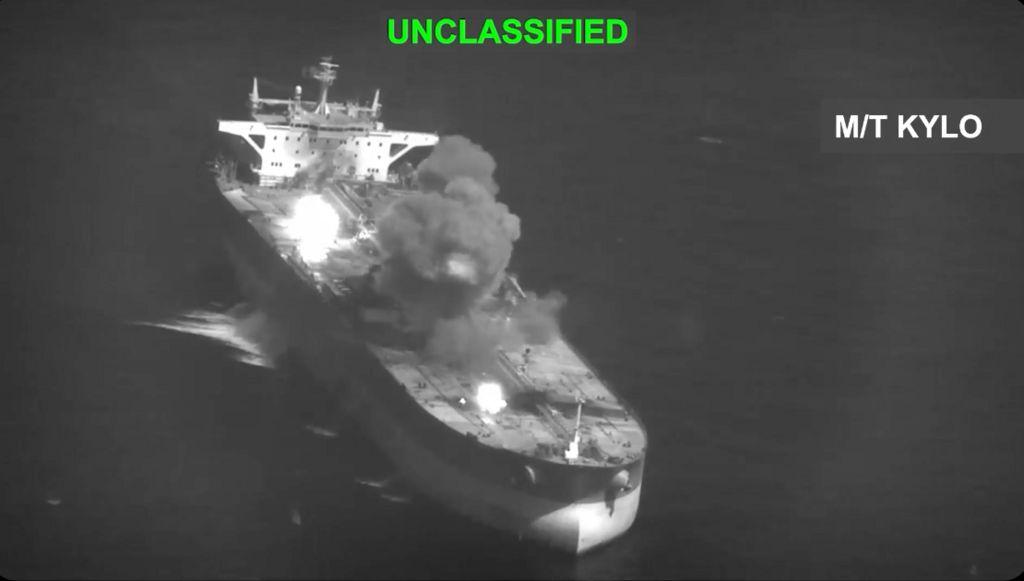
    In a separate development that has heightened regional risk, the Islamic Revolutionary Guard Corps (IRGC) claimed two oil tankers exploded while transiting an “unsafe and hazardous southern route” through the Strait of Hormuz, bringing both vessels to a standstill. However, US Centcom has disputed the IRGC’s account of the incident, offering no further details on the explosion claims. The IRGC has issued a stark warning that the Strait of Hormuz will remain unsafe for all oil and petrochemical transit so long as US airstrikes continue, vowing additional “punitive operations” against American and allied interests.

    The current escalation grew out of three recent deadly attacks on US personnel in the region. Over the weekend, the Pentagon confirmed a third American service member was killed in an Iranian-aligned attack in northern Iraq on Saturday. That killing followed a fatal attack on a US base in Jordan on Friday that took the lives of two US soldiers: 19-year-old Private Isabella Gonzales and 25-year-old Lieutenant Tyler James Feehan. A third service member was initially reported missing after the Jordan attack, and US officials confirmed search teams have recovered “unidentified remains” during ongoing recovery operations.

    Despite the expanding military conflict, top US diplomatic officials have signaled openness to de-escalation. US Secretary of State Marco Rubio stated that the United States “always remains open to a diplomatic solution” to the ongoing crisis. Rubio also argued that the international community must collectively decide whether to allow Iran to control a critical global waterway, accusing Tehran of using energy transit through the strait as political leverage against the West.

    The current breakdown follows the collapse of a preliminary ceasefire deal reached in mid-June, which was designed to halt cross-border hostilities between the two sides. Negotiations aimed at forging a permanent peace agreement have stalled completely after President Trump announced the original ceasefire was “over” on July 8, clearing the way for the resumption of large-scale military strikes that have pushed the region to the brink of broader conflict.

  • Trump, Bieber and Shakira – a World Cup final like never before

    Trump, Bieber and Shakira – a World Cup final like never before

    The 2026 FIFA World Cup final, co-hosted across the United States, Mexico and Canada, will not enter history as a classic display of on-pitch football, but it will be remembered for a dramatic array of off-pitch events, celebrity appearances and political controversy that dominated headlines from the New York New Jersey Stadium. After 120 minutes of play, Spain claimed their second-ever World Cup crown, securing a 1-0 victory over Argentina courtesy of a Ferran Torres strike in extra time. Beyond the winning goal, there was little action on the pitch that captured global attention – but the surrounding narrative of the match gave audiences plenty to discuss.

    The most high-profile talking point of the tournament’s closing match was the attendance of former US President Donald Trump, who had not attended a single match throughout the three-nation event before the final. Trump arrived at the stadium in dramatic fashion, one of three helicopters that circled the venue before landing, and took his seat alongside FIFA President Gianni Infantino roughly 20 minutes before kickoff, in time to watch the pre-match closing ceremony featuring performances from Robbie Williams and Nicole Scherzinger.

    Trump’s presence had already sparked controversy earlier in the tournament, after he admitted to contacting Infantino to request a review of a red card issued to US striker Folarin Balogun. The resulting decision to overturn Balogun’s suspension allowed the player to feature in the United States’ round of 16 defeat to Belgium, a decision that drew widespread criticism across global football circles.

    Tensions around Trump’s attendance carried into the trophy ceremony, where the former president joined Infantino to hand out medals to both squads. Crowds inside the stadium booed as the pair walked on stage, and Argentina defender Cristian Romero was photographed walking straight past Trump without shaking his hand after receiving his runner-up medal from Infantino. Unlike his appearance at the 2025 Club World Cup final, where he lingered on stage long after the planned presentation ended, Trump left the stage shortly after the trophy was handed to Spain’s captain, allowing the winning squad to claim their moment of celebration without interruption.

    Beyond political controversy, the 2026 final made history for its unprecedentedly extended half-time break, styled after the blockbuster half-time shows seen at the NFL’s Super Bowl. Stretched to 27 minutes – the longest half-time interval in World Cup history – the break featured a star-studded mini-concert headlined by global music icons including Madonna, BTS, Coldplay, Shakira (whose track *Dai Dai* served as the official 2026 World Cup anthem) and Justin Bieber. Bieber delivered a toned-down acoustic rendition of *Everything Hallelujah* following a cameo nod to hit series *Ted Lasso*, switching pace from the high-energy performances that opened the show.

    The extended break drew mixed reactions from fans and pundits alike, with former England striker Wayne Rooney offering a blunt assessment from the BBC’s *Match of the Day* studio. “I thought it was crap,” Rooney said. “I thought the performances were bad. The timings were bad. Just let us play football.”

    The pre-match build-up also featured A-list celebrity appearances, with Hollywood star Tom Cruise delivering a dramatic opening speech before kickoff, while daytime fireworks displays were held before the match, during half-time and after the trophy presentation to mark the historic occasion. Despite the glitz and glamour of the event, spectators and media faced significant chaos outside the stadium ahead of kickoff. Heightened security measures overseen by the US Secret Service – implemented due to Trump’s attendance – led to massive queues outside the venue gates, which opened four hours before kickoff to accommodate the extra checks.

    Confusion over designated access routes left some media personnel shuffling between different entrances and re-joining lengthy queues multiple times, while more stringent bag searches than seen at previous tournament matches added to wait times. Organizers eventually managed to ease congestion before kickoff, and the match got underway on schedule with no delays.

    The final marked a historic milestone for 19-year-old Spanish winger Lamine Yamal, who became one of the youngest players ever to win a World Cup winner’s medal, while the result ended a disappointing tournament for Argentina, where fans and pundits widely criticized the squad for failing to support star player Lionel Messi in his bid for a second World Cup title. For neutrals and organisers, the 2026 final will be remembered less for the 90-plus minutes of football, and more as a landmark example of the growing intersection of sport, entertainment and global politics in the modern World Cup era.

  • JD Vance announces birth of baby boy with wife Usha

    JD Vance announces birth of baby boy with wife Usha

    In a joyful personal announcement shared via social media, sitting United States Vice President JD Vance has revealed that he and his wife Usha Vance have welcomed their fourth child, a baby boy named Alec Neel Vance. According to Vance’s official statement, the newborn arrived on Sunday morning, and both mother and child are currently in good health and high spirits.

    “Usha and the baby are happy and healthy, and our kids are overjoyed to meet their little brother,” Vance wrote in his post. He also extended a special note of gratitude to the military medical team and support staff at Washington D.C.’s Walter Reed Medical Center, who provided care throughout the birth process.

    News agency the Associated Press notes this occasion carries unique historical significance: Alec’s birth marks the first time a sitting vice president has welcomed a new child while in office in more than 150 years, a milestone that sets Vance’s family apart in modern U.S. political history.

    Alec joins the Vance family’s three older children: 9-year-old Ewan, 6-year-old Vivek, and 4-year-old Mirabel. The couple first crossed paths in 2010 while they were both students at Yale Law School, where they bonded over participation in a discussion group focused on social shifts in the United States.

    Usha Vance, born Usha Chilukuri, has a unique multicultural background: she was raised in working-class suburban San Diego, California, to parents who immigrated to the U.S. from Andhra Pradesh, India. Her father works as a mechanical engineer, while her mother is a molecular biologist. Last year, the entire Vance family traveled to India on an official visit, where they were photographed publicly as a family of five ahead of Alec’s arrival.

    Beyond this personal milestone, the birth aligns with a key policy priority Vance has championed throughout his time in the Trump administration. The vice president has emerged as one of the most prominent voices in the administration advocating for policy measures to encourage higher birth rates across the United States, framing falling fertility rates as a critical long-term challenge for the country’s economic and social future.

  • In pictures: Joyous fans gather across the US and Canada to watch World Cup final

    In pictures: Joyous fans gather across the US and Canada to watch World Cup final

    The 2026 FIFA World Cup, co-hosted by the United States, Canada and Mexico, reached its thrilling climax on Saturday with a highly anticipated final showdown between Spain and Argentina. Though none of the three host nations advanced to the tournament’s final match, football passion did not dim across the region – thousands of fans from both competing camps gathered in public viewing spaces, fan zones and private events from coast to coast to cheer on their teams.

  • Watch: Torrential rain hits New York and New Jersey triggering flash floods

    Watch: Torrential rain hits New York and New Jersey triggering flash floods

    A catastrophic extreme weather event has struck the densely populated northeastern United States, as record-breaking torrential rainstorms swept through New York and New Jersey this week, triggering immediate and dangerous flash flooding that upended daily life for millions of residents.

    Footage captured from hard-hit areas shows raging floodwaters surging through the region’s iconic urban infrastructure, with cascades of murky water pouring directly into underground subway stations that serve as the lifeline of New York City’s transit system. Above ground, major city streets have been transformed into rushing, shallow rivers, forcing pedestrians and motorists alike to abandon their travel plans.

    Visual records from the scene show residents wading through waist-deep floodwaters in heavily impacted neighborhoods, as local emergency management teams have deployed rapid response units to evacuate people trapped in low-lying areas and stranded vehicles. The sudden onset of the flash floods has caught many communities off guard, with weather officials having issued urgent warnings for residents to avoid non-essential travel and move to higher ground where possible.

    The extreme rainfall, which climate scientists link to a growing pattern of more intense precipitation events in the Northeast caused by rising global temperatures, has already disrupted transit services, closed dozens of roads, and raised concerns about infrastructure damage across the two states.