标签: North America

北美洲

  • How the moon and music have collided in space

    How the moon and music have collided in space

    When it comes to curating playlists for different settings, most people stick to unwritten rules: high-energy techno for gym sessions, groovy disco for nightclubs, and upbeat pop for cross-country road trips. But what does the perfect playlist look like 240,000 miles from Earth, orbiting the moon? For the four-person crew of NASA’s Artemis II mission, that question has an answer that mixes modern pop, hip-hop, classic rock, and deeply personal meaning — and the world is getting a glimpse of how music connects isolated astronauts to the home they left behind.

    One of the biggest breakout names from the Artemis II wake-up playlist is American rapper Denzel Curry, whose collaborative track *Tokyo Drifting* (with Glass Animals) has become one of the crew’s daily morning greetings. Curry told BBC Newsbeat he was shocked and thrilled to see his work reach such unprecedented heights. A lifelong fan of space-focused media, Curry said he would jump at the chance to meet the Artemis II crew to thank them for including his track, and he has already set a bold new career goal: becoming the first rapper to perform live from space. He hopes the cosmic placement will give his track a new wave of popularity among listeners back on Earth.

    Curry is far from the first artist whose work has made the journey to orbit, and the tradition of waking up astronauts with custom-picked songs stretches back more than 60 years. Retired British astronaut Tim Peake, who became the first Briton to walk on the International Space Station (ISS) in 2015, says music is far more than just entertainment in the isolated environment of space. As he prepared for his launch, Peake hand-picked three tracks to accompany him: Queen’s *Don’t Stop Me Now*, U2’s *Beautiful Day*, and Coldplay’s *A Sky Full of Stars*. “It gives you a connection back to Earth,” Peake explained. “It reminds you of times in your life when you’ve heard that music, of friends and family waiting for you back home.” The experience of listening to familiar music while floating above Earth, a “lovely, beautiful blue, green, white marble in the blackness of space,” is deeply surreal, he added, and that emotional connection makes the soundtrack an essential part of any space mission.

    Antonia Jaramillo, a NASA mission control team member based in Houston, echoed that sentiment, noting that the daily routine of wake-up music helps ground astronauts during high-stakes missions far from home. “They are by themselves, going around the moon,” Jaramillo said. “We all have our morning wake-up routine back on Earth, a soundtrack that gets you in the right headspace for the day. It’s a very similar thing we’re doing for our crew.” The process of getting the custom playlist to the crew is simpler than many might think: tracks are downloaded ahead of time, and flight controllers at mission control broadcast the songs to the capsule just like any other communication with the crew. For Artemis II, the full nine-song playlist was curated by the crew themselves, with input from their friends and family members, blending personal favorite tracks with songs that carry special meaning for the historic moon mission.

    Space researchers say the longstanding marriage of music and space exploration is no accident. Dr. Eleanor Armstrong, a space researcher at the University of Leicester, explained that the morning wake-up song tradition dates all the way back to NASA’s 1960s Gemini program, drawing on a long history of military organizations like the U.S. Navy using music to structure the start of a work day. That tradition has included many iconic moments beyond pre-planned playlists: during the 1965 Gemini 6A mission, astronauts Thomas Stafford and Wally Schirra smuggled a harmonica and set of small bells on board to celebrate the first successful space rendezvous, surprising mission control with a live performance of *Jingle Bells*. Those first instruments played in space are now on permanent display at the Smithsonian National Air and Space Museum in Washington D.C.

    Music has also been woven into uncrewed exploration missions: NASA’s 1977 Voyager 1 probe, now traveling through interstellar space beyond the edges of our solar system, carries a golden record filled with songs and sounds that represent the diversity of human life on Earth. More recently, the Tesla Roadster that SpaceX launched into orbit in 2018 is programmed to play David Bowie’s *Space Oddity* on an endless loop.

    Artemis II crew member Christina Koch, who has long been fascinated by the intersection of music and space, has carried on that tradition in her own career. Koch famously located the original cassette tape used to play music during the 1969 Apollo 11 mission, and played it from the ISS during the 50th anniversary of the historic moon landing. During her 2019-2020 ISS mission, she even learned to play a keyboard song for her husband as a surprise for their wedding anniversary, and the pair collaboratively build playlists for her missions, so they can share the experience of her journey even when separated by hundreds of thousands of miles.

    Koch told Canada’s Prime Minister Mark Carney earlier this week that the Artemis II wake-up playlist is “absolute perfection,” though she joked she was disappointed that Chappell Roan’s *Pink Pony Club* was cut off right before the iconic chorus — adding that she sang the track to herself all day after the partial play. For other crew members, the songs carry equally personal meaning: Commander Reid Wiseman said *Tokyo Drifting* reminds him of annual family vacations to Florida, where he and his daughters listen to the track on the road. Canadian astronaut Jeremy Hansen’s family picked Queen and Bowie’s *Under Pressure* for his wake-up, while NASA astronaut Victor Glover said his wife surprised him by swapping one of his planned picks for Mandisa’s *Good Morning*, a pleasant start to his days in orbit.

    The full Artemis II wake-up playlist is now available to stream on Spotify, giving listeners on Earth the chance to hear the same soundtrack that’s greeted the crew during their history-making lunar orbit. The nine-track list includes *Sleepyhead* by Young & Sick, *Green Light* by John Legend and André 3000, *In a Daydream* by the Freddy Jones Band, *Pink Pony Club* by Chappell Roan, *Working Class Heroes* by CeeLo Green, *Good Morning* by Mandisa and TobyMac, *Tokyo Drifting* by Glass Animals and Denzel Curry, *Under Pressure* by Queen and David Bowie, and *Lonesome Drifter* by Charley Crockett.


  • Bronny James sets up father LeBron in Lakers win

    Bronny James sets up father LeBron in Lakers win

    The NBA’s regular season delivered a one-of-a-kind milestone this week, as 19-year-old Bronny James recorded the first son-to-father assist in league history, finding his 41-year-old father LeBron James for an easy breakaway dunk during the Los Angeles Lakers’ 119-103 victory over Pacific Division rival Golden State Warriors. The historic play marked the second time the father-son duo have made NBA history in the span of a month: just four weeks prior, LeBron notched the first father-to-son assist against the Brooklyn Nets, cementing their place as the first parent-child pairing to share the court in NBA history.

    In the Warriors game, LeBron turned his 26 points into a dominant offensive performance, adding 11 assists to lead the Lakers to a critical late-season win. Young Bronny held his own against the playoff-bound Warriors, putting up 10 points and three assists of his own. Both the Lakers, now fourth in the Western Conference, and the 10th-place Warriors have already locked in their spots for the 2026 postseason, which tips off on April 18.

    The night brought a slate of other consequential late regular season matchups across the league. The New York Knicks pulled out a 112-106 win over the Boston Celtics, with Josh Hart leading all scorers with 26 points. The result puts mounting pressure on the Celtics, who enter the final two games of the regular season second in the Eastern Conference standings, while the Knicks climb to third. The Toronto Raptors earned a comfortable 128-114 win over the Miami Heat, and the Houston Rockets held off the Philadelphia 76ers 113-102 to boost their own playoff positioning. For teams already eliminated from postseason contention, the Chicago Bulls defeated the Washington Wizards 119-108, and the Indiana Pacers cruised to a 123-94 win over the Brooklyn Nets.

    Off the court, women’s basketball reached a major expansion milestone this week, with the Women’s National Basketball Association board of governors approving three new expansion franchises in Cleveland, Detroit, and Philadelphia that will grow the league to 18 teams by 2030. The Cleveland team will be the first of the three to take the court, making its debut in the 2028 WNBA season, with Detroit joining the league in 2029 and Philadelphia following a year later in 2030.

    The latest expansion marks the latest in a series of growth moves for the WNBA, which has added four new franchises in a five-year window. The Golden State Valkyries are set to make their debut in 2025, with the Toronto Tempo and Portland Fire launching their inaugural seasons this coming year. The 2026 WNBA regular season is scheduled to tip off on May 8 and run through September 24, kicking off what will be a historic period of growth for the league.

  • This coat cost $248 in illegal tariffs. Will he ever get the money back?

    This coat cost $248 in illegal tariffs. Will he ever get the money back?

    When Massachusetts personal trainer Alex Grossomanides ordered a French down jacket last year, he thought he had locked in a solid deal. That excitement quickly faded when a $400 bill for tariffs and processing fees landed in his inbox — a charge that came close to matching the purchase price of the coat itself. The unexpected cost stemmed from a little-known detail: the parka was manufactured in Myanmar, which at the time fell under a 40% US tariff rate, adding $248.04 in duties alone. Months later, the U.S. Supreme Court overturned the controversial 40% tariff and dozens of other levies first introduced by former President Donald Trump, triggering what is set to become the largest tariff refund program in U.S. history. But even as authorities prepare to launch the repayment process, thousands of consumers and small business owners like Grossomanides fear they will never see their money returned.

    The court’s ruling only extends eligibility for refunds to importers who paid the duties directly to U.S. Customs. This narrow scope excludes the vast majority of people who ultimately bore the cost of the tariffs through indirect channels: higher retail prices, hidden processing fees, and supply chain markups. Grossomanides, who paid his tariff through global shipping firm DHL, says he wants to believe he will recoup his funds, but he has received no communication from the company and is not optimistic. “They should be refunding people,” the 37-year-old said. “It’s all my money and I took the hit for it, which I don’t think is fair.”

    In March, the U.S. Court of International Trade ordered U.S. Customs and Border Protection to return the more than $160 billion in duties the federal government collected from the invalidated tariffs, opening the door for roughly 330,000 direct importers to claim back at least a portion of their costs. Fears that the Biden administration would challenge the court order have not come to pass, and customs officials working on the program say the refund portal is scheduled to go live this month, with a progress update due to the Court of International Trade on April 14. Even so, economic analysts warn that fully reversing the financial damage of the tariffs is functionally impossible. Multiple independent studies confirm that most importers already passed the bulk of tariff costs on to consumers in the form of higher prices — a cost shift that the court’s ruling does nothing to address.

    For small businesses across the country, the pain is particularly acute. Sue Johnson, owner of Sue Johnson Lamps, a small lighting design firm based in Berkeley, California, says her business suffered a major blow when the tariffs forced her mica supplier to double the price of the raw material she uses for her Art Deco-inspired lamp designs. Despite the Supreme Court ruling, Johnson says she has no expectation of receiving any compensation for the extra costs she absorbed. “Maybe big direct importers will get repaid, but I have no hope they’re going to refund me,” she said.

    Small importers note that the issue is far more complex than the refund program acknowledges. While many raised prices to offset tariff costs, most could not raise them enough to cover the full expense, eating into already thin profit margins. Beyond direct duty costs, the tariffs triggered a cascade of secondary financial harm: many small businesses took on high-interest debt to cover unexpected duty bills, lost sales from price-sensitive customers, and spent thousands of dollars on administrative work just to navigate the claims process. Kacie Wright, who works for Houghton Horns, a small Texas-based importer of musical instruments, told a forum hosted by small business advocacy group We Pay the Tariffs that even if her firm ultimately receives a refund, it will not make the business whole. “Just making sure our business was lined up to receive a refund has been costly, requiring more than six months of back-and-forth with customs officials to properly register in the agency’s online system,” Wright explained.

    Jared Slipman, chair of the tax department at law firm Obermayer, which advises dozens of small businesses on the refund process, says U.S. Customs has placed the full burden of gathering documentation and filing claims on the claimants themselves. For many small businesses, Slipman says, the administrative requirements are so burdensome that many will conclude the potential payout is not worth the time and cost of applying. Other businesses, he predicts, will be forced to file additional litigation just to recoup the funds they are owed. Most of all, Slipman says, ordinary consumers get the worst end of the deal. “It may very well be the case that this is an orchestrated theft from the American consumer… and that would be very unfortunate,” Slipman said.

    For consumers like James Tak, a 41-year-old Washington resident who paid a $24 tariff fee to UPS last year when he received a shipment of video games as a gift from a friend in Japan, even small charges add up. Tak says he understands that processing refunds for millions of indirect payers would be a logistical nightmare, but he still believes he is owed his money back. “I just think it’s money I shouldn’t have to pay,” Tak said.

    A small number of shipping firms, including global logistics giant FedEx, have publicly stated they intend to pass any refunds they receive back to the consumers and small businesses that originally paid the charges. But most importers have issued only vague, limited promises, especially for firms that passed tariff costs through to consumers as general price hikes rather than separate line-item charges. The dispute over unclaimed refunds has already sparked a wave of class-action lawsuits against major U.S. retailers and brands, including warehouse club Costco, eyewear maker EssilorLuxottica (parent company of Ray-Ban), and activewear brand Fabletics, founded by actress Kate Hudson. Fabletics previously broke out tariff charges as a separate line item on customer receipts, leading plaintiffs to accuse the firm of “unjust enrichment” — collecting extra tariff costs from customers and now standing to collect the same funds again from the federal government.

    Adrian Bacon, head of litigation at the Law Offices of Todd Friedman, which brought the class-action suit against Fabletics and is investigating multiple other firms, says while government watchdogs like the Federal Trade Commission typically handle consumer protection issues, the involvement of federal trade policy means private legal action is the only available avenue to force companies to pass refunds on to consumers. That has not stopped current Trump administration officials from weighing in on the debate. U.S. Trade Representative Jamieson Greer last month called on companies that receive “windfall” refunds to pass the money on to workers in the form of performance bonuses. Last February, Treasury Secretary Scott Bessent cast doubt on the likelihood that ordinary consumers would ever see any of the refund money. “I got a feeling the American people won’t see it,” Bessent said.

  • How the Artemis crew will splash down on Earth

    How the Artemis crew will splash down on Earth

    NASA’s groundbreaking Artemis lunar mission is approaching its final milestone, as the four-person crew prepares to wrap up their 10-day journey around the Moon and make their dramatic return to Earth via splashdown on April 10. This mission marks a critical step in humanity’s renewed push for deep space exploration, building on decades of lunar research and laying the groundwork for future crewed landings on the lunar surface. Unlike the Apollo missions of the 20th century, this flight tests updated life support systems, navigation technology, and reentry protocols that will be essential for the upcoming Artemis III landing, which aims to place the first woman and person of color on the Moon. The splashdown process itself is a carefully choreographed operation: after the crew module separates from the service module, it will enter Earth’s atmosphere at hypersonic speeds, with heat shields absorbing the extreme temperatures generated by atmospheric friction. Parachutes will then deploy in sequential stages to slow the capsule down to a safe landing speed, before it touches down in a pre-determined open ocean area. NASA recovery teams, working alongside the U.S. Coast Guard and other partner organizations, have completed months of training to rapidly locate the capsule, extract the crew, and transport them to waiting facilities for medical checks and debriefing. Every step of this return operation is being closely watched by space agencies and aerospace teams around the world, as success here will clear the way for the next phase of the Artemis program, which ultimately aims to establish a sustainable lunar outpost and prepare for future human missions to Mars.

  • With Middle East in flames, Trump eyes ‘next conquest’

    With Middle East in flames, Trump eyes ‘next conquest’

    Six weeks after former U.S. President Donald Trump partnered with Israeli Prime Minister Benjamin Netanyahu to launch a military conflict that has left the Middle East mired in deadly violence, the commander-in-chief has stoked global alarm with a provocative late-night boast that the U.S. military is already eyeing its “next conquest.”

    The controversial remark came in a Wednesday evening post to Trump’s Truth Social platform, where he outlined that U.S. forces would remain deployed near and within Iranian territory until Washington secures what he calls a “real agreement” to end the ongoing hostilities. The timeline of the comment comes just one day after a fragile two-week ceasefire between the U.S. and Iran was announced, a truce that already hangs in the balance following Israel’s large-scale bombardment of neighboring Lebanon.

    Trump doubled down on aggression in the same post, threatening that Washington would launch a “bigger, and better, and stronger” attack on Iran if negotiations fail to deliver his desired outcome. He then added that the U.S. military is “Loading Up and Resting, looking forward, actually, to its next Conquest.” The inflammatory statement has already sparked pushback even within his own administration, with multiple senior national security officials privately acknowledging that Trump’s claims of imminent victory in Iran are dangerously premature.

    International relations scholars and political observers have roundly condemned the president’s remarks. Branislav Slantchev, a political science professor specializing in global affairs at the University of California San Diego, wrote in response to the post that “this depraved idiot is out of control.” Journalist Marisa Kabas echoed that outrage, adding simply, “We cannot live this way.”

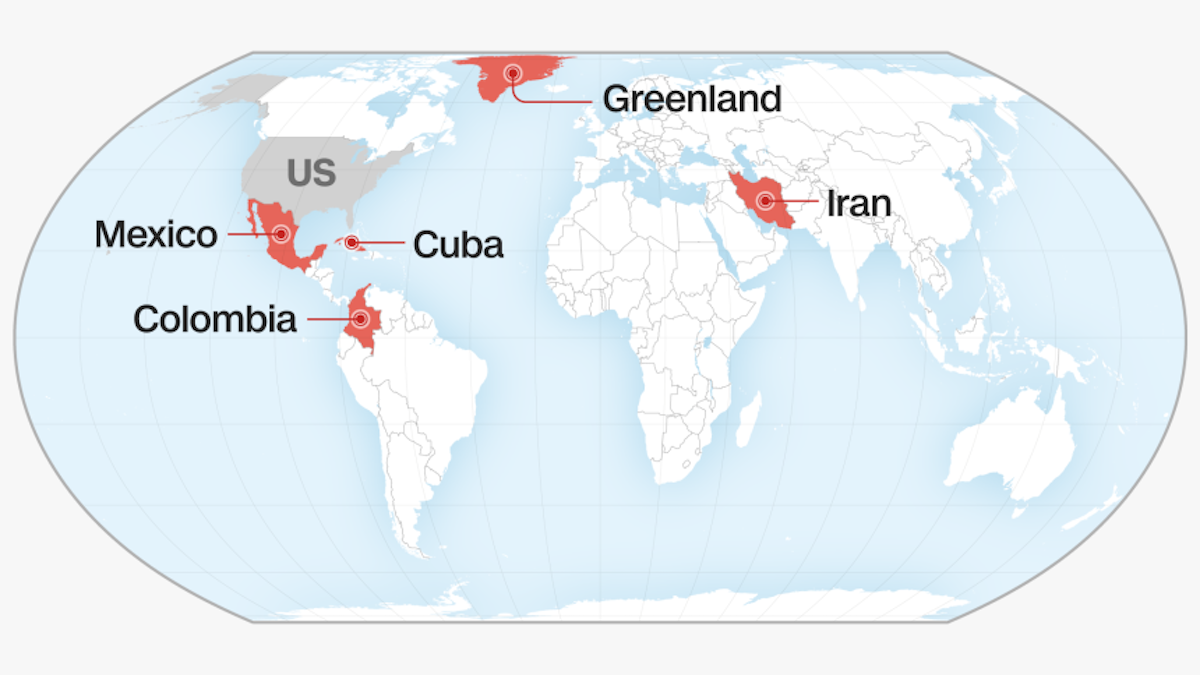
    Critics have long highlighted a stark contradiction in Trump’s foreign policy: despite running for office on a pledge of “no new wars,” he has ordered military strikes in more countries than any modern U.S. president in history. In his Wednesday post, Trump did not name a specific target for what he called the military’s “next conquest,” but context makes clear potential targets are no mystery. Over recent months, Trump has repeatedly issued violent threats against both Cuba and Greenland, openly threatening to seize both territories by force. In a separate Truth Social post the same night, Trump derided Greenland in all capital letters as a “BIG, POORLY RUN, PIECE OF ICE.”

    Just last week, Trump submitted a formal request to Congress for a $1.5 trillion military budget for the upcoming fiscal year, a proposal that allocates tens of billions of dollars for new battleships and fighter jets. The expansionist rhetoric lines up with comments he made one month prior at a Saudi-backed investment summit held in Miami, where he celebrated past U.S. military strikes on Venezuela and Iran before bluntly declaring, “Cuba is next.” He quickly added, “Pretend I didn’t say that,” after making the remark.

    Foreign policy analysts argue that Trump’s aggressive rhetoric is a reaction to a costly failure of his Iran war gambit. Brian Finucane, senior adviser to the U.S. Program at the International Crisis Group, explained that Trump is “lashing out because his war on a whim did not result in the hoped-for ‘Venezuela’ in Iran but a historic debacle instead.”

    Reporting from last month by The Intercept’s Nick Turse adds context to expanding U.S. military operations even beyond the Middle East. Turse revealed that amid the ongoing Iran conflict, a top Pentagon official unveiled a new Western Hemisphere initiative dubbed “Operation Total Extermination,” targeting armed groups across the Americas. Joseph Humire, the Pentagon’s acting assistant secretary for homeland defense and Americas security affairs, told Congress that the U.S. military backed joint kinetic strikes against cartel targets along the Colombia-Ecuador border in early March. Turse’s reporting confirmed that the cross-border campaign has already spilled into Colombian territory: on March 3, a Colombian farm was hit by errant fire or a ricochet from the strikes, leaving an unexploded 500-pound bomb abandoned in the country’s border region. Since taking office for his second term, Trump has launched offensive military operations not only in Iran but also in Iraq, Nigeria, Somalia, Syria, and Yemen — most of which were long-running theaters of conflict from the post-9/11 war on terror.

    Beyond his threats of new conquests, Trump has also lashed out at U.S. allies over their refusal to back his unauthorized Iran war, while simultaneously demanding they help clean up the geopolitical and economic disaster the conflict created. In his post attacking Greenland, he launched an all-caps tirade against NATO member states that declined to deploy troops to a conflict Trump launched without any prior consultation or alliance approval: “NATO WASN’T THERE WHEN WE NEEDED THEM, AND THEY WON’T BE THERE IF WE NEED THEM AGAIN.”

    Just hours after that tirade, multiple sources confirmed to Bloomberg that Trump is now demanding NATO allies draft concrete plans to mitigate the crisis he created. According to Thursday’s Bloomberg reporting, Washington is pushing for “specific commitments from European allies on their pledge to help secure the Strait of Hormuz after the fighting in Iran stops,” and has given allies just days to present detailed operational plans for guaranteeing open navigation through the strategic waterway. This is not the first time Trump has pressured allies to deploy forces to the strait: last month, he attempted to strong-arm European nations into sending their navies to the region to support commercial shipping security, but every participating nation rejected the request.

    Even the core objective of the ceasefire Trump announced last Tuesday remains unmet more than 24 hours later: the Strait of Hormuz, one of the world’s most critical energy chokepoints, remains completely closed to most commercial traffic, just as it has been since the war began more than a month ago. Bloomberg’s Thursday reporting confirmed that ship traffic through the strait has “remained blocked,” being “limited to a handful of Iran-linked ships, another sign that a fragile ceasefire between the US and Iran has yet to improve flows through the world’s key energy chokepoint.”

    The ongoing closure has already shaken global energy markets: Brent crude futures initially dropped sharply when the ceasefire was announced, but have steadily climbed back toward the $100 per barrel mark as the closure continues.

    Given that Trump has failed to deliver even the most basic outcome of his own ceasefire deal, many analysts and policymakers are questioning why U.S. allies should step in to resolve a crisis he created. Dominic Waghorn, international affairs editor at Sky News, observed that “neither a military escort nor military force can reopen the Strait, short of a full scale occupation of southern Iran – and even then insurgents could keep it closed with the threat of action.” Prominent economist Dean Baker has urged U.S. allies to outright reject Trump’s demand, writing that “The European countries should specifically commit to pay the toll Iran is requesting.” White House correspondent SV Dáte of HuffPost summed up Trump’s approach to the crisis in one blunt line: “I broke it, someone else can fix it.”

  • White House staff told not to place bets on prediction markets

    White House staff told not to place bets on prediction markets

    Last month, the White House issued a formal warning to all its employees prohibiting the use of non-public, insider information to place speculative trades on online prediction markets, according to multiple sources familiar with the internal communication. The cautionary email, first brought to public attention by the Wall Street Journal, was distributed to White House personnel on March 24. This timing came exactly one day after former U.S. President Donald Trump announced a five-day halt on his public threat to launch military strikes against Iranian power plants and national energy infrastructure. The advisory was prompted by existing press reporting that raised widespread alarms over potential improper activity by U.S. government officials on popular prediction platforms including Kalshi and Polymarket. When approached for comment by the BBC, White House spokesperson Davis Ingle pushed back on suggestions of any wrongdoing by administration members, noting that all insinuations of improper trading by current administration officials are unsubstantiated, baseless claims that amount to irresponsible journalism. Ingle further clarified that every federal employee working within the executive branch is already bound by strict federal government ethics regulations that explicitly ban the use of confidential insider information to secure personal financial gain. “The only special interest that will ever guide President Trump is the best interest of the American people,” Ingle added in his official statement. The BBC has reached out to both Kalshi and Polymarket to request their perspective on the warning and broader concerns around insider trading on their platforms, and as of this reporting, neither company has issued an official public response. This latest incident is not the first time prediction markets have come under regulatory and public scrutiny. Back in January, Polymarket faced intense public and congressional scrutiny after an anonymous gambler netted nearly half a million dollars from a bet that Venezuelan President Nicolás Maduro would be captured, placing the wager just hours before the capture was officially announced to the public. To date, the identity of the bettor remains unknown, with the only trace of the account being an alphanumeric blockchain identifier tied to the transaction. The unconfirmed but widely discussed incident sparked major questions over whether the anonymous bettor had obtained advance insider knowledge of the U.S. military operation that led to Maduro’s capture, profiting illegally from non-public information. Prediction markets, which have seen explosive growth in mainstream popularity over the past 12 months, currently host more than $44 billion (equivalent to roughly £33 billion) in total cumulative trades across major platforms. While the majority of bets placed on these platforms center on major sports events and entertainment outcomes, users increasingly trade on high-stakes political and economic events, ranging from whether the U.S. Federal Reserve will adjust benchmark interest rates to the projected outcomes of local, state, and national elections.

  • Hip-hop pioneer, Afrika Bambaataa,  dies aged 67

    Hip-hop pioneer, Afrika Bambaataa, dies aged 67

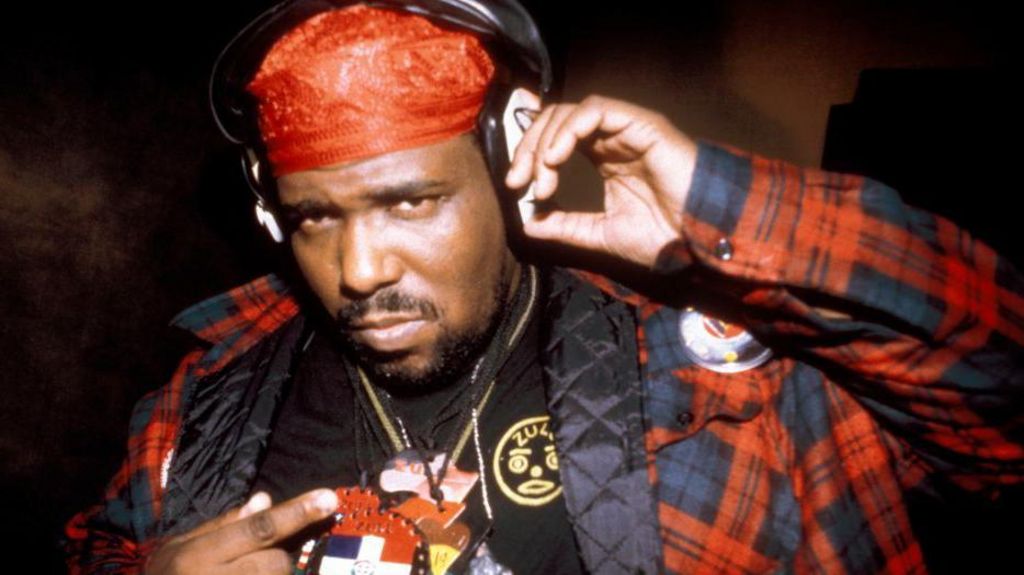
    The global hip-hop community is mourning the passing of one of its foundational pioneers, Afrika Bambaataa, who died at age 67 from cancer complications, the Hip Hop Alliance has officially confirmed. First to break the news was celebrity news outlet TMZ, which reported that the iconic cultural figure passed away on Thursday in a medical facility in Pennsylvania.

    Born Lance Taylor to Jamaican and Barbadian immigrant parents in the Bronx, New York, Bambaataa grew up immersed in the turbulence of 1960s and 70s New York, coming of age alongside the rising Black liberation movement. As a teenager, he was an active member of the street gang the Black Spades, where he honed the leadership skills that would later shape the future of global youth culture. In 1973, the same year DJ Kool Herc held the back-to-school party widely cited as the birth of hip-hop, Bambaataa co-founded the Universal Zulu Nation, an international collective dedicated to redirecting young people away from street violence and toward creative expression through music, art, and dance.

    Bambaataa rose to global fame in 1982 with his groundbreaking hit *Planet Rock*, a genre-defying track that blended electronic production, hip-hop breaks, and funk influences that redefined the sound of 1980s hip-hop and cemented his status as an innovator. Over the following decades, he built an extensive collaborative resume, working alongside legends ranging from soul icon James Brown to punk pioneer John Lydon, and contributed to high-profile politically charged projects including 1985’s anti-apartheid charity single *Sun City*.

    In a statement honoring Bambaataa’s contributions, the Hip Hop Alliance highlighted his role in building a global cultural movement rooted in the core values of peace, unity, love, and joy. “His vision transformed the Bronx into the birthplace of a culture that now reaches every corner of the world,” said Reverend Dr. Kurtis Blow Walker, the organization’s executive director.

    But Bambaataa’s legacy has long been complicated by serious controversy. In 2016, decades-old allegations of child sexual abuse and trafficking from the 1980s and 1990s became public, prompting Bambaataa to step down as head of the Universal Zulu Nation. The artist repeatedly denied all accusations, calling them baseless attacks designed to destroy his reputation and legacy in hip-hop. In 2025, Bambaataa lost a civil suit related to the allegations after he failed to appear in court, according to reporting from *The Guardian*.

    The Hip Hop Alliance acknowledged this complexity in its official tribute, noting that the abuse claims have sparked important, ongoing conversations about Bambaataa’s legacy within the global hip-hop community. For many, he remains a visionary who turned a local Bronx youth movement into a global cultural force; for others, his groundbreaking contributions can never be separated from the serious accusations that shadowed the final decades of his life.

  • BBC tours Orion spacecraft model ahead of Artemis II return

    BBC tours Orion spacecraft model ahead of Artemis II return

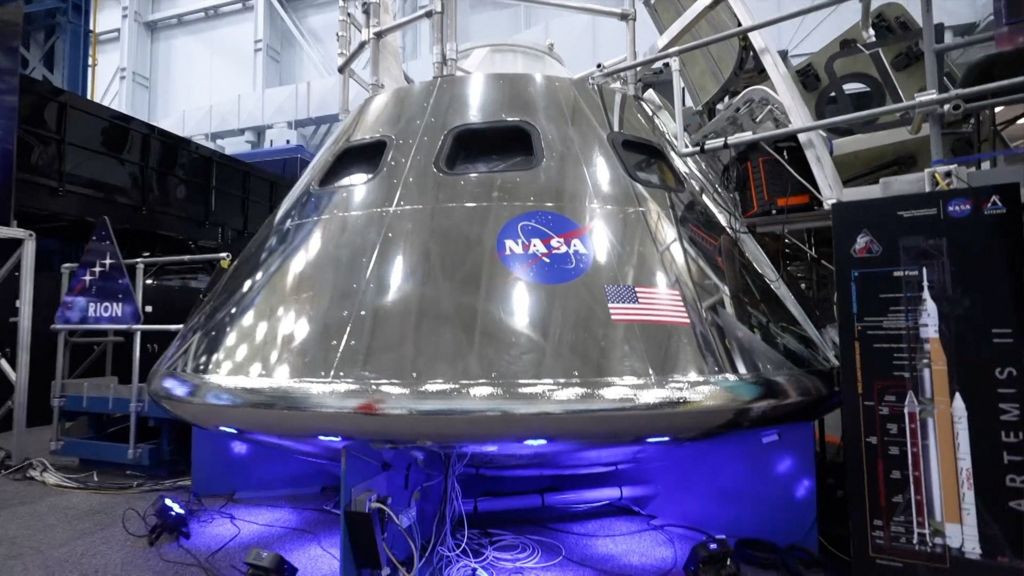
    Ahead of one of the most anticipated milestones in modern space exploration, the BBC has been granted an exclusive behind-the-scenes tour of a full-scale model of NASA’s Orion spacecraft, the vehicle that will carry the Artemis II crew safely back to Earth following their groundbreaking lunar mission. Scheduled for re-entry and splashdown on April 10, the upcoming return marks a critical juncture for NASA’s Artemis program, which aims to reestablish human presence on the moon and lay the groundwork for future deep space missions to Mars.

  • US has let in 4,499 refugees since October – all but three were South African

    US has let in 4,499 refugees since October – all but three were South African

    A dramatic shift in the demographic and geographic origin of refugees admitted to the United States has followed former President Donald Trump’s sweeping overhaul of American refugee policy, newly released U.S. government data confirms, triggering escalating diplomatic tensions between Washington and Pretoria over the targeted resettlement of white South African Afrikaners.

    According to data compiled by the U.S. Refugee Processing Center, between October 2025 and the end of the first quarter of 2026, just 4,499 refugees total have been resettled across the United States. Strikingly, all but three of these arrivals — who came from Afghanistan — are South African nationals. This data stands in stark contrast to the final full fiscal year of the Biden administration, which ran from October 2023 to September 2024, when the U.S. welcomed 125,000 refugees from 85 different countries across the globe.

    After returning to the presidency, Trump implemented a full pause on all refugee admissions to the U.S., even halting processing for applicants fleeing active war zones and humanitarian crises. The only explicit exception carved out in this policy was for Afrikaners, a white ethnic minority in South Africa who Trump has repeatedly claimed face systemic persecution. This framing has been uniformly rejected by the South African government, which has pushed back aggressively against the U.S. policy.

    When announcing the policy shift, Trump framed the change as a measure to bolster U.S. national security and protect domestic public safety. Official policy guidance issued by his administration specified that refugee processing priority would be granted to Afrikaner South Africans alongside what the order called “other victims of illegal or unjust discrimination in their respective homelands.”

    Diplomatic relations between the two countries have deteriorated rapidly since Trump’s second term began. Just over 12 months ago, South Africa’s ambassador to the U.S., Ebrahim Rasool, was expelled from the country after he publicly accused Trump of “mobilising supremacism” and using the narrative of white victimhood in South Africa as a racial dog whistle to energize his political base.

    Tensions boiled over into a high-profile public confrontation during a May 2025 Oval Office meeting between Trump and South African President Cyril Ramaphosa. During the talks, Trump repeated unsubstantiated claims that white South African farmers were the targets of systematic persecution and what he called “genocide.” Ramaphosa directly refuted these false claims, and received public backing from John Steenhuisen, the white leader of South Africa’s Democratic Alliance — a major political party that is part of the country’s current coalition government.

    Steenhuisen told Trump that the vast majority of both commercial and smallholder white farmers in South Africa have no intention of leaving the country, and remain committed to building their lives and livelihoods there. In October 2025, the South African government issued an official rebuke of the U.S. policy to prioritize Afrikaner refugee claims, noting that the widespread narrative of a so-called “white genocide” in South Africa has been repeatedly discredited by independent researchers and lacks any credible, verifiable evidence.

    The South African government further pointed to an open letter signed by prominent members of the Afrikaner community itself — including leading academics, business leaders, and even descendants of prominent apartheid-era political figures — that rejected the persecution narrative. Multiple signatories of the letter went so far as to label the U.S. resettlement scheme a fundamentally racist policy.

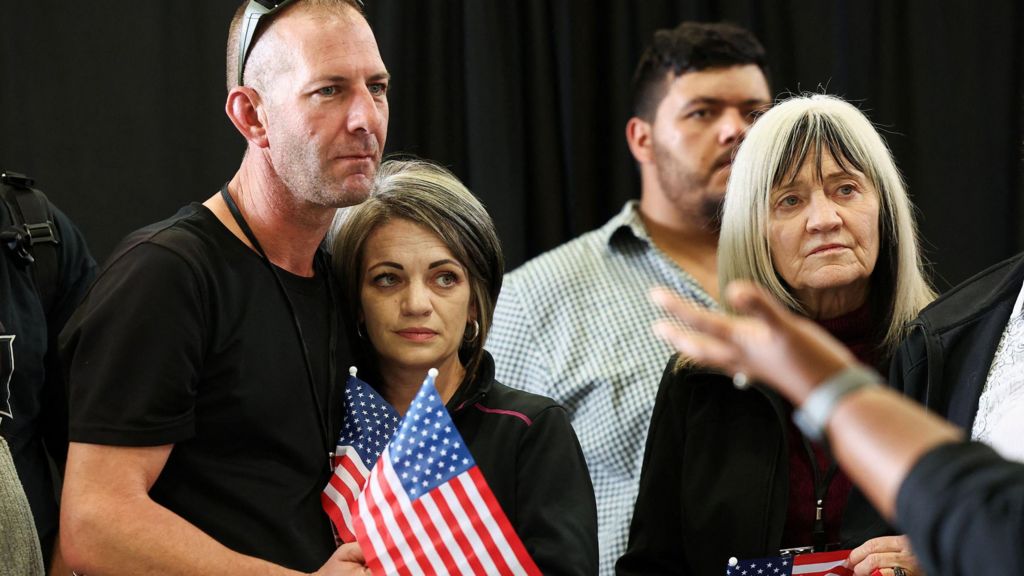
    The first cohort of resettled Afrikaner refugees, numbering 68 people, arrived in the U.S. in May 2025. Arrival numbers have surged sharply in early 2026, with 2,848 South African refugees entering the country between February and March alone. The resettled refugees have spread across the U.S., with the single largest concentration of 543 people establishing new homes in Texas.

  • Melania Trump says rumours linking her to Epstein ‘need to stop’

    Melania Trump says rumours linking her to Epstein ‘need to stop’

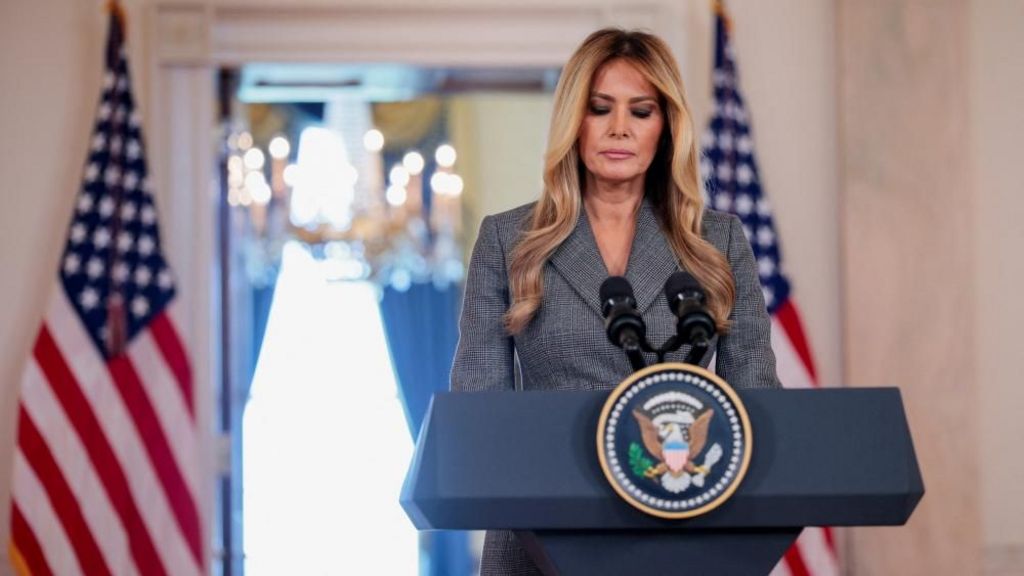
    In an unexpected, unscripted appearance at the White House on Thursday, former first lady Melania Trump issued a direct, public denial of any personal or professional connection to disgraced financier and convicted sex offender Jeffrey Epstein, demanding that all unsubstantiated rumors linking her to the case stop immediately.\n\nAddressing reporters on the South Lawn, Melania Trump pushed back against widespread online conspiracy theories that claim Epstein played a role in introducing her to her husband, former president Donald Trump. She labeled these claims as deliberately malicious attacks designed to damage her personal reputation, calling them “mean-spirited attempts to defame my reputation.”\n\nIn a clear, firm statement, she laid out her position on the Epstein case explicitly: “I have never had any knowledge of Epstein abuse of his victims. I was never involved in any capacity. I was not a participant.” She also confirmed that she herself was never victimized by Epstein, reiterating that her connection to the convicted trafficker is entirely non-existent, stating “I never had a relationship with Epstein” and adding that all claims suggesting otherwise “need to end today.”\n\nIn a surprising turn, the former first lady also used the appearance to call on Congress to launch formal hearings centered on the needs and testimonies of Epstein’s survivors of sex trafficking, a move that caught many political observers off guard. As of this report, no clear explanation has emerged for what prompted the sudden public statement, which comes amid renewed public interest in the Epstein case and lingering conspiracy theories surrounding his 2019 death in federal custody.\n\nThis is a developing story, with additional details expected to emerge in the coming hours as reporters follow up on the announcement and congressional leaders respond to Melania Trump’s call for hearings.