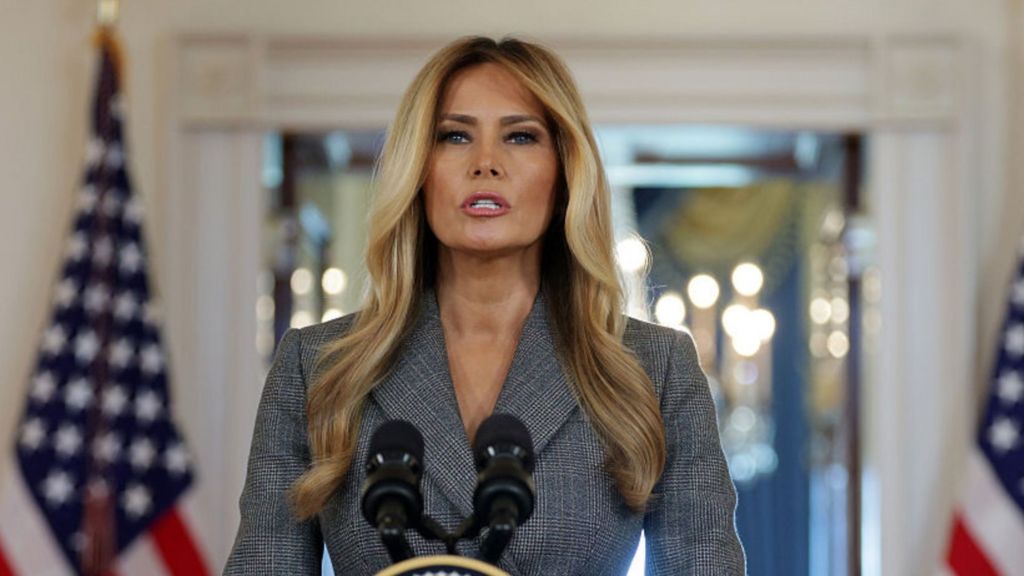
In a rare on-the-record statement to reporters on the White House grounds, former First Lady Melania Trump has issued a full and firm denial of any personal or professional connection to disgraced financier and convicted sex offender Jeffrey Epstein. Speaking directly to assembled media, Melania Trump pushed back firmly against lingering unsubstantiated claims that have circulated in public discourse linking her name to the late convicted felon, stating clearly that any such assertions are entirely false. The former first lady stressed that all rumors and unproven allegations connecting her to Epstein must cease immediately, ending any ambiguity around her position on the persistent speculation. This public denial comes as the latest chapter in ongoing public discussion surrounding Epstein’s extensive circle of connections, which has drawn continued scrutiny from media and investigators in years following his arrest and death in federal custody. As a high-profile public figure, Melania Trump’s choice to address the claims directly marks a break from her typical more reserved approach to responding to unsubstantiated tabloid rumors, highlighting the severity with which she views the allegations.
标签: North America
北美洲
-

Watch: How the US Navy will help recover the Artemis II crew
As NASA’s Artemis program inches closer to its first crewed lunar mission in over half a century, the United States Navy has stepped into a critical role, finalizing preparations to retrieve the Orion spacecraft and its four-person crew after their splashdown in the Pacific Ocean. The mission, which will mark humanity’s first return to crewed deep space exploration since the Apollo program concluded in 1972, is scheduled to conclude with a controlled splashdown off the coast of San Diego on April 10.
-

Canada’s Carney welcomes another defector to Liberals as he nears majority
In a seismic shift that has reshaped Canada’s federal political landscape this week, a veteran Conservative Member of Parliament from Ontario has crossed the floor to join Prime Minister Mark Carney’s Liberal Party, bringing the ruling party just one seat away from securing a long-sought working majority in the House of Commons.
Marilyn Gladu, who represents the border riding of Sarnia-Lambton-Bkejwanong, made her party switch official this week, framing the decision as a response to her constituents’ demands for competent, forward-thinking governance focused on growing a more robust and economically independent Canada. Gladu’s defection marks the fifth time a sitting MP has abandoned their original party to join the Liberal caucus in just a matter of months, a string of moves that has rapidly eroded opposition numbers and left the Liberals on the cusp of a majority.
After Gladu’s switch, the Liberals currently hold 171 seats in the 338-seat House of Commons. Only one more seat is needed to hit the 172-seat threshold required to form a full majority government, a goal that is now within touching distance for Carney’s administration. The string of defections began earlier this year with three Conservative MPs – Matt Jeneroux of Alberta, Chris d’Entremont of Nova Scotia, and Michael Ma of Ontario – leaving the official opposition to join the Liberals. Most recently, last month saw Lori Idlout, the MP for Nunavut, depart the New Democratic Party to caucus with Carney’s government.
Carney embraced Gladu’s arrival in a public social media statement, framing the string of defections as a sign of growing confidence in his government’s agenda amid ongoing global economic volatility. “At a moment when the global economy faces unprecedented uncertainty, Canada’s success depends on turning our ambition into tangible progress and our existing strengths into long-term, sustained competitive advantage,” Carney wrote. “Marilyn Gladu brings exactly the kind of practical, results-focused leadership that this work demands, and I am thrilled to welcome her to our team.”
Not surprisingly, the move drew fierce pushback from Conservative Party leader Pierre Poilievre, who slammed the defection as part of what he called a underhanded power grab by Carney. Poilievre accused the prime minister of trying to accumulate a majority “through dirty backroom deals” rather than through a general election, and called on Gladu to trigger a by-election in her riding to let her constituents weigh in on her party switch. “The people of Sarnia-Lambton-Bkejwanong voted for a Conservative vision of a Canada that is affordable, safe, and strong at home – not for the costly, big-spending Liberal government that Gladu has now chosen to join,” Poilievre wrote in his own social media statement.
Gladu pushed back against that criticism in her public announcement, which included a video appearance alongside Carney, noting that her riding sits directly along the Canada-U.S. border, making economic resilience and national independence top priorities for her constituents. “My choice to join the Liberal caucus is the best decision for the priorities of our community, and most importantly, for the future of our entire country,” Gladu said. “We need a proven global leader with a clear plan to build a more resilient, more self-reliant Canada, and that is exactly what Mark Carney delivers.”
-

Canada’s Mark Carney ‘so proud’ of astronauts in call to Artemis II
In a moment of national pride for Canada, former Bank of England Governor and prominent Canadian figure Mark Carney has shared his overwhelming enthusiasm for the country’s contribution to NASA’s groundbreaking Artemis II mission, following a formal call with astronaut Jeremy Hansen, who made history as the first Canadian selected for a deep space voyage.
Hansen, a highly trained Canadian Space Agency astronaut, secured his place on the four-person Artemis II crew — the first crewed mission to orbit the Moon since NASA’s Apollo program concluded in the 1970s. In recognition of this milestone, Canada’s prime minister held a personal conversation with Hansen to congratulate him on his historic selection, cementing Canada’s role as a key international partner in the next era of lunar exploration.
Carney, speaking publicly after the announcement, emphasized his deep pride in Hansen and the entire Canadian astronaut corps, noting that the mission represents more than just a personal achievement for Hansen. It stands as a testament to decades of Canadian investment in space research, technological innovation, and international scientific collaboration. As part of the Artemis Accords, Canada has partnered with NASA and other space agencies to advance lunar exploration, with plans to establish a long-term lunar outpost and eventually send crewed missions to Mars. Hansen’s participation in Artemis II marks a major milestone in Canada’s growing presence in human spaceflight, opening new doors for future Canadian scientists and engineers to contribute to deep space exploration.
The Artemis II mission, scheduled to launch no earlier than September 2025, will test all of the Orion spacecraft’s critical systems with a crew on board, paving the way for subsequent landings of the first woman and first person of color on the lunar surface. For Canada, a country with a long history of contributing to space exploration — including the iconic Canadarm robotic arm system that has supported decades of space shuttle and International Space Station missions — Hansen’s flight represents a new chapter of leadership in global space exploration.
-
US plans to automatically register men for military draft eligibility
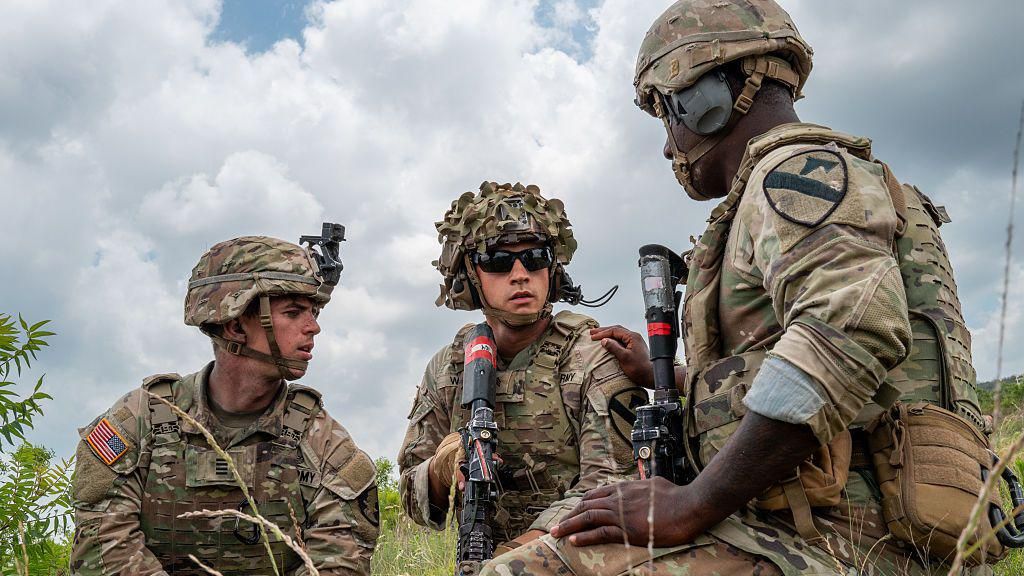
For more than 50 years, the United States military has operated as an all-volunteer force, a structural shift that came after widespread public backlash against the forced conscription that pulled 1.8 million Americans into service during the Vietnam War. Now, a decades-old manual self-registration system for potential military conscription is on track to be replaced by an automatic enrollment process, a change that could take effect as soon as this December. If implemented, the policy shift would transfer the responsibility of signing up 18- to 25-year-old men from the individuals themselves to the Selective Service System (SSS), the independent government agency that oversees potential draft eligibility.
-

Hawaii doctor found guilty of trying to kill wife on hike
On Wednesday, a Hawaii jury delivered a guilty verdict for a Maui physician in a high-profile domestic violence case that unfolded on a popular hiking trail one year prior. Following more than eight hours of closed-door deliberation, the 12-member panel found 47-year-old anesthesiologist Gerhardt Konig guilty of attempted manslaughter, rejecting the more severe charge of attempted murder that prosecutors had pushed for throughout the trial.
The violent incident dates back to March 2025, when Konig and his wife Arielle traveled from Maui to Oahu to celebrate Arielle’s birthday. The couple had been navigating ongoing marital strain after Konig discovered flirtatious text messages exchanged between Arielle and a male coworker, a detail that became central to the case’s narrative.
According to Arielle Konig’s testimony, the confrontation escalated suddenly on the Pali Puka Trail, a rugged hiking route known for its steep cliffside overlooks. She told the court her husband first shoved her toward the edge of a cliff, then attempted to stab her with a syringe, before bludgeoning her in the head with a large rock. Arielle testified she believed Konig intended to knock her unconscious to complete the fatal push over the cliff, leaving her body to be discovered days later as an accidental hiking death. She ultimately suffered what medical records describe as “severe complex scalp lacerations” from the attack.
Two passing hikers who stumbled on the mid-confrontation corroborated key parts of Arielle’s account during the trial, telling jurors they clearly saw Konig striking Arielle with the rock while her face was covered in blood. Prosecutors also introduced damning testimony from Konig’s 20-year-old son, who told the court his father admitted to him during a post-incident FaceTime call that “my stepmom had been cheating on him, and that he tried to kill her,” according to CBS News, the U.S. partner to the BBC.
When law enforcement officers arrived at the scene, Konig fled into the surrounding rugged terrain, triggering a multi-hour manhunt before he was taken into police custody.
Throughout the trial, Konig maintained his innocence, arguing that Arielle had attacked him first and that all his actions were in self-defense. But the jury ultimately sided with the prosecution’s narrative, opting for the lesser conviction of attempted manslaughter rather than attempted murder.
Speaking to NBC News after the verdict was issued, the jury foreperson explained the panel’s decision: jurors agreed Konig had acted out of extreme mental and emotional disturbance sparked by the revelation of his wife’s affair, and “we didn’t feel the evidence would uphold the fact that he intended on murdering her.”
As the court clerk read the guilty verdict, reporters observed Konig closing his eyes, bowing his head, and eventually covering his face with his hand. Konig now faces a maximum sentence of 20 years in state prison, with his formal sentencing scheduled for August 13. His defense team has already confirmed they plan to appeal the jury’s verdict to a higher court. -

Amazon to end support for older Kindles, prompting user outcry
Starting May 20, 2026, Amazon will permanently cease software and connectivity support for all Kindle and Kindle Fire devices released in 2012 or earlier, a policy change that has left thousands of long-time device owners angry and concerned over planned obsolescence and unnecessary electronic waste.
In direct email notifications sent to affected customers recently, the e-commerce and tech giant thanked users for their loyalty over decades, but confirmed that older models would no longer receive any future updates, nor would they retain access to the Kindle Store. This means owners of affected devices — which include iconic early models such as the 2007 first-generation Kindle, 2011’s Kindle Touch, and the first line of Kindle Fire tablets, as well as the 2012 first-generation Kindle Paperwhite — will no longer be able to purchase, borrow, or download new e-books to their devices.
Already downloaded e-books will remain accessible for offline reading on the outdated hardware, and users will still be able to access their full Kindle Library via Amazon’s mobile and desktop reading apps. Amazon has also issued a critical warning: completing a factory reset on any affected device will render it completely unusable, as the device will be unable to reconnected to Amazon servers to restore content or core functionality.
To ease the transition, Amazon says it has offered exclusive discounts on newer Kindle models to active users of the affected devices. Still, the announcement has drawn sharp criticism from long-time customers who argue their older devices still work perfectly well for their core purpose of displaying e-books. Many took to social media platform X to voice their frustration, with one user noting their 2013 Kindle Touch functioned flawlessly and had only recently been used to purchase a new book before the announcement. Others pointed out that basic e-readers require minimal updates, questioning why Amazon needed to cut off support entirely for devices that serve their core function with no performance issues. Kay Aaronricks, a 46-year-old Kindle owner from the UK, told reporters she felt unexpected grief at the thought of losing full use of her 14-year-old device, which has become a staple of her work and travel routine.
“I love paper books like anyone does, but the Kindle is more practical,” Aaronricks said, adding she is also concerned about the embedded advertising that comes standard on many of Amazon’s lower-priced newer Kindles. For her, the ad-free reading experience of her older device is a key part of the enjoyment, allowing her to disconnect from marketing and digital distractions that dominate daily life.
Industry analysts have offered mixed perspectives on Amazon’s decision. Paolo Pescatore, a veteran tech industry analyst, noted that the move is understandable from security and operational support standpoints. These devices were designed more than 14 years ago, he explained, for a different era of digital services, and their aging hardware cannot support modern, more resource-intensive connectivity and security features. Maintaining ongoing support for such a small, declining user base would require disproportionate time and resources that Amazon cannot justify long-term. Still, Pescatore acknowledged that cutting off access to the Kindle Store will turn fully functional devices into limited offline-only tools, a disappointing outcome for attached users.
Critics of the policy frame it as a clear example of planned obsolescence that will generate unnecessary electronic waste. Ugo Vallauri, co-director of the Restart Project, a non-profit that advocates for electronic device repair and extended product lifecycles, said manufacturers have a long history of framing the phase-out of older devices as a push toward better performance, but that argument does not hold water for devices that still work as intended.
“However, that’s hardly a good reason for soft-bricking millions of still functioning devices,” Vallauri said. While Amazon notes that the change only impacts around 3% of its active Kindle user base, independent estimates suggest that this could add up to 2 million devices being rendered prematurely obsolete. Vallauri calculated that this would generate more than 624 tons of additional e-waste, as many users will discard their still-functional devices rather than keep them as limited offline readers.
A full list of affected devices includes: 1st Generation Kindle (2007), Kindle DX and DX Graphite (2009, 2010), Kindle Keyboard (2010), Kindle 4 (2011), Kindle Touch (2011), Kindle 5 (2012), 1st Generation Kindle Paperwhite (2012), 1st Generation Kindle Fire (2011), 2nd Generation Kindle Fire (2012), Kindle Fire HD 7 (2012), and Kindle Fire HD 8.9 (2012).
-
Has US achieved its war objectives in Iran?
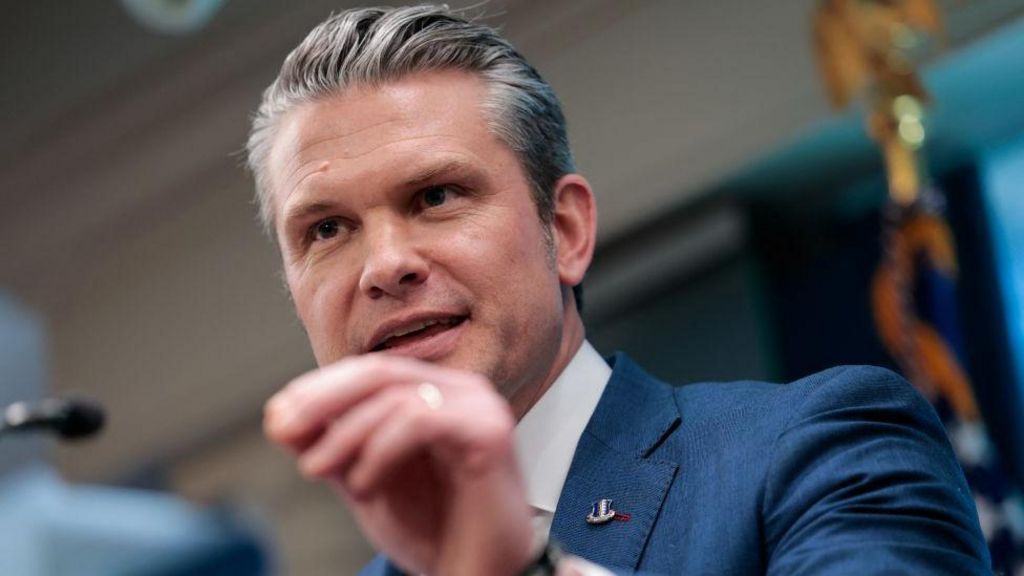
In the weeks following joint US-Israeli military strikes on Iran, a fierce battle over how the war’s trajectory is framed has unfolded inside the very heart of US military command: the Pentagon. As a reporter embedded in Defense Secretary Pete Hegseth’s press briefings since the conflict’s first days, one pattern has been impossible to miss: the former Army National Guard Major and ex-Fox News pundit has brought a distinctly televised, theatrical style to the podium, from his initial laying out of US war aims through the most recent briefing announcing a fragile two-week ceasefire.
Hegseth’s briefings have been unapologetically boastful affairs, centered on celebrating overt displays of American military dominance. Just this Wednesday, he declared the US had secured a “capital V military victory”, and in an earlier briefing, he characterized the campaign as delivering unrelenting “death and destruction from the sky all day long”. But peeling back this public messaging to uncover the real progress of the war, its human and financial toll, and its long-term strategic consequences demands far deeper scrutiny. With the already fragile ceasefire facing repeated tests, critical questions remain: what tangible gains has the US actually secured, and what costs have already been incurred to reach this point?
US President Donald Trump’s core stated war objective has long been stripping Iran of any capacity to develop a nuclear weapon – a goal Iran has repeatedly denied ever pursuing. For years prior to the current conflict, this objective was pursued through US-led diplomatic negotiations, but Trump ultimately rejected the 2015 Joint Comprehensive Plan of Action (JCPOA), the Obama-brokered nuclear deal with Iran, arguing it was too lenient on Tehran.
In his first term, Trump withdrew the US from the agreement and reimposed crippling sanctions on Iran, which had been in full compliance with the deal’s terms at the time. That move marked a clear choice to abandon diplomacy in favor of coercive force, a pattern that continued with the US assassination of top Islamic Revolutionary Guard Corps General Qasem Soleimani. For years, this pattern of alternating between tentative diplomatic outreach and sudden military action with Tehran ultimately culminated in the outbreak of the current war.
Today, even with the tentative ceasefire holding for the moment, there is little concrete evidence that Trump has achieved meaningful progress on his core nuclear goal. Last June, Trump claimed Iran’s nuclear infrastructure had already been “obliterated” by bombing raids on key sites at Isfahan, Fordow, and Natanz. But five additional weeks of open conflict later, Iran still retains its stockpile of near-weapons-grade enriched uranium, which is reported to be stored in gas cylinders hidden under rubble at targeted sites.
Rafael Grossi, head of the International Atomic Energy Agency (IAEA), the global nuclear watchdog, warned in the third week of the war that military action would never resolve the international community’s concerns over Iran’s nuclear program. While Trump has stated the US will now work with Iran to extract and remove all hidden nuclear material, Tehran has remained defiant on the issue. The question will now take center stage at upcoming US-Iran negotiations set to be held in Islamabad, and analysts warn that the attack has left Iran’s leadership even more distrustful of the US – and potentially more determined than ever to pursue a nuclear deterrent to fend off future American attacks.
When Trump first announced the war in a pre-recorded social media video from his Mar-a-Lago estate, a second stated objective was regime change in Tehran: he called on the Iranian people to overthrow their government once US-Israeli bombing concluded. Within days, he doubled down, demanding the regime’s “unconditional surrender” – a demand that has not been met. While Israeli strikes have killed senior Iranian leaders, including Supreme Leader Ayatollah Ali Khamenei, Khamenei’s son Mojtaba has already been named as his successor, leaving the regime structure intact.
Trump has claimed the new Iranian leadership is less “radicalised and far more intelligent” than its predecessor, and has expressed hope he can replicate the outcome of his 2020s intervention in Venezuela, where US forces captured President Nicholas Maduro and installed a US-aligned government in Caracas. So far, there is no indication that any such shift in power is imminent in Tehran.
On the topic of Iran’s conventional military arsenal, senior Trump administration officials have claimed the US has “obliterated” Iran’s missiles, drone fleets, launch facilities, arms factories, and naval forces. But leaked US intelligence assessments have disputed that claim, suggesting Iran still retains roughly half of its pre-war missile and drone stockpiles. The BBC has not been able to independently verify either side’s claims.
Regardless of the status of Iran’s arsenal, it is clear the Trump administration’s stated war goals have shifted dramatically since the conflict began, and the core objective of regime change has yet to materialize. The human cost for the US has already been steep: 13 American service members have been killed in action, and hundreds more have been wounded. The war has also drained US military stockpiles at an unprecedented rate, with thousands of precision munitions including large numbers of Tomahawk cruise missiles expended, putting the daily cost of the operation at more than $1 billion.
While US officials maintain that unmatched American military skill and cutting-edge technology allowed the air campaign to finish ahead of schedule, forcing Iran into the ceasefire, the political cost at home has already started to mount. Consistent public polling shows only a minority of American voters approve of the conflict, and support in Congress has broken down almost entirely along partisan lines, with most Republicans backing Trump. But in recent days, a growing number of GOP lawmakers have publicly denounced Trump’s unfiltered social media threat to “destroy a whole civilization”, breaking with the president’s position.
The rift has extended deep into Trump’s own MAGA base: high-profile movement figures including popular podcaster and journalist Tucker Carlson have openly split with Trump over the war. Marjorie Taylor Greene, once one of Trump’s most vocal supporters and a prominent MAGA leader who has since broken with the president, issued a scathing rebuke over the weekend as Trump escalated threats to destroy additional Iranian civilian infrastructure. “This is not making America great again, this is evil,” she said. So far, there is little sign these intra-Republican fractures will heal ahead of the November midterm elections.
Democrats, meanwhile, have uniformly condemned Trump’s increasingly inflammatory threats and his repeated insults of longstanding US allies. They have also demanded answers about an alleged US missile strike on a school in the Iranian town of Minab on the first day of the war, which local reports say killed at least 168 people, 110 of them children. If confirmed, the strike would rank among the deadliest incidents of civilian casualties from a US attack in the Middle East in a generation. The Pentagon says it is investigating the incident, but nearly six weeks after the attack, no findings have been released to the public.
This week, a bipartisan group of lawmakers went so far as to call on Trump’s cabinet to invoke the 25th Amendment to remove the president from power over his handling of the conflict. The White House has pushed back against all criticism, with Press Secretary Karoline Leavitt arguing that Trump’s hardline rhetoric forced Iran to agree to the ceasefire, and that “Never underestimate President Trump’s ability to successfully advance America’s interests and broker peace.”
A definitive public verdict on the war may come from American voters in November. The closure of the Strait of Hormuz, triggered by Iran’s response to the war, has already driven up gasoline and diesel prices across the US, and analysts predict those higher energy costs will soon push up grocery prices, stoking voter anger over inflation that is already expected to make this year’s midterm elections a tough fight for Trump’s Republican Party. If voter discontent over the war and its economic fallout continues to grow, Republicans could lose control of the House of Representatives and even the Senate – a heavy political price for the conflict.
Trump has already been forced to shift priorities to address the growing economic crisis: when the war began, the Strait of Hormuz was fully open, but now his top war goal has become reopening the key global oil chokepoint after Iran seized control of it. Trump has flip-flopped repeatedly on his strategy for reopening the strait: he first called on US allies to contribute to military action to reopen it, then claimed the US did not need any allied support, then reversed course again to ask for help, before dismissing longstanding allies as “cowards” for declining to join the campaign.
The conflict has also exacerbated already deep rifts within the NATO alliance, which had already been strained by Trump’s prior territorial claims on Greenland. Trump has stepped up his public attacks on the alliance, which declined to formally join the war effort. After a recent White House meeting with Trump, NATO Secretary General Mark Rutte acknowledged only that the conversation had been “very frank”, a sign of continuing tension. European allies have already started taking steps to reduce their strategic and economic dependence on what they now view as an unpredictable and unreliable US security guarantor, a shift that analysts say creates major strategic and economic opportunities for China – a development that has sparked deep alarm among Trump’s critics in Washington.
Today, the full human, political, economic, and strategic costs of the five-week war remain uncounted. If the current fragile ceasefire collapses or upcoming negotiations fail to produce a durable settlement, those costs could grow far steeper in the months ahead.
-

Confusion over ceasefire leads to dueling claims
Less than 24 hours after a two-week ceasefire between the United States and Iran was first announced, deep divisions and conflicting claims have thrown the truce into chaos, with disputes over its geographic scope, shipping access through the Strait of Hormuz and core terms on Iran’s nuclear program blocking progress on planned peace talks. The breakdown began Wednesday when Israel launched large-scale strikes against Hezbollah positions in Lebanon, which Lebanon’s civil defense service confirmed killed at least 254 people and left hundreds more wounded. In the wake of the attacks, Iran immediately accused the U.S. of breaking the terms of the ceasefire, insisting the truce explicitly included Lebanon and all allied factions operating in the country. This claim has been met with starkly opposing stances from Washington and Jerusalem, both of which argue that Lebanon was never part of the negotiated truce, while Pakistan — the third-party mediator that brokered the ceasefire — has confirmed Iran’s position that the agreement does extend to Lebanese territory. Mohammad Bagher Ghalibaf, speaker of Iran’s parliament, reaffirmed Tehran’s stance in an official statement, saying that any valid ceasefire must include Hezbollah in Lebanon regardless of U.S. and Israeli objections. The planned next step for the ceasefire — a new round of negotiations led by U.S. Vice President JD Vance in Islamabad, Pakistan’s capital — now hangs in the balance. Following the Israeli strikes, Iranian officials have repeatedly characterized moving forward with bilateral talks as unreasonable under current circumstances. Ghalibaf emphasized that launching negotiations or upholding a bilateral ceasefire is impossible in the context of ongoing attacks. The two sides also remain irreconcilably divided on another core sticking point: Iran’s nuclear program, the issue U.S. President Donald Trump has repeatedly cited as a primary justification for launching the war. Trump wrote on social media that the U.S. would work with Iran to locate and eliminate all undeclared nuclear material, which he referred to as nuclear “dust.” Ghalibaf pushed back against this framing, noting that the ceasefire explicitly permits Iran to continue its domestic uranium enrichment activities. Disputes have also erupted over access to the Strait of Hormuz, one of the world’s most critical energy chokepoints. Iranian state media outlet Fars News reported that all tanker traffic through the strait was suspended Wednesday afternoon in direct response to Israel’s strikes in Lebanon. White House press secretary Karoline Leavitt rejected this claim during Wednesday’s press briefing, asserting that traffic through the waterway had actually increased, and that she had received private confirmation that the strait was open and operating as required by the Trump administration. On-the-ground reporting from the BBC tells a different story: by 2 p.m. local time Wednesday, only three bulk carriers — the NJ Earth, Daytona Beach, and Hai Long 1 — had successfully transited the strait, leaving nearly 800 commercial ships stranded on either side. Multiple shipping sources also confirmed that Iran has been broadcasting English-language warnings to all tankers in the Persian Gulf, stating that any vessel that attempts to pass through the strait without prior authorization from Iranian authorities will be targeted and destroyed by military force. Hamid Hosseini, spokesperson for Iran’s Oil, Gas and Petrochemical Products Exporters’ Union — an organization that works closely with the Iranian government — told the Financial Times that Iran’s new requirement is designed to let Tehran inspect passing vessels and collect transit tolls. Hosseini explained that Iran needs to monitor all traffic moving through the strait to prevent weapons from being transferred to opposing forces during the 14-day truce. He added that while commercial traffic is technically allowed, the new inspection process will slow transit significantly, and Tehran has no urgency to speed up procedures. Despite the widespread chaos and conflicting claims that have emerged just hours after the ceasefire was announced, U.S. stock markets reacted with clear optimism to the announcement of a truce. All three major U.S. indexes — the Dow Jones Industrial Average, S&P 500, and Nasdaq — posted solid gains between 2.5% and 2.8% following news of the ceasefire. Analysts attribute the rally to investor hopes that a sustained truce would reduce global energy market volatility and lower the risk of a broader regional conflict that could disrupt global economic growth.
-

US-China collaboration seen as path to meet AI’s power demands
The global artificial intelligence boom is reshaping energy needs across every continent, and it has carved out an unexpected new space for cooperation between the world’s two largest economies: the United States and China. Industry leaders and clean energy experts argue that a partnership between the two nations on clean energy development and grid management could not only ease the growing energy crunch holding back AI expansion but also deliver widespread benefits for both countries and the entire global economy.
As AI adoption accelerates, data center footprints are expanding rapidly and computing power requirements are skyrocketing, pushing energy infrastructure to its breaking point. This crisis has emerged as one of the most urgent bottlenecks for sustained AI development worldwide. Against this backdrop, industry observers note that the complementary strengths of the US and China make cross-border collaboration not just a feasible path forward, but a logically necessary one to address the shared challenge.
Ramkumar Krishnan, a cleantech entrepreneur and technologist with over two decades of experience in clean energy and advanced technology, shared his perspective with China Daily during an interview in San Francisco. “Technologies and products that are used, whether it’s in the US or in China or in other parts of Asia, they’re all very similar,” Krishnan explained. “There are lots of ways that I think technology is a connecting piece that brings all the nations together, because we all need technologies to solve the problem.”
China has secured its position as a global leader in large-scale clean energy production. Official data from China’s National Energy Administration shows the country’s annual clean power output has already surpassed 10 trillion kilowatt-hours — more than double the comparable figure for the United States, and exceeding the combined total power consumption of the European Union, Russia, India and Japan. This massive scale has allowed China to build unmatched operational experience and deploy extensive infrastructure that other nations can draw from, especially when it comes to developing intelligent grid management systems capable of handling the high, consistent energy demands of AI data centers, Krishnan said.
Krishnan pointed out that renewable energy technologies hold a major advantage over traditional large-scale power projects in their speed of deployment. A utility-scale solar farm, for example, can be completed and connected to the grid in 18 months or less, while conventional nuclear or hydropower projects often require 10 to 15 years to reach operation. “Bringing the right portfolio of solutions that can help to accelerate the adoption of energy, and bringing new energy, that could be another area that we can solve the demand that we have from AI,” he added.
For the United States, the key challenge lies in unlocking greater efficiency from existing energy infrastructure, Krishnan noted. The country holds a large amount of untapped excess grid capacity, but much of this capacity remains underutilized due to inconsistent availability and geographically fragmented distribution. “How do we actually intelligently manage that? That’s an area of pretty strong interest — how do we model how energy is used, so that we can utilize that excess capacity in lots of different places, whether it’s industries, EV charging stations,” he said. Notably, Krishnan suggested that AI itself could be part of the solution to the energy crisis it has created: advanced AI systems can enable far more dynamic, intelligent energy management that matches variable renewable energy supply with constantly shifting demand across grids.
One major Chinese clean energy enterprise is already moving to turn this collaborative vision into concrete action. GCL Group, a leading Chinese clean energy service provider that has already developed utility-scale power projects across California, Colorado and New York, is actively pursuing partnerships with United States AI companies to deliver integrated energy solutions for global AI infrastructure expansion.
During a recent visit to Silicon Valley, GCL Group chairman Zhu Gongshan outlined the scope of the growing energy challenge. “Computing demands of generative AI are driving explosive growth in the global AI data center market, while putting mounting pressure on power supplies worldwide,” Zhu said. “As demand for computing capacity surges, energy is emerging as one of the biggest bottlenecks to AI development.”
Zhu highlighted Southeast Asia as a particularly high-potential emerging market for this cross-border collaboration model. The region is seeing a rapid surge in demand for AI computing capacity, and it could be best served by integrated platforms that combine US AI technological expertise with China’s scalable clean energy solutions, he added.