标签: North America

北美洲

  • Pardoned January 6 rioter pleads guilty to threatening US Democratic leader Jeffries

    Pardoned January 6 rioter pleads guilty to threatening US Democratic leader Jeffries

    In a significant legal development, Christopher Moynihan, a 35-year-old participant in the January 6th Capitol insurrection previously pardoned by former President Donald Trump, has entered a guilty plea for criminal harassment charges. The charges stem from explicit death threats made against House Minority Leader Hakeem Jeffries of New York.

    The admission occurred during a court hearing in Clinton, New York, where Moynihan acknowledged transmitting threatening text messages targeting the Democratic leader. According to court documents, Moynihan’s messages contained alarming statements including: “I cannot allow this terrorist to live. … I will kill him for the future,” in reference to an upcoming public appearance by Jeffries in New York City.

    Prosecutors emphasized the severity of these threats, noting they placed the recipient in “reasonable fear of the imminent murder and assassination of Hakeem Jeffries.” Dutchess County District Attorney Anthony Parisi condemned the actions, stating: “Threats against elected officials are not political speech, they are criminal acts that strike at the heart of public safety and our democratic system.”

    Moynihan’s criminal history includes a previous 21-month prison sentence handed down in February 2023 for felony obstruction of an official proceeding related to the Capitol attack. He was among approximately 1,590 individuals charged in connection with the January 6th insurrection attempt to disrupt the certification of President Joe Biden’s 2020 electoral victory.

    The case highlights ongoing concerns about recidivism among pardoned January 6 participants, with watchdog organizations reporting multiple instances of re-arrests and new criminal charges against previously pardoned individuals. Sentencing for Moynihan’s harassment conviction is scheduled for April, marking another chapter in the legal aftermath of the Capitol attack.

  • Trump to release $16-billion NY tunnel funding if major US hubs renamed after him

    Trump to release $16-billion NY tunnel funding if major US hubs renamed after him

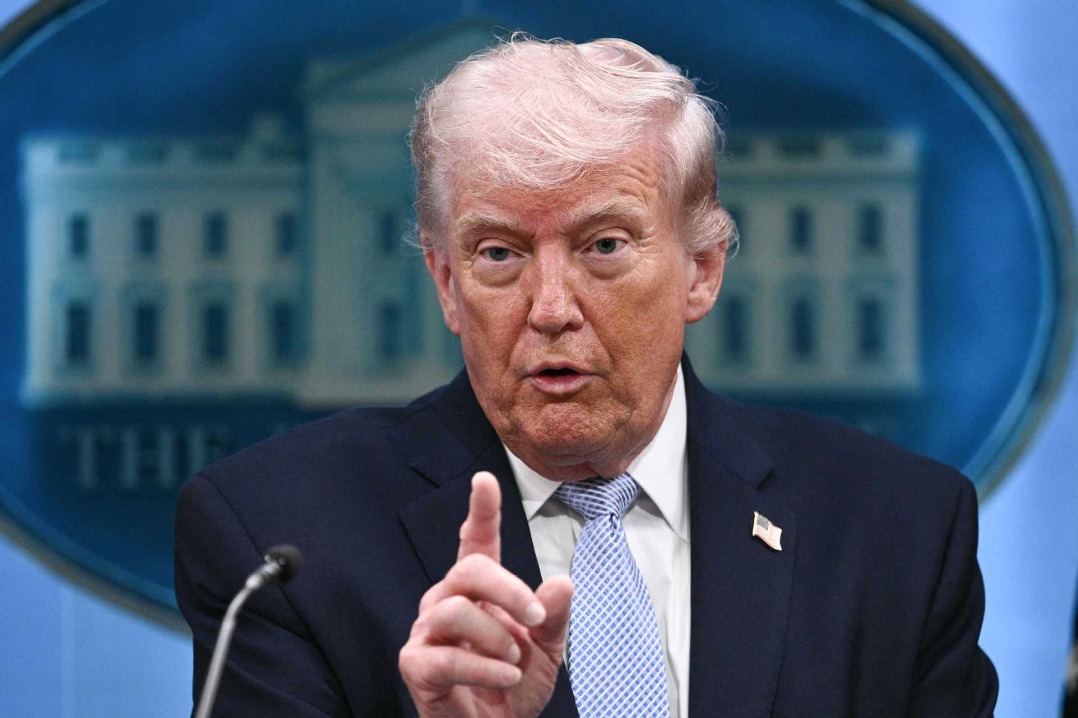
    In a controversial political maneuver, President Donald Trump has reportedly conditioned the release of $16 billion in federal funding for the critical Hudson River tunnel project on Democratic support for renaming two major American transportation hubs in his honor. According to multiple sources, the White House proposed last month that Senator Chuck Schumer endorse renaming Washington Dulles International Airport and New York’s Penn Station after the president in exchange for lifting the funding freeze imposed last October.\n\nThe proposal, first reported by Punchbowl News, was immediately rejected by Senator Schumer who asserted he lacked authority to authorize such renaming decisions. The political standoff comes as a federal judge prepares to hear an emergency request from New York and New Jersey officials to restore funding for the Gateway Program, which faces imminent construction shutdown that would displace approximately 1,000 workers.\n\nNew York Senator Kirsten Gillibrand characterized Trump’s proposal as \”ridiculous,\\” stating that \”these naming rights aren’t tradable as part of any negotiations, and neither is the dignity of New Yorkers.\” She accused the president of prioritizing \”his own narcissism over the good-paying union jobs\” the project would create.\n\nThe Gateway Program, which received substantial federal support during the Biden administration, represents one of the nation’s most crucial infrastructure initiatives. The project involves critical repairs to existing Amtrak tunnels beneath the Hudson River and construction of new passageways that serve as vital connectors between New Jersey and Manhattan.\n\nThis incident reflects Trump’s demonstrated preference for attaching his name to prominent institutions. Since returning to office in January, the Trump administration has affixed the president’s name to numerous federal buildings, a new class of Navy warships, a visa program for wealthy foreigners, and even the United States Institute of Peace building. In December, the Kennedy Center for the Performing Arts added Trump’s name to the institution following a board takeover.\n\nNew York Governor Kathy Hochul responded to the proposal with sarcasm, offering a \”counteroffer\” that suggested renaming Trump Tower as \”Hochul Tower.\” Meanwhile, legislative efforts by Congressional Republicans to formally rename Dulles Airport after Trump continue, though aviation officials express concerns about the potential disruption such a change would cause to the major United Airlines hub.

  • US and Iran hold talks as fears of direct conflict continue

    US and Iran hold talks as fears of direct conflict continue

    High-level diplomatic efforts are underway in Muscat as American and Iranian officials engage in critical negotiations aimed at de-escalating mounting tensions that threaten to erupt into armed conflict. The talks, mediated by Omani officials, represent a crucial diplomatic channel between the two nations who have not maintained formal relations since 1980.

    The American delegation, led by Special Envoy Steve Witkoff and presidential emissary Jared Kushner, faces Iranian Foreign Minister Abbas Araghchi across the negotiating table. These discussions occur against a backdrop of significant US military mobilization in the Persian Gulf, including the deployment of an aircraft carrier battle group and thousands of additional troops—a show of force that President Trump has explicitly tied to demands for Iranian concessions.

    Substantial disagreements persist regarding the scope of negotiations. Washington insists any comprehensive agreement must address four key areas: Iran’s nuclear program, its ballistic missile development, support for regional proxy forces, and human rights practices. Tehran maintains that discussions should be strictly limited to nuclear matters, particularly following the collapse of the 2025 nuclear talks after Israel’s surprise military action against Iranian facilities.

    The current crisis has been exacerbated by Iran’s violent suppression of nationwide protests last month, which human rights organizations report resulted in nearly 7,000 fatalities and over 50,000 arrests. This domestic unrest, fueled by economic hardship exacerbated by international sanctions, has created additional pressure on Iran’s leadership while simultaneously making concessions politically dangerous.

    Both nations face compelling reasons to seek diplomatic resolution. For Iran, the talks potentially offer relief from crippling economic sanctions that have devastated its economy. For the United States, successful negotiations could provide an alternative to military action that regional analysts warn could destabilize the entire Middle East without achieving strategic objectives.

    Omani Foreign Ministry officials characterized the discussions as focusing on ‘creating appropriate conditions for resuming diplomatic and technical negotiations,’ suggesting these preliminary talks aim to establish framework rather than achieve immediate breakthroughs. The location shift from originally planned Istanbul talks to Oman—which hosted previous negotiations—reflects Iranian preferences for a more neutral venue.

    President Trump’s blunt warning that Iran’s Supreme Leader ‘should be very worried’ underscores the gravity of the situation, while Secretary of State Marco Rubio’s statement that ‘we don’t see there’s any harm in trying’ indicates cautious diplomatic exploration rather than guaranteed success.

  • Trump unveils TrumpRx discounted drugs website, aims to lower prices

    Trump unveils TrumpRx discounted drugs website, aims to lower prices

    In a significant healthcare policy move, the Trump administration has officially launched TrumpRx.gov, a digital platform designed to provide Americans with access to discounted prescription medications. The initiative represents a cornerstone of the administration’s broader strategy to reduce pharmaceutical costs across the United States.

    President Donald Trump announced the platform’s operational status during a White House ceremony, accompanied by Dr. Mehmet Oz, Administrator of the Centers for Medicare & Medicaid Services, and Joe Gebbia, National Design Studio Director and Airbnb co-founder. The President emphasized the dual benefits of the program, stating, “People are going to save a lot of money and be healthy.”

    The platform emerges from agreements with sixteen major global pharmaceutical manufacturers, including industry leaders such as Pfizer, AstraZeneca, Merck, and GSK. These “most-favored nation” arrangements provide participating companies exemptions from U.S. tariffs in exchange for committing to price reductions for both government Medicaid programs and cash-paying consumers through the TrumpRx platform.

    Notably, the agreements include substantial price reductions for popular GLP-1 weight-loss medications from Eli Lilly and Novo Nordisk. Government projections indicate these reductions could lower monthly costs to between $149 and $350 on average for American consumers.

    Technical implementation of the platform is facilitated through partnership with prescription drug savings company GoodRx. Rather than directly selling medications, TrumpRx.gov will redirect consumers to external platforms where they can purchase medicines at negotiated discounted rates.

    However, healthcare policy experts have raised questions about the program’s broader impact. Juliette Cubanski, deputy director for Medicare policy at health policy organization KFF, noted that since the platform targets consumers purchasing medications without insurance, most transactions won’t contribute toward insurance deductibles. “There is a real question about the value of this for people with insurance,” Cubanski stated, adding that “in some cases, we could be looking at out-of-pocket costs that are still relatively unaffordable for a lot of people.”

    Despite these concerns, pharmaceutical companies recognize potential benefits. Chris Pernie, Novo Nordisk’s associate vice president for U.S. public affairs, commented that “the launch of TrumpRx will further extend patients’ reach to Ozempic and Wegovy” at self-pay prices.

    The initiative addresses the significant price disparity that sees Americans paying nearly triple the prescription drug costs compared to other developed nations. While the platform may provide savings for some uninsured consumers, experts caution that it does not represent a comprehensive solution to systemic drug pricing issues in the American healthcare system.

  • Explained: The reason behind gold’s sharp decline

    Explained: The reason behind gold’s sharp decline

    Gold markets experienced significant turbulence in late January as prices abruptly reversed their multi-month ascent, triggering a dramatic sell-off that caught investors off guard. The precious metal plummeted over 10% during a single trading session on Friday, marking its most substantial intraday decline since the early 1980s according to Bloomberg data.

    This sudden reversal occurred just as gold approached the $5,600 threshold, consistently surpassing even the most optimistic forecasts. Technical strategist Katie Stockton of Fairlead Strategies characterized the movement as “a dramatic reversal” that signaled a short-term sell signal rather than a fundamental market breakdown. Despite the sharp decline, gold managed to recover substantial ground within days, demonstrating underlying market resilience.

    The 2025 performance remains noteworthy with gold achieving a remarkable 65% annual gain—its strongest showing in nearly fifty years. This performance underscores gold’s enduring appeal as a wealth preservation asset during periods of global uncertainty. Jim Steel, HSBC’s chief precious metals analyst, notes that geopolitical tensions since Russia’s 2022 Ukraine invasion have fundamentally altered gold’s trading patterns, with the metal retaining gains from geopolitical events rather than surrendering them as in previous cycles.

    Multiple factors have propelled gold’s ascent: heightened geopolitical risks, policy uncertainties, trade war concerns, a weakening US dollar, substantial fiscal deficits, and questions regarding Federal Reserve independence. Central bank acquisitions have provided additional support, with institutions purchasing over 863 tonnes last year alone.

    The recent sell-off coincided with President Trump’s nomination of former Fed Governor Kevin Warsh to replace Jerome Powell. Warsh’s perceived hawkish stance on inflation alleviated concerns about Fed independence, triggering profit-taking among speculators. Additionally, the CME’s decision to raise margin requirements forced some investors to liquidate positions.

    Technical analysts identify potential support levels around the 50-day moving average near $4,455, with further cushions at $3,924 and $3,775. Suki Cooper of Standard Chartered views the correction as potentially beneficial for gold’s long-term trajectory, noting that the velocity of the rally warranted a cooling period.

    While jewelry demand may decline due to high prices, institutional and high-net-worth investment continues through large bars and ETFs. Chinese buying around the Lunar New Year will provide crucial insight into physical demand strength. Despite current volatility, structural factors supporting gold remain intact, suggesting this correction represents a pause rather than conclusion to its long-term bullish trend.

  • US military says it killed two people in strike on suspected drug vessel in Eastern Pacific

    US military says it killed two people in strike on suspected drug vessel in Eastern Pacific

    In a targeted operation on Thursday, United States military forces conducted a lethal strike against a vessel suspected of large-scale narcotics trafficking in the Eastern Pacific Ocean. The engagement resulted in the deaths of two individuals aboard the craft.

    The action was precipitated by actionable intelligence that identified the vessel’s movements along corridors infamous for illegal drug transportation. A formal statement released by the U.S. military via the social media platform X (formerly Twitter) detailed the justification, noting, ‘Intelligence confirmed the vessel was transiting along known narco-trafficking routes in the Eastern Pacific and was engaged in narco-trafficking operations.’

    The statement further confirmed that all U.S. personnel involved returned from the mission unscathed. This incident underscores the ongoing and intensified efforts by U.S. authorities to disrupt and dismantle transnational criminal organizations responsible for the flow of illicit substances. The Eastern Pacific corridor is a critical and heavily monitored zone for such counter-narcotics operations, which often involve sophisticated surveillance and interdiction tactics. The event follows a pattern of similar engagements in the region aimed at curbing the extensive drug trade that impacts global security and public health.

  • Uruguayan president hails ties with China

    Uruguayan president hails ties with China

    Uruguayan President Yamandu Orsi, during an official visit to Beijing on Wednesday, characterized the Uruguay-China relationship as an exemplary model of international cooperation that transcends significant disparities in geographic size, population, and economic scale. In a significant address, President Orsi emphasized the robust and mutually beneficial partnership between the two nations, highlighting their shared commitment to enhancing the provision of global public goods.

    The President’s remarks underscored a strategic diplomatic alignment, focusing on collaborative efforts that contribute positively to international stability and development. This high-level engagement signals a continued strengthening of bilateral relations, with both countries demonstrating a capacity to forge a consequential partnership despite their inherent differences. The dialogue in Beijing centered on frameworks for future cooperation, positioning the Uruguay-China dynamic as a noteworthy case study in effective South-South cooperation and a testament to the evolving landscape of global diplomacy where shared objectives can bridge traditional divides.

  • Treatment at crossroads of science and art

    Treatment at crossroads of science and art

    NEW YORK – The escalating prevalence of autism spectrum disorder (ASD) has reached critical levels, with US Health Secretary Robert F. Kennedy Jr. characterizing the situation as “running rampant.” Johns Hopkins University data reveals a staggering 300% surge in autism diagnoses over the past twenty years, while current CDC statistics indicate approximately 1 in 31 American 8-year-olds has received an ASD diagnosis.

    At the forefront of addressing this public health challenge is Dr. Li Xiaohong, Director of the Cellular Neurobiology Laboratory at New York State’s Institute for Basic Research in Developmental Disabilities. Her scientific journey began in China’s Hunan province, where she completed medical training at Xiangya School of Medicine before pursuing advanced physiology studies at the University of Cambridge.

    Dr. Li’s research team has made significant breakthroughs in identifying biological markers associated with autism onset. Their discoveries include distinctive neuroinflammatory patterns, altered neural development signaling pathways, and measurable imbalances in neural circuitry. These findings provide critical scientific groundwork for developing earlier diagnostic tools and targeted interventions.

    Beyond her laboratory achievements, Dr. Li employs an unconventional approach to autism awareness through artistic expression. As an established poet and composer with five published collections—including ‘Rainbow’ and ‘The Arc of the Wind’—she channels her scientific insights into creative works that foster public understanding.

    “Parental devotion, particularly from mothers, represents an enormous sacrifice that deserves recognition,” Dr. Li noted, reflecting on her interactions with families affected by autism. Her artistic endeavors aim to bridge the communication gap experienced by children with ASD, who often struggle to express emotions verbally.

    Dr. Li’s dual methodology recognizes that artistic expression can provide alternative communicative pathways for children with autism, potentially reducing frustration-induced depression and aggression. While acknowledging the limitations in fully understanding neurodivergent experiences, she maintains that artistic engagement offers valuable opportunities for connection and confidence-building among ASD children.

    This integration of rigorous scientific research with compassionate artistic expression represents an emerging paradigm in neurodevelopmental disorder treatment, emphasizing both biological mechanisms and humanistic approaches to care.

  • End of US-Russia nuclear pact ‘grave moment’: UN chief

    End of US-Russia nuclear pact ‘grave moment’: UN chief

    United Nations Secretary-General Antonio Guterres has issued a stark warning regarding the expiration of the New START nuclear arms reduction treaty between the United States and Russia, characterizing the development as a critically dangerous moment for global security.

    In an official statement released Wednesday, Guterres emphasized the unprecedented nature of the situation: ‘For the first time since the height of the Cold War over fifty years ago, we confront a world without legally binding constraints on the strategic nuclear arsenals of the Russian Federation and the United States. These two nations collectively control the overwhelming majority of the planet’s nuclear weapons stockpile.’

    The New Strategic Arms Reduction Treaty, which established verifiable limits on deployed nuclear warheads and strategic delivery systems for both nations, officially lapsed on Thursday. This agreement represented the final remaining nuclear arms control pact between the two superpowers following the United States’ withdrawal from the Intermediate-Range Nuclear Forces Treaty in 2019.

    Guterres highlighted the historical significance of nuclear arms control, noting that throughout the Cold War and subsequent decades, such agreements had successfully averted catastrophic outcomes. These frameworks established crucial stability, prevented devastating miscalculations through transparency measures, and most significantly facilitated the reduction of thousands of nuclear weapons from national arsenals.

    The expiration occurs during what the UN chief described as the most dangerous period for potential nuclear weapon use in decades. Despite this grim assessment, Guterres expressed cautious optimism, framing the moment as an opportunity to establish new arms control mechanisms better suited to contemporary geopolitical realities.

    ‘Both nations’ leadership has publicly acknowledged the destabilizing consequences of a nuclear arms race and the imperative to prevent uncontrolled nuclear proliferation,’ Guterres stated. ‘The international community now expects the Russian Federation and United States to transform these declarations into concrete action.’

    The Secretary-General urgently called for both nations to resume diplomatic negotiations without delay to establish a successor agreement that would restore verifiable limits, reduce existential risks, and reinforce global security architecture during this period of heightened international tension.

  • Watch: Bad Bunny lookalikes compete ahead of Super Bowl

    Watch: Bad Bunny lookalikes compete ahead of Super Bowl

    In an unprecedented celebration of Latin music’s global ascendancy, a unique competition featuring Bad Bunny impersonators has captivated audiences ahead of Super Bowl LVIII. The event, organized in recognition of the Puerto Rican superstar’s groundbreaking achievement, showcased dozens of talented performers embodying the artist’s distinctive style and persona.

    The gathering of lookalikes precedes what will be a historic moment in American television history. Bad Bunny, born Benito Antonio Martínez Ocasio, is set to become the first artist to deliver the Super Bowl halftime show entirely in Spanish. This milestone performance follows his recent Grammy triumph where his album ‘Un Verano Sin Ti’ secured the prestigious Album of the Year award.

    The impersonator competition highlighted not only the artist’s visual distinctiveness but also the cultural significance of his upcoming performance. Participants meticulously recreated Bad Bunny’s flamboyant fashion sense, charismatic stage presence, and musical style, demonstrating his profound impact on contemporary pop culture.

    This event underscores the growing influence of Latin music in mainstream American entertainment and represents a significant step toward greater cultural representation in major televised events. The Spanish-language halftime show is expected to reach approximately 100 million viewers worldwide, making it one of the most watched musical performances in history.