标签: North America

北美洲

  • Back to Earth: What happens to the Artemis II astronauts now?

    Back to Earth: What happens to the Artemis II astronauts now?

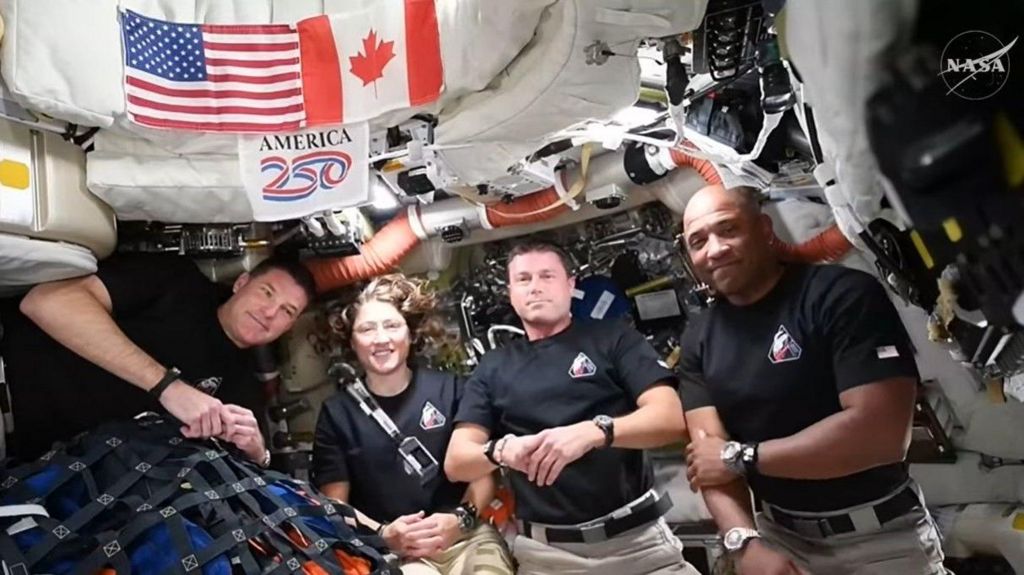
    After a groundbreaking journey that pushed the boundaries of human space exploration, the four-member Artemis II crew has completed their mission and splashed down safely off the coast of California, re-entering Earth’s atmosphere at a blistering speed of 25,000 miles per hour (40,000 kilometers per hour). This mission marks a historic milestone: the crew traveled farther into deep space than any human group before, surpassing the 1970 Apollo 13 record of 248,655 miles by more than 4,000 additional miles.

    During their lunar fly-by, the crew carried out a rare, unforgettable observation: using specialized eclipse viewers to watch a solar eclipse from their unique vantage point in space, capturing stunning images of the Moon backlit by the Sun from NASA’s Orion spacecraft. Even before their landing, the crew connected with audiences back on Earth, holding conversations with reporters, their families, and former U.S. President Donald Trump while still in orbit.

    For astronauts, space travel remains the defining peak of their professional lives, despite the unique hardships that come with extended time off-planet. Mission specialist Christina Koch noted ahead of splashdown that even minor inconveniences – from freeze-dried meals to limited private facilities for hygiene – were a small price to pay for the opportunity to explore deep space. The four crew members, commander Reid Wiseman, mission specialists Christina Koch and Victor Glover, and Canadian astronaut Jeremy Hansen, now begin their transition back to life on Earth, following a standard post-mission protocol.

    Immediately after splashdown, the crew was retrieved by a waiting U.S. warship, where medical teams conducted urgent initial health assessments. They were then airlifted by helicopter to shore, before transferring to NASA’s Johnson Space Center in Houston for further evaluation. Extended time in microgravity inevitably causes physiological changes: without Earth’s gravitational pull, muscle and bone mass deteriorate, particularly in the postural muscles of the back, neck, and calves. Even with the crew’s rigorous in-orbit exercise routine, some muscle loss is unavoidable, with up to 20% mass loss possible over just two weeks. However, NASA experts note the Artemis II mission’s relatively short duration means long-term health impacts are expected to be minimal. Compared to the five to six month typical stays on the International Space Station, the Artemis II crew’s time in space aligns with the short two to three week missions of the 1981-2011 space shuttle era, putting them at far lower risk of severe physiological degradation.

    Psychologically, returning to Earth brings a mix of emotions for the crew, all seasoned, highly trained space explorers selected for their emotional stability. Koch already shared from orbit that she will deeply miss the close teamwork and shared sense of purpose that defines life on a deep space mission. Like many astronauts before them, the Artemis II crew gained a profound new perspective on Earth from space: seeing the planet hanging in the black void of space reinforced how interconnected all humanity is, and how fragile our shared home is. “It truly emphasized how alike we are, how the same thing keeps every single person on planet Earth alive,” Koch explained. While many astronauts report being reluctant to leave the excitement and purpose of space work, the crew expressed immense excitement to reunite with their loved ones after the high-risk mission.

    For Wiseman, who lost his wife to cancer in 2020 and has raised their two teenage daughters as a single father, the reunion holds particular weight: he had prepared his daughters for the worst-case scenario before launch, showing them where his will was kept in case of a fatal accident. For Hansen’s family, the anticipation has been building for months. “Our two daughters and son were so, so excited to see their dad living his dream,” Dr. Catherine Hansen, Jeremy Hansen’s wife, told BBC World Service’s Newsday. “When Jeremy is back safely, we will absolutely come together. First just the five of us in a quiet environment to hear some of those private stories, and then we will absolutely celebrate with the world.”

    Looking ahead, the Artemis II crew’s futures remain tied to NASA’s ambitious lunar exploration program. While NASA does not disclose private details of crew members’ post-mission plans, the three NASA-affiliated astronauts remain active members of the agency’s astronaut corps, and all four Artemis II crew members are eligible to fly on future Artemis missions. The program is already gearing up for Artemis III, currently scheduled for 2027, and Artemis IV in 2028 – with Artemis III marked as the mission that will return human boots to the lunar surface for the first time since Apollo 17 in 1972, though industry analysts widely expect the landing date to be pushed back.

    One confirmed upcoming engagement is a visit to the White House: former President Trump, who first established the Artemis program during his first term in 2017, called the crew while they were in space to extend an invitation for a formal reception in the Oval Office. “I’ll ask for your autograph, because I don’t really ask for autographs much, but you deserve that,” Trump told the crew, adding that he planned to give them “a big salute on behalf of the American people and beyond that.” It remains unclear whether Canadian astronaut Jeremy Hansen will join the Washington visit.

    The biggest change the crew can expect after their mission is a sharp rise in public profile. Unlike many recent astronaut crews, the Artemis II four have captured global public attention, with round-the-clock news coverage and viral social media content turning them into household names. Adjusting to this new level of fame will likely be one of the biggest transitions they face as they settle back into life on Earth.


  • Trump posts graphic video of slaying to argue for stricter immigration policies

    Trump posts graphic video of slaying to argue for stricter immigration policies

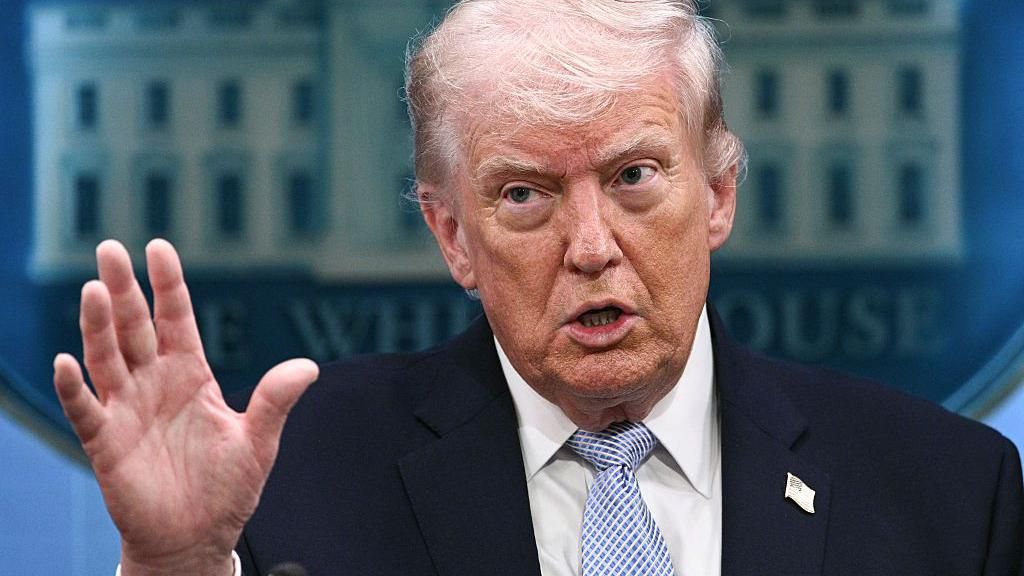
    A shocking fatal attack at a Florida gas station has thrust the decades-long debate over U.S. immigration policy back into the national spotlight, with former and current President Donald Trump leveraging the violent incident to escalate his push to eliminate Temporary Protected Status (TPS) for hundreds of thousands of Haitian migrants. The accused attacker, 41-year-old Rolbert Joachin, a Haitian national, has been formally charged with homicide following the April 3 incident that left a 62-year-old woman dead. U.S. law enforcement officials confirmed the charges in a press briefing held Friday, detailing the brutal nature of the attack.

    Graphic footage of the assault, which shows Joachin repeatedly striking the victim with a hammer first in the open street before delivering six additional blows to her head and torso after she collapses, has circulated widely online. Trump first shared the unedited video on his Truth Social platform, and the Department of Homeland Security (DHS) later confirmed it had also released the footage publicly. In his post, Trump described the recording as “one of the most vicious things you will ever see,” arguing that the slaying alone justified ending court blocks on his administration’s effort to revoke TPS for Haitian migrants.

    “This one killing should be enough for judges to stop impeding my Administration’s Immigration Policies,” Trump wrote on the social platform. Micah McCombs, special agent in charge of Homeland Security Investigations, echoed the shock of many in law enforcement, telling reporters Friday, “It’s senseless. It’s a video you can never unwatch.”

    Local law enforcement in Fort Myers, where the attack occurred, requested assistance from U.S. Immigration and Customs Enforcement (ICE) to locate Joachin immediately after the incident. Authorities took him into custody within hours of the attack, with no extended manhunt required. DHS records detail Joachin’s immigration history: he first entered the U.S. in August 2022, and a federal judge issued a final removal order against him that same year. However, the prior Biden administration granted Joachin TPS, a status that expired in 2024.

    Created by Congress in 1990, TPS is designed to bar deportations of immigrants from countries facing catastrophic conditions, including natural disasters, armed conflict, or public health crises that make safe return impossible. Haitian nationals were first granted TPS eligibility after the 2010 magnitude 7.0 earthquake that killed more than 200,000 people and left the Caribbean nation’s infrastructure in ruins. Successive presidential administrations have repeatedly extended Haitian TPS, most recently in 2021 under the Biden administration, covering more than 350,000 current enrollees.

    Shortly after returning to office in 2025, the Trump administration moved to terminate TPS for Haitian migrants, arguing that the program has strayed far from its original temporary mandate and effectively become a backdoor path to permanent residency that contradicts Congress’ original intent. In February, a federal judge issued a temporary injunction blocking the administration’s termination order, putting the policy change on hold while legal challenges proceed. The case is now set for oral arguments before the U.S. Supreme Court later this month, after the high court agreed to take up the appeal.

    The Trump administration’s broader effort to dismantle TPS programs across multiple host nations puts hundreds of thousands of additional migrants at risk of deportation. Enrollees from Afghanistan, Ethiopia, Honduras, Myanmar, Nepal, South Sudan, Syria, and Venezuela all currently hold TPS protections that could be revoked if the Supreme Court upholds the administration’s authority to end the programs. The administration has repeatedly argued that the broad, repeated extensions of TPS have incentivized illegal border crossings and overuse of the program by Democratic policymakers.

    In a statement released Friday, DHS confirmed that regardless of the outcome of Joachin’s criminal homicide case, he will be deported from the U.S. once legal proceedings are complete. The incident has already reignited fierce partisan debate over border security and immigration policy ahead of upcoming congressional votes on immigration reform, with Trump and Republican lawmakers doubling down on their calls for stricter enforcement and broader restrictions on migrant entry.

  • What is Trump doing with the US Forest Service?

    What is Trump doing with the US Forest Service?

    A controversial restructuring proposal from the Trump administration to move the U.S. Forest Service (USFS) headquarters out of Washington, D.C. to Salt Lake City, Utah has ignited fierce debate across political, labor, and outdoor industry circles, with critics warning the changes threaten the agency’s core mission of managing public lands and responding to wildfires.

    Founded more than a century ago in 1905 by President Theodore Roosevelt, the U.S. Forest Service is a century-old federal agency tasked with managing 193 million acres of public land across 43 states, Puerto Rico, and the U.S. Virgin Islands, covering 154 national forests and 20 national grasslands. Beyond conservation and sustainable stewardship of natural and cultural resources, the agency leads national wildfire management efforts, most famously recognizable by its decades-old Smokey Bear wildfire prevention campaign.

    Announced March 31 by the Trump administration, the relocation is the centerpiece of a broader overhaul that would eliminate existing regional office structures and shift to a state-centered operational model. Top officials from the U.S. Department of Agriculture (USDA), which oversees the USFS, argue the move is a common-sense reform that will bring agency leadership closer to the majority of public lands it manages, which are overwhelmingly concentrated in the Western U.S.

    USDA Secretary Brooke Rollins and USFS Chief Tom Schultz argue the shift will cut unnecessary costs for taxpayers, improve talent recruitment by leveraging Salt Lake City’s lower cost of living, proximity to a major international airport, and family-friendly quality of life. Under the new framework, 15 state directors will oversee operations across the country, while remaining regional functions will be distributed to existing USDA hubs in New Mexico, Georgia, Colorado, Wisconsin, Montana, and California. The plan has earned bipartisan support from Western governors, including Republican Utah Governor Spencer Cox and Democratic Colorado Governor Jared Polis, who back the state-focused governance model.

    But critics across labor, conservation, and outdoor business groups have raised alarm that the restructuring is a thinly veiled effort to drastically downsize the agency — or even eliminate its core functions — opening up protected public lands to exploitation by private extractive industries. The National Federation of Federal Employees (NFFE-IAM), the union representing more than tens of thousands of USFS workers, has condemned the plan as a reckless disruption that upends the careers of career public servants and creates unnecessary chaos for an agency tasked with high-stakes wildfire management.

    Reports indicate the overhaul includes closing 57 of 77 existing USFS research facilities and all nine regional offices across 31 states, in addition to relocating headquarters. Critics also point to the Trump administration’s history of deep staff cuts at national park and public land agencies that have already triggered widespread backlash and reduced public access to federal lands. Many observers have raised particular concern that the transition will unfold mid-way through the annual wildfire season, which runs from May through November across most of the U.S.

    While the Trump administration has pledged that frontline wildfire response and on-the-ground operations will continue without interruption, major outdoor industry companies and conservation groups have rejected that assurance. A coalition of 70 major outdoor and recreation businesses including REI Co-op, The North Face, and Columbia Sportswear oppose the plan, noting that recreation on USFS-managed lands generates $23.3 billion in annual U.S. economic activity, supporting thousands of jobs in local communities dependent on access to well-managed public lands. Outdoor retail giant Patagonia issued a separate statement arguing the downsizing of research facilities and staff will leave the USFS unable to fulfill its core mission, noting the only beneficiaries of the changes would be billionaire-backed extractive industries seeking access to protected public lands. To date, the administration has not released a public timeline for the completed relocation, and the BBC has requested comment from the USDA with no response as of reporting.

  • Melania Trump’s speech propels Epstein crisis back to forefront

    Melania Trump’s speech propels Epstein crisis back to forefront

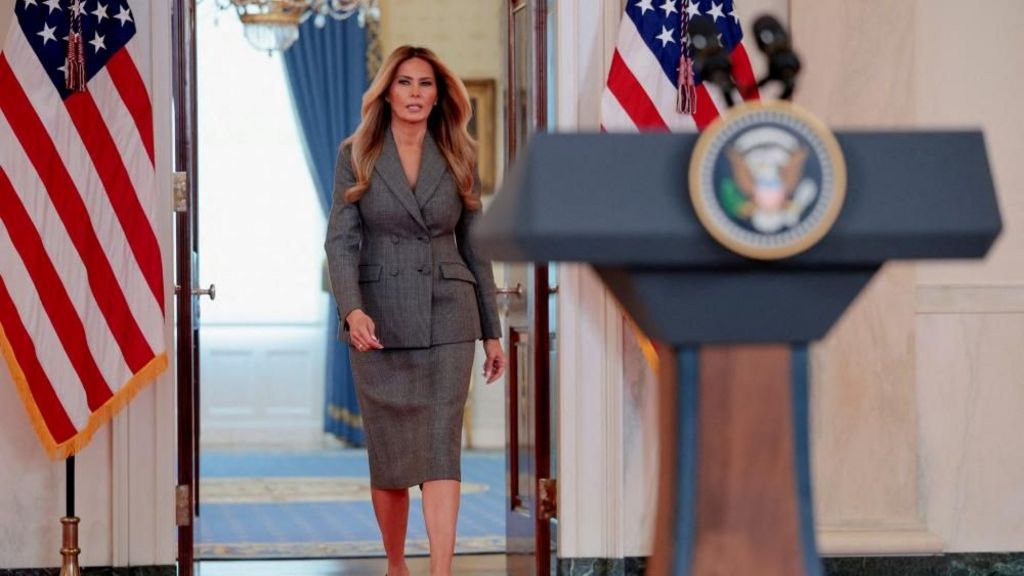
    In an unannounced, electrifying appearance at the White House podium last Thursday — the same spot where President Donald Trump delivered a national address on Iran just one week prior — former First Lady Melania Trump delivered a prepared statement that upended ongoing U.S. political discourse and shoved the long-simmering Jeffrey Epstein scandal back into the national spotlight. No senior administration officials received advance warning of the topic of her remarks, and even Washington’s most well-connected political insiders had no inkling of what was to come, turning a routine scheduled appearance into unmissable, breaking news.

    Flanked by two American flags, Melania Trump opened with a line that immediately jolted audiences and prompted major U.S. cable networks to cut away from their ongoing Iran coverage to carry her remarks live. “The lies linking me with the disgraceful Jeffrey Epstein need to end today,” she stated. In her full prepared remarks, she categorically denied ever having any relationship with either Epstein or his long-time associate Ghislaine Maxwell, rejected widespread long-running rumors that Epstein introduced her to Donald Trump, and claimed she had no prior knowledge of Epstein’s repeated sex offenses against underage girls. She closed her short statement by calling for public congressional hearings where Epstein’s survivors could testify under oath to uncover the full truth of the case.

    The sudden, out-of-the-blue nature of the denial immediately sparked rampant speculation across political and media circles: given that the rumors she addressed have circulated for years, and Melania Trump has historically relied on private legal counsel to address such claims rather than making public statements, many observers questioned if she was moving to pre-empt an impending new revelation tied to the scandal.

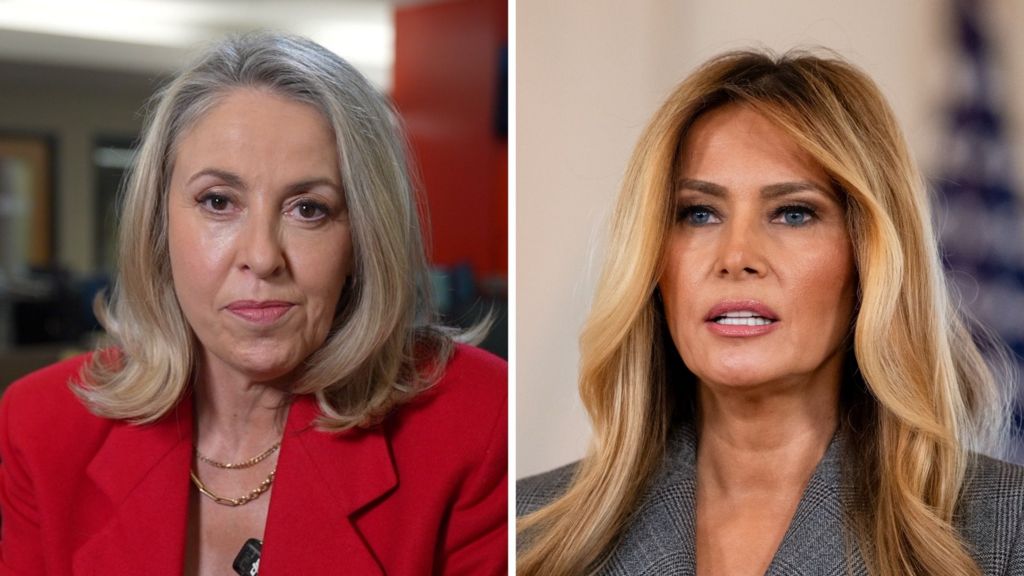
    Veteran investigative journalist Vicky Ward, who has covered Epstein’s network for decades, told reporters she finds the timing of the press conference deeply confusing. “If Melania Trump had done this at the start of the Epstein crisis a year ago, and called on Congress to center the victims’ stories, we would have a very different reaction to this move,” Ward explained. She added that the context of the statement does not align with public records, noting “There isn’t really much of Melania Trump in the Epstein files besides that one friendly email to Ghislaine Maxwell. I’m baffled by it. I don’t think anyone ever believed she was a victim.”

    Compounding the intrigue surrounding the event, conflicting accounts quickly emerged over whether the President was aware of the statement ahead of time: an initial spokesperson’s claim that Donald Trump had advance knowledge was later contradicted by the President himself, who said he had no idea his wife planned to make the remarks.

    Reaction from Epstein’s survivors was split immediately after the address. Thirteen survivors, alongside the family of high-profile accuser Virginia Roberts Giuffre, released a joint statement accusing Melania Trump of deflecting accountability rather than advancing justice. They argued that her call to shift the burden to survivors is a politically motivated tactic designed to protect powerful figures, including the Trump administration, which they say has failed to fully comply with the Epstein Files Transparency Act. Congressional Democrats have repeatedly criticized the U.S. Department of Justice for withholding roughly 2.5 million documents related to the case out of a total of six million, claiming the department has not provided sufficient legal justification for keeping the records sealed.

    Marina Lacerda, who was just 14 when she was abused by Epstein according to the 2009 federal indictment against the disgraced financier, was one of the signatories of the critical joint statement. In a separate video posted to social media, she went further, questioning the first lady’s motives. “It sounds like you’re just trying to shift attention from something to something else. So how does this benefit the Trump family, is my question,” Lacerda said.

    Not all survivors reacted negatively, however. Survivor Lisa Phillips praised Melania Trump for pushing back against the Department of Justice’s narrative that the Epstein file investigation is closed, calling her call to center survivor testimony a “bold move” during an interview with BBC Radio 4’s Today programme. Still, Phillips challenged the first lady to back her words with concrete action. “What I would do is I would call her bluff and I would, you know, push her a little bit and say, okay, Now that you’ve said that, what can you do? What can you do to help us? And what can you do to move us along?”

    On Capitol Hill, Republican James Comer, chairman of the House Oversight Committee which is leading the congressional investigation into the Epstein files, confirmed to Fox News on Friday that the committee always planned to hold public survivor hearings once its internal investigation wraps up. “I agree with the first lady and appreciate what she said,” Comer said. “We will have hearings.”

    Political observers and authors who have studied the Trump White House and the Epstein case have offered differing analyses of the meaning of the independent statement. Barry Levine, author of *The Spider: Inside the Tangled Web of Jeffrey Epstein and Ghislaine Maxwell*, argues that Melania Trump’s decision to explicitly acknowledge and center victims is deeply significant, because it puts her at odds with her husband’s long-held public stance. Levine noted that Donald Trump has repeatedly dismissed the entire Epstein files controversy as a hoax and has repeatedly refused to offer any support to survivors seeking accountability, even when given multiple opportunities to do so. Levine added that Melania Trump has long been an independent figure who speaks her own mind, a trait the president has previously acknowledged publicly.

    Tammy Vigil, author of *Melania and Michelle: First Ladies in a New Era*, told the BBC that the absence of any mention of Donald Trump in the statement reveals a clear policy and agenda rift between the president and first lady. “She’s pushing an agenda that by all outward appearances he doesn’t want to push. So she’s helping her own agenda. It’s a very independent statement and we’ve seen her do that a few times before,” Vigil explained.

    For congressional Democrats, the development has been an unexpected political opportunity. Melania Trump’s statement has reinserted the Epstein scandal into the national conversation at a time when the Trump administration was pushing to wrap up the investigation, putting her publicly at odds with her own administration’s position. Robert Garcia, the highest-ranking Democrat on the House Oversight Committee, said he was stunned by the speech and argued the administration now has no choice but to follow the first lady’s lead. “If Melania Trump wants real justice, she should ask her husband to release the rest of the Epstein files and ensure that Pam Bondi testifies,” Garcia said.

    Donald Trump, who socialized with Epstein repeatedly in the 1990s and is mentioned hundreds of times in the released Epstein files, has long denied any knowledge of Epstein’s crimes and has dismissed the entire controversy as a politically motivated hoax. This time, however, he cannot dismiss the person who pushed the scandal back into headlines as a political opponent with malicious intent. What has long been an enduring crisis the Trump administration has been unable to outrun has just been given new life by the most unexpected person: the former first lady.

  • Why is Melania Trump speaking out about Epstein now?

    Why is Melania Trump speaking out about Epstein now?

    In a surprising turn of events that has captured Washington’s attention, former first lady Melania Trump has publicly broken her long silence surrounding allegations of ties between herself and the deceased convicted sex offender Jeffrey Epstein, issuing a clear and firm denial of any association. The rare on-the-record statement to reporters marks one of the few instances in recent years that Melania has directly addressed a high-profile, controversial conspiracy theory that has circulated in political circles and tabloid media for years.

    Epstein, a wealthy financier, was convicted of sex offenses in 2008 and was facing new federal charges of sex trafficking involving underage girls when he died by suicide in a Manhattan jail cell in 2019. His death, and his extensive network of high-profile political and business connections, spawned countless unsubstantiated rumors and wild speculation, with a number of baseless claims attempting to draw connections between Epstein and members of the Trump family.

    During her recent interaction with the press, Melania Trump pushed back firmly against these lingering allegations, stating bluntly that all claims that seek to link her to the late offender have no basis in fact and must stop immediately. Political analysts note that the timing of this statement has sparked questions across the political spectrum, as it comes amid a renewed wave of attention on Epstein’s connections amid new legal developments linked to his co-conspirators, and as former President Donald Trump ramps up his 2024 presidential campaign. Some political observers speculate that the former first lady chose to speak out now to preempt any renewed attacks on the Trump family ahead of what is expected to be a tightly contested election cycle, while others note that the recent resurfacing of old rumors on social media may have prompted her to address the claims directly to clear her name.

    So far, no credible evidence has ever emerged to support any claims of a professional or personal connection between Melania Trump and Jeffrey Epstein beyond the few documented social encounters that have long been a matter of public record involving other members of the Trump organization. The former first lady’s statement is a rare direct intervention into a political controversy, and it has successfully drawn a line under the lingering speculation for many observers, though it is expected to keep the topic of Epstein’s connections in the public eye in the coming months.

  • OpenAI boss Sam Altman’s home targeted with Molotov cocktail

    OpenAI boss Sam Altman’s home targeted with Molotov cocktail

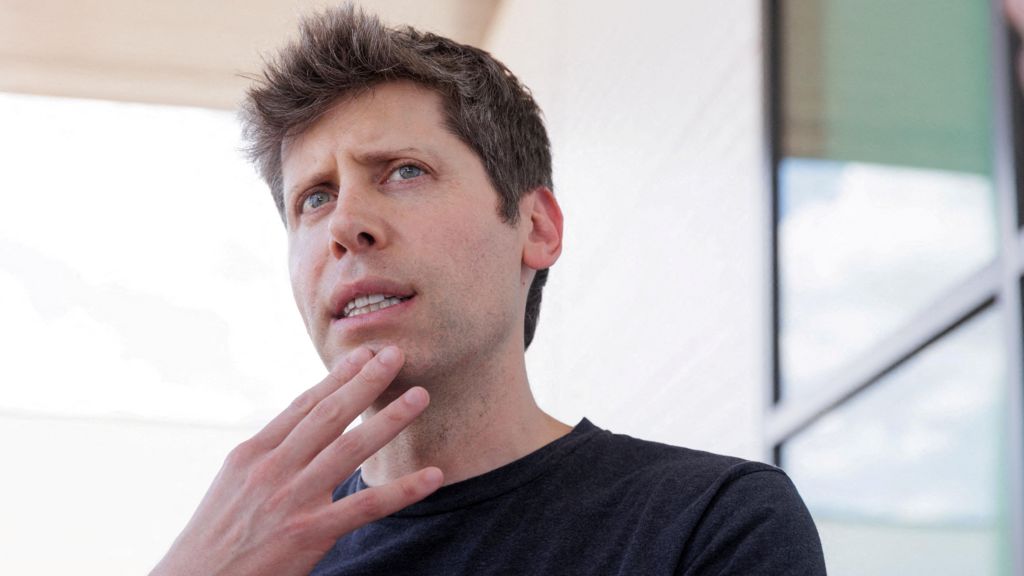
    A violent, targeted incident has rocked the San Francisco Bay Area tech community, after a 20-year-old man was taken into custody following a Molotov cocktail attack on the home of OpenAI CEO Sam Altman, one of the most high-profile leaders in the global artificial intelligence space. The attack left a perimeter gate at Altman’s property engulfed in flames, according to law enforcement reports.

    The San Francisco Police Department (SFPD) confirmed that first responders were dispatched to a disturbance call in the city’s upscale North Beach neighborhood in the early hours of Friday. While department officials initially declined to name the target of the attack or the suspect, an OpenAI spokesperson later verified that the targeted residence belonged to Altman, who serves as chief executive of the ChatGPT-developing AI firm. The spokesperson added that the same suspect was linked to a separate incident: threatening actions carried out at OpenAI’s main San Francisco headquarters.

    Thankfully, the incident did not result in any injuries to people at either location. “We deeply appreciate how quickly SFPD responded and the support from the city in helping keep our employees safe,” the OpenAI spokesperson said in an official statement Friday.

    Police records show that the suspect had fled the scene outside Altman’s residence before officers arrived. Roughly 60 minutes after the initial attack, however, the man reappeared outside an OpenAI office building, where he reportedly threatened to “burn down the building.” Law enforcement officers took the 20-year-old into custody at the site immediately after the threat.

    As of Friday afternoon, SFPD representatives declined to share additional details about the suspect’s custody status or potential upcoming criminal charges, noting that the investigation remains active and ongoing. No motive for the attack has been released to the public as of yet.

    Altman, a billionaire tech entrepreneur, holds multiple properties across the United States, but his primary place of residence is San Francisco, the city where OpenAI was founded and where its main operations are still based. As the most visible public face of the modern AI boom, Altman rose to global prominence after OpenAI launched ChatGPT in late 2022. The launch of the generative AI chatbot sparked an unprecedented global AI race, triggering hundreds of billions of dollars in annual corporate investment into AI research and product development across the technology industry.

    In recent weeks, Altman and OpenAI have become leading voices in the conversation around AI regulation and social impact. The company has openly acknowledged that widespread AI adoption could bring massive social and economic shifts, including widespread workforce displacement as AI systems grow more advanced and become capable of performing tasks across nearly every industry. Earlier this week, OpenAI released a set of policy proposals for governments around the world to mitigate the negative impacts of AI and prioritize human well-being, including expanded job training programs, workforce upskilling for AI-related roles, and higher tax rates for corporations and capital gains to offset shifting labor markets.

  • Trump’s blunt attack on former allies exposes splintered MAGA coalition

    Trump’s blunt attack on former allies exposes splintered MAGA coalition

    A major public rift has opened at the highest levels of U.S. conservatism, as former and current President Donald Trump launched a scathing verbal attack on four prominent right-wing commentators who have broken with him over his administration’s joint U.S.-Israeli military campaign against Iran. In a lengthy Thursday post on his Truth Social platform, Trump dismissed the critics, all past supporters who helped power his 2024 election victory, as “stupid people” that “nobody cares about” — an odd line of attack that came alongside a 372-word takedown that dedicated individual criticism to each figure. The targets included two ex-Fox News primetime hosts, Tucker Carlson and Megyn Kelly, plus far-right media personalities Alex Jones and Candace Owens. All four were key parts of Trump’s outreach strategy to right-wing podcasters and social media influencers during his 2024 presidential run, and all previously backed his political career openly. But in his post, Trump insisted their current views have drifted so far from his “Make America Great Again” movement that they no longer belong in the coalition. “They’re not MAGA, they’re losers,” he wrote, adding that he could win their support at any time if he chose, but refuses to return their calls because he is occupied with pressing domestic and global policy matters. Tucker Carlson, the highest-rated cable news host in the U.S. before his 2023 exit from Fox News, has built a massive new audience on X (formerly Twitter) since leaving the network, where he has pushed a populist conservative agenda that has increasingly diverged from Trump’s. A vocal opponent of the Iran war from its earliest days, Carlson escalated his criticism recently, calling a profanity-laced Easter Sunday message Trump sent to Iran “vile on every level” and labeling Trump’s open threats to strike Iranian civilian energy and transportation infrastructure a clear war crime. Responding to Trump’s attack, Carlson said he still held affection for the president but felt deep sympathy for his current state. He also echoed a growing narrative among anti-war conservatives that Trump’s decision to launch the conflict stemmed from outsized influence from Israeli Prime Minister Benjamin Netanyahu, claiming “The Israelis have him in a hammerlock.” Candace Owens, another of the targeted commentators who recently made unsubstantiated claims that conservative figure Charlie Kirk was assassinated last year over his anti-Israel positions, offered an even more blunt rebuke of Trump. “It may be time to put Grandpa up in a home,” she wrote on social media. Former Republican Congresswoman Marjorie Taylor Greene, who was referenced in passing in Trump’s post, also hit back publicly, echoing the growing split within conservative ranks. “President Trump has gone mad as he wages war against Iran, a broken campaign promise,” she wrote on X, adding “I fought alongside Tucker Carlson, Megyn Kelly, Candace Owens and Alex Jones to help get Trump elected. We never changed. Trump did.” Greene, who dramatically split with Trump last year over what she called his failure to disclose details of government files connected to the late Jeffrey Epstein, resigned her congressional seat in January and has since ramped up her public criticism of the administration. The public break between Trump and these high-profile conservatives lays bare growing fissures in the president’s conservative base that have emerged since the launch of the Iran conflict. The split comes at a critical moment for the administration: a fragile two-week ceasefire is currently in place between U.S. forces and Iran, and Vice President JD Vance is set to lead a U.S. delegation to Pakistan for direct, face-to-face negotiations with Iranian representatives this Saturday. Despite the ongoing ceasefire, Trump told the New York Post on Friday that the U.S. military is currently rearming and resupplying to prepare for a resumption of hostilities if negotiations fail. Should talks collapse and conflict resume, political analysts expect internal opposition to the war within Trump’s own party will grow, with more conservative figures likely to join the open criticism already led by Carlson, Greene and the other targeted commentators.

  • Colorado officials trying to identify woman struck by lightning

    Colorado officials trying to identify woman struck by lightning

    A public appeal has been launched by law enforcement in Colorado to identify an unidentified young woman who was left critically injured after being struck by lightning on a suburban walking trail earlier this week. The incident unfolded in Superior, a small community located roughly 32 kilometers northwest of Denver, on Thursday evening.

    According to local law enforcement officials, a group of bystanders who heard a loud thunderclap connected to the lightning strike went outside to investigate, where they discovered the unresponsive woman. The Good Samaritans immediately initiated cardiopulmonary resuscitation (CPR) and continued life-saving efforts until emergency response teams could arrive at the scene. First responders were dispatched to the location at approximately 17:39 local time.

    When first responders arrived, the woman had no detectable pulse and was not breathing. After sustained resuscitation work, she eventually regained a weak pulse and began breathing independently, though she remained unconscious. She was quickly airlifted to a major trauma center in Denver for urgent medical care.

    As of mid-morning Friday, the patient has stabilized slightly, with a regular heart rate and continued independent breathing, but she remains in critical condition, per an update from the Boulder County Sheriff’s Office shared on Facebook. Officials have not been able to confirm her identity, as she was carrying no form of identification when found, and her mobile phone was completely destroyed by the lightning strike. Her fingerprints also do not match any records on file in law enforcement databases.

    Law enforcement has released a detailed description of the victim to aid in identification. She is believed to be between 20 and 30 years old, a white woman standing 5 feet 5 inches tall and weighing roughly 54 kilograms, with distinctive red or auburn hair. She has three butterfly tattoos on her upper right arm, and was wearing a green running top, black running shorts with white trim, white or pink running shoes, and a grey or black windbreaker jacket at the time of the strike. No photo of the woman is being released to the public at this time, officials confirmed, as she has sustained significant facial trauma from the strike and does not resemble her typical appearance.

    Authorities have already cross-referenced the description with active missing person reports across the region, but have not yet found a matching case. The primary goal of the public appeal is to connect the injured woman with her family members, who can be with her at the hospital as she receives care.

    “Obviously, we want to connect her with her loved ones and family, so they can be there at the hospital with her,” said Carrie Haverfield, public information officer for the sheriff’s office, in an interview with the BBC. “So we’re asking the community if they have anyone fitting the description put out, a loved one, family member, who they’ve been unable to get ahold of.”

    Haverfield noted that while Superior sits on Colorado’s Front Range, an area of prairie and foothills rather than the high elevation mountain terrain where lightning strikes are more commonly reported, the state as a whole experiences a high volume of lightning activity annually. National Weather Service data estimates that roughly 500,000 lightning strikes hit the ground across Colorado each year. Between 2006 and 2024, the Lightning Safety Council ranks Colorado third in the United States for total lightning-related fatalities, only behind Florida and Texas which claim the top two spots. Nationwide, the U.S. Centers for Disease Control reports that around 40 million lightning strikes hit U.S. ground every year, though the annual odds of an individual being struck remain less than one in a million.

    Anyone with information that could help identify the victim is asked to contact the Boulder County Sheriff’s Office immediately.

  • Great at gaming? US air traffic control wants you to apply

    Great at gaming? US air traffic control wants you to apply

    Facing a years-long staffing crisis that has already contributed to high-profile aviation disasters, the U.S. Federal Aviation Administration is launching an unconventional new recruitment drive: targeting skilled video game players to fill thousands of vacant air traffic controller roles. The agency’s hiring window opens next week, and the new marketing campaign builds on similar outreach efforts launched during the Biden administration to attract a new generation of qualified candidates.

    The campaign’s core pitch leans into an intuitive alignment between gaming expertise and the demands of air traffic control. The opening of the campaign’s promotional video spotlights the Xbox logo before cutting to a dynamic montage, alternating between clips of gamers competing in online matches and working air traffic controllers monitoring flight data on their screens. The tagline cuts straight to the point: “You’ve been training for this.” In addition to leaning into the transferable skills gamers already hold, the ad also highlights the role’s lucrative compensation, noting that controllers can earn up to $155,000 annually after just three years on the job.

    U.S. Transportation Secretary Sean P. Duffy emphasized that the outreach strategy is a necessary adaptation to connect with younger workers who already possess the core competencies the role requires. “This new strategy taps into a growing demographic of young adults who have many of the hard skills it takes to be a successful controller,” Duffy explained in an official statement. This approach is not entirely new: it echoes the Biden administration’s 2021 “Level Up” recruitment campaign, which used popular gaming terminology to draw experienced players into applicant pools for open controller roles.

    Air traffic control is one of the most safety-critical roles in commercial aviation. Controllers are responsible for monitoring all aircraft moving through airport airspace, on taxiways, and on runways, directing movements to prevent mid-air collisions, ground incidents, and other safety hazards. Industry guidance for the role notes that it demands rapid, calm decision-making under high pressure, sharp spatial awareness, and advanced technical proficiency – skills that many experienced video game players develop through hours of interactive gameplay.

    Yet despite the critical nature of the role, persistent staffing shortages have plagued the industry for years, and the problem is projected to worsen over the coming decade, according to data from the U.S. Bureau of Labor Statistics. Last year, the FAA reported it needed 14,663 active controllers to operate at full capacity, but was already short at least 3,000 workers. The agency also projected that twice that number – roughly 6,000 current controllers – will retire or leave the profession by 2028. While Duffy noted Friday that current staffing levels are the highest they have been in six years, he did not release updated specific numbers to confirm the improvement.

    Labor leaders who represent working controllers have expressed support for the innovative approach, so long as strict safety and qualification standards remain in place. Nick Daniels, president of the National Air Traffic Controllers Association, the union that represents U.S. air traffic controllers, said the organization backs efforts to expand the candidate pool by targeting groups with existing relevant skills. “Our union welcomes innovative approaches to expanding the candidate pool, including outreach to individuals with high-level aptitude skills such as gamers, so long as all pathways maintain the rigorous standards required of this safety-critical profession,” Daniels said.

    The new recruitment push comes in the wake of two deadly high-profile aviation incidents linked to air traffic control operations in recent years. In early 2025, a mid-air collision between an army helicopter and a commercial passenger jet near Washington DC’s Ronald Reagan Washington National Airport killed 67 people. Earlier this year, an Air Canada passenger jet collided with an airport fire truck on the ground at New York’s LaGuardia Airport, killing two commercial pilots. These incidents have amplified public pressure on the FAA to resolve its persistent staffing shortfall and strengthen aviation safety across the U.S. national airspace system.

  • The five big sticking points in US-Iran talks

    The five big sticking points in US-Iran talks

    Islamabad, the capital of Pakistan, is fully prepped and waiting this week to host what may be the most consequential diplomatic negotiations of 2026: direct talks between the United States and Iran. Local crews have repainted road curbs in high-visibility yellow and black, security teams have deployed to their posts across the venue zone, and authorities have even declared a two-day public holiday for the capital to clear the way for the high-profile gathering. As the host nation, Pakistani officials have struck an optimistic tone, noting that they hold rare mutual trust with both Washington and Tehran – a fragile balance that made this breakthrough meeting possible in the first place.

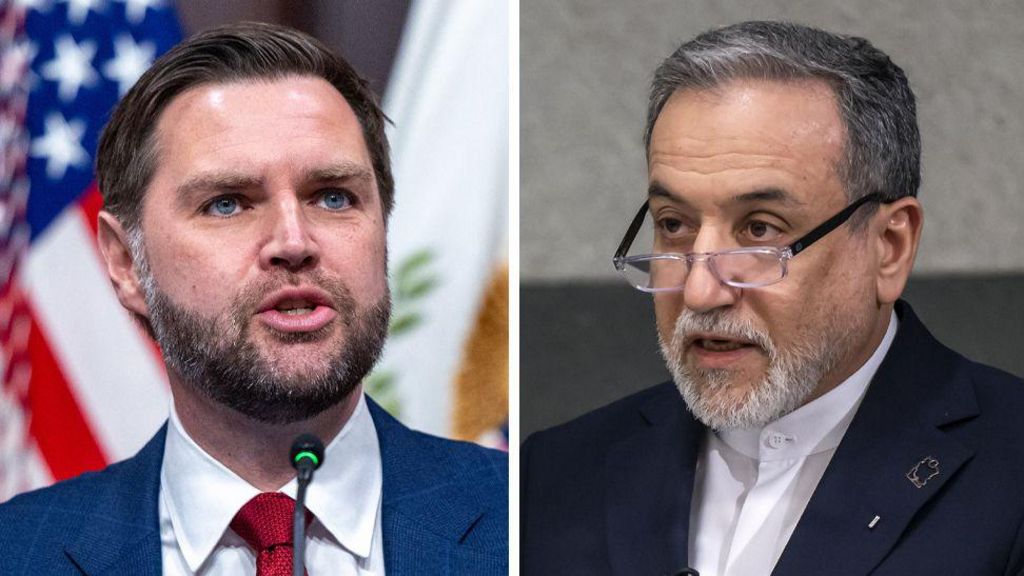
    Leading the US delegation to the talks is Vice President JD Vance, who has signaled cautious openness while issuing a clear warning to Iranian negotiators ahead of his departure from Washington. “If the Iranians are willing to negotiate in good faith, we’re certainly willing to extend the open hand,” Vance said. But he added a sharp caveat: “If they’re going to try to play us, then they’re going to find the negotiating team is not that receptive.” On the Iranian side, reports indicate Foreign Minister Abbas Araghchi will serve as co-leader of Tehran’s negotiation team.

    Despite the carefully laid groundwork, a cascade of interconnected challenges threatens to derail the talks before formal negotiations even begin. The most immediate flashpoint is Israel’s ongoing military campaign against Hezbollah, Iran’s powerful Lebanese ally and key member of Tehran’s regional “Axis of Resistance”. Iranian President Masoud Pezeshkian has issued a blunt warning that continued Israeli military action renders the entire negotiation process meaningless. “Our fingers remain on the trigger. Iran will never abandon its Lebanese sisters and brothers,” Pezeshkian wrote in a post on X.

    Israeli Prime Minister Benjamin Netanyahu has remained firm, stating there will be “no ceasefire” in the campaign against Hezbollah, though repeated evacuation warnings for Beirut’s southern suburbs have not yet been followed by a full-scale ground incursion. Former US President Donald Trump, who remains a central figure in shaping US policy in the region, has said he expects Israeli operations in Lebanon to shift to “a little more low key” in the coming days. The US State Department has also announced that direct Israeli-Lebanese negotiations will begin in Washington next week, a move designed to de-escalate tensions ahead of the US-Iran talks. Even so, it remains unclear whether the scaled-back operations will be enough to satisfy Tehran and keep the Islamabad talks on track.

    A second major point of friction ahead of the talks centers on the Strait of Hormuz, the strategic oil shipping chokepoint that connects the Persian Gulf to global markets. Since a preliminary ceasefire between the US and Iran took effect, only a tiny trickle of commercial vessels have been allowed to pass through the strait, leaving hundreds of ships and an estimated 20,000 seafarers stranded inside the Gulf. Trump has publicly slammed Iran for failing to honor an apparent agreement to open the waterway, calling Tehran’s performance “very poor” and accusing the country of acting dishonourably in a Truth Social post. “This is not the agreement we have!” he declared.

    Tehran has moved to formalize its control over the strait, claiming the waterway as sovereign Iranian territory and announcing plans to implement a new regulatory regime for transiting vessels. Last week, it unveiled new transit routes north of the existing two-way shipping lanes, justifying the change as a necessary measure to avoid anti-ship mines laid in the main traffic corridor – a statement that has stoked existing anxiety among global shipping companies. Adding to tensions, widespread reports suggest Iran has been charging passing tankers a $2 million toll for transit, a move Trump has warned Tehran against continuing.

    By far the most intractable and long-standing dispute on the negotiating table is Iran’s nuclear program. Trump launched Operation Epic Fury earlier this year with the explicit goal of ensuring Iran “can never have a nuclear weapon”. Iran has repeatedly denied seeking to build a nuclear bomb, a claim most Western governments view with deep skepticism, but maintains that as a signatory to the Nuclear Non-Proliferation Treaty, it retains the legal right to enrich uranium for peaceful civilian purposes.

    Tehran has put forward a 10-point negotiation framework that Trump has acknowledged is “a workable basis on which to negotiate”, with one of its core demands being international recognition of Iran’s sovereign right to uranium enrichment. By contrast, Trump’s reported 15-point counter-plan requires Iran to end all uranium enrichment activities on its own territory. When asked about this stark demand earlier this week, US Secretary of Defense Pete Hegseth would only confirm that the US position remains that Iran will “never have a nuclear weapon or the capability to get a path to one”. It took global negotiators more than a decade to hammer out the 2015 Joint Comprehensive Plan of Action (JCPOA), the landmark deal that addressed the nuclear issue in exhaustive detail, leaving many observers skeptical that a new comprehensive agreement can be reached quickly.

    Another core sticking point is Iran’s network of regional allies and proxy groups, which extend from Hezbollah in Lebanon and Hamas in Gaza to the Houthis in Yemen and pro-Iran militias in Iraq. This network, which Tehran calls the Axis of Resistance, has given Iran substantial regional influence, allowing it to maintain a forward defense posture in its decades-long rivalry with the US and Israel. Since the outbreak of the Gaza war in October 2023, the entire network has come under sustained attack, with one key pillar – the regime of former Syrian dictator Bashar al-Assad – falling completely. Israel views the network, which it calls part of an “Axis of Evil”, as an existential threat that must be fully eradicated.

    Domestically, Iran’s economy is reeling under decades of crippling international sanctions, and many Iranian citizens have called on their government to redirect spending away from regional military engagements and toward improving domestic living standards. Even so, there has been little public indication that Tehran is willing to abandon its regional allies as part of any deal with the US.

    Sanctions and frozen assets represent another immediate hurdle to even getting negotiations off the ground. Iran is demanding the full lifting of all US and international sanctions as a core condition of any final agreement. Last week, Iranian Parliament Speaker Mohammad Bagher Qalibaf stated that the estimated $120 billion in frozen Iranian assets held abroad must be released before formal talks can begin. Qalibaf claimed this release was one of two pre-negotiation agreements reached between the parties, alongside a ceasefire in Lebanon. But the April 7 ceasefire announcement by Pakistani Prime Minister Shehbaz Sharif made no mention of asset releases, and it remains unclear what prior agreement Qalibaf was referencing. Most analysts agree the Trump administration is highly unlikely to make such a major concession simply to open the talks, leaving another major rift to bridge before substantive discussions can even begin.

    As the delegations prepare to sit down in Islamabad, the entire world is watching: a breakthrough could dramatically reshape Middle East security and global energy markets, while a collapse could trigger a new wave of regional escalation.