标签: North America

北美洲

  • North America’s largest commuter rail system shuts down as workers strike

    North America’s largest commuter rail system shuts down as workers strike

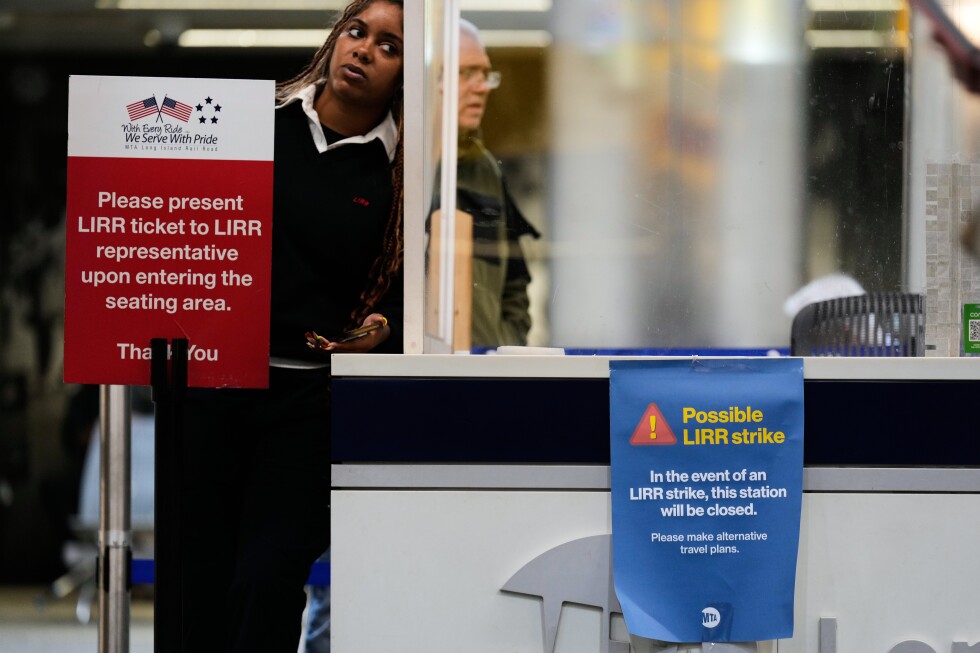
    A decades-rare labor action has brought North America’s largest commuter rail network to a complete halt, leaving hundreds of thousands of travelers across the New York metropolitan region scrambling for alternate transportation this weekend and beyond. Early Saturday, five unions representing roughly half of the Long Island Rail Road (LIRR) workforce initiated a strike after months of stalled contract negotiations that even saw intervention from the Trump White House fail to broker a compromise. Legally permitted to walk off the job starting at 12:01 a.m. Saturday, the strike is the first work stoppage to hit the LIRR since a 1994 two-day action.

    As of the early hours of the strike, no new bargaining sessions have been scheduled, according to Kevin Sexton, national vice president of the Brotherhood of Locomotive Engineers and Trainmen. “We’re far apart at this point,” Sexton told reporters Saturday morning. “We are truly sorry that we are in this situation.” But Janno Lieber, chair of the Metropolitan Transportation Authority (MTA), which oversees the LIRR, has pushed back on the union’s position, claiming the agency met all of the unions’ original pay demands and arguing that organized labor always planned to initiate a walkout.

    The shutdown is already throwing major planned New York City events into disarray. This weekend, the crosstown rivalry matchup between the New York Yankees and New York Mets is scheduled, and the New York Knicks are continuing their NBA playoff run at Madison Square Garden. Both venues have dedicated LIRR stops, drawing thousands of fans from Long Island’s eastern suburbs who rely on the rail line to reach Manhattan.

    If the strike extends past the weekend, the disruption will grow exponentially. Around 250,000 daily weekday commuters depend on the LIRR to travel between Long Island suburbs and New York City workplaces. For most, the only viable alternative is driving, which will put added pressure on the region’s already famously congested highways. “People are still going to commute, but if everybody starts driving now, the traffic is only going to get worse,” said Rich Piccola, a city-bound accountant who spoke to reporters Thursday while waiting for a train at Penn Station.

    New York Governor Kathy Hochul has issued an urgent recommendation for Long Island residents to work from home wherever possible to cut down on travel chaos. The MTA has rolled out a limited contingency plan of shuttle buses connecting LIRR hubs to New York City subway stations, but the system was never designed to absorb the full volume of daily commuter traffic. While remote work has become far more widespread since the COVID-19 pandemic, many in-person workers cannot do their jobs from home, noted Lisa Daglian, executive director of the Permanent Citizens Advisory Committee to the MTA, a commuter advocacy organization.

    “You work in construction, you work in the healthcare industry, you work at a school or you’re about to graduate from school, that’s not always possible,” Daglian said. “People need to get where they need to go.”

    Contract talks have deadlocked over two core issues: worker wage increases and health care premiums. Unions argue that more robust pay bumps are necessary to help LIRR workers, which include locomotive engineers, machinists and signalmen, keep pace with decades-high inflation and soaring living costs in the New York region. The MTA, however, has warned that meeting the unions’ original demands would force steep fare increases for riders and create pressure to match those terms in negotiations with other unionized MTA workers.

    Many commuters have expressed sympathy for workers’ concerns over affordability, even as they acknowledge they will bear the brunt of any agreed pay hikes. “Like the union workers, we too are burdened by the increase in the cost of living here on Long Island,” said Gerard Bringmann, chair of the LIRR Commuter Council, a rider advocacy group. Bringmann warned that if unions win the full pay increases they are seeking, a planned 4% annual fare hike could double to 8% for passengers.

    Labor experts note political pressure is already building to resolve the standoff quickly. Hochul, a Democrat, is up for reelection later this year, and Long Island is a critical swing voting bloc for her campaign. William Dwyer, a labor relations scholar at Rutgers University who studied last year’s three-day commuter rail strike in neighboring New Jersey, said a prolonged shutdown or steep fare hike would damage Hochul’s electoral prospects. “She’s up for reelection, and Long Island is a critical vote for her,” Dwyer said. “So if there’s a significant fare hike, that does not bode well for her on Election Day.”

  • US planning to criminally indict ex-Cuban leader Raúl Castro

    US planning to criminally indict ex-Cuban leader Raúl Castro

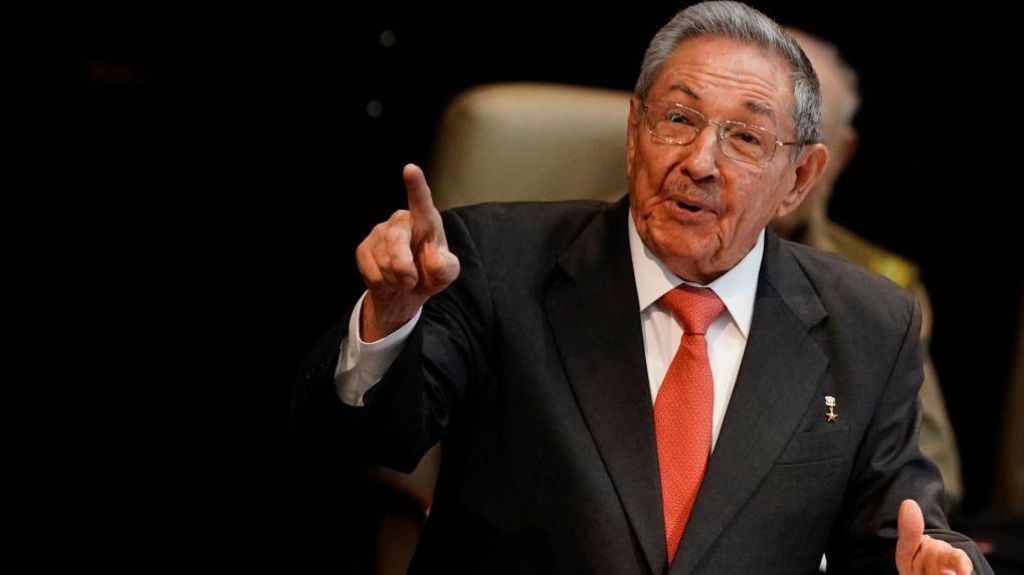
    Tensions between the United States and Cuba have spiked dramatically in recent days, after multiple anonymous U.S. Department of Justice sources confirmed that federal authorities are moving forward with a planned criminal indictment of 94-year-old former Cuban leader Raúl Castro, connected to the 1996 downing of two U.S.-linked aircraft that left four people dead. The expected charges, which require formal approval from a federal grand jury before they can be unsealed, come at a uniquely sensitive moment: just one day before the first reports of the indictment plan emerged, CIA Director John Ratcliffe traveled to Havana to hold rare direct talks with senior Cuban security officials.

    Raúl Castro, who retired from the top post of Cuba’s Communist Party in 2011 after leading the island nation for 15 years, closed out six decades of uninterrupted rule by the Castro family when he stepped down. He assumed the presidency in 2006 after his older brother, longtime leader Fidel Castro, resigned due to poor health, and previously served as Cuba’s armed forces minister at the time of the 1996 incident.

    The case that forms the core of the potential indictment dates back 30 years, to February 24, 1996, when Cuban military forces shot down two small civilian planes operated by Brothers to the Rescue, a Miami-based Cuban exile group with a stated mission of rescuing migrants crossing the Straits of Florida and an open anti-Castro political agenda. The group had repeatedly dropped anti-government leaflets in Cuban airspace prior to the incident, and Havana maintained at the time that the aircraft had violated Cuban national airspace. However, an investigation by the International Civil Aviation Organization concluded the shootdown occurred in international waters. All four people on board the two planes were killed in the attack.

    According to unnamed DoJ officials, the public indictment could be released as early as next Wednesday. When asked about the reports during a press gaggle on Air Force One Friday, U.S. President Donald Trump declined to comment on the details of the ongoing investigation, saying he would leave all statements to the Department of Justice. He did not hold back from broader criticism of the Cuban government, however, telling reporters: “But [Cubans] need help, as you know. And you talk about a declining country. They are really a nation, a country in decline.”

    The planned indictment is the latest escalation in a sustained U.S. pressure campaign against Havana that already includes a full oil embargo, sweeping economic sanctions, and open political rhetoric calling for regime change on the island. Trump’s oil blockade has already pushed Cuba to the brink of an energy crisis: just this week, the island’s energy minister publicly acknowledged that the country has effectively exhausted its supplies of fuel oil, leaving essential services and civilian livelihoods at risk. Expectant mothers across Cuba are already reporting severe struggles accessing basic care and supplies amid the ongoing fuel shortages.

    The move to reactivate the investigation into the 1996 shootdown gained momentum earlier this year, when Florida’s attorney general announced the state would reopen its own probe into Raúl Castro’s alleged role in the incident. Florida Governor Ron DeSantis echoed that momentum Friday, praising the planned federal charges as “long overdue.”

    Cuba has not yet issued an official formal response to the reports of the impending indictment, but Foreign Minister Bruno Rodriguez made clear Friday that Havana would not back down to U.S. pressure. “Despite the [US] embargo, sanctions and threats of the use of force, Cuba continues on a path of sovereignty towards its socialist development,” Rodriguez said, per Reuters.

    Acting U.S. Attorney General Todd Blanche, who leads the Department of Justice, has also declined to confirm the reports, telling Fox News: “If and when there’s a time to talk about about that, we will, obviously.” Under U.S. federal procedure, prosecutors must first present evidence of probable cause to a grand jury composed of ordinary citizens before any formal charges can be filed.

    Ratcliffe’s visit to Havana Thursday, which included a meeting with his Cuban counterpart at the Cuban interior ministry, was notable for the attendance of Raúl Rodríguez Castro, the grandson of the former Cuban leader. A CIA official told CBS, the BBC’s U.S. partner, that Washington was open to talks on economic and security cooperation, “but only if Cuba makes fundamental changes” to its governing system. The Cuban government’s official readout of the meeting framed it as an effort to improve bilateral dialogue, and reiterated that Havana does not pose a threat to U.S. national security. The talks also followed a renewed U.S. offer of $100 million in humanitarian aid to help mitigate the harm caused by the American oil blockade.

    The heightened focus on Cuba comes on the heels of a dramatic U.S. action in the region: in January, American authorities indicted Venezuelan leader Nicolás Maduro, and removed him from power in a rapid overnight military operation. Analysts have warned that a similar move to target Raúl Castro could trigger severe consequences for the United States, even as the indictment is widely seen as part of a broader pressure strategy.

    William LeoGrande, a professor of Latin American politics at American University in Washington and author of *Back Channel to Cuba: The Hidden History of Negotiations between Washington and Havana*, described the impending indictment as “one more element of the pressure campaign” that Trump has sustained since returning to office. He warned that further destabilization of the Cuban government could backfire spectacularly on Washington. “If the Cuban economy and social order collapses, it would actually be a disaster for the United States, because it’s likely to touch off a mass migration crisis,” LeoGrande explained. The professor added that the move appears to be a deliberate warning: “It looks like the US is sending a warning to Raúl Castro that he should use his influence to get the government to make concessions. Or else the US military may be coming for him, just like it came for President Maduro in Venezuela.”

  • US charges Iraqi militia commander with terrorism offences

    US charges Iraqi militia commander with terrorism offences

    In a major counterterrorism operation that spans three continents, United States federal authorities have taken an Iraqi militia commander accused of orchestrating nearly two dozen terror plots across North America and Europe into custody to face prosecution. The U.S. Department of Justice unsealed a multi-count criminal complaint on Friday detailing the charges against 32-year-old Mohammad Baqer Saad Dawood al-Saadi, a senior commander in Kataib Hezbollah — an Iraqi armed group branded a foreign terrorist organization by Washington with long-standing ties to Iran’s Islamic Revolutionary Guard Corps (IRGC).

    According to court documents, al-Saadi was first apprehended by law enforcement in Turkey, before being extradited to FBI custody and transported to the United States. He made his initial appearance at Manhattan federal court, where a judge ordered him held without bail ahead of his upcoming trial. Prosecutors allege al-Saadi’s coordinated campaign of planned and executed attacks was launched explicitly in retaliation for the 2020 U.S. drone strike that killed Qasem Soleimani, the top IRGC commander, and to advance the violent ideological objectives of Kataib Hezbollah and the IRGC.

    Court records outline that since March 9 of this year, al-Saadi has been linked to 18 separate attacks across European countries and two additional plots in Canada, all targeting U.S. and Israeli civilian and institutional interests. The string of documented incidents began with an explosive attack on a synagogue in Liège, Belgium, followed just four days later by an arson attack at a synagogue in Rotterdam, Netherlands. The next day, an explosive device was detonated at a Jewish school in Amsterdam, with a subsequent attack targeting the Bank of New York Mellon’s Amsterdam office just 24 hours later. The wave of attacks continued through March and April, spreading to major European cities including London, Antwerp, Paris and Munich. On April 29, an attacker stabbed two Jewish men in an attack in London that authorities tie to al-Saadi’s direction.

    Beyond the attacks already carried out, prosecutors say al-Saadi actively plotted large-scale assaults inside the United States, specifically targeting Jewish community centers. He is accused of attempting to recruit an individual he believed to be a member of a Mexican drug cartel to carry out attacks on three high-profile locations: a prominent, undisclosed synagogue in New York City, a Jewish institution in Los Angeles, California, and a third facility in Scottsdale, Arizona. According to official accounts, al-Saadi provided the undercover would-be operative with site photos, detailed maps of all three targets, and asked for a cost estimate to bomb the locations and ignite coordinated fires across the three sites simultaneously. A phone call recording from April 1 captures al-Saadi explicitly asking about the cost of hiring someone to carry out a bombing operation targeting “a Jewish temple, a Jewish centre” in the U.S., prosecutors allege.

    Al-Saadi faces six terrorism-related criminal counts, including conspiracy to provide material support to a designated foreign terrorist organization, conspiracy to support transnational terrorist acts, and conspiracy to bomb a public facility. However, his defense attorney Andrew Dalack has pushed back against the charges, framing the case as a politically motivated prosecution. Dalack told U.S. broadcaster CBS News that al-Saadi is essentially a prisoner of war and should be classified as such rather than facing civilian criminal trial. The BBC has reached out to Dalack for additional comment on the case, but has not yet received a response.

    Acting U.S. Attorney General Todd Blanche highlighted the arrest as a landmark success for American law enforcement, emphasizing the operation’s role in disrupting terrorist networks before they could carry out planned attacks inside U.S. borders. “As alleged in the complaint, Al-Saadi directed and urged others to attack U.S. and Israeli interests and to kill Americans and Jews in the U.S. and abroad, and in doing so advance the terrorist goals of Kata’ib Hizballah and Iran’s Islamic Revolutionary Guard Corps,” Blanche said in an official statement following the unsealing of the complaint.

  • What is a ‘safe death’? Mentally ill woman asks for assisted dying in Canada

    What is a ‘safe death’? Mentally ill woman asks for assisted dying in Canada

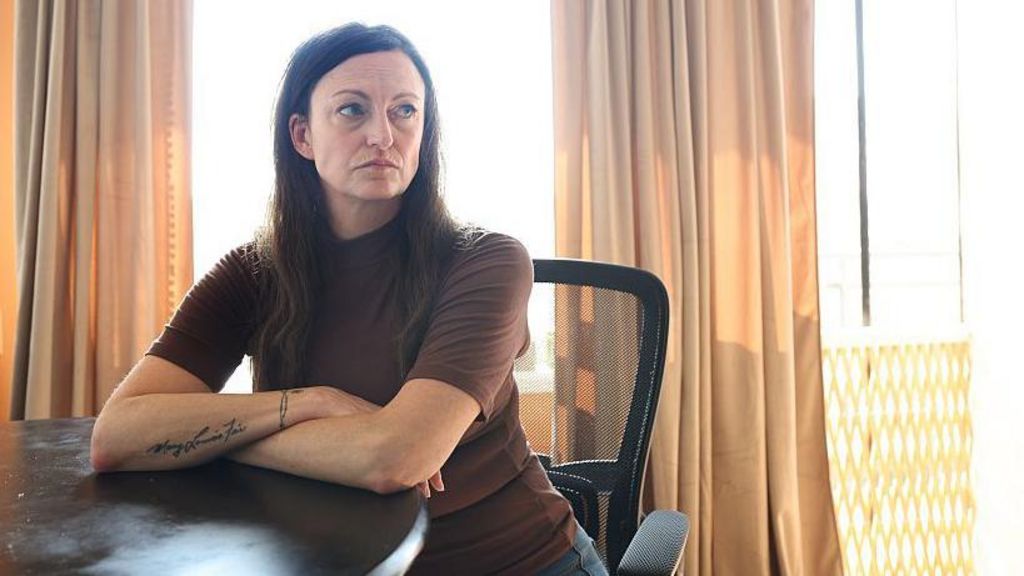
    For nearly 30 years, 49-year-old Toronto-based performer Claire Brosseau has navigated a devastating path of severe, treatment-resistant bipolar disorder and post-traumatic stress disorder (PTSD). A veteran stand-up comedian and actor who has worked across film, television, and theatre worldwide, Brosseau says she has tried every available intervention for her conditions—from talk therapy and pharmaceutical interventions to electroconvulsive brain stimulation. None have brought relief. Today, she is unable to work, leave her home unaccompanied, or maintain consistent connection with her loved ones, describing her own condition as “functionally terminal.” Now, she is at the center of a high-stakes national debate over whether Canada should expand its existing legal medically assisted dying (MAID) framework to include people whose only qualifying condition is untreatable mental illness.

    Currently, MAID is legal in Canada for patients with terminal illnesses and irreversible serious physical disabilities, but it explicitly excludes those whose sole diagnosis is mental illness. Brosseau, who has lived with debilitating mental illness since adolescence and received psychiatric care in four major North American cities over three decades, is now asking an Ontario court for a special exemption to access MAID immediately, arguing that the existing law is discriminatory and unconstitutional. She says she wakes every day consumed by overwhelming dread and crippling anxiety, and she wants a peaceful, controlled death rather than being forced to die by suicide.

    “Stigma is at the root of this exclusion,” Brosseau explained in an interview with the BBC. “If I were diagnosed with terminal cancer tomorrow, I would be immediately eligible for MAID even if I chose to stop treatment. But people like me, living with unbearable, incurable mental suffering, are denied the same right that is already a standard part of Canadian healthcare. I am not asking for special treatment—only equal treatment.”

    Canada first approved MAID for terminally ill patients in 2016, and expanded it to include non-terminal patients with irreversible serious medical conditions five years ago, following a successful legal challenge by disability advocates. The federal government had initially planned to extend eligibility to patients with treatment-resistant mental illness by 2024, but has twice delayed the expansion, most recently pushing any decision to 2026, amid widespread concerns that the Canadian healthcare system lacks the infrastructure, training, and regulatory frameworks to safely implement the change. Prime Minister Mark Carney has confirmed he will not make a decision until he receives the final recommendations from a joint parliamentary committee tasked with reviewing the proposed expansion. “I will base my position on the full evidence presented to the committee,” Carney told reporters recently.

    Over two months of hearings, the cross-party committee heard conflicting testimony from medical experts, disability advocates, and international commentators that laid bare the deep divides on this issue. Critics of expansion argue that expanding MAID to mentally ill patients risks turning assisted dying into a substitute for inadequate social and medical support. They point to reports of Canadian healthcare providers offering MAID to disabled patients who never requested it, arguing that systemic gaps in affordable housing, disability support, and specialized mental healthcare leave many vulnerable people with no other option to end unaddressed suffering. “We are currently investing in ending lives instead of investing in improving lives,” said Krista Orr, president of national disability advocacy group Inclusion Canada, who called on the committee not just to reject expansion but to roll MAID back to only terminal illness cases.

    Other critics warn that medical science still lacks a full understanding of many severe mental illnesses, making it impossible to definitively distinguish between temporary suicidal ideation and irreversible, untreatable suffering. Dr. Sonu Gaind, former chief of psychiatry at a major Toronto hospital, told the committee that none of the core safeguards and assessment questions have been resolved since the expansion was paused. “We now have even more evidence that we are not prepared to safely offer MAID for mental illness,” Gaind said.

    International experience, particularly from the Netherlands—one of the only countries that already allows MAID for patients suffering solely from mental illness—has added fuel to both sides of the debate. The Netherlands requires all patients seeking MAID for psychiatric reasons to undergo a full assessment by a qualified psychiatrist, and approvals for these cases remain relatively rare, accounting for only 2% of all assisted deaths in the country. However, the number of approved cases has skyrocketed from just 2 in 2010 to 219 in 2024. Dutch psychiatrist Dr. Jim van Os warned Canadian lawmakers that this growing trend reflects what he calls a “suicide contagion effect,” arguing the Dutch experience is a clear warning for Canada. But fellow Dutch psychiatrist Dr. Sisco Van Veen pushed back, noting that approved cases remain rare and MAID provides critical mercy to patients whose suffering is unbearable and untreatable.

    The committee itself has faced accusations of bias from supporters of expansion. Brosseau says she requested to testify before the committee multiple times but was denied a spot. One sitting member, Alberta Senator Kristopher Wells, has publicly called the review “one-sided” and says he has no confidence in the final report. Committee co-chairs Marcus Powlowski, a Liberal MP, and Conservative Senator Yonah Martin—both of whom have publicly opposed expanding MAID to mental illness—defended the process in statements, noting that limited hearing time meant prioritizing testimony from medical professionals and industry associations, and adding that the committee has “dutifully listened to both sides” of the debate. The committee’s final report is not expected to be delivered to parliament until as late as October 2025.

    For Brosseau, who says her condition is worsening by the month and cannot wait for years of parliamentary review, the delay is a matter of life and death. Confined to her home, with even short trips to the local grocery store triggering crippling panic attacks, she says her legal challenge is not a campaign for death—it is a fight for equal human rights. “I’m not campaigning for death. I’m campaigning to be seen as not a subsection of human,” she said. “We deserve the same autonomy over our bodies and our suffering that people with physical illness already have.”

    Public opinion polling shows a majority of Canadians support broad access to medically assisted dying, but public opinion becomes far more divided when the question is limited to mental illness. Currently, 96% of MAID approvals in Canada go to patients with reasonably foreseeable death, mostly terminal cancer patients, with only 4% going to non-terminal patients with irreversible serious conditions. As the country waits for the committee’s final recommendation, Brosseau’s legal case is pushing the judiciary to address a gap in the law that the federal government has so far been unwilling to fill.

  • Trump expected to drop IRS suit in exchange for MAGA slush fund

    Trump expected to drop IRS suit in exchange for MAGA slush fund

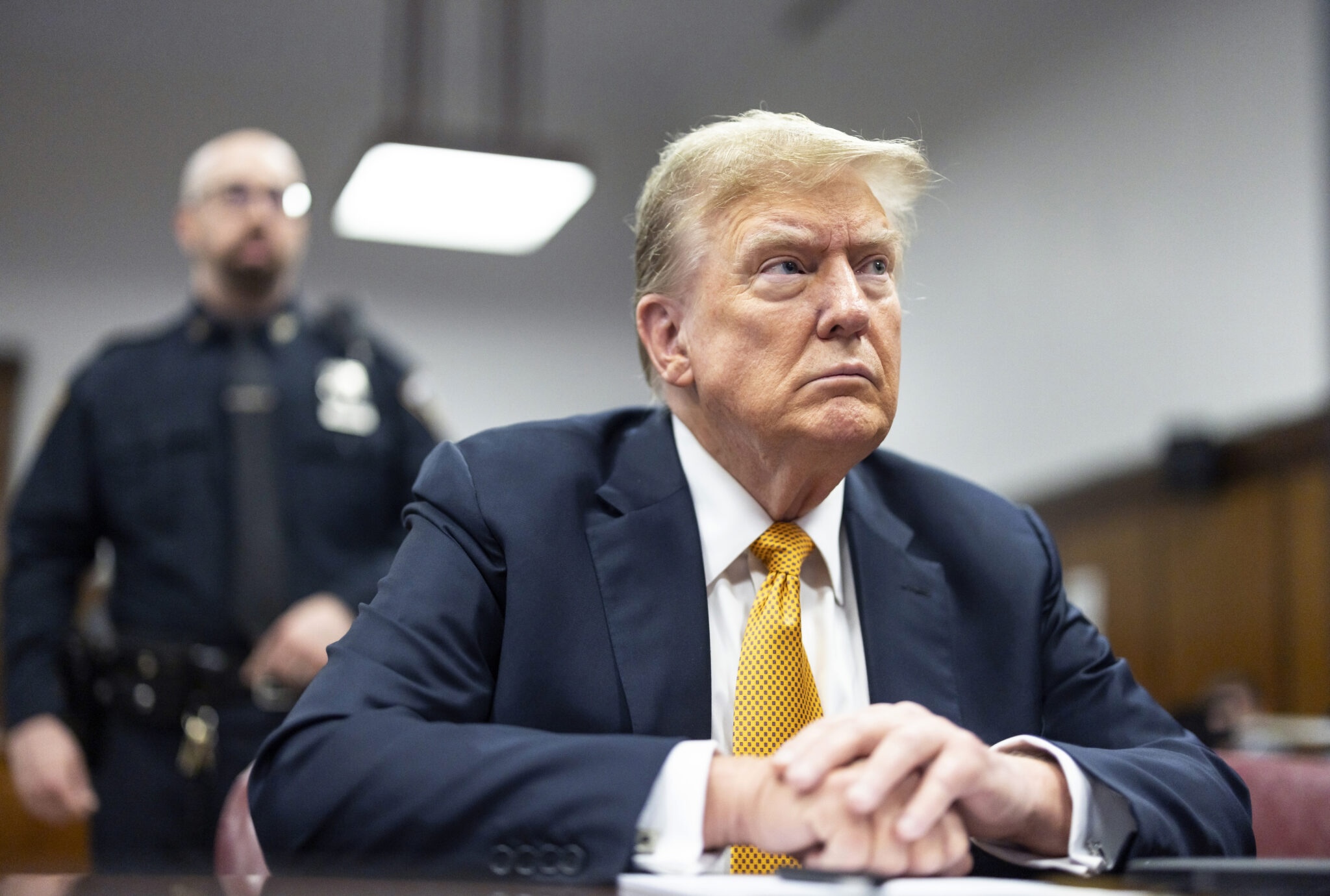
    In a sharp rebuke of emerging settlement terms for a $10 billion lawsuit President Donald Trump filed against the Internal Revenue Service, top congressional Democrats have accused the sitting president of orchestrating a massive scheme to divert $1.7 billion in public funds to his political allies, framing the deal as an unprecedented power grab that weaponizes federal institutions for partisan gain.

    Citing multiple unnamed sources familiar with ongoing negotiations, ABC News first reported late Thursday that a deal is expected to be finalized in the coming days. Under the reported terms, Trump would drop his pending lawsuit against the IRS in exchange for two key concessions: the creation of a $1.7 billion compensation pool funded through the U.S. Treasury’s Judgment Fund, a taxpayer-backed account reserved for official court judgments and government settlements, and a public formal apology from the agency for the 2020s leak of Trump’s personal tax returns during his first presidential term.

    The lawsuit itself stems from the unauthorized disclosure of Trump’s tax records by former IRS contractor Charles Littlejohn, who pleaded guilty to leaking the documents to The New York Times and ProPublica in 2024. Those leaks exposed that Trump had utilized aggressive, widely criticized tax avoidance schemes and paid no federal income taxes for multiple years leading up to his 2017 inauguration, breaking a decades-long bipartisan tradition of presidential tax transparency by refusing to release his returns voluntarily. Trump and his legal team initially sought a minimum $10 billion payout from the agency over the leak.

    The proposed settlement has already sparked fierce condemnation from congressional Democrats, who warn that the deal’s structure exposes deep conflicts of interest and unprecedented corruption. As sitting president, Trump already exercises full executive control over the IRS, which is currently led by his handpicked appointee Frank J. Bisignano, who reports directly to Trump-aligned Treasury Secretary Scott Bessent. The Department of Justice, which is defending the IRS in the case, is also under Trump’s executive authority, leading legal observers to question the legitimacy of the suit, since both nominal opposing parties are ultimately controlled by the plaintiff.

    Last month, U.S. District Judge Kathleen M. Williams, who is overseeing the case in the Southern District of Florida, publicly questioned the lawsuit’s constitutionality, noting that as sitting president, Trump holds authority over the federal entities he is suing. She has ordered both parties to submit legal briefs by May 20 proving a genuine adversarial conflict exists between the plaintiff and defendants, but legal analysts have noted the White House and DOJ can finalize a settlement before that deadline, leaving the judge with little power to block the deal. Beyond the $1.7 billion fund, multiple outlets have confirmed administration officials have also discussed dropping all outstanding IRS audits of Trump, his family, and his business entities—a move that could save Trump more than $100 million in back taxes, per a 2024 New York Times analysis.

    “ This is another installment in Trump’s ongoing effort to turn the federal government into a personal cash machine for his unpopular extremist movement,” Rep. Jamie Raskin, the top Democrat on the House Judiciary Committee, said in a formal statement Thursday. Raskin called the proposed deal “a massive and unprecedented presidential plunder of the American people,” warning that the plan marks “a declaration that the prior payouts were just a down payment, and that he now intends to earmark billions more in taxpayer dollars for his political allies, sycophants, and private militia of unemployed insurrectionists.” Raskin emphasized that Trump holds no statutory authority to divert Judgment Fund resources for this purpose, arguing that “Congress must act immediately to reassert the power of the purse and stop this brazen looting of taxpayer funds before this ‘pilot program’ for corruption becomes the permanent operating system of our government.”

    Other House Democrats echoed Raskin’s criticism. “Real story: Judge was about to throw out the case because Trump controls both parties,” Rep. Dan Goldman of New York wrote on social media Thursday. “Before it’s dismissed, Trump tells both parties to reach a ‘settlement.’ Settlement shields Trump from any future audit and creates a secret slush fund that can dole out money to anyone with no transparency.” Goldman called the arrangement “mind-boggling corruption.”

    ABC News’ reporting notes the proposed settlement includes multiple unusual provisions that raise transparency concerns. Under the draft terms, Trump would be barred from receiving direct personal payments from the three core legal claims at the center of the suit, but no restrictions prohibit Trump-aligned entities from filing future additional claims. More critically, the president would hold the authority to remove members of the commission overseeing the $1.7 billion fund without cause, and the commission would face no mandatory requirements to disclose its award procedures or decision-making, creating what experts describe as an unaccountable, oversight-free pool of taxpayer cash.

    Top Democratic lawmakers have gone even further in their assessments, describing the plan as the largest single instance of public corruption in U.S. history. “Trump is considering stealing billions of dollars from the American people,” said Rep. Don Beyer of Virginia, the ranking Democrat on the Joint Economic Committee. “He’s already the most corrupt president ever by a wide margin, but this would be fraud and theft on a scale even he has never attempted. The largest single act of grand larceny in American history.”

    Sen. Elizabeth Warren of Massachusetts, top Democrat on the Senate Banking, Housing, and Urban Affairs Committee, added that a pre-ruling settlement would amount to “a massive, unprecedented scandal.” Warren has already introduced legislation that would bar sitting presidents, vice presidents, and their immediate families from collecting settlement payments from the federal government, and would require independent court-appointed counsel to defend agencies in claims brought by top executive branch officials. But the bill has failed to advance in the current Republican-controlled Congress.

    The proposed settlement would represent a dramatic expansion of the pattern of self-dealing that has defined Trump’s second presidential term, according to tracking from the Center for American Progress, a left-leaning think tank that maintains a live public tracker of profits Trump and his family have earned through their hold on public office. To date, the tracker estimates Trump and his family have taken in more than $2.6 billion in cash and gifts through their positions, including roughly $1.5 billion from cryptocurrency ventures promoted from the White House, a $400 million luxury jet gifted by the government of Qatar, and more than $90 million in legal settlements from media and technology companies. Beyond the IRS suit, Trump has also demanded the Department of Justice pay him $230 million in damages over prior criminal investigations into his business and political activities.

    Even a partial payout on Trump’s original $10 billion claim would dwarf the self-dealing of Trump’s first 18 months back in office, analysts have noted, potentially doubling Trump’s reported net worth through public funds diverted through the settlement.

    Bharat Ramamurti, former deputy director of the White House National Economic Council under President Joe Biden, called the lawsuit and proposed settlement “a massive scam” that is “much worse” than Trump’s earlier proposal to divert $1 billion in taxpayer funds to renovate his White House ballroom.

  • Looksmaxxing influencer Clavicular reaches deal in alligator shooting case

    Looksmaxxing influencer Clavicular reaches deal in alligator shooting case

    A rising controversial social media influencer who helped spread the viral “looksmaxxing” trend has avoided jail time after accepting a plea deal in connection to a widely debated alligator shooting broadcast live online. Braden Eric Peters, 20, who goes by the online alias Clavicular, entered a no contest plea to a charge of unlawful firearm discharge at a Florida wildlife sanctuary during a March incident, according to court filings from Friday. The incident that triggered the charges unfolded on March 26, when Peters went live from an airboat in the Everglades Wildlife Management Area, located west of Miami. Footage captured during the livestream shows multiple gunshots being fired into the swamp waters of the conservation area, with online observers alleging the shots were aimed at an alligator. Within hours of the stream circulating online, the Florida Fish and Wildlife Conservation Commission confirmed it had opened an investigation into the video showing multiple people on an airboat appearing to fire at a reptile in the protected Everglades ecosystem. Peters was not the only influencer charged in the case. Fellow online personality Andrew Morales, who is known to his followers as “The Cuban Tarzan”, also entered a no contest plea and received an identical sentencing deal to Peters. A third influencer involved in the outing, Yabdiel Anibal Cotto Torres, who uses the online name “Baby Alien”, is scheduled to enter his formal plea in the case on May 20. Under the terms of the plea agreement reached with state prosecutors, Peters will serve six months of probation. Court officials added that the charge will be completely expunged from his criminal record if he successfully meets all the agreement’s requirements: completion of state-approved firearms and wildlife safety training courses, and 20 hours of court-ordered community service that is explicitly banned from being streamed online or monetized for content. Peters’ legal representation has emphasized that his client has taken accountability for his actions. In an official statement provided to the BBC, defense attorney Jeffrey Neiman said the negotiated plea deal fairly reflects the context and details of the March incident. “He is committed to moving forward responsibly and ensuring nothing like this occurs again,” Neiman said, adding that his legal team appreciated the professional handling of the case by the Florida state prosecution and the court. Prior to the final resolution of the case, Neiman had noted that Peters was following directions provided by a licensed airboat guide during the Everglades outing, and confirmed that no people or animals were harmed in the incident despite the unlawful discharge of the weapon. Peters rose to online fame for popularizing the so-called “looksmaxxing” trend, a online subculture where creators document extreme, often controversial lifestyle and cosmetic changes they make to improve their physical appearance, amassing hundreds of thousands of followers across major social platforms for the content.

  • ‘This is beyond the Oscar’: John Travolta wins surprise Cannes honorary Palme d’Or

    ‘This is beyond the Oscar’: John Travolta wins surprise Cannes honorary Palme d’Or

    The 77th Cannes Film Festival delivered one of its most memorable unplanned moments this week, when A-list Hollywood star John Travolta was presented with an unexpected Honorary Palme d’Or – the festival’s highest honor celebrating a lifetime of extraordinary contributions to cinema – moments before the world premiere of his first directorial feature film.

    Seventy-two-year-old Travolta, whose decades-long career has cemented his status as a pop culture and film icon, was visibly overcome with emotion as the award was announced to a packed theater of cheering fans, critics and industry peers. Fighting back tears during his acceptance speech, the two-time Academy Award nominee called the unanticipated honor more meaningful than a win at the Oscars. “This is a complete surprise,” Travolta told the crowd, opening his speech in fluent French to the delight of attendees. “I can’t believe this. This is the last thing I ever expected to receive here tonight. This is truly a humbling moment for me.”

    Travolta first rose to global stardom in the 1970s, leading iconic productions such as *Saturday Night Fever* and *Grease* that turned him into a household name and defined a generation of American cinema. He later cemented his legacy with a critically acclaimed career renaissance in the 1990s, headlining Quentin Tarantino’s cultural landmark *Pulp Fiction*, a role that earned him his second Oscar nomination. Over his more than 50-year career, he has remained one of the most recognizable and beloved stars in the global film industry.

    The feature that brought Travolta to Cannes this year, *Propeller One-Way Night Coach*, is a passion project decades in the making. A family-friendly adventure set in the golden age of aviation, the film is adapted from the 1997 children’s book Travolta wrote himself. In addition to writing the source material and making his directorial debut with the adaptation, Travolta also co-produced the project and appears on-screen alongside his daughter, Ella Bleu Travolta. Following its world premiere at the Cannes Film Festival, the movie is scheduled to launch globally on the Apple TV+ streaming platform later this month.

    Travolta is one of three legendary entertainment figures set to receive an Honorary Palme d’Or at this year’s Cannes festival. Acclaimed *Lord of the Rings* director Peter Jackson and award-winning singer, actor and filmmaker Barbra Streisand will also accept the honor over the course of the 2025 event. Surprise Honorary Palme d’Or presentations have become a beloved recent tradition at Cannes: last year, Denzel Washington received the unplanned honor, and two years ago, Hollywood icon Tom Cruise was surprised with the award ahead of the premiere of *Top Gun: Maverick* in 2022.

  • Waymo driverless cars become trapped in Atlanta suburb after glitch

    Waymo driverless cars become trapped in Atlanta suburb after glitch

    A recent technical malfunction has left multiple Waymo driverless vehicles stranded in an Atlanta suburban neighborhood, shining a new spotlight on the ongoing challenges of scaling autonomous vehicle technology for real-world conditions.

    The Alphabet-owned self-driving car firm confirmed this week that the AI-powered vehicles experienced an unexpected routing error that forced the fleet into an endless loop. Each affected car repeatedly redirected itself back to the same quiet cul-de-sac, leaving the autonomous vehicles unable to navigate out of the area on their own and requiring manual intervention from Waymo’s technical teams to resolve the issue.

    Local residents reported seeing the unoccupied driverless cars circling the small residential street multiple times before the problem was fixed, with images of the stuck vehicles circulating quickly on local social media channels. Waymo has not yet disclosed how many vehicles were affected by the glitch, nor has it released details on whether the incident caused any traffic disruptions or property damage in the area.

    The incident comes as Waymo continues expanding its autonomous ride-hailing services across multiple U.S. cities, including recent launches in suburban and urban markets outside of its original testing hubs. Routing and navigation remain among the most critical technical hurdles for fully autonomous vehicles, which rely on a combination of AI algorithms, real-time sensor data, and pre-mapped infrastructure to make split-second driving decisions. Industry analysts note that even rare glitches like this highlight the iterative nature of self-driving technology development, as companies work to address edge cases that do not appear during controlled testing. Waymo has stated that it is already investigating the root cause of the routing error to prevent similar malfunctions from occurring in future deployments.

  • US federal watchdog sues Chick-fil-A operator for religious discrimination

    US federal watchdog sues Chick-fil-A operator for religious discrimination

    A federal workplace civil rights agency has brought a lawsuit against a Texas-based Chick-fil-A franchise operator, accusing the company of unlawful religious discrimination after it fired a manager who requested Saturdays off for her religious Sabbath observance. The United States Equal Employment Opportunity Commission, the independent federal body tasked with enforcing anti-discrimination laws in US workplaces, announced the legal action against Hatch Trick Inc. in an official press statement.

    The affected employee, a member of the United Church of God which recognizes the Sabbath as falling on Saturday rather than the more common Sunday observance held by most Christian denominations, first made her request for Saturday scheduling accommodation during her initial job interview in August 2023, the EEOC alleges. For the first several months of her employment as a delivery operations manager at the Austin, Texas Chick-fil-A location owned by Hatch Trick, the franchisee honored the request, with the employee working 45 to 50 hours weekly across Monday to Friday, plus occasional additional shifts on Sunday. That changed in February 2024, when management reversed course and ordered the woman to begin working Saturdays, according to the commission’s court filing.

    When the employee reaffirmed her need for religious accommodation and refused the new scheduling requirement, company leadership informed her that she could not retain her higher-paying managerial role if she could not work Saturdays, the lawsuit claims. Instead, Hatch Trick offered her a demotion to an entry-level delivery driver position, which came with reduced hourly wages, fewer benefits, and shorter scheduled hours. The worker offered multiple alternative reasonable accommodations to keep her management role, including arranging for a trained driver to fill her dispatch duties on Saturdays and adjusting her schedule to only work after sundown on the Sabbath. After she rejected the demotion offer, the franchisee terminated her employment, the EEOC found.

    “Religious discrimination in the workplace is unlawful, and employers must make reasonable accommodations for employees’ sincerely held beliefs,” said Norma Guzman, director of the EEOC’s San Antonio Field Office, in a statement accompanying the lawsuit filing.

    The case draws a particular note of irony from Chick-fil-A’s own well-known corporate policy of closing all locations on Sundays specifically to allow staff to observe the Sabbath if they wish. The company’s official website states that Sunday closing gives employees time “to rest, enjoy time with their families and loved ones or worship if they choose.”

    When contacted for comment by the BBC, corporate Chick-fil-A declined to provide a statement, but told ABC News affiliate KVUE that as a franchise system, all individual hiring and employment decisions are the exclusive responsibility of independent restaurant owners. The BBC has also reached out to Hatch Trick Inc. for a response to the EEOC’s allegations, and had not received a reply as of reporting.

  • What China critics in Maga movement make of Trump’s Beijing trip

    What China critics in Maga movement make of Trump’s Beijing trip

    Just a decade ago, at a raucous 2016 campaign rally in Fort Wayne, Indiana, Donald Trump painted China as the United States’ top economic antagonist, roaring to the crowd that “We can’t continue to allow China to rape our country.” That fiery anti-China rhetoric defined his political career through years of rallies, his 2024 presidential run, and the early months of his second term in the White House.

    When Trump reclaimed the Oval Office, he stacked his senior cabinet with long-time China hawks who had built their political brands on criticizing Beijing: Secretary of State Marco Rubio, Vice President JD Vance, and senior economic advisor Peter Navarro. All were united in their claims that China was “ripping off” the U.S., stealing American intellectual property on an industrial scale, and fueling the national fentanyl crisis by channeling the drug into U.S. communities. The aggressive rhetoric quickly translated to policy: by mid-April 2025, dubbed “Liberation Day” by the Trump administration, U.S. tariffs on Chinese goods climbed from an initial 10% in February all the way to 145%. China responded in kind, imposing 125% retaliatory tariffs on U.S. imports and halting exports of critical rare earth elements to the U.S., launching a full-scale trade war.

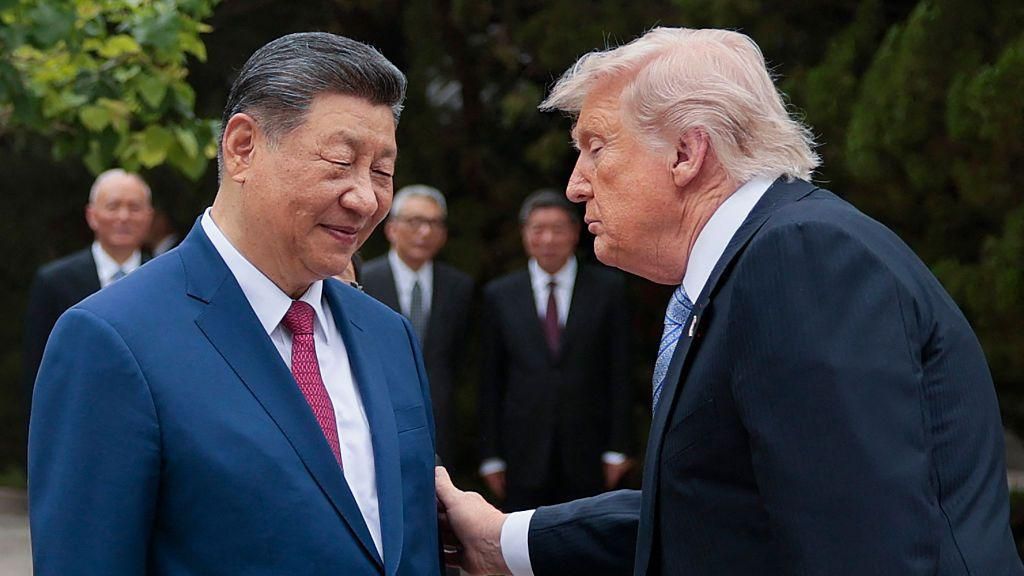
    But in a stunning turn of events this week, that antagonistic posture gave way to diplomatic detente during Trump’s landmark visit to Beijing. Welcomed with full ceremonial honors at the Great Hall of the People, Trump walked a red carpet to the sounds of the U.S. national anthem played by a Chinese military band, flanked by hundreds of flag-waving Chinese children. Standing alongside Chinese President Xi Jinping, Trump struck a dramatically warmer tone: “It’s an honour to be with you. It’s an honour to be your friend, and the relationship between China and the US is going to be better than ever before.”

    The shift from labeling China an economic predator to calling its leader a friend came alongside early announcements of limited but high-profile trade agreements, though concrete details and official figures remain scarce. Reports indicate that U.S. chip giant Nvidia has received approval to sell its semiconductors to 10 Chinese firms, aerospace manufacturer Boeing has locked in a 200-aircraft order, and global bank Citi has won approval to launch a full securities business in mainland China.

    Yet even amid the public pleasantries and softened rhetoric, long-standing hawkish U.S. positions and unresolved core tensions remain intact. Less than a week before the Beijing summit, the U.S. State Department imposed sanctions on three Chinese companies over allegations they provided satellite intelligence to Iran to aid attacks on U.S. military forces in the Middle East.

    The most contentious and unresolved issue remains the status of Taiwan, the self-governing island that Beijing claims as an integral part of its territory. The fate of a long-delayed $14 billion U.S. arms sale to Taiwan, a priority for both Democratic and Republican hawks, remains hanging in the balance. Ahead of the summit, a bipartisan group of U.S. senators sent a public letter urging Trump to move forward with the sale and raise the issue directly with President Xi. Speaking to reporters aboard Air Force One en route to Beijing, Trump offered no clarity: “On Taiwan, he [Xi] feels very strongly. I made no commitment either way. I will make a determination over the next fairly short period.”

    Notably, the official Chinese readout of the closed-door meeting centered heavily on the Taiwan issue, warning that failure to reach a clear understanding on the question could lead to “clashes and even conflicts, putting the entire relationship in great jeopardy.” No mention of Taiwan appeared at all in the White House’s official summary of the meeting. The stark difference in messaging was interpreted as an unambiguous threat by hardline figures within Trump’s own Make America Great Again movement. “I am shocked, given how much people wanted to make this into a positive spirit, he [Xi] started with a threat,” former Trump chief strategist Steve Bannon told Politico. “It was so brazen and so blatant, that they made this at the very top.”

    Surprisingly, most other prominent China hawks on Capitol Hill and within the Trump administration have remained largely silent in the wake of the summit, offering little public pushback against Trump’s new friendly tone and non-committal approach to the arms sale.

    U.S. China policy experts say this lack of backlash was entirely predictable. David Firestein, president and CEO of the George HW Bush Foundation for US-China Relations, told the BBC that even repeated high-level summits cannot erase decades of deep structural disagreement between the two global powers. “If you had 50 presidential summits in one month or one year, it still wouldn’t change the fact that there are some issues on which the US and China are simply never going to agree,” Firestein explained. “That doesn’t mean it’s not going to be a successful summit.”

    Firestein added that Trump’s softer tone likely reflects a quiet acknowledgment that the hardline tariff strategy adopted over the past eight years has failed to resolve long-standing U.S. grievances. “We still have the same problems today with market access, intellectual property rights, subsidies…the list goes on. None of those problems have been solved after eight years of having these tariffs on the books,” he said.

    David Sacks, an Asia studies fellow at the Council on Foreign Relations, noted that Trump’s new approach is likely to reshape broader Republican rhetoric and policy across the board, unlike the more fragmented approach of the first Trump administration. “Unlike the first Trump administration, and frankly, any other US administration in recent memory, this is much more top down. I think those in the administration are, mostly, in the role of implementation,” Sacks said. Stephen Orlins, president of the National Committee on US-China Relations, echoed that assessment, noting “When Trump opines, people follow. And the base follows.”

    For Trump, the Taiwan issue remains an intractable diplomatic dilemma. Bipartisan pressure to approve the $14 billion arms sale will only build ahead of President Xi’s planned reciprocal visit to the White House in September. Sacks noted that Congress will continue to press the administration for movement on the deal, with senior officials set to face repeated questions on the sale’s status during congressional hearings. Yet a final decision from Trump is far from certain. “A large US arms sale to Taiwan between now and September would potentially imperil that visit,” Sacks added. “The $14-billion package is actually now a big question.”