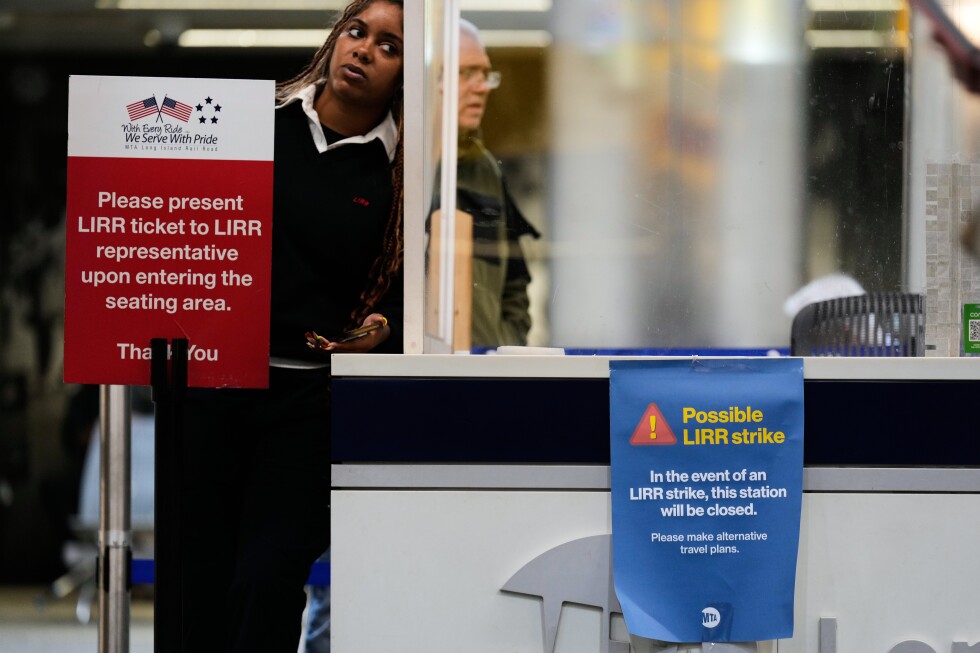
A decades-rare labor action has brought North America’s largest commuter rail network to a complete halt, leaving hundreds of thousands of travelers across the New York metropolitan region scrambling for alternate transportation this weekend and beyond. Early Saturday, five unions representing roughly half of the Long Island Rail Road (LIRR) workforce initiated a strike after months of stalled contract negotiations that even saw intervention from the Trump White House fail to broker a compromise. Legally permitted to walk off the job starting at 12:01 a.m. Saturday, the strike is the first work stoppage to hit the LIRR since a 1994 two-day action.
As of the early hours of the strike, no new bargaining sessions have been scheduled, according to Kevin Sexton, national vice president of the Brotherhood of Locomotive Engineers and Trainmen. “We’re far apart at this point,” Sexton told reporters Saturday morning. “We are truly sorry that we are in this situation.” But Janno Lieber, chair of the Metropolitan Transportation Authority (MTA), which oversees the LIRR, has pushed back on the union’s position, claiming the agency met all of the unions’ original pay demands and arguing that organized labor always planned to initiate a walkout.
The shutdown is already throwing major planned New York City events into disarray. This weekend, the crosstown rivalry matchup between the New York Yankees and New York Mets is scheduled, and the New York Knicks are continuing their NBA playoff run at Madison Square Garden. Both venues have dedicated LIRR stops, drawing thousands of fans from Long Island’s eastern suburbs who rely on the rail line to reach Manhattan.
If the strike extends past the weekend, the disruption will grow exponentially. Around 250,000 daily weekday commuters depend on the LIRR to travel between Long Island suburbs and New York City workplaces. For most, the only viable alternative is driving, which will put added pressure on the region’s already famously congested highways. “People are still going to commute, but if everybody starts driving now, the traffic is only going to get worse,” said Rich Piccola, a city-bound accountant who spoke to reporters Thursday while waiting for a train at Penn Station.
New York Governor Kathy Hochul has issued an urgent recommendation for Long Island residents to work from home wherever possible to cut down on travel chaos. The MTA has rolled out a limited contingency plan of shuttle buses connecting LIRR hubs to New York City subway stations, but the system was never designed to absorb the full volume of daily commuter traffic. While remote work has become far more widespread since the COVID-19 pandemic, many in-person workers cannot do their jobs from home, noted Lisa Daglian, executive director of the Permanent Citizens Advisory Committee to the MTA, a commuter advocacy organization.
“You work in construction, you work in the healthcare industry, you work at a school or you’re about to graduate from school, that’s not always possible,” Daglian said. “People need to get where they need to go.”
Contract talks have deadlocked over two core issues: worker wage increases and health care premiums. Unions argue that more robust pay bumps are necessary to help LIRR workers, which include locomotive engineers, machinists and signalmen, keep pace with decades-high inflation and soaring living costs in the New York region. The MTA, however, has warned that meeting the unions’ original demands would force steep fare increases for riders and create pressure to match those terms in negotiations with other unionized MTA workers.
Many commuters have expressed sympathy for workers’ concerns over affordability, even as they acknowledge they will bear the brunt of any agreed pay hikes. “Like the union workers, we too are burdened by the increase in the cost of living here on Long Island,” said Gerard Bringmann, chair of the LIRR Commuter Council, a rider advocacy group. Bringmann warned that if unions win the full pay increases they are seeking, a planned 4% annual fare hike could double to 8% for passengers.
Labor experts note political pressure is already building to resolve the standoff quickly. Hochul, a Democrat, is up for reelection later this year, and Long Island is a critical swing voting bloc for her campaign. William Dwyer, a labor relations scholar at Rutgers University who studied last year’s three-day commuter rail strike in neighboring New Jersey, said a prolonged shutdown or steep fare hike would damage Hochul’s electoral prospects. “She’s up for reelection, and Long Island is a critical vote for her,” Dwyer said. “So if there’s a significant fare hike, that does not bode well for her on Election Day.”