标签: North America

北美洲

  • Canada’s Cuba aid highlights differences

    Canada’s Cuba aid highlights differences

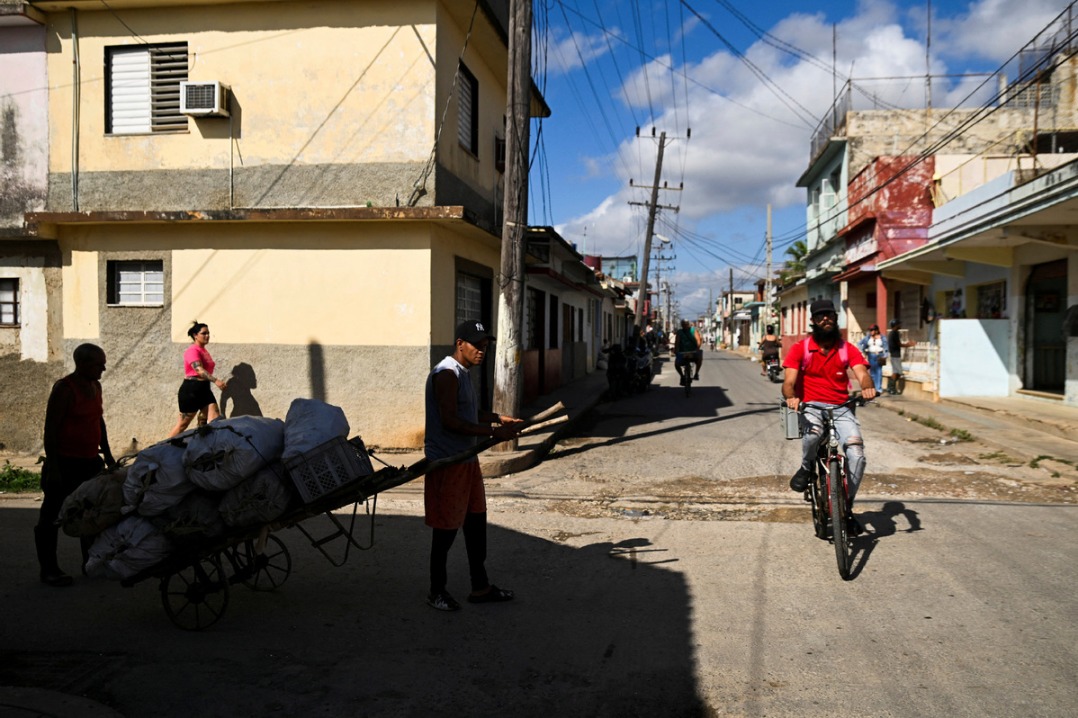
    Canada’s recent commitment of CA$8 million in food assistance to Cuba underscores a persistent foreign policy schism with the United States that has endured for over six decades, according to historical analysis. The aid package, announced by Canadian Foreign Minister Anita Anand, aims to address “significant hardship” and “urgent needs” facing the Cuban population.

    Ronald Stagg, history professor at Toronto Metropolitan University, contextualized this move within a longstanding pattern of Ottawa-Washington divergence on Cuban relations. The policy disconnect dates to the 1962 Cuban Missile Crisis when Prime Minister John Diefenbaker refused American requests to participate in the Cuban blockade. This established precedent continued through subsequent administrations, with Prime Minister Lester B. Pearson asserting Canadian jurisdiction over US subsidiaries operating in Canada despite American embargo extensions.

    This latest humanitarian gesture coincides with broader caution among US allies regarding alignment with Washington’s international positions. Multiple European nations have demonstrated measured responses to recent Middle Eastern conflicts. Spain rejected US requests to launch attacks from its territory, with Prime Minister Pedro Sanchez condemning military interventions that “violate international law.” Britain provided limited support while explicitly avoiding offensive operations, and Germany committed only to defensive measures if attacked.

    Canada itself has exhibited similar prudence, with Prime Minister Mark Carney initially supporting strikes before expressing regret over escalation. Professor Stagg notes that while Canadian-Cuban relations have experienced “ups and downs,” Ottawa has consistently maintained either “benign neglect or active support” toward Havana—a stance reflecting Canada’s historical orientation toward Britain and Europe rather than automatic alignment with American foreign policy objectives.

  • AI boom sends electricity bills in US skyrocketing

    AI boom sends electricity bills in US skyrocketing

    A silent crisis is brewing across American households and businesses as electricity bills reach unprecedented heights, driven substantially by the artificial intelligence revolution’s insatiable energy appetite. The convergence of accelerated AI infrastructure investment, an aging power grid, and seasonal demand spikes has created a perfect storm in energy markets.

    Kurt Borchardt, co-owner of Artisanal Brew Works in Saratoga Springs, New York, experienced this shock firsthand when his brewery’s electricity bill suddenly doubled within a single month. ‘Our electric bill doubled in one month. Almost a $3,000-$4,000 jump on a single bill,’ Borchardt recounted, describing the devastating impact on his business during its traditionally slow winter season. The brewery’s energy costs have now become its second-largest expense after rent, severely squeezing profit margins.

    This personal story reflects a national pattern. Recent data from the US Bureau of Labor Statistics reveals that while overall inflation increased 2.4 percent in the twelve months ending January, electricity prices surged by 6.3 percent during the same period. Unlike volatile gasoline prices, electricity costs have demonstrated a steady upward trajectory, creating sustained financial pressure across the economy.

    The primary catalyst behind this energy crunch stems from massive computing facilities powering artificial intelligence applications. According to Lawrence Berkeley National Laboratory, data centers accounted for approximately 4.4 percent of total US electricity consumption in 2023. Projections indicate this share could escalate to between 6.7 and 12 percent by 2028, depending on economic growth patterns.

    This demand surge is already manifesting in capacity markets. PJM Interconnection, the nation’s largest grid operator serving 13 states and Washington D.C., recently reported that its latest capacity auction fell short of reliability requirements by 6,623 megawatts for the 2027-28 delivery year. ‘This auction leaves no doubt that data centers’ demand for electricity continues to far outstrip new supply,’ stated Stu Bresler, PJM’s executive vice-president of market services and strategy.

    Economists warn that persistently elevated utility costs could undermine economic momentum. ‘Higher energy costs will act as a drag on growth and competitiveness for US firms and heighten affordability issues facing US households,’ explained Aaron Pacitti, economics professor at Siena University. ‘Since demand from data centers and AI is unlikely to subside anytime soon, these price increases will act as a modest headwind to growth.’

    The structural challenges extend beyond mere demand growth. In many regions, utility companies procure electricity through wholesale markets where prices spike when demand outpaces supply. This mechanism affects all consumers simultaneously, regardless of their individual consumption patterns, creating widespread economic repercussions that extend from manufacturing sectors to household budgets.

  • Trump sends mixed messages on when strikes on Iran will end

    Trump sends mixed messages on when strikes on Iran will end

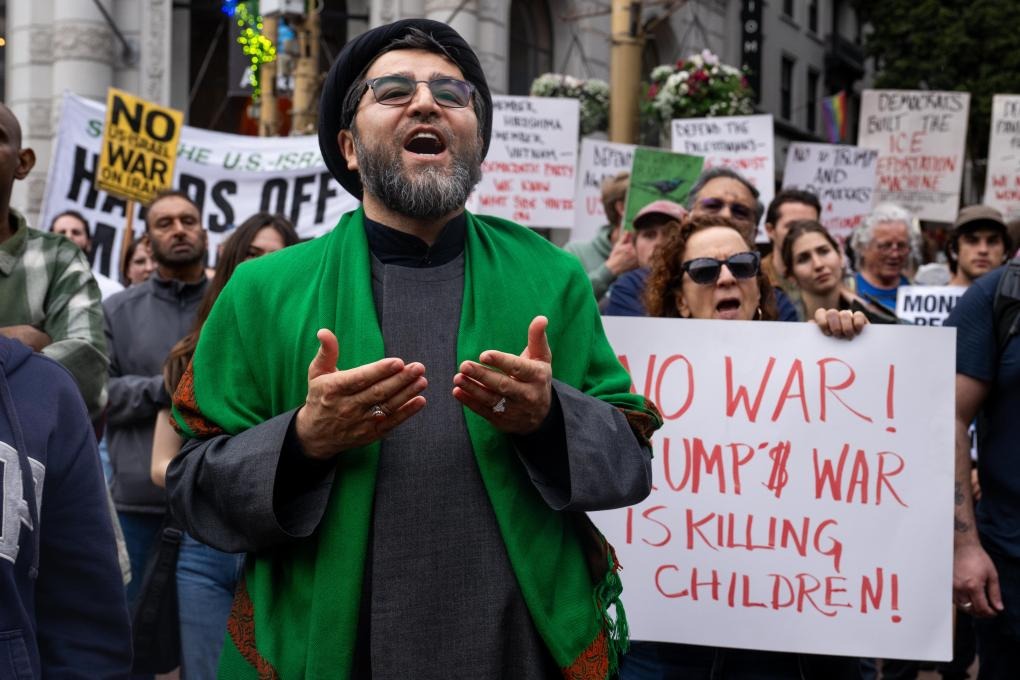
    WASHINGTON – President Donald Trump has offered conflicting characterizations of the ongoing U.S.-Israeli military campaign against Iran, creating ambiguity about the operation’s timeline and objectives. During an exchange with reporters while traveling in Ohio on Wednesday, Trump described the campaign as both a “war” and a short-term “excursion” simultaneously.

    When pressed by journalists to clarify whether the operation constituted a limited engagement or full-scale conflict, Trump responded: “Well, it’s both. It’s an excursion that will keep us out of a war, and the war is going to be, I mean for them it’s a war.”

    This contradictory messaging follows earlier statements made to House Republicans on Monday, where the President characterized the military action as a “short-term excursion” while simultaneously vowing to pursue “ultimate victory” and demanding Iran’s “unconditional surrender.”

    Despite Trump’s assertion that the conflict would conclude “soon” because there was “practically nothing left to target,” intelligence reports from Axios indicate that U.S. and Israeli officials are preparing for at least two additional weeks of strikes. According to the report, no internal directive has been issued regarding when military operations might cease.

    The human cost of the campaign continues to mount dramatically. Iran’s Ambassador and Permanent Representative to the United Nations, Amir Saeid Iravani, reported on Tuesday that more than 1,300 civilians have been killed and 9,669 civilian sites destroyed since the strikes began on February 28.

  • Kanye West ordered to pay $140K in Malibu mansion renovation lawsuit

    Kanye West ordered to pay $140K in Malibu mansion renovation lawsuit

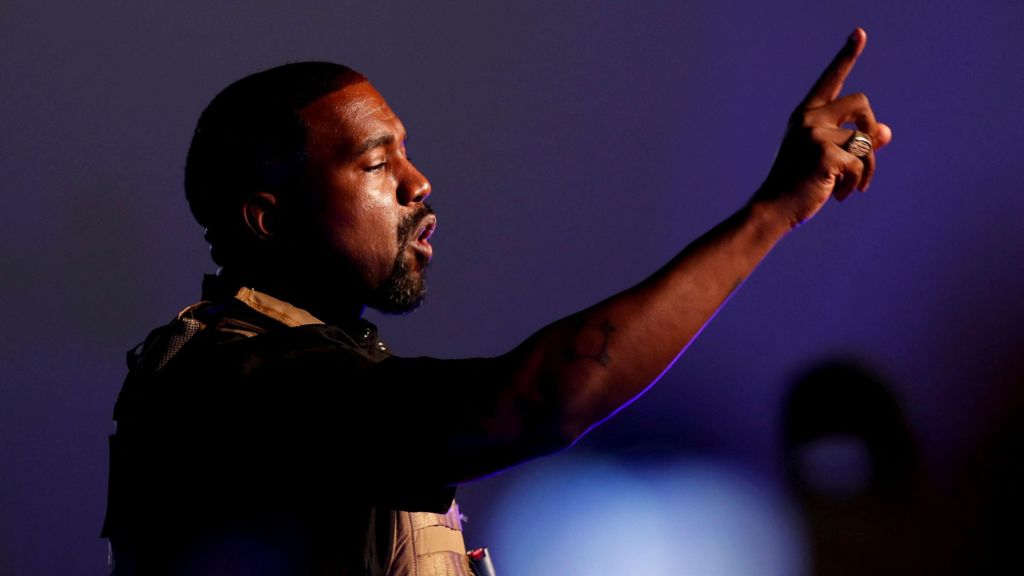
    A Los Angeles jury has mandated that renowned rapper Kanye West pay $140,000 to former handyman Tony Saxon, concluding a contentious civil trial centered on allegations of unpaid labor and extraordinary working conditions at West’s Malibu estate. The verdict, delivered after a ten-day proceeding at Los Angeles Superior Court, represents significantly less than the $1.7 million initially sought by Saxon.

    The legal battle unveiled startling testimony about the rapper’s conduct during property renovations. Saxon testified that West agreed to a $20,000 weekly compensation but provided only one such payment along with an additional $100,000 for construction expenses. The handyman further described being awakened at 3:00 AM to justify his inactivity and sleeping on a modest mattress placed directly on concrete flooring.

    Most remarkably, Saxon alleged that West requested the installation of a system to convert human waste into purified drinking and bathing water. The rapper reportedly acknowledged Saxon’s poor hygiene due to absent shower facilities by escorting him to Malibu’s luxury Nobu Hotel, where he personally drew the handyman’s bath while declaring it ‘a moment you’ll never forget.’

    West’s legal team countered these accounts by presenting financial records indicating $240,000 in payments over Saxon’s six-week employment. Defense attorney Andrew Cherkasky characterized Saxon as ‘a professional victim’ whose testimony contained ‘deep and wicked lies,’ while simultaneously disputing the validity of his reported injuries with video evidence of musical performances.

    The controversial property itself—a $57 million architectural masterpiece designed by Pritzker Prize-winning architect Tadao Ando—became a central element of the dispute. Saxon testified that West intended to radically transform the beachfront residence into an off-grid facility by eliminating electricity, plumbing, and replacing staircases with slides.

    This case marks the first among numerous lawsuits filed by former West employees to reach trial, occurring alongside the artist’s well-documented professional decline following antisemitic remarks and Nazi glorification in his public statements.

  • Justified or not? US military families on fears of Iran war

    Justified or not? US military families on fears of Iran war

    Amid escalating geopolitical friction, American military families are confronting profound anxieties regarding the prospect of armed engagement with Iran. The BBC’s North America editor, Sarah Smith, has captured these deeply personal apprehensions through poignant dialogues with those most directly affected by the human cost of war. A central voice in this narrative is Lynn, a Gold Star mother who carries the enduring grief of losing her son during the Iraq War. Her perspective is compounded by the insights of Jeremy, a military veteran whose service provides a ground-level view of the ramifications of international conflict. Their collective testimony transcends political debate, offering a raw examination of the potential consequences of further military action in the Middle East. This reporting underscores a critical dichotomy between strategic justifications at the governmental level and the palpable fears within the armed forces community. The analysis delves into whether a new confrontation is a necessary measure for national security or a path toward repeating past tragedies, exploring the complex emotional and psychological landscape for those who serve and the families who support them.

  • A small US grocer is calling out the lower prices at big chains

    A small US grocer is calling out the lower prices at big chains

    In the competitive landscape of American retail, independent grocery stores face an existential threat from pricing structures that favor large chain competitors. Alap Vora, proprietor of Concord Market in Brooklyn, New York, exemplifies this struggle as he navigates wholesale pricing disparities that undermine his ability to compete.

    Vora’s experience reveals a stark market imbalance: while he pays approximately $5 wholesale for a box of Honey Bunches of Oats cereal, major chains retail the identical product at his wholesale cost. This pricing dynamic stems from direct manufacturer relationships and preferred pricing agreements accessible only to large-volume retailers, creating what experts identify as systemic price discrimination.

    The scale of this challenge affects over 21,000 independent grocery stores across the United States, which collectively account for one-third of national grocery sales. Vora brought this issue to national attention through testimony before the US Senate Committee on Banking, Housing and Urban Affairs in May 2024, where he detailed ‘fluctuating, opaque pricing structures’ from distributors.

    Industry analyst Katherine Van Dyck of KVD Strategies identifies this pricing inequality as a primary concern for small businesses across multiple sectors, including independent bookstores and locally-owned pharmacies. ‘When a grocer faces these pricing dynamics in an industry with razor-thin margins,’ Van Dyck notes, ‘it becomes incredibly difficult to compete and contributes to business closures.’

    The recent revival of the 1936 Robinson-Patman Act represents a potential legislative solution. This Depression-era legislation, dormant for decades, prohibits sellers from offering preferential prices to certain buyers while excluding others. The Biden administration initiated enforcement through lawsuits against major distributors, though outcomes remain mixed under subsequent administrations.

    Legal scholars like NYU’s Daniel Francis suggest alternative approaches, including reduced tax and regulatory burdens for small retailers. Meanwhile, Vora’s practical response includes sometimes purchasing inventory from Costco for resale—a paradoxical solution that highlights the severity of pricing inequities.

    Beyond immediate financial pressures, Vora emphasizes the broader societal question: ‘Is small business critical? If job creation at this level matters, there needs to be more systemic support.’ His perspective underscores the fundamental choice facing American consumers and policymakers about the future of local retail ecosystems.

  • Big Tech backs Anthropic in fight against Trump administration

    Big Tech backs Anthropic in fight against Trump administration

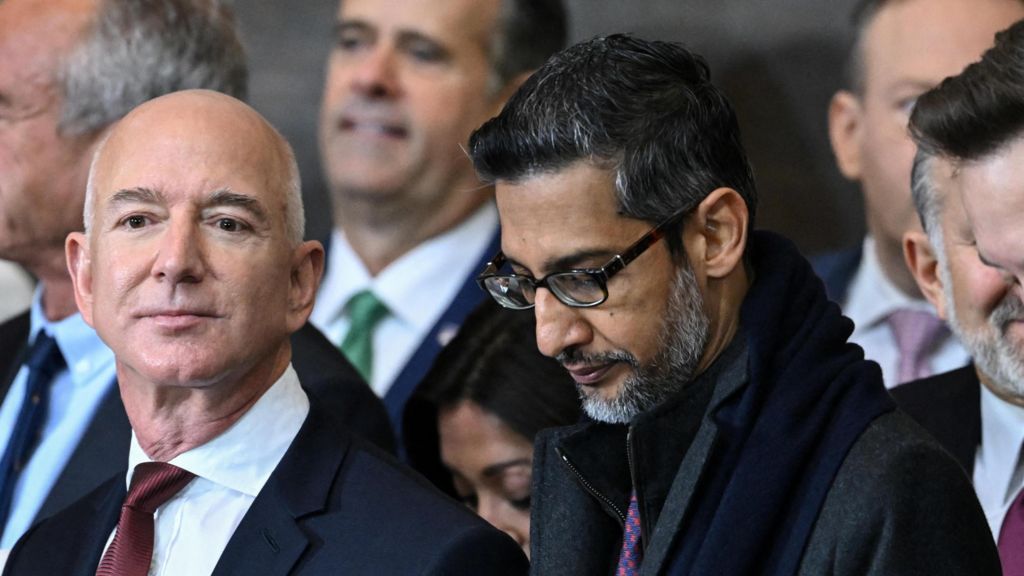
    In an unprecedented show of solidarity, America’s technology behemoths including Google, Amazon, Apple, and Microsoft have thrown their collective weight behind artificial intelligence firm Anthropic in its high-stakes legal battle against the Trump administration. The controversy centers on Defense Secretary Pete Hegseth’s extraordinary designation of Anthropic as a “supply chain risk”—a move tech giants warn could establish dangerous precedents for governmental overreach and retaliation against private enterprises.

    The legal confrontation erupted after Anthropic refused to comply with administration demands to remove contractual provisions prohibiting the use of its AI technology in domestic mass surveillance programs and autonomous weapons systems. This principled stand triggered what Microsoft described in court filings as potentially “broad negative ramifications for the entire technology sector,” with the software giant emphasizing its agreement that AI tools “should not be used to conduct domestic mass surveillance or put the country in a position where autonomous machines could independently start a war.”

    A coalition of influential organizations including the Chamber of Progress—a tech advocacy group representing Google, Apple, Amazon, Nvidia and other major players—filed a joint amicus brief expressing grave concerns about the administration’s punitive actions. The brief characterized the Defense Department’s labeling of Anthropic as “a potentially ruinous sanction” that effectively constitutes little more than a “temper tantrum” by government officials.

    The legal documents reveal startling allegations that the Defense Department actively contacted Anthropic’s customers, urging them to sever business relationships with the AI company. During Tuesday’s court hearing in San Francisco, Department of Justice representatives declined to deny these actions or commit to ceasing further retaliation.

    The conflict reached its boiling point in February when Anthropic CEO Dario Amodei publicly refused to eliminate ethical guardrails from government contracts, prompting President Trump to announce on his Truth Social platform that Anthropic’s Claude AI—in use by government agencies since 2024—would be completely removed from federal operations. Secretary Hegseth subsequently issued the unprecedented “supply chain risk” designation, marking the first time an American company has received such a label.

    Notably absent from the coalition supporting Anthropic is Meta, which departed the Chamber of Progress in 2025 after years of membership. This divergence highlights the complex political landscape where tech executives have largely supported and donated to Trump since his return to office, yet found the administration’s actions against Anthropic sufficiently alarming to warrant unified opposition.

    The case has attracted support from nearly 40 OpenAI and Google employees, along with two dozen former high-ranking military officials who warned the government’s actions “send the message that investing in national security carries the risk of capricious retaliation or disproportionate punishment for voicing disagreement.”

    Legal experts anticipate this landmark case may establish critical precedents regarding corporate free speech rights, ethical boundaries in government contracting, and the appropriate limits of executive power in regulating emerging technologies. As expressed by Foundation for Individual Rights and Expression counsel John Coleman: “A free society requires no less” than companies staying true to their principles against federal pressure.

  • Pete Hegseth brings combative style as face of Trump’s war in Iran

    Pete Hegseth brings combative style as face of Trump’s war in Iran

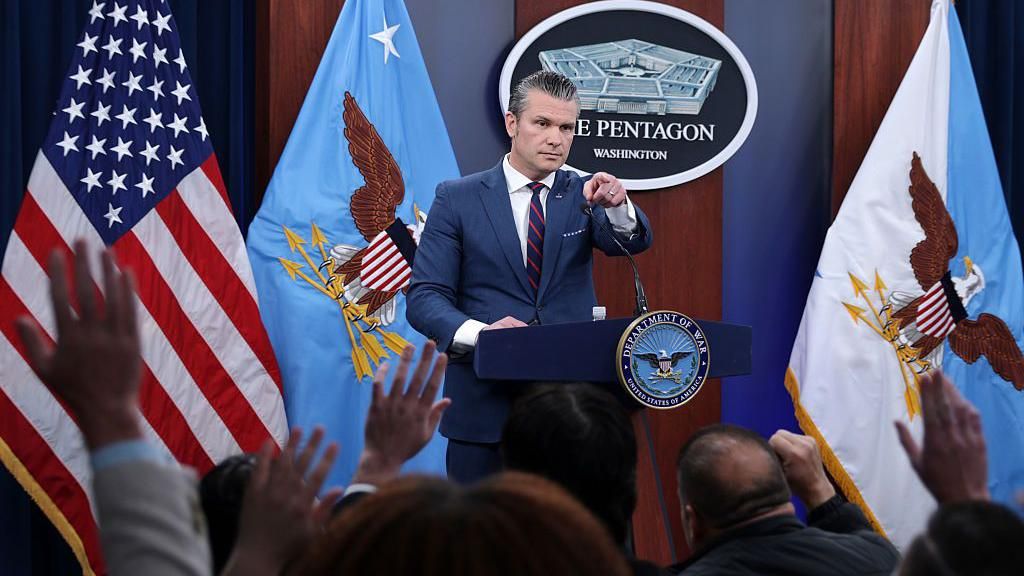
    Defense Secretary Pete Hegseth has emerged as the uncompromising voice of America’s military campaign in Iran, bringing his distinctive combative style to the forefront of wartime communications. The 45-year-old Princeton and Harvard graduate, who previously served as a Fox News host, describes Operation Epic Fury as systematically ‘crushing terrorist cowards’ while promising sustained offensive actions: ‘We have only just begun to hunt.’

    Hegseth’s approach marks a dramatic departure from the measured, technocratic language traditionally associated with Pentagon leadership. Now occupying the cabinet position recently rebranded as Secretary of War, he consistently projects what he terms the ‘warrior ethos’ and invokes Christian scripture while referring to military personnel as ‘my American brothers.’

    Despite his current prominence, Hegseth’s confirmation process faced significant challenges. Allegations of sexual misconduct, infidelity, and heavy drinking surfaced during hearings, though he characterized these as politically motivated smears. Critics also questioned his preparedness to lead the Defense Department’s nearly $1 trillion budget and three million employees, given his limited previous political experience beyond an unsuccessful 2012 Senate bid in Minnesota.

    The defense secretary’s tenure has been punctuated by controversies, including an incident where he inadvertently disclosed strike details in Yemen through a messaging app, prompting calls for his dismissal from Congress. His aggressive stance against diversity initiatives—which he labels ‘woke garbage’—has resulted in renamed military bases and severed ties with universities including his alma mater, Harvard.

    Recent reporting restrictions imposed by Hegseth’s Pentagon, including bans on photojournalists capturing ‘unflattering’ images, have raised concerns about press freedom. Meanwhile, legal challenges continue regarding his attempted demotion of retired Navy Captain and Arizona Senator Mark Kelly, whom Hegseth accused of treason for questioning military orders.

    Despite these controversies, polling indicates strong support among Republican voters for Hegseth’s leadership style. National security experts remain divided, with some praising his communication skills while others criticize his ‘brashness and bravado’ in briefings. As Operation Epic Fury continues, Hegseth maintains his objectives remain clear: eliminating Iran’s weapons capabilities, destroying its naval forces, and preventing nuclear weapons development.

  • Three brothers arrested after explosion at US embassy in Oslo

    Three brothers arrested after explosion at US embassy in Oslo

    Norwegian authorities have apprehended three brothers in connection with Sunday’s explosion outside the U.S. embassy in Oslo, revealing new details about the suspected terrorist bombing. The individuals, all Norwegian citizens in their twenties with connections to Iraq, were previously unknown to law enforcement before the incident.

    According to police attorney Christian Hatlo, the explosion resulted from an improvised explosive device strategically placed at the embassy entrance. The early morning blast at approximately 02:00 local time caused minor structural damage but fortunately resulted in no casualties. Emergency responders documented shattered glass, damaged doors, and scorch marks at the consular section entrance following the incident.

    The investigation has taken multiple directions, with authorities examining potential foreign state involvement and reviewing digital evidence including surveillance footage and a since-deleted Google Maps video featuring Iran’s late Supreme Leader Ayatollah Ali Khamenei. This development gains significance given Khamenei’s recent death during joint U.S.-Israeli operations in Tehran last month.

    Norwegian officials have deployed extensive resources including canine units, drones, and helicopters in what they classify as a high-priority investigation. Foreign Minister Espen Barth Eide condemned the attack as ‘unacceptable,’ emphasizing Norway’s commitment to diplomatic security. The U.S. State Department has concurrently launched its own investigation into the security breach.

    The suspects await interrogation as authorities work to determine motivations behind the attack, with terrorism charges already filed against the individuals whose identities remain protected under Norwegian law.

  • Trump’s Iran war and the dollar damage done

    Trump’s Iran war and the dollar damage done

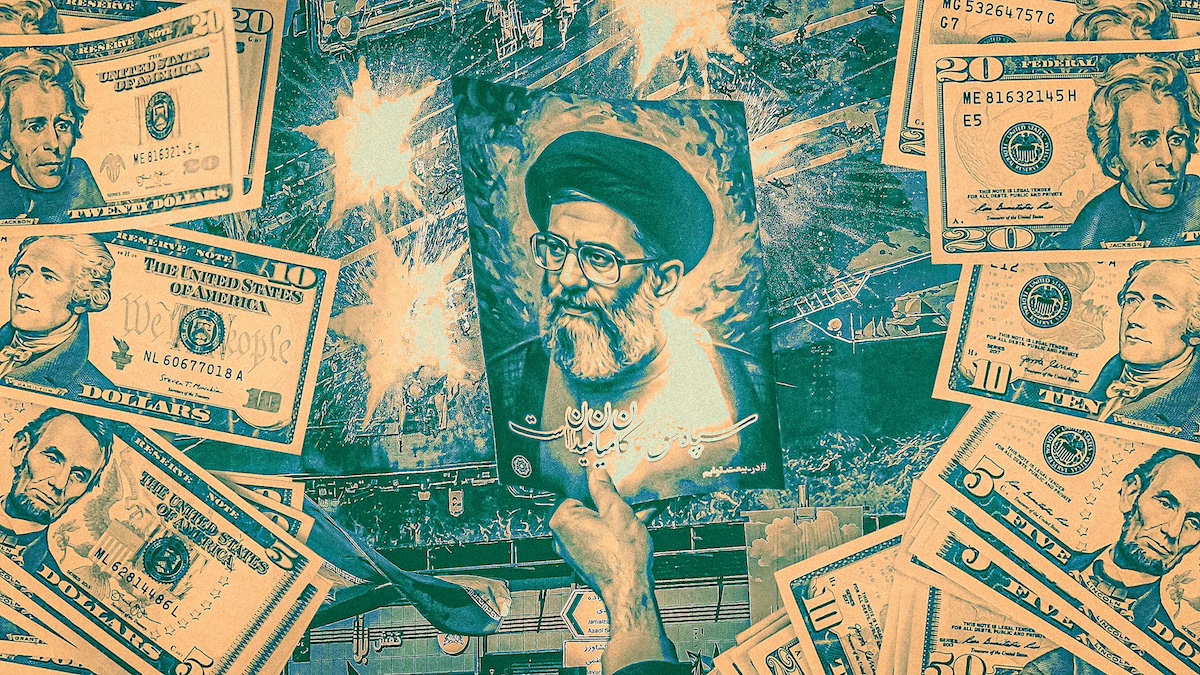
    TOKYO – The escalating geopolitical tensions between the United States and Iran under President Donald Trump’s administration have triggered profound economic repercussions that extend far beyond immediate conflict zones. Regardless of whether diplomatic resolutions emerge swiftly, analysts confirm that substantial damage to global economic confidence has already been cemented.

    The current administration has dramatically shifted the Overton window of acceptable geopolitical shocks, introducing unprecedented uncertainty into international markets. Financial institutions worldwide now grapple with incorporating potential “Black Swan” events that might originate from presidential social media channels into their risk assessments.

    This paradigm shift compounds existing economic disruptions stemming from Trump’s aggressive tariff policies and immigration reforms. According to former Federal Reserve Bank of San Francisco economist Tim Mahedy, “This administration represents a sequence of supply shocks—the Iran conflict layers upon two other significant disruptions through tariffs and immigration policy.”

    The potential protracted nature of the Iran confrontation poses particular threats to business confidence. Nationwide Financial economist Kathy Bostjancic warns that prolonged uncertainty could significantly reduce corporate investment and household spending, creating a tangible drag on economic growth.

    Simultaneously, the administration’s confrontational approach toward Federal Reserve independence has raised alarms within financial circles. Attempts to remove Chair Jerome Powell, replace Governor Lisa Cook, and install political loyalists to the Fed board suggest a deliberate effort to politicize monetary policy institutions.

    Perhaps most significantly, Trump’s combination of massive fiscal expansion—pushing national debt beyond $38 trillion—and unconventional monetary policy proposals has triggered concerns about the dollar’s long-term status as the global reserve currency. Despite Moody’s recent downgrade of U.S. credit ratings, the dollar maintains its dominant position, though analysts note increasing nervousness among foreign holders of U.S. debt, particularly China and Japan, which collectively hold approximately $1.9 trillion in Treasury securities.

    UBS economist Paul Donovan observes that while outright dumping of dollar holdings remains unlikely, “reduced future appetite for U.S. Treasuries among international investors is gaining market attention.”

    The administration’s pursuit of a weaker dollar through potential “Mar-a-Lago Accord” style agreements reflects a misunderstanding of contemporary global economic dynamics, particularly the rising influence of BRICS nations and oil-rich Gulf states.

    Meanwhile, China perceives strategic opportunity in U.S. geopolitical isolation and fiscal uncertainty. Despite the yuan comprising only 2% of global foreign exchange reserves compared to the dollar’s 57%, Trump’s alienation of traditional allies and unconventional economic policies have created openings for Chinese currency internationalization efforts.

    Enodo Economics Chief Economist Diana Choyleva emphasizes that conventional analytical approaches separating economics, geopolitics, and military risk have become dangerously inadequate. “The Iran conflict is altering strategic balances between the U.S. and China, strengthening Iran-China-Russia alignment, and forcing nations from Saudi Arabia to Taiwan to reconsider positions,” she notes. “These structural shifts will ultimately matter more than immediate oil price spikes.”