
A devastating chemical explosion at a paper mill in the U.S. state of Washington has left one person confirmed dead and nine additional workers unaccounted for, according to official statements from local authorities. In the wake of the industrial accident, members of the surrounding community have come together to support emergency response teams and the families of those who remain missing, offering emotional comfort, practical resources, and coordinated assistance during the uncertain aftermath. First responders have been working around the clock to secure the site, conduct search and recovery operations, and assess the extent of damage caused by the blast. Local officials have not yet released detailed information about the cause of the explosion or the identities of the deceased and missing workers, as investigations remain in the early stages. The tragedy has prompted an outpouring of solidarity across the region, with community organizations and local residents stepping up to provide whatever support is needed to those affected by the incident.
标签: North America
北美洲
-
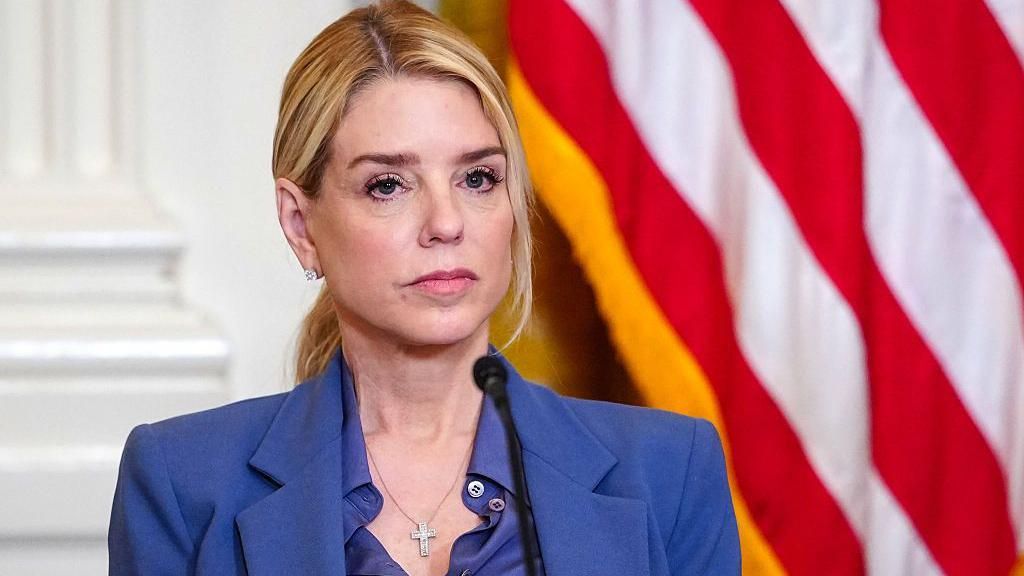
Former US Attorney General Pam Bondi diagnosed with cancer
Weeks after being removed from her position as the United States’ top law enforcement official, former Attorney General Pam Bondi has announced she has been diagnosed with thyroid cancer, multiple American media outlets have confirmed. The story of Bondi’s health diagnosis was first broken by Axios, which reported that the news of her illness came just a short time after former President Donald Trump removed her from the Department of Justice post.
At 60 years old, Bondi shared with CNN that she is currently undergoing active treatment for the cancer, and is still in the recovery period from a surgical procedure she underwent several weeks prior. Despite the diagnosis, she confirmed she is “doing well” and has no plans to step back from professional work. In a revealing new development, Bondi will join the newly formed White House advisory panel focused on artificial intelligence: the Presidential Council of Advisors on Science and Technology, commonly known as PCAST.
Katie Miller, a podcast host and former White House advisor, publicly shared her support for Bondi on social media, writing that “Pam has been quietly kicking cancer’s ass the last few weeks” and noting that Bondi “has a heart of gold”.
When Bondi departed the Department of Justice in early April, she stated at the time that she was looking forward to moving into a role in the private sector. Her appointment to PCAST marks the first public confirmation of her ongoing professional work following her exit from the Justice Department.
Vice President JD Vance issued an official statement praising Bondi’s new role, saying: “Pam has been an enormously valuable asset to the president’s team, and I’m thrilled for her and for all of us that she’s going to remain involved in confronting some of the most important issues the administration faces.”
PCAST was established by Trump via executive order in January 2025, with the formal mission to “unite the brightest minds from academia, industry, and government to guide our Nation through this critical moment by charting a path forward for American leadership in science and technology”. The first full slate of council members was not publicly announced until March 2026, and the group includes some of the most prominent leaders in the global science and technology sectors: Google co-founder Sergey Brin, Meta CEO Mark Zuckerberg, Oracle co-founder Larry Ellison, and Nvidia CEO Jensen Huang are all counted among its members.
-
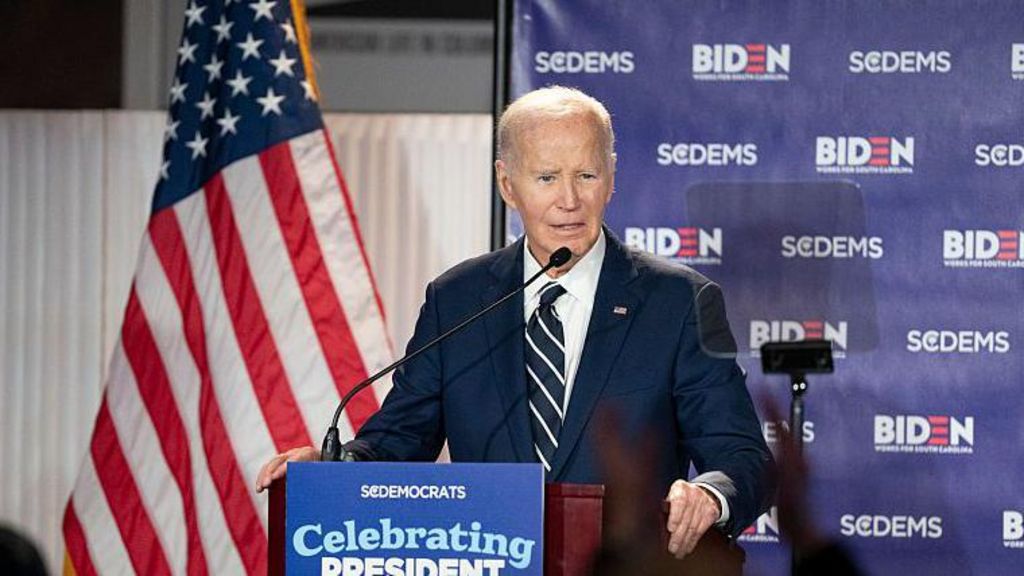
Biden sues US justice department to block release of recordings
The long-simmering debate over Joe Biden’s cognitive fitness has reignited in a dramatic legal clash, as the former US president has filed a lawsuit against the federal government to stop the planned release of private interview recordings he conducted with his memoir’s ghostwriter. The materials, which have already sparked fierce political controversy over the past two years, have been at the center of a battle between the Biden legal team, the new Trump-era Department of Justice, and congressional Republicans seeking to shed light on what they claim is evidence of significant mental decline.
The interviews in question date back to 2016, when Biden worked with co-writer Mark Zwonitzer to draft his 2017 memoir *Promise Me, Dad*, a reflective work centered on the 2015 death of his elder son Beau Biden. The recordings and transcripts of these conversations were obtained by Special Counsel Robert Hur during his 2023-2024 investigation into Biden’s improper retention of classified documents after he left the vice presidency.
Hur’s final 2024 report, while declining to recommend criminal charges against Biden, included damning observations about the former president’s memory that upended American politics. Citing the ghostwriter interviews, Hur wrote that the exchanges were “painfully slow, with Mr Biden struggling to remember events and straining at times to read and relay his own notebook entries.” The report also noted that Biden referenced personal vice-presidential notes during the interviews, some of which contained classified material, and explicitly pointed to “significant limitations” in Biden’s recollection. The findings triggered a nationwide conversation about Biden’s age and health, intensified after a poor performance in a 2024 general election debate eroded confidence from his own Democratic Party. Ultimately, Biden withdrew his bid for re-election that year.
In the months following the release of Hur’s report, House Republicans leading three congressional impeachment investigations into Biden submitted requests to obtain the full interview records. The Heritage Foundation, a prominent conservative Washington think tank, also launched a parallel legal battle to force the materials into the public domain.
The trajectory of the release shifted dramatically after Donald Trump won the 2024 presidential election and took office. The Department of Justice, which previously blocked disclosure of the interviews on privacy grounds during Biden’s presidency, reversed its position and announced plans to release all records by June 15.
In an official statement defending the reversal, Justice Department spokesperson Natalie Baldassarre directly attacked the prior Biden administration’s handling of the materials. “Joe Biden’s Justice Department tried to hide audio recordings that clearly demonstrate a significant decline in his cognitive abilities as far back as 2016,” Baldassarre said. “We will fight to ensure the American people can hear these recordings and draw their own conclusions about the former President’s mental acuity before he sought the presidency.”
Biden’s legal team has pushed back hard against the planned release in their federal lawsuit, arguing that the private conversations between the former president and his ghostwriter are protected under the US Privacy Act. They also accuse the current Justice Department of violating the Administrative Procedure Act, the federal law that sets binding rules for government agency conduct. The lawsuit claims the DOJ is relying on a false legal justification to disclose the sensitive materials, with the explicit improper goal of public exposure of Biden’s private conversations for political gain.
-
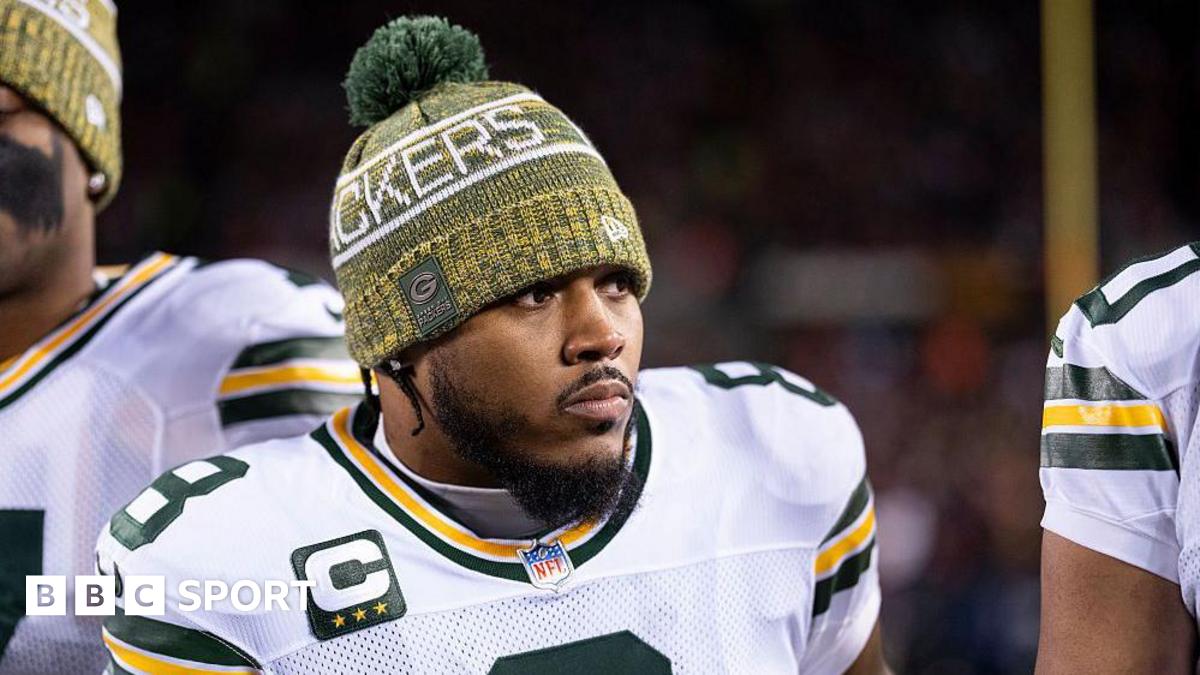
Packers’ Jacobs arrested on domestic abuse charges
One of the NFL’s most prominent running backs, Josh Jacobs of the Green Bay Packers, is at the center of a growing legal storm after being taken into custody on five felony and misdemeanor domestic abuse-related charges.
The case traces back to a disturbance call responded to by officers from Wisconsin’s Hobart-Lawrence Police Department on a Saturday morning. Three days after the initial complaint, the 28-year-old Pro Bowl running back was booked into the Brown County Jail. The charges against Jacobs span five distinct offenses: battery, criminal property damage, disorderly conduct, victim intimidation, and strangulation and suffocation.
Hobart-Lawrence Police Chief Michael Renkas confirmed the investigation remains active in an official statement, noting that no additional details would be disclosed to the public at this stage of the process.
Through his legal team, Jacobs has issued a categorical denial of all allegations against him. In a formal statement released by attorneys David Chesnoff, Richard Schonfeld and Clarence Duchac, the running back “vehemently denies” the claims, emphasizing that the case remains in its early investigative stages, with key evidence still not available to the public. The legal team has asked the public and media to allow the judicial process to proceed without premature judgment, calling for fairness and restraint in commentary on the case.
Both the Green Bay Packers organization and the National Football League have acknowledged the arrest, but have declined to issue substantive comment while the legal process unfolds. The Packers said they are aware of the matter but will not comment on an ongoing legal situation. The NFL confirmed that league officials have been in contact with the Packers organization regarding the arrest.
Jacobs joined the Packers in 2024 as a high-profile free agent, signing a four-year contract worth $48 million. A veteran of seven NFL seasons, he originally entered the league with the Las Vegas Raiders (formerly the Oakland Raiders) before making the move to Green Bay. Over his career, Jacobs has earned three Pro Bowl selections, in 2020, 2022, and 2024, and led the entire NFL in rushing yards during his tenure with the Raiders. Across his seven seasons, he has compiled 7,803 rushing yards on 1,840 carries and scored 74 total touchdowns. He is currently preparing for his third season with the Green Bay franchise.
-
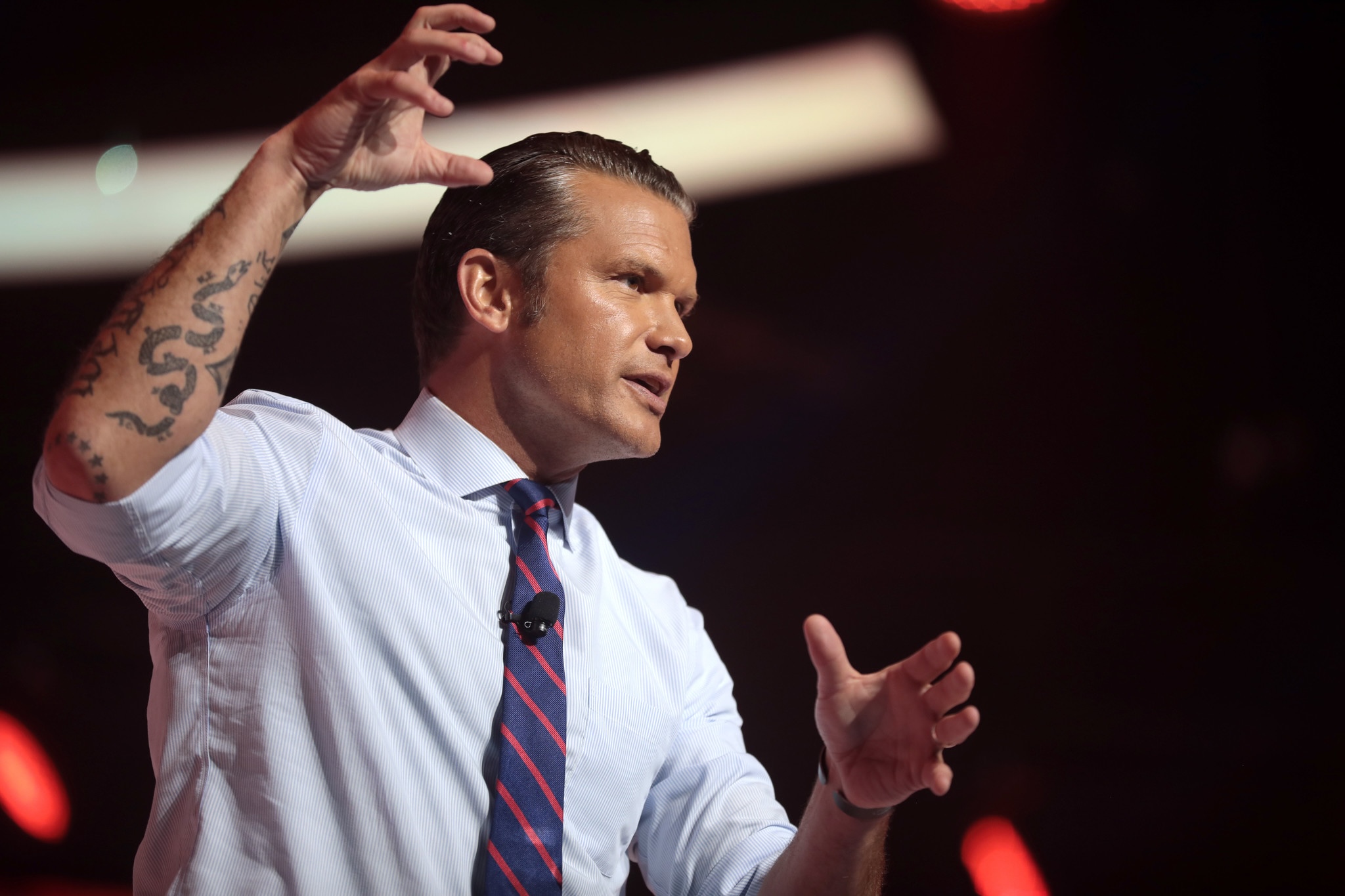
Pete Hegseth’s desperate crusade for masculine validation
Earlier in 2025, during a closed-door meeting with senior military leadership, then-President-elect Donald Trump posed a sharp question to his inner circle: what would be the outcome of a full-scale military conflict with Iran? While then-Chairman of the Joint Chiefs of Staff General Dan Caine pushed for urgent caution, correctly forecasting that an escalated campaign would push Iran to block the critical Strait of Hormuz—through which 20% of the world’s oil supplies pass—one voice leaped to endorse immediate war: Pete Hegseth, Trump’s self-described informal “Secretary of War.”
Trump would later recount the exchange at a public press event, noting: “Pete, I think you were the first one to speak up. And you said, ‘Let’s do it, because you can’t let them have a nuclear weapon.’”
For millions of Americans, military service is rooted in a desire to serve country, secure economic stability, or join a shared community of purpose. But for Hegseth, a long-running Fox News host turned top Pentagon advisor, a hunger for martial glory and a quest to forge a more aggressive masculine identity have always overshadowed all other motivations.
What many observers overlook is the throughline connecting Hegseth’s early life, his military career, and the current war he championed. After graduating from Princeton University in 2003, he deployed to both Afghanistan and Iraq—two conflicts that ultimately ended in humiliating U.S. defeat. For years after returning home, he used his media platform to defend the Pentagon’s long occupations of both nations, parroting mainstream Republican talking points that brushed aside widespread chaos and civilian death with promises that stable democratic governance was just over the horizon.
Military analysts and veteran observers say this unyielding zeal stems not from patriotic conviction, but from a desperate search for personal validation after decades of failed foreign policy. Adam Weinstein, a Marine Corps veteran and deputy director for Middle East policy at the Quincy Institute, a nonpartisan Washington-based think tank focused on peace and diplomacy, explains that rank-and-file service members and many junior officers have long accepted the catastrophic failure of the post-9/11 wars. “There’s a deep sense of sacrifice and loss for nothing,” Weinstein says. “And that can lead to fatalistic beliefs, it can lead to Islamophobia. In its healthier form, it can lead to questioning the principles of interventionism and the US foreign policy establishment.”
Hegseth chose a different path: he has refused any reckoning, either personal or geopolitical, with the failures of the Global War on Terror. Once open defense of the invasions became politically untenable, he shifted to a narrative that avoided any examination of his own military career and instead leaned into extreme rhetoric, increasingly laced with anti-Muslim bigotry, misogyny, and a toxic vision of hyper-masculine militarism.
As his public profile grew, Hegseth began arguing that the Pentagon itself was weak-willed, insufficiently aggressive, and overrun by incompetent, cowardly leaders—disproportionately targeting women and racial minorities, whom he claims have been unfairly promoted over more qualified white men. His solution was blunt: the U.S. simply needed to fight harder in the Middle East until the mission was complete and what he labels “Islamic extremism” was eliminated entirely. One former colleague noted, “I never got the feeling that he wanted to abandon the Middle East.”
### A Childhood Quest for Masculine Validation
Born and raised in Minnesota, Hegseth was raised in a conservative, religious household and fit the mold of an ideal all-American boy: athletic, devout, well-spoken, and conventionally attractive. But in his 2016 memoir *In the Arena: Good Citizens, a Great Republic, and How One Speech Can Reinvigorate America*, he admitted he carried a core shame: he saw himself as soft, unwilling to pick fights or confront conflict because of deep-seated fear. He hailed his father for his integrity and strong work ethic, but resented that he had not been taught the art of aggressive confrontation—something he saw as the core of true manhood.
For Hegseth, military service was the obvious path to remedy what he saw as a fatal flaw: he believed it would instill the toughness and masculinity he craved, while also opening doors to social mobility and national prestige. He applied to both West Point, the nation’s most prestigious service academy, and Princeton University, where he competed for an ROTC scholarship, ultimately accepting Princeton’s offer and matriculating in 1999.
Scholars have drawn a striking parallel between Hegseth’s path and that of another famous Minnesotan Princeton alumnus: novelist F. Scott Fitzgerald. Both were working-class young men who gained entry to the elite Ivy League institution, chafed at its upper-crust elitism while craving its validation, honed their writing voices on campus, and went on to serve in the U.S. Army. Both also struggled with alcohol and turbulent personal relationships, though Fitzgerald was far more reflective about his own flaws than Hegseth has ever been.
Hegseth has long echoed that unapologetic ambition, stating in a 2015 interview: “If you want something, you go after it – you’re willing to sleep a little less, put up with more, put up with a little insanity and do things you don’t want to do.”
Even during his time at Princeton, former professors and classmates noted Hegseth had “many faces”: in public, he loudly championed the impending Iraq War and attacked campus feminist groups, but in private settings, he could show nuance and kindness. Today, his former professors say his current public persona does not align with the young man they knew. That disconnect is no accident: his over-the-top, war-mongering posturing during the Trump era bears little relation to either his Ivy League education or his actual military service record.
Hegseth left Iraq with a Bronze Star, but the decoration was issued “without valor”—a lower-tier award that the *Washington Post* found was “issued somewhat liberally” during the War on Terror, with many enlisted troops joking that it amounted to little more than a “participation trophy” for ambitious officers. His award citation relied on the same empty platitudes the Bush White House used to sell the disastrous invasion to the American public, claiming he had “contributed immeasurably to the success of building a free and democratic nation for the citizens of Iraq”—a claim that is widely acknowledged as fiction decades later.
### Building a Political Brand Around War Crime Advocacy
After returning home, Hegseth built his political profile through work with a network of astroturf veterans’ groups backed by powerful conservative donors, most notably Concerned Veterans of America, which is funded by the billionaire Koch Brothers and advocates for full privatization of the U.S. Department of Veterans Affairs. In 2014, he headlined a 10-city “Defend Freedom” national tour, featuring patriotic rock band Madison Rising and speeches from decorated service members and military families.
It was on that tour that he connected with Karen Vaughn, a Gold Star mother whose son, a SEAL Team Six member, was killed in action in Afghanistan. Vaughn remains a close ally, saying she supports Hegseth because he prioritizes the voices of people who have experienced combat firsthand: “His friends are the people who fought these wars. They are not the people who sat around white linen tablecloths with glasses of wine discussing them.”
Vaughn later introduced Hegseth to Eddie Gallagher, a Navy SEAL who sparked national controversy when he was accused of killing unarmed civilians and stabbing a wounded, captive teenage fighter to death. Hegseth seized on Gallagher’s case, along with two other high-profile cases of troops accused of war crimes, to shift the national conversation around acceptable rules of engagement during war. He brashly argued: “These are men who went into the most dangerous places on earth with a job to defend us and made tough calls on a moment’s notice. They’re not war criminals, they’re warriors.”
Ultimately, Trump sided with Hegseth: he reversed Gallagher’s demotion after he was acquitted of the most serious charges, and issued full pardons to other troops convicted of war crimes. That victory cemented Hegseth’s credibility among a subset of hardline active-duty service members, and established him as the face of the modern Trumpian soldier archetype: white, male, devoutly Christian, and unapologetically aggressive.
### The Ideological Roots of Hegseth’s Bellicosity
Hegseth’s worldview has been deeply shaped by his repeated trips to Israel, which he first visited in 2013. Writing for *National Review* after that trip, he praised what he called “Israel’s sense of purpose,” noting that unlike the U.S., which often hides its wars behind technocratic policy justifications, Israel frames its conflicts in religious and existential terms. “I find myself envious of the gravity and substance of the Israelis’ task,” he wrote.
For Hegseth, Israel represented exactly the kind of unapologetic military dominance he had long sought for the U.S. in the Arab world. Repeated visits over the following decade reinvigorated both his Christian faith and his belief that aggressive, total war is morally justified. He met with far-right Israeli political leaders, toured military outposts along the northern border, and visited occupied Hebron in the West Bank, and produced a series of pro-Israel documentaries for Fox News’ streaming platform.
It was during one of these filming trips that he first encountered the Jerusalem cross, a symbol historically associated with the medieval Crusades. He had the cross tattooed on his chest, saying he wanted “to show that my religion is front and center in my life.” Today, his body art is a public manifesto for his worldview: it also includes an American flag, an assault rifle, the phrase “Deus Vult” (Latin for “God wills it”), a Crusader motto that has been widely adopted by white supremacists and was prominently displayed at the violent 2017 white nationalist rally in Charlottesville, Virginia. He also has the word “kafir” — Arabic for “infidel” — tattooed on his right bicep.
By 2016, Hegseth had framed U.S. national security as inextricably linked to Israel’s security, calling the Obama administration’s historic Iran Nuclear Deal a cowardly betrayal that would allow Iran to destroy both nations. During a 2016 speech in Jerusalem, he pledged that the U.S. would forever “lock arms and shields with all of you in defense of freedom and western civilization.”
### Driving the Current Iran Conflict
It is this long personal and ideological history that goes a long way toward explaining the current U.S. war with Iran. As the effective top leader of the Pentagon under the second Trump administration, Hegseth is a man driven by a deep personal need to erase the humiliation of the failed post-9/11 wars he served in, which he has framed as a personal emasculation.
Experts and former administration officials say this makes his push for war a deeply personal, ideological project, not a response to any actual imminent threat to U.S. national security. Multiple former Trump administration officials have publicly rejected the push for war, most notably Joe Kent, a former counterterrorism official who resigned his post, explicitly citing that “no imminent threat to our nation” comes from Iran. Even former Director of National Intelligence Tulsi Gabbard and former CIA Director John Ratcliffe have tacitly acknowledged that the war was not launched in response to a concrete, verifiable threat from Iran.
Today, Hegseth has abandoned any pretense of caution or compassion. As he recently told reporters: “We are punching them while they’re down, which is exactly how it should be.”
In practice, that has translated to a brutal joint bombing campaign with Israel that has hit civilian targets including a girls’ primary school, killing multiple children, and attacked commercial oil tankers in the Strait of Hormuz, causing massive oil spills that have poisoned regional marine ecosystems. Hegseth has also publicly pledged not to offer quarter to enemy combatants, a direct violation of the Geneva Conventions and international humanitarian law.
Hegseth has explicitly injected religious ideology into the U.S. military’s ranks, echoing Israel’s framing of conflict in religious terms. He recently told CBS News: “the providence of our almighty God is there protecting those troops, and we’re committed to this mission.” When asked if he sees the conflict as a religious war, he responded: “Obviously, we’re fighting religious fanatics who seek a nuclear capability in order for some religious Armageddon.”
He has hosted public prayer services at the Pentagon featuring hardline Christian nationalist pastors and prominent Christian contemporary musicians, and official Defense Department promotional videos have featured Bible verses superimposed over combat footage. Military watchdogs have also claimed that senior U.S. commanders have told troops that the war fulfills biblical prophecies about the end times. In recent weeks, a poster featuring Jesus Christ firing a mortar round has been spotted displayed at a U.S. military base in the Middle East, encapsulating Hegseth’s fusion of Christianity, violence, and masculine power.
In his 2024 book *The War on Warriors*, Hegseth laid out his full vision for remaking the U.S. military in his image, arguing that the force has been “warped and woke” by efforts to expand gender integration, diluting standards to allow women into combat roles while punishing “good soldiers” for misogynistic or offensive tattoos. In Hegseth’s own words, women belong on the front lines only as ink on a man’s bicep.
This article is republished with permission from TomDispatch, written by investigative journalist Jasper Craven, author of *God Forgives, Brothers Don’t: The Long March of Military Education and the Making of American Manhood*, and a fellow at the Veterans Healthcare Policy Institute.
-
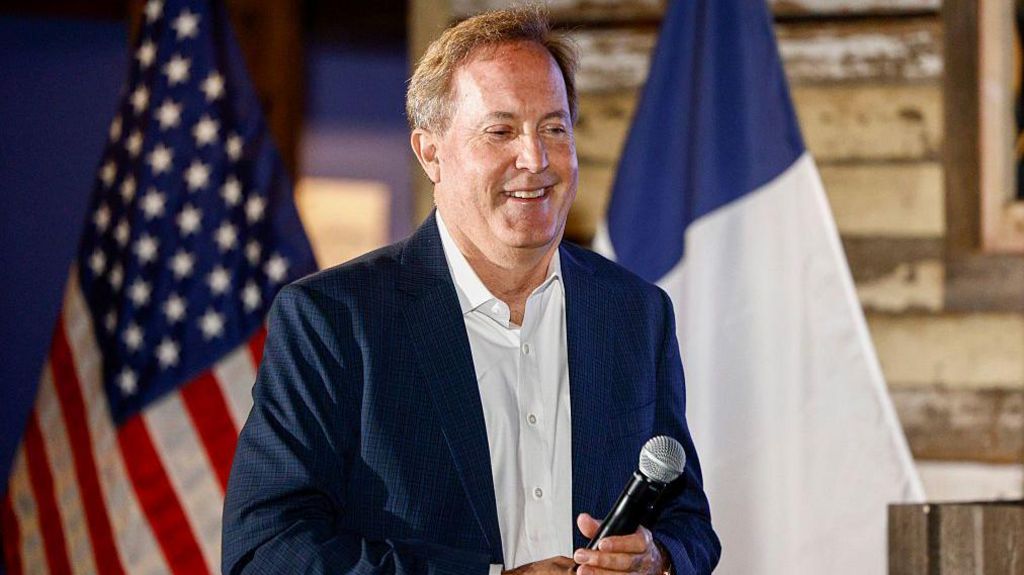
Attorney General Ken Paxton wins Texas Senate primary, defeating veteran congressman Cornyn
On Tuesday night, Texas Republican primary voters delivered a historic political upset: state Attorney General Ken Paxton ousted four-term incumbent Senator John Cornyn in a high-stakes runoff election that has already reshaped the national battle for control of the U.S. Senate. Though pollsters and political analysts had forecast Paxton’s win for weeks, the defeat of a 23-year congressional veteran who served 12 years in Senate Republican leadership ranks stands as one of the most shocking incumbent losses in modern GOP primary history. The brutal campaign also set a new milestone as the most expensive Senate primary contest in U.S. history.
The results clear the way for a fiercely competitive general election matchup in November, where Paxton will face Democratic state legislator James Talarico. The outcome of this Texas race will play a decisive role in whether Democrats can recapture a majority in the U.S. Senate for the final two years of Donald Trump’s second presidential term. National Democrats have long viewed Paxton as a more vulnerable general election candidate than the broadly popular Cornyn, and they are already framing the contest as a rare opportunity to flip a long-held Republican Senate seat in a deep-red state that has not sent a Democrat to the U.S. Senate since 1994.
Already confident of his primary success heading into Tuesday, 62-year-old Paxton began shifting his focus to the general election more than a week ago, rolling out statewide television attack ads that label Talarico a dangerous left-wing extremist out of step with Texas values. Most pre-runoff polling pointed to a tight general election in November, underscoring the competitiveness of the upcoming contest.
Cornyn’s defeat marks the second time in the 2026 Republican primary cycle that a sitting GOP U.S. senator has been ousted by a challenger backed by Trump. Just 10 days before the Texas runoff, Louisiana incumbent Bill Cassidy failed to even advance to his state’s GOP runoff, finishing behind two Trump-endorsed challengers. It has been 46 years since at least two sitting senators from the same party lost their renomination bids in a single election cycle, a statistic that highlights the ongoing upheaval reshaping the modern Republican Party.
While both incumbents fell to Trump-aligned challengers, the parallels between the two losses end there. Unlike Cassidy, who broke with Trump by voting to convict him during his 2021 second impeachment trial, Cornyn built a long record as a reliable party loyalist who frequently highlighted his close working relationship with the president. Though he was slow to throw his support behind Trump’s 2024 re-election bid, Cornyn consistently voted in line with GOP priorities throughout his Senate tenure.
In the first round of primary voting held back in March, Cornyn finished a narrow lead over Paxton, taking 42.5% of the vote to Paxton’s 40.8%. Neither candidate hit the 50% vote threshold required to avoid a runoff, setting up Tuesday’s decisive contest. Immediately after the March round of voting, political observers widely speculated that Trump was on the cusp of endorsing Cornyn, who was widely respected within national Republican circles for his robust fundraising record and senior leadership experience. That endorsement never materialized, however.
Despite facing years of lingering personal and political scandals, Paxton emerged as the clear favorite of Trump’s populist conservative base in Texas. He structured his entire primary campaign around attacking 74-year-old Cornyn as a creature of the Washington political establishment, arguing the incumbent was too moderate, too out of touch with grassroots Texas conservatives, and too entrenched in the old guard of Capitol Hill politics to represent the state’s changing GOP electorate. Even as Cornyn outspent Paxton by a staggering 9-to-1 margin in the runoff, Paxton’s grassroots support held solid.
Last week, as it became increasingly clear that Paxton was on track for a win, Trump formally endorsed the challenger. On social media, Trump accused Cornyn of “extreme disloyalty,” claiming the senator had failed to fight aggressively enough to advance Trump’s preferred voting reform legislation. Political analysts have framed Paxton’s victory as the latest proof of the enduring power of Trump’s endorsement in GOP primaries: Trump has already notched multiple primary wins this cycle for candidates he backed, including the ousters of Cassidy and a primary defeat for anti-Trump incumbent Representative Thomas Massie in Kentucky.
Yet the timing of Trump’s endorsement in the Texas race tells a more nuanced story: rather than leading his base to pick Paxton, the president followed the clear direction of grassroots Republican voters, who have remained hungry for firebrand populist candidates and deeply skeptical of longtime Washington insiders. While Cassidy’s defeat demonstrated that Trump can still mobilize GOP voters to oust his critics, the Texas runoff reveals that the populist impulses driving the modern Republican base are sometimes larger and more independently driven than even the former president’s influence.
-
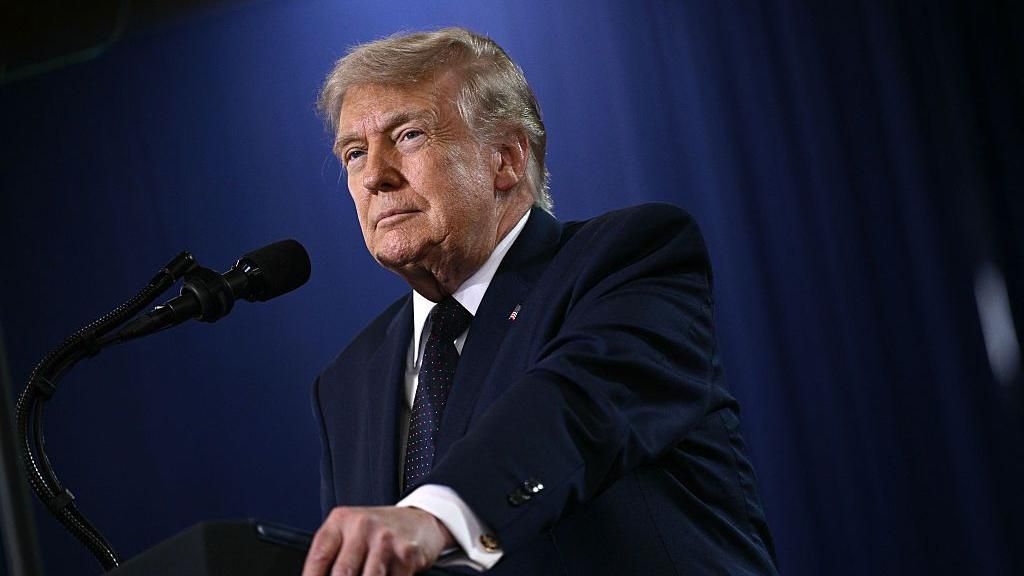
Trump administration wants federal workers to sign NDAs
A new controversy has erupted in U.S. federal politics after the Trump administration formally unveiled a draft proposal to mandate non-disclosure agreements (NDAs) for thousands of current and incoming federal government employees, an initiative crafted to crack down on unauthorized leaks of internal information to media outlets. The U.S. Office of Personnel Management (OPM), the agency that published the draft rule, argues that unapproved media leaks pose severe risks to government function: they can stifle open, honest feedback between agencies, disrupt the structured process of executive decision-making, and erode institutional trust across federal bodies.
In justifying the new policy, OPM specifically called out two high-profile leak incidents from earlier this year. The first involved alleged disclosures to The New York Times and The Washington Post about a planned U.S. military raid targeting former Venezuelan leader Nicolas Maduro, which OPM claims put American service members’ lives at risk. However, this account has already been publicly disputed by New York Times executive editor Joe Kahn, who confirmed the outlet never held verified advance details of the operation, nor did it withhold a pre-written story at the Trump administration’s request. When contacted for this reporting, the Times stood by Kahn’s earlier statement, while the BBC had not received a response from The Washington Post as of publication.
The second incident cited by OPM was a leak that exposed the personal contact information—including home addresses, phone numbers, and email addresses—of roughly 4,500 Immigration and Customs Enforcement (ICE) agents, a breach that directly put the agents and their families at personal safety risk.
Despite the administration’s framing of the policy as a targeted security measure, the proposal has drawn fierce pushback from federal employee unions and legal experts, who warn the NDAs are far broader than existing non-disclosure requirements and threaten core First Amendment rights for government workers. Currently, standard NDAs for federal staff only apply to employees handling classified, sensitive national security material or work tied to specific proprietary research projects. The new proposal, by contrast, would open the door for requirements across nearly all federal roles.
Everett Kelley, national president of the American Federation of Government Employees (AFGE)—the largest union representing federal workers—argued that despite the Trump administration’s claims that individual agencies can opt out of the requirement, OPM will inevitably pressure agencies to make the NDAs mandatory for all staff, and terminate any worker who refuses to sign. Kelley accused the administration of pursuing a deliberate campaign to silence career federal employees, purge long-serving public servants from government, and replace them with politically loyal appointees who will not criticize administration policy. “Federal employees do not surrender their First Amendment rights when they accept federal employment, and the public has a right to know about this administration’s abuses,” Kelley said in a statement.
Legal scholars echo these concerns, warning the overly broad proposal will almost certainly face court challenges if finalized. Amy Schmitz, a law professor at The Ohio State University, noted that while limited NDAs for sensitive roles are standard practice, the scope of the current plan is unprecedented. Orly Lobel, a law professor and director of the Center for Employment & Labor Policy at the University of San Diego, warned that the vague, broad terms of the proposal create a “chilling in terrorem effect” that will discourage workers from speaking out even about illegal, unethical, wasteful, or incompetent government activity out of fear of legal action. Lobel added that the provisions could also restrict workers’ ability to leverage their professional expertise when they leave government service for new private-sector or public-sector roles, harming both labor mobility and market competition.
For its part, OPM has pushed back against criticism, arguing in its draft notice that the new NDAs do not create any new substantive restrictions on employee speech or legally protected disclosures. The agency says the agreements explicitly preserve existing whistleblower protections and all other disclosure rights granted under federal law, and only serve as a formal acknowledgment by employees of their existing legal obligation to protect non-public, confidential, and proprietary government information.
The draft proposal is currently open to a 30-day public comment period, during which organizations and members of the public can submit feedback before the rule is finalized and implemented.
-
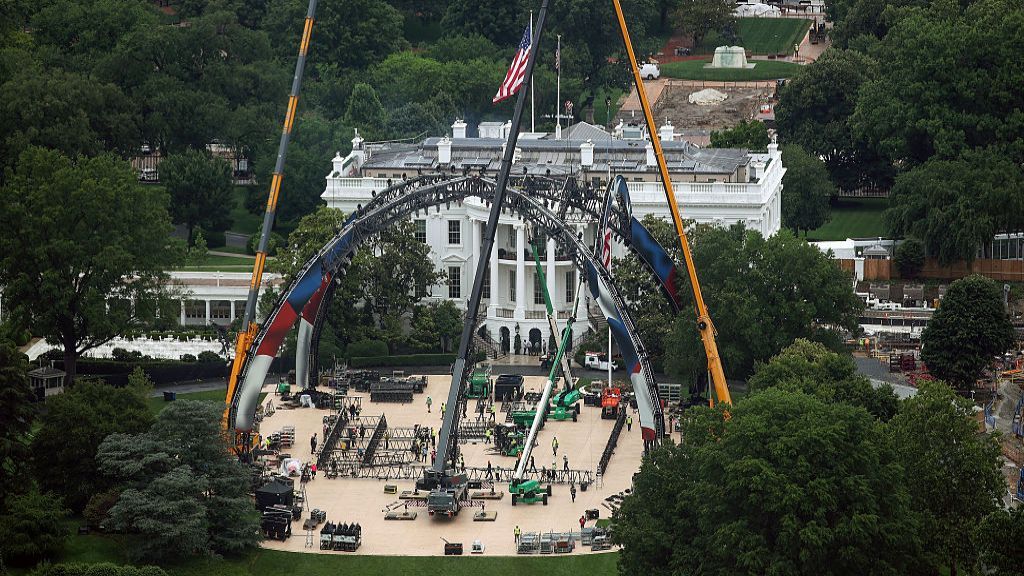
White House erects UFC cage ahead of US 250th anniversary celebrations
Preparations for a landmark, first-of-its-kind professional mixed martial arts event are officially underway at the White House, as crews have started assembling a regulation UFC octagon fighting cage on the South Lawn ahead of the mid-June celebration of the United States’ 250th anniversary of independence.
Visibly on site this week, construction teams have begun putting together the structure’s signature domed arch supports and event staging areas. Based on pre-shared digital renderings, the finished venue will feature the iconic octagonal fighting ring enclosed by a standard wire-mesh fence, with thousands of temporary spectator seats built out surrounding the canvas.
U.S. President Donald Trump has already hyped the upcoming event, calling it the most massive gathering in UFC’s history, and highlighting the unprecedented location of a professional fighting arena “right outside the front door of the White House”. Titled UFC Freedom 250, the card is scheduled for June 14, with the organization committing an estimated $60 million (£44.3 million) to the full construction and event production, according to early project disclosures.
Despite the major investment and nationwide promotion surrounding the historic event, the main fight card will only feature two championship bouts topping the lineup. The first headlining match will pit Brazil’s Alex Pereira against France’s Ciryl Gane for the interim UFC heavyweight championship belt. In the co-headline lightweight title fight, Georgian contender Ilia Topuria will challenge current interim champion Justin Gaethje for his belt.
UFC president Dana White confirmed earlier this month that just 4,300 attendees will be able to watch the fights live from the South Lawn venue. The majority of these on-site spots will be allocated to active-duty and veteran members of the U.S. military. An additional 85,000 free tickets will be distributed to members of the general public to view the event via large screen broadcasts at nearby Ellipse Park, and no tickets will be sold to the general public through standard sales channels.
President Trump has already commented on the overwhelming public demand for admission, noting “I have never seen anybody want anything so much as people want those tickets.” For high-profile VIP guests, the promotion is offering exclusive “high roller” access packages, though UFC has not publicly confirmed pricing. Respected mixed martial arts journalist Ariel Helwani has reported that guests seeking these packages are expected to pay as much as $1.5 million for the premium access.
Parent company TKO Group Holdings has clarified that the organization will not turn a profit from the event, with TKO president Mark Shapiro framing the $60 million outlay as “an investment for the long term” for the brand.
This event marks a historic first for the White House grounds: while the property has hosted casual recreational sports and public community events in decades past, UFC Freedom 250 will be the first full professional live sporting event ever held on official White House property.
The venue construction is also just the latest in a string of renovations and construction projects carried out by the second Trump administration to reshape the iconic presidential residence. Since returning to office, the administration has added custom gold detailing to the Oval Office, redeveloped part of the historic White House Rose Garden to install a new outdoor patio, completed a full refurbishment of the guest bathroom attached to the Lincoln Bedroom, and demolished part of the East Wing to clear space for a new administration ballroom.
-

Fans rally behind US men’s national soccer team as World Cup roster revealed
The announcement of the United States Men’s National Soccer Team’s World Cup roster has sparked an outpouring of support from passionate American soccer enthusiasts, who have gathered to rally behind their squad ahead of the global tournament. BBC correspondent Carl Nasman was on site at the roster reveal event to speak directly with fans, covering two key talking points that are top of mind for American supporters: the steep cost of tickets to attend World Cup matches, and the growing cultural significance of soccer within the United States. For years, soccer has been building a larger and more dedicated fan base across the country, with the World Cup serving as a major moment to showcase that growth. At the event, fans shared a range of perspectives – many expressed frustration over prohibitive ticket prices that put the experience of attending matches in person out of reach for many average supporters, while all reflected on what it means to see the US men’s team competing on the world’s biggest soccer stage. Despite concerns over costs, the overall mood among attendees was one of excitement and unity, with fans coming together to back their national team ahead of what many hope will be a deep run in the tournament.
-
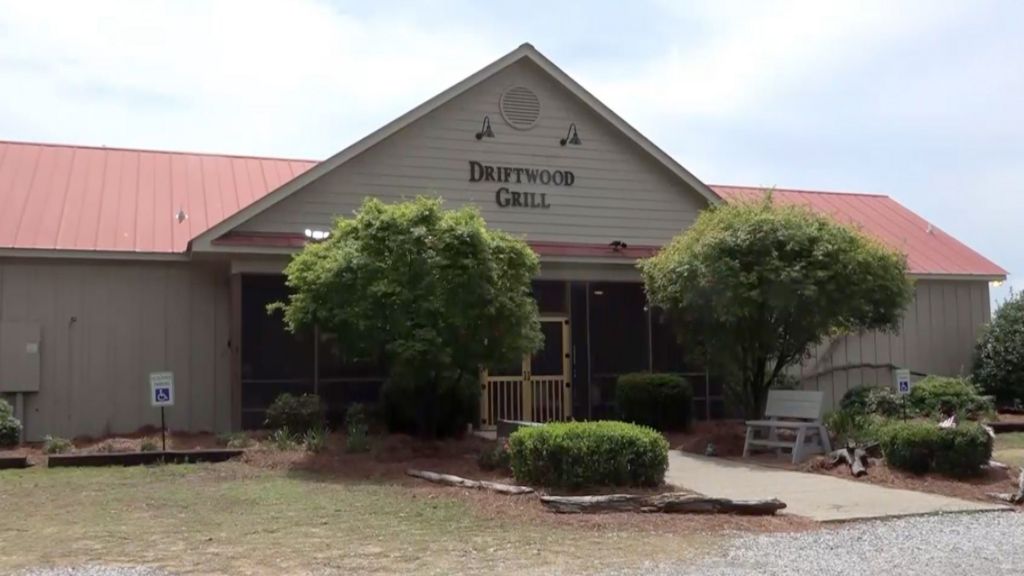
Woman killed when umbrella blows into her at restaurant
A sudden gust of wind has turned an ordinary outdoor meal into a devastating tragedy in South Carolina, leaving a 56-year-old diner dead after a loose table umbrella struck her neck. The fatal incident unfolded on May 23 at the outdoor patio of Driftwood Grill, a popular local eatery in Summerville, where the victim, identified as Dana Winger of Huger, was dining with her husband when the unexpected severe wind ripped the patio umbrella from its anchor.
The Clarendon County Coroner’s Office confirmed that first responders arrived at the scene quickly to find Winger unresponsive with a traumatic cut to her head and neck. Despite immediate emergency resuscitation efforts, medics were unable to save her life.
In the wake of the accident, representatives from Driftwood Grill released an official statement via the restaurant’s Facebook page expressing profound sorrow for the loss. “Our hearts are with the family, friends, and loved ones affected by the tragic incident during last night’s sudden severe weather event at Lake Marion,” the statement read. The restaurant noted that the unforeseen tragedy has left a deep emotional impact on the entire local community, including fellow diners who witnessed the event, restaurant staff, and the first responders who attended the scene. Out of respect for Winger’s grieving family, the establishment asked the public to offer prayers and compassion while respecting their privacy during this devastating period.
One day after the initial statement, on Monday, the restaurant updated the community to share that a professional grief support team had been brought in to provide emotional counseling for staff and community members reeling from the incident. “Today’s support session meant more than words can express to many people who have been emotionally affected by the events of that evening,” the follow-up post said.
Clarendon County Coroner Jacqueline Blackwell told the BBC that the incident is currently being investigated as a tragic accident, with a formal autopsy scheduled to take place on May 27 to confirm the official cause of death. The BBC has reached out to Driftwood Grill, the Clarendon County Fire Department, and the Clarendon County Sheriff’s Department for additional comment and further details on the investigation. No foul play is suspected in connection with Winger’s death, according to initial official accounts.