标签: North America

北美洲

  • Neil Sedaka, singer of Breaking Up Is Hard To Do, dies at 86

    Neil Sedaka, singer of Breaking Up Is Hard To Do, dies at 86

    The music world mourns the loss of legendary American singer-songwriter Neil Sedaka, who passed away at age 86. His family confirmed the devastating news through an official statement, describing him as “a true rock and roll legend” and “an incredible human being who will be deeply missed.

    Sedaka’s extraordinary career spanned six decades, during which he crafted some of pop music’s most enduring hits. The Brooklyn native, who received classical training at New York’s prestigious Juilliard School, first rose to prominence as a founding member of the doo-wop group The Tokens in the late 1950s.

    His remarkable songwriting talent produced timeless classics including Oh! Carol, Breaking Up Is Hard To Do, Bad Blood, Laughter in the Rain, and Calendar Girl. Beyond his own performances, Sedaka’s compositions became hits for numerous other renowned artists, earning him five Grammy Award nominations throughout his career.

    The musician demonstrated remarkable longevity in the industry, returning to Billboard’s Top 10 chart in 1975 with Love Will Keep Us Together, performed by the duo Captain & Tennille. This achievement highlighted his unique ability to adapt and remain relevant across changing musical eras.

    Sedaka’s legacy extends beyond his commercial success to his profound influence on multiple generations of musicians and music lovers. His family’s statement emphasized that while he was “an inspiration to millions,” those who knew him personally valued him most as a beloved husband, father, and grandfather.

  • What the Warner Bros deal could mean for streaming, cinemas and news

    What the Warner Bros deal could mean for streaming, cinemas and news

    A potential seismic shift in the media landscape is underway as Paramount Skydance advances its proposed acquisition of Warner Bros, though regulatory approval remains a significant hurdle. This consolidation would fundamentally alter Hollywood’s competitive dynamics while raising critical questions about content strategy, pricing models, and editorial independence.

    The centerpiece of the proposed merger involves combining Paramount+ with HBO Max to create a strengthened streaming platform capable of competing with industry giants Netflix, Amazon, and Disney. Subscribers would gain access to an extensive content library spanning current productions like ‘The Pitt’ to iconic franchises including ‘Star Trek’, ‘Friends’, ‘The Sopranos’, and classic films such as ‘Casablanca’.

    Financial analysts present diverging views on subscription pricing implications. Initially, bundled services might offer cost savings for existing subscribers of both platforms. However, reduced market competition could eventually enable price increases, though industry experts note Netflix would likely remain the market’s primary price-setter, potentially limiting significant hikes.

    The merger’s regulatory pathway appears complex. While approval might proceed rapidly under the current administration, state attorneys general—particularly California’s—have pledged vigorous investigations focusing on potential consumer harm and workforce impacts. The complete integration timeline extends years due to regulatory processes and existing distribution agreements.

    Unlike purely streaming-focused companies, both Paramount and Warner Bros maintain substantial theatrical distribution operations. Industry observers note this traditional studio approach would likely continue prioritizing cinema releases rather than rushing films directly to streaming platforms—a development that would provide stability for theater operators despite not reversing long-term attendance declines.

    Concerns have emerged regarding editorial independence should the merger proceed. The Ellison family’s existing relationship with the White House has raised questions about potential influences on CNN’s coverage, with media advocates warning about possible reduced criticism of the administration and personnel changes affecting journalists known for adversarial reporting.

    The financial viability of combining two legacy media companies facing significant debt obligations remains uncertain. Content investment constraints may emerge as both entities seek to manage financial burdens acquired through previous mergers and acquisitions.

    Beyond traditional streaming competition, industry analysts identify YouTube’s evolution toward long-form content as the most substantial threat. The platform’s trending videos increasingly resemble traditional television programming, positioning it as a direct competitor to ad-supported streaming services while short-form content continues eroding traditional media audiences.

  • Trump orders government to stop using Anthropic in battle over AI use

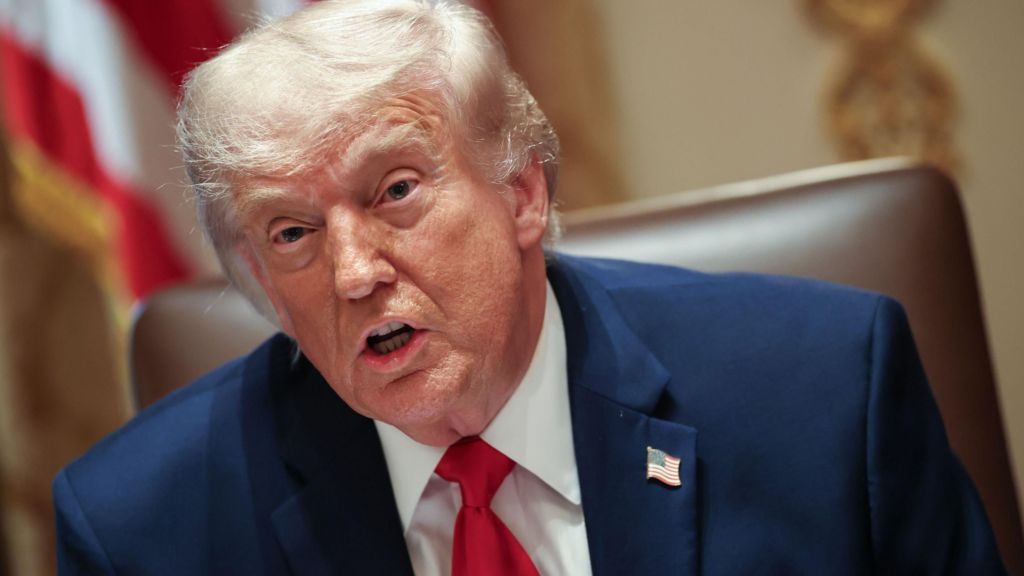
    Trump orders government to stop using Anthropic in battle over AI use

    In a dramatic escalation of tensions between the U.S. government and the artificial intelligence sector, President Donald Trump has mandated the immediate termination of all federal contracts with AI developer Anthropic. The directive, announced via Truth Social on Friday, demands a complete phase-out of Anthropic’s technology from government systems within six months.

    The confrontation centers on a fundamental disagreement regarding the ethical deployment of AI in military and domestic security applications. The Pentagon had issued an ultimatum demanding unrestricted access to Anthropic’s AI tools, a requirement CEO Dario Amodei vehemently rejected earlier this week. Amodei’s refusal was grounded in ethical concerns over potential applications in mass surveillance systems and fully autonomous weaponry.

    President Trump’s social media statements characterized Anthropic as a ‘woke, out-of-control, Radical Left AI company’ whose leadership lacked understanding of real-world necessities. He threatened to employ ‘the Full Power of the Presidency’ to ensure compliance during the transition period, warning of ‘major civil and criminal consequences’ for non-cooperation.

    The dispute has revealed significant fractures within the technology industry regarding defense contracts. OpenAI CEO Sam Altman publicly supported his competitor’s stance, circulating an internal memo that established identical ethical boundaries for his own company’s defense contracts. Altman emphasized that OpenAI would similarly refuse involvement in ‘unlawful or unsuited cloud deployments, such as domestic surveillance and autonomous offensive weapons.’

    The standoff has galvanized tech workers across major defense contractors. Labor organizations representing approximately 700,000 employees at Amazon, Google, and Microsoft signed an open letter urging their employers to similarly ‘refuse to comply’ with the Pentagon’s demands. The Alphabet Workers Union declared that ‘tech workers are united in our stance that our employers should not be in the business of war.’

    Prior to the presidential order, Defense Secretary Pete Hegseth had presented Anthropic with contradictory ultimatums: either accept the Pentagon’s terms for ‘any lawful use’ of its technology or face invocation of the Defense Production Act and designation as a ‘supply chain risk.’ Amodei had previously stated he would cease Pentagon collaboration rather than acquiesce to these demands.

    Financial analysts note that Anthropic’s position is strengthened by its substantial market valuation of $380 billion, making the $200 million defense contract relatively insignificant to its financial stability. A former Department of Defense official, speaking anonymously, described the government’s legal footing as ‘extremely flimsy’ and noted the controversy provides valuable publicity for Anthropic’s ethical stance.

    The conflict highlights the absence of comprehensive federal legislation governing military AI applications, creating a regulatory vacuum that has enabled this unprecedented confrontation between governmental authority and technological ethics.

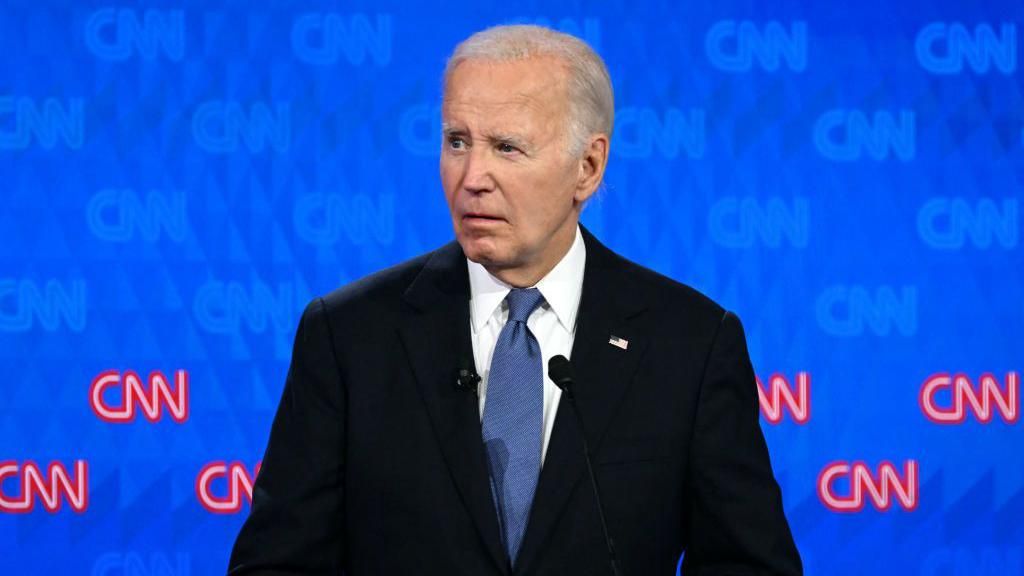
  • Joe Biden takes selfies with passengers as he takes commercial flight

    Joe Biden takes selfies with passengers as he takes commercial flight

    Former U.S. President Joe Biden demonstrated a rare moment of accessibility and camaraderie with fellow travelers when adverse weather conditions disrupted air travel operations. The incident occurred at Ronald Reagan Washington National Airport, where Biden found himself among hundreds of passengers affected by an unexpected ground stop that halted all departures for approximately sixty minutes.

    Rather than retreating to private facilities, the former commander-in-chief utilized the delay to connect with citizens, engaging in spontaneous conversations and willingly participating in the modern ritual of smartphone photography. Multiple travelers documented these interactions, capturing Biden’s approachable demeanor as he moved through the terminal area.

    This occurrence highlights the continuing integration of former presidents into civilian life while simultaneously underscoring the vulnerabilities of the national air transportation network. Aviation experts note that such ground stops, typically implemented during severe weather events or security concerns, create cascading delays throughout the entire flight system.

    The episode provided a glimpse into the post-presidential travel arrangements of senior political figures, who occasionally opt for commercial aviation despite typically having access to government and private transportation options. Biden’s decision to fly commercially and his subsequent conduct during the interruption resonated with many observers as a demonstration of democratic principles and civilian connectivity.

  • Canada’s Alberta projects deficit of nearly C$9.4bn, citing low oil prices

    Canada’s Alberta projects deficit of nearly C$9.4bn, citing low oil prices

    The Canadian province of Alberta, renowned for its vast oil reserves, has announced a staggering C$9.4 billion budget deficit, attributing the shortfall to a dual crisis of plummeting oil revenues and unprecedented population growth. Finance Minister Nate Horner presented the grim economic outlook, describing the fiscal reality as “a tough pill to swallow” that will compel the province to violate its own fiscal restraint legislation.

    Alberta’s economic framework remains intrinsically linked to the volatile oil market, with the province housing the world’s third-largest oil reserves. The government projects West Texas Intermediate crude will average just $60.50 per barrel in the coming year, significantly below the $74-$77 per barrel required for budgetary equilibrium. This marks a substantial decline from the $74.34 average recorded two years prior.

    Simultaneously, Alberta has experienced record population expansion, growing faster than any other Canadian province despite recent immigration tightening at the federal level. While Minister Horner declined to quantify the exact impact of demographic changes on the deficit, he acknowledged the influx has created substantial pressure on public services and housing infrastructure.

    The fiscal crisis has triggered significant political developments. Premier Danielle Smith announced plans for multiple referendum questions, including controversial measures that would restrict access to healthcare and education services for certain newcomers through fee structures. These proposals have faced sharp criticism from opposition leaders who accuse the government of immigrant scapegoating to divert attention from fiscal mismanagement.

    Adding to the political complexity, separatist movements are gathering signatures to force a referendum on Alberta’s potential secession from Canada. While support for independence remains limited, proponents aim to place the question before voters alongside the immigration measures on October 19th. The provincial government maintains its immigration proposals aim to assert greater autonomy over demographic policy, currently controlled by federal authorities in Ottawa.

    Notably, Alberta remains Canada’s only province without a sales tax, though Minister Horner suggested this longstanding tax advantage might require reconsideration given the current fiscal challenges, signaling potential fundamental shifts in the province’s economic policy approach.

  • Trump ‘not thrilled’ with Iran after latest talks on nuclear programme

    Trump ‘not thrilled’ with Iran after latest talks on nuclear programme

    International diplomatic efforts face heightened uncertainty as U.S. President Donald Trump expressed profound dissatisfaction with Iran’s position in nuclear negotiations. In his first public comments following inconclusive talks in Geneva, Trump stated he was “not happy” with Tehran’s unwillingness to meet American demands, though he emphasized his preference to avoid military confrontation.

    The diplomatic stalemate has triggered global security concerns, with multiple nations issuing urgent travel advisories for the region. The United Kingdom has temporarily withdrawn staff from its Tehran embassy and updated travel guidance against non-essential travel to Israel. China, India, and Canada have advised their citizens to depart Iran immediately, while Germany and France reinforced existing travel warnings.

    The U.S. Embassy in Israel has authorized voluntary departure for non-emergency personnel and families, recommending they “consider leaving while commercial flights are available.” This precaution follows similar security measures implemented at the U.S. embassy in Beirut.

    Despite the tensions, Omani Foreign Minister Badr Albusaidi, who mediated the indirect talks, reported “significant progress” had been achieved. Iranian Foreign Minister Abbas Araghchi acknowledged “good progress” while noting persistent disagreements on certain issues. Technical discussions are scheduled to resume in Vienna next week.

    The military backdrop remains ominous. Trump has ordered the largest U.S. military buildup in the Middle East since the 2003 Iraq invasion, deploying two aircraft carriers, additional warships, and advanced aircraft. The President previously established a ten-day deadline for determining whether diplomacy or military action would prevail.

    International Atomic Energy Agency concerns compound the situation, with inspectors reportedly denied access to Iranian uranium enrichment sites since U.S. airstrikes destroyed three nuclear facilities in June. Iran maintains its nuclear program serves peaceful purposes, though it has enriched uranium to near-weapons-grade levels.

    U.S. Secretary of State Marco Rubio is scheduled to visit Israel Monday to discuss regional priorities, including the Iran situation, as the international community watches for signs of resolution or escalation.

  • Nasa announces change to its Moon landing plans

    Nasa announces change to its Moon landing plans

    NASA has announced a strategic revision to its Artemis program, introducing an additional mission phase to enhance safety and technical preparedness before attempting the first human lunar landing in over five decades. The updated roadmap now includes Artemis III as a low-Earth orbit (LEO) docking exercise scheduled for 2027, marking a significant departure from the original plan that envisioned this mission as a direct lunar landing attempt.

    Under the restructured timeline, Artemis II remains on schedule for an April launch, carrying four astronauts on a circumlunar voyage around the Moon’s far side. However, this mission has experienced technical setbacks due to a helium leak detected on the Space Launch System (SLS) rocket, necessitating repairs at Kennedy Space Center’s Vehicle Assembly Building. The earliest launch window has consequently shifted to April, pending completion of necessary repairs.

    NASA Administrator Jared Isaacman justified the program restructuring by emphasizing risk mitigation. “The current architecture was not a pathway to success,” Isaacman stated during a media briefing. “Conducting integrated systems testing of the Orion capsule and lunar lander in low-Earth orbit provides invaluable operational experience before committing to lunar surface operations.”

    The revised approach addresses critical program gaps, particularly the delayed development of the human-rated lunar lander. While SpaceX holds the current contract for lander development using its Starship platform, NASA has concurrently engaged Blue Origin to develop an accelerated alternative solution. The Artemis III LEO mission could potentially test docking procedures with either or both lander prototypes.

    This strategic pivot occurs against the backdrop of intensifying international space competition, with China targeting a crewed lunar landing by 2030. Both nations are focusing on the Moon’s south pole region, establishing what amounts to a modern space race for strategic lunar positioning and resource access.

    Despite these changes, NASA maintains its commitment to achieving one or even two lunar landings by 2028 through subsequent Artemis IV and V missions, demonstrating the program’s adaptive planning while preserving its overarching objectives of sustainable lunar exploration.

  • OpenAI vows safety policy changes after Tumbler Ridge shooting

    OpenAI vows safety policy changes after Tumbler Ridge shooting

    OpenAI has publicly acknowledged critical failures in its safety protocols following the devastating Tumbler Ridge school shooting that claimed eight lives in February 2026. In a detailed open letter to Canadian authorities, the artificial intelligence company revealed how suspect Jesse Van Rootselaar evaded detection by creating secondary accounts after his initial ChatGPT account was banned for policy violations seven months prior to the attack.

    The company disclosed that internal systems had flagged the 18-year-old’s account in June 2025, but it wasn’t reported to law enforcement because it didn’t meet the threshold for ‘credible and imminent planning’ of violence at that time. This admission comes after Canadian officials sharply criticized OpenAI for what they characterize as a preventable intelligence failure.

    In response to the tragedy, OpenAI has implemented sweeping changes to its safety framework. The company has enlisted mental health and behavioral experts to assist in threat assessment, modified its reporting criteria to be ‘more flexible,’ and established direct communication channels with Canadian law enforcement for rapid response to potential threats. The company stated that under these new protocols, Van Rootselaar’s account would have been immediately reported to authorities.

    The shooting, one of Canada’s deadliest, resulted in the deaths of five school children, an educator, and the suspect’s mother and stepbrother. Canadian AI Minister Evan Solomon expressed profound disappointment with OpenAI’s response, stating that no ‘substantial new safety protocols’ were presented during emergency meetings. Both federal and provincial officials have warned that legislative action remains possible if the company fails to implement adequate safeguards promptly.

    British Columbia Premier David Eby emphasized the devastating consequences of OpenAI’s inaction, noting that company CEO Sam Altman has agreed to meet directly with Canadian officials to address these critical safety concerns.

  • How Hollywood and Maga aligned over Warner Bros deal

    How Hollywood and Maga aligned over Warner Bros deal

    In a stunning reversal, streaming giant Netflix has abruptly terminated its proposed $82.7 billion acquisition of Warner Bros, capitulating to both financial pressures and mounting political opposition within the Trump administration. The deal’s collapse represents a significant victory for conservative critics and creates an unexpected alliance between Hollywood traditionalists and MAGA supporters.

    The termination emerged just one day after Netflix CEO Ted Sarandos met with Department of Justice officials and Attorney General Pam Bondi at the White House. While Netflix maintains the decision was purely financial—citing Paramount Skydance’s superior $111 billion offer—the meeting underscored the intense political scrutiny surrounding the proposed merger. The administration’s opposition had become increasingly vocal, with President Trump himself demanding Netflix dismiss board member Susan Rice, former National Security Advisor to Barack Obama, via his Truth Social platform.

    Conservative commentators, including far-right activist Laura Loomer and Senator Ted Cruz, had framed Netflix as a ‘woke’ corporation hostile to conservative values, particularly citing the company’s production deal with the Obamas’ Higher Ground Productions. This political pressure created a pincer movement alongside opposition from Hollywood figures like director James Cameron, who warned the merger would be ‘disastrous for the theatrical motion picture business.’

    The collapse clears the path for Paramount Skydance’s competing bid, which presents its own regulatory concerns. Unlike Netflix’s proposal to spin off Warner’s news assets including CNN, Paramount Skydance plans to acquire the entire company—potentially placing major news networks under control of Trump associates, given that Paramount Skydance leadership maintains ties to the former president.

  • IMF urges Washington to work with partners to ease trade restrictions

    IMF urges Washington to work with partners to ease trade restrictions

    The International Monetary Fund has issued a compelling appeal to Washington, urging collaborative engagement with global trading partners to mutually reduce restrictive trade measures. This recommendation comes as part of the IMF’s comprehensive review of the world’s largest economy during the first year of President Donald Trump’s second term.

    IMF Managing Director Kristalina Georgieva presented the findings, which highlight concerns about the administration’s widespread tariff implementations targeting both allies and competitors. These measures, intended to shrink the U.S. trade deficit and stimulate domestic manufacturing, have instead created significant market volatility and supply chain disruptions throughout 2025.

    The report specifically recommends that U.S. authorities work constructively with international counterparts to address unfair trade practices through coordinated reduction of trade restrictions and industrial policy distortions. The IMF emphasized that national security-related trade measures should be applied with precision and narrow scope to minimize cross-border economic impacts.

    Notably, the assessment was finalized before the recent Supreme Court decision that struck down numerous Trump administration tariffs last Friday. In response to this judicial setback, the administration has utilized alternative legal mechanisms to implement a new 10% global tariff, with threats of escalation to 15%.

    The IMF simultaneously expressed concern about America’s substantial trade and current account deficits, which Georgieva characterized as ‘too big.’ Additionally, the continuing ascent of public debt presents a growing stability risk to both the U.S. and global economy, despite current low sovereign stress levels.

    While projecting U.S. GDP growth acceleration from 2.2% in 2025 to 2.6% in 2026, the IMF warned that ongoing trade policy uncertainties could exert greater-than-expected drag on economic activity. The fund noted that productivity growth remained robust despite government shutdown impacts in the fourth quarter.

    The unpredictable tariff environment has particularly strained relations with key allies including the United Kingdom and Australia, creating uneven economic consequences across global markets. British business representatives estimate approximately 40,000 UK exporting firms face significant impacts, while analysts note that modern multinational production networks amplify the ripple effects of tariff changes throughout international supply chains.