
Construction crews have broken ground on a large-scale temporary UFC arena directly on the White House campus, launching preparations for an unprecedented professional cage fighting event tied to America’s milestone 250th anniversary of the Declaration of Independence. The undertaking marks a highly unusual addition to the national anniversary festivities, bringing elite mixed martial arts action to the heart of U.S. political power for the first time in modern history. Multiple project updates confirm that the massive purpose-built structure is taking shape on schedule, with work focusing on erecting the steel framework for the arena and installing the iconic octagonal fighting cage that has become synonymous with the Ultimate Fighting Championship. Organizers say the event is designed to blend American cultural celebration with popular professional sports entertainment, drawing spectators from across the country to the nation’s capital for the historic anniversary. While the event has drawn some public discussion about hosting a commercial combat sports event on White House grounds, preparations continue moving forward ahead of the scheduled anniversary celebrations.
标签: North America
北美洲
-

Republicans in South Carolina defy Trump to reject voting map changes
With just six months remaining until the critical November 2026 U.S. midterm elections, a surprising rebellion within Republican ranks and a landmark federal court ruling have thrown a months-long Republican push for partisan gerrymandering into disarray, just weeks after the U.S. Supreme Court upended decades of voting rights protections.
In the first unexpected development, South Carolina Republican lawmakers refused to bow to pressure from former President (now incumbent President) Donald Trump, blocking a proposed voting map redraw that would have dismantled the safely Democratic-held congressional seat of Jim Clyburn, the state’s only Democratic U.S. House member. The move eliminates the GOP’s chance to flip the seat to expand their House majority, with lawmakers arguing that it would be improper to disrupt an election process that has already begun.
“Neither my conscience nor my common sense would allow me to stop an election that is already underway,” said Republican State Sen. Richard Cash during the floor vote on the measure.
This South Carolina setback for Trump-aligned Republicans comes on the heels of another win for voting rights advocates and Democrats: a federal district court in Alabama issued a temporary block on a Republican-drawn congressional map that had been intended for use in November’s election. The three-judge panel ruled the map, which reduced the number of majority-Black congressional districts from two to one, constituted intentional racial discrimination in violation of the 14th Amendment to the U.S. Constitution. The court ordered Alabama to retain the race-aware map with two majority-Black districts first used in the 2024 election cycle.
Both of these outcomes directly follow a controversial U.S. Supreme Court decision handed down last month, where the court’s 6-3 conservative majority reversed decades of legal precedent tied to the 1960s-era Voting Rights Act. The ruling held that the landmark civil rights law does not require states to draw congressional districts that allow racial minority groups to elect candidates in proportion to their share of the state’s overall population. Only explicit, overt racial discrimination, the court ruled, qualifies as a valid reason to strike down a state’s map, meaning partisan gerrymandering designed to give one party an advantage remains constitutional even if it indirectly dilutes minority voting power.
The Supreme Court’s ruling immediately opened the door for Republican-led legislatures across the American South to move rapidly to dismantle court-ordered majority-minority districts, which have historically been held by Black Democrats due to consistent voting patterns, and replace them with maps that favor Republican candidates. This push is part of a broader national strategy by Republicans to lock in control of the U.S. House of Representatives ahead of November’s midterms, which will shape the trajectory of Trump’s policy agenda for the second half of his current term.
Trump first sparked what many have called a “partisan map arms race” last summer, when he publicly called on Texas to redraw its congressional maps to pick up additional Republican House seats. Since the Supreme Court’s ruling last month, multiple other Republican-led states including Florida, Tennessee and Mississippi have begun moving forward with their own redistricting plans, with votes scheduled over the coming weeks.
Democratic leaders have condemned the coordinated Republican redistricting push as an undemocratic power grab. House Minority Leader Hakeem Jeffries, the top Democrat in the chamber, accused Trump and congressional Republicans of seeking to rig the electoral map to hold onto House majority. “There will be a free and fair election in November,” Jeffries said in a statement to CBS News.
The nation’s oldest civil rights organization, the NAACP, praised the Alabama court’s ruling as an important win to protect Black representation, but warned that the fight over voting rights is far from over. “Redrawing maps to silence the voices of entire communities cannot be tolerated. It goes against the very values of democracy that our ancestors fought and died for,” said NAACP President Derrick Johnson. “While this is good news, it is not the end of this fight.”
-
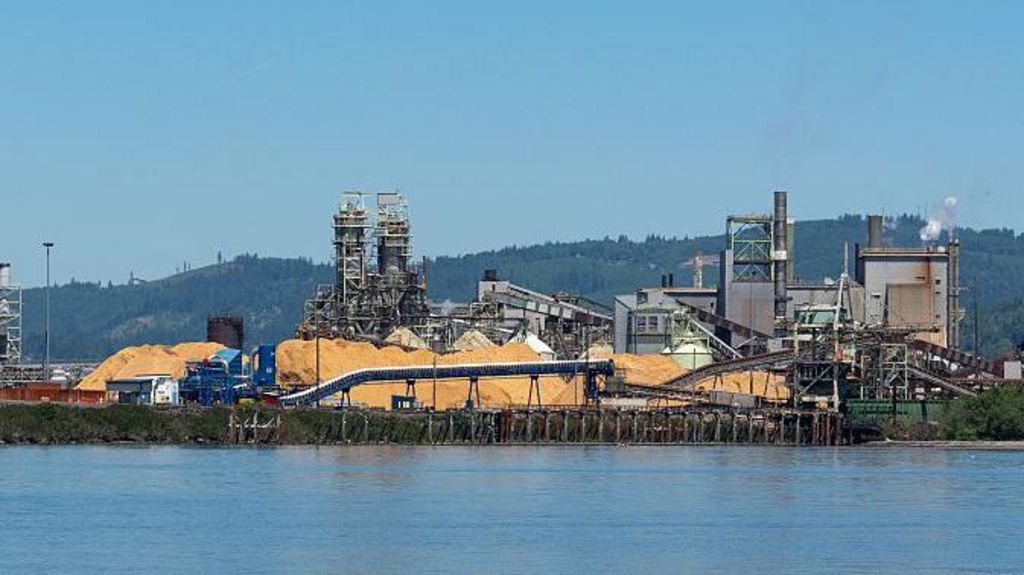
Multiple people killed and others missing after chemical explosion at US paper mill
A devastating chemical explosion at a Longview, Washington paper packaging plant has left multiple people dead, dozens more injured, and an undetermined number of workers unaccounted for, emergency officials confirmed Tuesday. The blast, which unfolded shortly after 7 a.m. PDT at the Nippon Dynawave Packaging facility roughly 130 miles south of Seattle, stemmed from the catastrophic rupture of a storage tank holding white liquor, a highly corrosive alkaline chemical core to paper manufacturing processes.
Cowlitz Fire and Rescue Chief Scott Goldstein told reporters that while authorities have confirmed the existence of fatalities, the exact death toll remains unknown as search and recovery operations continue at the site. Of the 10 injured people already transported to regional hospitals, nine are Nippon Dynawave employees and one is a responding firefighter. Injuries range from minor scrapes to life-threatening critical conditions, including burn damage and chemical inhalation damage, with company officials confirming multiple patients remain in critical care.
The ruptured tank had a total capacity of 80,000 gallons and was approximately 60 percent full at the time of the explosion, Goldstein said. While the site has been stabilized and emergency responders have ruled out any ongoing hazard to the broader Longview community, local officials have urged the public to avoid the restricted area as recovery work proceeds. The Longview Fire Department noted that personal identifying information for deceased and injured people will not be released until all next of kin have been notified, a standard protocol for mass casualty incidents.
Washington Governor Bob Ferguson deployed state environmental response teams to the site to support local emergency operations, and released a statement of condolence Tuesday morning. “I’m deeply saddened to hear that there have been fatalities,” Ferguson said. “My thoughts are with the workers and their families, and with the first responders who are putting their own lives at risk to save others.”
Public records show this is not the first major safety incident at the 1,000-employee facility, which produces a wide range of paper products including tissue, printer paper, disposable food containers and packaging cartons. In July 2023, a large multi-day fire burned through stockpiled wood piles at the same plant, drawing regional emergency response. Unlike a separate ongoing chemical incident in Southern California that forced the evacuation of more than 50,000 residents earlier this week, Washington officials have not issued any evacuation orders for the Longview area.
White liquor, the chemical that leaked following the tank rupture, is a caustic alkaline mixture of sodium hydroxide and sodium sulfide widely used in the kraft process of wood pulping for paper production. Exposure to the chemical can cause severe chemical burns, permanent organ damage, and respiratory failure if inhaled.
-

Adams & Robinson in US squad for World Cup
As the 2026 FIFA World Cup co-host United States moves closer to its opening group stage match, head coach Mauricio Pochettino has officially announced his final 26-player roster for the tournament, bringing together a mix of Europe-based stars and domestic Major League Soccer talent.
Five players plying their trade in English top-flight and lower-tier clubs earned call-ups to the squad, headlined by Bournemouth midfielder Tyler Adams and Fulham left-back Antonee Robinson — two experienced campaigners who have each notched 52 international caps for the Stars and Stripes to date. They are joined on the roster by Leeds United midfielder Brenden Aaronson, Crystal Palace center-back Chris Richards, and Coventry City forward Haji Wright.
Other high-profile European-based selections include Celtic defender Auston Trusty, AC Milan attacking star Christian Pulisic, Juventus midfielder Weston McKennie, and Borussia Mönchengladbach attacking midfielder Gio Reyna, the 23-year-old son of former US internationals Claudio Reyna and Danielle Reyna. Reyna’s inclusion comes nearly four years after a high-profile controversy that rocked the 2022 Qatar World Cup US camp. After the 2022 tournament, details emerged that then-head coach Gregg Berhalter had threatened to remove Reyna from the squad over alleged poor attitude in training. In response, Danielle Reyna shared details with US Soccer of a 1991 physical altercation between Berhalter and his then-girlfriend (now wife), triggering an independent investigation by the governing body. The investigation ultimately concluded Berhalter had not improperly hidden information about the incident and found no evidence of repeated similar misconduct. Notably, Pochettino also included Sebastian Berhalter — Gregg Berhalter’s son and current Vancouver Whitecaps midfielder — among the MLS-based players selected for the tournament.
The full roster also features three goalkeepers: Chicago Fire’s Chris Brady, New York City’s Matt Freese, and New England Revolution’s Matt Turner. Alongside the named defenders, additional backline selections include PSV Eindhoven’s Sergino Dest, Villarreal’s Alex Freeman, Toulouse’s Mark McKenzie, Charlotte FC’s Tim Ream, FC Cincinnati’s Miles Robinson, Borussia Mönchengladbach’s Joe Scally, and Columbus Crew’s Max Arfsten. The midfield corps adds Bayer Leverkusen’s Malik Tillman, Marseille’s Timothy Weah, Seattle Sounders’ Cristian Roldan, and Club America’s Alejandro Zendejas, while the forward group is completed by Monaco’s Folarin Balogun and PSV Eindhoven’s Ricardo Pepi.
As one of the three joint hosts of the 2026 FIFA World Cup, the United States will kick off its Group D campaign on June 13 against Paraguay, before facing subsequent group stage matches against Australia and Turkey.
-

Nasa unveils next steps to build permanent Moon base
In a major update to its ambitious lunar exploration agenda, NASA has publicly released new design renderings and contract details for the robotic vehicles and infrastructure that will lay the groundwork for a permanent American outpost on the Moon. The announcement comes as the United States and China engage in a growing 21st-century space race, with both nations racing to put the first humans back on the lunar surface in more than 50 years.
As part of the $20 billion Ignition Moon Base program first unveiled in March 2025, NASA aims to complete a permanently crewed outpost powered by a mix of nuclear fission and solar energy at the Moon’s south pole by 2032. The program is structured in three distinct phases, starting with an extensive pre-human robotic exploration mission that will map the region’s harsh, cratered terrain and deliver critical scientific equipment. NASA has now awarded construction contracts for this initial phase to three private aerospace firms: Jeff Bezos-founded Blue Origin, Intuitive Machines, and Astrobotic Technology.
Each company has been tapped to deliver specialized hardware tailored to the challenges of lunar operations. Blue Origin’s Endurance lunar lander is being engineered to execute precision landings across uneven terrain while operating with full autonomous navigation and control. Astrobotic’s Griffin-1 lander, meanwhile, is targeted to touch down in the Nobile Crater, a permanently shadowed basin near the lunar south pole that scientists believe holds large deposits of frozen water ice. All robotic craft will carry a suite of scientific instruments, including high-resolution mapping cameras and laser-based landing assistance tools. Through 2029, the program plans 25 separate robotic launches, delivering a total of 4 metric tons of cargo to the lunar surface, according to Moon Base program executive Carlos García-Galán.
Following the completion of robotic exploration, the second phase will focus on installing the base’s energy infrastructure, including small modular fission reactors that can provide reliable power through the lunar south pole’s two-week-long dark nights. The third and final phase will see the construction of semi-permanent habitation modules and long-range rovers that will allow human crews to traverse the rocky polar landscape. The south pole was selected as the base site specifically for its accessible water ice, which can be processed into drinking water, breathable oxygen, and rocket fuel for future deep space missions, including crewed missions to Mars. A permanent lunar presence would also open new avenues for cutting-edge lunar science and potential commercial resource extraction, NASA officials say.
In a statement Tuesday, NASA administrator Jared Isaacman emphasized the long-term commitment of the U.S. to lunar exploration, saying the new contracts confirm America will “never give up the Moon again” after the end of the Apollo program. The U.S. has a stated political goal of landing American astronauts on the Moon before the end of the current presidential term in 2028, putting intense public pressure on NASA to meet the aggressive timeline.
This timeline puts NASA in direct competition with China’s own lunar program, which is on track to land the first Chinese humans on the Moon by 2030. Just this week, China moved forward with its human spaceflight program, launching the Shenzhou-23 mission to deliver a new crew to the Tiangong space station in low Earth orbit, demonstrating consistent progress in its space infrastructure development. Many independent space experts, however, say NASA’s 2028 landing target is unrealistic, given persistent delays in the development of the human landing system.
NASA has contracted Elon Musk’s SpaceX to develop the Starship Human Landing System, the craft that will carry astronauts from lunar orbit down to the surface. The project has faced repeated technical setbacks and schedule slippage that have pushed back its expected completion date. “It would not surprise me at all if China gets there first,” Dr. Simeon Barber, a lunar scientist at the U.K.’s Open University, told reporters. Barber noted that the ongoing delays to the human landing craft are the single biggest bottleneck for NASA’s lunar agenda. He also suggested that the aggressive timeline and recent string of announcements are driven as much by political pressure as technical planning, saying NASA feels compelled to demonstrate progress amid the high-profile competition with China. Even after the successful Artemis II mission that carried four American astronauts on a lunar flyby in April 2026, many scientists share Barber’s view that China is on track to beat the U.S. to the first crewed lunar landing of this new space race.
-

Watch: Nasa shows renderings for planned permanent moon base
In a major milestone for humanity’s deep space exploration ambitions, NASA has publicly released detailed digital renderings that outline its blueprint for a long-term, crewed outpost on the Moon, with a formal target of establishing permanent human habitation on Earth’s only natural satellite by 2032.
The newly revealed visualizations offer the public and scientific communities a clear preview of what the groundbreaking facility could look like once completed, showcasing modular living quarters, research laboratories, and operational zones designed to sustain human life through the Moon’s extreme temperature swings, long dark lunar nights, and harsh cosmic radiation environment. Unlike the short-duration Apollo missions of the 1960s and 1970s that only saw brief visits by astronauts, this project marks a fundamental shift in lunar exploration: moving from temporary visits to continuous, long-term human presence off Earth.
Experts note that a permanent lunar base is not just an end goal on its own. It is positioned as a critical stepping stone for future crewed missions to Mars, allowing scientists to test life support systems, resource utilization technologies (including extracting water ice from lunar polar regions), and deep space survival strategies in a relatively accessible deep space environment. The project also opens new opportunities for international collaboration and commercial partnership in space exploration, with multiple private aerospace companies already contributing to development planning for key components of the base.
NASA’s release of these renderings comes amid renewed global interest in lunar exploration, with multiple space agencies around the world advancing their own lunar exploration plans in recent years. The 2032 target date sets a clear timeline for the agency to advance engineering development, test new technologies, and execute precursor missions to lay the groundwork for the permanent habitation facility.
-

Robert F Kennedy Jr grabs writhing snakes on a Florida patio
A recently surfaced video of United States Health Secretary Robert F. Kennedy Jr. picking up two active black racer snakes with his bare hands has spread rapidly across social media platforms, prompting official cautions from wildlife regulators urging members of the public not to replicate the risky behavior.
In the caption accompanying the clip he shared Tuesday, Kennedy explained he was removing the reptiles from the patio of his senior colleague Dr. Mehmet Oz’s beachfront property in Florida. The caption referenced his wife, actress Cheryl Hines, who can be heard in the footage questioning the stunt with a confused “Why?” before pleading “Bobby, please” as Kennedy moves to grab the snakes. Dr. Oz, who serves as the head of the Centers for Medicare & Medicaid Services under Kennedy’s Department of Health and Human Services, hosted Kennedy at the home during the encounter.
Footage shows Kennedy approaching the slithering snakes fully clothed except for going barefoot, crouching to seize them, and holding the writhing animals up to the camera with a smile, even as the pair repeatedly bite his hands. Contrary to common assumption, the National Park Service confirms that black racers are a non-venomous species that pose little danger to humans when left undisturbed in their natural habitats.
The incident comes as the Florida Fish and Wildlife Conservation Commission has ramped up public warnings about snake interactions this spring, when the animals become far more active across the state. In a recent public advisory posted to Facebook, the agency urged residents and visitors to “give snakes a wide berth and admire them from a distance,” adding that even non-venomous species can deliver painful, damaging bites that require medical attention. “Resist the urge to pick it up – even our nonvenomous snakes can give a solid bite,” the commission emphasized.
This viral snake encounter is not the first time Kennedy has made headlines for unusual hands-on interactions with wildlife. Just two months prior in April, he faced questions during a Capitol Hill hearing over reports that he once cut the penis off a road-killed raccoon to conduct personal research. Arizona Democratic Congresswoman Adelita Grijalva directly raised the allegation during the oversight hearing, referencing news coverage of Kennedy’s reported self-directed biological studies. Two years earlier, Kennedy also drew criticism from environmental advocates over claims that he used a chainsaw to decapitate a dead beached whale so he could transport the head home on the roof of his vehicle.
-

Protests escalate outside ICE facility over alleged inhumane conditions
Public outrage has boiled over into escalating demonstrations outside a U.S. Immigration and Customs Enforcement (ICE) detention facility, as widespread allegations of inhumane living conditions for detained migrants push tensions to new heights. Demonstrators have gathered in growing numbers outside the facility, calling for urgent transparency, immediate reform of the detention system, and accountability for officials who oversee the facility’s operations.
Protest organizers and advocacy groups have shared firsthand accounts from released detainees and family members that paint a grim picture of life inside the facility, including overcrowding, inadequate access to nutritious food, unsanitary housing, and delayed or denied medical care. These claims have galvanized broader public criticism of the U.S. immigration detention system, with civil rights organizations warning that systemic neglect is putting vulnerable detainees at severe risk.
In response to the mounting protests, the U.S. Department of Homeland Security (DHS) issued an official statement pushing back against the allegations. According to DHS, all detainees held at the facility are provided with “medical, dental, and mental health services as available.” The agency did not address the additional claims of overcrowding, unsanitary conditions, and poor nutrition that have sparked the demonstrations, leaving protesters demanding more detailed clarification and independent oversight of the facility.
The escalating unrest comes amid a years-long national debate over U.S. immigration policy and the treatment of people held in federal detention facilities awaiting immigration hearings. Many congressional Democrats and immigrant advocacy groups have pushed for major overhauls to the detention system, including reducing the overall number of people detained and implementing stricter standards for facility conditions, while conservative lawmakers have generally defended current enforcement practices. Independent observers note that this latest round of protests highlights the growing public divide over how the U.S. should manage immigration detention, with no clear legislative compromise on the horizon.
-

Iran condemns US strikes as ‘gross violation’ of ceasefire
Weeks after a fragile truce halted large-scale conflict between Iran and the United States, a new round of US air strikes near the strategic Strait of Hormuz has thrown ongoing peace negotiations into uncertainty, with Tehran condemning the attack as a blatant breach of the ceasefire agreement.
The US Central Command (Centcom) confirmed the Monday strikes in southern Iran, framing the operation as necessary self-defense targeting Iranian missile installations and boats suspected of preparing to lay mines. While Centcom did not release exact location details, an unnamed official speaking to The New York Times confirmed the targets were located in the vicinity of Bandar Abbas, Iran’s key southern port city that hosts a major naval base along the Strait of Hormuz. Local Iranian officials initially reported hearing large explosions in the area and launched an immediate investigation into the incident.
In an official statement following the strikes, Iran’s foreign ministry labeled the US action an “aggressive and unjustified” gross violation of the ceasefire that took effect on April 8. The ministry held Washington fully accountable for any consequences stemming from the operation in Hormozgan province, the coastal region that borders the world’s most critical energy chokepoint. Iran has blocked shipping through the strait since the conflict began, a move that triggered a sharp spike in global energy prices. “Without a doubt, the Islamic Republic of Iran will not leave any evil unanswered and will not hesitate to defend the Iranian nation,” the statement added. In a subsequent development, Iran’s Islamic Revolutionary Guard Corps (IRGC) claimed it had shot down an American drone and opened fire on a US fighter jet that entered Iranian airspace, though the group did not provide a timeline for the encounter.
The conflict dates back to February 28, when the United States and Israel launched a wave of deadly opening attacks against Iran, including an operation that killed Iran’s supreme leader. After three weeks of intense fighting, the two sides reached a ceasefire agreement that has held largely intact for over a month, with only one major clash recorded earlier in May. The strikes come at a critical juncture, as diplomatic negotiators have been holding multi-party talks aimed at extending the existing truce and eventually reaching a permanent end to the open conflict.
Details of the proposed preliminary deal have emerged in recent days: rather than a full permanent settlement, the parties are negotiating a memorandum of understanding that would include a 60-day extension of the ceasefire, the reopening of the Strait of Hormuz to commercial shipping, and a framework for future negotiations on Iran’s controversial nuclear program. The core sticking point in the talks remains Tehran’s demand for the release of billions of dollars in Iranian assets that have been frozen by foreign governments. Additional points of contention center on the future of Iran’s stockpile of highly enriched uranium, which the US, Israel and Western nations claim is intended for nuclear weapons development – an assertion Iran has repeatedly denied, maintaining its nuclear program is exclusively for peaceful energy and medical purposes.
US leadership has sent mixed signals on the status of negotiations in recent days. Over the weekend, former President Donald Trump first indicated a deal was close at hand, then reversed course saying he had instructed American negotiators to avoid rushing into an agreement. Secretary of State Marco Rubio has clarified that a final agreement remains achievable, but will require several more days of negotiations. On Monday, Iranian officials acknowledged that some incremental progress has been made, but added that a finalized deal is not imminent.
The majority of peace negotiations to date have been mediated by Pakistan, but this week Iranian negotiators shifted to talks facilitated by Qatari mediators in Doha. A source briefed on the Doha talks confirmed to Reuters that Iran’s central bank governor joined Monday’s negotiating session to lead discussions on the issue of frozen assets, with talks also focusing heavily on the status of Iran’s uranium program and the future of the Strait of Hormuz. At this stage, it remains unclear how the Monday strikes will impact the trajectory of the diplomatic process, leaving regional stability and global energy markets in a state of heightened uncertainty.
-

Watch: Texas police rescue baby from car stuck in floodwater
A harrowing water rescue unfolded in flood-ravaged Texas this week, after a father made the risky decision to drive his vehicle through a rain-swollen road that had already been submerged by days of heavy downpours. The ill-fated attempt left his car stranded in rushing floodwater, with his infant child still trapped inside, prompting an emergency call to local law enforcement.
Responding officers arrived quickly at the scene, launching an urgent operation to extract the baby from the waterlogged vehicle before rapidly rising floodwaters could cause further danger. In dramatic footage released by the Texas Police Department that has since circulated publicly, first responders can be seen navigating fast-moving, chest-deep water to reach the stuck car and safely pull the infant to dry ground.
Following the successful rescue, law enforcement officials have issued a stark public warning to all motorists across the region: never attempt to cross a flooded roadway, no matter how familiar you are with the route or how shallow the water may appear. Statistics consistently show that most flood-related vehicle fatalities stem from preventable attempts to cross submerged roads, and officials are stressing that turning around rather than risking crossing is the only safe choice.
Thankfully, the outcome of this incident avoided tragedy. Authorities confirmed that neither the adult driver nor the rescued baby suffered any injuries, a result that first responders are calling a best-case scenario after the dangerous misstep.