
A large-scale out-of-control fire has completely destroyed a warehouse belonging to a medical equipment distribution center located just outside the San Francisco city limits. The company that operates the facility confirmed late Wednesday that all on-site staff were quickly evacuated from the burning structure as flames spread rapidly across the property. Emergency fire crews were dispatched to the scene immediately after witnesses reported plumes of black smoke rising from the industrial zone where the warehouse is situated. A full headcount conducted after evacuation confirmed that every employee was accounted for, with no reports of injuries related to the incident so far. Investigators have not yet released information about the potential cause of the fire, and an inquiry into the origin and spread of the blaze is already underway. The distribution center plays a key role in getting critical medical supplies to healthcare providers across Northern California, and early assessments are now being conducted to gauge what impact the loss of the facility will have on regional supply chains in the coming weeks. While the company has moved quickly to reassure partners that alternative distribution channels are being activated, local healthcare stakeholders are monitoring the situation closely to avoid disruptions to patient care.
标签: North America
北美洲
-

Taylor Swift makes tearful 21-minute speech as she joins Songwriters Hall of Fame
In a landmark moment for modern popular music, global pop icon Taylor Swift has etched her name into industry history as the youngest woman ever inducted into the Songwriters Hall of Fame. During an emotional 21-minute acceptance speech at the New York induction ceremony, the 36-year-old superstar choked back tears as she paid tribute to the life-altering sacrifice her family made to launch her career.
When Swift was just 14 years old, her entire family left their home in Pennsylvania to uproot and relocate to Nashville, Tennessee – widely recognized as the global capital of country music and songcraft. Reflecting on that choice, Swift acknowledged the immense disruption the move brought to her parents and younger brother. “It couldn’t have been easy for my parents and my brother to just pick up and move our entire family,” she told the assembled crowd of music industry luminaries. “Even though words are supposed to kind of be my thing, I will never be able to express my gratitude to you guys for doing that for me. You’re the reason I’m here tonight.”
The induction was introduced by legendary Hollywood director Steven Spielberg, whom Swift described as a lifelong hero whose work fundamentally shaped her approach to narrative storytelling through song. In her speech, the Grammy-winning artist opened up about her relationship to her craft, revealing that songwriting is the only natural instinct she has ever had in her decades-long career. “When I say that songwriting was the easiest part for me, I think what I mean is that it was instinctual. No-one taught me how to do it,” she explained. Unlike other skills she has had to master – from crowd engagement and choreography to navigating the complexities of the music industry and protecting her mental health through years of trial, error, and public upheaval – songwriting has always come unforced to Swift.
The honor comes on the heels of a historic multi-year run for Swift, who most recently broke her own global album sales record with the October release of her latest studio project, *The Life of a Showgirl*. In the broader context of the Hall of Fame’s history, Swift is the second-youngest inductee overall, falling just behind legendary musician Stevie Wonder, who received the honor at 33 years old. The five of Swift’s most iconic tracks cited by the Hall of Fame for the honor include *All Too Well (10 Minute Version) (Taylor’s Version)*, *Blank Space*, *Anti-Hero*, *Love Story*, and *The Last Great American Dynasty*.
In attendance for the milestone moment was Swift’s fiancé, NFL star Travis Kelce, marking a public appearance amid ongoing swirling rumors that the couple will tie the knot next month. Swift was not the only celebrated songwriter to join the Hall of Fame this year. Her fellow 2026 inductees include alternative music icon Alanis Morissette, soft rock legend Kenny Loggins, Kiss co-founders Gene Simmons and Paul Stanley, hitmaker Christopher “Tricky” Stewart – known for his work with Beyoncé, Rihanna, and Katy Perry – Grammy-winning collaborator Walter Afanasieff, famous for his partnership with Mariah Carey, British songwriter Terry Britten, who penned Tina Turner’s classic *We Don’t Need Another Hero*, and Graham Lyle, the writer behind Turner’s iconic hit *What’s Love Got to Do with It?*.
Founded in 1969, the Songwriters Hall of Fame has a decades-long mission of honoring creators whose work forms the backbone of the world’s most beloved popular music. In its more than 55 years of operation, fewer than 500 songwriters have earned induction, cementing the honor as one of the most prestigious in the global music industry. Beyond her latest Hall of Fame recognition, Swift stands as one of the best-selling music artists of all time, with a discography that includes 12 original studio albums and four re-recorded “Taylor’s Version” albums, released to reclaim ownership of her early work. She also holds a unique historic achievement as the first artist ever to win the Grammy Award for Album of the Year four times over.
-
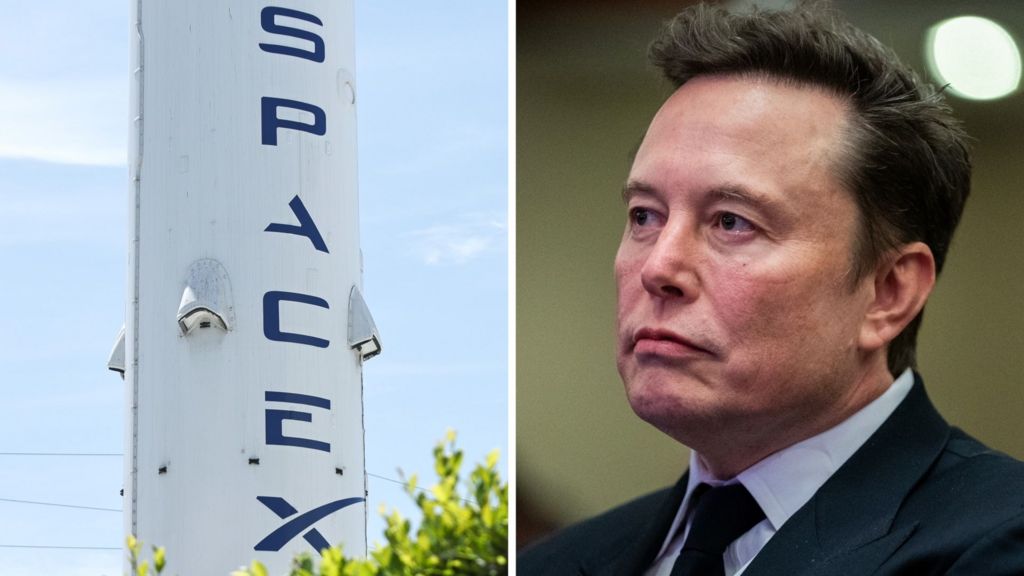
Watch: Three things to know about SpaceX’s stock market debut
SpaceX, the Elon Musk-founded aerospace and space exploration giant, is on the cusp of one of the most anticipated initial public offerings in recent market history. The BBC’s global business correspondent Samira Hussain has broken down the most critical details that investors and industry observers need to understand ahead of this landmark market entry. This IPO is far more than just another corporate listing: it represents a coming-of-age moment for the commercial space industry, which has evolved from a niche government-dependent sector to a multi-billion dollar private market attracting widespread investor interest. Hussain’s breakdown clarifies three core areas that shape expectations for the offering: the company’s unique market position, the risks and opportunities facing potential shareholders, and what the debut signals for the future of private space innovation. As one of the most valuable private startups in the world, SpaceX’s transition to a publicly traded company has been years in the making, with its existing portfolio of revolutionary projects — from satellite internet through Starlink to NASA crewed missions to the International Space Station — already redefining what private companies can achieve in low Earth orbit and beyond. Hussain’s explanatory analysis cuts through the hype surrounding the IPO, giving audiences a clear, accessible breakdown of the factors that will define the success of this historic stock market debut.
-

‘I was employee number one’: SpaceX co-founder reacts to firm’s market debut
Twenty-two years after stepping away from a legacy aerospace career to help launch a radical new space venture, Tom Mueller, SpaceX’s very first hire and co-founder alongside tech entrepreneur Elon Musk, has opened up about his experiences as the company prepares for a high-stakes public market debut. In an exclusive interview with BBC correspondent Michelle Fleury, Mueller, who built the company’s first rocket engines from scratch in a cramped Los Angeles warehouse, recalled the early days of the startup when few industry insiders believed a private company could challenge established government-led space programs.
As the driving force behind SpaceX’s groundbreaking Merlin and Raptor rocket engine designs, Mueller witnessed every milestone of the company’s transformation: from the early failed launch attempts that nearly sank the venture to the historic first reusable rocket landings that revolutionized space access. Now, as the company moves toward its public listing that is projected to value SpaceX at well over $100 billion, Mueller shared his perspective on how the small team of passionate engineers grew into the world’s leading commercial space enterprise. The long-awaited market debut is expected to reshape the private space industry, unlocking billions in new capital for SpaceX’s ambitious projects including the Starlink satellite internet constellation and the NASA-led Artemis program’s lunar landing mission. Mueller’s reflections offer a rare insider look at the origins of a company that has redefined what private enterprise can achieve in space exploration.
-
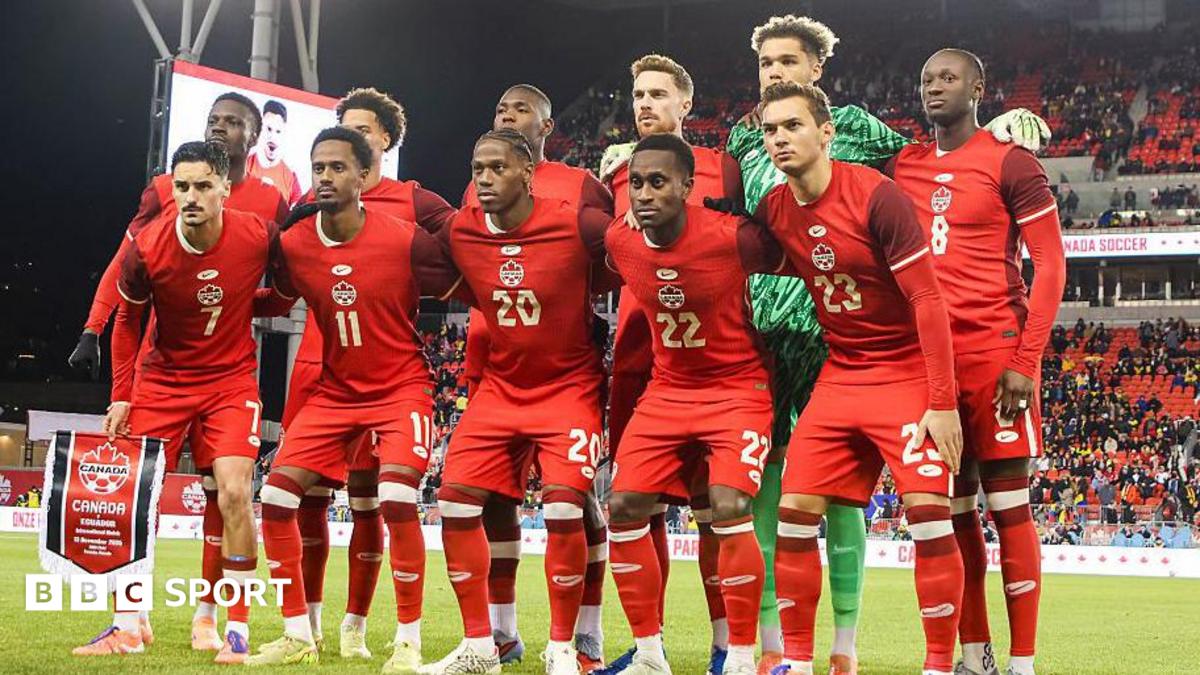
‘Best Canada team ever’ bid to shine at home World Cup
As the 2026 FIFA World Cup kicks off, much of the global spotlight has fallen on political shifts in the United States and ongoing infrastructure and scheduling controversies in co-host Mexico. But few have turned their attention to the tournament’s third, often underrepresented host nation: Canada. For Canadian football observers, this quiet invisibility is nothing new. “Canada is often overlooked, and we are comfortable with that,” veteran Canadian football journalist Har Johal told BBC Sport in an exclusive interview. “We will smile, be polite, and let our co-hosts to the south dominate the headlines. But that does not mean we do not have big ambitions of our own.”
Beneath the widely held stereotype of Canadian politeness lies a steely, growing confidence: this iteration of the men’s national team is widely considered the most talented in the country’s history, and they are poised to deliver a breakout performance on home soil this summer, starting with their tournament opener against Bosnia-Herzegovina in Toronto on Friday at 20:00 BST.
### Off the Pitch: Hosting Success, With Some Growing Pains
Unlike several proposed U.S. host venues that have drawn criticism for exorbitant travel costs and remote locations, Canada has avoided major off-pitch controversy. Both of its host cities – Vancouver and Toronto – boast centrally located, accessible stadiums that eliminate the need for long-distance commutes for fans. That said, the nation is not immune to the cost-of-living strains hitting the 2026 tournament overall.FIFA’s standardized ticketing pricing structure has left many local fans facing similarly expensive seat costs to their counterparts in the U.S. and Mexico, and hotel prices have skyrocketed to unprecedented levels. Downtown Vancouver hotels currently charge more than $1,000 per night during the tournament, with some peak match-night rates exceeding $2,000. When Vancouver hosted the 2010 Winter Olympics, the average downtown hotel rate sat at just $359 per night. Compared to standard 2025 off-tournament rates, prices have surged by more than 300% in some blocks.
### A History of Waiting, and Growing Talent on the Pitch
This 2026 tournament marks just Canada’s third appearance at the men’s World Cup finals, following debut runs in 1986 and 2022. The nation’s World Cup record is far from intimidating: across six total matches, Canada has yet to earn a win, scoring only two goals while conceding 12. At the 2022 Qatar World Cup, Canada entered the tournament labeled a potential dark horse after a stunning qualification campaign, but was outclassed in a brutal group that featured eventual semi-finalists Croatia and Morocco, alongside Belgium.Four years later, with four additional years of top-flight international experience and the undeniable energy boost of a home crowd, expectations around the team have shifted dramatically. Johal notes that momentum for Canadian football has been building for decades, as more young Canadian talent earn spots at top European clubs. “The timing is fantastic, but it has been building for Canada – we have seen more players in top European leagues, the talent is there,” she explained. “At Qatar, expectations were already high, and they are just as high again this year. People are getting excited, momentum is slowly building. The whole country is really behind Team Canada, and excitement ramps up every single day. This is a great generation, the best Canadian team we have ever had.”
On paper, Canada’s 2026 group is far more manageable than their 2022 draw. They will face Switzerland, Qatar, and Bosnia-Herzegovina – the latter of which upset powerhouse Italy on penalties to qualify for the tournament. “People are saying there is no reason Canada cannot top this group, especially after Italy choked,” Johal said. “Now maybe the Swiss are our biggest rivals.”
That confidence has yet to fully translate to recent match results. Canada were eliminated from the 2025 Concacaf Gold Cup quarter-finals by underdog Guatemala on penalties, and their recent friendly form has been inconsistent. The March 2026 international break brought two consecutive draws against Iceland and Tunisia on home soil in Toronto, and goals have been hard to come by: the team has failed to score in four of their last nine outings, leaving manager Jesse Marsch with work to do to meet lofty home expectations.
### The Golden Generation Led By a Talisman Returning From Injury
While Marsch works to solidify his starting eleven, the entire nation is holding its breath for star talisman Alphonso Davies, who is set to miss the opening Bosnia-Herzegovina match through injury but hopes to return later in the tournament. The 25-year-old Bayern Munich winger, now Canada’s captain, made history at the 2022 World Cup as the first Canadian man to score a World Cup goal, even as the team bowed out in the group stage. Now the undisputed face of Canadian football, Davies has missed 15 club matches this season through a series of injury setbacks, including a hamstring strain that kept him out of the March 2026 international window. If the winger can return to full fitness, it would be a transformational boost for the host side.“We saw Davies come back and score for Bayern recently, he is an integral part,” Johal said. “Davies is 100% the face of the team, it’s just we have not seen that face so often with the injuries.”
Davies anchors what is widely called Canada’s golden generation, alongside Juventus striker Jonathan David and Villarreal midfielder Tajon Buchanan. If all three can reach peak form for the tournament, analysts agree Canada has the quality to compete with any side in their group.
Toronto-based national team midfielder Jonathan Osorio credits the rising quality of Canadian football to decades of growing popularity and investment in the sport at all levels. “The exposure to other leagues around the world being shown on TV here was also a factor,” Osorio told BBC World Service. “I think Canadian club teams in MLS being successful helped, and all those things helped that next generation really believe and dream big, and believe that it is possible to one day help Canada reach a high level. Our grassroots began to improve. Everything began to improve as far as the sport in our country and that’s what led us to finally getting over that hump and qualifying for multiple World Cups. I think this team represents Canada more than any other national team in any sport. We really show how diverse Canada is.”
### Ambition Meets Expectation: A First Win Awaits
For a nation that has never won a World Cup match, the bar for success is clear. “Success has to be getting out of the group, or even topping the group,” Johal said. “There is no reason why they can’t, they are strong all over the field. Yes, we have never won a game, but as hosts it is a good time to do that now. If they don’t get out the group, heads will roll.”The first head expected to be on the chopping block if Canada underperforms is manager Marsch, a former Leeds United boss appointed in May 2024 specifically to lead the host side into the home tournament. While Marsch’s time in England ended in sacking and Leeds relegation in the 2022-23 season, he has built strong support in Canada for his straightforward style and experience coaching at the top club level. Osorio argues Marsch’s tactical approach is a perfect fit for this Canadian side.
“His football is very intense and physical, which suits our strengths as a team,” Osorio said. “But at the same time, it doesn’t take away from playing attractive, confident football. It’s been a perfect match honestly, and his experience coaching at the highest level has already had a huge impact on a lot of players in terms of their development and growth. It’s probably the best squad we’ve ever had in our history, and the player pool is deeper than it’s ever been.”
Marsch, an American, has already dismissed off-field speculation about him leaving the Canadian job to take the vacant U.S. national team role in 2024, and has publicly pushed back on U.S. President Donald Trump’s controversial comments calling for the annexation of Canada, calling the remarks “ridiculous”. Johal says Canadian fans appreciate Marsch’s no-nonsense, transparent approach, and do not take issue with an American leading their national side.
“People like Marsch, they like his no-nonsense approach,” Johal said. “He is an open book and gives long answers at media conferences – what you see is what you get. People just want the best results.”
As for the style of play fans can expect from the 2026 hosts, Johal says it matches the country’s beloved national sport of ice hockey: high-tempo, physical, and aggressive, with no willingness to back down from opposition. “Canada are aggressive, they get on the ball and want to take the game to the opposition. It is similar to hockey – physical play and high pace. Players are not afraid to get stuck in. I would not be surprised to see a few cards – they do not want to be pushed around.”
So for fans expecting the stereotypical quiet Canadian politeness on the pitch this World Cup: think again.
Fans across the UK can watch Canada’s opening match against Bosnia-Herzegovina on BBC One, BBC iPlayer, and the BBC Sport website and app from 19:00 BST on Friday, with full live commentary on BBC Radio 5 Live and BBC Sounds.
-
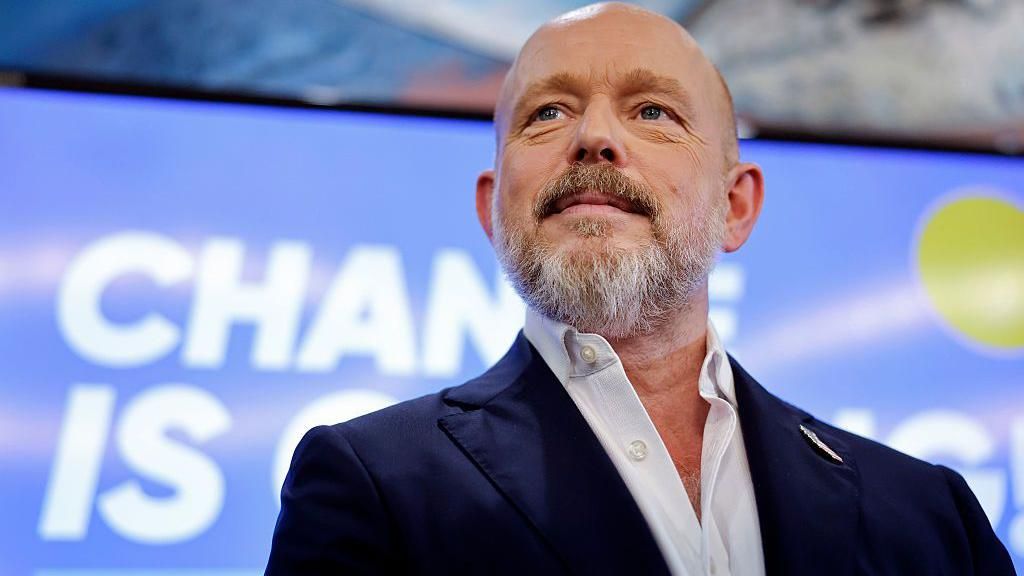
Ex-UK political aide Steve Hilton pledges ‘common sense’ overhaul if elected California governor
A former top advisor to one-time British Prime Minister David Cameron has launched a surprising bid for California’s governorship, framing his November campaign as a mission to rescue the state from what he calls suffocating bureaucratic overreach and spiraling economic decline. In his first interview with a UK media outlet since securing a spot in the general election this week, Steve Hilton told BBC Radio 4’s *Today* programme that his candidacy draws directly from California’s long-held “rebel spirit”, a tradition he argues has been eroded after 16 years of uninterrupted Democratic control of the state government.
Having relocated to California in 2012, Hilton is running as a Republican in the deep-blue liberal state, but he has positioned his campaign around a self-described “common sense” policy platform rather than strict partisan ideology. Casting himself as a political outsider untainted by decades of Sacramento insider politics, Hilton says he is running to rebuild housing affordability and expand economic opportunity in what he describes as “the most incredible place in the world”.
At the core of his policy agenda is a push for widespread tax cuts, broad business deregulation, and deep cuts to what he calls wasteful bloat in state government. “The quickest way we can get more money into people’s pockets is for government to take less out,” Hilton explained, outlining a pledge to set a $100,000 tax-free income threshold for Californians, alongside measures to slash sky-high energy and housing costs across the state.
Hilton’s political path to this race has been anything but conventional: he served as the architect of the UK Conservative Party’s iconic “Big Society” agenda under Cameron before becoming an early backer of Donald Trump’s 2016 presidential bid. When asked to place himself on the ideological spectrum between Cameron-style centrist conservatism and Trump-era right-wing populism, he rejected the framing entirely, arguing neither movement defines his personal political identity. Instead, he ties his platform to a broader cross-partisan critique of decades of stagnant wages and growing economic inequality, a trend he says has fueled populist backlash across both the American left and right.
This economic-focused message shapes his entire pitch to California voters, where he blames decades of Democratic policy making for the state’s crippling cost of living, rising business exodus, growing homelessness, and surging violent crime rates. “The record is a disaster,” he said, pointing to data that puts California among the highest U.S. rates for poverty, unemployment, and cost of living. When asked to draw comparisons to high-profile left-wing campaigns like that of New York City Mayor Zohran Mamdani, Hilton dismissed the comparison, saying he pays little attention to that race.
One of the biggest lingering questions for Hilton’s campaign is his close alignment with former President Donald Trump, who holds extremely low approval ratings in California. Trump has officially endorsed Hilton’s candidacy, claiming the British-born candidate would align fully with his policy agenda if elected. When asked whether Trump’s backing would prove a liability in the general election, Hilton pushed back, arguing it is actually an “asset for Californians”. He argued that closer cooperation with a second Trump White House would unlock critical policy progress, particularly on domestic energy production. Pointing to the state’s sky-high gasoline prices, he blamed restrictive environmental policies for forcing California to import most of its oil despite holding massive untapped domestic reserves. “I will work co-operatively to expand energy production,” he said, noting the shift would immediately bring down consumer costs.
Immigration policy also emerged as a key talking point in the interview. As the son of Hungarian immigrants, Hilton describes himself as a champion of the “legal immigrant community”, but he has come out strongly against California’s decades-old “sanctuary state” policies, which limit state and local law enforcement cooperation with federal immigration enforcement agencies. If elected governor, he says he would not obstruct federal immigration authorities, and would instead return to the more cooperative intergovernmental framework that was in place during the Obama administration. When pressed on civil liberties concerns, including cases where immigrants without criminal records have been detained by federal authorities, Hilton argued better coordination between state and federal agencies would eliminate these problematic scenarios.
Hilton’s Democratic opponent, Xavier Becerra, a former cabinet secretary under President Joe Biden, has already struck a sharp contrast in his own campaign, framing himself as a defender of the “California dream” who answers only to Golden State voters, not Washington D.C. insiders. Becerra has repeatedly accused Hilton of being a loyal ally of Trump who would hand control of the state over to the former president, and has questioned whether Hilton can be trusted to defend California’s election system against Trump’s unsubstantiated claims of widespread voter fraud. “Californians didn’t build the greatest state in the nation to hand it over to a Trump errand boy dead-set on throwing our progress into reverse,” Jonathan Underland, a spokesperson for the Becerra campaign, told the BBC. “Voters know Steve Hilton means higher prices, rights stripped away, and an all-out attack on our values — and they don’t want anything to do with it.”
Hilton’s advancement to the general election has already surprised most political observers, who did not expect the outsider candidate to break through a crowded primary field. He advanced in large part due to a split in the Democratic vote across multiple candidates, and Hilton has openly acknowledged the steep challenge he faces in a state where Democrats hold overwhelming majorities in nearly every level of government. Even so, he argues that widespread voter discontent has created a unique opening for a change candidate: polling consistently shows a majority of Californians believe the state is heading in the wrong direction. He also points to the 2024 presidential election, where more than six million Californians cast ballots for Trump, arguing that mobilizing that base of Republican voters, combined with winning over independent voters frustrated by the status quo, could be enough to pull off an upset. He added that a proposed ballot measure on mandatory voter ID, which is popular with Republican voters, could drive higher turnout that benefits his campaign. While Hilton says he has not seen evidence of widespread voter fraud in California, he has still called for sweeping electoral reform, including ending the practice of automatically mailing ballots to all 23 million registered voters — a system that he argues is the root cause of the state’s famously slow vote counting process.
The November election will now test whether Hilton’s pragmatic, outsider-focused message can resonate beyond the small Republican base in a state that has been dominated by Democrats for a generation, and whether a one-time Westminster political operative can successfully reinvent himself to win high office in American politics.
-
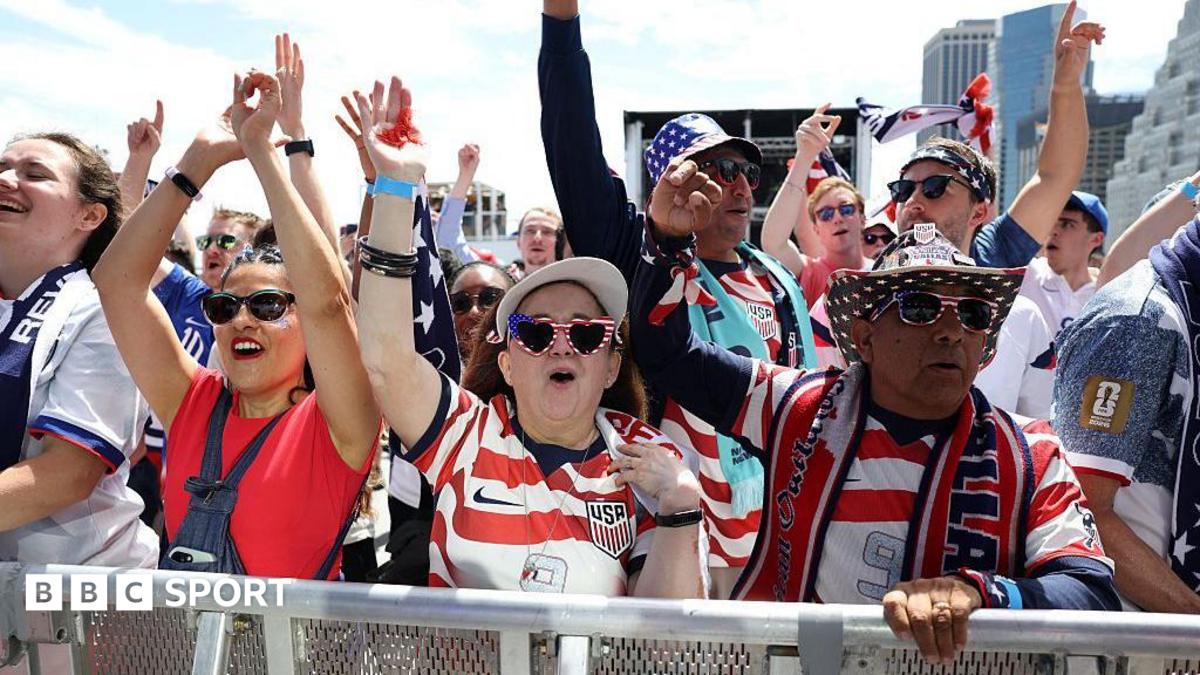
‘No-one knows it’s on’ – NBA Finals feed US World Cup apathy
As the 2026 FIFA Men’s World Cup prepares for its first matches on US soil, the global tournament faces a major uphill battle to capture mainstream public attention across the country — overshadowed by a historic NBA Finals run that has gripped major American cities and facing long-standing cultural gaps where other domestic sports reign supreme.
Across the United States, the immediate conversation is dominated not by international football, but by the New York Knicks’ stunning, record-breaking comeback against the San Antonio Spurs that has left the franchise one win away from its first NBA championship since 1973. Wild street celebrations erupted across Manhattan after the game, with fans climbing onto cars to cheer the historic victory, while even in beachside Santa Monica, bar crowds roared for the basketball result rather than any World Cup build-up. For many New Yorkers, the NBA Finals have completely crowded out any space for World Cup excitement. “To be honest I haven’t really kept up with anything about the World Cup. I don’t care about anything other than the Knicks,” one Knicks fan told BBC Sport, echoing a widespread sentiment that even local organizers acknowledge.
This is only the second time the United States has hosted the men’s World Cup, 32 years after the 1994 tournament that reshaped American soccer culture, spurring growing popularity and paving the way for the creation of Major League Soccer. Three decades on, traces of the 2026 tournament are visible in major host cities: subway trains wrapped in US national team colors in New York, a giant Lionel Messi billboard in Times Square, street banners promoting the tournament outside Los Angeles International Airport, and a massive Messi mural in downtown LA. International fans have begun arriving, with supporters of Morocco, Brazil, Scotland and other nations spotted wearing team gear across host hubs.
Yet for casual sports fans and even many locals, the tournament has flown entirely under the radar. A Los Angeles taxi driver recently expressed complete surprise when told the World Cup was days away, asking “There’s a World Cup happening? Who’s playing?” Even visiting Scotland fans, who have traveled to Boston for their nation’s first World Cup appearance in 28 years, reported that most Americans they’ve interacted with have no idea the tournament is underway. “I had a Scotland top. She didn’t even know the World Cup is on,” one fan told reporters.
A recent national poll underscores this apathy: half of all surveyed Americans say they do not care about the tournament. Soccer has grown in popularity over the past 30 years, particularly among younger generations, but it still has not displaced the hold that basketball, American football and baseball have on mainstream US sports culture.
Compounding the challenge of low awareness is the issue of prohibitively high ticket prices, which have priced out many families and casual fans even among committed soccer supporters. Ahead of the US men’s national team’s opening match against Paraguay on Saturday, unsold tickets remained available, with the cheapest entry point sitting at $1,120 — a cost many households refuse to absorb. “We have two girls in club soccer so we are very much fans,” said Chris, a Los Angeles local, who explained he and his family would be watching the tournament from home rather than attending in person. “If it was more affordable for families we would definitely go and check it out,” added another local father Brennan, echoing that sentiment.
Host city organizers are optimistic, however, that excitement will build as the tournament progresses. “I think we have had a slow build that is leading to a frothy frenzy,” said Larry Freedman, co-chairman of the Los Angeles World Cup Host Committee. “It has been such a long time coming and with so many other sports and activities in LA people have been thinking about what they will do tomorrow, not two or three years out. But now we are on the eve of it kicking off people are getting very, very excited. We have a very diverse community here and people from all over the world who will have teams participating in this tournament.”
Among younger Americans who never experienced the 1994 tournament, there are signs of growing enthusiasm. Many younger fans have organized watch parties, and are leaning into national pride to draw less interested friends into following Team USA. “I think it has surpassed baseball in popularity here, but I don’t think it will get as big as American football or basketball. People will get into it,” said one young LA fan. Even casual first-time viewers expressed excitement at getting to experience the global tournament on home soil: “I’ve never actually watched the World Cup but I will watch it this year. I think it will be exciting because it is here in LA now and LA is where it is at. It will be something different,” said Isaiah, a visitor from Sacramento County.
Organizers have also experimented with new outreach tactics to attract casual audiences, including featuring US international Malik Tillman on the cover of a major fashion magazine in an unconventional spread designed to boost exposure beyond traditional soccer circles. “Ultimately it’s about exposure. I’m always up for expressing ourselves in different ways,” said US center-back Mark McKenzie of the campaign.
Interest has ticked upward as the US opener approaches: 30,000 fans registered interest for just 5,000 available spots at a recent open US training session. How far the US team advances in the tournament will also play a key role in growing support: a deep run could mirror the 1994 tournament’s lasting impact, accelerating soccer’s growth in the US for decades to come.
-
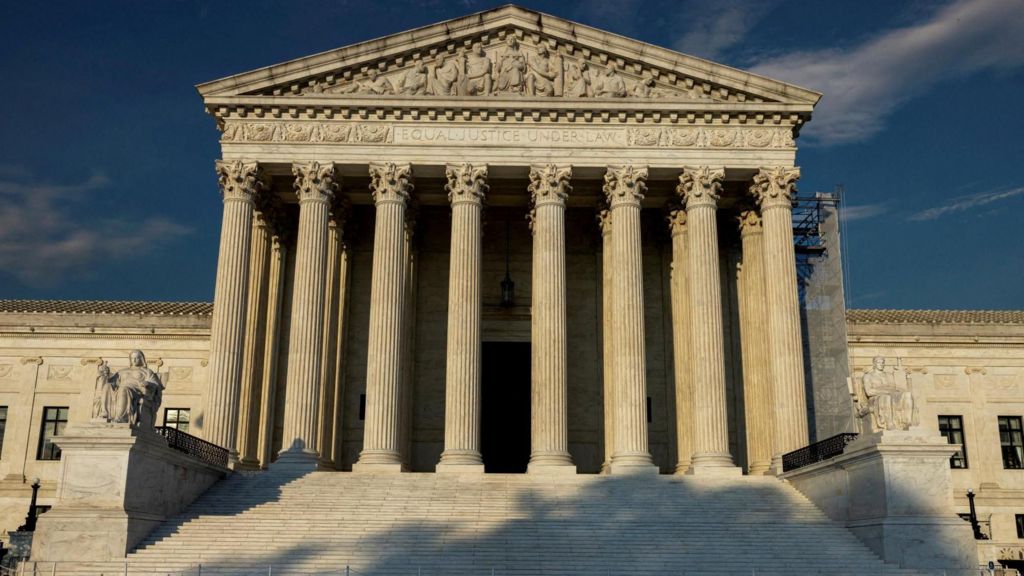
US Supreme Court denies Alabama’s request to carry out nitrogen gas execution
In a high-stakes ruling that has reignited national debate over capital punishment practices in the United States, the US Supreme Court has rejected an emergency appeal from Alabama officials seeking approval to carry out an execution via nitrogen gas hypoxia.
This decision marks the latest turn in a long-running legal battle over the controversial execution method, which Alabama pioneered for regular use in 2024. Lower courts had already stepped in to block the planned execution of 49-year-old death row inmate Jeffery Lee, ruling that nitrogen hypoxia almost certainly violates the Eighth Amendment of the US Constitution, which prohibits cruel and unusual punishment.
Lee’s scheduled execution was set for 6 p.m. local time on Thursday, just hours after Alabama submitted its emergency appeal to the nation’s highest court. The Supreme Court released a brief, unsigned order that offered no detailed reasoning for its denial of the state’s request. Three conservative justices – Clarence Thomas, Samuel Alito, and Neil Gorsuch – issued a dissent, stating they would have granted Alabama’s request to move forward with the execution.
The controversy around nitrogen gas executions escalated earlier this week, when a federal judge issued a permanent ban on the method after hearing extensive testimony from expert witnesses during an April bench trial. The ruling reversed an earlier decision from a federal appeals court, and laid out detailed findings that inmates subjected to nitrogen hypoxia would likely endure agonizing symptoms before death: including extreme air hunger, crippling emotional distress, debilitating anxiety, dangerous physiological stress, and prolonged physical discomfort, according to reporting from CBS News, the US partner of the BBC.
Alabama is the first US state to implement nitrogen gas as a primary execution method, and has already put seven inmates to death using the protocol since rolling it out in January 2024. The current case centers on Lee, who was convicted of the 1998 double murder during a pawnshop robbery, and has spent more than 25 years on death row. A notable detail of his sentencing: the jury that convicted him originally recommended a life sentence without possibility of parole, but a trial judge overturned that decision under a judicial override rule that has since been repealed in Alabama.
While the Supreme Court’s ruling blocks this specific attempt to use nitrogen gas for Lee’s execution, Alabama legal officials retain the option to pursue execution via an alternative method. The decision has drawn renewed attention to the growing national scrutiny of untested execution methods, as states grapple with ongoing shortages of lethal injection drugs and growing legal pushback against capital punishment practices.
-

Do not use my music, Ariana Grande tells White House
A high-profile conflict over artistic autonomy and political messaging has erupted after the White House used pop superstar Ariana Grande’s 2024 chart-topping track *Bye* as the soundtrack for a TikTok video promoting the Trump administration’s hardline immigration policies, prompting a fierce public rebuke from the artist.
The short-form video, shared to the White House’s official TikTok account on Monday, opens with graphic footage of U.S. border officers placing undocumented individuals in handcuffs, escorting them into vehicles, and transferring them to immigration detention facilities. The caption paired with the clip reads: “Bye-bye… President Trump has delivered the most secure border in history.”
Grande did not hold back in her public response to the unauthorized use of her work, commenting directly on the TikTok post: “Please do not use my music in relation to this barbaric, inhumane, heinous nonsense.”
Not long after the Grammy-winning artist and *Wicked* film star issued her criticism, the video had its audio muted, and Grande’s critical comment was removed from the comment section. Multiple TikTok users quickly noticed the changes, pointing out the removal of the artist’s remark and the disabled audio in their own responses to the post.
The White House pushed back against Grande’s condemnation in a statement from spokesperson Abigail Jackson to U.S. media outlets. Jackson argued: “What’s actually barbaric, inhumane, and heinous are the criminal illegal aliens who have injured and murdered innocent American citizens.”
The controversy comes on the heels of President Donald Trump signing a major immigration funding bill into law, which allocates more than $70 billion (£52 billion) to U.S. immigration agencies for the remainder of his current presidential term, which will last two and a half years.
Grande is far from the first high-profile musician to push back against the Trump administration’s unauthorized use of their work for political promotion. Last year, singer Sabrina Carpenter publicly demanded the White House cut ties with her music after a similar clip featuring a segment of her 2024 song *Juno* was released to highlight Immigration and Customs Enforcement (ICE) operations. Carpenter wrote at the time, “do not ever involve me or my music to benefit your inhumane agenda.”
During Trump’s 2024 re-election campaign, dozens of legendary and contemporary artists publicly called on the campaign to stop using their music at rallies and official campaign content. ABBA, Céline Dion, and Beyoncé were among the big-name acts that explicitly banned the campaign from using their copyrighted work.
The incident highlights the ongoing tension between political actors seeking to co-opt popular culture to advance their policy messaging and artists who want to control how their creative work is used, particularly when it comes to policies they view as morally objectionable.
-

Cheering for the ‘home team’ during the World Cup gets complicated for Canadians
As Toronto prepares to welcome the 2026 FIFA World Cup’s opening group stage match between Canada and Bosnia and Herzegovina, the country’s long-celebrated multicultural identity has emerged as the defining narrative of the tournament for Canadian fans, turning a high-stakes athletic clash into a celebration of shared belonging across diverse communities.
For many residents with roots in both competing nations, the match poses a gentle, joyful dilemma that perfectly encapsulates Canada’s dual-heritage culture. Nikola Vukelic, a Toronto-based lifelong football fan who has lived in Canada since 1999 after growing up supporting Bosnian domestic clubs, says he still cannot pick a side to cheer for. He described Bosnia’s stunning qualifying victory over four-time World Cup champions Italy as a “surreal” moment he never expected to witness, but decades of calling Canada home have left him equally invested in the host nation’s campaign. Vukelic’s solution? A mixed uniform: his Bosnia national team jersey paired with Canada football shorts, to be worn while hosting a watch party with friends close to BMO Stadium, the venue for Friday’s opening match. For him, the final score is irrelevant. “I’m going to have fun either way,” he said.
Vukelic’s experience is far from unique. Canada’s most recent national census data shows more than 35% of the population – approximately 13 million people – identify with multiple ethnic and cultural origins, a demographic reality that has been on full display across host cities Toronto and Vancouver in the lead-up to the tournament. Across both cities, cross-cultural watch parties have popped up in unexpected, community-focused spaces: Turkish fans gathering to cheer on their team at an Australian-owned pub, Balkan supporters setting up screens outside a specialty food market, and football fans of all backgrounds meeting at an Iraqi-run hookah lounge.
This culture of inclusive diversity has become a core selling point for Canadian soccer organizers, who have framed the tournament as a counterpoint to growing global division. Speaking at the 2026 FIFA World Congress held in Vancouver earlier this year, Canada Soccer President Peter Augruso emphasized that the country’s multiculturalism is more than a policy – it is a lived experience. “Here, the world doesn’t just visit,” he said. “The world lives, works, learns, and thrives together.”
That ethos is clearly visible in the community-led celebrations being held across Greater Toronto. For Adis and Amir Mrakovic, Bosnian-Canadian brothers who own Mrakovic Fine Foods, a beloved Balkan specialty store in the Toronto suburb of Etobicoke, the opening match pairing their home country and their adopted nation is a once-in-a-lifetime moment. The pair arrived in Canada with their family in 1994, not long after their father launched the small business selling traditional smoked meats. Over nearly 30 years, the shop has grown into a community staple, famous across the city for its grilled ćevapi kebabs that serve the region’s large Balkan diaspora.
Like most fans, the brothers never expected Bosnia to qualify for the 2026 tournament. The side had not reached the World Cup since 2014, and faced a grueling qualifying draw that included tough competitors Austria and Italy. When Bosnia knocked Italy out via penalty shootout on March 31 to secure their spot and set up the opening match against Canada, the result was a shock to the entire global football community. “It was a shock for everybody,” Amir said.
Within days, the brothers planned a large public watch party outside their store, outfitting the space with a 26-foot big screen, a local DJ, and a full menu of grilled ćevapi for attendees. They expect hundreds of fans to attend, with some traveling more than 500 kilometers from Montreal to join the celebration. For the Mrakovics, the event is as much a celebration of their Canadian identity as it is their Bosnian roots. “We felt an obligation to bring people together,” Adis explained. When asked what final score they hope for, Amir laughed and summed up the mood of many dual-heritage fans: the best outcome is a tie.
Even for Canadian fans of Italy, who saw their ancestral nation fall just short of qualification, the moment has become a celebration of multiple belonging. In Toronto’s Little Italy neighborhood, the 2026 World Cup qualifying loss left many Italian-Canadian fans heartbroken, as many had dreamed of watching Italy face Canada in the opening match. To honor that disappointment, Canada Soccer organized a promotional event at Cafe Diplomatico, a historic Italian restaurant that has served as a gathering spot for Canadian soccer fans for decades, inviting fans to swap their Italy jerseys for new Canada kits. When fans reached the front of the line, organizers surprised them with a message: they did not have to give up their Italy jerseys after all. They could keep both, an announcement that moved some long-time fans to tears. “It’s very rare to be in a country like ours where you’re allowed to have multiple homes in your hearts,” said Canada Soccer spokesperson Paulo Senra.
The spirit of cross-cultural fan camaraderie extends across the country to Vancouver, the second Canadian host city that will welcome groups of fans from around the world for 13 total matches, including matchups between Australia and Turkey, New Zealand and Egypt, and Switzerland and Canada. Even when two rival nations face off, fans from both sides often gather to watch together: for the Australia-Turkey matchup, a local Turkish band is hosting a joint watch party at a Vancouver pub, where fans of both nations will cheer side by side. Ilyas Kayran, a member of the hosting band Istanbul the Band, says this inclusive dynamic is core to what it means to be Canadian. “This is Canadian identity,” he said.
Even Canada’s national men’s team itself reflects the country’s multicultural makeup. The squad’s captain and star player, Alphonso Davies, was born in a refugee camp in Ghana before his family resettled in Edmonton, Alberta, where he developed his skills and launched his professional career. This year marks only the third time Canada has qualified for the FIFA World Cup, and the first time the team has competed on home soil as a co-host of the 2026 North American tournament. Though the team faces long odds to advance, the squad is aiming to become the first Canadian men’s side to reach the tournament’s knockout round.
Of the three North American co-hosts, Canada holds the smallest hosting role for the 2026 tournament: while Mexico has three host cities and the United States is hosting 78 total matches, Canada only has two host cities – Toronto and Vancouver – each holding 13 matches. Despite the smaller footprint, the public cost of hosting remains steep: an independent estimate from Canada’s Parliamentary Budget Officer puts total taxpayer spending at just over C$1 billion, or roughly C$82 million per match.
The tournament has also faced criticism over ticket pricing, with the cheapest in-person tickets for Canadian-hosted matches running into the hundreds of dollars. Many fans have complained that the pricing locks out local supporters in a country where cost of living in major cities like Toronto and Vancouver is already extremely high. As of the lead-up to the opening match, hundreds of tickets remain unsold in both cities, and demand for hotel and short-term vacation rental accommodation has been lower than pre-tournament projections.
Despite these challenges, Canadian federal and provincial officials have framed hosting the 2026 World Cup as a transformative opportunity for the country. Adam van Koeverden, Canada’s FIFA Sherpa and Secretary of State for Sport, called it a “once-in-a-generation opportunity” to showcase the country to the world.
For fans like Vukelic, who says he cannot afford the high price of an in-person ticket to the opening match, the challenges have done little to dim the excitement of the tournament. Even watching from home, he is soaking up the atmosphere and the energy the World Cup has brought to his city. “The only thing we have to be careful about is the traffic here,” he joked. “Other than that, Toronto is ready for this.”