标签: North America

北美洲

  • ‘Attacked 28 times in a day’ – BBC visits heavily targeted US-UK base in Iraq

    ‘Attacked 28 times in a day’ – BBC visits heavily targeted US-UK base in Iraq

    A recent on-the-ground reporting trip by the BBC has pulled back the curtain on one of the most violently targeted American and British military installations in the entire Middle East, a site that endured an astonishing 28 separate attacks in a single 24-hour period before a fragile ceasefire agreement brought a temporary lull in hostilities.

    Located within Iraqi territory, this base has long sat at the center of escalating regional frictions, becoming a primary focal point for anti-coalition strikes that have put the lives of both American and British service members stationed there in constant danger. In the period leading up to the current fragile truce, attacks against the outpost grew not just in frequency, but in intensity, culminating in the record-breaking 28-attack barrage that underscored just how precarious the security situation around the installation had become.

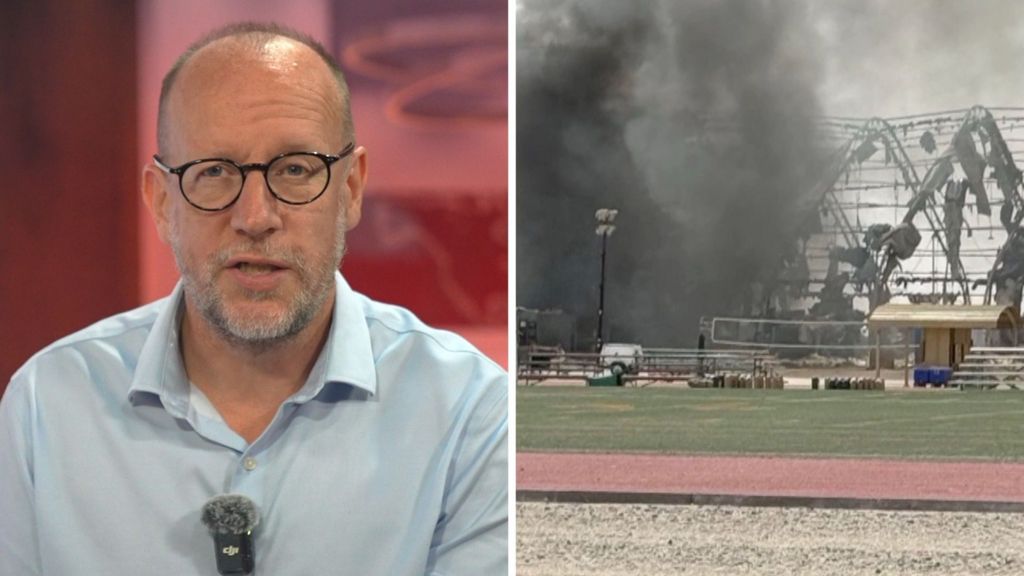
    During their visit to the base, BBC correspondents documented the visible aftermath of repeated strikes: damaged infrastructure, reinforced defensive positions, and service members who had grown accustomed to regular air raid sirens and incoming fire. The ceasefire that has paused the near-constant attacks remains shaky, with no long-term political agreement in place to resolve the underlying tensions that drive attacks on coalition forces in Iraq. Analysts warn that even with the current lull, the base remains at high risk of resumed hostilities if ceasefire terms break down, continuing to serve as a flashpoint for broader regional unrest that has roiled the Middle East for months.

  • Watch: Aerial video shows destruction after tornado strikes small Texas town

    Watch: Aerial video shows destruction after tornado strikes small Texas town

    For nearly six straight days, a relentless wave of severe thunderstorms and tornado activity has pummeled broad swathes of the U.S. Midwest and South, leaving a trail of damage in its wake. The latest hard-hit community is a small rural town in Texas, where newly released aerial footage lays bare the full scale of destruction unleashed when a powerful tornado tore through the area.

    Drone and aircraft footage captured in the aftermath of the storm reveals widespread damage to residential neighborhoods, public infrastructure, and local businesses. Entire blocks of homes have been reduced to piles of rubble, uprooted trees litter streets and yards, and critical utility lines have been torn down, leaving hundreds of residents without power in the storm’s aftermath.

    The ongoing storm system has already broken several early-season severity records across the region, with multiple tornado warnings issued daily and local emergency management teams working around the clock to conduct search and rescue operations, clear debris, and restore basic services to affected areas. For the small Texas town impacted in this latest tornado event, the recovery process is expected to take months, if not years, as residents work to rebuild their homes and their community.

    Meteorologists with the U.S. National Weather Service note that above-average atmospheric moisture and unusually warm surface temperatures across the Gulf of Mexico have created favorable conditions for the sustained severe storm activity that has plagued the region this past week. Emergency management officials have urged residents in at-risk areas to remain alert for updated weather warnings and to have emergency evacuation plans ready as the storm system continues to push through the region.

  • The King and Queen in the Big Apple: What the royals did on their third day in the US

    The King and Queen in the Big Apple: What the royals did on their third day in the US

    On the third day of their royal visit to the United States, Britain’s King Charles III and Queen Camilla carried out a full schedule of public engagements across New York City, weaving together remembrance, outreach, and cultural connection. The day began with a somber, respectful visit to the 9/11 Memorial, where the couple honored the nearly 3,000 lives lost in the 2001 terrorist attacks, laying an unseen wreath and pausing to reflect at the sunken reflecting pools that mark the footprint of the fallen twin towers.

    Following the memorial visit, the royal schedule split for separate community-focused events. Queen Camilla traveled midtown to the iconic New York Public Library, where she joined a group of young local children for a reading activity. The event, centered on promoting childhood literacy, saw Camilla share excerpts from popular children’s books, interact with the young attendees, and highlight the importance of accessible public education and reading programs for young people across urban communities.

    Across Harlem, King Charles headed to a local community organization that has long served the Harlem neighborhood’s residents, providing social services, youth programming, and economic support to locals. During his visit, the King met with organization leaders, spoke with local residents, and learned about the grassroots work the group carries out to address key challenges facing the Harlem community, from food insecurity to youth development. The separate neighborhood engagements allowed the royal couple to connect with diverse communities across one of America’s most culturally diverse cities, on the third day of their official trip to the United States.

  • The ‘Polar Bear Capital’ with Arctic gateway ambitions

    The ‘Polar Bear Capital’ with Arctic gateway ambitions

    Nestled in Canada’s sub-Arctic region, the Port of Churchill on the shores of Hudson Bay spends most of the year shrouded in snow and locked in ice, open to commercial shipping for just four to five months annually. For this remote Manitoba town of barely 1,000 residents, however, this long-overlooked Arctic deep-water port holds the promise of transformative economic opportunity — and national leaders are betting big on its potential to reshape Canada’s trade future.\n\nGeography is Churchill’s greatest asset. Positioned directly on Hudson Bay with an unobstructed path through the Labrador Sea to the North Atlantic, the port cuts days off shipping times for Canadian resources bound for Europe, Africa, and South America. Connected by rail to resource-rich western Canada, and already the country’s only Arctic deep-water port capable of accommodating ultra-large container vessels, oil tankers, and LNG carriers, the site has long been tied to Canadian Arctic maritime ambitions that never came to fruition.\n\nA century of unfulfilled plans\n\nOpened nearly 100 years ago, the Port of Churchill long served as an export route for prairie grain, until collapsing grain shipments in 2016 led producers to shift to cheaper southern routes. The port fell into severe disrepair under decades of poor private management by a Denver-based firm that took ownership in 1997, with no meaningful investment in port infrastructure or connecting rail lines. It reopened in 2019 after a 2018 ownership transfer to Arctic Gateway Group, a consortium of Indigenous and local community groups that sought to take control of the region’s economic destiny.\n\nSince the transfer, the Canadian federal government has invested C$320 million ($235 million) into maintenance, restoration, and modernization of the port and its connecting railway. The site notched its first milestone in 2024, when it delivered its inaugural shipment of critical minerals to Belgium. Today, it is being framed as a cornerstone project by Prime Minister Mark Carney’s government, which aims to double Canada’s non-U.S. exports over the next decade, reduce the country’s heavy trade reliance on its southern neighbor, and capitalize on shifting global market demands driven by three major forces: accelerating Arctic climate change, U.S. tariff pressures, and Europe’s ongoing energy shortage following global geopolitical conflicts.\n\n”Canada has an abundance of resources, and this port expansion will mean we can ship more to the world,” Carney said earlier this year, adding that the project has the potential to fundamentally transform Canada’s national economy. For local residents, the benefits are equally clear: expanding port operations could create hundreds of jobs in a region that has long relied exclusively on seasonal polar bear and northern lights tourism, Churchill’s signature industry that draws visitors from across the globe each late summer and autumn.\n\nBarriers to year-round operation\n\nThe biggest obstacle to unlocking the port’s full potential is its limited seasonal access, and the question of whether year-round operation is even feasible. Proponents have set an ambitious goal to launch LNG exports from Churchill by 2030, but climate researchers warn that ice-free year-round shipping will remain impossible in the region this century, even under the most aggressive global warming scenarios.\n\nDr. Alex Crawford, an Arctic climate systems researcher at the University of Manitoba leading a study of regional open-water shipping for Arctic Gateway Group, explained that inconsistent ice formation across Hudson Bay makes unescorted shipping nearly impossible for most of the year, and icebreaker escorts are prohibitively expensive. Unlike Russia, which operates a fleet of powerful nuclear-powered icebreakers to maintain year-round shipping along its Northern Sea Route, Canada’s icebreaker fleet is small and outdated, with decades of plans for new vessels derailed by bureaucratic delays and limited funding. While Ottawa has recently launched a program to build new icebreakers capable of cutting through 10-foot thick ice year-round, the technology needed to keep Hudson Bay open to shipping is not yet in place.\n\nEconomic and environmental questions also loom large. Maritime trade expert Jean-Paul Rodrigue, a professor at Texas A&M University’s Galveston campus, notes that Arctic shipping requires specialized, costly vessel modifications for frigid conditions, and constant demand for resources like LNG requires 12-month port operation. Even with shorter shipping times to Europe, Rodrigue questions whether companies will be willing to absorb the extra costs of operating at a seasonal Arctic port to shave just a few days off transit times.\n\nEnvironmental activists and local community members also warn that port expansion could threaten the fragile Arctic ecosystem that supports Churchill’s booming tourism industry, which draws visitors seeking beluga whales, caribou, polar bears, and the northern lights. Mayor Mike Spence, who also serves as co-chair of Arctic Gateway Group, acknowledges the concerns, saying ongoing community engagement will prioritize balancing economic development and environmental protection. He notes that climate change is already shifting polar bear migration patterns and tourism seasons, making economic diversification a necessity for the town’s long-term survival.\n\nA shifting geopolitical landscape creates new opportunity\n\nWhile the project remains a high-risk bet, shifting global politics have given Churchill’s ambitions new momentum. Spence points to major geopolitical shifts following Donald Trump’s return to the U.S. presidency, which has pushed Canada to actively diversify its trade partners beyond its southern neighbor. Rising U.S. tariffs have made southern trade routes more expensive, and Europe’s urgent search for new energy and critical mineral suppliers has created new demand for Canadian exports.\n\nThe port has already secured international backing: earlier this year, operators signed a collaboration agreement with Belgium’s Port of Antwerp-Bruges to work on infrastructure design, business development, and future trade routes. While the expansion project is not on the Canadian federal government’s immediate shortlist for new funding, meaning its future is not yet guaranteed, experts see a potential niche for the port even without full year-round operation.\n\nRodrigue argues that the Port of Churchill could serve as a critical hub for stockpiling and exporting strategic critical minerals mined in western Canada, meeting growing global demand for the materials needed for clean energy and technology manufacturing. Canada finds itself at an inflection point, Rodrigue says, where shifting geopolitical and economic conditions could finally turn this long-held national ambition into a reality that benefits both the small remote town and the entire country’s trade future.

  • Musk accuses OpenAI lawyer of trying to ‘trick’ him in combative testimony

    Musk accuses OpenAI lawyer of trying to ‘trick’ him in combative testimony

    One of the most closely watched legal battles in the history of artificial intelligence entered a tense new phase this week, as Tesla and SpaceX CEO Elon Musk took the stand for a second day of testimony in his multi-billion-dollar lawsuit against OpenAI, co-founder Sam Altman, and OpenAI president Greg Brockman. The Oakland, California courtroom has become the center of a debate that will shape the future direction of the AI sector, pitting Musk against his former colleagues over the core founding mission of one of the world’s most valuable tech companies. On the stand, Musk repeatedly pushed back against aggressive questioning from OpenAI’s lead defense attorney William Savitt, at one point labeling the lawyer’s line of inquiry unnecessarily convoluted and intentionally designed to trip him up. “Your questions are not simple,” Musk told Savitt mid-examination. “They’re designed to trick me essentially.”

    Musk, a founding investor of OpenAI, launched the lawsuit in 2024, alleging that Altman, Brockman, and major OpenAI backer Microsoft betrayed the organization’s original non-profit charter by shifting OpenAI to a for-profit operating model. He argues that the founders explicitly misled him and other early supporters about the long-term direction of the company, which was launched with the stated public mission of developing artificial general intelligence (AGI) — AI systems that outperform human-level intelligence across all domains — for public benefit, not private profit.

    The tech billionaire laid out his core position clearly during his opening testimony, framing the case as a fundamental check on the integrity of charitable organizations. “It’s actually very simple,” he said. “It’s not okay to steal a charity… If it’s okay to loot a charity, the entire foundation of charitable giving will be destroyed.” Musk acknowledged that he contributed nearly $38 million to the non-profit OpenAI as an early backer, covering almost all of the organization’s initial operating costs because he wanted to ensure it stayed aligned with its public-focused mission. He admitted that he expected to cede control as more stakeholders joined the project, but said he never anticipated the entire mission would be flipped to prioritize commercial profit. “I could have done that with OpenAI, but I chose not to. I chose something that was for the public benefit,” he said. “I deliberately chose to create this as a non-profit for the public good.”

    Through his legal team, Musk is seeking billions of dollars in damages for what he calls OpenAI’s “wrongful gains,” all of which he says should be redirected to fund OpenAI’s non-profit division. He is also calling for a full leadership shakeup, including the removal of Altman from his top executive role at the company.

    OpenAI’s legal team has struck back with a sharply contrasting narrative, arguing that Musk’s lawsuit is nothing more than an attempt to sabotage a leading rival in the global AI race. The company says Musk left OpenAI in 2018 only after he failed to seize full control of the organization, and that his current legal action is driven by regret over walking away from the company years before its ChatGPT product revolutionized the AI industry and generated hundreds of billions of dollars in market value.

    Savitt used his cross-examination to highlight what he frames as a contradiction in Musk’s position: while Musk insists OpenAI must remain non-profit to ensure AGI safety, his own competing AI startup, xAI — launched in 2023, a year after ChatGPT’s blockbuster debut — operates as a for-profit company. Savitt also argued that Musk has long sought to advance his own commercial interests through OpenAI, claiming Musk tried to force a merger between OpenAI and Tesla, and used his early investment as leverage to “bully” other co-founders. “We’re here because Mr Musk didn’t get his way at OpenAI,” Savitt told the court. “Because he’s a competitor, Mr Musk will do anything to attack OpenAI.”

    As of the second day of testimony, Altman and Brockman sat in the front row of the courtroom observing the proceedings, and Altman is expected to take the stand later in the trial. The case, which is set to run for several weeks, has already drawn widespread public attention: crowds of demonstrators have gathered outside the Oakland courthouse, and tech industry observers across the globe are tracking the outcome closely, as a ruling for either side could set lasting precedents for how AI organizations are structured, governed, and held accountable to their original missions. Analysts note that Musk’s xAI has trailed OpenAI in market adoption and product development since its launch, a context OpenAI has leaned on to bolster its claim that the lawsuit is driven by competitive jealousy.

    OpenAI has pushed back on all of Musk’s core claims, maintaining that Musk was fully aware of and supported the 2019 decision to launch a commercial arm to fund the massive costs of AI research years before ChatGPT launched. The company also says all of Musk’s original $38 million donation was spent exactly as intended, in service of the organization’s founding mission.

    As the trial unfolds, the global tech industry waits for a verdict that could reshape the dynamics of the fast-growing AI sector, redefining the line between non-profit public mission and commercial innovation in one of the most important technological revolutions of the century.

  • The kelp producer who wants to get Americans eating seaweed

    The kelp producer who wants to get Americans eating seaweed

    Ten years ago, Suzie Flores sat behind a desk in a Manhattan academic publishing firm, commuting daily from Jersey City with an English degree and a life that left her questioning her purpose. Today, she is the founder of Stonington Kelp Company, a pioneering seaweed farm operating out of a converted Connecticut marina where she lives and works with her family, on a mission to convince American consumers that the next era of sustainable food grows beneath the ocean’s surface.

    On frigid February mornings, when most coastal New England residents stay hunkered indoors, Flores can often be found heading out from Stonington’s marina – one of the state’s last active commercial fishing ports – to check her sugar kelp lines, if conditions cooperate. The sea must be calm, boat hulls cleared of ice, and GPS buoys anchored where she left them. At this point in the growing season, only thin, tender fronds hang from the lines; by spring, they will stretch to a full meter long. She measures each growth stage, documents her findings with photos, and collects water samples for partner marine researchers before returning to shore.

    Flores’ career pivot came after a period of major life upheaval. Her husband Jay, a former combat photographer who covered conflicts in Iraq and Afghanistan, returned home struggling to adjust to civilian life and retrained as an engineer. Around the same time, the couple welcomed three children in quick succession, prompting Flores to reevaluate the fast-paced urban career she had built. She asked herself a simple but profound question: What would she want her children to remember her for at her funeral? The answer was certainly not drafting market research for higher education software.

    The family left New York City, purchased a dilapidated marina on the border of Connecticut and Rhode Island, and rooted themselves in coastal life. Flores went back to school to earn a degree in environmental science, reached out to Charlie Yarish, a University of Connecticut biologist widely recognized as the pioneer of American seaweed farming, who responded within the same day and connected her to GreenWave, a non-profit that helps new aquaculture farmers navigate complex permitting and regulatory processes. Flores recalls taking those early strategy calls with a newborn strapped to her chest, wondering if the risky transition could ever pay off. For her, everything felt aligned – almost too good to be true. That gut feeling held, except for one critical gap: when she harvested her first crop, thousands of pounds of sugar kelp sat with no market to absorb it.

    “Had Jay and I known how much work building a market would be, I don’t know if we would have gone into it,” Flores admitted. Undeterred, she set out to create demand from scratch. She cold-called farm-to-table restaurants across New England, walking chefs through the unique qualities of East Coast sugar kelp: a mild, briny flavor and delicate texture that stands in stark contrast to the thick, rubbery Pacific kelp most Americans are familiar with.

    Her grassroots pitch paid off. Today, Stonington Kelp Company sells out its entire harvest every season, supplying top-tier regional restaurants where chefs value both kelp’s culinary versatility and its local provenance. David Standridge, the 2026 James Beard Award finalist for Outstanding Chef and head of The Shipwright’s Daughter in Mystic, Connecticut, is one of Flores’ longest-standing customers. For Standridge, sugar kelp fills a unique seasonal gap: it is the first fresh local produce available in New England each year, ready to harvest weeks before any land-grown vegetable sprouts, giving him a bright green, local ingredient to feature when the winter lull leaves other options bare. “It’s just crunchy and light and salty and briny,” Standridge explained. “It doesn’t carry a lot of difficult flavours to pair. It kind of goes with a lot of things.” What draws him most, he added, is kelp’s ability to carry the character of the water it grows in – a quality analogous to wine’s terroir or oyster’s merroir. “There’s a lot of dishes where you might not taste the kelp, but it’ll just taste more like the ocean,” he said.

    Despite Flores’ individual success, her journey highlights a major systemic barrier to the growth of America’s domestic seaweed industry. More than 90% of the seaweed consumed in the U.S. is imported, mostly from Asian countries where seaweed cultivation has been practiced for centuries. North America produces only a tiny fraction of global supply, and while the number of domestic kelp farms has grown steadily in recent years, supporting infrastructure for processing, distribution, and mass consumer outreach has failed to keep pace. For new farmers, the biggest challenge is no longer growing kelp successfully – it is building a large enough market and supply chain to support sustained, scalable operations.

    Flores also faces the immediate, unpredictable risks of coastal farming. This past winter, repeated intense storms packing 70-mile-per-hour winds and deep freezes that locked surface gear in solid ice, combined with shifting underwater currents that tore cultivation lines apart, destroyed a huge portion of her harvest. She estimates she lost 40 to 50% of her crop, on top of the 30% loss that new kelp farmers are typically advised to budget for. Even with that major reduction, she still sold out her entire available stock, and is already adjusting her planning to account for more frequent extreme winter weather in coming years.

    What keeps Flores pushing forward is both the environmental and economic promise of kelp farming. As sugar kelp grows, it naturally absorbs excess nitrogen pollution from runoff, improving coastal water quality and creating critical habitat for wild marine life. In the years since she launched her farm, blue mussels have begun colonizing her cultivation lines, and schools of fish cluster beneath the fronds, drawing seabirds back to the area in greater numbers.

    For coastal communities like Stonington, kelp also offers a path to economic revitalization. The region’s once-dominant lobster industry has largely collapsed in recent decades, and the local commercial fishing fleet is rapidly aging. Flores’ vision is not to build a single large corporate kelp operation, but to grow a network of small, family-owned kelp farms – mirroring the successful, low-impact expansion of oyster aquaculture that has taken root across the New England coastline. Kelp can be grown in the off-season by existing fishermen who already own boats and gear, with far lower upfront costs than most new aquaculture operations, creating a new stream of income for coastal families.

    “It hasn’t grown at a massively rapid rate,” Flores said of her own business. “But it’s always growth. We’re always going in the right direction.” Beyond her work on the water, Flores also teaches courses on kelp farming and sustainable aquaculture at Yale University and the University of Massachusetts Boston, and runs educational seaweed programs for local culinary schools. She notes that the youngest students are often the most skeptical, until she incorporates kelp into familiar comfort foods like macaroni and cheese – after that, most become quick converts.

    Her three children have grown up with the farm as a backdrop to their daily lives, taking boat trips for lunch and helping with small chores as part of routine. Flores says she doesn’t necessarily expect them to take over the business; what she wants for them is the freedom to choose work that feels meaningful, rather than sticking to an unfulfilling path for stability. “There is nothing worse than not listening to yourself about what brings you joy,” she said. She learned that lesson in a Manhattan office, and hopes her children never have to learn it the same way.

    “Kelp is the lobster roll of the future,” Flores joked, before pausing to add somberly: “The lobster roll is gone. In large part because of us.” Out on the calm waters of Long Island Sound, the ocean remains. Flores is betting that seaweed farming can help build a more sustainable future for both the water and the coastal communities that depend on it, one harvest at a time.

  • Three takeaways from Hegseth’s clash with lawmakers over Iran war

    Three takeaways from Hegseth’s clash with lawmakers over Iran war

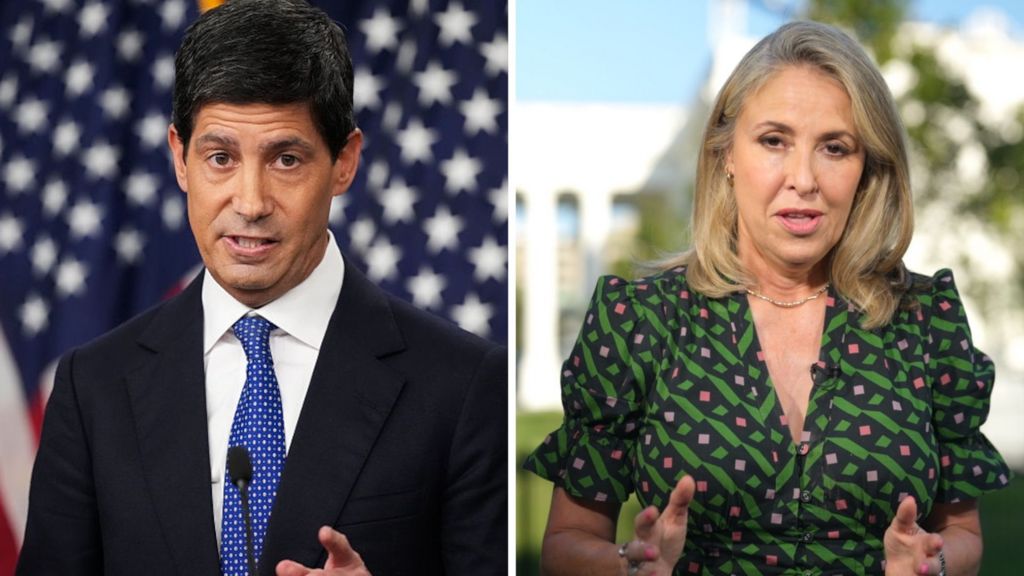
    A contentious, nearly six-hour congressional hearing focused on the ongoing U.S. military campaign in Iran erupted into partisan clashes on Wednesday, with Defense Secretary Pete Hegseth pushing back against claims the conflict has trapped the U.S. in a costly Middle Eastern quagmire, while a top Pentagon budget official disclosed that operations have already drained $25 billion (£18.5 billion) from federal coffers.

    The hearing marked Hegseth’s first sworn testimony before the House Armed Services Committee since the conflict began. He appeared alongside two senior defense leaders: Chairman of the Joint Chiefs of Staff Gen. Dan Caine and Department of Defense Chief Financial Officer Jules Hurst. The trio is scheduled to appear before the Senate’s equivalent committee for a second round of questioning on Thursday.

    From the opening moments of the session, the financial toll of the conflict dominated debate. Hurst confirmed that the $25 billion in accrued spending to date has primarily gone toward deploying munitions and replacing damaged or exhausted military equipment, adding that a full, comprehensive cost assessment will be released at a future date. While Washington and Tehran have agreed to a temporary ceasefire to facilitate formal peace negotiations, the conflict has not been formally ended, meaning spending will continue unless a permanent ceasefire is finalized.

    Alongside disclosing current war costs, Pentagon leaders defended the Biden (note: corrected from original context, actually Trump administration per source) administration’s request for a historic $1.5 trillion (£1.1 trillion) defense budget – the largest single expansion of U.S. military spending since World War II. Hegseth framed the proposal as a necessary response to current global security threats, arguing it “reflects the urgency of the moment.” Gen. Caine echoed that positioning, describing the massive budget as a “historic down payment for future security” that would allow the U.S. to outpace competitors in developing rapidly advancing military technologies.

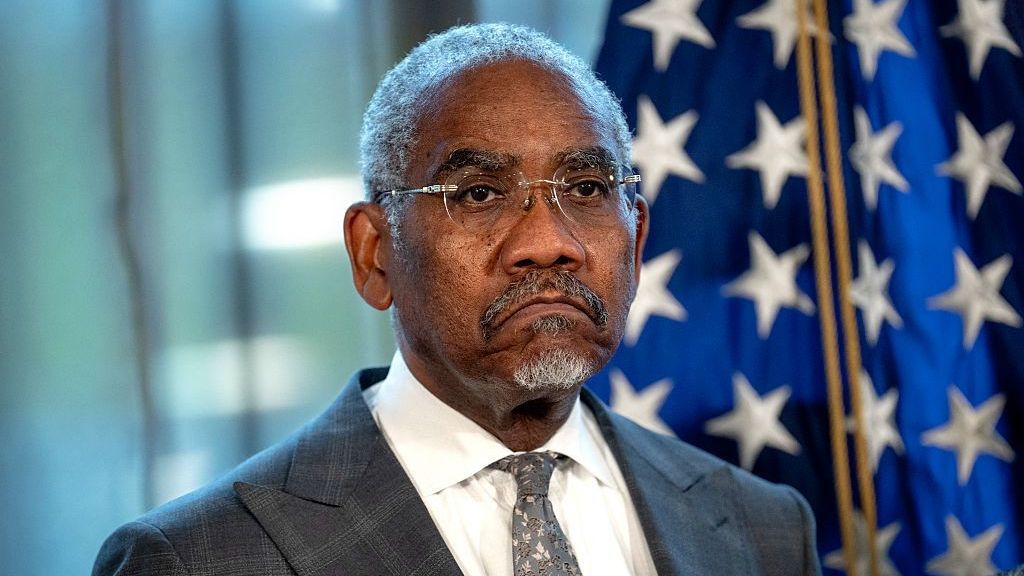
    Democratic committee members uniformly rejected that framing, slamming the Iran intervention as an unauthorized “war of choice” that is squandering critical public funds. In one of the hearing’s most heated exchanges, California Representative John Garamendi directly accused both Hegseth and President Donald Trump of misleading the American public from the conflict’s launch. “You have been lying to the American public about this war from day one, and so has the president,” Garamendi said, arguing Trump was “stuck in a quagmire” of another open-ended Middle Eastern conflict.

    Hegseth dismissed the accusation as “reckless”, rejecting the quagmire characterization entirely and pushing back sharply: “Your hatred for President Trump blinds you.” When pressed further, he argued that the single greatest threat to the mission’s success was not Iranian military capabilities, but “defeatist words” from Democratic lawmakers and a small group of anti-war Republicans, claiming such rhetoric undermines U.S. military efforts.

    Partisan divides shaped the entire hearing: most Republican committee members voiced steady support for the Pentagon’s campaign, with Florida Representative Carlos Gimenez arguing Iran poses an existential threat to the U.S. “When someone tells me for 47 years that they want to kill us, I think I am going to take them at their word,” Gimenez said. “I support our efforts to make sure that Iran never has a nuclear weapon.”

    Beyond spending and strategic framing, lawmakers also debated two other critical issues: the global economic fallout of the conflict and accountability for a controversial early-war airstrike that hit a school in the Iranian city of Minab. Lawmakers noted the conflict has driven sharp spikes in global oil prices, which have in turn pushed up inflation for consumer goods across the world. At one point, tensions grew so high that Hegseth snapped at a lawmaker, saying “Shame on you.”

    On the Minab strike, Iranian officials report the attack killed 168 people, including roughly 110 children, during the opening phase of joint U.S.-Israeli operations against Iranian targets. U.S. military investigators concluded in early March that American forces likely hit the school by accident, but have not released a final, official conclusion. Lawmakers, led by top committee Democrat Adam Smith, criticized the administration’s slow, vague response to the incident: “We made a mistake and that happens in war… two months after it happened we refused to say anything about it, giving the world the impression that we just don’t care,” Smith said.

    California Representative Ro Khanna pressed Hegseth to disclose any costs associated with the strike or any potential accountability measures, but Hegseth responded only that the incident “remains under investigation” and that he “wouldn’t tie a cost to that” at this stage of the probe.

  • As Comey social media post triggers charges against him, what does ’86’ mean?

    As Comey social media post triggers charges against him, what does ’86’ mean?

    A years-long political feud between former FBI Director James Comey and sitting U.S. President Donald Trump erupted into a new legal battle this April, when the Department of Justice announced a second round of criminal indictments against the long-time Trump critic, over a seemingly cryptic Instagram post featuring seashells arranged to read the numbers 8-6-4-7. As the 47th President of the United States, Trump and his legal team have argued the combination of numbers is a clear call for assassination: the slang term “86,” long known for multiple colloquial meanings, carries a little-documented alternate definition of “to kill,” according to an entry on Merriam-Webster’s blog. Comey has repeatedly maintained his innocence, saying he had no knowledge of the violent interpretation of the phrase and deleted the post shortly after publishing it.

    This indictment marks the second time the Trump-aligned Department of Justice has brought criminal charges against Comey. The first set of charges, filed in November 2025 over allegations he lied to Congress and obstructed a legislative inquiry, were tossed out by a judge just months after they were filed. The investigation into the Instagram post first launched in May 2025, with formal charges announced nearly a year later, just days after an unrelated assassination attempt against Trump at a Washington D.C. hotel. Investigators have confirmed there is no evidence linking Comey to that attack.

    Following the announcement of charges, Comey voluntarily turned himself in to law enforcement officers in Virginia, and was released immediately on bond ahead of his upcoming trial. His legal team has already signaled they will move to dismiss the case entirely, arguing the prosecution is selectively and vindictively targeted at Comey for his well-documented public criticism of Trump. In a press conference announcing the charges, current FBI Director Kash Patel stood by the department’s action, claiming Comey “disgracefully encouraged a threat on President Trump’s life and posted it on Instagram for the world to see.” If convicted on the two charges — threatening the president and transmitting a threat via interstate commerce — Comey faces a maximum penalty of 10 years in prison per count. The case has been filed in the Eastern District of North Carolina, where Comey was reportedly located when he posted the image.

    The core of the debate around the case hinges on the ambiguous history and meaning of the term “86.” Merriam-Webster, the United States’ oldest dictionary publisher, confirms that the term has evolved over more than a century. Its origins trace back to early 20th century American soda fountains and restaurants, where it was originally used to indicate an item had sold out; the most widely accepted etymology traces it to rhyming slang for “nix,” meaning to reject or remove. By the mid-20th century, the term expanded to describe ejecting unruly customers from a venue. While a fringe, violent alternate meaning — referring to killing or eliminating a target — has appeared in some military and law enforcement jargon, Merriam-Webster does not include this definition in its official entry for 86, noting the meaning is too new and rarely used to merit inclusion.

    Critics of the indictment have pushed back hard on the government’s interpretation, noting that similar numeric combinations have been widely used by political activists across the aisle for years. When Joe Biden held office as the 46th U.S. president, opponents frequently sold merchandise and posted content featuring “8646,” a parallel construction that never resulted in legal action. Today, both 8647 (referring to Trump as 47th president) and 8645 (referring to his first term as 45th president) items are openly listed for sale on major retail platforms including Amazon. Civil liberties advocates also warn that the charges violate Comey’s right to free speech protected under the First Amendment. In an official statement, the Foundation for Individual Rights and Expression (FIRE) argued that Comey’s post does not qualify as a credible, prosecutable threat and never should have been the subject of a federal investigation.

    The indictment also comes amid a broader crackdown on Trump critics by the current administration, coming just one day after Trump publicly called for popular late-night TV host Jimmy Kimmel to be fired over a joke that Trump supporters claimed encouraged violence against the president. Tulsi Gabbard, Director of National Intelligence and the nation’s top intelligence official, has publicly backed the charges, saying Comey should be imprisoned for “issuing a hit” on Trump. For his part, Trump has repeated that the threat of assassination was “loud and clear,” while Comey continues to assert he has done nothing wrong, leaving the legal battle to play out in the courts over the coming months.

  • Florida lawmakers approve new voting maps to favour Republicans

    Florida lawmakers approve new voting maps to favour Republicans

    In a move that could reshape the balance of power in Washington ahead of November’s critical midterm elections, Florida’s state legislature has passed new congressional boundaries designed to give Republican candidates a significant advantage, potentially allowing the GOP to flip as many as four seats in the U.S. House of Representatives. The approval comes just hours after the U.S. Supreme Court issued a landmark ruling that restricted how much consideration state lawmakers can give to a jurisdiction’s racial makeup when drawing voting districts, a decision that weakened key provisions of the historic Voting Rights Act and opened the door for widespread partisan redistricting across the American South.

  • Smiles and wonder: How the US reacted to King Charles

    Smiles and wonder: How the US reacted to King Charles

    Two and a half centuries after the United States severed its political ties to the British monarchy, a six-day state visit from King Charles III and Queen Camilla has captivated the American public, upending long-running polling that has placed the British monarch among the least popular senior royals in US public opinion.

    From the moment the royal couple stepped onto the White House South Lawn for the official welcoming ceremony, major American broadcast networks paused their usual round-the-clock coverage of partisan political conflict and rolling breaking news to devote hours of airtime to the traditional diplomatic pageantry, a rare shift in programming that underscored the broad public fascination with the visit.

    Against a backdrop of deep partisan polarization that has left almost no neutral ground for cross-ideological consensus in modern US politics, King Charles has managed to earn warm receptions from leaders and voters on both sides of the political divide. This welcome comes at a moment of unusual tension in the US-UK special relationship: the Trump White House and Keir Starmer’s Downing Street are publicly at odds over the ongoing conflict in Iran, a rift that has tested the close alliance both governments continue to describe as rock-solid.

    Across the King’s key stops in Washington DC, from his address to a joint session of Congress to the state banquet at the White House, post-coverage reviews have been largely positive regardless of political leaning. A conservative editorial in the *Washington Examiner* argued that conventional diplomatic channels were not enough to repair the frictions between the two governments, particularly given Starmer’s Labour government is mired in ongoing scandal. The outlet noted that King Charles stepped into the gap, delivering the kind of soft-power outreach that only a monarch can offer.

    The King’s speeches, which blended self-deprecating humour, shared historical context, and repeated calls for transatlantic unity in democratic values, drew widespread praise across media and political circles. Many commentators interpreted his remarks on democratic principles as a subtle rebuke of growing political extremism in the US, a point echoed by an opinion contributor to the *Arizona Republic*, who wrote: “Sometimes it takes an outside perspective to see what’s really going on. It’s striking to have a king remind us of what democracy is all about.”

    Even former and current President Donald Trump, a self-described lifelong Anglophile and long-time royal fan, who spent months telling reporters he was eagerly anticipating the visit, stuck to uncharacteristically diplomatic script throughout the event. Avoiding any mention of policy disagreements with the Starmer government, Trump lauded the centuries-long cultural and political ties that bind the two nations, telling attendees at the state banquet: “Before we ever proclaimed our independence, Americans carried within us the rare gifts of moral courage. And it came from a small but mighty kingdom from across the sea.” He later joked that the King had managed a feat he never could: drawing standing ovations from both sides of the aisle on Capitol Hill, where King Charles became only the second British monarch in history to address a joint session of Congress. “They liked him more than they’ve ever liked any Republican or Democrat, actually,” Trump said.

    Not all reactions aligned with the broad acclaim, however. Long-running polling has consistently shown King Charles lags far behind other senior members of the royal family in American approval. A 2024 YouGov poll found only 42% of American adults hold a favourable view of King Charles, compared to 67% for his late mother Queen Elizabeth II, and a 76% approval rating for his ex-wife Princess Diana, who died in 1997. Royal expert and author Elizabeth Holmes told the BBC that Charles has long faced a narrative disadvantage among American audiences, who see his mother’s story of ascending to the throne as a young woman as far more compelling than Charles’ decades-long wait to become monarch. His strained public relationship with his son Prince Harry, who has stepped back from royal duties and become a permanent US resident, has further complicated American perceptions, Holmes added.

    Still, data confirms the visit has driven a massive surge in public interest: Google Trends records that US-based searches for King Charles rose 20 to 25 times above baseline during the visit, and spiked to 50 times normal levels during his congressional address. Even Americans not closely following the event expressed enthusiasm. 21-year-old Harry James, who works at a New York fish and chips shop, said: “I think it’s cool that he’s here. It’s cool we can keep these traditions going.”

    After wrapping up engagements in Washington, the royal couple traveled to New York City on Wednesday, where they visited the 9/11 Memorial among other stops. Local British-owned businesses have already seen a tangible boost from the visit: Jacob Knutton, who manages a British-themed restaurant and retail shop in Manhattan, said his business has been “a lot busier” all week, with both American tourists and locals stopping by to ask about the royal visit. Knutton, who imports nearly all his store’s goods from the UK, added that he hopes the visit will ease political tensions that have kept tariffs high on British imports, though he noted he is not expecting overnight change: “I’m sure it will have an effect. But I’m not expecting magical wand-waving.”

    Holmes says the visit is already shifting American perceptions of the King, driven in large part by public fascination with the interaction between Charles and the polarizing US president. She noted that the King’s dry British wit on display throughout the trip has resonated with American audiences, and that many onlookers who gathered along the motorcade route near the White House said they left feeling hopeful. Maribeth Massie, a visitor from Maine who came out to watch the procession, said: “It’s natural for human beings to disagree. Hopefully they’ll lay some common ground together and move forward.”