A targeted attack on a commercial cargo vessel transiting the Strait of Hormuz has triggered renewed tensions between the United States and Iran, forcing the United Nations’ International Maritime Organization (IMO) to pause a major evacuation operation that aimed to free more than 11,000 trapped sailors, according to multiple international maritime and official sources.
The incident unfolded on Thursday, when a projectile struck the Singapore-flagged bulk carrier *Ever Lovely*, owned by Taiwan-based shipping firm Evergreen, roughly 7.5 nautical miles southeast of Oman’s Port of Dahit. UK Maritime Trade Operations (UKMTO), the British body that monitors security in the Gulf region, initially reported the strike, while Evergreen later confirmed that all crew members remained unharmed, the vessel sustained only limited damage, and it successfully completed its transit of the critical waterway. Data from ship-tracking platform MarineTraffic, reviewed by BBC Verify, shows the *Ever Lovely* was traveling along the southern route designated by the IMO at the time of the attack. Arsenio Dominguez, the IMO’s secretary-general, noted in a Thursday statement that the vessel was not part of the organization’s official evacuation framework, but did not elaborate further.
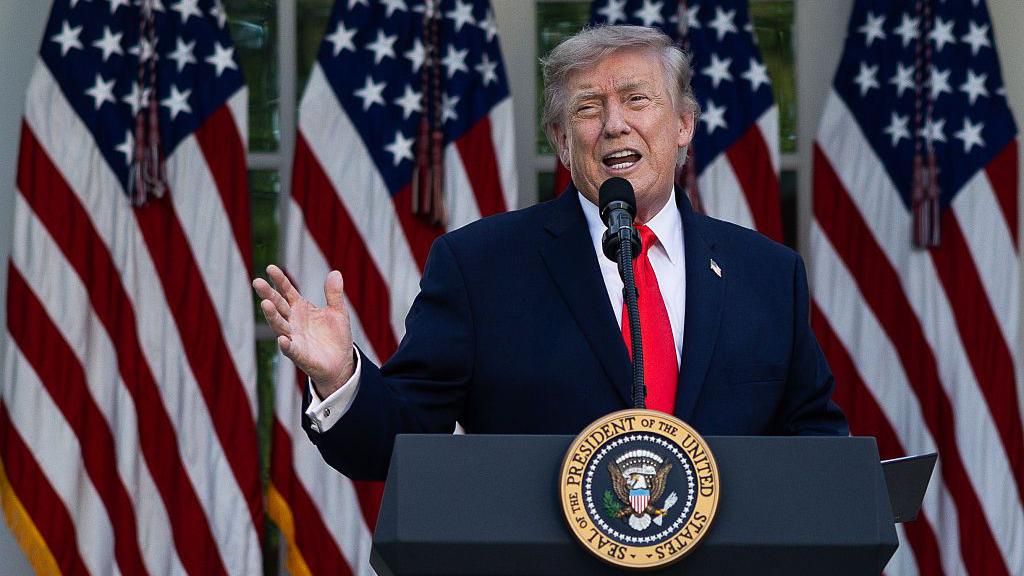
On Friday, former U.S. President Donald Trump, who currently holds the U.S. presidency, publicly condemned Iran via his social platform Truth Social. Trump claimed that Iran launched at least four unmanned aerial drones at ships passing through the strait; U.S. defensive systems intercepted three, he said, while the fourth struck the upper deck of the *Ever Lovely*. “Obviously, this is a foolish violation of our Ceasefire Agreement,” Trump wrote in his post, adding that despite the damage, the cargo ship was able to continue its voyage. As of Friday afternoon, Iran had not issued a direct response to Trump’s accusation, though Iranian state media has circulated coverage of his remarks.
Tensions over the Strait of Hormuz, which carries roughly a fifth of the world’s daily oil and natural gas shipments, flared in late February after the United States and Israel launched a series of military strikes against Iranian targets. In response, Tehran effectively closed the waterway, triggering a sharp spike in global energy prices and disrupting global supplies of critical commodities including fertilizer. Earlier this month, Washington and Tehran reached a 14-point ceasefire memorandum of understanding that reopened the strait. The agreement required Iran to use its best efforts to guarantee safe passage for all commercial vessels through the waterway free of charge for a 60-day period. Even after the ceasefire took effect, however, disagreements have persisted: Iran has repeatedly stated it plans to collect what it calls “maritime service fees” for transits, a position that the U.S. has strongly rejected.
In the lead-up to Thursday’s attack, Iran’s Islamic Revolutionary Guard Corps (IRGC), the country’s elite military force, issued a public warning that any vessel attempting to cross the strait via a route designated by the IMO would be “unacceptable and completely dangerous,” and that all ships must coordinate their transits directly with Iranian authorities. On Friday, the IRGC repeated its longstanding assertion that the entire Strait of Hormuz falls under Iranian territorial sovereignty, according to Iranian state media reports.
Following the attack on the *Ever Lovely*, the IMO announced it would immediately pause its evacuation operation, which was designed to extract more than 11,000 seafarers who had been stranded on vessels stuck in the area since the strait was closed in February. As of Friday, the organization reported that roughly 115 vessels and 2,500 seafarers had already completed safe transits before the pause went into effect. Dominguez said Friday that the IMO is now working with key stakeholders including the U.S., Iran, and Oman to secure written guarantees that transiting vessels will not be targeted in future attacks. “As soon as I get further confirmations of that, we’re ready to re-initiate the process of evacuation,” Dominguez said.