标签: North America

北美洲

  • Remote work in UAE: What are the rights of employers, employees?

    Remote work in UAE: What are the rights of employers, employees?

    The United Arab Emirates has formally institutionalized remote work arrangements through specific legislative measures, creating a structured legal environment for both employers and employees. According to Cabinet Resolution No. (1) of 2022, which implements Federal Decree-Law No. (33) of 2021, remote work is recognized as a legitimate employment type when mutually agreed upon in writing.

    The regulatory framework mandates that remote work arrangements, whether full-time or partial, must be explicitly documented through employment contracts or formal amendments. These documents must comprehensively detail all employment terms, including but not limited to: identification of both parties, job role specifications, compensation structure, designated workplace parameters, precise working hours, leave entitlements, probationary conditions, and termination procedures.

    Article 17 (6) of the Federal Decree-Law specifically addresses remote work scenarios, stating that employees may perform duties remotely within or outside the UAE with employer approval, while reserving the employer’s right to establish specific working hours. The legislation further stipulates that conversion to remote work arrangements requires mutual consent, settlement of all outstanding entitlements from original contracts, and strict adherence to procedures established by the Ministry of Human Resources and Emiratisation.

    The legal provisions emphasize that while employers maintain the authority to set operational parameters for remote work, employees gain protected status under UAE labor law when working remotely. This represents a significant modernization of the Emirates’ employment landscape, providing clarity on statutory obligations including working hour calculations, leave entitlements, and other regulatory requirements for remote arrangements.

    Legal experts recommend that businesses seeking to implement remote work policies should formalize these arrangements through proper contractual documentation and seek specialized legal counsel to ensure full compliance with the evolving regulatory environment.
  • Bitcoin roars back above $91,000 as geopolitical jolt triggers short squeeze

    Bitcoin roars back above $91,000 as geopolitical jolt triggers short squeeze

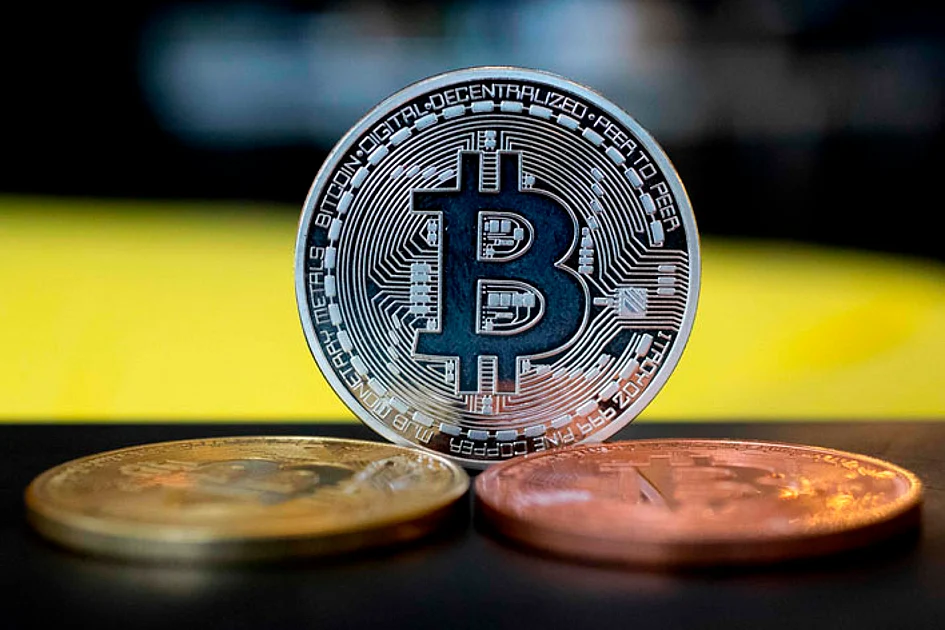
    Bitcoin experienced a dramatic resurgence over the weekend, catapulting beyond the $91,000 threshold amid geopolitical turmoil originating from Venezuela. The world’s premier cryptocurrency reached approximately $91,300 during Asian trading hours on Sunday, marking its most robust performance since mid-December and registering over 4% weekly gains.

    The sudden price escalation was primarily ignited by escalating political developments in Venezuela, where reports emerged regarding President Nicolás Maduro’s alleged detention by US authorities. Subsequent statements from former President Donald Trump suggesting Washington’s intention to assert control over Venezuelan oil assets created immediate global market turbulence. While cryptocurrencies maintain no direct correlation to Venezuelan politics, traders frequently interpret rapidly evolving geopolitical situations as volatility catalysts that can disrupt market positioning.

    Market analysts identified this movement as a textbook short squeeze phenomenon, where thin liquidity conditions and concentrated bearish positions dramatically amplified price action. Derivatives data revealed approximately $180 million in crypto futures positions were liquidated within 24 hours, with short positions accounting for $133 million of this total. Bitcoin specifically witnessed over $58 million in short liquidations compared to merely $6 million in long positions, indicating the surge was driven primarily by traders covering bearish bets rather than substantial new buying activity.

    Technical factors played a crucial role in the rally’s momentum. Bitcoin’s decisive breach of its 50-day moving average represented a significant psychological breakthrough after weeks of constrained trading patterns. Market observers noted that leverage had gradually accumulated during Bitcoin’s recent consolidation phase, creating conditions ripe for accelerated price movements when key technical levels were breached.

    The cryptocurrency’s response to geopolitical stress reflects its evolving market characterization. Previously touted as crisis hedges, digital assets now typically behave as high-beta risk instruments in immediate term reactions. Current analyst assessments suggest Bitcoin’s ability to sustain this rebound will depend on maintaining reclaimed technical support levels and generating consistent spot market demand beyond liquidation-driven momentum.

    This episode underscores the crypto market’s continued vulnerability to sudden collisions between geopolitical developments, leverage structures, and trader psychology, where periods of quiet consolidation can rapidly transform into dramatic price movements.

  • 40 killed in US airstrikes on Venezuela, report says

    40 killed in US airstrikes on Venezuela, report says

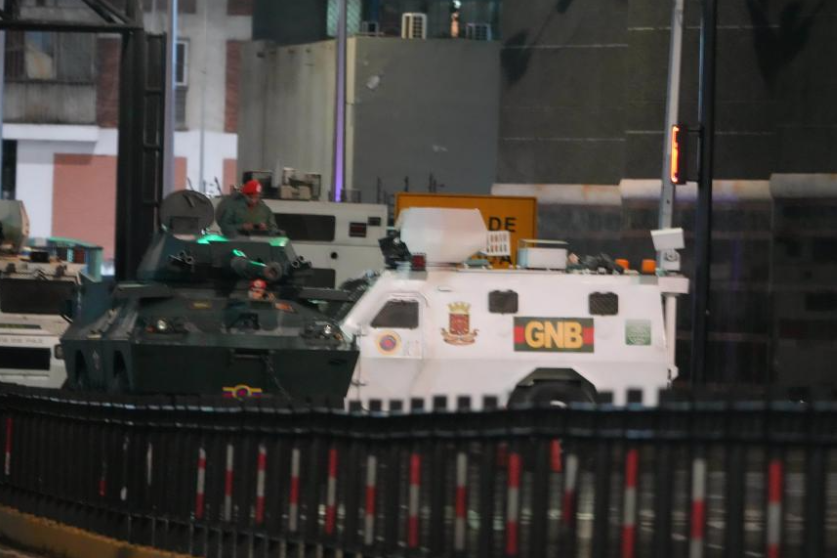
    A significant military operation conducted by United States forces in Venezuela has resulted in substantial casualties, with The New York Times reporting approximately 40 fatalities according to an anonymous senior Venezuelan official. The extensive aerial assaults occurred during pre-dawn hours on Saturday as part of an apparent mission to apprehend Venezuelan President Nicolas Maduro and his spouse, both of whom are currently detained in New York.

    Verified visual evidence obtained by the publication depicts dense smoke plumes and consecutive detonations in proximity to La Carlota Airport within Caracas, Venezuela’s capital district. Additional strikes targeted a residential structure in Catia La Mar, a western municipality of Caracas, where explosive impacts demolished external walls of a three-story apartment complex. Initial reports confirm at least one elderly female civilian died in this incident, with another individual sustaining critical injuries.

    Multiple American news organizations, referencing Venezuelan governmental sources, indicated that military installations across Caribbean coastal regions including Miranda, Aragua, and La Guaira states faced simultaneous bombardments alongside the capital operations.

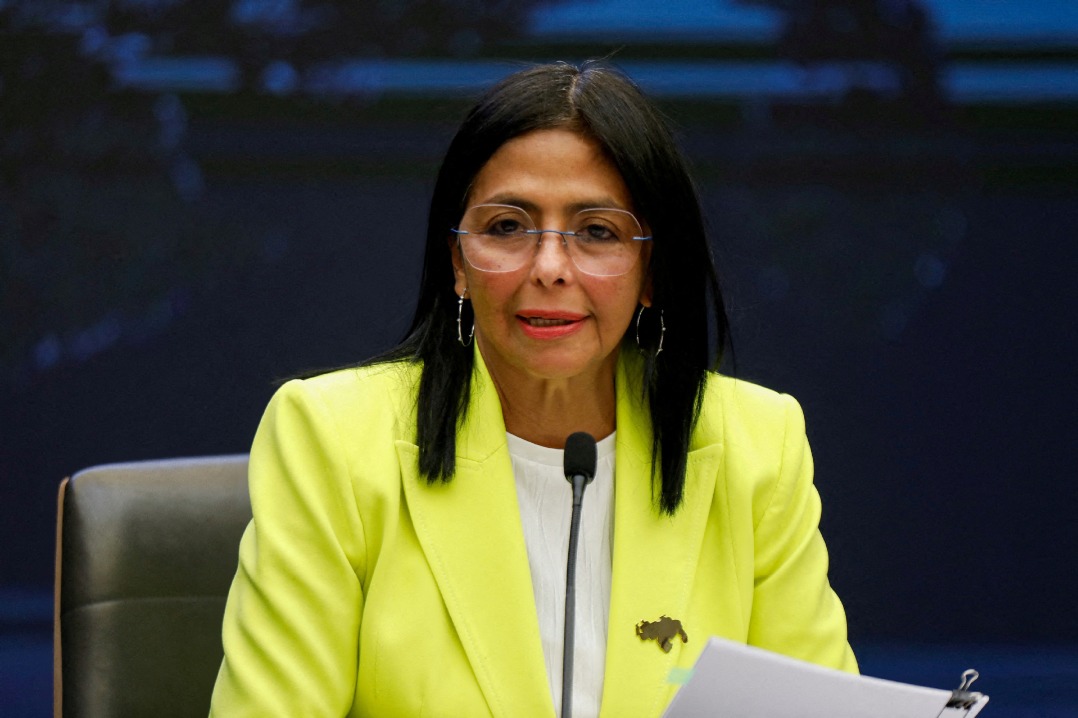
    Venezuelan Vice President Delcy Rodriguez acknowledged on Saturday that casualties encompassed both non-combatant civilians and armed forces personnel, though precise numbers remained unspecified during initial assessments.

    In a Fox News interview, US President Donald Trump confirmed American personnel sustained injuries during the extraction operation targeting Maduro, while clarifying no US military fatalities occurred. The President additionally noted damage to one United States aircraft deployed during the mission.

  • From ambition to reality: 20 years of Dubai under Sheikh Mohammed

    From ambition to reality: 20 years of Dubai under Sheikh Mohammed

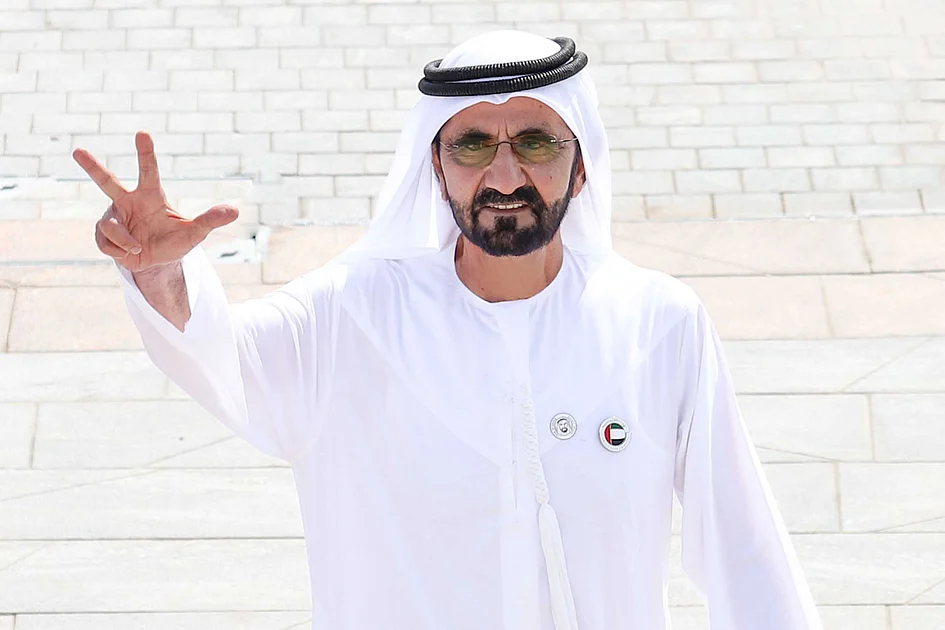
    January 4, 2026, marks the twentieth anniversary of Sheikh Mohammed bin Rashid Al Maktoum’s ascension as the Ruler of Dubai and UAE Vice President. Over these two decades, his leadership has fundamentally redefined the emirate’s global stature, transforming ambitious visions into tangible realities and establishing Dubai as a paradigm of innovation and futuristic urban development.

    Sheikh Mohammed’s tenure is characterized by a philosophy that rejects limitations and routinely achieves the extraordinary. This ethos is physically manifested across the city’s skyline and its strategic initiatives. The iconic Burj Khalifa, the world’s tallest structure, stands as a permanent testament to this ambition. The emirate’s infrastructure was revolutionized with the 2009 launch of the Dubai Metro, the region’s first rapid transit system, which continues to expand with the forthcoming Blue Line.

    Beyond physical infrastructure, Sheikh Mohammed’s vision propelled Dubai onto the global stage in science and technology. The Mohammed Bin Rashid Space Centre (MBRSC), founded in 2006, has been instrumental in the UAE’s space endeavors, including sending the first Emirati astronaut to space and the historic Hope Probe mission that made the UAE the first Arab nation to reach Mars. This focus on the future is further encapsulated by architectural marvels like the Museum of the Future.

    His leadership also prioritized social development and global humanitarian contributions. Initiatives like Dubai Cares have impacted over 116 million lives through global education programs. The Mohammed bin Rashid Global Initiatives (MBRGI) stands as one of the region’s largest humanitarian networks. Domestically, large-scale national housing projects and the pioneering Golden Visa programme have enhanced social stability and established Dubai as a global hub for talent and investment.

    From the development of mega-tourism projects like Atlantis, The Palm and Bluewaters Island to establishing itself as a dynamic startup capital through regulatory reforms, Dubai’s evolution under Sheikh Mohammed offers a blueprint for future-ready cities. His decisive, forward-oriented leadership style remains the defining force behind the emirate’s relentless transformation into a global benchmark for innovation, resilience, and limitless ambition.

  • Venezuela’s supreme court orders VP Delcy Rodriguez to serve as acting president

    Venezuela’s supreme court orders VP Delcy Rodriguez to serve as acting president

    In a dramatic constitutional response to the capture of President Nicolás Maduro, Venezuela’s Supreme Court of Justice has mandated Vice President Delcy Rodríguez to immediately assume the powers of acting head of state. The judicial order, announced late Saturday by Magistrate Tania D’Amelio through national broadcast networks, represents a significant escalation in the ongoing political crisis.

    The court’s ruling explicitly condemns what it characterizes as an unlawful military incursion by United States forces that resulted in Maduro’s apprehension and subsequent transfer to New York alongside his wife, Cilia Flores. The judicial body declared these actions constitute a flagrant violation of both Venezuelan constitutional law and international statutes, including the United Nations Charter.

    In its strongly-worded decision, the court asserted that the operation appears designed to facilitate foreign appropriation of Venezuela’s strategic natural resources. The judiciary has called for national unity in defending Venezuelan sovereignty while appealing for regional solidarity to preserve stability throughout Latin America and the Caribbean.

    Rodríguez, who concurrently serves as the nation’s Oil Minister, now faces the formidable challenge of leading a government in crisis while navigating complex international tensions. The political transition occurs against the backdrop of widespread international concern regarding the unprecedented cross-border military operation that precipitated this constitutional succession.

  • Video shows Maduro’s arrival in US and journey into custody

    Video shows Maduro’s arrival in US and journey into custody

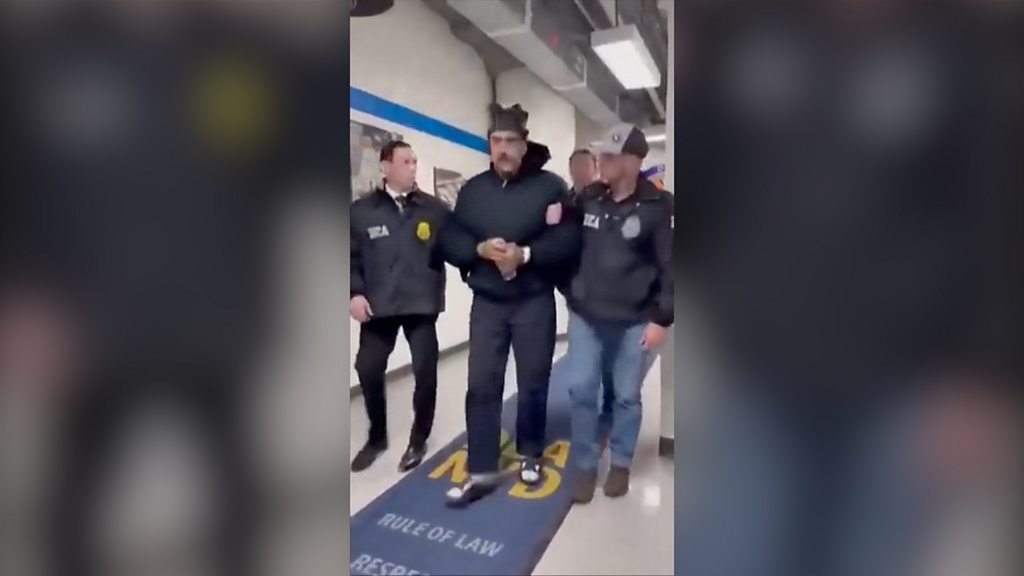
    In an unprecedented geopolitical development, Venezuelan President Nicolás Maduro has been transferred to United States custody following his capture during American military operations this past Saturday. Video documentation has emerged showing Maduro’s arrival on US soil and his subsequent processing by law enforcement authorities in New York.

    The operation represents a significant escalation in the ongoing tensions between Washington and Caracas, which have persisted through multiple administrations. Maduro, who has led Venezuela since 2013, faces numerous charges in US courts, including allegations of drug trafficking, corruption, and human rights violations.

    This extraordinary event marks one of the most dramatic moments in US-Latin American relations in recent decades, with potential ramifications for regional diplomacy, international law, and the principle of sovereign immunity. The transfer of a sitting head of state to another country’s jurisdiction without extradition proceedings establishes a remarkable precedent in international relations.

    Analysts are closely monitoring reactions from Venezuela’s political allies, including Russia, China, and Cuba, who have consistently supported Maduro’s government. The situation continues to develop as legal experts examine the complex jurisdictional questions raised by this unprecedented action.

  • Maduro to be held at detention center in New York

    Maduro to be held at detention center in New York

    In an unprecedented geopolitical development, Venezuelan President Nicolas Maduro and First Lady Cilia Flores have been transported to the Metropolitan Detention Center in Brooklyn, New York, following their capture during a large-scale American military operation in Venezuela. The dramatic events unfolded early Saturday morning, marking one of the most significant international incidents in recent history.

    According to multiple intelligence reports and verified video evidence, the military aircraft transporting the Venezuelan leadership touched down at Stewart Air National Guard Base in Newburgh, New York, approximately at 5:00 PM EST (2200 GMT) on Saturday. The operation represents a dramatic escalation in the ongoing tensions between the United States and the Venezuelan government.

    The United States Department of Justice has unsealed a comprehensive indictment detailing serious charges against President Maduro and several associates. The allegations include narco-terrorism conspiracy, cocaine importation conspiracy, and multiple weapons-related charges involving machine guns and destructive devices. Legal proceedings are scheduled to commence next week in the US District Court for the Southern District of New York.

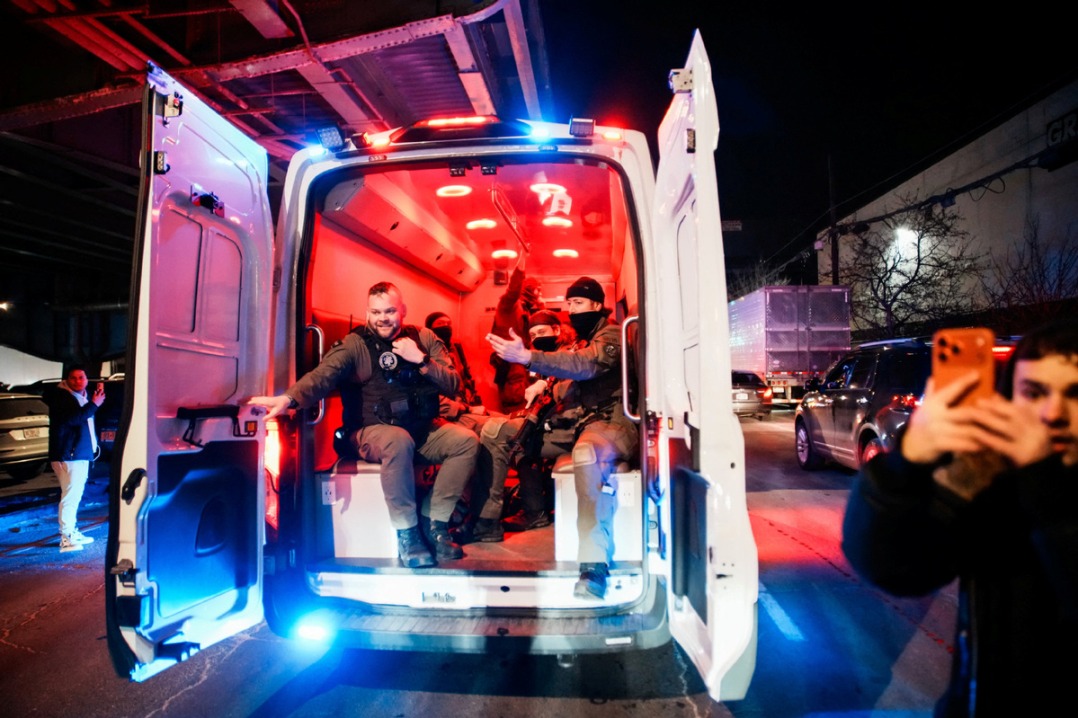
    The extraordinary military action has triggered immediate international backlash and domestic criticism. New York City Mayor Zohran Mamdani revealed he had directly contacted President Donald Trump to express vehement opposition to what he characterized as an unlawful pursuit of regime change that violates both federal and international statutes. Demonstrators gathered outside the Newburgh air base to protest the US intervention in Venezuela.

    Meanwhile, in Caracas, Venezuelan Vice President Delcy Rodriguez convened an emergency session of the National Defense Council, demanding the immediate release of the detained leadership. The session was broadcast nationally on state television, signaling the Venezuelan government’s determination to maintain continuity of governance amid the crisis.

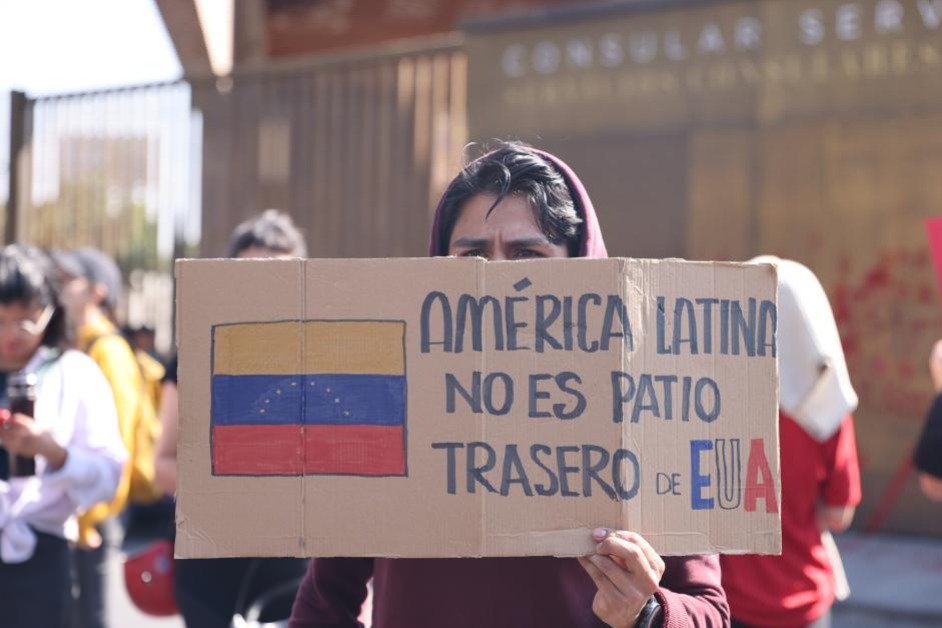
  • People protest outside US Embassy in Mexico City

    People protest outside US Embassy in Mexico City

    China Daily Information Co (CDIC) has established stringent copyright protection protocols for all content published across its digital platforms. The comprehensive policy explicitly prohibits unauthorized republication or utilization of any materials—including textual content, photographs, and multimedia information—without obtaining prior written authorization from CDIC.

    The copyright notice, which applies to content dating back to 1994, underscores the company’s commitment to intellectual property protection in the digital landscape. The policy further specifies technical recommendations for optimal user experience, suggesting browsers with 1024*768 resolution or higher for accessing their digital properties.

    CDIC maintains additional regulatory compliance through officially registered publishing licenses, including multimedia online publication authorization 0108263 and registration number 130349. These certifications demonstrate the organization’s adherence to China’s digital content management regulations.

    Beyond content protection measures, the platform provides information regarding corporate operations including advertising opportunities, employment prospects for both general and expatriate positions, and various contact channels for stakeholder engagement. The company also maintains active presence across multiple social media platforms, encouraging authorized content sharing through proper channels.

  • People protest in support of Venezuela outside US Embassy in Colombia

    People protest in support of Venezuela outside US Embassy in Colombia

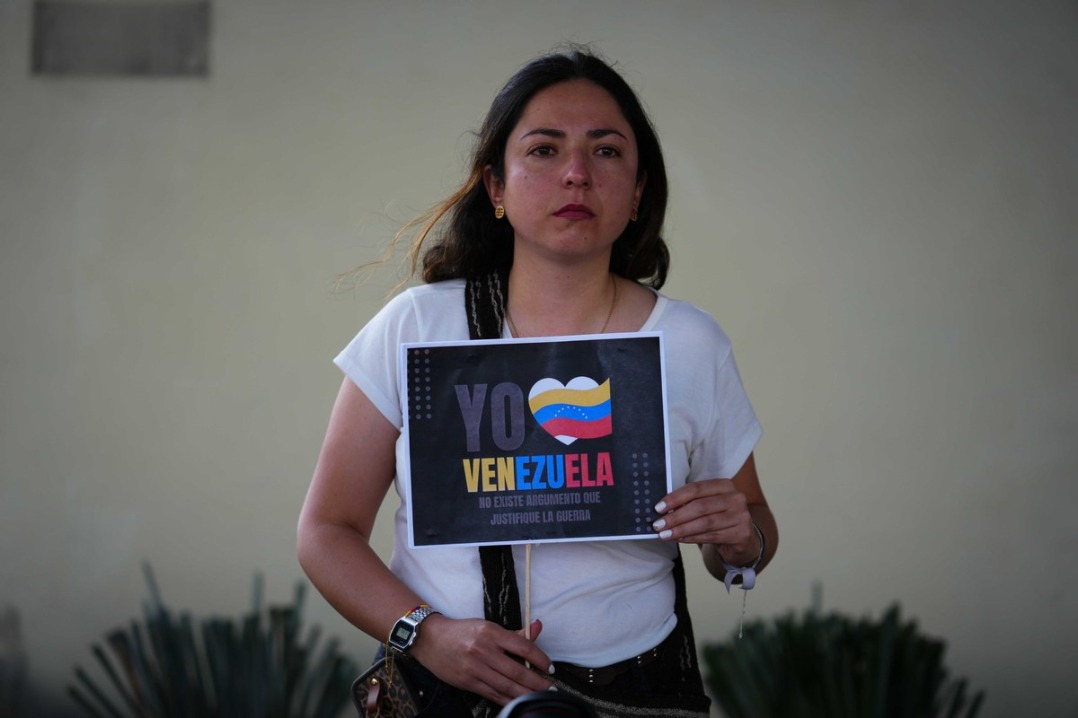
    BOGOTA, COLOMBIA – January 3, 2026, witnessed significant demonstrations outside the United States Embassy in Colombia’s capital, as protesters gathered to express solidarity with Venezuela following a dramatic military escalation. The protests emerged in direct response to early morning operations conducted by US military forces against Venezuelan targets, which reportedly resulted in the capture and extraction of Venezuelan President Nicolas Maduro.

    Demonstrators, carrying signs and Venezuelan flags, congregated in Bogota to condemn what they characterized as an act of international aggression. The gathering reflected deep-seated regional tensions and differing ideological alignments within South America regarding the Venezuelan political crisis. Photographic evidence from the scene captured emotionally charged moments, including a woman holding a placard that articulated the protesters’ demands for sovereignty and non-intervention.

    This development marks a severe intensification of the longstanding political confrontation between the United States and Venezuela, potentially altering the geopolitical landscape of Latin America. The embassy protests underscore how international conflicts can galvanize diaspora communities and sympathetic groups across borders, transforming diplomatic premises into focal points for political expression.

  • ‘I can’t believe it’ – Joy and uncertainty in Florida’s ‘Little Venezuela’

    ‘I can’t believe it’ – Joy and uncertainty in Florida’s ‘Little Venezuela’

    In the predawn hours of Saturday, a seismic shift in Venezuelan politics unfolded as U.S. special forces executed a dramatic operation to capture President Nicolás Maduro from his compound. The event triggered spontaneous celebrations across Miami’s Venezuelan diaspora, particularly in Doral where over 40% of residents claim Venezuelan heritage.

    For Rosana Mateos, a Florida resident since 2012, the news realized years of recurring dreams about Maduro’s downfall. “My husband woke me saying they caught Maduro. I couldn’t believe it,” she recounted, describing the emotional moment she learned of the development many Venezuelan exiles had long anticipated.

    The epicenter of celebrations emerged at El Arepazo restaurant, where hundreds gathered by noon with flags, music, and car horns creating a festival atmosphere. Bryan Marquez, who emigrated just two years ago from Tachira state, struggled to articulate his emotions: “We suffered under them. It was humiliating. That’s why so many of us left.”

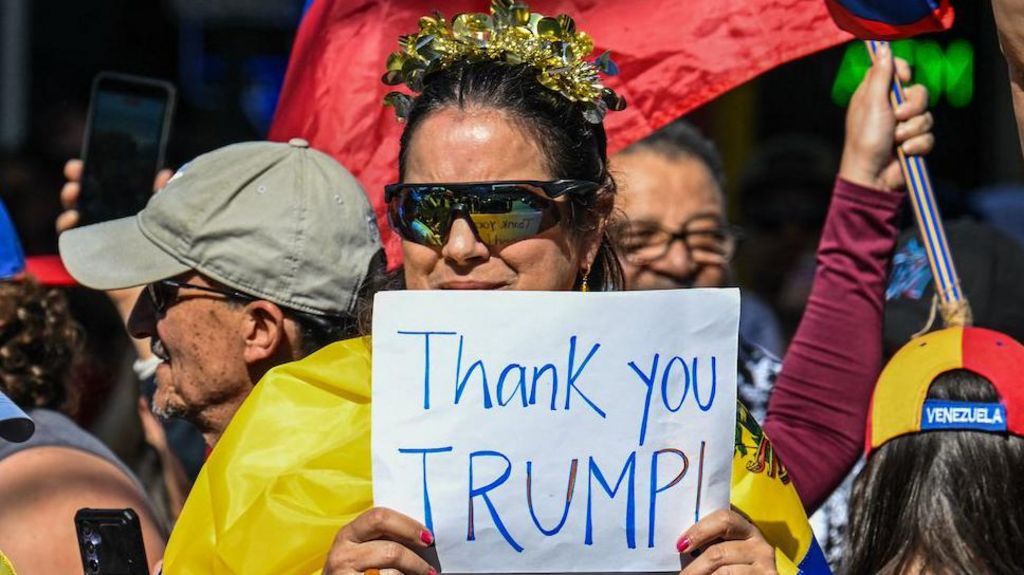
    Many attendees credited U.S. President Donald Trump for enabling their longed-for political change. “It’s an indescribable feeling,” Marquez added. “He’s really helped us… I don’t know what to say, except thank you.”

    Yet beneath the celebrations simmered uncertainties about Venezuela’s political future. Trump’s press conference remarks created confusion, particularly his statement that the U.S. “is going to run Venezuela through a team that’s working with the people,” and his dismissal of opposition leader María Corina Machado’s governing capabilities.

    Mateos expressed strong objections to any continued involvement of Maduro regime figures: “We do not accept a government of Delcy Rodriguez, or anyone that was part of the Maduro regime. They are dirty and corrupt.”

    Some analysts within the community suggested Trump might need to maintain temporary oversight. “Donald Trump will have to do it for now,” commented marketing professional Elkin, who predicted the U.S. president would “move Venezuela towards a more inclusive transition.”

    The events marked both a culmination of exile aspirations and the beginning of new political uncertainties for Venezuela’s future.