标签: Europe

欧洲

  • France allows asymptomatic passengers off new cruise ship struck by stomach bug outbreak

    France allows asymptomatic passengers off new cruise ship struck by stomach bug outbreak

    BORDEAUX, France – A public health incident that kept more than 1,700 passengers and crew confined to a British cruise ship off the French Atlantic coast has entered a new phase, with local authorities allowing all unaffected guests to leave the vessel Wednesday evening, after confirming the outbreak stems from the highly contagious stomach bug norovirus.

    The Ambition, operated by UK-based Ambassador Cruise Line, had been mid-voyage on a 14-night itinerary departing from Belfast and Liverpool, with planned stops across northern Spain and coastal France, when widespread gastrointestinal symptoms were reported among people on board. The ship docked in Bordeaux on Tuesday evening, and French public health officials immediately issued a full lockdown order, requiring all passengers and crew to stay on board to contain the spread of the pathogen.

    Within a day, officials adjusted the policy, clearing guests who showed no signs of illness to disembark. Photos and on-scene observations captured one passenger exiting the ship with arms raised in a gesture of relief and celebration. As of Thursday, officials had not released an exact count of how many people took advantage of the permission to leave.

    Testing conducted at Bordeaux University Hospital confirmed norovirus as the source of the outbreak, ruling out any connection to the recent deadly hantavirus outbreak on a Dutch vessel that had put European public health agencies on high alert in recent weeks. Local health officials added that no severe cases of illness have been recorded so far, and passengers experiencing symptoms are receiving ongoing care from the cruise ship’s in-house medical team.

    It remains unclear whether the Ambition will resume its scheduled journey, and if so, when operations will restart.

    The outbreak aligns with broader patterns of norovirus spread on cruise ships documented by global health authorities. The U.S. Centers for Disease Control and Prevention, which tracks gastrointestinal illness outbreaks on cruise vessels calling at both U.S. and international ports, recorded 23 separate outbreaks on cruise ships last year. The vast majority of these outbreaks, including one caused by a newly identified strain, were linked to norovirus, a pathogen known for spreading quickly in enclosed communal settings such as cruise liners.

    Ambassador Cruise Line, the operator of the Ambition, is a UK-based company founded in 2021 that focuses on serving travelers over the age of 50.

  • Swapping Love Island for Eurovision: Antigoni’s pride at representing Cyprus

    Swapping Love Island for Eurovision: Antigoni’s pride at representing Cyprus

    The Eurovision Song Contest has increasingly become a stage where familiar faces from across the entertainment world make surprise appearances, with small participating nation San Marino leading the trend in recent years — from a fleeting cameo by 80s pop icon Boy George at this year’s contest to a high-profile guest spot from American rapper Flo Rida that helped the country secure its place in the 2021 grand final. This year, however, it is fans of hit British reality series *Love Island* that are in for a surprise: 2022 series eight contestant Antigoni Buxton is set to take the stage in the contest’s second semi-final, representing Cyprus with her upbeat dance-pop entry *Jalla*.

    For many viewers who only know Buxton from her time as a bombshell on the reality dating show, her leap to Eurovision may come as a shock — but the London-born singer-songwriter says that transition is anything but out of the blue. In an interview with BBC Newsbeat, Buxton explained that singing has been her lifelong passion, long before her *Love Island* appearance. “I’ve been wanting to be a singer, that has been my dream since I was as young as I can remember,” she said. “And I had an obsession with Eurovision ever since I saw Helena Paparizou win for Greece back in 2005.” Buxton frames her 2022 reality TV stint as a happy accident that opened unexpected doors: “If anything doing Love Island was random. It was a great moment because it gave me the chance to introduce myself to a lot of people and now I’m on that path I always wanted to be on.”

    Though raised in the British capital, Buxton has deep Greek-Cypriot roots, and she has woven her cultural heritage into every layer of her Eurovision entry. She spent six to eight weeks every summer on the Mediterranean island growing up, and says she has always felt a strong connection to her Cypriot identity, making representing the country a point of immense pride. *Jalla* blends modern pop production with traditional Greek instrumentation, and draws direct inspiration from Tsifteteli, the beloved Greek belly dance style. The track’s title itself holds special local meaning: it is unique Cypriot-Greek slang that roughly translates to “more” or “again”, a detail Buxton says she is excited to share with a global audience. “Sharing my roots is something I do across all my music, and I am really proud to be able to share that specific part of Cypriot culture here,” she added.

    The music video for *Jalla* leans even further into Buxton’s cultural and entertainment connections, featuring cameos from her own mother and grandparents, as well as iconic UK-based Cypriot dance duo Stavros Flatley. The father-son pair rose to fame after their memorable 2009 run on *Britain’s Got Talent*, and Buxton says they are one of the most famous Cypriot acts to break through in the UK. She reached out directly to Demi, the duo’s lead performer, who jumped at the chance to join the project with open enthusiasm.

    Unlike her experience on reality competition television, Buutton says she has found the Eurovision community to be overwhelmingly warm and supportive, a sharp contrast to the critical culture that often surrounds reality TV appearances. “That’s the thing about Eurovision, it’s almost the opposite of some things I’ve done in the public eye in the past where people want to judge and give bad comments,” she explained. “People still do, but it’s a very loving community. It’s a really warm, happy, loving, supportive community. Everyone sees that it’s a big opportunity to learn about culture, to have fun. So I feel overwhelmed with joy and with gratitude.”

    This year marks the 42nd time Cyprus has competed in the Eurovision Song Contest — a record for the most participation by any country without ever claiming the top prize. After failing to qualify for the 2025 grand final, the country is pulling out all the stops for Buxton’s performance in this year’s host city Vienna. Her live staging takes the track’s lyric about dancing on tables literally, featuring a giant prop table that dancers emerge from underneath, and builds to a explosive climax packed with extensive pyrotechnics. But despite the high stakes for her country, 30-year-old Buxton says she is not solely focused on taking home the win. “In terms of my career and in terms of success, the focus is just doing my very best,” she said. “If I can leave there and feel like I did myself proud, Cyprus is proud of me, my family and my team, that is a win in itself. But I also feel like I have an opportunity to make history for my country and it would just mean so much to the people of Cyprus.”

  • Latvian PM resigns after row over stray Ukrainian drones

    Latvian PM resigns after row over stray Ukrainian drones

    A sudden political upheaval has shaken the Baltic nation of Latvia, where Prime Minister Evika Silina has formally stepped down after her ruling four-party coalition collapsed earlier this week, triggered by a controversy over stray Ukrainian drones bound for Russia that entered Latvian airspace.

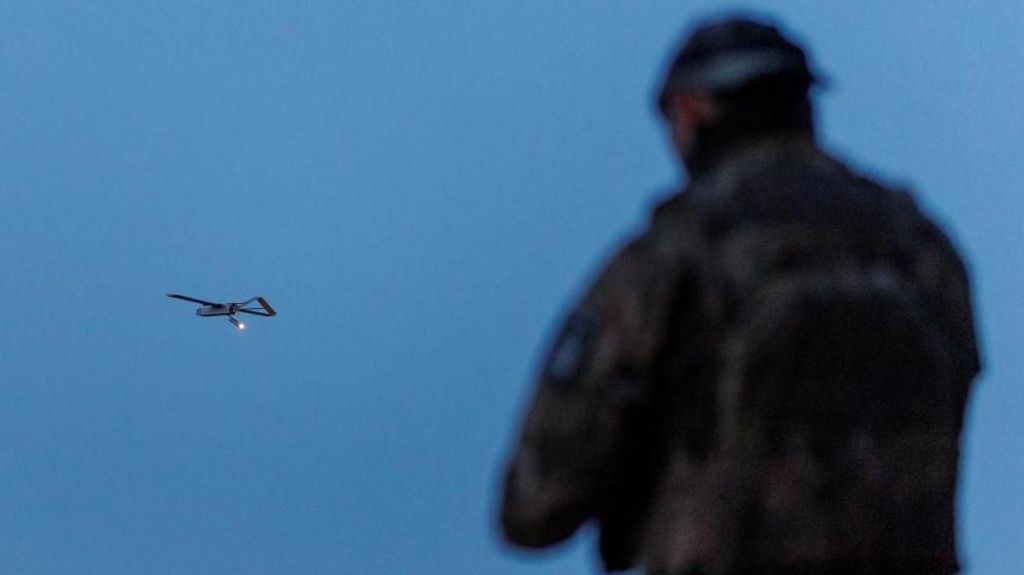
    The chain of events that ended Silina’s premiership began on May 7, when three unmanned aerial vehicles crossed into Latvia’s eastern territory. This marked the second unintended drone incursion recorded in the country since the start of 2026. Both Latvian and Ukrainian officials have confirmed the drones were originally launched by Ukrainian forces targeting Russian positions, but signal jamming interference knocked them off course, leading them to stray across the border.

    Of the three errant drones, one crashed onto undamaged ground, a second hit an unoccupied oil storage facility near the eastern Latvian town of Rezekne, and the third transited Latvian airspace before exiting. No casualties or injuries were reported in the incidents, but public anger quickly grew over what local residents described as a delayed and inadequate official response. Residents told reporters that Latvia’s emergency cell broadcast alert system was not activated until a full hour after the first crash near Rezekne, leaving local communities unaware of potential risk.

    Last week, Silina moved to take decisive action: she dismissed Defence Minister Andris Spruds over his handling of the incursion, criticizing his response as insufficient and naming an immediate replacement for the post. In response, Spruds’ party, the Progressives, withdrew all its legislative and governing support from Silina’s ruling coalition, effectively collapsing the government just five months ahead of the scheduled October 2026 general election.

    Speaking to reporters on Thursday, Silina hit back at what she described as political posturing from her former coalition partners. “Seeing a strong candidate for the post of defence minister… political windbags have chosen a crisis,” she said, adding: “I am resigning but I am not giving up.” Silina also justified her dismissal of Spruds by pointing to broader performance issues across Latvia’s defence sector. Noting that Latvia currently allocates 5% of its gross domestic product to national defence — one of the highest shares among NATO members — she argued that this level of investment demands far greater accountability and tangible results for the Latvian public.

    First appointed prime minister in September 2023, Silina led a centrist four-party coalition that maintained unwavering support for Ukraine in its war against Russian invasion. Like its Baltic neighbors Estonia and Lithuania, Latvia has grown increasingly concerned about potential Russian territorial aggression since Moscow launched its full-scale invasion of Ukraine in 2022. In response, the country has sharply expanded its defence spending and procurement, and reintroduced compulsory military service in 2023, just one year after the full-scale invasion began.

    Latvian President Edgars Rinkevics has announced he will make a formal decision on the fastest possible pathway to forming a new caretaker government on May 15, as the country prepares for its upcoming general election this autumn.

  • Hungary summons Russian ambassador to protest attack in Ukraine near its border

    Hungary summons Russian ambassador to protest attack in Ukraine near its border

    BUDAPEST — In a move that signals a sharp break from the pro-Kremlin policies of Hungary’s previous administration, new Prime Minister Péter Magyar has summoned Russia’s top envoy to Budapest to answer for a massive Russian drone assault that struck western Ukraine’s Transcarpathia region, just across Hungary’s northern border.

    The Wednesday attack was part of one of the longest and largest Russian air barrages of the war to date. Ukrainian President Volodymyr Zelenskyy confirmed that Moscow launched more than 800 drones across 20 Ukrainian regions, hitting Transcarpathia directly. The multi-hour assault left at least six civilians dead and dozens more injured, among them multiple children.

    Transcarpathia hosts a large ethnic Hungarian community, making the strike a direct matter of national concern for Budapest. Russian Ambassador Evgeny Stanislavov was scheduled to meet with Hungarian Foreign Minister Anita Orbán at the foreign ministry at midday Thursday, where top Hungarian officials will deliver a formal rebuke of the attack.

    “The Hungarian government strongly condemns the Russian attack on Transcarpathia,” Magyar announced publicly during a Wednesday press briefing in southern Hungary’s Ópusztaszer, confirming the diplomatic summons. “She will tell him the same and ask for information on when Russia and Vladimir Putin plan to finally end this bloody war that began more than four years ago,” the prime minister added.

    As of Thursday morning, the Kremlin has not issued any public response to the summons.

    The diplomatic action is widely viewed as a defining turning point in Hungarian foreign policy. For 16 years, former Prime Minister Viktor Orbán maintained unusually close ties to Moscow, even after Russia’s 2022 full-scale invasion of Ukraine, defied widespread EU and NATO consensus to isolate the Kremlin. That era ended in April, when Magyar defeated Orbán in a historic general election, ending the former leader’s long hold on power. Since taking office, Magyar has pledged to roll back Orbán’s legacy, prioritizing rooting out systemic corruption and aligning Hungary more closely with EU and NATO collective security goals.

    Zelenskyy welcomed Hungary’s new stance, calling the summons a powerful, important signal from Budapest. “Moscow has once again shown itself to be a common threat not only to Ukraine, but also to neighbouring countries and Europe as a whole,” Zelenskyy wrote on social media, thanking Magyar for his firm stance.

    The diplomatic summons comes amid already heightened tensions between Moscow and Budapest. In March, ahead of the election that unseated Orbán, Ambassador Stanislavov published a public Facebook open letter to Magyar, denying Russian interference in Hungarian politics to support Orbán, a long-time Kremlin ally. “It’s really not worth scaring Hungarians with imaginary Russian threats,” Stanislavov wrote at the time, adding that the Russian embassy’s only goals were maintaining normal bilateral relations, pursuing mutually beneficial cooperation where possible, and protecting the interests of Russian and Hungarian citizens.

    This report includes contributions from correspondent McNeil in Brussels.

  • Latvian prime minister resigns after controversy over stray Ukrainian drones

    Latvian prime minister resigns after controversy over stray Ukrainian drones

    RIGA, Latvia – A dramatic political shift unfolded in the Baltic state of Latvia this week, as center-right Prime Minister Evika Silina tendered her resignation Thursday after her left-leaning coalition partner, the Progressives Party, withdrew its parliamentary support, stripping the ruling government of its working majority.

    The collapse of the three-party ruling coalition traces back to growing tensions over a series of high-profile incidents involving stray drones, which Latvian officials have linked to Ukraine’s ongoing conflict with Russia. The crisis first boiled over last week, when Defense Minister Andris Spruds, a Progressives Party member appointed through the coalition agreement, was forced to step down after losing confidence from both the prime minister and the Latvian public.

    Explaining her decision to remove Spruds over the weekend, Silina stated that the repeated drone incursions had exposed a critical failure at the top of the defense sector. “The drones incidents clearly demonstrated that the political leadership of the defense sector has failed to fulfill its promise of safe skies over our country,” she said Sunday.

    The most notable of the incursions occurred on May 7, when two drones presumed to be Ukrainian crossed the Latvian border. One of the unmanned aerial vehicles crashed at a domestic fuel storage facility, triggering widespread public alarm over border security gaps. Spruds had argued that the drones, originally targeting Russian positions, strayed into Latvian territory by accident. But critics pushed back on that assessment, pointing out that this incursion was just one of several similar events across the three Baltic states that have occurred since March. Every incident, critics argue, has laid bare critical weaknesses in Latvia’s ability to detect and respond to cross-border military threats, eroding public trust in the government’s national security commitments.

    Long before the drone crisis, the tripartite coalition – which also included a agrarian political party – had already been fraying for months, strained by disagreements across a range of policy and political issues. Silina’s exit from office also comes just five months ahead of Latvia’s scheduled general elections this October, leaving a period of political uncertainty as the country moves toward a national vote.

    In a public post on X Thursday announcing her resignation, Silina emphasized her commitment to national interests, saying, “My priority has always been, and remains, the well-being and security of Latvia’s people. Parties and coalitions change, but Latvia endures. And my responsibility to society comes above all else.”

    Latvian President Edgars Rinkevics, who holds the constitutional authority to appoint a new prime minister, will convene talks with representatives of all parliamentary political parties on Friday to chart a path forward for forming a new government.

    In a recent comment on the drone incidents, Ukrainian Foreign Minister Andrii Sybiha offered a counter-explanation for the incursions. Speaking Sunday, Sybiha claimed that the stray drones were the result of Russian electronic warfare operations intentionally diverting Ukrainian drones away from their intended targets inside Russia. To help prevent similar future events, Sybiha offered Ukraine’s full technical and intelligence support to Baltic states and Finland to shore up their airspace security.

    Related cross-border security issues have been rising in the region in recent months: Latvia’s security service recently reported that two individuals had set fire to train infrastructure connected to Russian logistics, and a prominent Russian academic specializing in North Korea studies was expelled from the country following a short detention period.

  • Rescuers search rubble of Kyiv flats after massive Russian strikes kill two

    Rescuers search rubble of Kyiv flats after massive Russian strikes kill two

    Three straight days of deadly Russian aerial assaults have rocked Ukraine, leaving at least two people dead and 40 others injured after a massive overnight barrage of missiles and drones targeted multiple cities across the country, including the capital Kyiv. Ukrainian officials confirmed the attacks marked a sharp escalation of hostilities that began immediately after a three-day US-brokered ceasefire expired late Monday. The truce, which saw only minor violations along the frontline and no large-scale air attacks, gave way to renewed violence on Tuesday, when nine Ukrainians were killed. An additional six people lost their lives in strikes across the nation on Wednesday, three of them in the western city of Rivne.

    In Kyiv, one of the hardest-hit targets in the latest overnight wave of attacks, a nine-story residential apartment building suffered partial collapse after being directly hit. Emergency rescue teams launched a search operation at dawn Thursday to pull any remaining survivors trapped under the rubble of the destroyed structure. Kyiv Mayor Vitaliy Klychko, who toured the damaged site early Thursday, confirmed that 18 apartments were completely destroyed in the strike, and critical civilian infrastructure was also damaged, disrupting the capital’s municipal water supply for local residents. As of Thursday morning, Ukrainian President Volodymyr Zelensky announced that dozens of people had already been pulled from the rubble, though emergency workers still hold fears that more victims remain trapped beneath the debris.

    Beyond the partially collapsed apartment block, the overnight attack left damage to multiple other civilian sites, including additional residential buildings, a local school, and a veterinary clinic, Zelensky added. In a public statement following the strikes, Zelensky pushed back against any suggestions that Russia is seeking to de-escalate the conflict, saying the large-scale assault was “definitely not the actions of those who believe the war is coming to an end.” He called on Ukraine’s international allies to speak out firmly against the renewed attacks, rather than remaining silent.

    Ukrainian Prime Minister Yulia Svyrydenko described the assault as an “especially difficult night for Kyiv,” and noted that Russian drones and missiles targeted regions far beyond the capital. Strikes were also reported in Kremenchuk, Bila Tserkva, Kharkiv, Sumy, and Odesa, spread across central, eastern, and southern Ukraine. In a social media post, Svyrydenko made an urgent appeal for international support: “Ukraine needs help in strengthening its air defense. This is the only way to save our people and our cities.”

    Ukrainian Foreign Minister Andriy Sybiha condemned the attack as “barbaric” and accused Russian President Vladimir Putin of prioritizing aggression and terror over diplomatic efforts to end the war. He pointed out that the large-scale assault coincided with a high-stakes summit between US President Donald Trump and Chinese President Xi Jinping, and urged the two world leaders to use their diplomatic leverage to force Moscow to end its invasion. “I am certain that the leaders of the United States and China have enough leverage over Moscow to tell Putin to finally end the war,” Sybiha said.

    The latest round of military escalation comes as Ukrainian officials are also grappling with a domestic political corruption scandal. In a separate development in Kyiv on Thursday, a Ukrainian court ordered 60 days of pretrial detention for Andriy Yermak, formerly one of Zelensky’s closest top aides. Yermak is currently a suspect in a money laundering investigation tied to a £7.5 million luxury construction project built outside Kyiv, according to Ukraine’s national anti-corruption agencies. The court ruled that Yermak could be released on bail of £2.35 million ($3.2 million) if he wears an electronic monitoring tag, but Yermak says he does not have the funds to cover the bail amount and will seek financial support from friends and acquaintances. Yermak has forcefully denied all the allegations against him, calling them baseless. He says he will appeal the ruling, and has no plans to leave Ukraine, stating publicly: “I’m staying in Ukraine. I have nothing to hide.”

  • UK leadership contenders expected to launch bids to unseat prime minister after days of maneuvering

    UK leadership contenders expected to launch bids to unseat prime minister after days of maneuvering

    LONDON — British Prime Minister Keir Starmer is facing an imminent open challenge to his leadership of the ruling Labour Party, as two high-profile political figures have cleared the path for a leadership contest set to unfold Thursday.

    Wes Streeting, the current UK Health Secretary, has secured the required number of endorsements from Labour Members of Parliament to formally launch a challenge against Starmer for both party leadership and the office of prime minister, according to close allies of the Health Secretary. Streeting is expected to make his official challenge announcement later Thursday.

    The second major development came from former Deputy Prime Minister Angela Rayner, who confirmed Thursday she has resolved outstanding tax disputes with UK tax authorities that forced her resignation from the Cabinet in September 2024. Speaking to the Guardian, Rayner said Starmer needs to “reflect on” his hold on the premiership, adding that she stands ready to take part in any leadership contest triggered by Streeting’s challenge. A prominent figure aligned with Labour’s left wing, Rayner has long pushed for more aggressive progressive policies including a higher minimum wage and increased taxation on the wealthiest Britons.

    Calls for Starmer’s resignation have mounted rapidly over the past week after the Labour Party recorded catastrophic losses in nationwide local and regional elections. The poor election outcome amplified widespread voter frustration over what many see as the glacial pace of policy change under Starmer’s 10-month-old government.

    Despite the growing mutiny within his own party, Starmer has remained defiant, pledging publicly to hold onto his position. He has warned that opening a leadership contest at this juncture would throw the British government into crippling chaos, at a moment when the administration should be prioritizing urgent national and global issues: the ongoing UK cost of living crisis and the ongoing conflict in the Middle East.

    Under formal Labour Party rules, any candidate seeking to challenge the incumbent party leader must secure the public support of at least 81 of the party’s 403 sitting House of Commons MPs. In recent days, more than that threshold of Labour lawmakers have publicly called for Starmer to step down, clearing the signature hurdle for any challenger.

    Both Streeting and Starmer hail from the moderate faction of the centre-left Labour Party, a dynamic that could split establishment party support in a contest. Beyond Streeting and Rayner, other potential candidates are already being tipped to enter the race. Andy Burnham, the popular and widely respected Mayor of Greater Manchester, has emerged as a frequent name in leadership speculation, though he currently sits outside Parliament — a requirement for any Labour leader. Sources close to Burnham indicate that a sitting Labour MP could step down to trigger a by-election that would allow Burnham to win a parliamentary seat ahead of any leadership vote. Burnham fueled speculation this week when he canceled his regular weekly appearance on BBC local radio, citing a need to “prioritize discussions arising from last week’s elections.”

  • Paris’ Invalides is more than Napoleon’s tomb. For 350 years, it has been a home for war wounded

    Paris’ Invalides is more than Napoleon’s tomb. For 350 years, it has been a home for war wounded

    Towering over the Paris skyline, the gilded dome of Les Invalides is recognized worldwide as the final resting place of French emperor Napoleon Bonaparte, drawing more than 1.4 million tourists to its historic museums and mausoleum every year. But few visitors understand that beneath the landmark’s iconic facade, a quiet, centuries-old core mission endures: for more than 350 years, this complex has served as a permanent home and specialized hospital for wounded veterans and civilian victims of war and terror attacks.

    First commissioned in the 17th century by King Louis XIV, the National Institution of Invalides welcomed its first group of retired and injured soldiers in 1670, marking the first time a European state took formal, long-term responsibility for caring for its war-wounded — a duty previously left entirely to religious orders. Today, the institution houses 64 residents, ranging from young combat veterans injured in overseas deployments to 90-plus-year-old Holocaust survivors who count themselves among the last living witnesses of Nazi atrocities.

    As the original facilities have aged, the French government has launched a major 100 million euro ($108 million) renovation project, with public funding covering core infrastructure and private donors invited to sponsor upgrades to individual residential rooms. This month, the institution granted exclusive access to Associated Press reporters, opening up the residential wings that sit just steps from Napoleon’s grand central sarcophagus — a rare look at the living community that shares space with one of Paris’ top tourist landmarks.

    “Les Invalides is a unique place — a magical, incredible and grand site,” explained General Christophe de Saint Chamas, the military officer who serves as the institution’s governor. He noted that from its inception, the project carried dual meaning: it demonstrated Louis XIV’s commitment to his soldiers, and it stood as one of the first formal acts of state-sponsored social care in modern history. “Before that, religious communities were taking in the wounded by obligation. Here, the state said: we’re taking care of them, over the long term, until their death,” de Saint Chamas said.

    Across its 350-year history, Les Invalides has tracked every turning point in French history: it was stormed by revolutionaries seeking weapons during the 1789 French Revolution, expanded to house thousands of veterans under Napoleon’s rule, and opened its doors to civilian war victims for the first time in the 20th century. Today, two of its most prominent residents are 101-year-old Ginette Kolinka and 98-year-old Esther Senot, both Auschwitz-Birkenau death camp survivors who have dedicated decades to educating young people about the Holocaust to ensure its atrocities are never forgotten.

    Senot, born to Polish Jewish parents in Paris, was just 15 when she was arrested by French police and deported to Auschwitz in 1943. Of the 1,000 people packed into her cattle car transport, only she and one other person survived. She spent 17 months in Nazi camps, returning to France after liberation weighing just 70 pounds, having lost 17 family members including her parents and six siblings. For decades after the war, she faced widespread indifference to the stories of deportees — it was only during a 1985 visit to Auschwitz that she began speaking publicly, after challenging a tour guide’s inaccurate account that erased the majority-Jewish identity of most camp victims.

    “When people asked me to share my story, I could not say no,” Senot recalled, showing the identification number the Nazis tattooed on her left arm. She moved to Les Invalides after her husband’s death and as her own medical needs grew, a choice shaped by her connection to the institution: her brother, a soldier in the French 2nd Armored Division that helped liberate France from Nazi occupation, lived at Les Invalides for 10 years in the 2000s. “I used to come visit him regularly, and I already knew the community here. When I found myself alone in old age, coming here felt natural,” she said.

    For younger wounded veterans, Les Invalides offers more than just medical care — it provides a ready-made community bound by shared experience of combat and injury. Master Corporal Mikaele Iva, who was left disabled after a parachute accident during a deployment to Gabon in 2021, has lived at the institution since his injury. He uses a wheelchair, but still competes in adaptive sports including fencing, archery and golf through the facility’s sports club, and represents Les Invalides at national ceremonies.

    “Over time, we become a second family here,” Iva explained. Residents gather to chat in the common coffee room, attend football matches and concerts together, and support one another through the challenges of living with disability. “We share both joyful moments and hard days. That’s the same as military life: we get back on our feet after injury, and we never leave each other behind, no matter what,” he said. Iva added that he finds deep meaning in the care France provides through Les Invalides: his former comrade, whom he pulled to safety after a severe injury during a deployment to Afghanistan, also lives at the institution, a tangible reminder of the nation’s promise to stand by those who serve.

    Caregivers share that same sense of national purpose. “We devote ourselves to them body and soul,” said Mustapha Nachet, a nurse coordinator who has worked at the residential center since 2014. “This is the nation’s way of giving back for everything they have given for our country.” Nachet noted that care at Les Invalides is deeply personalized, as the needs of a 30-year-old wounded combat veteran are vastly different from those of a 99-year-old civilian Holocaust survivor.

    Beyond residential care, Les Invalides operates a world-leading specialized hospital for people with severe war-related disabilities, with cutting-edge expertise in prosthetics and rehabilitation. Its medical teams conduct ongoing research to improve mobility for amputees and wheelchair users, and they have treated dozens of survivors of the 2015 terror attacks across Paris, including victims of the Bataclan concert hall massacre.

    General Sylvain Ausset, the institution’s medical director, notes that across centuries, the facility has documented how the nature of war injury has evolved with each new conflict. “Each conflict leaves its own mark, and none ever erases a previous one,” he explained. “In World War I, we saw severe facial injuries on a mass scale that people rarely survived before. In World War II, more soldiers with spinal cord injuries that caused paraplegia and quadriplegia began to survive. In more recent conflicts in Iraq and Afghanistan, we saw multiple amputations on a scale never seen before. Today, the defining injury we treat is psychological trauma.”

    For de Saint Chamas, the institution’s centuries-long mission remains as vital today as it was when Louis XIV broke ground in the 1600s. It is a tangible promise to active-duty troops: “It allows active-duty troops to deploy knowing that if something happens to them, France will be there.”

  • A Vienna cafe offers a welcome for Israel supporters as tensions brew at the Eurovision Song Contest

    A Vienna cafe offers a welcome for Israel supporters as tensions brew at the Eurovision Song Contest

    The iconic coffeehouses of Vienna, a city long celebrated as a global hub of music, have opened their doors to Eurovision Song Contest fans this year — but the festive atmosphere has been sharply overshadowed by escalating geopolitical tensions tied to Israel’s inclusion in the glitzy global pop competition.

    When city officials first unveiled their roster of “Eurofan Cafes,” themed venues serving cuisine and playing music from each competing nation, Israel was notably absent from the lineup. Stepping into the gap, MQ Kantine — a contemporary cafe located in Vienna’s popular arts and museums district — stepped forward to host Israeli-themed programming. Today, the space features falafel, lox bagels and kosher wine on its menu, strings of small Israeli flags strung across its ceiling, and a uniformed police officer posted permanently outside its entrance.

    Security measures across Vienna have been ramped up significantly for this year’s contest, turning the event’s unifying “United by Music” slogan into something of a hollow promise for many. Five countries have already announced boycotts of the 2026 Eurovision in response to the European Broadcasting Union’s decision to allow Israel to compete, while pro-Palestinian organizers have planned alternative protest concerts across the continent, alongside a major anti-Israel march scheduled ahead of Saturday’s grand final. At MQ Kantine, local volunteers rotate shifts to watch for potential unrest, but cafe representative Daniel Kapp — a PR consultant and pro-Israel campaigner — says community response has so far been overwhelmingly supportive.

    Sitting on the cafe’s sun-dappled terrace as guests sipped coffee and drank beer, Kapp noted that while the visible police presence confirms the situation is far from business as usual, the public support for the venue reflects a shifting cultural context in Austria. “My feeling is that Austria to a certain degree has learned from its history,” he said, referencing the state-sponsored antisemitism that killed hundreds of thousands of Austrian and European Jews under Nazi rule during World War II. “Which is why the support for Israel is a lot more normal than it is in other countries.”

    Israel has competed in the Eurovision Song Contest for more than 50 years, claiming the grand prize four times. But its participation has sparked global controversy ever since it launched its full-scale military offensive in Gaza following the October 7, 2023 cross-border attack led by Hamas that killed roughly 1,200 people and took roughly 250 hostages. According to Gaza’s Health Ministry — which operates under Hamas rule but whose casualty data is widely regarded as reliable by the international community — more than 73,000 Palestinians have been killed in the offensive to date. The Israeli government has repeatedly defended its military campaign as a necessary response to the October 7 attacks, though multiple independent experts, including a panel commissioned by a United Nations human rights body, have concluded that Israel’s actions in Gaza meet the legal definition of genocide. Israel, a country home to hundreds of thousands of Holocaust survivors and their descendants, has vehemently denied these allegations. Ongoing cross-border conflict between Israel and Hezbollah in Lebanon and recent Israeli strikes on Iranian military targets have only amplified global tensions surrounding Israel’s participation.

    Protests calling for Israel’s expulsion from the contest marred last year’s event in Liverpool, UK, and this year’s preliminary rounds hosted in Malmö, Sweden, and tensions have carried over to Vienna’s host city activities. This year’s contest has been split sharply along political lines: while the main arena at Wiener Stadthalle and the official Eurovision Village fan zone maintain an upbeat, celebratory vibe, entry requires passing through a heavy security cordon of armed officers, bag scanners and personal searches, with a total ban on all bags inside the arena. Security concerns have been heightened in Vienna after a 21-year-old Austrian man pled guilty this year to plotting a mass attack on a 2024 Taylor Swift concert, after pledging allegiance to the Islamic State group.

    Israeli contestant Noam Bettan has revealed he practiced his performance while recordings of crowd booms played in the background, following the same preparation used by 2023 Israeli competitor Yuval Raphael. When Bettan took the stage for Tuesday’s first semifinal, scattered boos rang out through the arena between cheers from supporters, but he still secured a top 10 spot to advance to Saturday’s grand final, determined by a combined vote of national juries and global viewers. Contest organizers confirmed four audience members were removed from the 10,000-person semifinal crowd for disruptive political behavior.

    Austrian Eurovision fan Ivo Herzl, who attended the semifinal, described the in-arena energy as “incredibly positive.” He has shown his support for Israel by designing and selling “Mazel Lov” T-shirts, a playful pun on the Hebrew-Yiddish celebratory phrase “mazel tov.” “Vienna has always been a city of tolerance,” Herzl said. “It’s the city of music and we’ll always do everything possible for everyone to enjoy a musical event.”

    Many Israeli fans said they have been reassured by the heavy security and widespread public support in Vienna. Oz Yona, who is attending his first Eurovision this year, said he has encountered “no hate” during his trip, and credited Austria for taking the threat of antisemitism seriously. Yona came to cheer on Bettan alongside friends, but he downplayed his chances of winning — for musical, not political, reasons. “I don’t think he will win,” Yona said. “Finland is better this year. Greece is better this year. We have a good song, but not a winning song.”

    Even among long-time Eurovision fans, the political tensions have fractured a community long known for its radical inclusivity and cross-border friendship. Birgitta Peterson and Kristina Nilsson, two Swedish fans who call themselves The Swedish Ladies and attend the contest every year to meet their network of “Eurovision family” from across the continent, plan to wave Israeli flags in the stands during Saturday’s final, breaking with the position of their home country’s contestant Felicia, who has publicly stated she believes Israel should be excluded from the competition. “The wounds are very deep at the moment,” Nilsson said. “This event should really be about ‘united by music’ and happiness. That’s what Eurovision is all about.”

  • Russia hits Kyiv with drones and ballistic missiles, injuring at least 4

    Russia hits Kyiv with drones and ballistic missiles, injuring at least 4

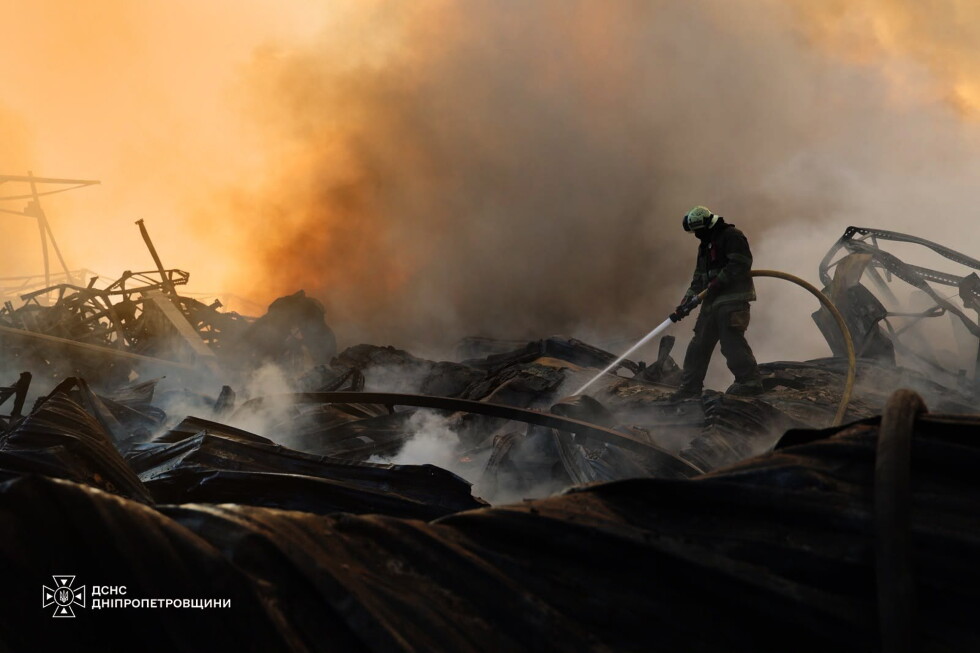
    KYIV, Ukraine — A large-scale combined assault featuring drones and ballistic missiles targeting Ukraine’s capital city unfolded in the early hours of Thursday, marking the second attack on Kyiv within a single day and leaving multiple people injured and massive residential infrastructure destroyed, local Ukrainian officials confirmed.\n\nTymur Tkachenko, head of Kyiv’s Military Administration, released preliminary details confirming that damage from the strikes was documented across six of the capital’s administrative districts. The assault damaged both private residential properties and key civilian infrastructure, he said, confirming that Russian forces used a mix of ballistic missiles and Iranian-designed Shahed drones in the coordinated attack.\n\nOne of the most severe incidents took place in Kyiv’s Darnytsia district, where a multi-story apartment building suffered a partial collapse that split the entire structure into two sections. Multiple residents were trapped under fallen concrete and debris following the blast. Ukraine’s national Emergency Service confirmed that first responders had pulled at least 10 survivors from the rubble by mid-morning. On-site footage and reporting showed rescue crews continuing to comb through the smoldering wreckage hours after the strike, searching for any additional trapped survivors.\n\nIn the capital’s Dnieper district, Tkachenko added, a rogue drone struck the roof of a five-story residential building, and a second residential structure in the adjacent Dniprovskyi district also sustained significant damage. Loud explosion sounds echoed across all neighborhoods of Kyiv from the early onset of the assault just after midnight.\n\nThe overnight attack came just hours after an unusually large, rare daytime strike on Kyiv that killed at least six civilians, according to Ukrainian President Volodymyr Zelenskyy. Zelenskyy noted that the daytime assault involved more than 800 drones deployed by Russian forces, and that the hours-long attack was deliberately intended to inflict maximum civilian harm. “The goal of this terror is to create as much pain and grief as possible for our people,” Zelenskyy stated in a post-strike address.