
Residents of Ukraine are reeling from one of the most traumatic nights of recent conflict, after a massive Russian missile assault overwhelmed Kyiv’s stretched air defense systems, leaving critical gaps that allowed multiple projectiles to reach their targets. Among the homes destroyed in the attack was the residence of Anastasiia, whose life has been upended by the unstopped strike. Local officials and witnesses have described the assault as the “scariest night” in recent memory, as the strain on Ukraine’s defensive capabilities left communities vulnerable to widespread damage and loss. For weeks, Ukrainian officials have warned that stockpiles of air defense interceptors are running critically low, after months of sustained Russian bombardment targeting infrastructure and residential areas. This latest attack underscores the urgent plea from Kyiv for additional military support from Western allies, as depleted defensive stockpiles continue to limit Ukraine’s ability to shoot down incoming Russian missiles before they strike. The attack has left survivors like Anastasiia without homes, and highlighted the growing human cost of strained defensive resources in the ongoing full-scale invasion.
标签: Europe
欧洲
-
After deadly Kyiv strike, Ukraine warns interceptor shortage is costing lives
On a devastating overnight attack that ranks among the most intense bombardments the Ukrainian capital has seen in months, Russian forces launched a massive combined aerial assault that left at least 21 civilians dead and dozens more injured, laying bare the fatal consequences of critical air defense interceptor shortages plaguing Ukraine’s military.
Moscow’s assault, which began just after midnight with barely any advance warning for residents, unleashed 115 drones and 24 ballistic missiles across Ukrainian territory. While Ukrainian air defense crews managed to shoot down the vast majority of the incoming drones, depleted stockpiles left them unable to intercept a single one of the ballistic missiles, according to official reports.
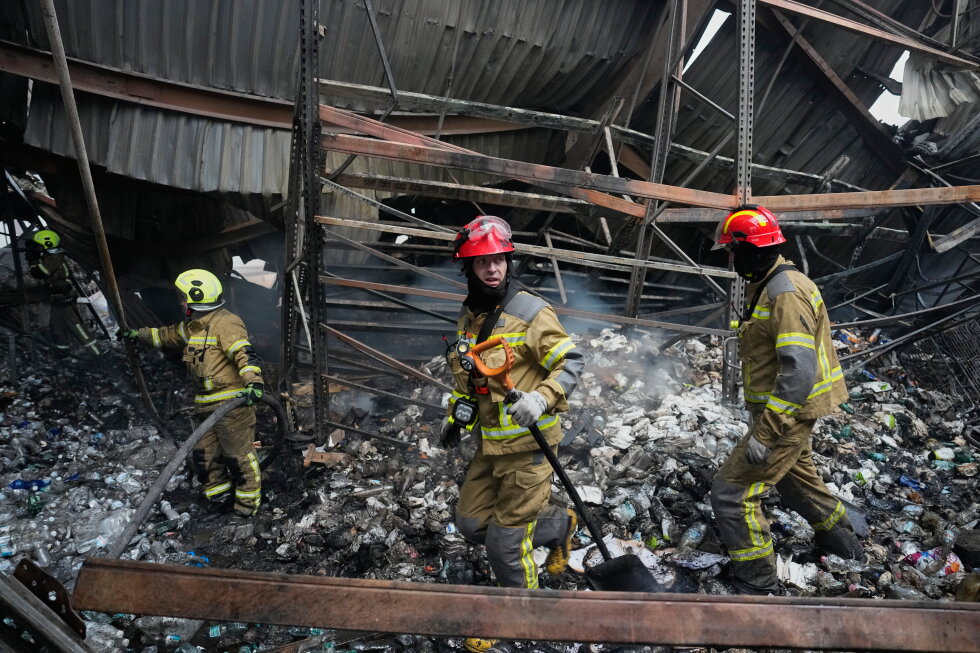
The aftermath at Kvitneva railway station, a site on Kyiv’s outskirts, bears grim witness to the human cost of the failure: eight people were killed at this location alone, where discarded shoes, broken glasses, and torn scraps of clothing still mark the blast site on the pockmarked platform. Recovery workers were photographed pulling white body bags from the site and loading them into waiting ambulances, while nearby storage and logistics facilities – including a major online retailer’s warehouse and a national postal sorting center – burned for more than 12 hours after the strike. It remains unclear whether the target was the railway infrastructure itself or the adjacent warehouse, which was also hit and still smoldered hours after the initial explosion.
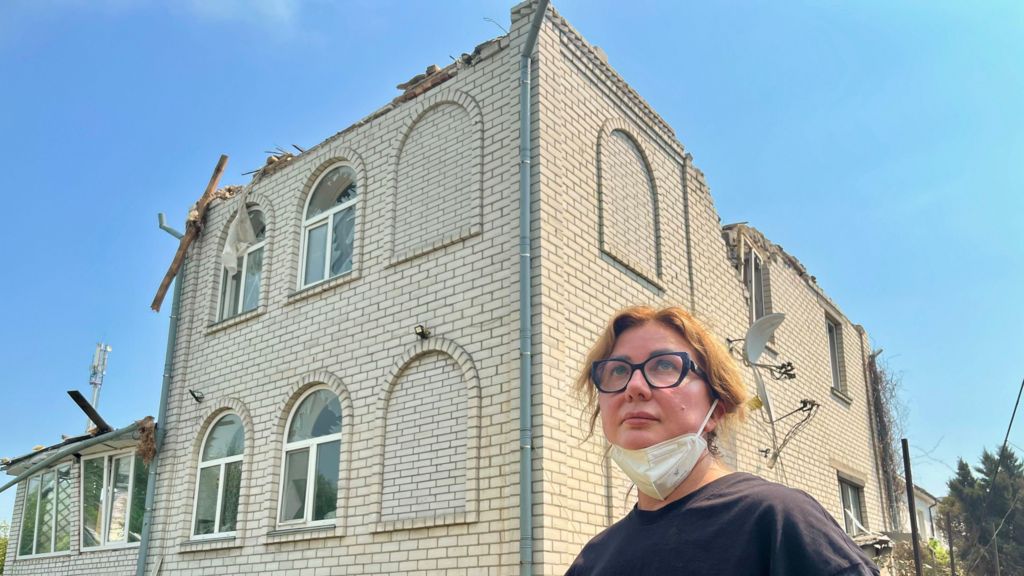
For residents who survived the attack, the experience has been nothing short of catastrophic, even for those who have already endured four and a half years of full-scale war. Anastasiia Dudley, whose home was nearly leveled by the assault, called Wednesday’s strike the “scariest night” she has lived through since Russia launched its full-scale invasion of Ukraine in February 2022. Her three-story home, which was hit by a drone hours before the ballistic missile strike on the nearby station and warehouse, lost its entire top floor and roof, with catastrophic structural damage to the second floor that leaves the remaining walls leaning precariously. “You see two floors – the first and the second, but it was a three-floor house with a roof,” she explained. “So no roof, no third floor, and extensive damage on the second floor. It’s pretty unstable.” Despite the destruction, Dudley and her mother escaped the attack shaken but physically unharmed.
The root of Ukraine’s inability to stop the ballistic missile barrage lies in a crippling shortage of Patriot interceptor missiles, the system Ukraine has relied on for years to neutralize Russian long-range ballistic threats. For months, Ukraine has depended on supplies of these interceptors from the United States, but shifting US stockpile commitments and policy reversals have left Ukrainian air defenses stretched dangerously thin. Earlier this summer, the US initially offered Ukraine a license to domestically produce Patriot systems, but last week US President Donald Trump denied that Washington had ever agreed to transfer that level of technology to Ukraine. Currently, US stockpiles of the interceptors have been heavily depleted by competing commitments related to tensions with Iran, leaving the US administration unwilling to release additional supplies to Kyiv.
The gap has had fatal consequences, Ukrainian officials argue. In a statement following the attack, Ukrainian President Volodymyr Zelenskyy stressed that ballistic missile interceptors could have prevented the deaths of the civilians killed in the strike. “Quite literally every single day, the lives of people here in Ukraine depend on the decisiveness of our partners in Europe and America,” he said, adding that he had spoken with NATO Secretary General Mark Rutte to push for urgent shipments of additional interceptors. Zelenskyy has repeatedly warned that the shortage of air defense interceptors directly encourages Russia to step up large-scale deadly strikes, a warning that was underscored by a similar attack just last week when Ukraine was only able to intercept one out of 27 incoming Russian ballistic missiles.
While Ukraine does retain an undisclosed number of fully functional Patriot launch systems, it is the interceptor missiles themselves that are in critically short supply. Military logistics mean that at least two interceptors are required to reliably destroy each incoming ballistic missile, and the system’s 160-kilometer operating range makes strategic deployment across Ukraine’s large territory challenging. Russia, for its part, regularly launches between 20 and 30 ballistic missiles in each large-scale strike, easily outstripping Ukraine’s ability to respond with its current stockpiles.
Ivan Stupak, a Ukrainian military expert and former intelligence service officer, compared the current situation to owning a high-performance luxury car with no fuel to run it. “Imagine you own a Lamborghini but have no fuel,” he explained. “You have one of the best cars in the world, but you can’t drive anywhere… The situation with Patriot is similar. The systems are there, but there are no interceptor missiles.” Worse, the shortage leaves the Patriot systems themselves vulnerable to Russian targeting, as they become high-priority targets for Russian strikes while they are unable to adequately defend themselves or the surrounding area. “Until we receive more interceptor missiles, these systems need to be relocated or concealed somehow so the Russians cannot detect and destroy them. Right now they’re extremely vulnerable,” Stupak added.
In the immediate aftermath of the strike, recovery work proceeded quickly in Kyiv: emergency teams moved in to repair damaged power lines above the Kvitneva railway tracks to resume passenger and freight services as soon as possible, a rapid clear-up process that Ukrainians have become grimly accustomed to over the course of the war. But the underlying threat remains ever-present. For Ukrainian civilians, the safety of their skies depends entirely on policy decisions made thousands of miles away, outside their borders, and until those decisions deliver the interceptors they need, another deadly, unchallenged Russian strike could come at any moment.
-
Why Russia’s ballistic missiles are increasingly getting through Ukrainian defenses
In the heart of Kyiv, Ukraine, every Russian ballistic missile launch creates a race against time. With flight times measured in minutes — and sometimes just seconds — air defense crews have barely any window to detect, track, and intercept these deadly, high-speed threats before they strike their targets.
This compressed timeline has left major Ukrainian population centers increasingly vulnerable to catastrophic strikes, as Ukrainian military officials confirm that only the American-made Patriot air defense system is capable of reliably stopping these steep-diving, supersonic projectiles. The stark reality, however, is that Ukraine currently operates far too few Patriot batteries and interceptor missiles to cover the entire country’s populated areas.
Ballistic missiles operate on a fundamentally different flight profile than the slower, aircraft-like cruise missiles Russia also uses extensively in its attacks. Launched like rockets, they arc high into the atmosphere before plunging toward their targets at multiple times the speed of sound, drastically cutting the window for defensive response. The most recent major barrage on Kyiv underscored this danger: strikes hit a commercial brewery, a civilian warehouse, and a national mail sorting facility, leaving at least 17 people dead and dozens injured, President Volodymyr Zelenskyy confirmed Wednesday.
Thomas Withington, an electronic warfare specialist at the UK-based Royal United Services Institute, compared the challenge of intercepting these missiles to catching a fast-moving ball. “When the warhead is hurled toward its target, it’s very, very steep and it’s going at a ridiculous speed,” he explained. “If the ball is going really fast, it’s harder to catch.”
Russia’s primary workhorse ballistic missile is the ground-launched Iskander-M, but the Kremlin has also deployed a range of other high-speed weapons that create identical interception challenges: the air-launched Kinzhal ballistic missile, modified S-300 and S-400 air defense missiles repurposed for ground strikes, and even the Zircon hypersonic anti-ship missile, whose extreme speed produces interception difficulties on par with traditional ballistic missiles.
### Patriots Remain the Only Working Defense
The PAC-3 variant of the Patriot system, the most advanced anti-missile model supplied to Kyiv by Western allies, was purpose-built to counter high-speed ballistic threats. Unlike older defensive systems that detonate explosives near incoming targets to disable them, the PAC-3 uses a maneuverable hit-to-kill interceptor that directly collides with incoming warheads to destroy them mid-flight. Even for the Patriot system, though, timing is critical: the technology must rapidly track the incoming projectile, calculate its projected flight path, launch an interceptor within minutes, and often completes the final engagement in just seconds.Ukrainian Air Force spokesman Yurii Ihnat confirmed that Patriots are currently the only system in Ukraine’s arsenal capable of intercepting Iskander-M, S-400, and Zircon weapons. While the U.S. and its allies field other capable anti-ballistic systems, including the land-based THAAD and sea-based Aegis defense platforms, none have been transferred to Ukrainian forces to date.
Even when Patriots are available, protection is not guaranteed. When a battery is deployed elsewhere, out of position, or running low on interceptors, most of Ukraine’s other existing air defense systems cannot fill the gap. Compounding this problem, Russia often mixes ballistic missile strikes with cruise missiles, explosive drones, and decoy targets to stretch defensive resources thin, forcing Ukrainian commanders to ration scarce interceptor missiles across multiple simultaneous threats. With too few batteries to cover every major Ukrainian city, large swathes of the country remain exposed.
### A Global Shortage That Cannot Be Fixed Quickly
The shortage of Patriot interceptors is not unique to Ukraine: the ongoing conflict in the Middle East, where U.S. and Israeli forces have expended large numbers of Patriot and THAAD interceptors to counter Iranian attacks, has stretched global inventories thin. An analysis by the Associated Press estimates that U.S. stockpiles of Patriot interceptors have dropped by at least 65% from pre-war levels, a claim the Pentagon has pushed back on, saying it retains a robust strategic arsenal.Closing the supply gap will take years, even with expanded production. Manufacturer Lockheed Martin delivered more than 600 PAC-3 MSE interceptors in 2025, and is ramping up capacity to reach an annual production rate of 2,000 interceptors by the end of 2030. NATO’s first European Patriot production facility is scheduled to open in Germany this September, but that new capacity will not make up for current shortfalls overnight.
Political uncertainty has further muddled efforts to increase Ukraine’s supply of defensive systems. At last month’s NATO summit held in Turkey, U.S. President Donald Trump announced the U.S. would grant Ukraine a license to produce Patriot systems domestically. Just three weeks later, however, Trump clarified that no final decision had been made. Even if a license is approved, defense officials and industry experts told the AP that establishing domestic Patriot production in Ukraine would take years of work before it can deliver operational interceptors.
### Ukraine Shifts Strategy: Targeting Launchers Instead of Just Intercepting Missiles
With defensive resources stretched thin, Ukraine is pursuing an alternative approach to reduce the threat: targeting Russian missile launchers and production infrastructure before missiles can even be launched — a strategy leaders describe as “shooting the archer instead of the arrow.”People familiar with ongoing diplomatic discussions told the AP that Zelenskyy has asked the Trump administration to help secure permission from Elon Musk’s SpaceX to expand the use of Starlink satellite communications for Ukrainian strike operations inside Russian territory. Musk has currently restricted Starlink access in Russian border regions to avoid escalating tensions, but expanded connectivity would allow Ukrainian surveillance drones to more accurately target mobile ballistic missile launchers and supporting infrastructure, reducing the number of incoming missiles that Patriot batteries need to intercept. The request has not been publicly confirmed by the White House, Ukrainian Embassy in Washington, or SpaceX.
Kyiv is also working on independent alternatives to Western air defense systems to reduce its reliance on imported Patriots. A key project under development is Freya, a lower-cost indigenous anti-ballistic defense system led by Ukrainian engineers. In July, Ukraine formed a coalition with nine other European countries to advance the joint development of shared mass-produced missile defense capabilities, with Zelenskyy stating that a fully operational system could be ready within 12 months. To date, Freya remains in the development phase, and it is unclear when it will be deployed for operational use.
In comments following the latest deadly ballistic missile attack on Kyiv, Zelenskyy emphasized the growing scope of the shortage: Ukraine received only one-third of the air defense missile deliveries in the first half of 2026 that it received in the same period a year earlier. He called on Western allies that are unwilling to immediately increase interceptor shipments to instead impose new, tougher sanctions on Russia’s ballistic missile production sector, noting that a large share of Russia’s missile manufacturing supply chain has yet to be targeted by existing international sanctions.
-

Wildfire near Athens leaves rescuers scrambling to reunite hundreds of animals
As containment orders were lifted Wednesday for a destructive wildfire that ripped through mountain and coastal terrain west of Athens, Greece, one rescued puppy still waited to go home. Sasa, an alert mixed-breed dog with floppy ears, remains in temporary shelter alongside hundreds of other domestic and wild animals pulled from the path of the blaze by local volunteer rescuers.
The wildfire, which at its peak spread across five active fronts, has scorched more than 100 square kilometers of land and destroyed dozens of residential properties. It is just one of dozens of massive wildfires sweeping Europe during an unseasonably hot summer, a crisis that has put growing numbers of animals at risk and raised urgent alarm among animal welfare organizations across the continent. Even nations that typically experience mild, cool summers have faced large-scale blazes this year, amplifying the scope of the threat.
In Megara, the coastal town 40 kilometers west of Athens at the center of this latest fire, local rescue coordinator Elena Dede says volunteer teams managed to save more than 280 animals — most of them domestic dogs — while operating through extreme heat shifting, unpredictable fire paths, and high winds that amplified the blaze’s spread. Rescued animals including Sasa are currently housed in a repurposed indoor sports facility, each kept in collapsible wire enclosures with basic enrichment and access to fresh water.
Dede described the chaotic conditions rescuers faced, noting “There was so much heat and the fire was so aggressive. It was changing directions all the time.” While the volunteer effort has saved hundreds of lives, both rescuers and welfare advocates acknowledge that the current response system is stretched far beyond its limits.
Richard Parr, director of the U.K.-based Center for Wild Animal Welfare, called the on-the-ground work of firefighters and local volunteer groups “heroic,” but warned that rising global temperatures driven by climate change have dramatically increased risks for millions of animals across Europe. Currently, he explained, most animal rescue efforts during wildfires are unplanned, ad-hoc operations carried out by private citizens and small local charities. “The scale of the challenges they’re facing in terms of the number of animals affected and the areas of fire is gigantic and completely out of step,” Parr said.
His organization is now pushing the European Union to establish a dedicated, centrally funded EU animal rescue service that can coordinate large-scale responses across member states during climate-driven disasters. Parr also called on national and local governments to pre-emptively create designated “fire refuges” for wild and domestic animals across fire-prone regions, such as maintained ponds and rocky outcrops that can offer emergency shelter when blazes break out.
Back in Megara, the rescue effort faces a new logistical challenge: reuniting displaced animals like Sasa with their owners, and finding permanent placement for animals whose owners cannot be located. Dede says local authorities are working to cross-reference rescued animals with posted missing pet notices, and temporary foster homes are being lined up for animals waiting to be rehomed.
Even as the work continues, Dede acknowledges that the animals now in the shelter are the lucky ones. Rescuers worked through thick toxic smoke and extreme stress to carry out missions, and many animals remain unaccounted for. “It was really hard for every volunteer and every person involved to survive the smoke and the stress,” she said. “I will never forget the animals that we knew were left behind. I’m just hoping they were saved and ran free.”
-

Central Europe swelters and Slovakia and Austria hit their record high temperatures
A brutal new wave of extreme heat has swept across Central Europe this week, pushing temperature gauges past historic milestones in Slovakia and Austria and marking yet another alarming milestone in the region’s accelerating climate shift. On Wednesday, both nations recorded the highest daily temperatures ever documented on their territory, capping a summer defined by repeated, unprecedented heat extremes.
Slovakia’s new national high comes as the third time the country has broken its all-time heat record in just one summer. Data released by the Slovak Meteorological Institute confirms that the southern town of Kamenica nad Hronom hit 41.4 degrees Celsius (106.5 degrees Fahrenheit) during the latest heat surge, shattering previous marks set only weeks earlier. Prior to this week, the nation’s record stood at 41.3 C (106.3 F), also set in Kamenica nad Hronom on June 30, which itself broke a 41.0 C (105.8 F) record set the day before in Turna nad Bodvou. That back-to-back-to-back record-breaking streak has even toppled a long-standing 2007 high of 40.3 C (104.5 F) set in Hurbanovo, which stood as the national benchmark for 16 years before this summer’s relentless heat.
The extreme conditions are not limited to daytime temperatures. Overnight temperatures between Tuesday and Wednesday also hit a historic peak, with the southwestern town of Skalica recording a low of 28.4 C (83 F) — the warmest night ever recorded in Slovakia.
Neighboring Austria followed suit, breaking its own all-time heat record just one day after the previous milestone was set. Austria’s GeoSphere meteorological service confirmed that a reading of 41.2 C (106.1 F) was recorded in Bad Deutsch-Altenburg, a town located right on Austria’s border with Slovakia. That reading beat the previous national record of 41.0 C (105.8 F), which was set just 24 hours earlier. The news comes weeks after the Czech Republic and Hungary, two other Central European neighbors, also notched their own all-time national heat records earlier this hot season.
The string of simultaneous broken heat records across Central Europe aligns with a broader pattern of extreme climate across the entire continent this year. Europe is currently experiencing an exceptionally hot, dry summer that has turned vast stretches of forest and rural land into tinderboxes, sparking unprecedented wildfire seasons that have forced hundreds of thousands of people to evacuate their homes and popular tourist vacation spots.
Data from the European Union’s Copernicus Climate Change Service confirms that Europe is warming faster than any other continent on Earth. Since the 1980s, the continent’s average temperature has increased at twice the rate of the global average, a trend that scientists link to human-caused climate change and that has made extreme heat events far more frequent, more intense, and longer-lasting across the region.
-

France is banning unsolicited telemarketing calls starting next week
PARIS – Starting next week, a landmark new consumer protection law will come into force across France, permanently banning unsolicited cold-call telemarketing. The legislation, championed by President Emmanuel Macron’s administration and set to take effect on August 11, targets intrusive unsolicited sales pitches and cracks down on fraudulent commercial tactics that disproportionately endanger vulnerable groups.
For decades, French consumers have voiced growing frustration with uninvited marketing calls. Under the previous regulatory framework, people who wished to block such calls were required to register their phone numbers on a government-managed opt-out list. However, consumer advocacy groups have long documented that many call centers routinely disregard this registry, leaving millions of people vulnerable to daily intrusions.
The new regulation flips this framework on its head. “Under the updated rules, businesses are strictly prohibited from reaching out to consumers for marketing purposes without their explicit prior consent,” explained Alice Vilcot, chief of staff at France’s Directorate-General for Competition, Consumer Affairs and Prevention of Fraud. “Importantly, consumers also retain the right to withdraw that consent at any point going forward.”
Government data underscores the urgency of the reform: official estimates show that three out of every four French people receive at least one unsolicited sales call each week, with many facing a constant stream of such intrusions to both their landlines and mobile devices. In 2024, 11 leading national consumer organizations issued a joint public appeal for a full ban, denouncing what they called “relentless harassment” that has become an unwelcome regular disruption to daily life. The legislation was ultimately approved by French parliament last year.
To enforce the new ban, regulators have put in place steep punitive measures. Individual violators face fines of up to €75,000 (approximately $87,000) for each illegal call, while corporate offenders can be fined as much as €375,000 ($435,000) per violation. A small set of targeted exceptions apply: consumers who voluntarily opt in to receive marketing communications, for example by checking a consent box during an online purchase, will still receive such calls, and companies may reach out to existing customers with new offers tied to an ongoing contractual relationship. Members of the public can report suspected violations directly through a dedicated government portal.
Vilcot pointed to a high-profile enforcement case from last year that foreshadowed the country’s tougher stance: an Ireland-based telemarketing firm was hit with a €6 million ($6.9 million) fine for violating the old rules by repeatedly calling numbers listed on the previous opt-out registry.
The new rule has not been without controversy, however. In Morocco, which hosts a large offshore call center industry that serves the French market, government officials have warned of significant employment risks. In March, Moroccan Employment Minister Younes Sekkouri stated that between 40,000 and 50,000 local call center jobs could be impacted, noting that the French market makes up more than 80% of total sector revenue for Moroccan call centers.
France’s policy shift puts it among a small group of European nations that have adopted an opt-in model for telemarketing. Neighboring Germany implemented a similar ban on unsolicited cold calls back in 2009. Most other major economies, by contrast, still rely on opt-out systems: the U.S. maintains a national Do Not Call Registry, Canada operates its own national do-not-call list, and the United Kingdom runs the Telephone Preference Service, where users can register to block unwanted calls. In the U.K., violating opt-out requests can result in fines of up to £500,000 ($670,000) per violation.
AP reporter Jill Lawless contributed reporting from London.
-

4 people have been stabbed in London’s Covent Garden area and a woman arrested, police say
A violent stabbing incident disrupted the busy tourist hub of Covent Garden in central London on Wednesday, leaving four men injured and prompting the swift arrest of a local woman, London’s Metropolitan Police have confirmed.
Initially, authorities reported that three individuals had been wounded in the attack, which took place on Endell Street in the afternoon. But an updated statement from the force later corrected this count, confirming that four men, aged 34, 39, 42 and 52, were located with visible stab wounds following the disturbance.
A 47-year-old woman has been taken into police custody in connection with the event. She faces suspicion on two charges: possession of an offensive weapon and assault, according to official police briefing. All four injured men were quickly transferred from the scene to a leading major trauma center for urgent medical care. As of Wednesday evening, law enforcement has not released any additional details on the severity or current status of the victims’ injuries.
London Ambulance Service also confirmed its response to the emergency. A service spokesperson noted that paramedics administered on-site first aid to all four patients before transporting them via road ambulance to the trauma center. The incident, which unfolded in one of London’s most crowded and visitor-favorite districts, triggered an immediate emergency response, though no further details about a potential motive or the relationship between the suspect and victims have been made public.
-
Party in Spain’s government questions co-hosting 2030 World Cup with Morocco after migration crisis
In the wake of a chaotic mass migration surge through the Moroccan-Spanish border last week that left dozens dead, a key junior partner in Spain’s ruling government is pushing for the country to re-examine its plan to co-host the 2030 FIFA World Cup alongside Morocco and Portugal.
Sumar, a small left-wing party that holds cabinet positions in Socialist Prime Minister Pedro Sánchez’s governing coalition, tabled a non-binding parliamentary motion Wednesday calling on Spanish sports governing bodies to revisit the 2030 co-hosting agreement finalized with Morocco and Portugal. While Sumar only controls 26 of 350 seats in Spain’s national parliament, its position carries outsize political weight as a member of Sánchez’s ruling administration — a government that has already drawn sharp criticism from other European Union members over its handling of the Ceuta crisis. Party leaders have acknowledged that beyond backing from other small left-wing blocs, additional parliamentary support for the motion remains unlikely at this stage.
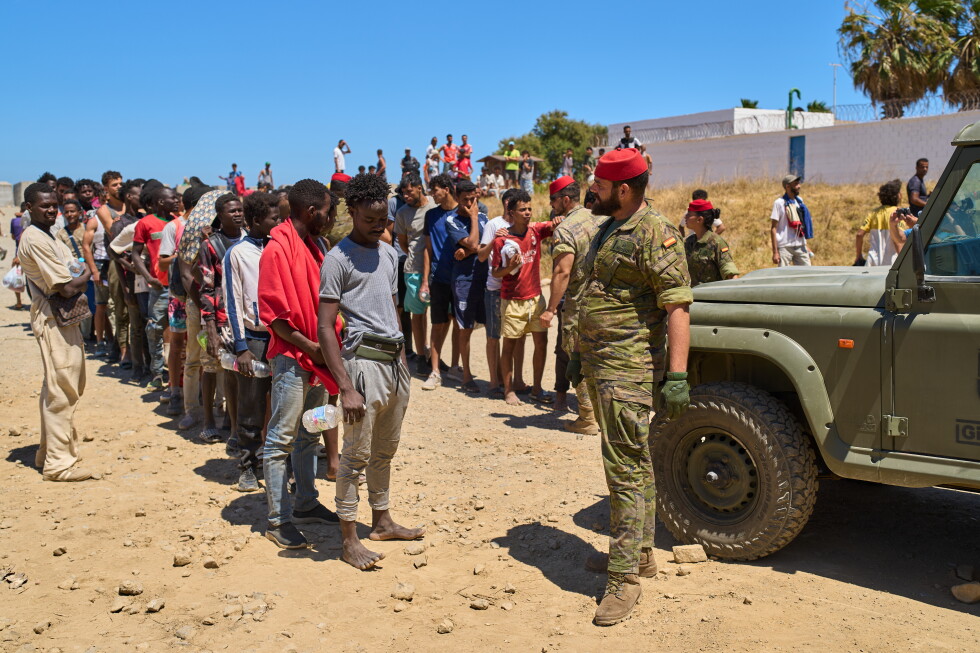
Last week, more than 72,000 migrants crossed the border from Morocco into Ceuta, a small Spanish autonomous territory located on the North African coast. By the time the initial surge calmed, Moroccan authorities helped Spanish officials repatriate nearly all of the arrivals, with roughly 2,000 people — 1,000 of them minors — remaining in the enclave as of the latest figures from Spain’s Interior Ministry. At least 84 migrants died while attempting to cross by swimming around the breakwater and border fence separating the two territories, a surge that was largely coordinated and fueled by viral social media posts encouraging mass crossings.
Prime Minister Sánchez has publicly defended Moroccan authorities’ response, crediting them with acting quickly to facilitate the repatriation process. But his stance has drawn backlash from opposition figures and even within his own cabinet: Spain’s defense minister has joined calls for Morocco to issue a more detailed public explanation of the events that led to the crisis.
Nahuel González, a Sumar lawmaker and one of the co-authors of the motion, has gone further, accusing the Moroccan government of deliberately weaponizing migration to gain political leverage. “The Moroccan state, the Moroccan monarchy, does not respect human rights, it uses migrants to exercise political pressure,” González told Spanish public broadcaster TVE. When pressed to clarify whether Sumar was calling for Morocco to be stripped of its co-hosting status or for Spain to exit the joint hosting plan entirely, González declined to specify, saying only that the motion asks for “Spain’s sports institutions [to] reconsider this World Cup that is to be shared with Morocco because we believe that we must defend human rights.”
Concern over the joint hosting plan has spread to co-host Portugal, where a small parliamentary party Livre has echoed Sumar’s calls. The party sent an official letter to Portuguese Prime Minister Luís Montenegro and the president of the Portuguese Football Federation calling for a full reassessment, arguing that continuing with the current co-hosting arrangement is “unsustainable” in the wake of the Ceuta crisis.
The 2030 FIFA World Cup is structured as a joint project that will see most matches hosted across Spain, Morocco and Portugal. To mark the 100-year anniversary of the first World Cup hosted by Uruguay in 1930, three South American nations — Argentina, Paraguay and Uruguay — will each host one opening round match as part of the centenary celebration.
Videojournalist Helena Alves contributed reporting from Lisbon, Portugal.
-
Drone carrying explosives found at German airport, police say
A serious aviation security incident has unfolded at Germany’s Leipzig/Halle Airport, after authorities discovered an unidentified object suspected to be an explosive-laden drone close to parked Ukrainian aircraft near a runway, triggering a major criminal investigation and widespread flight disruptions.
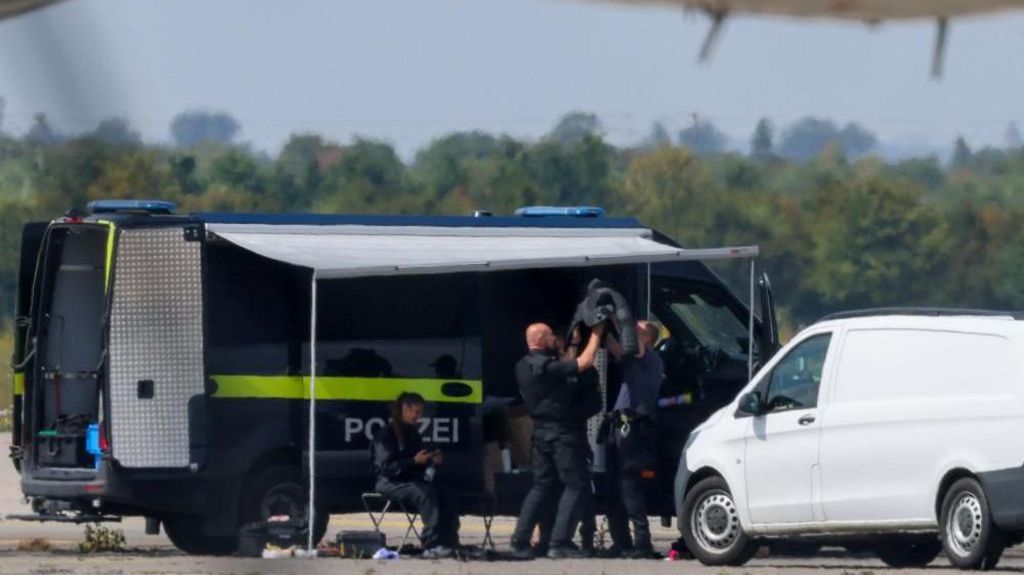
The incident began late Wednesday night, when local police first received reports of an unidentified flying object in the airport’s restricted airspace shortly before midnight. In response to the potential security threat, air traffic control redirected multiple inbound aircraft – including a commercial passenger jet arriving from Mallorca – to alternate airports across the country to avoid any risk of harm. After securing the area, search teams located the suspicious object adjacent to the airport’s southern runway, in the immediate vicinity of parked Ukrainian Antonov transport planes.
To safely examine the item, law enforcement deployed a specialized explosive detection robot. Citing unnamed security sources, Germany’s national news agency DPA reported that the drone was outfitted with an explosive device and a functional detonator. As of the latest updates, the southern runway – a critical hub for global logistics giant DHL’s cargo operations – remains closed to all traffic. Police confirmed that limited operations resumed on the airport’s northern runway at 1:55 p.m. local time, allowing a partial restart of flight activity.
In a separate development, German tabloid Bild reported that a second cargo plane collided with an unknown airborne object shortly after taking off from Leipzig Airport the same night. The aircraft was able to divert and land safely at Hanover Airport, where inspectors found only minor damage to the plane’s nose section, with no injuries reported among crew or passengers.
Armin Schuster, interior minister for the state of Saxony where the airport is located, has labeled the incident an “extremely serious security event” that demands a full, urgent investigation. The discovery comes amid a growing wave of unauthorized drone incursions at sensitive German infrastructure sites over the past several months. Unmanned aircraft have been repeatedly spotted over military bases, commercial airports, energy export terminals, seaports, and major logistics facilities, prompting nationwide security alerts.
Federal law enforcement officials have publicly warned that many of these unapproved overflights may be coordinated by Russian intelligence operatives, as part of a campaign to destabilize German infrastructure and disrupt support for Ukraine. This suspicion builds on a previous incident at Leipzig Airport in July 2024, when a package burst into flames on the tarmac before it could be loaded onto a DHL cargo plane. German authorities have openly entertained the theory that the incident was an act of sabotage linked to Moscow, though the Kremlin has consistently denied any involvement in all such incidents across Germany.
This is not the first time the airport has been tied to geopolitical espionage. Last year, a Chinese national was convicted in German court of providing sensitive intelligence, including details of flight schedules and cargo movements at Leipzig/Halle Airport, to a Chinese intelligence agent operating in the country.
German federal and state security forces have now heightened alert levels at all major airports across the country, as investigators work to determine the origin of the drone, who organized the incursion, and what the intended target was.
-
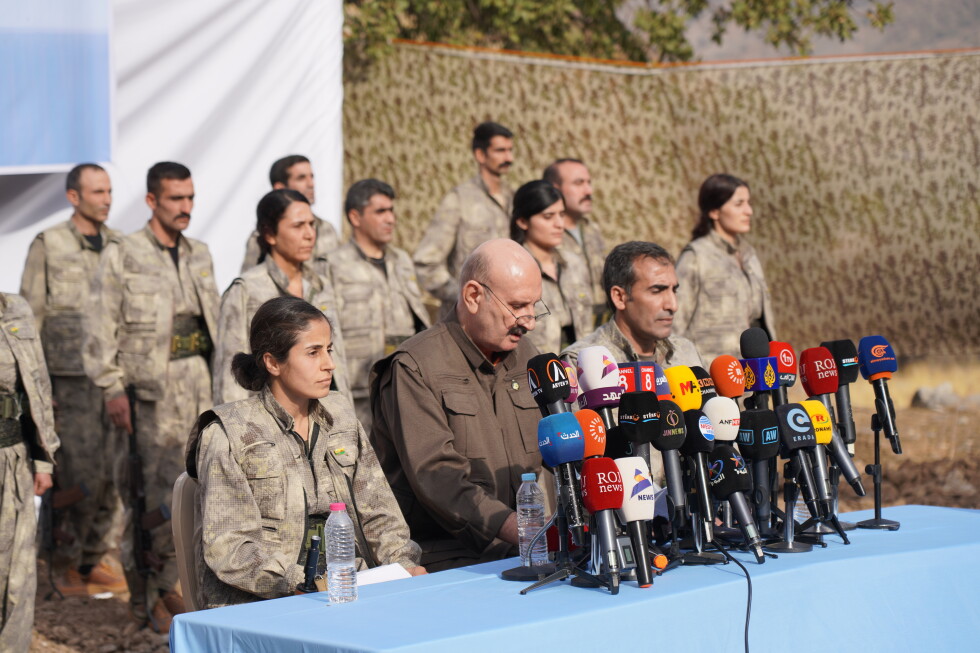
Bill aiming for peace between Turkey and Kurdish fighters goes to parliament
In a landmark step toward resolving one of the Middle East’s longest-running internal conflicts, Turkey’s ruling Justice and Development Party (AKP) has tabled a parliamentary bill to advance a new peace initiative with the Kurdistan Workers’ Party (PKK), including provisions for a broad pardon for former militants. This legislative push comes months after the PKK announced it would disarm and disband in response to a call from its imprisoned founder Abdullah Öcalan, a decision that marked a dramatic shift in a confrontation stretching back 40 years.
The PKK first launched an armed insurgency against the Turkish state in 1984. Over the following decades, the conflict has killed more than 40,000 people, with violence spilling across the country’s borders into northern Iraq and Syria, where the PKK maintains regional bases. Originally formed to demand an independent Kurdish state, the group later adjusted its goals to push for greater political autonomy and expanded cultural rights for Turkey’s Kurdish population. Multiple past peace efforts between Ankara and the PKK have collapsed, most recently in 2015 when hostilities reignited after a two-year ceasefire. Designated a terrorist organization by Turkey, the United States, and the European Union, the PKK carried out a symbolic disarmament ceremony in its northern Iraq headquarters last year after Öcalan’s call, and began withdrawing remaining fighters from Turkish territory to Iraqi bases.
Officially named the bill “to strengthen national solidarity and social cohesion”, the new legislation lays out clear, formal procedures for overseeing the complete disarmament of the PKK and outlines the judicial process for the group’s members. Abdullah Güler, the AKP’s parliamentary group chair, confirmed to reporters that the bill has already secured the support of 360 sitting members of parliament, with additional lawmakers expected to add their backing in the coming days. The legislation will go first to parliament’s Justice Committee for review this Friday, before moving to a full debate in the general assembly. The government has set an aggressive timeline, aiming to pass the bill before parliament enters its summer recess later this month.
Under the terms of the proposed framework, the Turkish National Security Council will be responsible for verifying that the PKK has fully disbanded and surrendered all of its weapons stockpiles, which the group still retains the majority of. Once these conditions are met, the bill will grant an effective pardon to approximately 4,000 PKK members not directly implicated in violent acts. This provision would clear the way for the release of people already convicted of minor offenses related to PKK membership, as well as those convicted of providing financial support or propaganda for the group. It would also allow PKK members based in Iraq, Syria, and exiled across Europe to return to Turkey without facing prosecution, according to reporting from leading Turkish daily *Hürriyet*. For cases still under active investigation or prosecution, legal proceedings will be paused for a period proportional to the severity of the alleged offenses, and cases will be dismissed entirely if no additional terror-related offenses are committed during the waiting period. All applications for amnesty must be filed within six months of the law being officially published in the Official Gazette, and the entire process will be overseen by a joint ministerial committee and parliamentary commission.
Notably, the bill excludes senior PKK figures from its amnesty provisions: militants convicted of intentional homicide and those sentenced to life in prison before 2005, including Öcalan himself, are not eligible for pardon. Öcalan has been imprisoned on İmralı Island since his capture in 1999, and the pro-Kurdish DEM Party has long lobbied for Öcalan to be granted official status to coordinate the disarmament process, with the ultimate goal of securing his release. While that demand is not included in the current draft legislation, Turkish media reports indicate that the question of Öcalan’s status could be taken up in future legislation if the current peace process moves forward. In the near term, officials are expected to improve Öcalan’s prison conditions, expanding his access to visitors and external communication.
In a statement delivered through DEM Party lawmakers who visited him in prison earlier this week, Öcalan expressed full support for the new legislation, framing it as a historic turning point for Turkey. “With this law, we are setting out to resolve a historical issue,” he said. “We are at the beginning of a democratization process that will be at least as significant as the founding of the republic.” The proposed legal framework is set to remain in effect for up to four years, though parliament has the authority to extend the timeline if needed. If the process advances successfully, policymakers have indicated additional legislation will be introduced to address unresolved issues, including the question of Öcalan’s eventual release.