标签: Europe

欧洲

  • Day of mourning for bar fire victims in Switzerland

    Day of mourning for bar fire victims in Switzerland

    The Swiss nation stood in solemn unity as a wave of collective grief swept across the country during an official day of mourning. In a powerful and poignant tribute, church bells resonated from every canton for a continuous five-minute period, creating a synchronized symphony of remembrance that echoed through city squares and mountain valleys alike. This profound act of national solidarity was dedicated to honoring the memory of the young victims whose lives were tragically cut short in a devastating bar fire that has left the nation in shock.

    The commemorative bell tolling served as both a public expression of shared sorrow and a demonstration of Switzerland’s communal strength during times of unprecedented tragedy. While specific details regarding the fire’s origin and casualty numbers remain under official investigation, the overwhelming response from citizens and institutions alike highlights the profound impact this event has made on the national consciousness. The coordinated memorial represents one of the most significant displays of public mourning in recent Swiss history, bringing together diverse communities across linguistic and cultural divides in a shared moment of reflection and support for the victims’ families and survivors.

  • Trial starts of man accused of inciting teenagers to harm themselves online

    Trial starts of man accused of inciting teenagers to harm themselves online

    A landmark cybercrime trial commenced in Hamburg this week against a 21-year-old dual German-Iranian national, identified only as Shahriar J. due to privacy laws. The defendant stands accused of operating under the pseudonym ‘White Tiger’ as a key member of the international criminal network ‘764,’ which authorities have characterized as a nihilistic violent extremist group dedicated to child exploitation.

    Prosecutors have brought 204 distinct charges against Shahriar J., alleging he systematically targeted and groomed more than 30 vulnerable children and teenagers, primarily between ages 11 and 15, from Germany, the United Kingdom, Canada, and the United States. The crimes are said to have occurred between 2021 and 2023, entirely through online channels.

    The prosecution’s case details a horrific pattern of manipulation. Shahriar J. is suspected of using social media to establish intense emotional dependency with his victims before exploiting that bond to coerce them into producing violent and sexual content. This allegedly included live-streamed acts of self-harm and sexual acts. In what German media reports describe as the most extreme cases, he is charged with one count of murder and five counts of attempted murder ‘as an indirect perpetrator’ for allegedly persuading victims to take their own lives, including a 13-year-old American boy who died by suicide during an online session.

    A central element of the charges involves the accusation that Shahriar J. recorded these acts to blackmail the children, threatening to publish the material unless they performed increasingly severe self-harm on camera.

    Given that some alleged offenses occurred while the defendant was a minor, the court proceedings are being held in private. Before the trial, his defense lawyer, Christiane Yüksel, vehemently denied all accusations, labeling them ‘baseless and fabricated.’ She specifically challenged the legal theory of ‘indirect perpetration’ in the murder charge as an unproven ‘experimental construct.’

    The case has drawn significant international attention, with the U.S. Federal Bureau of Investigation (FBI) having previously made arrests linked to the ‘764’ network, which it classified as a major international child exploitation enterprise.

  • Italy backs historic EU-Mercosur trade deal after 25 years of negotiations

    Italy backs historic EU-Mercosur trade deal after 25 years of negotiations

    BRUSSELS — In a decisive political breakthrough, the European Union has secured Italy’s pivotal endorsement for its landmark free trade agreement with the Mercosur bloc, overcoming decades of negotiations and significant internal opposition. Italian Prime Minister Giorgia Meloni, previously viewed as the swing vote, announced her support following assurances that protected Italian agricultural interests, particularly safeguarding the nation’s premium food products from unfair competition.

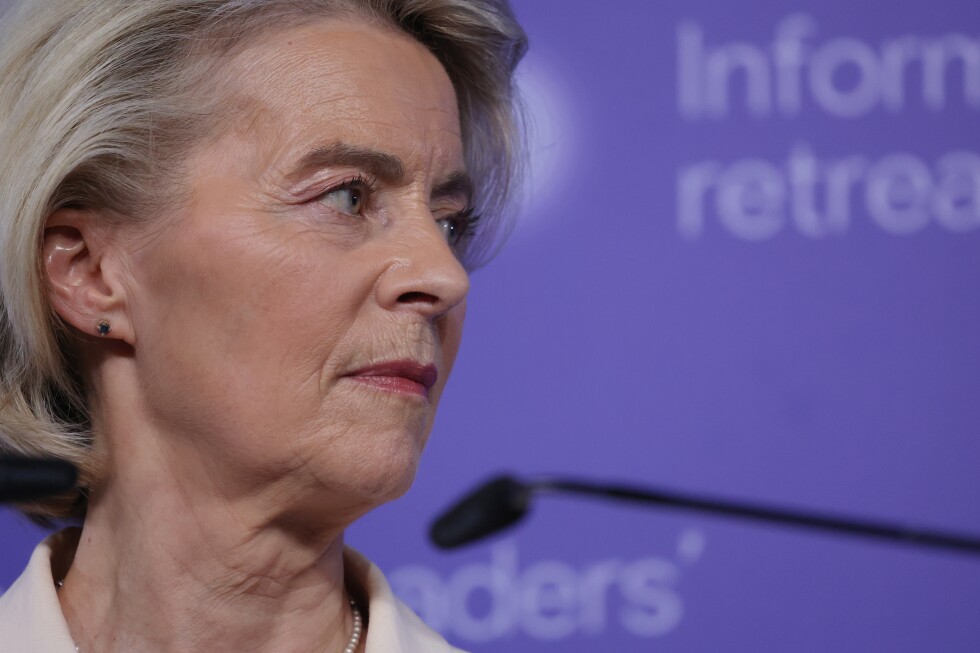
    The agreement, negotiated over 25 years with Brazil, Argentina, Paraguay, Uruguay, and Bolivia, establishes one of the world’s largest free trade zones encompassing approximately 780 million people and representing a quarter of global GDP. European Commission President Ursula von der Leyen hailed the development as a powerful demonstration of EU economic sovereignty amid an increasingly transactional global landscape, announcing plans to travel to Paraguay for upcoming Mercosur meetings.

    German Chancellor Friedrich Merz characterized the pact as a milestone in European trade policy that enhances strategic autonomy. The deal provides Brussels with a significant diplomatic victory at a time of global economic uncertainty, creating a counterweight to American protectionist tendencies and Chinese export controls. Brazilian President Luiz Inácio Lula da Silva celebrated the agreement as a triumph for multilateralism during an era of growing protectionism.

    Despite this progress, substantial opposition persists. France, Poland, Austria, Hungary, and Ireland voted against the agreement, citing concerns about agricultural sector vulnerabilities. French President Emmanuel Macron acknowledged that while safeguards had been incorporated—including emergency import brakes and mirrored food safety regulations—the economic benefits remained insufficient to justify risks to EU farmers. Environmental groups additionally condemned the pact, warning it would accelerate Amazon deforestation and undermine climate objectives.

  • Pope to visit Spain this year, with stops in Madrid, Barcelona and Canary Islands, cardinal says

    Pope to visit Spain this year, with stops in Madrid, Barcelona and Canary Islands, cardinal says

    VATICAN CITY — Pope Leo XIV is preparing for a significant journey to Spain in 2026, with an itinerary featuring Madrid, Barcelona, and the Canary Islands. This pilgrimage fulfills a vision initially contemplated by his predecessor, Pope Francis, particularly regarding visiting a crucial migration gateway to Europe.

    Cardinal José Cobo Cano, Archbishop of Madrid, confirmed the developing plans following high-level discussions with Vatican officials. While speculation had suggested a June timeline, the cardinal emphasized that specific dates remain undetermined. The proposed agenda includes official engagements in the capital city of Madrid and a ceremonial visit to Barcelona’s iconic Sagrada Familia basilica. This segment holds special significance as 2026 marks the centenary of architect Antoni Gaudí’s death, who currently awaits possible beatification.

    The Canary Islands segment represents the most symbolically charged portion of the visit. This archipelago, situated near northwest Africa, serves as a primary entry point for migrants crossing from West Africa. Pope Francis had previously expressed particular interest in visiting these islands to demonstrate solidarity with migrants and refugees, though he consistently declined invitations to mainland Spain during his pontificate.

    This Spanish journey constitutes the first confirmed international travel plans for Pope Leo XIV in 2026. The American pontiff has additionally expressed intentions to visit Africa, with Algeria featuring prominently due to its connection to St. Augustine, foundational to Leo’s Augustinian order. Potential visits to Peru—where he served as a missionary for twenty years—along with Argentina and Uruguay are also under consideration.

    The announcement coincided with a landmark development in Spain’s Catholic Church governance. Spanish bishops recently conceded to grant the state ombudsman ultimate authority in determining compensation for clergy sexual abuse victims, representing a substantial shift in ecclesiastical policy.

  • The pope in a major foreign policy address blasts how countries are using force to assert dominion

    The pope in a major foreign policy address blasts how countries are using force to assert dominion

    In a groundbreaking diplomatic address that broke with Vatican tradition, Pope Leo XIV issued his most comprehensive condemnation to date of escalating military interventions by global powers. Speaking before the assembled diplomatic corps at the Holy See on Friday, the first U.S.-born pontiff in history delivered a stark warning about the resurgence of warfare as an instrument of foreign policy.

    The pontiff’s unusually direct speech, delivered primarily in English rather than the customary Italian or French, represented a significant departure from diplomatic protocol. While not explicitly naming specific nations, the address clearly referenced recent U.S. operations in Venezuela, Russia’s ongoing engagement in Ukraine, and multiple other conflict zones that have challenged the post-World War II international legal framework.

    Leo XIV articulated profound concerns about the systematic undermining of multilateral institutions, particularly the United Nations, and the dangerous shift from diplomacy to military coercion. “A diplomacy that promotes dialogue and seeks consensus among all parties is being replaced by a diplomacy based on force,” he declared, adding that the fundamental principle prohibiting nations from violating others’ borders through force had been “completely undermined.”

    The address extended beyond geopolitical matters to address fundamental human rights issues. The Pope highlighted the global persecution of Christians as one of today’s most widespread human rights crises, affecting approximately one in seven Christians worldwide. He cited specific instances of religiously motivated violence across multiple continents while noting that more subtle forms of discrimination also persist in Western nations.

    Reaffirming traditional Catholic teachings, Leo XIV expressed deep concern about expanding access to abortion services and strongly condemned surrogacy arrangements, which he characterized as reducing human life to commercial transactions that violate the dignity of both children and women. He framed these issues within the broader context of defending the most vulnerable members of society, including the unborn, refugees, and migrants.

    The comprehensive nature of this annual foreign policy address signals a potentially new direction for Vatican diplomacy under its American-born leader, combining traditional moral teachings with urgent contemporary concerns about global stability and human dignity.

  • Visiting EU leaders pledge to support Syria’s recovery after years of civil war

    Visiting EU leaders pledge to support Syria’s recovery after years of civil war

    In a landmark diplomatic engagement, high-ranking European Union officials conducted an unprecedented visit to Damascus on Friday, signaling a profound shift in Syria’s international relations. European Commission President Ursula von der Leyen and European Council President António Costa held substantive talks with Syrian Interim President Ahmad al-Sharaa, discussing post-conflict recovery strategies nearly two years after the conclusion of Syria’s devastating civil war.

    The fourteen-year conflict reached its conclusion in December 2024 when rebel forces led by al-Sharaa successfully ousted former President Bashar Assad, whose regime had faced extensive international condemnation for systematic human rights violations. The new administration has since embarked on a remarkably successful diplomatic campaign, restoring ties with numerous Western and Arab nations that had previously isolated Assad’s government.

    During the historic meeting, President Costa announced the European Union’s commitment to provide €620 million (approximately $723 million) in comprehensive financial support scheduled for 2026-2027. This assistance package combines immediate humanitarian relief with substantial reconstruction funding—previously obstructed by international sanctions during Assad’s tenure that have now been lifted.

    President von der Leyen characterized the development as Syria’s ‘journey toward hope and renewal’ in a social media statement, affirming Europe’s commitment to supporting national recovery efforts. Despite these diplomatic advances, significant challenges persist within Syria, including economic instability, sporadic sectarian violence, and ongoing consolidation efforts by al-Sharaa’s government.

    Recent days have witnessed renewed hostilities between government forces and Kurdish fighters in Aleppo, complicating negotiations regarding the integration of Kurdish-led Syrian Democratic Forces into the national military structure. Although Syria’s Defense Ministry announced a ceasefire arrangement on Friday, Kurdish forces had not publicly acknowledged the agreement at the time of reporting.

    President Costa acknowledged these security concerns during the visit, describing recent violent escalations as ‘worrisome’ while emphasizing the necessity of continued dialogue. He recognized that the path to comprehensive reconciliation and recovery remains ‘difficult and long,’ requiring sustained international engagement.

    The EU delegation subsequently traveled to Lebanon, where officials welcomed the Lebanese army’s progress in implementing weapon disarmament plans for non-state groups, including the powerful Hezbollah militia. Von der Leyen specifically endorsed disarmament efforts south of the Litani River and called for full compliance with the November 2024 ceasefire agreement that ended recent Israel-Hezbollah hostilities. She emphasized the fundamental importance of Lebanon’s territorial integrity and the complete disarmament of Hezbollah, even as Israel continues airstrikes targeting what it identifies as Hezbollah’s rearmament attempts.

  • David Bowie’s childhood home in London is set to open to the public next year

    David Bowie’s childhood home in London is set to open to the public next year

    LONDON — The humble suburban bedroom where David Bowie first dreamed of stardom will soon welcome pilgrims to the very space where his legendary career was born. The Heritage of London Trust has acquired the musician’s childhood residence in Bromley, announcing plans to transform the historic property into a public museum by late 2027.

    The 19th-century railway worker’s cottage, where Bowie lived from age 8 to 20, will undergo meticulous restoration to recreate its 1960s aesthetic. Central to the experience will be the modest 9-by-10-foot bedroom that Bowie once described as ‘my entire world’—the creative incubator where he immersed himself in books, music, and records that would shape his artistic evolution.

    Supported by Bowie’s estate and a £500,000 charitable grant, the project will preserve the environment where the artist formerly known as David Jones transformed from a suburban schoolboy into the beginnings of an international icon. The house will eventually host public visits and creative workshops for children, serving as both memorial and inspiration.

    The announcement coincides with the tenth anniversary of Bowie’s passing on January 10, 2016, just two days after releasing his final album ‘Blackstar.’ This new cultural destination complements the David Bowie Centre at the V&A Museum, which opened last year to house the artist’s 90,000-item archive.

    Childhood friend George Underwood reflected: ‘We were dreamers in that house, listening to and playing music together. That David’s music would eventually save and change lives seems amazing when you consider these small beginnings.’

  • Winter storm slams UK and France, disrupting travel and leaving tens of thousands without power

    Winter storm slams UK and France, disrupting travel and leaving tens of thousands without power

    Western Europe faced severe weather disruptions on Friday as Storm Goretti, a powerful Atlantic weather system, battered coastal regions of northern France and southern England with destructive winds, heavy precipitation, and significant infrastructure damage.

    The meteorological event originated as a deep low-pressure system that first struck the Isles of Scilly off England’s southwestern coast, where wind velocities reached unprecedented speeds of 99 mph (159 kph). The extreme conditions resulted in blocked transportation routes, structurally compromised buildings, and extensive power failures that subsequently affected water supply systems in multiple communities.

    According to National Grid, Britain’s primary electricity transmission operator, over 57,000 households and commercial establishments experienced power interruptions across southwestern England, the Midlands, and Wales. The situation intensified as the advancing storm front interacted with an established Arctic air mass, generating substantial snowfall across northern territories and torrential rainfall in southern regions.

    Northern Scotland endured particularly severe conditions, with accumulated snow depths exceeding half a meter (20 inches) from earlier winter events. Municipal authorities deployed snowplows continuously to maintain road accessibility, while educational institutions remained shuttered—over 250 schools across Scotland canceled classes, with some facilities closing for five consecutive days.

    Transportation networks suffered extensive disruptions throughout the United Kingdom. National Rail issued comprehensive travel advisories warning of service interruptions across England, Scotland, and Wales. Birmingham Airport implemented temporary closures due to hazardous conditions, later resuming operations with significantly reduced runway capacity.

    The Met Office, Britain’s national meteorological service, had preemptively declared its highest-level red weather warning for southwestern England—an exceptional measure reserved for potentially life-threatening conditions.

    Simultaneously, northwestern France experienced comparable devastation from the storm’s onslaught. French power grid operator Enedis reported approximately 320,000 households without electricity by midday Friday, notably concentrated in Normandy where wind gusts reached extraordinary velocities of 213 kph (132 mph) at Gatteville-le-Phare.

    Météo-France, the national weather service, had issued severe weather alerts recommending residents remain indoors. Regional rail services throughout northwestern France were suspended indefinitely, while high-speed rail connections and Paris airport operations maintained minimal service levels despite the challenging conditions.

  • Switzerland honors the victims of the deadly Alpine bar fire in a national day of mourning

    Switzerland honors the victims of the deadly Alpine bar fire in a national day of mourning

    The Swiss nation will observe a solemn day of mourning on Friday to commemorate the 40 individuals who perished in a devastating fire at the Le Constellation bar in Crans-Montana during New Year’s celebrations. The memorial service forms the centerpiece of a national tribute, with church bells scheduled to resonate across the country for five minutes at 2 p.m. local time, followed by a minute of collective silence.

    Official investigations into the January 1st catastrophe, which also left 116 people injured—many with severe burns—point to a tragic ignition source. Preliminary findings suggest that sparkling candles adorning Champagne bottles, lit during the festivities, came into contact with the ceiling’s soundproofing material, triggering the rapid blaze. The inquiry is now rigorously examining whether this acoustic paneling met existing safety regulations and if the use of such pyrotechnic devices was legally permitted within the establishment.

    A critical aspect of the investigation reveals that the venue had not undergone a mandatory fire safety inspection since 2019. The intensity of the fire complicated victim identification procedures, necessitating the use of DNA samples provided by grieving families. Police reports indicate a significant number of the deceased were young adults, ranging from their late teens to mid-twenties.

    In response to the incident, Valais regional prosecutors have initiated a criminal investigation targeting the bar’s management. The proprietors now face serious allegations, including involuntary homicide, involuntary bodily harm, and negligently causing a fire, as authorities seek to determine the full extent of operational liabilities.

  • ‘He’s crazy’: BBC speaks to Greenlanders about Trump’s threats

    ‘He’s crazy’: BBC speaks to Greenlanders about Trump’s threats

    Residents of Greenland have expressed overwhelming skepticism and disbelief regarding former U.S. President Donald Trump’s repeated interest in purchasing the autonomous Danish territory, with many characterizing his proposals as ‘crazy’ and fundamentally unserious. The BBC’s Europe Editor, Katya Adler, traveled to the Arctic island to gauge local reactions, uncovering a widespread sentiment that such geopolitical maneuvers demonstrate a profound misunderstanding of Greenland’s political status and cultural identity.

    Interviews conducted across the icy landscape revealed that Greenlanders view themselves as a distinct nation with rich Inuit heritage, not as a real estate commodity. Many questioned the very premise of the proposal, emphasizing that the island is not for sale and that its people possess full autonomy over their domestic affairs despite Denmark handling foreign policy and defense. The notion of a land purchase was widely perceived as a colonial-era anachronism that ignores modern sovereignty rights.

    Beyond cultural offense, residents raised practical concerns about the environmental implications of Trump’s interest, which appeared driven by the island’s strategic position and mineral resources rather than its 56,000 inhabitants’ welfare. Locals fear that increased great power competition in the Arctic could threaten their fragile ecosystem and traditional way of life. The consensus among those interviewed suggests Trump’s proposition has backfired, strengthening Greenlandic resolve to determine its own future rather than submit to external ownership fantasies.