标签: Europe

欧洲

  • Ukraine using AI drones to strike vital convoys supplying Russian troops

    Ukraine using AI drones to strike vital convoys supplying Russian troops

    After years of static frontline momentum in Russia’s full-scale invasion of Ukraine, Kyiv has launched a stepped-up campaign targeting Russian military supply convoys along key routes connecting occupied territories to Russia and Crimea, leveraging cutting-edge artificial intelligence-enhanced drone technology to hit targets deeper behind enemy lines with greater precision. Multiple independent open-source and defense analysts have confirmed the growing scale and impact of Ukraine’s new “logistics lockdown” strategy.

    BBC Verify has corroborated footage of at least 14 separate strikes carried out over the past week, targeting convoys transporting critical supplies including food, fuel, and ammunition along the high-priority southern supply corridors. Independent open-source collective GeoConfirmed has verified geolocation data showing destroyed and burned-out truck hulls and military vehicles at multiple sites along the route. Of the confirmed strikes, at least 10 occurred between the Russian border and the occupied port city of Mariupol, with one additional strike documented southwest of Melitopol, a key logistical hub for Russian forces in southern Ukraine.

    Clément Molin, an analyst with the think tank Atum Mundi, confirmed to BBC Verify that he has verified the destruction of 150 Russian supply vehicles more than 20 kilometers behind the front line — a figure he estimates represents only around half of all actual strikes carried out in the campaign.

    The backbone of Ukraine’s new campaign is the AI-enabled Hornet loitering munition system, which military analysts say represents a major technological leap over older drone models used by Kyiv earlier in the war. Nick Brown, a weapons specialist with defense intelligence firm Janes, explained that the Hornet system’s AI targeting module has been trained on thousands of hours of combat footage of Russian military vehicles collected over four years of war, allowing the drones to autonomously identify and prioritize valid targets. The drones also connect to operators via SpaceX’s Starlink satellite network, making them far more resistant to Russian electronic jamming than older systems. This combination of capabilities allows Ukraine to launch hundreds of the loitering munitions toward target areas more than 100 miles behind enemy lines, where they can independently seek out and engage Russian supply vehicles.
    Ukraine’s Defense Minister Mykhailo Fedorov outlined the strategic goals of the new drone campaign this Wednesday, noting that the “logistics lockdown” strategy is designed to increase pressure on Russian forces in their rear areas and cut off the frontline Russian units from the sustained resupply they need to carry out offensive operations.

    Cristian Vlas, a researcher with conflict monitoring organization Acled, told BBC Verify that the strikes have already forced Russian military command to adopt immediate tactical changes: the military has shortened the length of all supply convoys moving along key routes as a quick stopgap measure to reduce potential losses from drone attacks. Vlas added that Ukraine’s objectives extend beyond simply destroying supply trucks: the campaign also targets key Russian command posts and communications towers that enable frontline Russian units to coordinate operations and launch long-range drone and missile strikes from occupied Ukrainian territory. These assets are the backbone of Russia’s frontline combat capability, ensuring troops receive the food, fuel, and intelligence they need to maintain offensive pressure.

    Robert Tollast, a land warfare expert at the London-based Royal United Service Institute, explained just how critical uninterrupted supply is to Russian frontline operations, noting that active combat brigades can require up to 1,000 tonnes of fuel, food, ammunition, and other essential supplies every single day. While Ukraine previously carried out long-range strike campaigns targeting Russian air defense systems, Tollast emphasized that the extended range and precision of the new AI drone campaign represents an entirely new level of threat to Russian logistics. “If you are cutting resupply, for example ammunition trucks 100km or more from the front using small drones, and then longer-range drones are going after larger logistical sites, this is a very serious problem for the Russians,” he said.

    The new drone campaign has already shifted the momentum of frontline operations in Ukraine’s favor, according to recent analysis from the Institute for the Study of War (ISW). The think tank’s latest assessments mark the first time since 2023 that Ukraine has been recapturing more territory than it loses on a weekly basis, ending months of near-stalemate across the front line.

    George Barros, an ISW analyst focusing on the Ukraine war, said that Kyiv’s innovative use of new technology proves the conflict is not locked in a permanent stalemate. Ukrainian forces are now able to carry out mechanized tactical maneuvers that were impossible just 12 months ago, thanks to the pressure created by the drone campaign. Barros added that as Ukraine’s intermediate-range strike campaign pushes Russian logistics hubs and forward operating bases further away from the front line, Russia’s ability to carry out infantry infiltration missions will continue to degrade, as these units lack the resupply to sustain persistent offensive actions. Ukraine’s “drone superiority” has even neutralized Russia’s traditional advantage of deploying overwhelming numbers of troops to the front line, Barros noted.

    The impact of the campaign is already visible in Russian tactical adjustments: Ukraine’s 412th Nemesis Brigade, a specialist drone unit, confirmed this week that Russian commanders have restricted the movement of heavy military equipment across southern occupied Ukraine, and Russian convoys have begun diverting from paved main supply routes to travel across open fields and unimproved dirt roads to avoid drone detection. Even pro-Russian occupation authorities have imposed restrictions: Vladimir Saldo, the Russian-appointed head of occupied Kherson region, has ordered new limits on civilian traffic along the key southern supply route to reduce the risk of drone strikes on military convoys.

    Despite Ukraine’s current battlefield advantage, Barros cautioned that the edge provided by the new AI drone technology is likely temporary. Russia will almost certainly develop effective countermeasures to blunt the drone campaign over time, meaning Ukraine’s international backers have a rare, narrow window to capitalize on the favorable battlefield dynamics while Kyiv holds the upper hand.

  • The clearest sign Father Time is closing in on Djokovic?

    The clearest sign Father Time is closing in on Djokovic?

    The 2026 French Open has delivered one of the most memorable matches in modern tennis history, as 19-year-old Brazilian breakout star Joao Fonseca defeated 39-year-old tennis legend Novak Djokovic in a grueling five-set clash that stretched nearly five hours on Court Philippe Chatrier. A raucous crowd packed with Brazilian supporters watched on as the young contender pulled off an upset that will be remembered for generations, capping a dramatic, momentum-shifting battle with three consecutive aces to seal the victory.

    Entering the match, Djokovic stood as the last remaining Grand Slam champion in the men’s draw. Top contenders Jannik Sinner had already been eliminated, while defending threat Carlos Alcaraz withdrew due to injury, leaving the Serbian star as the overwhelming favorite to claim a record-breaking 25th major singles title. Djokovic looked set to deliver on that expectation early, taking a commanding two-set lead and holding break points while up 4-3 in the fourth set that would have all but closed out the match. But fatigue, compounded by already nearly seven hours of four-set play against French wildcards Giovanni Mpetshi Perricard and Valentin Royer in earlier rounds, ultimately caught up with the 23-time Grand Slam winner.

    As Fonseca raised his level, Djokovic’s energy faded, forcing him to retch on the side of the court as he fought to summon the strength to continue. When the final point landed, the 39-year-old offered a gracious concession, admitting he had simply run out of physical gas. “I just ran out of gas, to be honest. I didn’t feel good at all on the court in the next couple of sets,” Djokovic told reporters post-match, adding, “I don’t think I’ve done too much wrong with my game. It’s just that he was just better.”

    The result marks a coming-of-age moment for Fonseca, who was born the same year Djokovic reached his first French Open quarterfinal in 2006. Long touted as one of the most promising young talents in men’s tennis, Djokovic himself admitted he had been an admirer of the Brazilian’s game since his Grand Slam debut at the 2025 Australian Open. On Sunday, the tennis world got to see exactly why the hype around Fonseca has grown so rapidly. His ferocious forehand has long been his signature weapon, but it was his composure and tactical maturity that won the day: he adjusted his game as Djokovic faded, mixing consistent deep groundstrokes with deft drop shots that kept the legend off-balance, before closing out the win with unflinching nerve on serve.

    Thousands of Brazilian fans, dressed in green and gold and waving national flags, erupted in celebration after the final point. Only two Brazilian players have ever won a Grand Slam singles title – Maria Bueno and three-time French Open champion Gustavo Kuerten, who last took the Coupe des Mousquetaires in 2001. Now, a new generation of Brazilian tennis fans is dreaming that Fonseca can follow in Kuerten’s footsteps and claim the title in Paris.

    For Djokovic, the defeat brings an end to his 2026 French Open campaign, and raises fresh questions about how much longer the all-time great will continue competing against opponents young enough to be his son. While this exit marks the clearest sign yet that age is finally catching up to a player who has defied Father Time for years, the Serb shows no sign of stepping away. He will now turn his attention to Wimbledon, where he is a seven-time champion on a grass surface that has consistently troubled younger contenders, and few will count him out from adding to his major record there. Djokovic’s insatiable hunger for Grand Slam glory remains undimmed, even as his body can no longer always keep up with his legendary competitive drive.

    With Djokovic, Sinner and Alcaraz all out of the men’s draw, the 2026 French Open is guaranteed to crown a first-time Grand Slam singles champion. Remaining contenders in Djokovic’s half of the draw include second seed Alexander Zverev and two-time runner-up Casper Ruud, but after his epic upset win over the sport’s biggest name, no one will be counting out the teenage Brazilian who has already made history in Paris.

  • SEC moves to repeal rule that requires companies to report greenhouse gas emissions and climate risk

    SEC moves to repeal rule that requires companies to report greenhouse gas emissions and climate risk

    In a sweeping step to roll back climate-focused regulations implemented during the Biden administration, the U.S. Securities and Exchange Commission (SEC) announced Friday a formal proposal to scrap a landmark rule requiring certain publicly traded companies to disclose their greenhouse gas emissions and detail the financial risks they face from global warming.

    The climate disclosure mandate has been frozen in legal limbo since last year, after the SEC’s new Republican majority paused its legal defense of the rule amid multiple lawsuits filed by industry groups and Republican state attorneys general. In its official statement announcing the proposal, the commission argued the rule must be rescinded entirely because it oversteps the agency’s legal authority granted by Congress. The 2024 finalized rule, the SEC added, imposes steep, disproportionate costs on public companies and their shareholders that cannot be justified by the limited informational benefits it might deliver to a subset of investors.

    SEC Chairman Paul Atkins emphasized that eliminating the rule will prevent the agency from indirectly coercing corporate climate policy choices, and will uphold the commission’s commitment to only enacting regulations where projected benefits clearly outweigh the associated costs and burdens.

    The proposed repeal is part of a far broader series of environmental deregulatory actions launched during the second term of President Donald Trump. The Environmental Protection Agency (EPA), led by Administrator Lee Zeldin, has already scrapped major federal climate programs, canceled billions of dollars in Biden-era environmental justice grants, and revoked the foundational scientific finding that has served as the legal backbone for U.S. greenhouse gas regulation for decades. Zeldin has framed these actions as striking a decisive blow against what he calls “climate change religion.”

    Critics of the SEC’s proposal, however, warn that rolling back the disclosure rule will leave investors without the standardized, material data they need to accurately evaluate climate-related financial risks to their holdings. Kathy Fallon, director of land systems at the non-profit environmental advocacy group Clean Air Task Force, noted that while the 2024 rule was not perfect, it represented a critical step toward delivering consistent, transparent information to investors about financially material climate risks, including the use of carbon offsets. Fallon called on the commission to keep the rule in place and enforce disclosure requirements that meet the transparency needs of both investors and the general public.

    Democratic Massachusetts Senator Ed Markey, a longstanding proponent of the climate disclosure mandate, called the SEC’s announcement the end result of years of lobbying by corporate polluters aimed at weakening and dismantling protections that safeguard investments from high-risk business models. Markey stressed that the SEC’s core mission is to protect Americans’ retirement savings, union pensions, and personal investments, not put those assets at risk by shielding companies whose profitability relies on unregulated pollution and exposure to climate volatility. Tom Zimpleman, an attorney with the Natural Resources Defense Council, echoed this criticism, arguing the commission is abandoning its statutory responsibility to protect investors by ignoring the reality that climate risk is inherently financial risk.

    The SEC first approved the 2024 climate disclosure rule in a party-line vote, when the commission had a Democratic majority: three Democratic commissioners supported the rule, while two Republicans opposed it. Today, the commission holds three Republican members (including Chairman Atkins) and no Democratic appointees. When the rule was being developed, it became one of the most anticipated regulatory actions in recent history from the nation’s top financial regulator, drawing more than 24,000 public comments over two years from companies, auditors, lawmakers, and industry trade groups. At the time of its finalization, the rule aligned U.S. regulatory standards with the European Union and California, both of which have already implemented similar mandatory corporate climate disclosure requirements.

    A 60-day public comment period will open after the repeal proposal is published in the Federal Register, which is expected to occur in the coming days.

  • EU hails Hungary’s ‘wind of change’ and unlocks €16.4bn for new PM Magyar

    EU hails Hungary’s ‘wind of change’ and unlocks €16.4bn for new PM Magyar

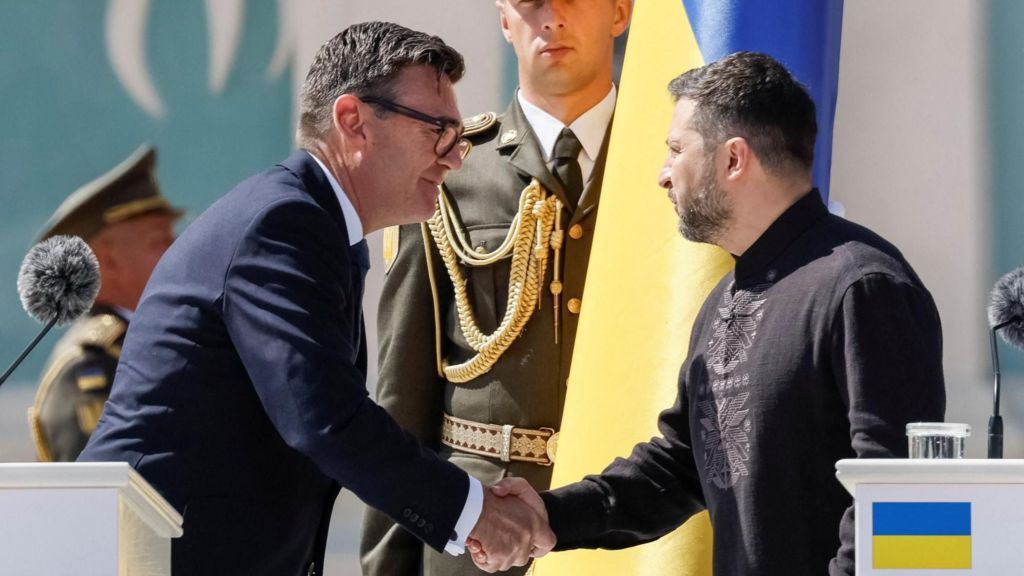
    Less than three weeks after taking office following a landslide electoral victory over long-time incumbent Viktor Orbán, Hungary’s new prime minister Péter Magyar has secured a landmark agreement with the European Union that will release €16.4 billion in previously frozen bloc funding, contingent on Budapest delivering a series of long-delayed governance and anti-corruption reforms.

    European Commission President Ursula von der Leyen announced the deal after meeting with Magyar, framing the agreement as a tangible vote of confidence in Hungary’s new political direction. She praised the incoming administration for sending clear, strong signals of change to the European community, noting that a perceptible “wind of change” is already sweeping across the Central European nation after years of strained relations between Brussels and Orbán’s nationalist Fidesz government.

    The full €16.4 billion package splits into two core tranches: €10 billion from the EU’s Covid-19 economic recovery fund, which Magyar’s administration had raced to unlock before an approaching August deadline, and an additional €6.4 billion from EU cohesion funds earmarked for improving Hungary’s economic and social infrastructure. The funding had been frozen by Brussels for years over widespread allegations of democratic backsliding and systemic corruption during Orbán’s 12-year tenure. Unlocking these funds was the central campaign pledge of Magyar’s relatively new Tisza Party in last month’s parliamentary election, which the party won with a two-thirds legislative supermajority.

    Von der Leyen emphasized that the agreement came after Magyar’s government rebuilt fractured trust between Budapest and Brussels, adding that the EU would not cut corners on holding the new administration accountable for meeting its reform commitments. She highlighted concrete early steps already taken by Magyar’s team that demonstrate a clear break from Orbán-era policies: Hungary has now joined the European Public Prosecutor’s Office, revised controversial public procurement legislation, and opened a review of the so-called public interest trusts that Orbán’s government used to transfer public institutions including hospitals and universities to the control of loyalist allies.

    “We can already see strong signals that Hungary is turning the page,” von der Leyen said, confirming that Hungarian university students will also regain full access to the EU’s Erasmus student exchange program. The program had been suspended for Hungarian institutions in 2022 after Orbán’s government brought more than 20 universities under the control of the politically aligned public interest trusts.

    Magyar framed the agreement as a “historic breakthrough” for Hungary, noting that the total funding equals 13% of the country’s entire annual state budget. Just two days before the announcement, he acknowledged, there was no guarantee a final deal could be reached, with negotiations only launching a few weeks prior to the final agreement.

    The prime minister outlined that the funding will be directed to core public sectors: €1.5 billion will go toward upgrading Hungary’s national electricity grid with a focus on expanding solar and wind energy capacity, while €2 billion will be allocated to purchasing new intercity passenger trains. The remainder will support improvements to healthcare, education, and transport infrastructure across the country.

    In a sharp rebuke of his predecessor, Magyar accused Orbán of lying to the Hungarian public for years about the root cause of the frozen funding. “The real reason was that corruption was at an incredible rate in Hungary,” he said, adding that his administration had long proven that restoring EU funding only required committing to targeted anti-corruption rules and measures to end systemic cronyism. “These steps and just a few weeks were enough to conclude a political agreement about these incredibly important funds,” he added.

    The deal comes as Orbán’s political future hangs in the balance. The former prime minister stepped down from his parliamentary seat last month and has announced plans to rebuild Fidesz ahead of a party congress in June that will decide whether he retains his position as party chairman. However, his path to a return to the premiership appears effectively blocked: last week, Tisza, leveraging its two-thirds legislative majority, tabled a constitutional amendment that would cap a prime minister’s total tenure at eight years, a rule that would bar Orbán from holding the office again even if his party returns to power.

  • Irish village without water during hottest week of year

    Irish village without water during hottest week of year

    A small village in the Republic of Ireland has been thrown into chaos by a complete water outage that lasted multiple days, arriving right as the region endured its hottest May temperatures ever recorded.

    Ballivor, a rural community in County Meath, lost access to running water at the start of the week, as the entire island of Ireland hit an all-time high temperature for the month of May. The unplanned outage hit particularly hard amid the soaring heat, leaving local residents without basic access to water for drinking, hygiene and household use.

    Local Aontú councillor Dave Boyne told reporters that the outage first began on Sunday, and the disruption was severe enough to force the village’s local school to shut its doors entirely. Calling the situation “mayhem” for local residents, Boyne noted that the crisis exposed long-standing systemic problems with the area’s water infrastructure. “People can’t flush the toilet, take a shower, it’s like living in a third world country,” he said, describing the widespread disruption to daily life.

    In response to the crisis, members of Boyne’s political party conducted door-to-door deliveries of bottled water, prioritizing vulnerable residents who face barriers leaving their homes to access alternative water supplies. As of mid-week, water service has been partially restored to parts of the village after emergency water tankers were brought in from nearby towns to replenish local supplies.

    Independent councillor Noel French confirmed that service has now been fully restored following the emergency intervention, but emphasized that the incident makes clear the local community is owed a reliable, adequate water infrastructure.

    Irish national water utility Uisce Éireann has acknowledged the issue and announced planned infrastructure upgrades to address the root of the problem. Scheduled for June, the works will include a major upgrade to Ballivor’s local water storage capacity, which is expected to reduce the risk of similar outages during periods of high demand. Per Ireland’s national public broadcaster RTÉ, a Uisce Éireann spokesperson stated the utility prioritizes and actively responds to all reports of water service interruptions from residents.

  • France asks prosecutors to investigate Israel’s treatment of Gaza flotilla activists

    France asks prosecutors to investigate Israel’s treatment of Gaza flotilla activists

    PARIS – In a sharp escalation of diplomatic tension between Paris and Jerusalem over the treatment of Gaza-bound activists, the French government announced Friday it has formally referred the case of alleged violent abuse of French nationals to national prosecutors, clearing the way for potential criminal proceedings against Israeli actors connected to the incident.

    The move comes two weeks after France enacted an indefinite entry ban on Itamar Ben-Gvir, Israel’s far-right national security minister, labeling his public taunting of detained flotilla activists as “unspeakable” and unacceptable. The confrontation traces back to this month’s interception of the Global Sumud Flotilla, a 50-vessel humanitarian convoy attempting to break Israel’s long-standing naval blockade of the Gaza Strip. Israeli forces intercepted the flotilla in international waters roughly 250 miles off Israel’s coast, detained hundreds of activists, and later deported most of the group to Turkey.

    Multiple activists from the convoy have leveled serious allegations against Israeli forces and officials, claiming they endured beatings, taser attacks, intimidation by attack dogs, and degrading treatment while in Israeli custody. Israel has repeatedly denied all claims of mistreatment. The situation sparked global public outrage after Ben-Gvir published a video of himself verbally harassing the detained activists, a step that drew immediate condemnation from the French government.

    In an interview with public radio outlet France Inter on Friday, French Foreign Minister Jean-Noël Barrot confirmed the formal referral to prosecutors, saying the decision followed a detailed report from French diplomatic staff based in Turkey. The report documented what Barrot described as severe abuses against French citizens: sexual violence, prolonged exposure to freezing temperatures, physical assault, and ongoing public humiliation. “All acts that could constitute criminal offenses,” Barrot noted.

    “I decided yesterday to refer the matter to the public prosecutor,” he said. “This case is now in the hands of the justice system.” Under French criminal procedure, prosecutors will first review the evidence presented to determine whether there is sufficient grounds to pursue formal criminal charges and move forward with an investigation.

    In a May 23 statement announcing the entry ban on Ben-Gvir, Barrot had already made clear France’s firm stance on the incident. “We cannot tolerate that French nationals can be threatened, intimidated or brutalized in this way — all the more so by a public official,” he said at the time. The latest decision to launch a criminal probe marks a further intensification of France’s criticism of Israel’s actions surrounding the flotilla interception.

  • Seeking to unblock EU funds, Hungary’s Magyar meets with EU leadership in Brussels

    Seeking to unblock EU funds, Hungary’s Magyar meets with EU leadership in Brussels

    BRUSSELS — In a landmark meeting that signals a sharp shift in Hungary’s relationship with the European Union, newly inaugurated Hungarian Prime Minister Péter Magyar will sit down Friday for his first face-to-face talks with European Commission President Ursula von der Leyen, with the core goal of unlocking more than €10 billion in bloc funding frozen for years over democratic erosion concerns.

    Magyar’s unexpected rise to power in April’s national election upended 16 years of nationalist rule under former Prime Minister Viktor Orbán, a leader who spent years openly clashing with Brussels’ top officials, regularly deriding von der Leyen and other EU leaders while systematically weakening Hungary’s domestic institutional checks and balances. Orbán’s tenure, marked by growing alarms over rising corruption and the collapse of judicial independence, led the European Commission to freeze billions in allocated Hungarian funding back in 2022. A year of incremental reforms under the previous administration eventually led EU officials to confirm last year that roughly €10.2 billion ($12.1 billion) could be released once outstanding commitments are met, a decision that gained new urgency after Magyar’s election win.

    Magyar’s center-right Tisza Party secured a parliamentary supermajority in the April vote, clearing the way for the new government to push through sweeping, rapid overhauls of Hungarian policy. Both EU leadership in Brussels and the new Budapest administration have made unlocking the frozen funds a top policy priority, as the cash is seen as a critical lifeline to shore up Hungary’s stagnant, underperforming economy. The total frozen allocation breaks down into €10 billion in COVID-19 economic recovery funding and an additional €6.3 billion in EU cohesion funds, which are targeted at lifting lower-income regional economies across the bloc. Negotiating teams from both sides have prioritized unlocking the COVID recovery funds first, as the program is set to expire at the end of August, leaving a narrow window to finalize approval before the funds are permanently lost.

    Magyar has been clear about the changes his administration is implementing to meet EU requirements: his government has moved forward to restore judicial independence, reinstate academic and media freedoms, and launch a sweeping anti-corruption campaign to address the longstanding concerns that led to the funding freeze. The prime minister has struck an uncharacteristically optimistic tone ahead of Friday’s talks, projecting confidence that the two sides will reach a final political agreement on releasing the funds. In a social media post published this week, Magyar confirmed the upcoming meeting, writing that the pair would finalize a political deal on releasing hundreds of billions of Hungarian forints in allocated funding that rightfully belongs to the country.

    The meeting caps a months-long period of dramatic political change in Hungary, after a campaign that saw Magyar center his platform on repairing Hungary’s fractured relationship with the European Union to unlock critical economic support. For Brussels, a successful agreement would mark a major win for the bloc’s efforts to defend its rule of law standards across member states, while for Hungary, the released funds would deliver a much-needed boost to a struggling economy.

  • Italy U21 forward Cristian Volpato switching nationality to Australia ahead of World Cup

    Italy U21 forward Cristian Volpato switching nationality to Australia ahead of World Cup

    Four years after rejecting an Australian national team call-up ahead of the 2022 Qatar World Cup, 22-year-old Italian club-based forward Cristian Volpato has finalized a nationality switch to represent Australia’s Socceroos on the global stage, football authorities confirmed this week.

    Born in Sydney, Volpato currently plies his trade for Italy’s Serie A side Sassuolo. Under FIFA’s international eligibility regulations, the switch is fully permitted: Volpato has never featured in a competitive senior international match for Italy’s senior national team, clearing the path for his change of representation. Football Australia announced Friday that the young attacker has already been added to the Socceroos’ pre-tournament training camp in Los Angeles, where the squad is putting the finishing touches to preparations ahead of head coach naming the final World Cup roster by Monday.

    A critical bureaucratic hurdle was cleared this week when Football Australia confirmed it had received an official release letter from the Italian Football Federation, a required step for FIFA to formally approve the eligibility change. This reverses a decision Volpato made back in 2022, when he turned down a Socceroos call-up for the Qatar tournament while playing at Rome’s AS Roma under legendary manager José Mourinho.

    Volpato’s addition comes as Italy’s senior national side once again missed out on World Cup qualification, marking the third consecutive tournament that the four-time world champions have failed to book a spot in the finals. For Australia, Volpato brings young attacking talent to a side that kicks off its 2026 FIFA World Cup Group D campaign on June 13 against Turkey in Vancouver. Six days after the opening match, the Socceroos will face the United States in Seattle, before wrapping up group stage play against Paraguay on June 25 at the home stadium of the NFL’s San Francisco 49ers. In this year’s expanded 48-team World Cup format, the top two teams from each group automatically advance to the round of 32, with the best third-place finishers also claiming spots in the knockout round.

  • When Sue Tilley met Lucian Freud, it changed her life. Now a painting of her could fetch $47 million

    When Sue Tilley met Lucian Freud, it changed her life. Now a painting of her could fetch $47 million

    In a quiet unemployment office in 1990s London, a chance encounter between civil servant Sue Tilley and legendary portrait painter Lucian Freud reshaped the course of both art history and Tilley’s life. This June, one of the most celebrated works born from that collaboration is set to hit the auction block, carrying a staggering pre-sale valuation that could cement its place among the most valuable modern art pieces ever sold.

    Titled *Sleeping by the Lion Carpet*, the 1996 work is the final of four large-scale reclining portraits Freud painted of Tilley. Sotheby’s will offer the 2.3-meter-tall nude piece at auction on June 24, with experts projecting it will sell for between £25 million and £35 million (equal to $33 million to $47 million). For 69-year-old Tilley, who never profited from the multi-million-dollar auction sales of the other portraits Freud made of her, the moment is not about regret—it is about the quiet thrill of earning an unplanned place in art history.

    Grandson of pioneering psychoanalyst Sigmund Freud, Lucian Freud built his legacy as the 20th century’s most acclaimed British portrait painter, celebrated for his thick, textured application of oil paint that captured unflinching, yet warm, depictions of his subjects’ textured skin tones. Over a decades-long career, he painted everyone from Queen Elizabeth II to close friends, family, and fellow creatives, favoring intimate, revealing portraits of people in his personal circle. His reputation has only grown in the years following his 2011 death at age 88, with his works consistently breaking auction records. In 2008, an earlier Freud portrait of Tilley, *Benefits Supervisor Sleeping*, sold for $33.6 million—a then-record price for a work by a living artist. A second Tilley portrait, *Benefits Supervisor Resting*, fetched $56.2 million at auction in 2015, and another of Freud’s works sold for $86 million in 2022.

    Tilley first crossed paths with Freud through her friend, the late Australian performance artist Leigh Bowery, who already modeled regularly for the painter. She recalled the casual rhythm of the sitting process in Freud’s cluttered London studio: long sessions stretched over months, punctuated by endless cups of tea, lively chitchat about the artist’s wild bohemian youth, and leisurely midday lunches. Even Freud’s unorthodox habit of stirring drinks with a used paintbrush, which left flecks of oil on Tilley’s clothes and skin, became a beloved part of the experience.

    Of the four portraits, *Sleeping by the Lion Carpet* holds a special place for Tilley: unlike the other works that required her to lie flat for hours (a position that grew increasingly painful over time), this piece saw her seated upright in a chair, making for a far more comfortable sitting experience. The unapologetically raw depiction of her body has never troubled her, either. “I’m not really vain,” Tilley shared during an interview at Sotheby’s showroom, standing before the towering canvas. “Sometimes I get out of bed in the morning, and I look at my legs and go, ‘Oh, they look just like that painting.’”

    Today, the portrait is part of the collection of British billionaire Joe Lewis, majority owner of Premier League club Tottenham Hotspur, and it is one of dozens of high-value works in Lewis’ collection going up for sale. The entire auction of Lewis’ collection, which also includes iconic pieces by Henri Matisse, Gustav Klimt, and Egon Schiele, is valued at more than £150 million ($201 million). Oliver Barker, chairman of Sotheby’s Europe, calls *Sleeping by the Lion Carpet* Freud’s magnum opus, noting the artist himself viewed the work as the peak of his creative achievement. “The market knows, and it’s very savvy, it wants to go for the best of the best — and this is it,” Barker said.

    While Tilley never received a share of the millions these portraits have generated at auction, and Freud only gifted her a small set of etchings (which she sold to fund a holiday), she holds no resentment. Now retired and living on England’s south coast, she says the greatest reward is the permanent place she has earned in art history. As a young woman, she spent hours poring over art books, fascinated by the interconnected bohemian circles of pre-Raphaelites and Impressionists. Only recently has she realized she now belongs to that same world. “That’s thrilling for me that I’ve achieved my ambition without really knowing it,” she said.

  • With a stalemate in Ukraine and discontent at home, Putin seems ready to escalate his war

    With a stalemate in Ukraine and discontent at home, Putin seems ready to escalate his war

    After nearly five years of conflict in Ukraine, Russian President Vladimir Putin is plotting a major narrative shift to reverse mounting domestic pressures and a grinding battlefield stalemate that has stalled Moscow’s military advances across the front line.

    Multiple independent analysts and on-the-ground developments indicate Putin is preparing to sharply ramp up large-scale aerial assaults on Ukraine’s capital Kyiv, a strategic gambit designed to shore up slipping domestic approval ratings and convince a war-weary Russian public that Moscow is on track to victory. Recent official warnings from the Kremlin of “consistent and systematic” missile strikes against Kyiv, paired with an extraordinary demand for foreign embassies to evacuate their diplomatic staff from the capital, confirm the Russian leader’s willingness to escalate despite massive operational costs and certain widespread international backlash.

    This hardening posture has been underscored by large-scale nuclear force drills held by Russia earlier this month, as well as a string of increasingly belligerent statements warning European allies of Kyiv that they face direct retaliation for what the Kremlin frames as their direct involvement in Ukrainian cross-border drone attacks.

    The current military landscape paints a stark picture of Moscow’s stalled ambitions. Following limited territorial gains secured by Russian forces in 2023, advances along the roughly 1,000-kilometer front line have ground to a near-complete halt. In contrast, Ukraine’s armed forces have mounted increasingly effective counterstrikes, reclaimed swathes of occupied territory, and shifted the character of the conflict in their favor, according to a recent analysis from the Washington-based Institute for the Study of War. The think tank noted that Russian offensive momentum has fully stagnated, while Ukrainian forces have adopted innovative tactics and new operational frameworks to break out of the costly positional warfare that has defined much of the past two years of fighting.

    This battlefield gridlock has directly undermined Putin’s core stated military goal: the full capture of Ukraine’s eastern Donetsk region, which remains partially under Kyiv’s control. Ukrainian officials have flatly rejected Moscow’s demand that Kyiv withdraw from all occupied Donbas territory as a precondition for any ceasefire negotiation.

    Parallel to its ground advances, Ukraine has dramatically expanded the scope and scale of its long-range strikes deep inside Russian territory, targeting key energy infrastructure and arms manufacturing facilities to inflict mounting economic and military damage. Just weeks ago, Putin was forced to scale back Moscow’s annual May 9 Victory Day parade—one of the Kremlin’s most high-profile domestic patriotic events—over credible fears of a Ukrainian drone attack. Days after the truncated parade, a large-scale drone assault on Moscow’s outer suburbs killed three people, proving that even Russia’s heavily defended capital is not immune to Ukrainian strikes. The attack shattered the Kremlin’s long-running domestic narrative that the war remains a distant conflict that does not disrupt daily life for ordinary Russians.

    Ukrainian President Volodymyr Zelenskyy emphasized that these deep strikes are “significantly changing the situation — and, more broadly, the world’s perception of Russia’s war.” In a direct acknowledgement of the growing threat from Ukrainian deep attacks, Russian lawmakers recently approved new legislation requiring Russian commercial banks to cover the full cost of installing drone-jamming equipment on their own properties, rather than shifting that expense to the Russian military.

    Thomas Withington, a senior analyst at London’s Royal United Services Institute, warned that “from Russia’s perspective, these attacks are just going to get worse.” He added that Ukraine’s increasingly bold drone operations are “exacting not only a political but an economic cost in Russia.”

    Beyond the battlefield, the prolonged conflict has taken a severe toll on Russia’s domestic economy and public morale. The short-term economic boost from massive wartime military spending has faded, leaving Russia with stagnating overall growth. To contain a growing budget deficit, the Kremlin has been forced to raise domestic taxes and increase government borrowing. While windfall oil revenues from the ongoing Iran war have temporarily eased fiscal pressures, structural economic challenges continue to build.

    Nigel Gould-Davies, a Russia expert at the London-based International Institute for Strategic Studies, explained in a recent analysis that “war-fueled high prices of capital, labor and goods, as well as rising taxes, have begun to depress the civilian sectors,” resulting in “a dual economy of overheated military output and civilian stagnation.”

    Though Russia has relied on volunteer enlistment driven by comparatively high combat wages to sustain its force levels, Gould-Davies noted that emerging data shows this incentive model is losing effectiveness, and Russia is now losing more troops than it is able to recruit to front line units. To maintain current force levels, he argued the Kremlin will eventually be forced to implement a new round of forced mobilization of both human and material resources, a step that will require the government to “curtail the last remaining post-Soviet market freedoms, labor freedom, and freedom of movement.”

    Signs of growing domestic discontent are already emerging, even among circles previously loyal to the Kremlin. A number of pro-Kremlin social media influencers have begun openly criticizing government wartime policies, while recent moves to restrict mobile internet access and block widely used civilian messaging apps have disrupted daily routines for millions of Russians, sparking widespread public grumbling. Natalya Kasperskaya, one of Russia’s most prominent tech entrepreneurs and a longstanding Kremlin supporter, issued a rare public rebuke of internet restrictions and VPN blocking, warning that the policies are inflicting catastrophic damage on Russia’s domestic technology sector.

    Tatyana Stanovaya, a leading independent Russia analyst and founder of the Kremlin-focused R.Politik newsletter, observed that the combination of spreading Ukrainian drone strikes, disruptive internet restrictions, and rising taxes has gradually eroded Putin’s domestic political standing. While she noted Putin faces no immediate threat to his hold on power, “the gradual fading of Putin’s credibility is real.”

    Early spring opinion polling in Russia, including one survey conducted by a state-run pollster, recorded a clear dip in Putin’s approval ratings. While the state poll recorded a small uptick in ratings in May after switching its methodology to conduct face-to-face interviews, many independent observers believe official numbers are inflated amid a widespread crackdown on all forms of anti-government dissent.

    Alexander Baunov, a senior fellow at the Carnegie Russia Eurasia Center, wrote in a recent commentary that “Putin is losing his magic. Power remains undivided in his hands, but its spell is fading. Even loyalists complain about the mounting restrictions and repression, and once-upbeat businesspeople are now despondent.”

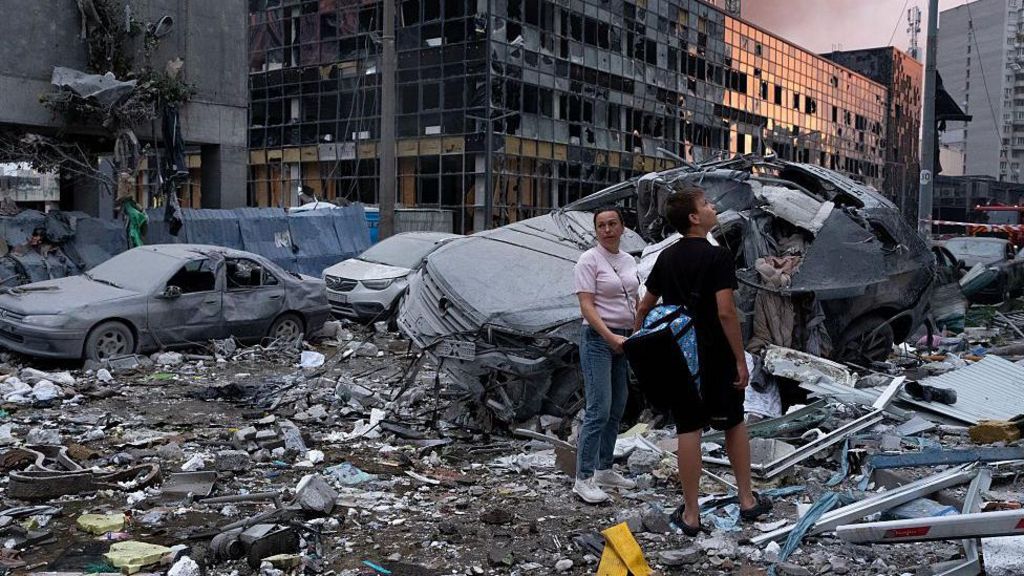
    The current round of Russian escalation follows a May 22 Ukrainian drone attack on a college dormitory in Russian-occupied eastern Ukraine, which Moscow claims killed 21 people. In retaliation, Putin ordered a massive missile barrage against Kyiv and its surrounding region. The Sunday strike, which marked the first combat use of Russia’s new hypersonic Oreshnik missile, killed two civilians, injured dozens more, and destroyed or damaged dozens of residential and commercial buildings.

    The day after the attack, the Russian Foreign Ministry announced that Moscow would launch “consistent and systematic” strikes on Kyiv targeting Ukrainian drone manufacturing facilities and what it called “decision-making centers.” It repeated its demand that all foreign diplomats evacuate the capital, a demand that has been uniformly rejected by Ukraine’s Western allies.

    Russian Foreign Minister Sergey Lavrov held a call with U.S. Secretary of State Marco Rubio to warn of the coming escalation and push for U.S. diplomatic evacuation. “The danger in all of these wars as they continue and then they go on is that they always have the threat of escalation, of spreading into something new,” Rubio told reporters after the call.

    The ongoing Iran war has paused U.S. diplomatic mediation efforts in Ukraine and drained American stockpiles of air defense missiles, delaying delivery of the U.S.-made Patriot air defense systems that Ukraine desperately needs to fend off Russian aerial assaults. Moscow-based independent military analyst Sergei Poletaev explained that Russia views this air defense gap in Kyiv as a unique window of opportunity. “Kyiv’s air defenses have been exhausted enough to make a massive attack efficient,” he noted in a recent analysis.

    Alongside the planned blitz on Kyiv, Russia has issued a wave of new threats targeting Ukraine’s European NATO allies. The Russian Defense Ministry published a public list of European facilities it claims are involved in producing drones and drone components for Ukraine, while Russia’s Foreign Intelligence Service warned the Baltic states that their NATO membership will not shield them from Russian retaliation if they allow Ukraine to launch cross-border strikes from their territory. All targeted allies have outright rejected Moscow’s claims.

    Dmitry Polyansky, Russia’s permanent envoy to the Organization for Security and Cooperation in Europe, warned in a recent statement that “we are actually very, very close to direct military confrontation” between Russia and the Western alliance.