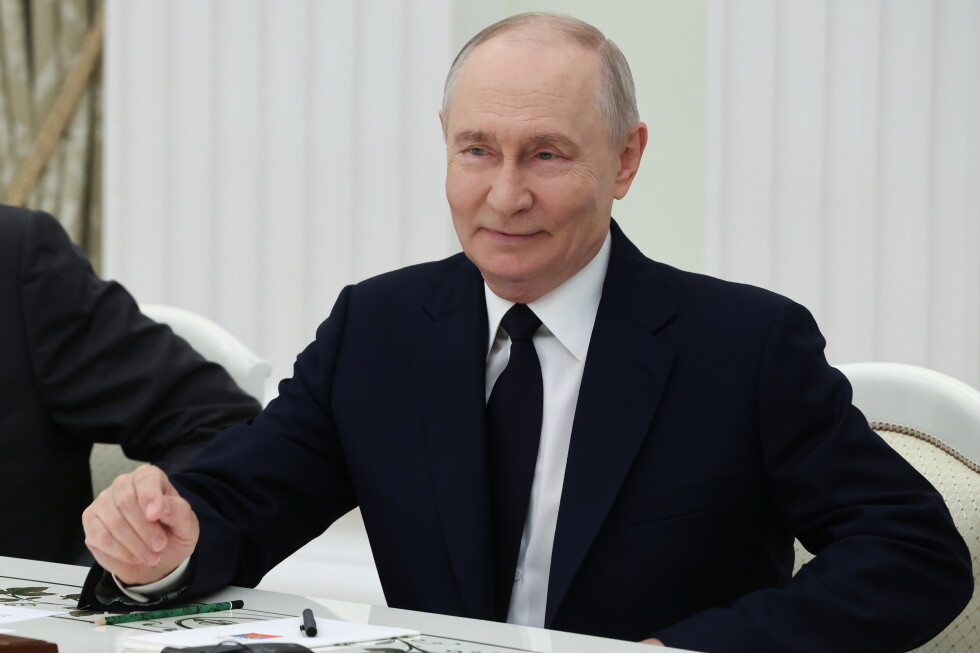
For many Romanians, the full-scale Russian invasion of Ukraine has stopped being a distant conflict unfolding across a border. It has arrived on their doorsteps, leaving a gaping hole in an apartment building and a population gripped by anxiety over future attacks. The incident in the northeastern Romanian city of Galati, which occurred in the early hours of Friday while most residents were asleep, marks the most severe incursion of the war into NATO and European Union member Romania since Russia launched its full-scale invasion in 2022. On Saturday, reporters climbed 11 stories to the building’s damaged roof, where a jagged, two-meter wide concrete puncture from the downed drone was covered with a temporary plastic tarp. The blast sparked an immediate fire that left the apartment directly below the roof heavily damaged, and a mother and her teenage son were hospitalized with bruising and minor burns. Disaster experts and local residents have emphasized that the outcome could have been far deadlier: the drone struck the building’s concrete lift shaft, which absorbed the majority of the explosion’s force. If the strike had hit a residential side of the structure, an entire floor or more could have been destroyed. Costel Patrichi, the building’s resident manager, described the chaotic morning of the incident. Just before 2 a.m., his phone buzzed with an official air threat alert warning that an unidentified drone was moving toward the city from the nearby Ukrainian border, located only a few dozen miles away. Seconds after the alert arrived, a deafening explosion shook the entire building. Like many Galati residents, Patrichi expressed deep frustration at the failure of Romanian air defenses to intercept the incoming drone. “They told us we are protected by NATO, not to worry. But look where we are now!” he told reporters. He added that the strike has shattered any sense of safety for local residents: “Now I’m afraid. If I go back to my flat tonight, I will sleep with fear. Because this could happen again.” This pervasive sense of vulnerability echoes the constant fear that Ukrainian civilians face nightly, as Russian attack drones regularly target residential infrastructure across the country, killing civilians and destroying homes. But for Romania, a NATO member, the strike represents a dangerous new escalation of the war. Moscow has repeatedly denied any connection to the drone, with Russian President Vladimir Putin claiming there is no evidence linking the weapon to Russian forces. But Romanian officials have pushed back firmly against these denials, confirming the drone is a Russian-produced Geran-2, also widely known as a Shahed. Romanian President Klaus Iohannis told the BBC that the identification is unambiguous: this was a Russian drone, matching the design of another unexploded Russian drone that crashed in Romanian territory just four to five weeks prior. The drones in the region are part of a sustained Russian campaign targeting key Ukrainian Danube River ports, which serve as a critical export hub for Ukrainian grain. On the day of the Galati strike, Romanian defense officials tracked a swarm of 43 Russian drones moving west along the border. According to Iohannis, one of the drones was damaged by Ukrainian air defenses, veered off course, and crossed into Romanian territory before striking the apartment building. NATO allies have formally condemned the incident, calling Russia’s conduct in the war reckless and blaming Moscow’s unprovoked aggression for the incursion. But the international response has been marked by deliberate caution, as leaders work to avoid a direct military confrontation between nuclear-armed Russia and the 31-member alliance. Bucharest government officials confirmed that they briefly considered invoking Article 4 of the NATO treaty, which would trigger an emergency collective security consultation, but rejected the move to prevent widespread public panic. The more drastic step of invoking Article 5 – NATO’s collective mutual defense clause, which defines an attack on one member as an attack on all – has not been put forward for discussion, as no alliance member has accused Russia of launching a deliberate attack on Romanian territory. In response to the strike, Romania has ordered the closure of a Russian consulate in the Black Sea port city of Constanta as a formal diplomatic warning. Iohannis noted that the next step in Romania’s planned diplomatic escalation would be the expulsion of Russia’s ambassador to Bucharest, but no such move has been ordered as of yet. Bucharest has also called on NATO to accelerate the delivery of promised additional air defense equipment to Romania’s eastern border region, and the Romanian government has moved forward with plans to acquire its own fleet of attack drones, including future joint development projects with Ukrainian defense firms. The European Union has also accelerated work on a new round of economic sanctions targeting Moscow. For residents of Galati, diplomatic maneuvers and sanctions have done little to ease the constant sense of danger. Adrian, a local resident who surveyed damage to his family’s apartment in the struck building, called the incident “insane”, noting that the strike occurred in a dense residential neighborhood in the middle of the city. “No-one feels safe now,” he said. Adrian placed full blame for the incident on Russia and Vladimir Putin, adding that existing international sanctions have done little to deter Russian aggression. “But I don’t think the sanctions are enough,” he said. “Because they could take everything from Russia, and they would still attack.” As the war enters its fourth year, the risk of the conflict spilling beyond Ukraine’s borders into neighboring NATO territory is higher than it has ever been, and ordinary Romanians on the front lines of the border region are left living with the constant possibility of another strike.
标签: Europe
欧洲
-

‘I will sleep with fear’: Romanians shaken after block of flats hit by drone
On Friday, a Russian drone crashed into a residential apartment block in Romania, triggering a destructive blaze and leaving two people with injuries, according to official statements from Romanian authorities. The incident has sent waves of anxiety and unease across local communities, with many residents saying they now face an uncertain future marred by constant fear of further attacks. One local resident summed up the widespread mood of trepidation, saying, “I will sleep with fear” going forward. The strike comes amid heightened regional tensions following months of cross-border drone and missile incidents linked to the ongoing conflict in Ukraine, which shares a long border with NATO member Romania. Emergency services were quick to respond, extinguishing the fire and launching an investigation into the exact origins of the drone and how it crossed into Romanian territory. Romanian officials have yet to release a full public account of the strike’s trajectory, but the incident has already sparked renewed discussion among NATO allies about reinforcing eastern flank security to deter further accidental or intentional incursions into alliance territory. For residents of the affected building and surrounding neighborhoods, the immediate impact has been deeply personal, with many displaced from their homes and left grappling with property damage and emotional trauma.
-

Italy bans Kanye West and Travis Scott concerts over security concerns
In a decision that marks the latest in a string of performance cancellations for controversial rapper Kanye West (now legally known as Ye), Italian authorities have blocked two scheduled July concerts headlined by West and fellow rapper Travis Scott in the northern city of Reggio Emilia, citing urgent public order and safety concerns.
The announcement came Friday from Prefect Salvatore Angieri, following a formal request from Reggio Emilia’s local Jewish community to scrap West’s planned appearance. Community leader Nicoletta Uzzielli had pushed local officials to scrap the event and replace it with a performance that would center music as a unifying, inclusive force for all people.
West has sparked global outrage over the past three years for a repeated pattern of antisemitic, racist, and openly pro-Nazi rhetoric, a controversy that already led to the UK government barring him from entering the country earlier this year. The two cancelled Reggio Emilia shows, scheduled for July 17 and 18 at the city’s RFC Arena, were set to feature West and Scott alongside a roster of major A-list acts including The Chainsmokers, Rita Ora, and Swedish House Mafia.
In an official statement, the regional prefecture outlined the multiple factors that guided its final call. Among the top considerations were the wave of concert cancellations for West already implemented across other nations, and the very real threat of large-scale counter-demonstrations targeting the event. Officials also noted that the close scheduling of the two back-to-back events, combined with projections of massive crowds gathering at the venue, created additional unmanageable public safety risks.
Travis Scott, the co-headliner of the events, has also faced ongoing intense scrutiny over his role in the 2021 Astroworld Festival tragedy in Houston, Texas, where a crowd surge during Scott’s headline set left 10 attendees dead between the ages of 9 and 27, and injured thousands more when panic spread through the over-capacity crowd pressed against the stage.
The Italian cancellation is just the latest domino to fall in a series of scrapped shows for West this year. Last month, London’s high-profile Wireless Festival was called off entirely after West, the announced headline act, was denied entry to the UK amid widespread public backlash over his inflammatory remarks. West’s pattern of problematic comments dates back to 2022, when he posted on social media that he would go “death con 3 On Jewish people”, and in May 2023 he released a track titled *Heil Hitler* and sold merchandise emblazoned with swastikas.
Following the UK entry ban, cancellations quickly spread across mainland Europe. In mid-April, West announced the Marseille stop on his European tour would be postponed “until further notice”, with French media reporting at the time that Interior Minister Laurent Nuñez was actively moving to ban the scheduled June 11 show. That same month, a planned June 19 concert at Poland’s Silesian Stadium in Chorzów was also cancelled, with venue officials citing unspecified “formal and legal reasons”.
West has made recent attempts to rebuild his standing in mainstream entertainment after stepping back from public view. In January, he published a lengthy apology in *The Wall Street Journal*, claiming “I am not a Nazi or an antisemite” and asserting “I love Jewish people”. He also attributed his past harmful comments to his bipolar disorder diagnosis, writing that he had “lost touch with reality” during the period when the remarks were made.
-

Tens of thousands march in support of Turkey’s deposed opposition leader
On a tense Saturday in Turkey’s capital Ankara, tens of thousands of supporters of the recently deposed leader of the country’s main opposition Republican People’s Party (CHP) took to the streets to protest a court ruling that removed him from office, escalating a political standoff that has already shaken the nation’s democratic landscape.
Ozgur Ozel, 51, who was formally elected to lead the CHP during a 2023 party congress, was ousted from his position via court order on May 21. The appellate ruling nullified the results of the 2023 congress vote, citing unproven allegations of procedural irregularities, and reinstalled Ozel’s 77-year-old predecessor Kemal Kilicdaroglu, who held the CHP leadership for 13 years of largely muted opposition to long-serving President Recep Tayyip Erdogan.
The demonstration began with a rally at Guven Park, located in central Ankara, where Ozel addressed the assembled crowd to condemn his ousting. He framed the court decision as nothing less than a deliberate power grab by the ruling government. “They are attempting to replace the CHP’s elected chairman and appoint a hand-picked trustee,” Ozel told his cheering supporters. “Today is the day to restart our march to power. I wish this were an internal party matter. This is not an internal matter for the CHP. This is a matter between Recep Tayyip Erdogan and the nation.”
Following the rally, Ozel led the crowd in an unplanned march to the mausoleum of Mustafa Kemal Ataturk, the founder of modern Turkey, a symbolic site widely tied to the nation’s secular and democratic founding principles.
Many political observers and opposition supporters widely view the court ruling as a politically motivated maneuver designed to weaken the CHP ahead of a potential early national election. Recent polling puts the CHP neck-and-neck with Erdogan’s ruling Justice and Development Party (AKP), and while the next scheduled general election is not set to take place until 2028, widespread speculation suggests Erdogan may call for a vote earlier to capitalize on current political momentum.
Ozel, who led the CHP to major gains in the 2024 municipal elections, solidified and expanded the party’s control of critical major cities including Istanbul and Ankara that the opposition first flipped in 2019, dealing a significant public rebuke to the AKP. The party’s most high-profile rising star, Istanbul mayor Ekrem Imamoglu, is widely seen as the strongest potential challenger to Erdogan, who has held Turkey’s presidency since 2003. However, Imamoglu has remained in prison since March 2024, facing a series of criminal charges that could result in decades of prison time if he is convicted. Supporters universally dismiss the charges as a fabricated political attack designed to remove Erdogan’s most formidable rival from the electoral landscape.
The ousting of Ozel is far from an isolated incident, Ozel argues: it is the latest in a sweeping pattern of legal pressure targeting the CHP and its members across the country. To date, hundreds of elected CHP officials and party activists have been detained, with most cases centered on unproven corruption allegations targeting municipalities run by the opposition. Last Sunday, just days before the mass march, Turkish police stormed CHP headquarters in Ankara to forcibly remove Ozel and his allies from the building.
In a striking parallel development on Saturday, Kilicdaroglu held a separate, rival gathering for his own supporters at the CHP headquarters, where he used the event to accuse the prior Ozel-led party administration of widespread corruption. Kilicdaroglu’s event drew a far smaller crowd than the mass march led by Ozel.
Turkish government officials have repeatedly pushed back against allegations of political interference in the judiciary, insisting that the country’s courts operate independently and free from political pressure. However, critics warn that the cumulative series of legal actions against opposition figures has eroded public trust in the impartiality of Turkey’s judicial system, deepening political polarization in the country ahead of what is already shaping up to be a contentious election cycle.
This political upheaval comes as the Turkish opposition holds unprecedented momentum after its strong showing in 2024 municipal elections, turning the conflict over the CHP leadership into a flashpoint for the broader struggle over the future of Turkish democracy.
-

Ukraine keeps up assault on Russian oil infrastructure as Kyiv braces for more strikes
Overnight attacks carried out by Ukrainian drones have ignited large blazes at key Russian energy sites, marking the latest escalation in Kyiv’s campaign targeting Moscow’s oil infrastructure that funds its ongoing invasion, Russian regional officials confirmed Saturday.
Two separate regions across southern Russia reported drone-related fire incidents at oil storage and logistics hubs. In the Rostov region, falling debris from a downed Ukrainian drone sparked a blaze at an oil depot located in the port city of Taganrog, damaging the storage facility and a parked oil tanker. Just across the regional border in Krasnodar, local authorities recorded a second fire at another oil depot in Armavir, also caused by falling drone wreckage.
Ukrainian President Volodymyr Zelenskyy publicly acknowledged the attack in a post on social media platform X Saturday, highlighting that the Armavir facility sits more than 500 kilometers from Ukraine’s official border. “We are rightfully bringing the war back to where it came from,” Zelenskyy wrote, framing the strikes as a legitimate retaliatory measure against Russian aggression.
The coordinated attacks come as Ukraine has steadily expanded its mid- and long-range strike capacity over the course of the four-year full-scale invasion, leveraging domestically developed drone and missile systems to target Russian assets deep behind front lines. Strikes on critical oil infrastructure — a core revenue stream for Moscow that funds its military operation in Ukraine — have grown into a near-daily occurrence in recent months.
This latest wave of attacks also unfolds against a backdrop of escalating Russian strikes on Ukrainian critical infrastructure, and growing international concern over the war spilling beyond Ukraine’s borders. Just one day prior, a Russian drone launched in an attack on Ukraine strayed off course and slammed into an apartment building in eastern Romania, a NATO member state. The incident wounded two civilians, drew widespread condemnation from European capitals, and amplified fears that the conflict could draw in the entire transatlantic military alliance.
For its part, Russia has repeatedly launched large-scale barrages of long-range ballistic missiles against Ukraine’s national power grid and urban population centers in recent months. The Kremlin’s Foreign Ministry confirmed earlier this week that Moscow plans to launch new “systemic strikes” against the Ukrainian capital Kyiv, leaving local authorities and military units bracing for imminent heavy bombardment. On Thursday, Zelenskyy stated that he has repeatedly and forcefully urged the United States to deploy additional Patriot air defense systems to Ukraine, which Kyiv views as critical to intercepting Russia’s destructive ballistic missile attacks.
-

Dead humpback whale brought to shore in Denmark with autopsy set next week
For months, the journey of a wayward humpback whale held the German public in rapt attention, as the giant marine mammal repeatedly became stranded in the unfamiliar waters of the Baltic Sea, hundreds of kilometers from its natural North Atlantic habitat. On Saturday, nearly two weeks after the whale’s body was found floating in shallow coastal waters, authorities hauled the carcass onto a beach near the small Danish island of Anholt, closing out a high-profile saga that united animal lovers and dominated regional headlines.
After the humpback was first spotted off Germany’s northern coastline on March 3, local media turned the animal into an overnight celebrity, giving it two affectionate nicknames—Timmy and Hope—and running rolling live updates and push notifications tracking every shift in its condition. Rescuers launched a months-long effort to guide the lost whale back to open ocean, a campaign that drew both widespread public support and heated debate over intervention strategies. The final push came on May 2, when teams loaded the whale onto a barge and transported it toward the North Sea in a last-ditch bid to return it to its native habitat.
Twelve days later, on May 14, the whale’s dead body was discovered washed up near Anholt, located in the Kattegat Strait—the wide stretch of water separating Denmark and Sweden that links the Baltic to the North Sea. Its death brought an end to the months-long rescue effort that had captured the region’s imagination.
Danish outlet News5 broadcast a live stream of the recovery operation Saturday, showing a heavy cable connected to an on-beach truck pulling the massive carcass onto the sandy shoreline. According to the Danish Environmental Protection Agency, a full necropsy will be conducted on the remains next week to pinpoint the exact cause of the whale’s death.
To this day, researchers still do not have a definitive explanation for why the humpback strayed so far off its migration route into the Baltic Sea, a body of water that does not support the feeding or migratory patterns of this species. Some leading marine biologists have theorized the whale may have lost its way while chasing a school of herring into the region, or veered off course during its annual migration.
-

Russian spies are aggressively seeking Western technology as sanctions bite, officials say
Amid crippling international sanctions and a grinding, costly war in Ukraine, Russia’s intelligence apparatus has sharply escalated its campaign to steal cutting-edge Western technology and classified defense secrets, three senior European intelligence leaders have confirmed in exclusive comments to the Associated Press. The multi-pronged operation, which spans frontline human espionage, cyber intrusions, and elaborate front company schemes, is not only intended to prop up Moscow’s war machine but also to advance its long-term strategic edge over Western allies, officials warn.
Four straight years of sweeping Western sanctions have gutted Russia’s ability to legally import critical industrial machinery, advanced research, and high-tech components from European markets. Combined with the massive resource drain of its full-scale invasion of Ukraine, the restrictions have pushed key domestic industries to the breaking point and brought the country to the brink of a potential full-blown financial crisis. That mounting pressure has forced Russian intelligence to double down on illicit procurement, targeting a broad range of sensitive assets that directly serve the Kremlin’s war and strategic goals.
“They really know what they need, and are putting serious effort” into acquiring everything from advanced industrial machine tools and factory equipment to cutting-edge research and dual-use technology that can serve both civilian and military purposes, explained Christoffer Wedelin, deputy head of operations at Sweden’s Security Service.
In Sweden alone, Russian operatives have focused heavily on the country’s defense sector and top-secret research into its most advanced military hardware, including the Saab Gripen fighter jet. Wedelin added that Moscow is also actively seeking to obtain civilian-developed camera and laser technology that can be repurposed for integration into Russian weapons systems.
Juha Martelius, director of Finland’s Security and Intelligence Service, noted that Russia’s espionage push extends beyond immediate war needs: the Kremlin is also stealing technology to secure a long-term competitive advantage over the West for decades to come. Key high-priority sectors include space technology, quantum computing, arctic resource technology, and advanced marine technology. Martelius specified that space technology, which powers satellite imaging, military communications, and navigation, is an urgent requirement for Moscow right now, though he declined to share further details. Russia is also desperate to access Western computer technology and proprietary software updates for industrial machine tools, all of which are blocked under current sanctions, he added.
The warnings from Scandinavian and Baltic intelligence come just days after Anne Keast-Butler, director of the United Kingdom’s signals intelligence agency, publicly accused Russia of “relentlessly targeting” the UK and its European allies through technology theft, sabotage plots, and assassination attempts.
The scope of Russia’s illicit procurement network was highlighted earlier this year, when Swedish police arrested two individuals on suspicion of sanctions violations linked to a Turkish front company that had shipped dozens of industrial metalworking and metal-turning machine tools to Russia. As these networks grow more sophisticated and layered, Wedelin warned that private European companies must increase their vigilance to avoid unknowingly becoming complicit in Russia’s war supply chain. “All of the security and intelligence services in Russia are helping out on the state’s efforts to get this,” he emphasized.
Beyond traditional procurement schemes, Russian intelligence has also ramped up cyberattacks against European private firms and critical infrastructure to gather intelligence that can be exploited at a moment’s notice, Wedelin said. He pointed to a high-profile attempted cyberattack on a Swedish power plant last year as a clear example of this new, more aggressive posture. Russian-linked actors attempted to destroy the plant’s core operating systems, but the attempt failed after internal security systems detected the intrusion. The attack was partially designed to erode public and political support for Ukraine in Western Europe, Wedelin added.
Prior to that incident, Swedish intelligence had only observed Russian actors conducting reconnaissance for potential future attacks, gathering general intelligence, or engaging in activity tied to independent cybercriminals. The power plant attack marked a dramatic shift in Russia’s operational style, Wedelin argued: “They’re no longer caring as much about potential attribution after their activities, so they are taking greater risks to achieve their goals.”
Top intelligence leaders say this increasingly brazen behavior directly reflects growing internal economic panic inside the Kremlin. “Russia’s economy is not doing well at all,” said Kaupo Rosin, head of Estonia’s Foreign Intelligence Service. Current data shows that roughly one-third of Russia’s entire gross domestic product is now diverted to funding the war effort in Ukraine, Martelius confirmed. Years of sanctions and war-related disruptions have crippled long-term growth and locked in persistent, high inflation that has eroded living standards for ordinary Russians.
By the end of February 2026, Russia had already hit 3.4 trillion rubles ($47.9 billion) of its 3.7 trillion ruble ($52.1 billion) full-year budget deficit, Rosin revealed. While the recent conflict between Iran and Israel that began in late February drove global oil prices sharply higher, and limited Western concessions — including U.S. sanctions waivers for Russian oil sales and a softening of UK oil sanctions to lower global fuel costs — have given a temporary boost to Russian export revenues, the reprieve is not enough to reverse long-term decline. “It doesn’t save them,” Rosin said, warning that Moscow could face a full-blown financial crisis by the end of 2026 if Western pressure remains unchanged.
Intelligence assessments collected by Estonian intelligence show that elite Russian officials have grown far more pessimistic about the country’s trajectory over the past six months, with the official narrative of “total victory” in Ukraine having largely disappeared from private discussions. Keast-Butler, the UK intelligence chief, recently confirmed that nearly 500,000 Russian soldiers have been killed in Ukraine since the 2022 full-scale invasion — a figure that Moscow has never publicly confirmed, as Russia has kept all official combat casualty data classified since the war began.
With stalled progress on the battlefield and mounting economic troubles, many mid-ranking Russian officials are now privately questioning the purpose of the war, Rosin said, citing internal intelligence reports. Martelius added that even though some negative news about the war and economy may be sanitized before it reaches President Vladimir Putin, he believes the Russian leader has a broadly clear understanding of the severity of the challenges his country faces. Even so, Martelius warned that economic trouble should not be expected to trigger spontaneous political change in the near term: “It is very dangerous to start analyzing Russia as if it is some country like ours. It is not.”
-

AI helped a musician with Parkinson’s finish his new album when he could no longer play guitar
For years, British singer-songwriter Samuel Smith crafted original Americana music with a guitar permanently in his hands. But after a 2020 Parkinson’s disease diagnosis left him unable to play his instrument consistently due to the neurological disorder’s progressive symptoms, he turned to a surprising tool: generative artificial intelligence, to keep his creative practice alive. Now, with the release of his second full-length album *The Art of Letting Go*, Smith is opening up about how AI has unlocked new possibilities for artists living with disabilities — even as it remains one of the most divisive issues in the modern music industry.
Parkinson’s disease, which causes progressive nerve damage, commonly leads to muscle tremors, stiffness and chronic fatigue that erode fine motor control, skills critical for playing string instruments like guitar. By the time Smith began work on his 8-track album more than a year before its release, his ability to play had deteriorated significantly. Faced with the choice of abandoning songwriting entirely or adapting to his new physical limitations, he chose to adapt.
For his instrumental track *Horizon*, Smith leaned on popular AI music generation platforms Suno and Udio to translate his creative vision into shareable demos for the session musicians recording the final studio track. His process begins with humming rough melodic ideas into his smartphone, then uploading those recordings to the AI tools alongside text prompts that detail the track’s desired instrumentation, mood and musical style. He stressed that the AI-generated demos are never used in the final master of his songs; instead, they act as a communication tool to show professional players exactly what he hears in his head, when he can no longer demonstrate it on guitar. Producing a demo that matches his distinct artistic voice often takes dozens of attempts and extensive manual editing, Smith explained.
Unlike the narrative of AI replacing human creators that dominates much industry debate, Smith frames the technology as an enabling tool, not a replacement. “AI is not replacing anything for me. It’s unlocking, it’s enabling. It’s allowing me to keep writing. I upload my lyrics; AI doesn’t create my lyrics. I upload my music; AI does not create my music,” he said. “It then brings it to life in a way that I can play to session players and say, ‘Here, that’s what I’m thinking, that is what I’m hearing.’”
The album, recorded in Nashville with a roster of award-winning roots and bluegrass musicians including 16-time Grammy winner Jerry Douglas, banjo artist Alison Brown and Grammy-nominated guitarist Julian Lage, includes one particularly poignant moment: a guitar duet between Smith and Lage on *Horizon*. After months of being unable to play, Smith had a 10-minute window of reduced symptoms in the studio that let him record his part, a moment he calls the “last breath of my guitar playing.” Working alongside musicians he has admired for decades, he said, was an extraordinary, career-defining experience. Smith released his debut album *In the Springtime* in 2023, in part to create a tangible musical legacy for his two young sons that would preserve his creative voice even as his disease progresses.
Generative AI has split the global music industry in recent years. Major record labels including Sony Music Entertainment, Universal Music Group and Warner Records sued Suno and Udio in June 2024, arguing the platforms illegally used copyrighted recorded music to train their AI models. Since the lawsuit, Universal has reached a settlement and partnership deal with Udio, and Warner has done the same with Suno. Much of the public debate has centered on copyright disputes and artist displacement, but experts say Smith’s experience highlights a less discussed, potentially transformative use case for the technology: expanding creative access for musicians living with disabilities and chronic illness.
Ruaidhri Mannion, a composer and music technology scholar at Brunel University of London, noted that affordable digital recording tools democratized music creation over the past few decades, and AI could follow the same path by lowering barriers for creators with physical limitations. “If these tools are able to enable people to be able to participate with other creative groups and encourage more people to feel confident to be able to reach out to an ensemble or an orchestra or something, then I think that is all for the better,” Mannion said. He added a caveat, however: overreliance on AI could erase the messy, iterative process of trial, error and collaborative synergy that shapes artistic development. “What makes a lot of music-making meaningful is the collaborative element. There’s a lot of experimentation and development and failure that’s part of musical discovery,” he explained.
Critics of unregulated generative AI in music, including a group of independent artists who signed an open letter titled “Say no to Suno” earlier this year, argue that the technology erodes artist royalties and enables creative fraud when it scrapes existing copyrighted work without permission. The letter acknowledged that responsible AI use can benefit creators, but called for clearer protections for working artists. Both Suno and Udio have denied copyright infringement claims and stated they are committed to collaborating with the music industry, rather than operating against it.
Smith believes his experience makes the case for responsible, targeted AI development that benefits marginalized creators. His message to AI music platforms is clear: “if these companies want to show they’ve got a place, a role in society, then step up. Engage with health professionals, engage with music therapists, engage with society and show us what you can do.” In May 2024, Smith partnered with the Berklee Music and Health Institute for a New York event bringing together industry leaders, clinicians and researchers to explore how music and technology can support people living with neurological conditions. For Smith, continuing to create music is about more than art: it is about refusing to let Parkinson’s define his identity or the legacy he leaves for his children. “My 4-year-old is probably never going to remember me playing, and it’s heartbreaking,” he said. “But I’ve been able to pull this into something and refuse to be defined by this disease.”
-

Spain’s Sánchez digs in after eight years as PM as wave of scandals threatens survival
On June 1, Pedro Sánchez will mark eight years since he first took office as Spain’s prime minister. For a leader hitting this milestone, celebration would be the expected norm—but this year, Sánchez is not planning anniversary events. Instead, he is locked in a desperate battle to hold onto power, as his Socialist Workers’ Party (PSOE) and ruling coalition are engulfed in a cascading series of corruption investigations that have shaken the foundations of his administration.
No direct link to Sánchez has emerged in any of the ongoing probes, but the investigations have ensnared his closest political allies, senior party figures, and even his own immediate family. The latest wave of scandals began this week with the trial of David Sánchez, the prime minister’s brother and a professional musician. He stands accused of influence peddling, after allegedly securing a senior musical leadership post in the southwestern region of Badajoz without following required competitive selection processes, and failing to fulfill the core duties of the role after taking office. Even more consequentially, a Spanish judge has been probing the business dealings of Begoña Gómez, Sánchez’s wife, since 2024, and has recommended that she stand trial on charges of influence peddling and misuse of public funds. She is scheduled to attend a preliminary hearing on June 9. Sánchez has pushed back hard against the cases targeting his family, arguing they originated from unsubstantiated accusations pushed by far-right political groups.
The scandals extend far beyond the prime minister’s family circle. José Luis Rodríguez Zapatero, a former Socialist prime minister and one of Sánchez’s most prominent and respected allies, has been named in a money laundering investigation connected to a 2021 €53 million government bailout for the collapsed airline Plus Ultra. Prosecutors allege Zapatero used his political influence to secure the bailout in exchange for a private commission. Zapatero, who is set to appear in court for questioning on June 17, has repeatedly denied any illegal activity, and Sánchez has repeatedly reaffirmed his “full support” for the former leader. For the Spanish left, Zapatero’s connection to the investigation carries unique symbolic weight: during his 2004-2011 tenure, he oversaw landmark progressive reforms including the legalization of same-sex marriage, stricter gender violence laws, and the peaceful end of ETA’s four-decade separatist insurgency, earning him a reputation as a moral reference point for the Socialist movement.
“Symbolically, this is extremely significant,” explained Paco Camas, head of public opinion for the polling firm Ipsos in Spain. “This is the first former Spanish prime minister ever to face formal investigation, which makes the situation unprecedented. On top of that, Zapatero has long been a moral anchor for the entire Socialist Party.”
The scandal that has amplified pressure on Sánchez most dramatically in recent days is the probe that led to a 12-hour police raid on PSOE’s national headquarters in Madrid earlier this week. Investigators are probing allegations that senior party figures paid party member Leire Díez to orchestrate a “dirty tricks” campaign to discredit police officers, judges, and prosecutors leading ongoing corruption investigations into Socialist figures, including party third-in-command Santos Cerdán. Cerdán has been named as a suspect in this new probe, and Díez has denied all allegations against her.
The current wave of investigations traces back to 2023, when José Luis Ábalos, a former Socialist deputy party leader and transport minister, was implicated in a probe into a criminal network accused of collecting millions in kickbacks from the €50 million sale of face masks at the height of the COVID-19 pandemic. Ábalos, who has always denied wrongdoing and was expelled from PSOE, recently went on trial and is awaiting a verdict. Last year, he was also linked to a broader kickbacks-for-public-contracts scandal alongside Cerdán. The revelation hit Sánchez particularly hard, as he had publicly defended Cerdán against media allegations before investigation evidence was made public. “The Socialist Party and I were wrong to trust him,” Sánchez acknowledged at the time. Both Cerdán and Ábalos maintain their innocence.
Even traditionally pro-Socialist media has voiced harsh criticism of the accumulating scandals. Centre-left newspaper El País, which has historically been sympathetic to PSOE, warned in a recent editorial: “The growing number of cases makes clear these are not isolated incidents or the product of shadowy conspiracies. The investigations are directly linked to the core of power that has governed Spain for the past eight years.”
Spain’s centre-right opposition, led by the Popular Party (PP), has led growing calls for Sánchez’s immediate resignation and an early general election, which is not scheduled to be held until 2027. PP leader Alberto Núñez Feijóo has described the string of scandals as a “criminal carousel.”
Sánchez, who has gained a reputation across Spanish politics for his almost unmatched resilience, has repeatedly insisted he intends to serve out the full remaining term of the current parliament. His government is a minority coalition that has long struggled to maintain stable support from a fragmented bloc of regional nationalist and left-wing parliamentary partners, failing to pass a single new national budget in this legislative session. Now, key allies are showing signs that their patience is running out. The Basque Nationalist Party (PNV), one of the coalition’s supporting parties, has already suggested that waiting until 2027 to hold a new election would be “irresponsible.”
Still, even if Sánchez loses the support of some minor partners, a collapse of the government is not guaranteed. The opposition currently lacks enough parliamentary support to pass a no-confidence vote—an ironic turn of events, given that Sánchez himself seized power via a successful no-confidence vote against the PP government in 2018. Crucially, regional autonomy-focused parties like the PNV remain deeply wary of the centralizing agenda of a potential PP government, which could govern in coalition with the far-right Vox party, giving them little incentive to force early elections.
“I don’t see any incentive for the current government to call early elections, no matter how blocked the legislative process is or how badly it is damaged by these scandals,” Camas noted. “Sánchez can absolutely dig in and hold on.” Camas added that, much like after the 2023 Ábalos-Cerdán scandal, the upcoming summer parliamentary recess could give the government much-needed breathing room to regroup and rebuild political momentum when legislators return in September.
Another looming risk for Sánchez is growing internal dissent within the Socialist Party itself. Prominent internal critics including Castilla-La Mancha regional president Emiliano García-Page and former Socialist prime minister Felipe González have already called for early elections. Political observers warn that if more regional and municipal Socialist leaders come to believe the scandals will damage their electoral prospects ahead of the 2027 local elections, a broad internal rebellion could break out. But for now, that revolt has not materialized.
“Right now, we are not seeing that kind of internal revolt,” said Lluís Orriols, a political scientist at Madrid’s Carlos III University. Orriols added that Sánchez’s long-term political future will ultimately depend on how the ongoing investigations unfold. If new explosive evidence emerges, particularly evidence connecting the Socialist Party to illegal financing, it could trigger an exodus of parliamentary allies that would make pressure on Sánchez unbearable—even for a politician famous for political survival.
“This government has been in an extremely fragile position for some time,” Orriols said. “We cannot rule out the possibility that it will run out of political air very soon.”
-

Ukraine using AI drones to strike vital convoys supplying Russian troops
After years of static frontline momentum in Russia’s full-scale invasion of Ukraine, Kyiv has launched a stepped-up campaign targeting Russian military supply convoys along key routes connecting occupied territories to Russia and Crimea, leveraging cutting-edge artificial intelligence-enhanced drone technology to hit targets deeper behind enemy lines with greater precision. Multiple independent open-source and defense analysts have confirmed the growing scale and impact of Ukraine’s new “logistics lockdown” strategy.
BBC Verify has corroborated footage of at least 14 separate strikes carried out over the past week, targeting convoys transporting critical supplies including food, fuel, and ammunition along the high-priority southern supply corridors. Independent open-source collective GeoConfirmed has verified geolocation data showing destroyed and burned-out truck hulls and military vehicles at multiple sites along the route. Of the confirmed strikes, at least 10 occurred between the Russian border and the occupied port city of Mariupol, with one additional strike documented southwest of Melitopol, a key logistical hub for Russian forces in southern Ukraine.
Clément Molin, an analyst with the think tank Atum Mundi, confirmed to BBC Verify that he has verified the destruction of 150 Russian supply vehicles more than 20 kilometers behind the front line — a figure he estimates represents only around half of all actual strikes carried out in the campaign.
The backbone of Ukraine’s new campaign is the AI-enabled Hornet loitering munition system, which military analysts say represents a major technological leap over older drone models used by Kyiv earlier in the war. Nick Brown, a weapons specialist with defense intelligence firm Janes, explained that the Hornet system’s AI targeting module has been trained on thousands of hours of combat footage of Russian military vehicles collected over four years of war, allowing the drones to autonomously identify and prioritize valid targets. The drones also connect to operators via SpaceX’s Starlink satellite network, making them far more resistant to Russian electronic jamming than older systems. This combination of capabilities allows Ukraine to launch hundreds of the loitering munitions toward target areas more than 100 miles behind enemy lines, where they can independently seek out and engage Russian supply vehicles.
Ukraine’s Defense Minister Mykhailo Fedorov outlined the strategic goals of the new drone campaign this Wednesday, noting that the “logistics lockdown” strategy is designed to increase pressure on Russian forces in their rear areas and cut off the frontline Russian units from the sustained resupply they need to carry out offensive operations.Cristian Vlas, a researcher with conflict monitoring organization Acled, told BBC Verify that the strikes have already forced Russian military command to adopt immediate tactical changes: the military has shortened the length of all supply convoys moving along key routes as a quick stopgap measure to reduce potential losses from drone attacks. Vlas added that Ukraine’s objectives extend beyond simply destroying supply trucks: the campaign also targets key Russian command posts and communications towers that enable frontline Russian units to coordinate operations and launch long-range drone and missile strikes from occupied Ukrainian territory. These assets are the backbone of Russia’s frontline combat capability, ensuring troops receive the food, fuel, and intelligence they need to maintain offensive pressure.
Robert Tollast, a land warfare expert at the London-based Royal United Service Institute, explained just how critical uninterrupted supply is to Russian frontline operations, noting that active combat brigades can require up to 1,000 tonnes of fuel, food, ammunition, and other essential supplies every single day. While Ukraine previously carried out long-range strike campaigns targeting Russian air defense systems, Tollast emphasized that the extended range and precision of the new AI drone campaign represents an entirely new level of threat to Russian logistics. “If you are cutting resupply, for example ammunition trucks 100km or more from the front using small drones, and then longer-range drones are going after larger logistical sites, this is a very serious problem for the Russians,” he said.
The new drone campaign has already shifted the momentum of frontline operations in Ukraine’s favor, according to recent analysis from the Institute for the Study of War (ISW). The think tank’s latest assessments mark the first time since 2023 that Ukraine has been recapturing more territory than it loses on a weekly basis, ending months of near-stalemate across the front line.
George Barros, an ISW analyst focusing on the Ukraine war, said that Kyiv’s innovative use of new technology proves the conflict is not locked in a permanent stalemate. Ukrainian forces are now able to carry out mechanized tactical maneuvers that were impossible just 12 months ago, thanks to the pressure created by the drone campaign. Barros added that as Ukraine’s intermediate-range strike campaign pushes Russian logistics hubs and forward operating bases further away from the front line, Russia’s ability to carry out infantry infiltration missions will continue to degrade, as these units lack the resupply to sustain persistent offensive actions. Ukraine’s “drone superiority” has even neutralized Russia’s traditional advantage of deploying overwhelming numbers of troops to the front line, Barros noted.
The impact of the campaign is already visible in Russian tactical adjustments: Ukraine’s 412th Nemesis Brigade, a specialist drone unit, confirmed this week that Russian commanders have restricted the movement of heavy military equipment across southern occupied Ukraine, and Russian convoys have begun diverting from paved main supply routes to travel across open fields and unimproved dirt roads to avoid drone detection. Even pro-Russian occupation authorities have imposed restrictions: Vladimir Saldo, the Russian-appointed head of occupied Kherson region, has ordered new limits on civilian traffic along the key southern supply route to reduce the risk of drone strikes on military convoys.
Despite Ukraine’s current battlefield advantage, Barros cautioned that the edge provided by the new AI drone technology is likely temporary. Russia will almost certainly develop effective countermeasures to blunt the drone campaign over time, meaning Ukraine’s international backers have a rare, narrow window to capitalize on the favorable battlefield dynamics while Kyiv holds the upper hand.