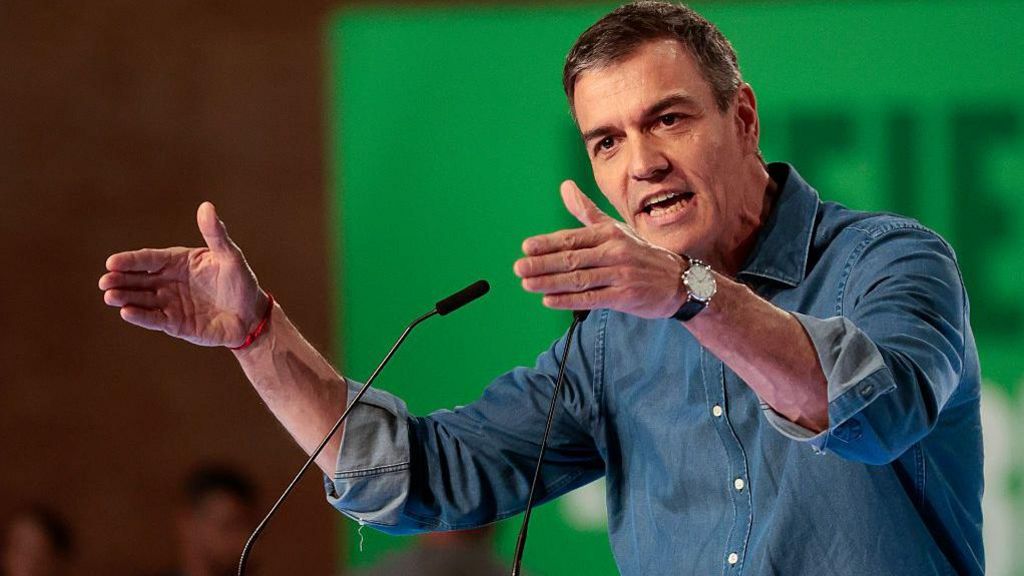
On June 1, Pedro Sánchez will mark eight years since he first took office as Spain’s prime minister. For a leader hitting this milestone, celebration would be the expected norm—but this year, Sánchez is not planning anniversary events. Instead, he is locked in a desperate battle to hold onto power, as his Socialist Workers’ Party (PSOE) and ruling coalition are engulfed in a cascading series of corruption investigations that have shaken the foundations of his administration.
No direct link to Sánchez has emerged in any of the ongoing probes, but the investigations have ensnared his closest political allies, senior party figures, and even his own immediate family. The latest wave of scandals began this week with the trial of David Sánchez, the prime minister’s brother and a professional musician. He stands accused of influence peddling, after allegedly securing a senior musical leadership post in the southwestern region of Badajoz without following required competitive selection processes, and failing to fulfill the core duties of the role after taking office. Even more consequentially, a Spanish judge has been probing the business dealings of Begoña Gómez, Sánchez’s wife, since 2024, and has recommended that she stand trial on charges of influence peddling and misuse of public funds. She is scheduled to attend a preliminary hearing on June 9. Sánchez has pushed back hard against the cases targeting his family, arguing they originated from unsubstantiated accusations pushed by far-right political groups.
The scandals extend far beyond the prime minister’s family circle. José Luis Rodríguez Zapatero, a former Socialist prime minister and one of Sánchez’s most prominent and respected allies, has been named in a money laundering investigation connected to a 2021 €53 million government bailout for the collapsed airline Plus Ultra. Prosecutors allege Zapatero used his political influence to secure the bailout in exchange for a private commission. Zapatero, who is set to appear in court for questioning on June 17, has repeatedly denied any illegal activity, and Sánchez has repeatedly reaffirmed his “full support” for the former leader. For the Spanish left, Zapatero’s connection to the investigation carries unique symbolic weight: during his 2004-2011 tenure, he oversaw landmark progressive reforms including the legalization of same-sex marriage, stricter gender violence laws, and the peaceful end of ETA’s four-decade separatist insurgency, earning him a reputation as a moral reference point for the Socialist movement.
“Symbolically, this is extremely significant,” explained Paco Camas, head of public opinion for the polling firm Ipsos in Spain. “This is the first former Spanish prime minister ever to face formal investigation, which makes the situation unprecedented. On top of that, Zapatero has long been a moral anchor for the entire Socialist Party.”
The scandal that has amplified pressure on Sánchez most dramatically in recent days is the probe that led to a 12-hour police raid on PSOE’s national headquarters in Madrid earlier this week. Investigators are probing allegations that senior party figures paid party member Leire Díez to orchestrate a “dirty tricks” campaign to discredit police officers, judges, and prosecutors leading ongoing corruption investigations into Socialist figures, including party third-in-command Santos Cerdán. Cerdán has been named as a suspect in this new probe, and Díez has denied all allegations against her.
The current wave of investigations traces back to 2023, when José Luis Ábalos, a former Socialist deputy party leader and transport minister, was implicated in a probe into a criminal network accused of collecting millions in kickbacks from the €50 million sale of face masks at the height of the COVID-19 pandemic. Ábalos, who has always denied wrongdoing and was expelled from PSOE, recently went on trial and is awaiting a verdict. Last year, he was also linked to a broader kickbacks-for-public-contracts scandal alongside Cerdán. The revelation hit Sánchez particularly hard, as he had publicly defended Cerdán against media allegations before investigation evidence was made public. “The Socialist Party and I were wrong to trust him,” Sánchez acknowledged at the time. Both Cerdán and Ábalos maintain their innocence.
Even traditionally pro-Socialist media has voiced harsh criticism of the accumulating scandals. Centre-left newspaper El País, which has historically been sympathetic to PSOE, warned in a recent editorial: “The growing number of cases makes clear these are not isolated incidents or the product of shadowy conspiracies. The investigations are directly linked to the core of power that has governed Spain for the past eight years.”
Spain’s centre-right opposition, led by the Popular Party (PP), has led growing calls for Sánchez’s immediate resignation and an early general election, which is not scheduled to be held until 2027. PP leader Alberto Núñez Feijóo has described the string of scandals as a “criminal carousel.”
Sánchez, who has gained a reputation across Spanish politics for his almost unmatched resilience, has repeatedly insisted he intends to serve out the full remaining term of the current parliament. His government is a minority coalition that has long struggled to maintain stable support from a fragmented bloc of regional nationalist and left-wing parliamentary partners, failing to pass a single new national budget in this legislative session. Now, key allies are showing signs that their patience is running out. The Basque Nationalist Party (PNV), one of the coalition’s supporting parties, has already suggested that waiting until 2027 to hold a new election would be “irresponsible.”
Still, even if Sánchez loses the support of some minor partners, a collapse of the government is not guaranteed. The opposition currently lacks enough parliamentary support to pass a no-confidence vote—an ironic turn of events, given that Sánchez himself seized power via a successful no-confidence vote against the PP government in 2018. Crucially, regional autonomy-focused parties like the PNV remain deeply wary of the centralizing agenda of a potential PP government, which could govern in coalition with the far-right Vox party, giving them little incentive to force early elections.
“I don’t see any incentive for the current government to call early elections, no matter how blocked the legislative process is or how badly it is damaged by these scandals,” Camas noted. “Sánchez can absolutely dig in and hold on.” Camas added that, much like after the 2023 Ábalos-Cerdán scandal, the upcoming summer parliamentary recess could give the government much-needed breathing room to regroup and rebuild political momentum when legislators return in September.
Another looming risk for Sánchez is growing internal dissent within the Socialist Party itself. Prominent internal critics including Castilla-La Mancha regional president Emiliano García-Page and former Socialist prime minister Felipe González have already called for early elections. Political observers warn that if more regional and municipal Socialist leaders come to believe the scandals will damage their electoral prospects ahead of the 2027 local elections, a broad internal rebellion could break out. But for now, that revolt has not materialized.
“Right now, we are not seeing that kind of internal revolt,” said Lluís Orriols, a political scientist at Madrid’s Carlos III University. Orriols added that Sánchez’s long-term political future will ultimately depend on how the ongoing investigations unfold. If new explosive evidence emerges, particularly evidence connecting the Socialist Party to illegal financing, it could trigger an exodus of parliamentary allies that would make pressure on Sánchez unbearable—even for a politician famous for political survival.
“This government has been in an extremely fragile position for some time,” Orriols said. “We cannot rule out the possibility that it will run out of political air very soon.”