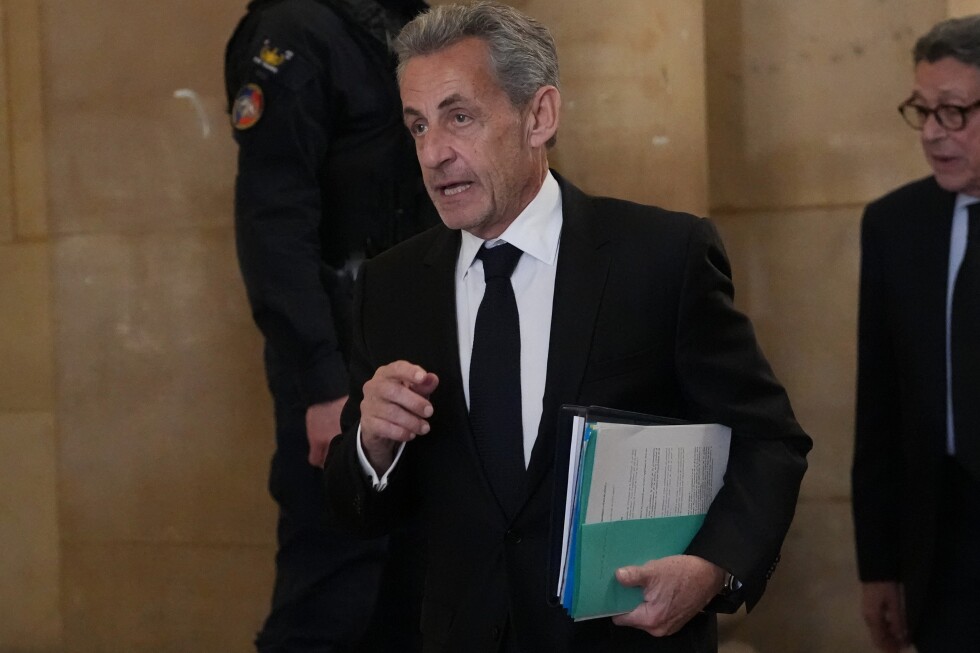
PARIS – In a sharp escalation of one of the most politically charged judicial cases in modern French history, national prosecutors formally requested Wednesday that appellate judges sentence former President Nicolas Sarkozy to seven years in prison and levy a €300,000 ($330,000) fine over long-running allegations that the late Libyan dictator Moammar Gadhafi secretly bankrolled Sarkozy’s victorious 2007 presidential campaign.
The 71-year-old former head of state already made history in September 2025 when he became the first former French president in modern memory to be imprisoned, after he was handed an initial five-year sentence on criminal conspiracy charges tied to the case. He served just 20 days at Paris’ La Santé Prison before being granted supervised release in November, and both sides have appealed the original verdict: prosecutors are pushing to overturn the acquittals Sarkozy secured in the first trial and secure a harsher custodial term.
The appeal proceedings are scheduled to run through early June, with a final ruling from the three-judge panel expected on November 30. Legal analysts note the Libya case carries unprecedented symbolic and political weight among the multiple corruption investigations Sarkozy has faced in recent years, as it centers on the extraordinary claim that a foreign dictatorship helped install a French president in office.
In Wednesday’s hearing, prosecutors asked the appellate judges to reverse three key acquittals from the first trial, finding Sarkozy guilty of corruption, illegal campaign financing, and complicity in the concealment of embezzled Libyan public funds. They also proposed a five-year ban on Sarkozy holding any public office if convicted.
Sarkozy’s lead defense attorney, Christophe Ingrain, pushed back aggressively against the prosecution’s demands after the hearing, telling reporters that the latest requests are identical to arguments financial prosecutors already failed to win over in the first trial. “There is no Libyan money in his campaign, in his estate,” Ingrain said. “Nicolas Sarkozy is innocent, and we will demonstrate it in fifteen days.”
Sarkozy is not the only figure facing consequences in the case: multiple close allies from his inner circle also stand accused, including his former chief of staff Claude Guéant, former Interior Minister Brice Hortefeux, long-time political fixer Alexandre Djouhri, and Éric Woerth, who served as treasurer for Sarkozy’s 2007 campaign. Prosecutors have requested sentences ranging from 10 months to six years and fines between €3,000 and €4 million ($3,500 to $4.68 million) for the co-defendants. Prosecutors have also requested an international arrest warrant for Beshir Saleh, the former chief of Gadhafi’s cabinet, who has lived in exile since the collapse of the Libyan regime in 2011 and has not appeared at any stage of the proceedings.
Allegations of illicit Libyan financing first emerged publicly back in 2011. French investigating authorities later traced approximately €6 million ($7 million) in transfers from Libya to accounts controlled by Ziad Takieddine, an alleged middleman in the deal who died last September just days before the first trial verdict was issued.
The case rests on two previously undisclosed meetings held in late 2005 between Guéant, Hortefeux, and Abdallah Senoussi, Gadhafi’s brother-in-law and longtime intelligence chief. Senoussi had already been sentenced in absentia to life in prison by a French court in 1999 for organizing the 1989 bombing of UTA Flight 772 over Niger, an attack that killed 170 people including 54 French citizens. Prosecutors allege that Sarkozy’s campaign team offered to revisit Senoussi’s French conviction in exchange for the secret campaign donations.
Sarkozy has repeatedly and categorically rejected the prosecution’s narrative. During his April appearance before the appellate court, he questioned the logic of the claims, telling judges: “Why would I have chosen Mr. Gadhafi, whom I had never met before, to set up a suspicious financing arrangement with him during a 30-minute meeting? It makes no sense.” He added: “I owe the truth to the French people. I’m innocent,” reiterating that no Libyan funds ever reached his 2007 campaign.
Notably, prosecutors have taken a harder line against Sarkozy on appeal than they did in the first proceedings, this week labeling him the “instigator” of the alleged corrupt deal. In the first trial, judges only found Sarkozy guilty of allowing his aides to approach the Libyan regime on his behalf, and acquitted him of corruption on a technicality: they ruled that as a presidential candidate, he did not hold the “public authority” status required to meet the definition of corruption under French law.
Sarkozy already has two finalized convictions in separate corruption-related cases. In November, France’s highest court upheld his conviction over the illegal financing of his failed 2012 re-election bid, the so-called Bygmalion affair, which carried a one-year sentence – six months of which is custodial and six months suspended. Last week, a French judge ruled that Sarkozy could serve the six-month custodial term via conditional release rather than with an electronic ankle monitoring tag, citing his advanced age, though that ruling has not yet been finalized. He was also convicted in a separate case of illegal wiretapping of a sitting judge.
The three-judge panel hearing the appeal is not required to follow the prosecution’s sentencing recommendations. Defense attorneys are set to deliver their closing arguments in two weeks.