标签: Europe

欧洲

  • How ciabatta was created to rival the baguette

    How ciabatta was created to rival the baguette

    In a fascinating chapter of culinary history, the iconic Italian ciabatta bread emerged not from ancient tradition but from a deliberate 20th-century creation designed to compete with France’s bakery dominance. According to historical accounts explored by BBC’s Witness History, this now-classic bread was developed through calculated innovation rather than accidental discovery.

    The genesis of ciabatta dates back to the early 1980s when Italian bakers grew increasingly concerned about the growing market share of French baguettes in Italian restaurants and supermarkets. French bread’s popularity threatened to overshadow Italy’s own bakery traditions, prompting Venetian baker Arnaldo Cavallari to spearhead a response.

    Cavallari, determined to create a distinctly Italian alternative that could rival the baguette’s airy texture and versatility, experimented for months at his bakery in Adria, Veneto. His breakthrough came when he developed a high-hydration dough using wheat flour, olive oil, and a unique fermentation process that created the bread’s characteristic irregular holes and crisp crust. The resulting loaf’s slipper-like shape inspired its name ‘ciabatta’ – Italian for slipper.

    This culinary innovation quickly spread beyond Venice, with variations developing across Italy’s regions. The bread’s sturdy yet porous structure made it ideal for sandwiches, particularly panini, helping it gain international popularity throughout the 1990s. Today, ciabatta stands as a testament to how culinary competition can spark innovation that becomes embraced as traditional, despite its relatively recent origins.

  • Leak damages 19th Century painting in latest Louvre setback

    Leak damages 19th Century painting in latest Louvre setback

    The Louvre Museum in Paris confronts yet another preservation emergency after a heating pipe failure triggered significant water damage to a historically significant ceiling masterpiece. The incident occurred late Thursday in Room 707, known as the Duchâtel chamber, housing invaluable 15th and 16th century artworks.

    Emergency responders contained the leakage within forty minutes of detection, though not before water infiltration caused substantial harm to Charles Meynier’s 1822 ceiling painting ‘The Apotheosis of Poussin, Le Sueur and Le Brun.’ Preliminary assessment by restoration specialists revealed two distinct tears in the canvas alongside lifted paint layers across the ceiling and architectural arches.

    This preservation crisis represents the latest in an escalating series of institutional challenges for the world’s most visited museum. Mere days prior, French authorities detained nine individuals—including two Louvre employees—in connection with an alleged ticket fraud operation.

    The museum’s operational management faces intensified scrutiny following multiple recent security and infrastructure failures. December witnessed water damage to 300-400 artifacts in the Egyptian department, while November necessitated partial gallery closures due to structural vulnerabilities. Most dramatically, an October heist resulted in the theft of €88 million in historic jewelry from the Gallery of Apollo, with most pieces remaining unrecovered.

    France’s public audit authority recently criticized the institution’s budgetary priorities, noting excessive acquisition spending occurring “to the detriment of the maintenance and renovation of buildings.” The Louvre has since relocated its most valuable jewels to the Bank of France while implementing temporary structural supports in affected areas.

    Though architectural inspectors confirmed no lasting structural damage from the latest incident, the cumulative effect of these crises has raised fundamental questions about the museum’s operational priorities and preservation capabilities.

  • Falling cocoa prices won’t necessarily mean cheaper Valentine’s Day chocolates

    Falling cocoa prices won’t necessarily mean cheaper Valentine’s Day chocolates

    Despite cocoa futures experiencing a dramatic 70% price collapse since February 2023, consumers face persistently elevated costs for chocolate products this Easter season. Market data reveals U.S. retail chocolate prices surged 14% year-over-year in early 2024, compounding the previous year’s 7.8% increase, while Germany witnessed even steeper hikes at 18.9%.

    The commodity’s volatility stems from a perfect storm of factors. West African growing regions—responsible for over 70% of global cocoa supply—endured disastrous harvests in 2024 due to crop diseases and inadequate rainfall, driving prices to historic highs. Although improved weather conditions in Ivory Coast and Ghana, coupled with expanded production in Ecuador, have since alleviated supply constraints, the market now confronts diminished global demand.

    Manufacturers have responded to consumer resistance by implementing strategic adaptations. Market analyst Chris Costagli of NIQ notes companies are reducing chocolate content in products and expanding alternative confectionery lines like gummy candies. This shift reflects in sales data: while dollar-value chocolate sales grew 6.7% in 2024, unit sales declined 1.3% as buyers purchased fewer chocolate items.

    Trade policies further complicated the pricing landscape. The Trump administration’s imposition of 15% average tariffs on cocoa-producing nations in February 2024 increased import costs, though these were partially reversed for raw cocoa in November. However, higher tariffs on finished European chocolates remain effective.

    Industry executives compare the situation to gasoline pricing dynamics: manufacturers maintain elevated prices to offset earlier high-cost inventory and hedge against future market volatility. Mondelez International implemented global price increases averaging 8% across its portfolio (including Cadbury and Toblerone), with even steeper hikes in European markets where consumer pushback forced subsequent price reductions in Germany and the UK.

    The market has bifurcated into premium and value segments. Luxury brands like Ferrero Rocher and Lindt experienced less pricing pressure due to their established premium positioning, while value brands gained market share as cost-conscious consumers traded down from mainstream products. This polarization reflects broader consumer behavior shifts in response to sustained inflationary pressures.

  • A new round of US-brokered talks between Russia and Ukraine is set for Geneva next week

    A new round of US-brokered talks between Russia and Ukraine is set for Geneva next week

    Diplomatic efforts to resolve the ongoing Russo-Ukrainian conflict will intensify next week as representatives from Moscow and Kyiv prepare for US-mediated negotiations in Geneva. Scheduled for Tuesday and Wednesday, these critical discussions coincide with the approaching fourth anniversary of Russia’s full-scale invasion of Ukraine.

    Kremlin spokesperson Dmitry Peskov officially confirmed the meeting through Russian state media channels, while Ukrainian President Volodymyr Zelenskyy’s communications adviser Dmytro Lytvyn simultaneously verified Ukraine’s participation. This diplomatic initiative unfolds against a backdrop of persistent military confrontation along the 1,250-kilometer frontline, continued Russian bombardment of Ukrainian civilian infrastructure and energy systems, and regular Ukrainian drone strikes targeting Russian military assets.

    The upcoming Geneva negotiations follow previously unsuccessful mediation attempts, including two rounds of talks hosted in Abu Dhabi that failed to bridge fundamental disagreements regarding the status of Ukraine’s Russian-occupied Donbas region. President Zelenskyy recently indicated that Washington has established a June deadline for reaching a comprehensive settlement, though previous timelines set during the Trump administration produced minimal results.

    As diplomatic preparations advance, President Zelenskyy visited Munich, Germany, to inspect a joint Ukrainian-German drone manufacturing facility and participate in the Munich Security Conference—a premier gathering of international defense officials. The Ukrainian delegation will be led by National Security and Defense Council chief Rustem Umerov, while Moscow’s representation will be handled by Vladimir Medinsky, a senior adviser to President Vladimir Putin who previously headed Russia’s negotiation team during the March 2022 Istanbul talks.

    Medinsky’s reappointment signals a potential strategic shift from military-focused discussions toward addressing political dimensions of the conflict. Earlier trilateral sessions primarily examined technical aspects including ceasefire mechanisms and buffer zone establishment.

    Meanwhile, the human cost of continued hostilities remains devastating. Recent Russian strikes in eastern Ukraine killed three young brothers aged 8 to 19, leaving their mother and grandmother severely injured. Separate attacks on Odesa’s port infrastructure resulted in additional casualties. Russia’s Defense Ministry reported intercepting 58 Ukrainian drones overnight, with debris from downed aircraft injuring civilians including a 12-year-old boy in the Volgograd region—a recent focus of Ukrainian attacks on energy infrastructure.

  • Trump’s push for Greenland reveals a political weak spot, new AP-NORC poll finds

    Trump’s push for Greenland reveals a political weak spot, new AP-NORC poll finds

    A recent AP-NORC Center for Public Affairs Research survey has uncovered a significant fracture in President Donald Trump’s typically unwavering Republican support base regarding his controversial pursuit of Greenland. The poll, conducted February 5-8, indicates approximately 70% of American adults disapprove of Trump’s handling of the Greenland situation, surpassing general foreign policy disapproval rates and revealing a notable vulnerability for the administration.

    While Trump maintains strong Republican approval on key issues like immigration and the economy (around 80%), his Greenland ambitions have created an unusual divide within his own party. The data shows nearly half of Republicans disapprove of his attempt to acquire the semi-autonomous Danish territory, which the president has justified as crucial for national security in the Arctic region.

    The generational divide among Republicans is particularly striking, with about 60% of those under 45 expressing disapproval compared to approximately 40% of older party members. This stands in stark contrast to the 70% of Republicans who generally approve of Trump’s overall foreign policy approach.

    Trump had argued that U.S. control of Greenland was necessary to counter growing Russian and Chinese influence in the Arctic, despite America’s existing military presence in the region. However, even supporters like Ayman Amir, a 46-year-old Trump backer from Houston, questioned the approach: ‘We can’t take it by force. We don’t have a right to do that,’ he told researchers.

    The president abandoned his aggressive stance late last month after reportedly reaching a framework agreement regarding access to Greenland with NATO assistance. The episode represents one of several recent moves that have strained relationships with key allies, a central topic at this week’s Munich Security Conference.

    Despite the Greenland controversy, Trump’s overall foreign policy approval has remained steady at approximately 40% among American adults, unchanged in recent months. The AP-NORC poll surveyed 1,156 adults with a margin of error of ±3.9 percentage points overall and ±6.1 points for Republicans.

  • Britain’s High Court says government acted illegally in outlawing protest group Palestine Action

    Britain’s High Court says government acted illegally in outlawing protest group Palestine Action

    LONDON — In a landmark judicial decision, Britain’s High Court has declared the government’s proscription of protest group Palestine Action as a terrorist organization to be unlawful. The ruling, delivered on Friday by a three-judge panel comprising Justices Victoria Sharp, Jonathan Swift, and Karen Steyn, determined that the government’s classification was disproportionate and unsupported by evidence of terrorist-level activities.

    The court found that while maintaining the ban pending government appeal, the characterization of Palestine Action’s activities failed to meet the statutory threshold for terrorist designation under UK counter-terrorism legislation. The judges noted that despite some actions potentially qualifying as criminal offenses, the group’s overall conduct lacked the “level, scale and persistence” necessary to justify terrorist classification.

    Palestine Action co-founder Huda Ammori hailed the decision as “a monumental victory both for our fundamental freedoms here in Britain and in the struggle for freedom for the Palestinian people,” characterizing the original ban as “one of the most extreme attacks on free speech in recent British history.”

    Home Secretary Shabana Mahmood expressed disappointment with the ruling, stating her intention to challenge the judgment in the Court of Appeal. “I disagree with the notion that banning this terrorist organization is disproportionate,” Mahmood asserted.

    The controversial proscription last year had placed Palestine Action alongside organizations like al-Qaida and Hamas, rendering membership or support punishable by up to 14 years imprisonment. Subsequent enforcement led to over 2,000 arrests primarily for displaying supportive signage.

    The government’s original designation followed June protests where activists breached a Royal Air Force base, damaging aircraft in opposition to UK military support for Israel’s Gaza operations. Since its 2020 formation, Palestine Action has targeted UK facilities linked to Israeli defense contractor Elbit Systems, causing significant property damage that officials claim impacts national security.

    The court acknowledged that while certain individual actions might constitute criminal offenses, existing legal frameworks already provided adequate remedies without necessitating terrorist designation.

  • Rubio warns Europe of new era in geopolitics before big Munich speech

    Rubio warns Europe of new era in geopolitics before big Munich speech

    U.S. Secretary of State Marco Rubio has characterized the current geopolitical climate as a “defining moment” and a “new era” as he leads the American delegation to the prestigious Munich Security Conference. This gathering of global leaders occurs amidst unprecedented strain in transatlantic relations, fueled by recent remarks from President Donald Trump questioning U.S. commitments to NATO and controversially asserting claims over Denmark’s semi-autonomous territory of Greenland.

    The conference agenda is densely packed with critical issues, including the ongoing war in Ukraine, escalating tensions with China, and the potential for a renewed nuclear agreement with Iran. Rubio’s address is highly anticipated, following last year’s contentious speech by then-Vice President JD Vance, which critics say triggered a year of diplomatic friction. Secretary Rubio indicated a potential shift in tone, telling reporters that the rapidly changing world requires all nations to “re-examine what that looks like and what our role is going to be.”

    The Greenland controversy has emerged as a central point of tension. Danish Prime Minister Mette Frederiksen confirmed plans to meet with Secretary Rubio to discuss what European leaders view as a watershed moment that has significantly eroded trust. President Trump’s unsubstantiated claims that Greenland is “covered with Russian and Chinese ships” and vital to U.S. national security have alarmed allies.

    Ahead of the conference, a significant coalition of eight former U.S. ambassadors to NATO and eight former American supreme commanders in Europe issued a powerful open letter defending the alliance. They argued that NATO serves as a crucial “force-multiplier” for American power, enabling influence “in ways that would be impossible – or prohibitively expensive – to achieve on its own.”

    This gathering highlights divergent views on the future of Western alliances. French President Emmanuel Macron, who will also address the conference, has consistently advocated for European strategic independence from the United States. Conversely, NATO Secretary General Mark Rutte has emphasized the enduring importance of transatlantic bonds. German Foreign Minister Johann Wadephul stated the conference aim was to jointly redefine what holds NATO together and demonstrate to the U.S. that it equally needs European partnership.

    With approximately 50 world leaders in attendance, including British opposition leader Sir Keir Starmer, the conference will grapple with fundamental questions about European defense and international cooperation in an increasingly uncertain geopolitical landscape. Conference chairman Wolfgang Ischinger noted that the White House’s evolving foreign policy “is already changing the world, and it has triggered dynamics whose full consequences are only beginning to emerge.”

  • Fire in Budapest suburb kills at least 3 and injures 22

    Fire in Budapest suburb kills at least 3 and injures 22

    A devastating fire ripped through a worker dormitory in Budakeszi, a suburb just west of Budapest, in the early hours of Friday, resulting in a tragic loss of life and numerous injuries. Hungarian disaster management authorities confirmed that the inferno, which engulfed the two-story structure, claimed the lives of three individuals and left nearly two dozen others wounded.

    Emergency services mounted a large-scale response, deploying over 40 paramedics and 18 emergency vehicles to the scene. Firefighters battling the blaze successfully rescued multiple survivors and removed three gas cylinders from the compromised building. The victims—two men and one woman—were tragically discovered beneath the collapsed roof, according to officials.

    During a subsequent news conference, representatives from the Pest County Police Headquarters revealed that their preliminary investigation points to a probable explosion within one of the rooms as the catalyst for the fire. The spokesperson further disclosed that initial inspections uncovered several regulatory violations within the building, specifically highlighting unauthorized and non-compliant gas usage practices.

    In light of these findings, authorities have initiated a full criminal investigation to determine the exact circumstances and liabilities surrounding the incident. Medical teams provided urgent care to 22 injured persons at the site, with four individuals sustaining injuries so severe they were classified as life-threatening. All those harmed in the incident have been transferred to eight separate hospitals across Budapest for specialized medical treatment and continued care.

  • Storm aftermath leaves 2 dead in France; flood alerts to remain Saturday

    Storm aftermath leaves 2 dead in France; flood alerts to remain Saturday

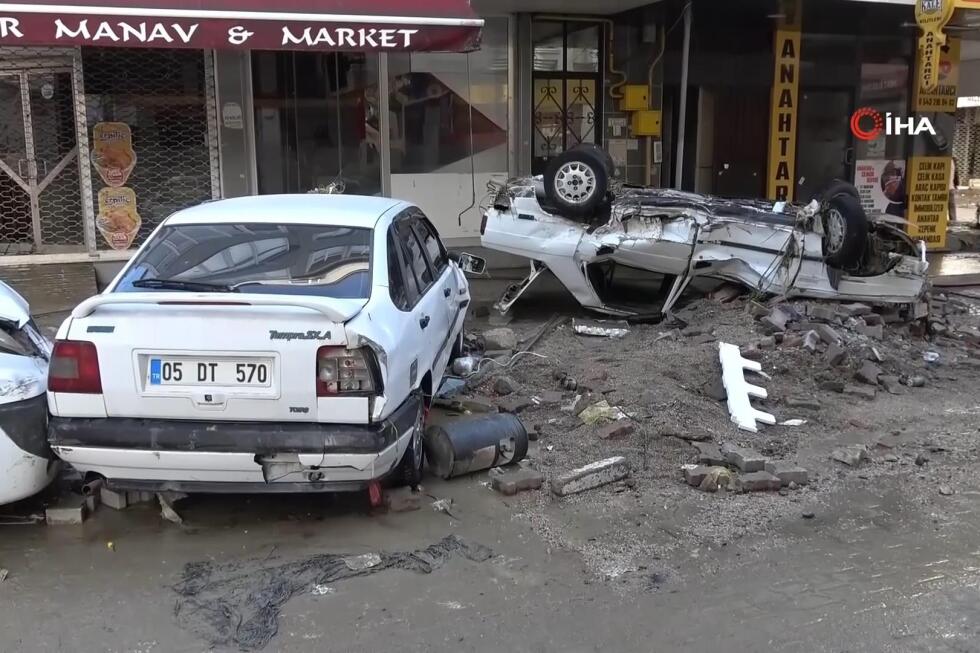
    France continues to confront the severe aftermath of Storm Nils, with significant flooding threats lingering in the southwestern regions even as intense wind conditions have subsided. The national meteorological service, Météo-France, reported that while weather warnings for high winds were lifted on Friday, critical flood alerts remain actively in place.

    The storm’s human toll was confirmed by government spokesperson Maud Bregeon during a national television appearance. Officials reported two fatalities directly linked to the severe weather event. The first casualty occurred on Thursday within the Landes department, followed by a second individual who tragically lost his life in Tarn-et-Garonne after being discovered in his garden.

    Infrastructure damage has been substantial, with national energy provider Enedis reporting approximately 900,000 customers experiencing power outages at the storm’s peak intensity. Restoration efforts have been mobilized on a massive scale, with service already reinstated to nearly half of affected households by Friday morning. The company has deployed 3,000 personnel, including 2,100 specialized technicians, to accelerate recovery operations across impacted regions.

    The flooding situation remains particularly critical along the Garonne river basin. Météo-France maintained its highest-level red flood alerts for Gironde and Lot-et-Garonne departments, with forecasts indicating these warnings will remain through Saturday. Meteorologists characterized Storm Nils as possessing ‘uncommon strength’ after making landfall from the Atlantic coastline between Wednesday night and Thursday morning before tracking eastward into Central Europe.

  • Trans-Atlantic tensions in focus as annual Munich security gathering opens

    Trans-Atlantic tensions in focus as annual Munich security gathering opens

    MUNICH — The prestigious Munich Security Conference commenced Friday amid heightened tensions in trans-Atlantic relations, assembling an impressive roster of global security leaders including U.S. Secretary of State Marco Rubio, numerous European Union officials, and international representatives from Ukraine and China.

    German Chancellor Friedrich Merz inaugurated the three-day event with an opening address, joined by fifteen EU heads of state or government. The conference anticipates participation from Ukrainian President Volodymyr Zelenskyy, Chinese Foreign Minister Wang Yi, and a substantial congressional delegation from the United States.

    Conference chairman Wolfgang Ischinger highlighted the gathering’s critical timing, noting that trans-Atlantic relations—the foundational element since the conference’s establishment in 1963—currently face “a significant crisis of confidence and credibility.” Ischinger expressed particular appreciation for the strong American engagement despite these challenges.

    The backdrop for this year’s meeting includes lingering tensions from last year’s conference, where then-Vice President JD Vance delivered unexpectedly critical remarks to European leaders regarding democratic standards on the continent. Subsequent months witnessed several controversial actions by the Trump administration targeting allies, including a recently retracted threat to impose tariffs on multiple European nations in pursuit of U.S. control over Greenland—a semi-autonomous territory of NATO ally Denmark.

    While Secretary Rubio’s delegation brings hopes for a less confrontational approach focused on conventional security issues, analysts question whether philosophical alignment with previous administration policies will enable meaningful reconciliation. Claudia Major, senior vice president at the German Marshall Fund in Berlin, emphasized that “Greenland has been a fundamental change for Europeans. That one NATO ally threatens another NATO ally has deeply affected European trust in the trans-Atlantic relationship.”