
In a landmark moment marking the Italian luxury automaker’s historic shift toward electrification, iconic sports car brand Ferrari has pulled back the curtain on its first ever fully electric model, the Luce. The high-profile launch, which drew global attention to the brand’s long-awaited entry into the zero-emission luxury market, included a rare inspection of the new vehicle by Pope Leo. Priced at $640,000 – equivalent to approximately £474,320 – the Luce represents Ferrari’s bet that high-end performance car enthusiasts will embrace electric technology without sacrificing the luxury, speed, and exclusivity the brand has built its reputation on over seven decades. The launch comes as nearly all major global automakers race to transition their lineups away from internal combustion engines to meet tightening global emissions regulations and growing consumer demand for sustainable luxury vehicles, putting Ferrari alongside elite brands that have begun navigating the new landscape of the global automotive industry.
标签: Europe
欧洲
-
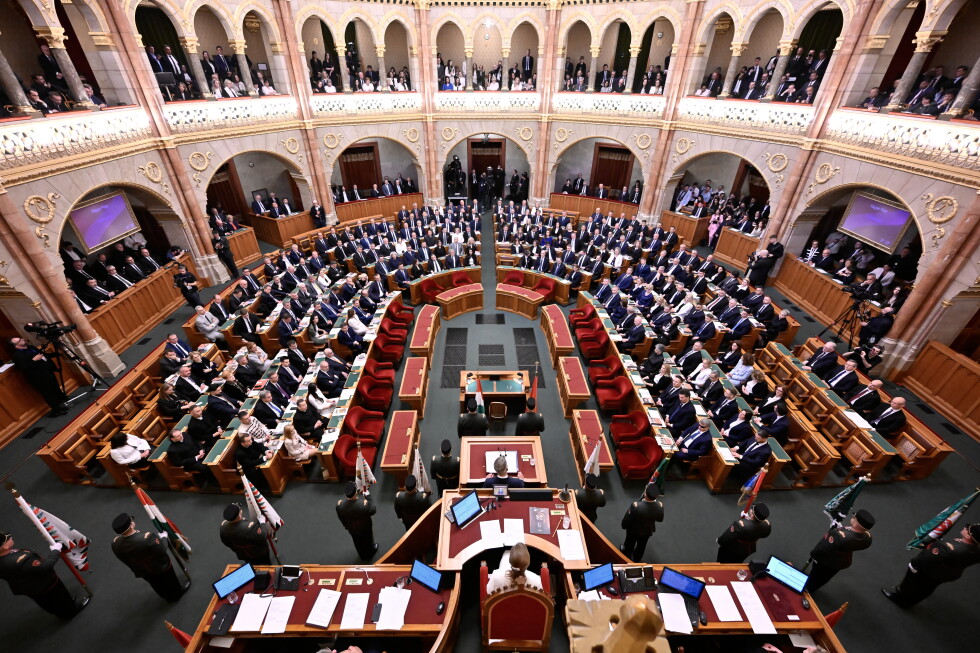
Hungary’s parliament votes to remain a member of the International Criminal Court
In a landmark legislative vote that marks a sharp shift in Hungary’s international legal commitments, the country’s national parliament approved a bill on Wednesday to cancel the previous administration’s planned withdrawal from the International Criminal Court (ICC), cementing Hungary’s continued membership in the world’s only permanent tribunal for prosecuting war crimes, genocide, and crimes against humanity.
The reversal comes eight months after former Prime Minister Viktor Orbán’s right-wing government announced Hungary would exit the ICC, a move that came immediately on the heels of a state visit to Budapest by Israeli Prime Minister Benjamin Netanyahu. The visit sparked global condemnation because the ICC had already issued an arrest warrant for Netanyahu over allegations of war crimes tied to Israel’s military campaign in the Gaza Strip, and Orbán’s government refused to execute the warrant, a requirement for all ICC member states. Orbán at the time defended his decision by claiming the ICC had devolved into a partisan “political court”, drawing sharp rebuke from the court and other global intergovernmental bodies. Hungary’s withdrawal had been scheduled to formally take effect on June 2 of this year.
The legislation reversing the exit was introduced just two days before the vote by current Prime Minister Péter Magyar, who took office after Orbán’s government lost recent parliamentary elections. In the text of the bill, Magyar’s administration emphasized that upholding global peace and defending universal human rights requires that perpetrators of the world’s most serious atrocities be held accountable before a legitimate international judicial body. “To this end, it is necessary to maintain Hungary’s participation in the Statute of the International Criminal Court,” the bill reads.
The final vote split largely along party lines: 133 legislators from Magyar’s ruling Tisza Party supported the bill, while 37 lawmakers voted against the measure and five abstained from the vote. The ICC’s governing body, the Assembly of States Parties, had publicly signaled its support for the reversal ahead of the vote, releasing a pre-ballot statement Monday that offered early congratulations to the new Hungarian government for the decision to stay in the court. The group reiterated that Hungary’s continued membership strengthens the global framework for accountability for mass atrocities.
Notably, this isn’t the first time the ICC has clashed with Hungary over the Netanyahu visit: last year, the court’s judges officially ruled that Hungary had violated its binding legal obligations by failing to detain the Israeli prime minister during his trip. In a July 2024 ruling, a judicial panel found that “failure to arrest suspects severely undermines the court’s ability to carry out its mandate.”
Hungary has deep historical ties to the court: it was one of the founding members of the ICC, and Orbán himself personally signed the court’s founding treaty, the Rome Statute, back in 1999 when he first held the office of prime minister. If the withdrawal had moved forward, Hungary would have become only the third sovereign state to formally leave the ICC, following the exits of Burundi and the Philippines, and would have been the sole member of the 27-nation European Union not party to the court’s founding treaty. Reporting for this article was contributed by Quell from The Hague, Netherlands.
-

Denmark and former Leicester goalkeeper Kasper Schmeichel retiring because of shoulder injury
Legendary Danish and Celtic goalkeeper Kasper Schmeichel, who etched his name in soccer history by winning the 2016 Premier League title with Leicester City in one of the most iconic underdog victories in the sport’s modern era, has formally announced his retirement from professional soccer, forced to step away early by a persistent serious shoulder injury.
Schmeichel broke the news in an exclusive interview with Denmark’s TV2, broadcast on Wednesday. “When my contract with Celtic expires this coming June, my career as an active professional footballer will come to an end,” the 39-year-old said. “I believe this is the right moment to make it public that I have already played my final match at the top professional level.”
The goalkeeper, who is the son of Manchester United all-time great Peter Schmeichel, has not taken the field since February this year. Back in March, he already shared that he would need to undergo two separate shoulder surgeries, but held out hope that he could recover enough to continue his playing career. Unfortunately, those hopes never came to fruition, leaving Schmeichel to accept that his time competing at the top level is over.
Throughout a decorated career that spanned clubs including Manchester City, Leeds United, Nice, Anderlecht, Leicester and most recently Celtic, Schmeichel also earned 120 caps for the Danish men’s national team, and represented his country at both the 2018 and 2022 FIFA World Cups. Reflecting on his early exit from the sport, Schmeichel acknowledged, “it’s not how I would have wanted my career to end.”
Schmeichel’s last appearance in a Denmark national team jersey came in November 2023, during a World Cup qualifying defeat to Scotland. The Danish Football Union (DBU) paid tribute to the goalkeeper on social media platform X, highlighting his 13-year legacy with the national side. “From his debut in Skopje to his World Cup bow against Peru, countless match-winning saves against the world’s top teams, a Euro semifinal run at Wembley and so much more,” the DBU post read. “13 years. 120 matches for the National Team. Thanks for unforgettable moments, Kasper.”
-

Former member of German militant group jailed for armed robberies after decades on the run
After more than three decades evading law enforcement and a high-profile trial, a one-time leading member of Germany’s infamous militant Red Army Faction (RAF) has received a 13-year prison sentence for orchestrating and carrying out a series of violent armed robberies spanning 17 years.
Sixty-seven-year-old Daniela Klette, who spent over 30 years as a fugitive following the disbandment of the RAF, was only apprehended in February 2024 during a raid on a quiet residential apartment in Berlin’s Kreuzberg district. Found living under a false identity using a foreign passport, Klette was quickly transferred to Lower Saxony – the region where the majority of her criminal offenses took place – to face trial later that same year.
The Red Army Faction, also widely known by its alternate name the Baader-Meinhof Gang, carried out a decades-long campaign of politically motivated violence across West Germany from the early 1970s through the early 1990s, which included bombings, assassinations, and kidnappings. The group formally disbanded in the early 1990s, but Klette and two other former faction members remained at large, turning to a string of armed robberies to fund their life off the grid.
In a verdict delivered Wednesday at the Verden regional court in Lower Saxony, judges found Klette guilty on multiple charges: aggravated robbery, violations of Germany’s strict weapons laws, and several other related criminal offenses connected to eight separate raids carried out between 1999 and 2016. Klette’s defense team had pushed for a full acquittal during the proceedings, but the prosecution’s evidence linking her to the crime spree proved overwhelming.
Court documents confirm Klette carried out each robbery alongside two other former RAF affiliates: Burkhard Garweg and Ernst-Volker Staub, both of whom remain at large as of the verdict. The crime spree began in July 1999 in the western German city of Duisburg, when masked attackers rammed an armored cash transport van, threatened security guards with firearms and a grenade launcher, and escaped with an undisclosed large sum of cash. The final recorded robbery took place near Braunschweig in June 2016, when the gang stole nearly €1.4 million (approximately £1.2 million) from another armored van.
Notably, prosecutors noted during the trial that despite decades on the run, Klette made no deliberate effort to conceal her true identity from acquaintances in her Berlin neighborhood, allowing investigators to eventually track her down after years of cold leads.
-
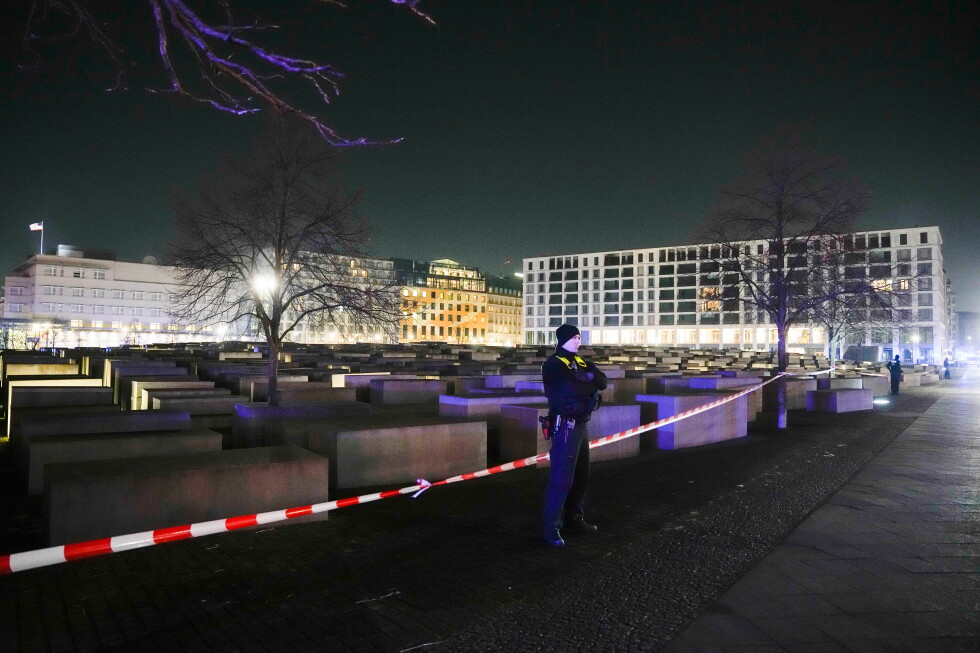
Berlin police arrest man suspected of being an accomplice to Holocaust Memorial stabbing
BERLIN – German law enforcement officials have taken a suspected accomplice in a 2025 terror-related stabbing attack at Berlin’s iconic Holocaust Memorial into custody, more than a year after the violent incident left a Spanish tourist seriously injured. Federal public prosecutors announced Wednesday that the suspect, a Syrian national identified only as Khalaf A. in compliance with Germany’s strict personal privacy regulations, faces formal charges of accessory to attempted murder and aggravated bodily harm.
According to the prosecution’s official statement, evidence indicates Khalaf A. spent the full afternoon of February 20, 2025 — the day ahead of the stabbing attack — with the perpetrator of the violence, Wassim Al M., also a Syrian citizen who was convicted of his role in the attack earlier this year. During that meeting, prosecutors confirm Khalaf A. actively encouraged Wassim Al M. to move forward with his planned attack.
Wassim Al M. was found guilty by the Berlin District Court in March on a multi-count indictment that included attempted murder and attempted membership in a proscribed foreign terrorist organization. He was sentenced to a 13-year prison term, the maximum penalty available under the convictions. Court documents from the trial confirm Wassim Al M. traveled from his residence in Leipzig to central Berlin specifically to carry out an attack on behalf of the Islamic State terror group.
Presiding judge Doris Husch explained during the sentencing proceedings that the perpetrator deliberately selected the Memorial to the Murdered Jews of Europe as his target because “he believed he would find people of Jewish faith there.” After carrying out the throat stabbing of the Spanish tourist, witnesses confirm he shouted “Allahu akbar,” or “God is great,” as he claimed the attack for the terror organization.
The Memorial to the Murdered Jews of Europe, one of Germany’s most prominent sites of national memory, sits just steps from the Brandenburg Gate in central Berlin. The sprawling memorial consists of 2,700 uneven gray concrete slabs, erected to honor the 6 million Jewish people murdered by the Nazi regime during the Holocaust.
The 2025 attack took place just 48 hours before a critical German federal parliamentary election, a contest where migration policy had emerged as the defining campaign issue. The debate over immigration had been intensified by a string of deadly attacks carried out by recent immigrant arrivals in the months leading up to the vote.
-

Spanish police search headquarters of PM Sánchez’s ruling Socialist party
MADRID, Spain — In a significant development for Spain’s embattled governing party, Spain’s Civil Guard confirmed Wednesday that law enforcement officers have executed a search warrant at the central Madrid headquarters of Prime Minister Pedro Sánchez’s ruling Socialist Party, as part of an active judicial investigation into alleged financial and institutional misconduct.
The court-ordered raid marks the latest in a string of corruption scandals that have piled mounting political pressure on Sánchez and his Socialist administration, which has governed as a minority government since 2018. The operation is tied to a formal investigation being overseen by National Court Judge Santiago Pedraz, which centers on alleged efforts by senior Socialist figures to interfere with independent judicial proceedings. Per a statement from the National Court, Pedraz ordered officers to seize a range of physical documents and electronic records tied to probes of an alleged network working to undermine judicial processes that posed political risks to the ruling party.
Investigators’ focus currently rests on Leire Díez, a former Socialist Party member whose alleged actions first triggered the case in 2025. That year, Spanish media published leaked audio recordings that appeared to capture Díez discussing plans to discredit a senior officer in the Civil Guard’s own anti-corruption division. Subsequent reporting further tied her to alleged attempts to manipulate the work of state prosecutors. Judge Pedraz is specifically examining whether Díez received formal or informal payments from the Socialist Party to carry out these actions. The party has asserted that any wrongdoing was solely the personal act of Díez, who has already left the party and issued a full denial of all allegations against her.
Beyond Díez, the probe has expanded to include several other high-profile figures, including former Socialist Party heavyweight Santos Cerdán — who is already facing investigation in a separate, unrelated corruption case. Additional suspects include a former Andalusia regional government official, an active Civil Guard officer, a private business owner, and two practicing lawyers. All six individuals face a range of allegations, including bribery, false testimony, commercial document forgery, influence peddling, and systematic corruption.
The raid is not an isolated controversy for the Socialists; the party has faced a cascade of judicial investigations in recent months that have shaken Sánchez’s government. Just one week before the Madrid headquarters search, a separate Spanish court confirmed it was probing former Socialist Prime Minister José Luis Rodríguez Zapatero over his alleged ties to a controversial state airline bailout program. Zapatero has denied all wrongdoing in that case. Separately, Sánchez’s own wife and brother are currently under investigation over influence peddling allegations, both of which they have also denied.
The most serious allegations to date tie Cerdán and a former cabinet minister under Sánchez to a kickback scheme that allegedly operated during the COVID-19 pandemic, when public health spending was at an all-time high. Both figures have rejected all claims of misconduct. The string of scandals has already forced Sánchez to issue a public apology to the Spanish nation in 2025, and the prime minister has repeatedly described investigations targeting his family as a coordinated political “smear campaign” designed to undermine his government.
Sánchez, who has gained international attention for his progressive policy agenda that drew public criticism from former U.S. President Donald Trump, has not been directly linked to any of the ongoing corruption investigations. His minority administration remains in power through a coalition agreement with a junior partner, who has so far retained their support for the government despite the ongoing judicial actions.
-
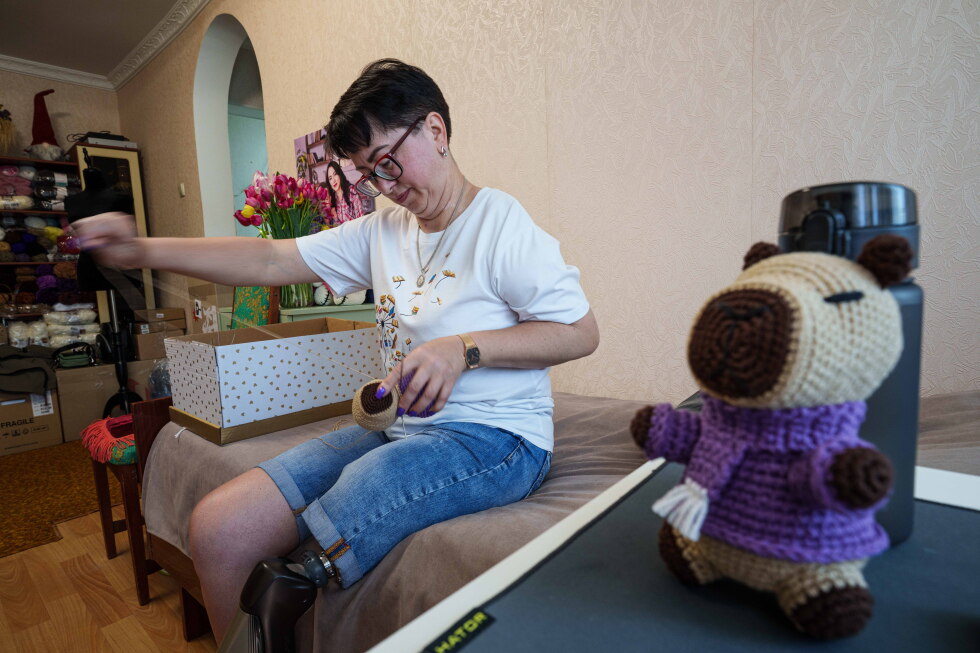
For one Ukrainian war amputee, rebuilding is painful after a Russian strike killed her husband
In the central Ukrainian city of Kryvyi Rih, 50-year-old Iryna Nakonechna carries a quiet, unbreakable resolve forged in unthinkable tragedy. Last year, a Russian missile strike took everything she once knew: it killed her husband Serhii Nakonechnyi and tore away her left leg, leaving her with lasting mobility damage to her arms.
In the immediate aftermath of the attack, which struck as the couple enjoyed an unseasonably warm post-dinner stroll near a downtown hotel on March 5, 2025, Nakonechna made a deliberate choice to let go of the life she had shared with Serhii. She cut off her long dark wavy hair, cleared almost every memento—furniture, clothing, personal trinkets, and most photos—from the apartment they once shared. Only one portrait of the couple remains, a quiet anchor to the past while she forges a new future. “Shedding my old identity was the only way I could endure the painful reinvention I needed to build a new life with my prosthetic,” she explains.
Today, Nakonechna cuts a sharp, vibrant figure: her signature pixie cut frames a face lit by quick, loud laughter, and bold red cat-eye glasses sit atop her nose. But beneath her effervescent wit lies a deep, unspoken grief that is rarely centered in mainstream narratives of wartime resilience. She is one of tens of thousands of Ukrainians—both soldiers and civilians—who have lost limbs to Russia’s full-scale invasion, a growing population whose invisible wounds often go unmentioned.
The exact number of Ukrainian war amputees remains unknown, but the count climbs steadily every day. Landmines planted across occupied territory, relentless artillery barrages, and ongoing missile and drone strikes continue to inflict catastrophic, life-altering injuries on people across the country. This surge has pushed Ukraine to rapidly expand rehabilitation and prosthetic services, and it has reshaped Ukrainian society at large: prosthetic limbs are no longer hidden, but have emerged as bold, visible symbols of survival and defiance against aggression.
For Nakonechna, the journey of recovery is both physical and psychological. She still walks with a cane, learning to trust the prosthetic that extends to her upper thigh, and her injured arms leave her unable to lift heavy objects. Every week, she attends an hour-long physical therapy session with Anastasiia Stetsenko, a therapist who is guiding her toward the next milestone: walking without assistance.
Their sessions follow a gentle but rigorous routine. Nakonechna begins by removing her prosthetic to rest it against the wall, then moves through seated weight lifts timed to her breathing, slow circular rotations of her residual limb to test range of motion, and eventually squats while gripping a ballet barre—one of the hardest movements to relearn. When exercises grow grueling, Nakonechna jokes with Stetsenko, calling her therapist a “demon” and quips that the routine feels like an extreme sport. When challenged to attempt a difficult squat, she laughs and deadpans, “I will respond as my grandson would: Just no.” The room fills with shared laughter, the dynamic between the two women far closer to old friends than clinician and patient.
The work is not just about building physical strength; it is about rebuilding the confidence to complete everyday tasks most people take for granted: climbing stairs, bending to pick up a dropped item, navigating cracked, uneven city streets, and chasing her 2-year-old grandson Tymofii across a playground.
That fateful March day stripped Nakonechna of more than her limb and her husband. After the missile detonated, throwing the couple dozens of meters apart, she woke to find herself separated from Serhii, admitted to a different hospital. He died the next day, and she never got to say goodbye. “I wasn’t even at his funeral,” she says quietly. For two months, she endured two surgeries a week, her days blurring into a fog of pain and recovery. By May, she could finally sit up on her own—a small relief, but only the first step of a far longer journey.
Now, the apartment she once shared with Serhii is almost unrecognizable from its former self. “I had to get rid of everything from the past,” she says. “I had to focus on living my life, even if it was only half the life I had before.” She invited her 77-year-old mother, who lives with dementia, to move in, and builds small moments of joy around their daily routines. The one thing she still grieves is that she cannot lift her grandson into her arms. Not long ago, Tymofii stuck a cartoon sticker of a capybara wearing a prosthetic leg onto her prosthetic—she has never peeled it off.
A skilled craftswoman, Nakonechna found a new purpose through Superhumans, a modern Ukrainian trauma center that specializes in prosthetics and rehabilitation for war survivors. She began knitting small toy capybaras, a gentle animal that has become an unofficial symbol of resilience for Ukrainian amputees. The trend started when veterans began placing capybara toys and stickers on their prosthetics to put strangers at ease; over time, the fuzzy, playful animal has grown to represent the quiet determination to reclaim joy after utter devastation.
Nakonechna’s hand-knit capybaras quickly became popular with other survivors, and she spends hours every week working on the toys. For her, the repetitive craft is a form of healing: “When I count the stitches, I think only about the stitches, not about the life that could have been and unfortunately is not,” she says. Her favorite part of the process is assembling the pieces, turning separate bits of yarn into a whole, finished toy—a small mirror of the work she is doing on herself.
Recently, she notched a small but transformative personal victory: for the first time since her injury, she put on a pair of shorts and went out in public, no longer hiding her prosthetic from the world. The small act marked a huge internal shift. “I accepted myself as I am,” she says.
For Nakonechna, and for thousands of Ukrainian amputees like her, resilience is not just about surviving. It is about learning to live with invisible wounds, rebuilding an identity from scratch, and finding small, precious moments of joy in a life forever changed by war.
-

Chief of communications intel agency says Russia is relentlessly targeting UK
LONDON – The head of the United Kingdom’s leading signals intelligence agency has issued an urgent wake-up call, warning that Britain and its Western partners could cede ground in the escalating global cyberspace conflict to hostile state actors unless all sectors of society ramp up cybersecurity efforts immediately.
Anne Keast-Butler, director of Government Communications Headquarters (GCHQ), is set to deliver a stark address Wednesday at Bletchley Park, the historic World War II codebreaking site that laid the groundwork for modern computing. In pre-released excerpts of her speech, Keast-Butler will detail that Russian actors are carrying out unrelenting cyber operations targeting critical national infrastructure, democratic electoral processes, global supply chains and public confidence across Britain and the European continent. Beyond cyber espionage, she will accuse Russia of stealing proprietary cutting-edge technology, orchestrating sabotage plots and planning assassination attempts against Western targets.
The GCHQ chief also highlighted the disruptive impact of rapid artificial intelligence advancement, noting that the evolving digital landscape has upended traditional cybersecurity norms. She described China as a leading science and technology superpower, warning that the window for Britain and its allies to maintain a strategic technological lead over competing nations is shrinking rapidly.
To counter these growing threats, Keast-Butler is calling for a collective, cross-society shift in mindset that treats cybersecurity as a far higher priority—arguing that urgency must spread from corporate boardrooms to ordinary household living rooms to build collective resilience.
This warning marks the latest in a series of alerts from Western intelligence leaders about escalating hostile Russian activity in the so-called “gray zone,” a space of aggressive action that falls just below the formal threshold of open war. In recent months, authorities across Nordic and Eastern European nations including Sweden, Poland, Denmark and Norway have publicly confirmed that Russian-affiliated hackers have targeted their critical infrastructure, ranging from power generation facilities to dam systems.
Just one month prior, Richard Horne, head of the UK’s National Cyber Security Centre, issued a similar alert, noting that the most severe cyber threats facing the United Kingdom are orchestrated by hostile states including Russia, China and Iran. Horne added that the frequency and severity of these attacks could surge exponentially if Britain is drawn into a formal international military conflict.
Keast-Butler’s speech also emphasizes the critical importance of retaining strong cross-border intelligence and security partnerships, at a time when strained transatlantic relations—fueled by former U.S. President Donald Trump’s “America First” foreign policy that sidelined longtime alliance commitments—have created new rifts between London and Washington.
The choice of Bletchley Park as the venue for the annual GCHQ director’s lecture carries deliberate symbolic weight. Located 72 kilometers northwest of London, the historic manor house brought together hundreds of mathematicians, cryptographers, puzzle enthusiasts and chess masters during World War II to crack Nazi Germany’s Enigma code, a system long thought to be unbreakable. Their breakthrough work not only shortened the Second World War by years, but also paved the way for the development of modern digital computing.
-

Tourists can be refused tap water, Italy’s top court rules
A years-long legal dispute over a denied request for tap water at a luxury Italian alpine hotel has reached a definitive conclusion, with Italy’s highest court upholding the venue’s right to refuse complimentary tap service to guests. The case dates back to the 2019 winter ski season, when an unidentified tourist visited the restaurant at the five-star Hotel Sassongher, located in the scenic Dolomites village of Corvara. When the woman ordered her meal, she asked for a glass of tap water – a request that waiters turned down, instead offering only commercially bottled mineral water priced at €7 (approximately £6) per bottle.
Disagreeing with the hotel’s policy, the tourist launched a legal claim for €2,700 in damages, arguing the denial violated both her consumer rights and a fundamental universal principle. She framed access to water as a basic human right and natural resource that all hospitality venues should be required to provide, comparing the availability of tap water to basic amenities that guests reasonably expect, such as clean sheets on hotel beds and soap in guest bathrooms. Her claim was first filed in a lower court based in Rome, but the case ultimately advanced all the way to the Italian Supreme Court for a final ruling.
In its final judgment, the Supreme Court rejected the tourist’s appeal and dismissed all claims for compensation for both emotional distress and economic harm. Silvio Belardi, legal counsel representing Hotel Sassongher, told local outlet Corriere Alto Adige that the high court’s ruling established a clear precedent: Italian hospitality venues face no legal obligation to serve tap water to customers. “There is no obligation to supply tap water,” Belardi confirmed, summarizing the court’s core holding.
This ruling stands in sharp contrast to regulations in other parts of Europe, including England and Wales, where all licensed hospitality venues are legally mandated to provide free drinking tap water to customers upon request. The BBC has reached out to Hotel Sassongher to request additional comment on the Supreme Court’s decision, and no further statement from the venue has been released as of the latest updates. The case has sparked fresh conversation around consumer expectations, access to water, and regulatory gaps in Italy’s hospitality industry guidelines.
-
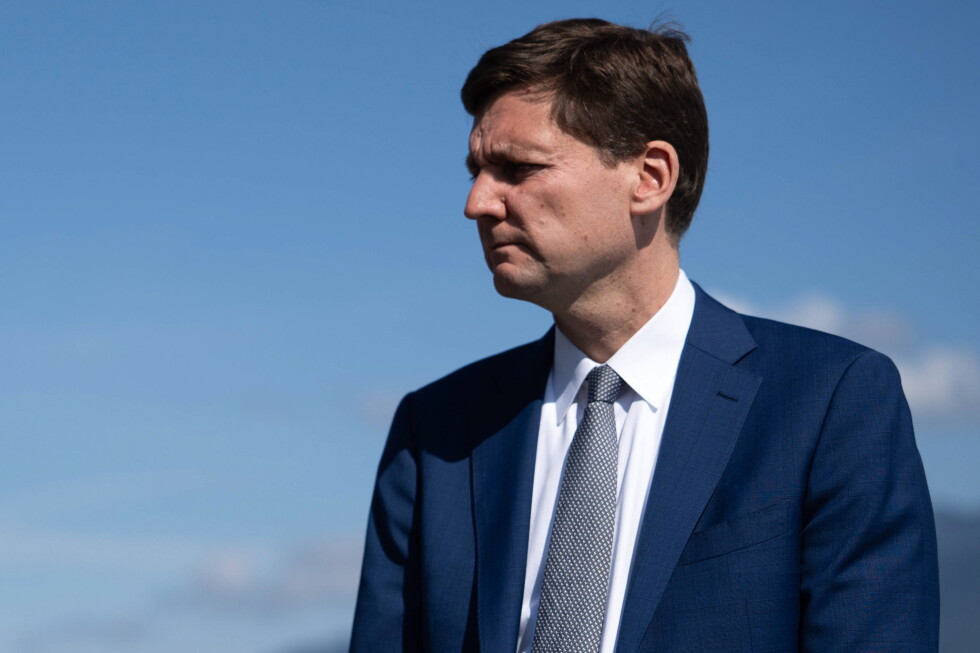
Canada and Germany make liquefied natural gas deal as Carney looks to diversify from US
TORONTO – A major milestone in transatlantic energy cooperation has emerged this week, as an anonymous official confirmed Tuesday that Canada has locked in a long-term liquefied natural gas (LNG) export agreement with Germany’s state-backed energy utility SEFE, short for Securing Energy for Europe. The deal will cover supplies from the proposed Ksi Lisims LNG terminal, a $10 billion Canadian (US$7.2 billion) project planned for British Columbia’s Pacific Coast on Pearse Island, near the Alaskan border. The official spoke on condition of anonymity ahead of a formal public announcement scheduled for Wednesday, and revealed that the agreement will see up to 1 million metric tons of LNG shipped from the terminal to Germany each year.
This deal marks a critical step forward for the Ksi Lisims project, which has already secured all necessary construction permits but has not yet received a final investment decision from its developing consortium. British Columbia Premier David Eby had signaled earlier Tuesday that a binding offtake agreement with a major European buyer like SEFE would be a deciding factor pushing the consortium to greenlight construction, noting that finalized sales contracts are a required precursor to any final investment decision for large-scale energy infrastructure projects. The Ksi Lisims consortium has already secured similar offtake agreements with subsidiaries of two global energy giants: London-based Shell and France’s TotalEnergies.
For Canada, the agreement aligns with a key trade priority set by newly elected Prime Minister Mark Carney, who has pledged to double Canada’s non-U.S. trade volume over the next 10 years. Currently, the country’s vast oil and gas sector ships nearly all of its energy exports to its southern neighbor, making diversification into European and other global markets a core economic and strategic goal.
For Germany, the deal addresses ongoing energy security concerns that first emerged in 2022, when the Russian invasion of Ukraine prompted Moscow to cut most of its natural gas supplies to Europe. Prior to the war, Germany relied heavily on Russian piped gas to power its industry, heat residential homes, and generate electricity. The sudden supply cut sparked a continent-wide energy crisis that drove up inflation across the EU, pushed energy prices to record highs, and forced multiple industrial facilities to temporarily suspend operations. SEFE, originally the German subsidiary of Russian energy giant Gazprom, was nationalized by the German government in 2022 to stabilize the country’s energy market amid the crisis, and has since been working to lock in reliable alternative LNG supplies from non-Russian producers around the world.