标签: Europe

欧洲

  • A rare public trial opens in Paris child abuse case as parents seek a national wake-up call

    A rare public trial opens in Paris child abuse case as parents seek a national wake-up call

    PARIS – A groundbreaking public trial launched in Paris this week has thrown long-silenced child abuse scandals in French educational settings back into the national spotlight, after a group of affected parents broke with decades of legal convention to open proceedings to the public, inspired by a high-profile campaigner’s fight against abuse. The defendant, a 36-year-old school assistant whose identity has not been released to protect the ongoing case, stands accused of sexually assaulting nine children between the ages of 3 and 5 at a Paris nursery school. The alleged offenses occurred between August 2024 and April 2025, during bathroom supervision, lunch breaks, and after-school care sessions. He additionally faces charges of sexual harassment against two colleagues and sexual assault against one, and has denied all allegations. If convicted, he could face up to 10 years of prison time.

    Under standard French law, all criminal cases involving minor victims are held behind closed doors to protect the privacy of children. But the parents of the victims in this case chose to waive that privacy protection, drawing direct inspiration from Gisèle Pelicot, who made her own widely publicized trial for rape and drug-related offenses open to the public to shine a light on systemic abuse. Echoing Pelicot’s core mantra that shame should rest with abusers, not survivors, the families say their choice to open the trial is intended to break the culture of silence that has allowed child abuse to persist unaddressed in French schools for years.

    The allegations first came to light in April 2025, when multiple children disclosed the abuse to their parents. According to the families, their trauma was compounded by systemic failures: a warning raised by one mother months before the case came to light was dismissed outright by school leadership, a revelation that has amplified calls for sweeping oversight reform. Outside the Paris courthouse Tuesday, parent activists gathered to demand action. Barka Zerouali, co-founder of MeToo Ecole – the grassroots MeToo School movement focused on educational setting abuse – told protesters that the moment demands a national reckoning. Demonstrators carried banners reading “Because no child should be afraid to go to school”, echoing the growing public anger over unaddressed risks for young children.

    Rebecca Royer, a legal representative for multiple affected families, outlined the broader goals of the parents’ campaign: “what we are expecting is a real turning point in child protection, meaning we expect the government and municipalities to implement real measures to protect children, but also to provide real resources.”

    This trial is not an isolated case. In recent months, a cascade of similar allegations across Paris and the rest of France has pulled the issue of child abuse in early education into the center of public and political debate. Last week, Paris prosecutor Laure Beccuau confirmed that active investigations are ongoing across 84 city nursery schools, 20 elementary schools, and 10 daycare centers. Since the start of 2026, 78 school and after-school staff in Paris have been suspended from their roles, 31 of them over suspicions of sexual violence, according to newly elected Paris Mayor Emmanuel Grégoire.

    Unlike state-employed teachers, school assistants and after-school program leaders in France are hired and overseen by municipal authorities – a structural arrangement that has come under intense scrutiny in the wake of the allegations. Grégoire, who took office in March, has named combating child abuse his “absolute priority”, and recently unveiled a €20 million ($22 million) action plan to fix what he has called “major dysfunction” in the city’s school oversight system. He has pledged that any employee suspected of child abuse will be suspended immediately pending investigation. Before his election, Grégoire publicly shared his own experience as a child abuse survivor, when he was assaulted as a 9- and 10-year-old in elementary school. The wave of abuse allegations that emerged earlier this year made child protection a defining issue of the Paris mayoral campaign, cementing its place as a top national priority.
  • Hungary’s Magyar vows to probe alleged misconduct by Orbán’s government

    Hungary’s Magyar vows to probe alleged misconduct by Orbán’s government

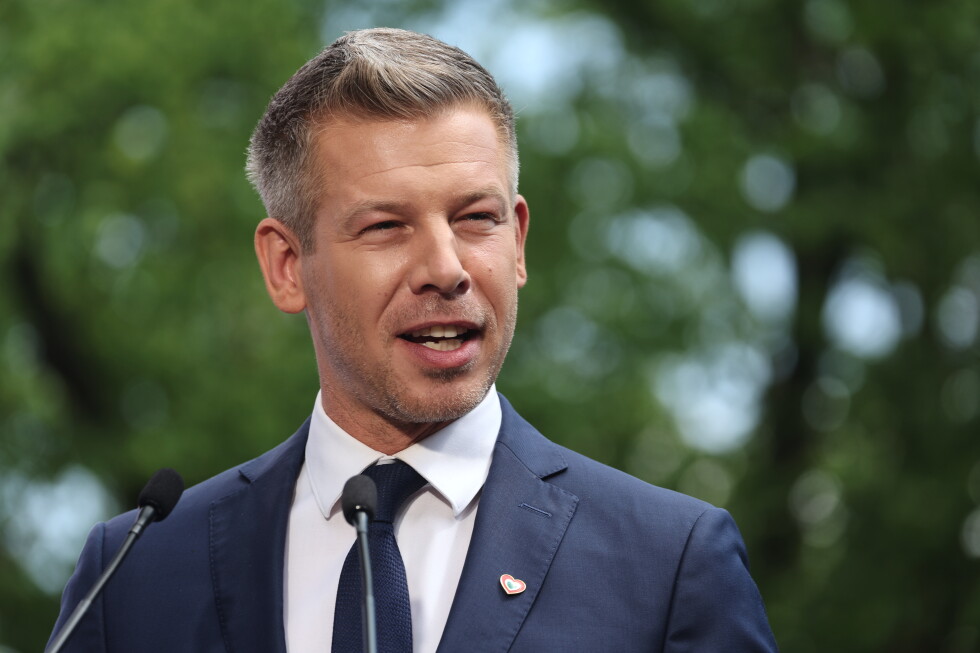
    BUDAPEST, Hungary – Fresh off a historic electoral upset that ended 16 years of nationalist-populist rule under Viktor Orbán, newly installed Hungarian Prime Minister Péter Magyar announced Tuesday that his center-right Tisza party will launch six parliamentary investigative committees to probe allegations of widespread corruption and abuse of power from Orbán’s previous administration.

    Magyar’s Tisza party secured a two-thirds parliamentary majority in last month’s national election, a decisive landslide victory that gave the new government the legislative power needed to roll back the controversial authoritarian-leaning policies that earned Orbán condemnation from critics and international observers as a far-right autocrat. Holding Orbán, his long-ruling Fidesz party, and their allied business networks accountable for alleged misconduct was a central pledge of Tisza’s election campaign.

    Addressing lawmakers on the floor of parliament, Magyar outlined the scope of the upcoming investigations, which include the suspected misappropriation of hundreds of millions of dollars in public funds managed by Hungary’s National Bank – a case already undergoing active police examination. “We will put all corruption and abuses of power on full display,” Magyar stated. “The Hungarian people have the right to know who benefited from their money, who stole their money, who got rich from the vulnerability of the people.”

    Throughout his four consecutive terms in office spanning 16 years, Orbán faced repeated accusations of systemic misuse of public funds, including directing hundreds of millions in profitable state contracts to close family members and a small circle of pro-Fidesz business elites. He was also widely criticized for systematically eroding independent democratic institutions, prompting the European Parliament to formally designate Hungary as no longer a full democracy in 2022.

    Since Tisza parliamentarians took office earlier this month, the new majority has already tabled a landmark constitutional amendment that would cap the office of prime minister at a total of eight years. This new lifetime limit would apply to Magyar himself, and retroactively bars Orbán, who served 16 years in power, from holding the premiership again. On Tuesday, Magyar added that the government will also explore extending this term limit restriction to all other elected public offices, noting, “No one should imagine that electoral authority is inherited forever. Power exercised without limits leads to loss of control over time in any democratic system.”

    One of the six investigative committees will also examine the controversial details of a 2024 presidential pardon granted to an accomplice in a child sexual abuse case by former Hungarian President Katalin Novák, a scandal that ultimately forced Novák’s resignation earlier this year.

    In addition to the probes and term limits, Magyar’s administration has committed to further democratic overhauls: a constitutional amendment to dissolve Orbán’s controversial Sovereignty Protection Office, a 2023-created body that targeted non-governmental organizations, independent media, and opposition groups under the pretext of countering foreign interference. The new prime minister also vowed to eliminate long-held political privileges for senior officeholders, including cutting salaries for the prime minister, cabinet members, state-owned enterprise executives, and sitting lawmakers.

  • Russia ramps up threats against Ukraine. What does that say about the war?

    Russia ramps up threats against Ukraine. What does that say about the war?

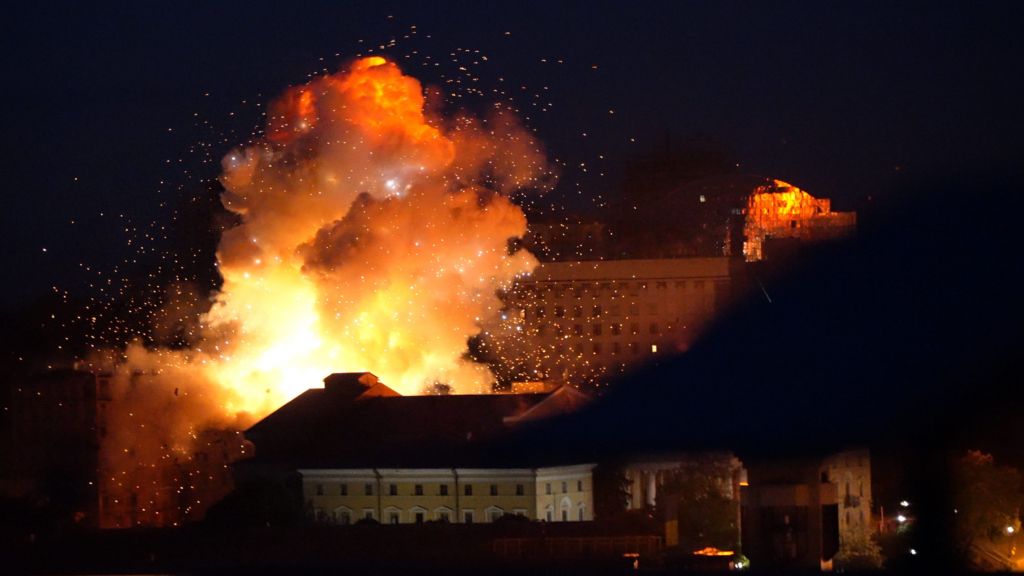
    Over the weekend, the Russian military launched one of its largest recent bombardment campaigns against Ukraine’s capital Kyiv, following the attack with explicit new threats of consistent, systematic targeting of Ukrainian military infrastructure in the city. Alongside its warnings of intensified strikes, Moscow has urged foreign nationals and diplomatic personnel to evacuate Kyiv immediately, stoking fears of a dramatic escalation in the four-year full-scale invasion that has reshaped eastern Europe’s security landscape.

    On the surface, these threats carry an ominous tone that has prompted global observers to question whether a new phase of open conflict is imminent. But as Ukrainian officials point out, the reality on the ground holds much that is familiar: for more than four years, Russian forces have targeted Ukrainian population centers and infrastructure on a weekly basis, and Kyiv has faced regular bombardments since the full-scale invasion began in February 2022. Ukraine’s foreign ministry has assessed that the overall level of security threat to Kyiv and other Ukrainian cities remains unchanged from what it has been over the past months and years.

    What is new, however, is the explicit framing Moscow has given to its planned strikes, a shift tied directly to a recent incident in the Russian-occupied Luhansk region. Last week, Moscow accused Ukrainian forces of deliberately carrying out a lethal strike that killed 21 civilians in the town of Starobilsk, framing the attack as an intentional massacre of students. Ukraine has rejected that claim, asserting it only targeted a legitimate Russian military facility in the occupied territory. For the first time in recent months, the Kremlin is holding up the alleged civilian casualty event as formal justification for large-scale retaliation against Kyiv – a departure from its usual pattern of launching strikes without extensive public justification, and a contrast to its longstanding lack of public remorse for civilian casualties caused by its own military operations across Ukraine.

    Analysts and Ukrainian officials have offered multiple interpretations of what is driving this new rhetorical escalation. Ivan Stupak, a military analyst and former Ukrainian intelligence officer, argues that the shift in messaging reflects growing problems with Russian domestic narrative control. “When you have problems with the economy and Russian society, then there’s pressure for revenge,” he explained.

    Andrii Kovalenko, a member of Ukraine’s National Security and Defence Council, outlined three additional factors unrelated to the Starobilsk incident that he believes explain the new threats. First, he argues, the heightened rhetoric stems directly from Russia’s persistent lack of strategic progress on the front lines. With no major territorial gains to show for months of fighting, the Kremlin is turning to psychological pressure to break Ukrainian public morale. Second, the warning to foreign diplomats to leave Kyiv is a deliberate attempt to pressure Ukraine’s Western allies, whose continued political and military support Moscow has long identified as a core barrier to achieving its war aims. Third, Kovalenko says the threats serve as a deliberate distraction from Ukraine’s growing ability to carry out long-range strikes on Russian territory and its incremental progress reclaiming occupied Ukrainian land.

    These assessments align with broader analysis from international defense and security research institutes. The Washington-based Institute for the Study of War has concluded that the trajectory of the war, now entering its fifth year, is currently shifting in favor of Ukrainian forces. Russia is losing far more soldiers than it is able to recruit each month, with casualty numbers outpacing monthly recruitment for five consecutive months, as Russian command continues to throw troops into costly offensives that yield minimal territorial gains.

    Nigel Gould-Davies, a senior fellow at the International Institute of Strategic Studies, notes that these battlefield losses have left the Kremlin facing a fateful choice. As Russia confronts growing constraints on both its military industrial output and available manpower, it will soon have to decide whether to order a forced mobilization of the country’s economy and society to sustain the war effort. Forcing mass conscription and economic restructuring, Gould-Davies warns, would be deeply disruptive and extremely unpopular among the Russian public, carrying significant risks to the Kremlin’s domestic stability.

    Despite these signs of growing Russian weakness, the immediate threat to Kyiv remains acute. The capital is still clearing damage from the large-scale weekend retaliatory strike that saw Russia launch nearly 600 drones and 90 missiles, the vast majority aimed at Kyiv. While Ukrainian air defenses intercepted most of the drones, 35 missiles successfully struck targets. In a notable display of new weapons deployment, Russia used at least one of its new Oreshnik hypersonic missiles, a system fitted with six independent warheads that is extremely difficult for conventional air defense systems to intercept. Stupak argues that the deployment of the new missile so far has been primarily for propaganda purposes, noting that Russian Oreshnik tests over Ukraine have so far used inert warheads and caused limited damage.

    Still, Kyiv faces growing challenges in defending against repeated large-scale Russian strikes. Ukrainian officials have repeatedly warned that critical air defense interceptor missiles are in dangerously short supply, and US-made Patriot systems – the only weapon currently in Ukraine’s arsenal proven effective at intercepting Russian ballistic missiles – remain far less numerous than needed. Ukrainian President Volodymyr Zelensky has recently renewed urgent appeals to Western allies to deliver additional air defense systems and interceptor missiles to shore up Kyiv’s defenses.

    While analysts agree that the Kremlin’s escalating threats stem in large part from growing desperation over the course of the war, that desperation does not make the threat to Ukraine any less severe. For Kyiv and its international backers, Russia’s worsening position on the battlefield may only make the coming months more dangerous.

  • From McEnroe to Medvedev, meltdowns on tennis courts are part of the sport’s mental challenge

    From McEnroe to Medvedev, meltdowns on tennis courts are part of the sport’s mental challenge

    As the 2024 clay court swing reaches its peak with the French Open underway, a familiar, dramatic staple of professional tennis has returned to the spotlight: explosive on-court temper outbursts, most commonly marked by violent racket-smashing. For a sport universally recognized as one of the most psychologically demanding in the world, moments where even top-ranked competitors lose their composure in front of thousands of live spectators and millions of global viewers are far from a new phenomenon.

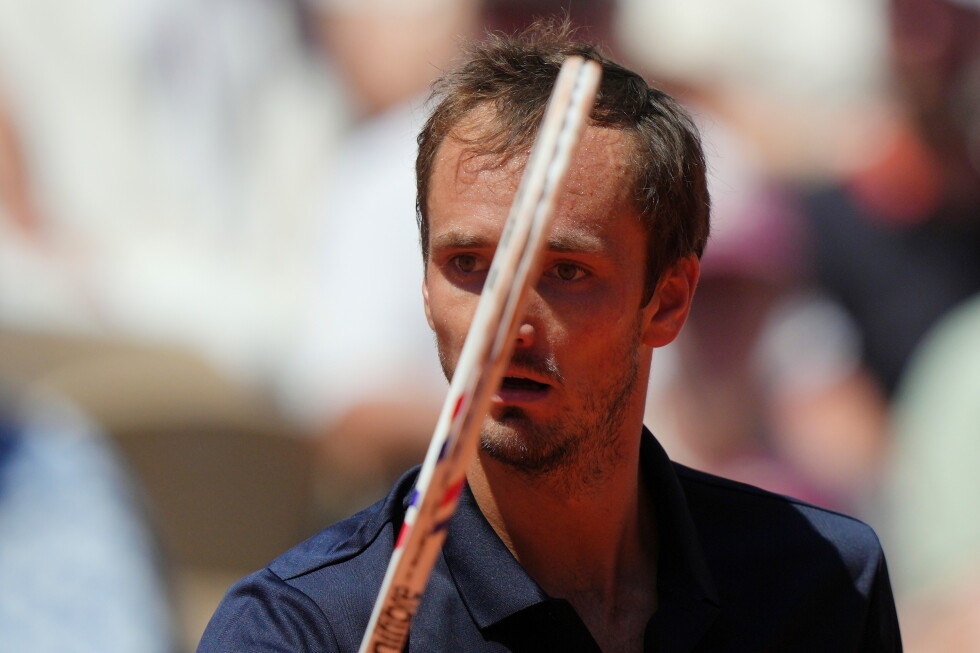
    Recent weeks have already delivered multiple high-profile meltdowns across European clay tournaments. Former world No. 1 Daniil Medvedev suffered one of the most humbling defeats of his career earlier this season, dropping a 6-0 6-0 double-bagel loss to Matteo Berrettini at the Monte Carlo Masters. Midway through the lopsided defeat, the Russian star slammed his racket into the red clay seven consecutive times before tossing the completely mangled frame into a court-side trash can. Medvedev later acknowledged that even he did not plan the outburst, noting he had hoped the release of frustration might spark a comeback, though the effort failed to turn his game around.

    Not long after, German competitor Daniel Altmaier saw his frustration boil over during a tournament in Hamburg, where he smashed his racket before kicking the broken frame into the spectator stands. No fans were injured in the incident, but it reignited conversations about the risks of unregulated on-court anger.

    This trend stretches back decades. 1980s legend John McEnroe remains one of the most iconic examples of on-court temper, and even some of the sport’s most beloved and composed greats had their moments early in their careers. Roger Federer, widely hailed as one of the classiest players in tennis history, was known for frequent racket-smashing as a junior before reining in his emotions to build his legendary legacy. Other all-time greats have also had high-profile run-ins with officials over outbursts: Serena Williams was penalized for shouting at a line judge following a foot fault call at the 2009 U.S. Open, while Novak Djokovic was disqualified from the 2020 U.S. Open after accidentally striking a line judge in the throat with a hit ball, ending his 29-match winning streak in stunning fashion.

    Current top players have opened up about the root of these outbursts, explaining that the pressure of tennis amplifies the same frustrations all people experience in daily life. Andrey Rublev, the world No. 13 and a player who has long been open about his own on-court anger, noted that the intensity of the sport can even leave him with cuts after punching racket strings or slamming his knees to release frustration. Rublev’s coach, legendary former player Marat Safin, once estimated he broke more than 1,000 rackets over the course of his own career.

    “It’s not about tennis,” Rublev explained. “All people have this situation in life and you just lose it. What makes tennis different is that you’re completely alone out there, and everyone is watching. Some people handle those emotions better, but I’m one of the people who let them take over.”

    World No. 1 Aryna Sabalenka, who has worked for years to manage her own temper, says that unchecked anger used to tank her performance. “My emotions were destroying my game and my level was dropping dramatically when I would start overreacting on everything,” she said. “Opponents would see that weakness, step up, and play even better. Learning to keep those emotions in check has been a huge improvement for my career, and it really helped me level up.”

    Some players have adapted by channeling their frustration away from the public eye. After Coco Gauff’s off-court post-match meltdown was caught on camera at the Australian Open, it sparked broad debate about athlete privacy. World No. 5 Jessica Pegula says she intentionally reserves any racket-smashing for private spaces away from crowds. “I go find some place that’s maybe not near people and then I can break a racket,” she said, noting that on the court she is able to stay composed. “I’m not a super emotional person in general, so getting to that point takes a lot for me. But I do think it’s entertaining to watch – sometimes I wish I could wear my heart on my sleeve more, that’s just not who I am.”

    Four-time Grand Slam champion Naomi Osaka similarly developed a private way to handle frustration, after her father corrected her poor on-court attitude when she was young. Now, Osaka releases her anger quietly enough that it rarely draws attention. “I actually do curse a lot on the court, I say it so softly you can’t hear it,” she explained. “I’m really glad about that, because I don’t want to get fined for it.”

    36-year-old Sorana Cirstea, who recently became the oldest player to debut in the WTA top 20, summed up the prevailing perspective among players: professional tennis is a uniquely grueling mental test, and competitors are only human. “It’s such a mental sport,” Cirstea said. “To be able to sustain that mentality for three long hours with all the adrenaline and the pressure, sometimes you don’t handle it the best. We are human.”

  • Turkish riot police use water cannons ahead of deposed opposition leader’s speech to rally

    Turkish riot police use water cannons ahead of deposed opposition leader’s speech to rally

    A deepening political crisis gripped Turkey this week as riot police deployed water cannons and pepper spray to block thousands of opposition supporters from gathering for a planned address by ousted main opposition leader Ozgur Ozel in the western stronghold of Izmir, escalating a conflict that has already seen a police raid on party headquarters and growing accusations of judicial politicization.

    The turmoil traces back to last Thursday, when an Ankara appeals court overturned the results of the 2023 Republican People’s Party (CHP) congress that elected Ozel as the party’s new leader. The court ruling forcibly removed Ozel and his entire core leadership team from their posts, reinstating his 77-year-old predecessor Kemal Kilicdaroglu, who led the opposition for 13 years against long-serving President Recep Tayyip Erdogan with limited electoral success. Critics across Turkey’s political opposition widely view the court order as a politically motivated attack designed to weaken the CHP ahead of potential early national elections.

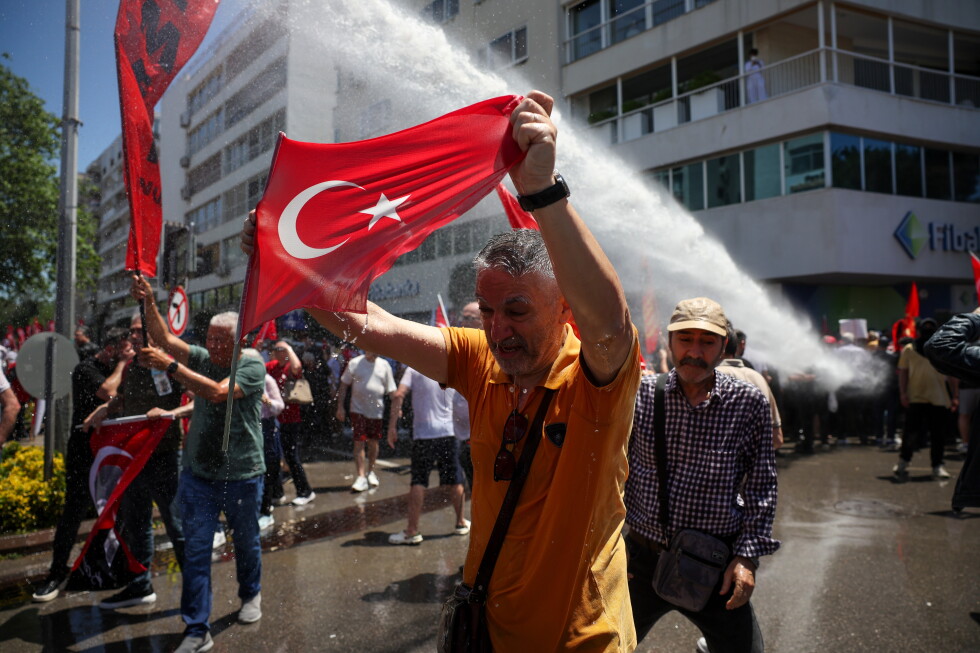
    Ozel, who had planned to address his supporters at Izmir’s Cumhuriyet Square on Tuesday, found his path blocked by heavy security deployments: steel barricades sealed off access to the public space, and lines of riot police turned back crowds heading to the event. Footage broadcast by pro-opposition outlet Halk TV showed dozens of mostly middle-aged attendees being soaked by high-powered water cannons as they attempted to push past the security cordon, with local media confirming that police also used pepper spray to disperse the gathering. Despite the blockade, Ozel eventually reached the square before relocating to a nearby public space, where he delivered his speech to thousands of cheering, gathered supporters.

    The confrontation in Izmir comes just days after a violent standoff at CHP’s national headquarters in Ankara. Following the court ruling, Ozel and his supporters barricaded themselves inside the building to protest the decision. On Sunday, riot police stormed the headquarters, firing plastic pellets and pepper spray to end the occupation, in a move that further inflamed tensions across the opposition bloc.

    Speaking from Izmir, Ozel called on Kilicdaroglu to honor the will of the party’s 2 million registered members and immediately schedule a new leadership congress to resolve the dispute. “Don’t divide the party, don’t stop our march to power,” Ozel stated, adding that the party should let the full membership choose their leader directly. Kilicdaroglu has not yet issued a public response to the call for a new vote.

    The escalation comes against a shifting electoral backdrop in Turkey. Polling consistently shows the CHP running neck-and-neck with Erdogan’s ruling Justice and Development Party (AKP), and while the next national election is not formally scheduled until 2028, political analysts widely expect Erdogan to call early elections to capitalize on current economic momentum. Ozel led the CHP to major gains in the 2024 municipal elections, solidifying the opposition’s control of key major cities including Istanbul and Ankara, gains that first demonstrated the CHP’s growing electoral competitiveness after years of underperformance.

    Critics of Erdogan’s government frame the court ruling against Ozel as the latest in a years-long series of legal actions targeting CHP leadership and elected officials. The most high-profile of these actions is the ongoing criminal case against Istanbul’s popular CHP mayor Ekrem Imamoglu, who has emerged as the leading potential opposition challenger to Erdogan in the next presidential election. Imamoglu has been imprisoned since March 2023, and the charges against him could result in decades of prison time and a permanent ban from political office. Independent observers widely argue that these legal cases, most centered on unproven corruption allegations, are intended to neutralize the CHP’s most popular figures ahead of the next election.

    The Erdogan government has repeatedly rejected accusations of political interference in the judiciary, insisting that Turkish courts operate independently and free from executive pressure. The confrontation in Izmir unfolded one day ahead of the major Islamic holiday of Eid al-Adha, a point highlighted in Erdogan’s televised holiday message, where the president called for national unity and reconciliation. “I hope this vacation will be an occasion for hearts to soften, for those who are estranged to reconcile, for grievances to be resolved,” Erdogan said, with no direct mention of the ongoing opposition crisis.

  • Exceptionally early heat wave shatters records and brings deaths in Europe

    Exceptionally early heat wave shatters records and brings deaths in Europe

    An extraordinary early-season heatwave is sweeping across large swathes of Western Europe, breaking long-standing temperature benchmarks, forcing emergency responders into action, and leaving multiple people dead amid widespread government warnings of life-threatening risks. The extreme heat, which has arrived far earlier than typical seasonal peaks, has put both communities and infrastructure under unaccustomed strain, as climate experts link the off-season extreme weather to accelerating global warming.

    In the United Kingdom, the unprecedented heat delivered the hottest May day in the nation’s recorded history on Monday, with thermometers reaching 34.8°C (94.6°F) at London’s Kew Gardens. This reading obliterated the previous 91-year-old record of 32.8°C (91.4°F), which had stood shared since 1922 and 1944. The extreme conditions extended overnight, with London logging a rare “tropical night” where temperatures never dropped below 20°C (68°F), offering no reprieve from the swelter. Forecasters with the UK Met Office projected temperatures in southern England could climb as high as 35°C (95°F) on Tuesday.

    The brutal heat has already resulted in fatalities across the UK. Police confirmed a 13-year-old boy died Monday after getting into distress while swimming in a reservoir near Halifax, in northern England. In the Scottish capital of Edinburgh, firefighters worked around the clock to contain a large out-of-control grass fire that broke out on Arthur’s Seat, the iconic rocky hill that overlooks the city, sending large plumes of dark smoke billowing over the urban area.

    For London commuters returning to work after a three-day holiday weekend that drew crowds to beaches, parks and public pools, Tuesday brought fresh misery. Many underground carriages lack air conditioning, leaving rush-hour passengers sweltering in the stagnant heat. Train service to and from the busy Waterloo Station was further disrupted by a smoke incident on the tracks.

    UK health officials have activated an amber health alert covering most of the country through Wednesday morning, warning of elevated health risks, particularly for vulnerable groups including elderly people who are more susceptible to heat stroke and dehydration. Unlike warmer-climate nations, the UK’s historically mild temperatures mean most residential homes, schools and commercial buildings are not equipped with air conditioning, leaving millions without a reliable way to cool down. The early arrival of the extreme heat has also heightened water safety risks: the annual summer lifeguard patrol schedule at popular coastal swimming spots has not yet begun, leaving unguarded waters more dangerous for thrill-seekers looking to cool off.

    Across the English Channel, France is also facing record-breaking heat for the month of May, with temperatures soaring well above 30°C (86°F) across most of the nation. French government spokeswoman Maud Bregeon confirmed at least seven deaths have been linked to the extreme heat so far: five people drowned while trying to cool off, and two others died during organized sports competitions. On the country’s Atlantic coast, where popular beaches face persistent risks from powerful riptides, emergency responders handled a surge of water rescues over the weekend, including two fatal drownings on Sunday at resorts in the Gironde region. Regional prefect Sophie Brocas issued an urgent call for beachgoers to practice “the utmost caution” in the dangerous conditions.

    Climate scientists have long warned that human-caused global warming is increasing the frequency and severity of extreme weather events across the globe. Today, these unprecedented, deadly weather events are striking at uncharacteristic times of year and in regions unaccustomed to such extremes, expanding the population exposed to preventable heat-related harm.

  • Four killed as school minibus collides with train in Belgium

    Four killed as school minibus collides with train in Belgium

    A devastating early-morning collision between a passenger train and a school minibus in the small Belgian town of Buggenhout has left four people dead, including two schoolchildren and two adult staff members, authorities have confirmed. The crash unfolded just after 8 a.m. local time (6 a.m. GMT) at a manned level crossing in the town, which sits northwest of Brussels near the city of Aalst, according to federal police spokesperson An Berger.

    At the time of impact, the minibus was transporting seven children, one driver, and one adult chaperone en route to a local special education secondary school. Berger confirmed that no physical injuries were reported among passengers and crew on the train, though one individual on board received medical care for acute shock following the incident.

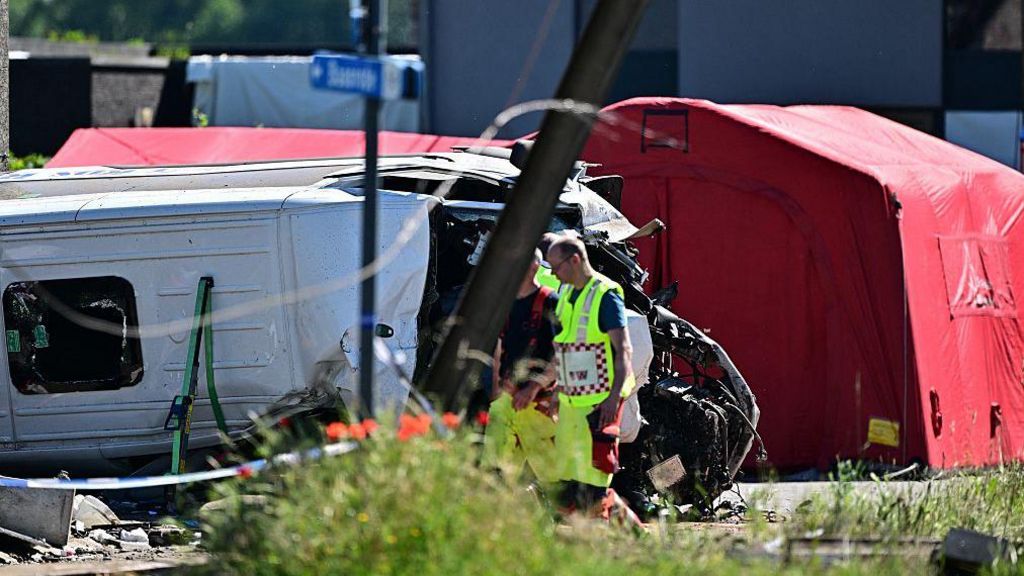
    Photographs captured at the accident scene show the mangled minibus resting on its side off the tracks, a stark visual of the tragedy that has shaken the local community. Belgian Mobility Minister Jean-Luc Crucke, who first confirmed that the crossing’s safety barriers were already lowered at the time of the collision, offered his immediate condolences to all those affected. “My first thoughts are with the victims,” Crucke said in a statement shortly after the crash.

    Flemish Education Minister Zuhal Demir also echoed the sorrow of national and regional leaders, sharing her reaction on public social media. “What heartbreaking news,” Demir wrote. “My thoughts are with all the victims, their families and everyone closely involved.” Local emergency services rushed to the scene immediately after the collision to extract casualties and secure the area, with investigations into the exact cause of the crash now underway.

  • Several hurt in a crash between a train and a minibus, Belgian police say

    Several hurt in a crash between a train and a minibus, Belgian police say

    BRUSSELS – A dramatic collision between a passenger train and a minibus transporting children has left multiple people injured in northern Belgium, federal law enforcement officials confirmed Tuesday. The crash unfolded at an unprotected level crossing close to the small municipality of Buggenhout, located roughly 30 kilometers northwest of the country’s capital city. As of Tuesday afternoon, the full sequence of events leading to the incident remained unconfirmed, with authorities still working to piece together how the crash occurred. Federal police have confirmed that “several people” sustained harm in the collision, but declined to share additional information, including the full extent of injuries or the identities of those involved. Local private broadcaster VTM, however, has reported that a number of fatalities have been recorded at the scene, though official confirmation of this detail is still pending. A multi-disciplinary response team, including public prosecutors, forensic investigators, and national transport safety experts, was dispatched to the crash site shortly after the incident to launch a full investigation into the cause. In a public statement posted to social media, Belgian Interior Minister Bernard Quintin offered his reaction to what he described as a devastating loss. “I feel great sadness over the tragic accident in Buggenhout, where a school bus was struck by a train,” Quintin wrote. “My thoughts are with the victims and all of their families and loved ones at this incredibly difficult time.” The incident has sent shockwaves through the local community, with emergency services remaining on site to coordinate response efforts through Tuesday afternoon.

  • Russia maintains attacks on Ukraine as Kyiv warned to brace for possible major barrage

    Russia maintains attacks on Ukraine as Kyiv warned to brace for possible major barrage

    In a major escalation of aerial attacks on Ukraine, Russian forces launched more than 100 drones alongside two ballistic missiles against Ukrainian targets overnight, Ukraine’s Air Force confirmed Tuesday. The attack came just one day after Moscow issued explicit warnings of impending large-scale strikes on the Ukrainian capital, prompting evacuation calls for foreign nationals and diplomatic staff — a threat Ukrainian officials dismissed as nothing new to their experience of nearly three years of constant Russian attacks.

    On Monday, Russian authorities urged all foreign citizens, including diplomatic personnel stationed in Kyiv, to evacuate the capital immediately, advising local residents to avoid all military and government infrastructure amid preparations for what it called “systemic strikes” against the city. In a diplomatic readout, Russia’s Foreign Ministry confirmed that Foreign Minister Sergey Lavrov raised the call for U.S. diplomatic evacuation during a phone call with U.S. Secretary of State Marco Rubio. While Rubio did not confirm whether the U.S. State Department would comply with the demand, he expressed concern during an official trip to India that the ongoing “terrible” conflict in Ukraine could spiral into further escalation.

    The current Trump administration has spent more than a year pursuing diplomatic efforts to end the full-scale war that began with Russia’s February 2022 invasion of Ukraine. To date, those negotiations have produced no major breakthrough, and talks have been paused entirely as Washington redirects its strategic focus to the ongoing conflict with Iran.

    Despite Moscow’s stark warnings, no diplomatic missions have announced plans to withdraw from Kyiv. The European Union, French and Polish embassies have all issued public statements confirming they will remain in the capital. Ukrainian Foreign Ministry officials pushed back on Moscow’s threat assessment Monday, noting that the level of security risk to Kyiv and other Ukrainian urban centers remains unchanged from what the country has navigated for months and years. Russia has carried out continuous missile and drone strikes on Ukrainian population centers since the full-scale invasion began, they added, and Ukraine stands ready to provide additional security support to any diplomatic mission that requests it.

    Moscow framed its massive weekend attack — the largest single missile strike of 2025 — as retaliation for a deadly Ukrainian drone strike on a building in Starobilsk, a Luhansk region city under Russian occupation. Russia claimed the strike hit a college dormitory, but Ukraine’s General Staff corrected the account, confirming the target was the local headquarters of a Russian special military drone unit.

    A key vulnerability for Ukraine’s defense remains a critical shortage of air defense interceptors needed to stop Russian ballistic missile attacks, Ukrainian President Volodymyr Zelenskyy confirmed Monday. In a social media statement, Zelenskyy noted that advanced U.S.-manufactured air defense systems, which Ukraine relies on to counter Russian ballistic threats, are in short supply due to competing defense demands from the Iran war. “Unfortunately, there has been no progress for a long time with America on expanding the production of anti-ballistic capabilities,” Zelenskyy wrote. He added that Kyiv is now working closely with European partners to scale up domestic production of anti-ballistic defenses to meet battlefield needs.

    Despite the air defense shortfall, Zelenskyy noted that Ukrainian forces have made incremental battlefield gains in recent months that have allowed them to stabilize the 1,250-kilometer front line stretching across eastern and southern Ukraine, demonstrating that Kyiv’s military is able to hold its position against Russia’s larger force.

    Independent analysis from the Institute for the Study of War (ISW), a Washington-based security think tank, finds that Russia’s planned spring offensive is already struggling to make gains, as mid-range Ukrainian drone strikes repeatedly disrupt Russian rear-echelon supply lines. The think tank noted Monday that Moscow’s public warnings of massive upcoming strikes on Kyiv are largely a distraction tactic, designed to draw public attention away from poor Russian battlefield performance and growing domestic economic pressure caused by war spending and international sanctions.

    This report featured contributions from correspondent Hatton in Lisbon, Portugal, and Elise Morton in London, and is part of AP’s ongoing coverage of the Russia-Ukraine war.

  • Gisèle Pelicot ‘deeply shocked’ by decision not to jail boys in rape case

    Gisèle Pelicot ‘deeply shocked’ by decision not to jail boys in rape case

    A high-profile French rape survivor has spoken out against a controversial UK court decision that spared three teenage boys from custodial sentences for the repeated rape of two underage girls in southern England, calling the outcome a failure of justice for victims of sexual violence.

    The attacks unfolded in two separate incidents in Fordingbridge, Hampshire, between November 2024 and January 2025. Two 14-year-old boys carried out rapes against a 14-year-old and a 15-year-old girl, while a third 13-year-old boy was convicted of aiding and abetting the second assault. In a shocking detail that amplified the gravity of the crimes, the perpetrators recorded video of the attacks and shared the footage across social media platforms. The case has already sparked urgent questions about the responsibility of big tech firms in preventing the spread of abusive content.

    At Southampton Crown Court, Judge Nicholas Rowland handed down Youth Rehabilitation Orders (YROs) rather than custodial placements, arguing that the offenders’ young ages meant avoiding permanent criminalization was a priority. The two 14-year-olds (now 15) received three-year YROs with 180 days of intensive supervision, along with 10-year restraining orders and three-month curfews. The 13-year-old (now 14) was sentenced to an 18-month YRO for his role in the second attack. Judge Rowland acknowledged the extreme severity of the crimes, noting that the recording of the assaults made them even more abhorrent, but stood by his decision to spare the teens from youth detention.

    Following the ruling, the UK Attorney General Lord Richard Hermer announced he would launch a formal review of the sentences, with 28 days to determine if the outcome is unduly lenient and should be referred to the Court of Appeal for reconsideration. Prime Minister Keir Starmer has also publicly labeled the case “appalling” and praised the two victims for their “extraordinary bravery” in coming forward amid such heinous circumstances.

    Now, 73-year-old Gisèle Pelicot, a veteran campaigner for sexual assault survivors who became a global symbol of courage after waiving anonymity in France’s largest ever mass rape trial, has spoken out about the UK ruling. In an interview with BBC Breakfast, Pelicot said she was “deeply shocked” that the offenders were allowed to walk free, while their victims carry lifelong trauma that will never fully heal.

    Pelicot’s own experience of abuse made headlines around the world: her husband Dominique Pelicot drugged her into unconsciousness for years and invited dozens of stranger to rape her, in a case that rocked France. Dominique Pelicot was ultimately sentenced to 20 years in prison, and Gisèle Pelicot has since dedicated herself to encouraging other survivors to speak out about their experiences.

    In the Fordingbridge case, one of the victims, now 16, described the non-custodial sentence as like a “rock straight in my face” and a mere “slap on the wrist” for the crimes committed against her. She told the BBC’s *Sunday with Laura Kuenssberg* that she and her family are pushing for the sentences to be changed, questioning why she endured the trauma of reliving the attack during trial if no significant punishment would be imposed.

    Pelicot said she salutes the incredible strength and courage of this victim for choosing to speak publicly about her abuse, adding that she hopes her own high-profile story helped give the young survivor the confidence to come forward. “Rape is a crime and justice has an essential role,” Pelicot said. “It’s there to, in fact, name the crimes, to recognise the suffering of victims, and to remember that in fact they must not remain unpunished.”

    She also called on national governments and large technology companies to step up their efforts to protect survivors of sexual violence, particularly amid the growing trend of perpetrators sharing abusive content of their attacks online that causes ongoing harm to victims long after the initial assault.