标签: Europe

欧洲

  • Jury considers verdict for man accused of plotting Taylor Swift concert attack

    Jury considers verdict for man accused of plotting Taylor Swift concert attack

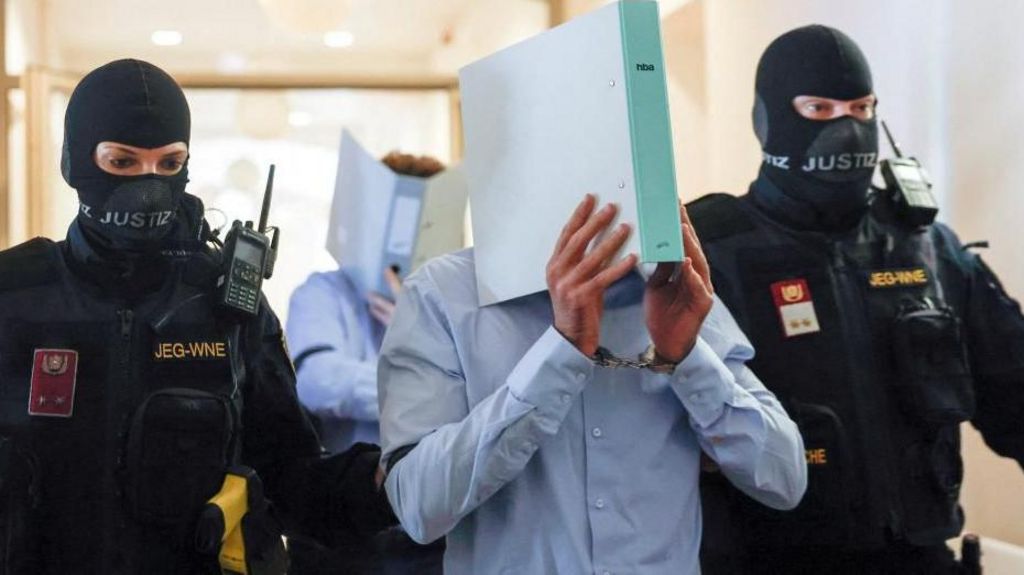
    A jury in Austria has begun closed-door deliberations to reach a verdict in the high-profile trial of two young men linked to the Islamic State (IS) terrorist group, one of whom has confessed to plotting a deadly mass attack on a 2024 Taylor Swift concert in Vienna.

    In accordance with Austria’s strict privacy regulations for criminal defendants, the primary accused, a 21-year-old Austrian national, is publicly identified only as Beran A. He has publicly admitted to two core charges: plotting the jihadist attack on the sold-out Taylor Swift shows at Vienna’s Ernst Happel Stadium, and formal membership in a designated terrorist organization. However, he has refuted additional charges connected to an alleged secondary plot targeting the Islamic holy city of Mecca in Saudi Arabia.

    Beran A stands trial alongside 21-year-old Slovakian national Arda K, who prosecutors allege was a fellow member of the same IS-aligned cell. Court records confirm Arda K was not involved in planning the Taylor Swift attack, but is accused of complicity in the broader Mecca plot.

    The plot was foiled just hours before the first of three scheduled Swift concerts, after counterterrorism authorities received a critical tip from the U.S. Central Intelligence Agency (CIA) that led to Beran A’s arrest. With the threat confirmed, event organizers canceled all three performances, disappointing nearly 200,000 ticketed fans and leaving Swift herself devastated. In a subsequent documentary about her record-breaking Eras Tour, Swift shared that she learned of the planned attack mid-flight en route to Vienna, describing the moment as a near-miss that avoided an outright “massacre situation.”

    Prosecutors laid out their case outlining how Beran A became radicalized online and swore a formal oath of allegiance to IS. Court documents show he attempted to illegally obtain weapons including a fully automatic machine gun and a hand grenade, though those efforts ultimately failed. He also allegedly attempted to build an explosive device using step-by-step instructions pulled from an IS propaganda video posted to public online platforms.

    A court-appointed psychiatric expert, Peter Hoffmann, testified during the trial that Beran A shows no clinical signs of mental illness, and told the court there is “no psychiatric explanation” for his radicalization into violent extremism.

    In closing arguments, lead prosecution counsel pushed the jury to return guilty verdicts on all charges against both defendants, noting Beran A’s own admissions of guilt for the core Taylor Swift plot charges. Prosecutors also emphasized that the two men acted as accomplices in planning multiple additional attacks across Mecca and other unnamed cities months before the Vienna plot.

    That broader plot links the two defendants to Hasan E, a former high school classmate who is currently in Saudi Arabian custody facing charges for a stabbing attack that wounded five people, including a security guard, in Mecca. Both Beran A and Arda K admit they traveled to Istanbul and Dubai respectively as part of the early plot planning, but both deny providing material support to Hasan E for his subsequent attack.

    The prosecutor told the jury the trial presented a critical opportunity to send a clear message to would-be terrorists: “anyone who prepared a terrorist attack should face consequences.”

    Beran A’s defense attorney, Anna Mair, acknowledged her client has admitted guilt to the crimes he committed, but argued he should only face penalties for the acts he actually took part in. She told the court Beran A was not the ringleader of the cell, and had been manipulated by more radicalized actors. “My client is not innocent; he has committed serious crimes. But you can only convict him for what he has done,” Mair stated.

    Both young men offered apologies to the court during the trial. Beran A expressed remorse for his actions, while Arda K also said he regretted the plot ever progressed so far, asking the jury for a chance to eventually “integrate into society” if convicted.

    If both defendants are found guilty on all charges filed against them, they face a maximum sentence of 20 years in prison.

  • EU fines Temu €200m for allowing sale of illegal products

    EU fines Temu €200m for allowing sale of illegal products

    The European Commission has announced a €200 million ($232 million) fine against Chinese-owned e-commerce giant Temu, marking only the second major penalty issued under the bloc’s landmark Digital Services Act (DSA) for regulatory non-compliance. The penalty stems from a months-long investigation that found the platform failed to properly police the sale of illegally unsafe products, ranging from dangerous children’s toys to non-compliant electrical chargers that put consumers at serious risk.

    The inquiry into Temu’s practices launched back in October 2024, after regulators raised concerns that the company was not meeting its mandatory obligations as a Very Large Online Platform (VLOP) — a classification for large digital services that requires heightened risk monitoring under EU law. As part of the probe, an independent third-party testing firm conducted a widespread mystery shopping exercise to sample products sold on Temu’s platform. The results were alarming: a large share of the phone and device chargers purchased failed basic global electrical safety standards, and a similarly high proportion of baby toys were found to violate EU safety rules. Many of the infant toys contained toxic chemicals above permitted legal limits, while others included small detachable components that posed immediate choking and suffocation hazards to young children.

    In announcing the penalty, EU Technology Commissioner Henna Virkkunen emphasized that the ruling was designed to send an unambiguous, strong message to Temu and other large online platforms operating in the bloc. Regulators found that Temu did not adequately fulfill its legal requirement to diligently identify, analyze, and address the systemic risks that unregulated unsafe products pose to European consumers.

    Beyond the financial penalty, Temu is required to submit a comprehensive corrective action plan outlining how it will fix its regulatory gaps by August 28, 2025. After receiving the plan, the European Commission will have two months to review the proposed changes and determine whether they meet EU compliance standards.

    In an official response following the announcement, a Temu spokesperson stated that the company disagrees with the commission’s ruling and considers the €200 million fine disproportionate. The spokesperson added that the decision addresses conditions from 2024 and does not reflect updates the platform has already made to its safety and compliance systems. Temu says it is currently conducting a full review of the ruling and evaluating all possible next steps, including potential legal pushback.

    This penalty is only the second fine issued for content and product regulatory violations under the DSA, following a €120 million penalty imposed on Elon Musk-owned social media platform X (formerly Twitter) in December 2024. The case signals that EU regulators are ramping up enforcement of the DSA, holding large global digital platforms accountable for meeting strict consumer protection and risk management requirements when operating in the European single market.

  • Italy seizes gold, luxury villas and cash tied to Sicilian Mafia drug-trafficking gains

    Italy seizes gold, luxury villas and cash tied to Sicilian Mafia drug-trafficking gains

    MILAN – In a major strike against the Sicilian Mafia’s efforts to reconsolidate its financial stronghold, Italian law enforcement has confiscated over 200 million euros, equivalent to $232 million, in assets connected to the drug trafficking network of deceased notorious mafia boss Matteo Messina Denaro, anti-mafia prosecutors announced Thursday.

    At a press briefing detailing the operation, investigators outlined the wide scope of assets taken into custody: more than 12 kilograms (26 pounds) of high-purity gold bars, millions of euros in untraceable cash, a collection of high-end luxury watches, and approximately 20 upscale residential and commercial properties scattered across the country.

    Matteo Messina Denaro, one of Italy’s most wanted fugitives, spent 30 years evading capture before he was finally arrested in January 2023. Just nine months after his arrest, the 61-year-old mafia leader died at a prison hospital while serving multiple life sentences. He had already been convicted in absentia for dozens of high-profile murders, including his role as a mastermind behind the 1992 car bombings that killed Giovanni Falcone and Paolo Borsellino, two of Italy’s most prominent anti-mafia prosecutors.

    The landmark asset seizure is part of a long-running investigation into the multidecade money laundering trail that grew out of Messina Denaro’s international drug trafficking operation. Alongside the asset confiscation, law enforcement has already taken three suspects into custody tied to the network, and courts have approved seizure orders for all connected companies, offshore holdings, and financial accounts that make up the 200-million-euro criminal fortune.

    More than 150 elite financial police officers participated in coordinated search operations that stretched across Italy and seven offshore jurisdictions: Andorra, Gibraltar, the Cayman Islands, Switzerland, Lebanon, Monaco, and Spain, highlighting the global reach of Messina Denaro’s criminal enterprise.

    Giovanni Melillo, Italy’s national anti-mafia chief prosecutor, emphasized that the operation is a key part of a sustained national push to dismantle the Sicilian Mafia’s entire economic backbone. By stripping the organization of its accumulated criminal wealth, authorities aim to block the mafia from rebuilding powerful transnational criminal networks that can exert harmful influence over global finance, local communities, and public institutions through violence, intimidation, and corruption.

  • Man arrested after three injured in stabbing at Swiss train station

    Man arrested after three injured in stabbing at Swiss train station

    A violent stabbing incident at a major Swiss train station has left three people hospitalized and triggered a large emergency response, with law enforcement confirming the arrest of a local suspect on Friday morning. The attack unfolded just after 8:30 a.m. local time at Winterthur train station, located roughly 15 miles northwest of Switzerland’s largest city, Zurich, according to official police statements.

    Authorities confirmed that all three victims are Swiss citizens, aged 28, 43, and 52 respectively. All three were rushed to nearby medical facilities for treatment following the assault, which was carried out with an unspecified bladed weapon. The suspect taken into custody at the scene is identified as a 31-year-old Swiss man, and police have confirmed that no other assailants are being sought as of the latest update. Investigators are still working to establish a clear motive for the attack, with no conclusions drawn as of press time.
    Multiple eyewitness accounts have shed light on the chaotic scene of the incident. A worker in an adjacent office building told local reporters that he heard the suspect shout “Allahu Akbar” — Arabic for “God is greatest” — just moments before launching the knife attack on bystanders. At the time of the assault, a group of school children was passing through the station concourse, and quick action from a school teacher prevented the children from being caught up in the violence. Local media reports note the teacher positioned themselves between the suspect and the students, shielding them from harm.
    A taxi driver who was waiting at the station told the leading Zurich-based daily *Neue Zürcher Zeitung* that the attacker moved through the station’s underground underpass, targeting multiple people as he walked. Photographs published by multiple Swiss news organizations show significant sections of the station perimeter and surrounding areas cordoned off by law enforcement in the hours after the attack, as forensics teams worked to collect evidence at the scene. No further updates on the condition of the three injured victims have been released by authorities as the investigation continues.

  • Chinese online retailer Temu hit with $232 million fine over unsafe toys and electronics

    Chinese online retailer Temu hit with $232 million fine over unsafe toys and electronics

    BRUSSELS, LONDON – In one of the most significant penalties issued under the European Union’s landmark Digital Services Act (DSA) to date, Chinese e-commerce giant Temu has been fined 200 million euros ($232 million) after regulators concluded the platform systematically failed to shield European consumers from dangerous, non-compliant products ranging from toxic children’s toys to uncertified unsafe electronics.

    The penalty, announced Thursday by the European Commission, the EU’s executive governing body, follows a year-long investigation that grew out of 2023 preliminary findings confirming Temu’s marketplace exposed shoppers to widespread risks from goods that violate the bloc’s strict consumer safety standards. The action marks the first formal DSA compliance evaluation of Temu completed by the commission in 2024, and it puts the fast-growing discount retailer on notice to overhaul its platform governance or face further penalties.

    The DSA, the EU’s sweeping regulatory framework for large online platforms, mandates that major digital marketplaces implement rigorous systems to root out harmful content and illegal, non-compliant goods, with violations punishable by fines reaching up to 6% of a company’s global annual revenue. For this penalty, regulators settled on a 200 million euro fine, an amount they say reflects the seriousness of Temu’s compliance failures.

    Officials detailed that a mystery shopping probe carried out by investigators uncovered alarming levels of non-compliant products across high-risk categories. Among the most troubling finds were a large share of baby toys that contained toxic chemicals exceeding EU safety limits, plus small detachable parts that presented a choking and suffocation hazard for young children. Investigators also discovered dozens of electronic device chargers that failed basic electrical safety testing, putting users at risk of fire or electric shock.

    In a statement following the announcement, European Commission Executive Vice-President Henna Virkunnen emphasized that mandatory risk assessments are not perfunctory procedural steps for large platforms. “Temu’s risk assessment underestimates concrete risks, lacks specificity, is not grounded in solid evidence, and is not comprehensive,” Virkunnen said in prepared remarks. “It leaves regulators, users, and the public in the dark about the true scale of potential harm posed by illegal products sold on Temu. Now it is time for Temu to comply with the law.”

    Regulators added that Temu’s failure to conduct proper, comprehensive risk assessments for illegal goods on its platform qualifies as an especially severe breach of DSA rules. The commission has given Temu until the end of August 2024 to submit a formal action plan outlining how it will correct its compliance gaps. If Temu fails to meet the deadline or does not implement sufficient reforms, the platform could face additional recurring daily, weekly or monthly fines for continued non-compliance.

    Temu, which is owned by China-based PDD Holdings Inc. — the parent company of Chinese domestic e-commerce giant Pinduoduo — has rapidly expanded its European footprint in recent years, attracting 92 million monthly users across the 27-nation bloc. The platform built its customer base by offering ultra-low-priced goods across categories from clothing to home goods, with most inventory shipped directly from third-party sellers based in China.

    In response to the penalty, the company pushed back against the commission’s findings. A Temu spokesperson said the company disagrees with the decision and considers the $232 million fine “disproportionate.” The company also noted that the ruling is based on its 2024 evaluation that reflects the platform’s systems at an earlier point in time, “and does not reflect the current state of our systems.”

    “Temu engaged constructively with the Commission throughout the process and has since taken further steps to strengthen risk assessment, platform governance, and user protection,” the company added in its official statement.

  • Zelenskyy heads to Sweden as Ukraine touts drone expertise honed in war with Russia

    Zelenskyy heads to Sweden as Ukraine touts drone expertise honed in war with Russia

    On Thursday, Ukrainian President Volodymyr Zelenskyy traveled to Stockholm to hold high-stakes bilateral defense negotiations with Swedish Prime Minister Ulf Kristersson, marking another step in Kyiv’s ongoing push to secure additional military support from Western allies.

    Following the meeting, Zelenskyy announced via social media that the two nations are currently developing a landmark new defense assistance package, with negotiations advancing on an agreement to supply Saab Gripen fighter jets to Ukraine’s air force. This deal would mark a significant upgrade to Ukraine’s aerial capabilities, which have long been outmatched by Russia’s larger air fleet.

    A core pillar of Zelenskyy’s current global diplomacy has centered on reciprocal defense cooperation: Ukraine is now leveraging the specialized drone warfare expertise it has honed over more than four years of full-scale conflict with Russia to build deeper defense partnerships around the world. Zelenskyy confirmed that Ukrainian drone specialists have already assisted nations across the Middle East, particularly Gulf Arab states, in strengthening their air defense capabilities amid rising regional tensions tied to the Iran conflict. They have also provided support to U.S. military bases operating across the Middle East, he added. Beyond the Middle East, Ukraine has finalized joint drone production agreements with multiple European Union member states, where leaders share widespread concerns that Russian President Vladimir Putin holds broader military ambitions beyond Ukraine’s borders.

    On the battlefield, Ukraine’s domestic drone fleet has already proven to be a game-changing advantage against Russia’s much larger conventional military. Ukrainian drones routinely patrol the 1,250-kilometer front line stretching across eastern and southern Ukraine, and carry out deep strikes against Russian supply routes, slowing the advance of Moscow’s forces. In an updated assessment released late Wednesday, the Washington-based Institute for the Study of War confirmed this impact, noting that Ukraine’s successful mid-range and front-line drone strike campaigns have severely restricted Russia’s capacity to move troops to the front and resupply forward positions.

    Despite this tactical advantage, the conflict remains deeply lopsided in key areas. Russia currently occupies roughly 20 percent of Ukraine’s internationally recognized territory, including the Crimean Peninsula that Moscow illegally annexed in 2014. The human cost of Russia’s campaign has been staggering: the head of the United Kingdom’s GCHQ intelligence agency disclosed Wednesday that nearly 500,000 Russian soldiers have been killed in the conflict to date. Even so, Russia retains a significant quantitative edge in long-range ballistic missiles, which it has systematically used throughout the war to degrade Ukraine’s critical energy infrastructure and attack urban civilian centers.

    Last weekend, that escalating aerial campaign reached a new intensity when Russian forces launched a massive barrage against Kyiv, firing nearly 90 missiles alongside hundreds of attack drones in an attempt to overwhelm the capital’s air defense networks. In response to this escalating threat, Kyiv officials confirmed Wednesday that Zelenskyy has sent a formal letter to U.S. President Donald Trump and congressional leaders requesting additional American-made air defense ammunition to counter Russian ballistic missile attacks. In the letter, Zelenskyy stressed that Ukraine urgently needs more U.S. Patriot PAC-3 interceptors and other advanced air defense systems, warning that current delivery volumes have fallen to dangerously low levels as the ongoing Iran conflict diverts U.S. military stockpiles.

    As Kyiv prepares for expected further large-scale bombardments, no foreign diplomatic missions have followed Moscow’s recent recommendation to evacuate the capital ahead of what the Russian Foreign Ministry warned would be coming “systemic strikes” against Kyiv. On Thursday, Ukraine’s Foreign Ministry confirmed that all diplomatic missions based in the capital continue to operate as normal, with no suspensions or evacuations reported.

    The Associated Press continues to provide ongoing full coverage of the Russia-Ukraine war at https://apnews.com/hub/russia-ukraine.

  • Police say a man stabbed and wounded 3 people at a Swiss train station before being arrested

    Police say a man stabbed and wounded 3 people at a Swiss train station before being arrested

    GENEVA — Law enforcement authorities have confirmed that a stabbing incident at a major train station in the Swiss city of Winterthur left three people wounded on Thursday, with the attacker taken into custody shortly after the assault.

    According to an official statement released by Zurich cantonal police, the violent outbreak unfolded just after 8:30 a.m. local time, a peak window for commuter travel in the densely populated northeastern region of Switzerland. The individual taken into custody is a 31-year-old Swiss national, and investigators have launched a full probe to uncover the root motive behind the unprovoked attack.

    All three victims harmed in the incident are also Swiss citizens, aged 28, 43, and 52 respectively. Emergency response teams transported the injured parties to local medical facilities for treatment immediately following the attack, though authorities have not yet released any details regarding how seriously each victim was hurt.

    Situated just outside Switzerland’s largest urban center, Zurich, Winterthur is home to a population of roughly 123,000 people, making it one of the country’s midsize urban hubs. The attack has shaken local communities, with ongoing police work working to piece together the full sequence of events leading up to the stabbing.

  • Cannabis worth an estimated €4.2m seized

    Cannabis worth an estimated €4.2m seized

    In a major crackdown on illicit drug trafficking in western Ireland, law enforcement agencies have seized a large shipment of cannabis with an estimated street value of €4.2 million (equivalent to £3.6 million) in County Clare. The operation, carried out jointly on Tuesday by An Garda Síochána, Ireland’s national police service, and the Revenue Customs Service, resulted in the seizure of 210 kilograms of suspected cannabis herb. A 40-something male suspect was taken into custody immediately following the raid and continues to be held for questioning as of the latest updates. The seized controlled substances are scheduled to undergo formal forensic analysis to confirm their composition and purity, while active investigations into the broader drug trafficking network linked to this shipment remain ongoing. This seizure marks one of the larger narcotics busts in the region in recent months, underscoring Irish authorities’ continued efforts to disrupt cross-border and domestic illegal drug supply chains.

  • Man meets Dutch volunteer caring for father’s WW2 grave

    Man meets Dutch volunteer caring for father’s WW2 grave

    For nearly 80 years, Leslie Heath of Liverpool carried an unresolvable uncertainty: his father, Sergeant Leslie Heath, had been listed as missing in action from World War II, and his family grew up believing his body was never found. That long-held misunderstanding finally unraveled this year, opening a new chapter of healing and connection that crosses international borders.

    Sergeant Heath was just 30 years old when he lost his life in February 1945, fighting alongside Allied forces to liberate the Dutch town of Venray from Nazi occupation. Leslie, his only son, was barely 12 months old when his father shipped out to war, and he never got the chance to build a single living memory of him. For decades, the mystery of his father’s fate hung over the family; Leslie’s mother, who never remarried, died holding fast to the belief that her husband’s remains had never been recovered.

    The turning point came when the Venray War Cemetery Foundation launched a public appeal, partnering with BBC North West to trace the families of nearly 100 fallen soldiers from northwest England buried in the cemetery’s grounds. The organization’s initiative was simple but deeply meaningful: volunteers had taken on the work of tending to each grave, and they wanted to add personal photographs to every headstone to humanize the sacrifices of the men who died liberating their country. They weren’t just grave tenders—they were amateur detectives, digging through military records to connect lost soldiers to their long-separated families.

    Through the appeal, Leslie was put in touch with Rob Vdhoven, a volunteer with the foundation who had been tending to Sergeant Heath’s grave for months. Rob shared a long-hidden truth with Leslie: his father was not missing at all. He had been buried in a temporary battlefield grave immediately after his death, and his remains were only moved to the permanent Venray War Cemetery in 1947, two years after the war ended, a detail that had never been passed along to his family.

    For Leslie, the revelation was life-changing. “I’ve learned more about my father in the last eight weeks than I’ve known most of my entire life,” he shared in an interview.

    Last week, the pair finally met face-to-face in Liverpool, after Leslie’s daughter Michelle organized the cross-border trip to give the family a chance to thank Rob personally. Leslie said the connection was instant: “We connected immediately, and I felt like I had known him for ages. It was a strange feeling, but it was a nice feeling, you know? A really nice feeling.” As a token of gratitude, Leslie gave Rob one of his father’s original war medals, a small memento to honor the volunteer’s years of care.

    Rob, who visits and tends to Sergeant Heath’s grave once a month, says the work of caring for these fallen soldiers is more than a volunteer activity—it’s a debt of gratitude that can never be repaid. “Because of the man who’s laying at the cemetery we can walk freely in the Netherlands, and that’s a thing that we can never forget,” he said. “Someone has to care about it.”

    For Leslie, the knowledge that Rob tends to his father’s final resting place has brought a profound sense of peace after decades of uncertainty. “It gives you a hell of a lot of comfort,” he said. He praised the foundation’s work to add photographs to each grave, noting that the project turns an anonymous headstone into a reminder of a real man who gave his life for a country not his own. “They actually put photographs on the grave of every soldier to make it more human. It’s not a piece of concrete that’s there. It’s a man,” Leslie said. “The care and attention the volunteers give to the graves is absolutely amazing.”

    For the Heath family, what began with 80 years of uncertainty has ended in a connection that honors both sacrifice and friendship, binding a British military family to the Dutch community their father died to free.

  • France moves to repeal Code Noir, the slavery law it never abolished

    France moves to repeal Code Noir, the slavery law it never abolished

    PARIS – For nearly 200 years after France formally abolished chattel slavery across its territories, a foundational colonial-era law that codified Black people as owned property remained embedded in the nation’s legal books. On Thursday, French National Assembly lawmakers are finally set to vote to strike the archaic, oppressive statute from official records.

    The legislation expected to pass this week targets the *Code Noir* (or Black Code), a 1685 edict signed into law by King Louis XIV to regulate every aspect of enslaved life across France’s sprawling colonial empire. The decree explicitly reclassified human beings as chattel, legally permitting enslavers to overwork, assault, trade, sexually violate and murder enslaved people – and remarkably, no previous French government had ever formally rescinded the text. This long-overlooked fact has left many French citizens stunned and horrified.

    Muriel Jean-Baptiste, a Paris-based nurse whose family hails from Martinique, a Caribbean French overseas department, called the persistence of the law shocking. “A law that treated Black people as property was left sitting there,” she noted.

    The *Code Noir*’s 60 articles touched every corner of colonial life: Article 44 legally labeled enslaved people “movable property,” other clauses mandated disfigurement for captured freedom seekers, and the statute ruled that the testimony of an enslaved person held no legal weight against a white enslaver.

    President Emmanuel Macron acknowledged last week that the text “should never have survived the abolition of slavery” in the 19th century, adding that “the silence, even the indifference, that we have maintained for nearly two centuries toward this Black Code is no longer an oversight. It has become a form of offense.” Like all his predecessors, however, Macron has stopped short of issuing a formal national apology for France’s role in the transatlantic slave trade.

    France oversaw the third-largest transatlantic slave trade in history, transporting an estimated 1.4 million enslaved Africans to work on colonial plantations whose sugar-driven profits built the wealthy mainland French port cities of Nantes and Bordeaux. At its peak, the French colonial empire spanned four continents.

    While the upcoming repeal has been framed as a step toward reckoning with colonial history, many activists and analysts argue it exposes the deeper reality that France has yet to fully confront its legacy of enslavement and racial injustice, characterizing the vote as just one slow, incremental step in a long uncompleted journey.

    Legal observers note that formally striking the *Code Noir* from the books is largely a symbolic act: the statute lost all practical legal authority when France abolished slavery for the final time in 1848. Unlike many former colonial powers that granted independence to their former slaveholding territories, France integrated its four oldest slave colonies – Guadeloupe, Martinique, French Guiana and Réunion – as full overseas departments of the French Republic in 1946, meaning they are officially governed from Paris identically to any mainland region.

    Today, roughly 1.9 million people, most of whom are descendants of enslaved people, live in these departments as full French citizens. Despite their formal status as equal parts of the Republic, these territories remain among France’s poorest. Unemployment rates are roughly double the mainland average, and more than three-quarters of households in Mayotte, another French overseas department in the Indian Ocean, live below the national poverty line.

    The push for repeal came from a lawmaker who had no idea the *Code Noir* still existed on France’s legal books until he researched the topic. Max Mathiasin, a deputy from Guadeloupe and the great-great-grandson of enslaved people, had collected copies of the original text over the years but could never bring himself to read it cover to cover. “This was made by human beings — against human beings,” he said. For Mathiasin, Thursday’s vote is “a way of restoring our ancestors, restoring our humanity” that aligns with France’s foundational republican motto of liberty, equality and fraternity. “It means living up to the Republican promise,” he added.

    Even so, Mathiasin acknowledges that promise remains unfulfilled. “In Guadeloupe, in the most important positions, in the structures of the state, they are white,” he pointed out.

    Pierre-Yves Bocquet, deputy director of the Paris-based Foundation for the Memory of Slavery (chaired by former white prime minister Jean-Marc Ayrault), argues that the *Code Noir* created the framework for France’s “colonial exception” – the doctrine that the founding equal rights of the French Republic could be suspended for populations under colonial rule. That principle, he says, outlasted the formal end of the French empire: “Even today, we accept that people in the overseas territories can have fewer rights than in mainland France.”

    France is not unique in retaining remnants of its colonial past: both the United Kingdom and the United States still administer scattered overseas territories. But what distinguishes France, analysts note, is that it reclassified its former slave colonies as full departments of the Republic, not remote dependencies, yet still treats their populations as second-class citizens.

    For 81-year-old Max Relouzat, president of the Association for the Memory of Slaveries based in Martinique, the repeal is meaningful only because so little else has changed for Black descendants of enslaved people in France. Relouzat’s own African ancestor had no legal name under slavery, only a registration number; his family was granted the surname Relouzat only after emancipation, likely taken from a small village in mainland France’s Auvergne region. What angers him most is that the symbolic repeal leaves systemic racism in France entirely unaddressed. “Under the cover of departmentalization, a colonial system was maintained,” Relouzat said. “If the overseas departments are part of France, why is there a ministry for the overseas?” He argues that “we are still today in a form of apartheid … a form of colonial continuity.”

    Some long-time activists for racial justice warn that the repeal is being framed as a more significant milestone than it actually is. Florence Alexis, a leading scholar of slavery and daughter of celebrated Haitian writer Jacques Stephen Alexis, notes that the real turning point came 25 years ago with the 2001 Taubira Law, which made France the first country in the world to formally classify the transatlantic slave trade and chattel slavery as crimes against humanity. “That is what changed my life,” Alexis said. For her, systemic racism is the direct legacy of the institution of slavery itself, not just one 17th-century edict. She points to ongoing anti-Black discrimination that persists in daily life: “When I was a child at school, they called me the little monkey. People made animal cries when I walked past — as they still do in football stadiums today.”

    Élodie Léon, a 29-year-old Paris-born woman whose family is from French Guiana, welcomes the repeal but resents the nearly 200-year delay. “Symbolic neglect is also neglect,” she said.

    The debate over the *Code Noir* comes as Macron has recently opened discussion of reparations for slavery, a topic France has avoided for decades. Speaking at the 25th anniversary of the Taubira Law on May 21, Macron called reparations “a question we must not refuse” but refused to commit to financial compensation, instead framing repair as first requiring truth-telling, public education and historical preservation work.

    The wealthiest French slave colony was Saint-Domingue, where enslaved people rose up in revolution and won independence as the nation of Haiti in 1804. In retaliation, France forced the newly freed Haitian people to pay reparations to former French enslavers for lost property – a crippling debt that Haiti only fully paid off in 1947. France is not alone in grappling with this history: in the United States, federal reparations legislation has stalled for decades, and while California issued a formal apology for slavery, it has not approved financial compensation for descendants.

    Critics have pointed out that Macron’s recent opening to the idea of reparations clashes with other recent actions. Two months before his May speech, France abstained from a United Nations General Assembly resolution that labeled the transatlantic slave trade a crime against humanity, which passed 123-3 with 52 abstentions. Earlier this month, at the Africa Forward Summit in Kenya, just days after declaring himself a “pan-Africanist,” Macron sparked backlash when he seized a microphone and publicly ordered attendees to be quiet. “As soon as he sets foot on the African continent,” said French opposition lawmaker Danièle Obono, “he can’t help but behave like a colonizer.”

    Bocquet notes that the repeal of the *Code Noir* “will have no direct effect” on daily life for Black people in France or its overseas territories. Whether this symbolic step paves the way for tangible action to address racism and inequality, he says, “remains to be seen.” For Alexis, the low-stakes symbolic vote is intentionally convenient for France’s leadership: “It is easy for the French authorities, and for Macron, to do this. Because it commits them to nothing.”