标签: Europe

欧洲

  • Italy’s justice referendum becomes a high stakes test for conservative Premier Giorgia Meloni

    Italy’s justice referendum becomes a high stakes test for conservative Premier Giorgia Meloni

    Italian Premier Giorgia Meloni confronts a decisive political milestone as citizens participate in a two-day judicial reform referendum commencing Sunday. What originated as a technical adjustment to the nation’s justice apparatus has evolved into a comprehensive evaluation of Meloni’s domestic governance and international standing, with recent polling indicating an intensely competitive contest.

    The referendum encompasses several transformative provisions, including the separation of career trajectories for judges and prosecutors—prohibiting the transitional movement between these roles that currently exists in theory though seldom practiced. Additionally, it proposes restructuring the High Judicial Council into three distinct chambers and modifying selection procedures through randomized lotteries rather than internal elections.

    Meloni has dramatically intensified her advocacy as polling margins narrowed, framing the referendum as essential for national security. She contends that judicial factions have obstructed governmental initiatives on immigration and public safety, cautioning that rejection would empower unaccountable magistrates and potentially release dangerous criminals. Her rhetoric has provoked substantial criticism from legal professionals and center-left opponents who assert the reforms jeopardize judicial independence and constitutional safeguards.

    Political analyst Lorenzo Pregliasco observes that a defeat would deliver a substantial political message, potentially diminishing Meloni’s perception of invincibility while energizing opposition movements. The referendum also carries international implications, particularly regarding Meloni’s alignment with U.S. President Donald Trump, whose foreign policy approaches face growing disapproval among Italian voters.

    While a negative outcome would not compel Meloni’s resignation—her mandate continues through 2027—it could impair her credibility within European Union circles, where she has cultivated an image as a stabilizing influence. The judicial reform debate revives longstanding tensions between Italy’s conservative leadership and magistrates, reminiscent of conflicts during Silvio Berlusconi’s administration.

    Proponents argue the changes would modernize Italy’s notoriously sluggish judicial system and enhance accountability. Conversely, critics including prominent anti-Mafia prosecutor Nicola Gratteri maintain that the government has neglected more pressing judicial inefficiencies while implementing measures that complicate prosecuting corruption and white-collar crimes.

    This referendum represents a defining juncture for Meloni’s premiership, with consequences extending beyond judicial restructuring to potentially reshape her government’s political trajectory.

  • How Ukraine’s front line became a laboratory for drone innovation

    How Ukraine’s front line became a laboratory for drone innovation

    KHARKIV, Ukraine — Under the starlit skies of eastern Ukraine, specialized military teams maintain vigilant watch for Iranian-designed Shahed drones—the low-cost loitering munitions that Russia has deployed by the tens of thousands in its four-year conflict. These mobile units represent the frontline of a remarkable military innovation story: Ukraine’s grassroots development of drone interception technology that has evolved from battlefield necessity into a globally significant defense solution.

    When Shahed drones first appeared in autumn 2022, Ukraine possessed limited capabilities to counter them. Today, through continuous adaptation and ingenuity, drone crews successfully intercept these aerial threats mid-flight using increasingly sophisticated homemade technology. The 127th Brigade exemplifies this transformation, with soldiers constantly testing and refining their interceptor drones during lulls in combat operations.

    The evolution began approximately two years ago when conventional air-defense missiles proved ineffective against agile reconnaissance drones. A pivotal moment occurred when a Ukrainian pilot successfully downed a Russian Orlan surveillance drone using another drone—an event that military personnel now recognize as the dawn of a new era in aerial warfare. “That’s when I realized—this is a drone war. It had begun,” recalled a 27-year-old captain leading the brigade’s efforts, who spoke anonymously due to military regulations.

    Ukraine’s domestic drone interceptor market has subsequently flourished, with key developers showcasing their products at international arms exhibitions. The collaboration between military units and defense companies has been particularly fruitful in Kharkiv, where soldiers work alongside local manufacturers to test and refine aircraft-style interceptor drones capable of matching Shahed speeds exceeding 200 kilometers per hour (124 mph).

    Civil society organizations have played a crucial bridging role in this innovation ecosystem. The Come Back Alive Foundation launched its “Dronopad” (Dronefall) initiative in summer 2024 to systematize early successful interception cases into scalable solutions. Project lead Taras Tymochko emphasized the importance of rapid feedback loops between battlefield testing and technical refinement: “It’s always action and counteraction. That cycle is what drives the evolution of drone warfare.

    The technology’s cost-effectiveness represents perhaps its most revolutionary aspect. While a Patriot missile system costs approximately $2 million per interceptor, these drone systems operate at roughly $2,200 per unit—with the added advantage of being reusable when missions prove unsuccessful. As one pilot noted: “The difference is huge. And the effect? Not any worse.”

    The success of Ukraine’s drone defense approach has attracted international attention, with President Volodymyr Zelenskyy confirming that U.S. allies in the Middle East have sought Ukrainian expertise in defending against Iranian drones—the same systems that have occasionally overwhelmed sophisticated Western air defenses in the region.

    What began as improvisation has matured into a formal military capability, with the 127th Brigade now establishing dedicated air defense units centered on interceptor drone crews—a model being adopted across Ukraine’s armed forces. Nearly two years after initial skepticism, these systems have demonstrated that sometimes, as Tymochko observed, “air defense for the poor can be more effective than air defense for the rich.”

  • Slovenia’s governing liberals face right-wing populists in a tight parliamentary election

    Slovenia’s governing liberals face right-wing populists in a tight parliamentary election

    Slovenians cast their votes on Sunday in a critically contested parliamentary election that represents a fundamental ideological clash for the nation’s future direction. This electoral battle positions incumbent Prime Minister Robert Golob’s liberal Freedom Movement against the right-wing Slovenian Democratic Party (SDS), led by former three-time premier Janez Jansa, whose political style echoes that of Donald Trump.

    The election outcome carries significance beyond Slovenia’s borders, potentially influencing the political equilibrium within the 27-member European Union. A victory for Golob would maintain Slovenia’s current liberal trajectory within the bloc, while a Jansa triumph would bolster Europe’s expanding populist movements, particularly given his established alliance with Hungarian nationalist leader Viktor Orbán.

    Recent polling indicates an exceptionally tight race, with neither major party projected to secure an outright majority in the 90-seat parliament. This electoral uncertainty positions smaller political factions as potential kingmakers in post-election coalition negotiations.

    The campaign has been notably marred by allegations of foreign interference, with claims emerging about covert video recordings purportedly showing government-linked corruption. Investigative findings reveal that representatives from Black Cube, a private intelligence agency operated by former Israeli intelligence officers, made multiple visits to Slovenia in recent months, including to locations near Jansa’s party headquarters. While Jansa acknowledges contacts with a Black Cube adviser, he vehemently denies involvement in election interference schemes.

    Prime Minister Golob has called for an EU-level investigation, emphasizing the need to protect electoral integrity across member states. The allegations have intensified existing political divisions in a country historically known for its moderate political landscape.

    The ideological contrast between the candidates extends to foreign policy, with Golob’s administration adopting a pro-Palestinian stance—including official recognition of Palestinian statehood and travel restrictions on Israeli officials—while Jansa maintains strongly pro-Israel positions.

    Since gaining independence from Yugoslavia in 1991, Slovenia has consistently alternated between liberal and conservative governance. This election continues that tradition of political oscillation, with the Alpine nation’s two million citizens determining whether Europe’s liberal democratic values or right-wing populism will guide their future.

  • Italy is voting on whether to change its constitution. What does this mean for Meloni?

    Italy is voting on whether to change its constitution. What does this mean for Meloni?

    Italian Prime Minister Giorgia Meloni faces a critical political showdown as the nation prepares for a constitutional referendum this weekend that has transformed into a de facto plebiscite on her leadership. The proposed judicial reforms, which would separate career paths for judges and prosecutors while establishing distinct governing bodies, have ignited fierce debate across Italy’s political spectrum.

    In an unprecedented outreach effort, Meloni appeared on the popular Pulp podcast alongside rapper Fedez and co-host Luca Marra, exchanging her customary formal attire for casual wear to connect with younger voters. During the hour-long discussion, she vigorously defended the reforms as essential for creating a “more meritocratic, more responsible, more efficient” justice system while dismissing opposition claims as politically motivated attacks.

    The referendum has polarized the nation, with trade unions and opposition parties staging large demonstrations in Rome’s Piazza del Popolo, where protesters spelled out “Vote No” in white tape on cobblestones. Opposition forces frame the reform as a dangerous threat to democratic balances established in Italy’s post-fascist constitution, warning it could subject the judiciary to political control.

    Meloni’s government maintains that the changes address longstanding issues within Italy’s overloaded judicial system, which suffers from some of Europe’s longest trial durations. However, critics point to the proposal’s origins in Silvio Berlusconi’s Forza Italia party—which frequently clashed with courts during his leadership—and express concern about Meloni’s own adversarial relationship with the judiciary.

    The prime minister has employed dramatic rhetoric, claiming without evidence that rejecting the reforms would lead to “more immigrants, rapists, paedophiles, and drug dealers being freed.” Such statements have intensified concerns among opponents who note Meloni’s political beginnings as an admirer of Mussolini.

    With recent polls suggesting low turnout might benefit the “no” campaign, and amid economic pressures from global uncertainty and rising energy prices, the referendum has become a vessel for broader public discontent. Political analysts suggest that while Meloni would not resign following a defeat, her political standing would be significantly weakened, potentially shaking the stability she has brought to Italy’s traditionally volatile governance.

  • A deadly South Tyrol avalanche kills 2 skiers, trapping 25 near the Austria border

    A deadly South Tyrol avalanche kills 2 skiers, trapping 25 near the Austria border

    A devastating avalanche struck the high alpine region of Italy’s South Tyrol on Saturday, resulting in multiple casualties among backcountry skiers. The incident occurred at approximately 11:40 a.m. local time on the slopes of the 2,669-meter Hohe Ferse (Monte Tallone Grande) near Ratschings, close to the Austrian border.

    According to the CNSAS mountain rescue service’s Bolzano emergency center, the avalanche at 2,400 meters altitude engulfed 25 skiers in its path. The tragic event claimed two lives while leaving three individuals with serious injuries and two with minor wounds. Emergency response teams mobilized an extensive rescue operation involving six helicopters and approximately 80 personnel from multiple agencies including CNSAS, the Alpine Association, police, and firefighters.

    This incident contributes to an alarming trend across European alpine regions during the current season. Official data from European Avalanche Warning Services indicates this winter has surpassed average fatality rates, with 127 recorded avalanche deaths as of March 16—significantly exceeding the seasonal average of 100 fatalities. Italy has reported 33 deaths, followed by France with 31 and Austria with 29.

    The tragedy echoes a similar pattern observed in early February during Italy’s Winter Olympics hosting period, when a record 13 skiers perished within a single week, including 10 avalanche-related deaths. Mountain safety experts attribute the increased danger to unusually unstable snowpack conditions and heightened enthusiasm among skiers seeking fresh powder on off-piste terrain following recent heavy snowfall. Climate specialists further suggest that rising temperatures and intensified wind patterns are contributing factors to the deteriorating snow stability in alpine environments.

  • Tens of thousands of protesters rally in Prague against new government of Czech prime minister Babiš

    Tens of thousands of protesters rally in Prague against new government of Czech prime minister Babiš

    PRAGUE — In a powerful display of civic engagement, an estimated 200,000 demonstrators converged on Letná Park in Prague this Saturday, voicing profound concerns about the democratic trajectory under the new coalition government led by billionaire populist Prime Minister Andrej Babiš. The peaceful assembly, organized by the Million Moments for Democracy group, evoked memories of the historic 1989 protests that catalyzed the collapse of communism in Czechoslovakia.

    Protesters from across the Czech Republic gathered with national flags and banners bearing messages such as ‘Let’s defend democracy,’ expressing alarm that the current administration threatens to steer the nation toward autocratic governance and away from European unity. Mikuláš Minář, the lead organizer, explicitly stated the demonstration aimed to resist dragging the country onto the path seen in Hungary and Slovakia, nations known for their pro-Russian inclinations and democratic backsliding.

    The Babiš government, formed after his ANO movement’s electoral victory in October and subsequent coalition with the anti-migrant Freedom and Direct Democracy party and the right-wing Motorists for Themselves group, has initiated significant shifts in both foreign and domestic policy. These include opposition to key EU environmental and migration policies, rejection of financial assistance to Ukraine amid its conflict with Russia, and the preparation of legislation critics compare to Russia’s ‘foreign agents’ law. This proposed bill would mandate NGOs and individuals receiving foreign funding for vaguely defined political activities to register or face substantial penalties—a measure critics argue could severely restrict civil liberties.

    Further government plans to alter the funding structure of public broadcasters have raised fears of increasing state control over media independence. The protest was galvanized by recent parliamentary decisions, including the rejection of a motion to lift Prime Minister Babiš’s immunity from prosecution in a $2 million EU subsidy fraud case, effectively delaying any potential trial until after his term expires in 2029. Lawmakers also shielded lower house Speaker Tomio Okamura from prosecution on charges of inciting hatred, leading organizers to decry the creation of a two-tier system that privileges political elites.

    The rally underscored a deep-seated commitment to democratic values among citizens. Michael Černohlávek, a 19-year-old student attendee, emphasized the need to actively protect hard-won freedoms. With further protests planned, the event signals sustained public resistance to the government’s policy agenda and its perceived erosion of democratic norms.

  • What to know about Diego Garcia after Iran targets the remote island’s key US military base

    What to know about Diego Garcia after Iran targets the remote island’s key US military base

    In a significant escalation of regional tensions, Iran has launched ballistic missiles toward Diego Garcia, the strategically vital Indian Ocean island hosting a critical UK-US military installation. British authorities confirmed the attack while emphasizing that the missiles failed to reach their intended target, located approximately 2,500 miles from Iranian territory.

    The Diego Garcia base represents one of America’s most crucial overseas military assets, described by Pentagon officials as “an all but indispensable platform” for operations across the Middle East, South Asia, and East Africa. Housing approximately 2,500 predominantly American personnel, the facility has supported military campaigns from Vietnam to Afghanistan and Iraq. The base gained notoriety in 2008 when the U.S. government acknowledged its involvement in clandestine rendition flights for terror suspects.

    Recent geopolitical developments have intensified Diego Garcia’s strategic importance. Last year witnessed the deployment of nuclear-capable B-2 Spirit bombers to the island during heightened airstrike campaigns against Yemen’s Houthi rebels. Britain initially resisted American requests to utilize the base for potential strikes against Iranian targets but reversed its position following Iran’s aggressive actions toward neighboring states. The UK government now permits “specific and limited defensive operations” against Iranian missile sites threatening maritime traffic in the Strait of Hormuz.

    Iranian Foreign Minister Abbas Araghchi responded vehemently on social media platform X, accusing British Prime Minister Keir Starmer of endangering British citizens by permitting offensive operations from UK territory. Despite Iran’s self-imposed 1,240-mile range limitation on its ballistic missiles—which places Diego Garcia theoretically beyond reach—U.S. intelligence agencies maintain concerns that Iran’s space program could facilitate intercontinental ballistic missile development.

    The attack occurs amid ongoing controversy regarding the political status of Diego Garcia, part of the Chagos Archipelago. Britain expelled approximately 2,000 indigenous inhabitants during the 1960s and 1970s to establish the military base, drawing condemnation from international bodies including the United Nations and International Court of Justice. A recent UK-Mauritius agreement proposing sovereignty transfer with a 99-year base leaseback has encountered opposition from multiple fronts, including former U.S. President Donald Trump who characterized the arrangement as “an act of GREAT STUPIDITY.” Parliamentary consideration of the agreement remains suspended pending renewed U.S. support.

  • Iranian and Romanian charged after trying to enter UK’s nuclear submarine base

    Iranian and Romanian charged after trying to enter UK’s nuclear submarine base

    Scottish authorities have formally charged two individuals following a significant security incident at a critical military installation. A 34-year-old Iranian national and a 31-year-old Romanian national were apprehended last Thursday after attempting unauthorized entry into HM Naval Base Clyde, the strategic homeport for Britain’s nuclear-armed submarine fleet.

    The incident occurred at the Faslane base, located approximately 40 miles northwest of Glasgow, which serves as the operational headquarters for the United Kingdom’s Trident nuclear deterrent system. Police Scotland confirmed the detainments and subsequent charges, though specific allegations remain undisclosed under Scottish judicial protocols that withhold suspect names and precise charges prior to court appearances.

    Both defendants are scheduled for initial proceedings at Dumbarton Sheriff Court this coming Monday. The attempted breach marks a serious incident at one of Britain’s most secure military facilities, which maintains continuous at-sea nuclear deterrence through four Vanguard-class submarines armed with Trident II ballistic missiles.

    Britain’s nuclear weapons program, operational since the 1950s, represents a cornerstone of national defense strategy. The Faslane base employs extensive security measures to protect the submarines that carry the country’s strategic nuclear weapons. This incident raises questions about base security protocols and potential vulnerability to infiltration attempts by foreign nationals.

  • Russian drone attack kills two in Ukraine ahead of talks in US, officials say

    Russian drone attack kills two in Ukraine ahead of talks in US, officials say

    A Russian drone assault on the southeastern Ukrainian city of Zaporizhzhia has resulted in two fatalities and left two children, aged 11 and 15, injured. The attack occurred on Saturday, casting a shadow over forthcoming diplomatic discussions between Ukrainian and American officials scheduled to take place in the United States.

    Local authorities confirmed the strike targeted a residential area, underscoring the continued vulnerability of civilian zones in the ongoing conflict. Zaporizhzhia, one of four southeastern regions annexed by Russia in 2022 despite lacking full territorial control, has endured frequent military assaults since the initiation of full-scale hostilities.

    The upcoming US-mediated negotiations face significant challenges, having previously failed to halt combat operations or modify Moscow’s fundamental demands. Primary agenda items include organizing a new trilateral dialogue involving Russia and addressing tensions between Ukrainian President Volodymyr Zelensky and US President Donald Trump. The American leader has previously characterized Zelensky as the principal impediment to peaceful resolution.

    Complicating diplomatic efforts, the Trump administration recently implemented a one-month waiver easing sanctions on nations purchasing Russian oil—a move welcomed by the Kremlin but criticized by Ukrainian advocates as eroding Western consensus on economic pressure against Moscow.

    President Zelensky contends that resource diversion due to Middle East conflicts has created critical missile shortages for Ukrainian forces. He further alleges that Russian President Vladimir Putin seeks prolonged confrontation between the US, Israel and Iran to weaken international support for Kyiv.

    In a strategic exchange, Ukraine has offered its advanced drone technology to the United States, potentially enhancing capabilities against Iranian threats while strengthening bilateral cooperation amid evolving geopolitical dynamics.

  • Russian strike on Zaporizhzhia kills 2 as Ukraine seeks to move forward peace talks

    Russian strike on Zaporizhzhia kills 2 as Ukraine seeks to move forward peace talks

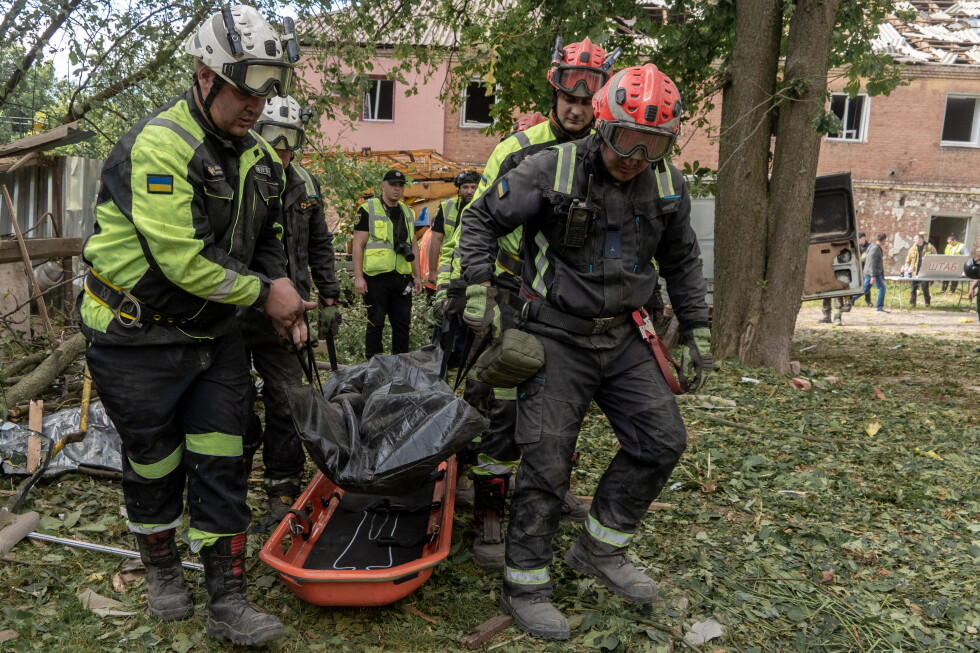
    A Russian drone assault on the southeastern Ukrainian city of Zaporizhzhia resulted in multiple civilian casualties Saturday morning, according to regional governor Ivan Fedorov. The attack destroyed a private residence, killing one man and one woman while leaving two children wounded.

    This lethal incident occurred against the backdrop of intensified diplomatic efforts to restart suspended peace negotiations. Ukrainian President Volodymyr Zelenskyy confirmed Thursday that an official delegation had been dispatched to the United States with the primary objective of resuming trilateral discussions involving Russia, which have remained stagnant since the recent escalation of Middle East conflicts.

    Kremlin spokesman Dmitry Peskov indicated Friday that a renewed round of U.S.-mediated negotiations between Moscow and Kyiv would likely convene in the near future, characterizing the current pause as temporary. However, Western European officials have consistently accused Russian President Vladimir Putin of employing deliberate delay tactics in negotiations while continuing military operations aimed at territorial acquisition.

    The geopolitical landscape has shifted substantially since February 28th, when Israeli and U.S. strikes on Iran redirected international attention from Ukraine’s ongoing defense efforts. This diversion coincides with Russia experiencing unexpected financial benefits through temporary U.S. waivers on oil sanctions, while Ukraine faces critical cash shortages despite promised European Union assistance totaling 90 billion euros.

    Additional priorities for Ukrainian officials during U.S. engagements include maintaining Washington’s authorization for NATO member states to procure American weaponry for subsequent transfer to Ukrainian forces. The White House has not formally confirmed any scheduled meetings with the Ukrainian delegation, though reports suggest discussions were anticipated to occur in Miami later Saturday.