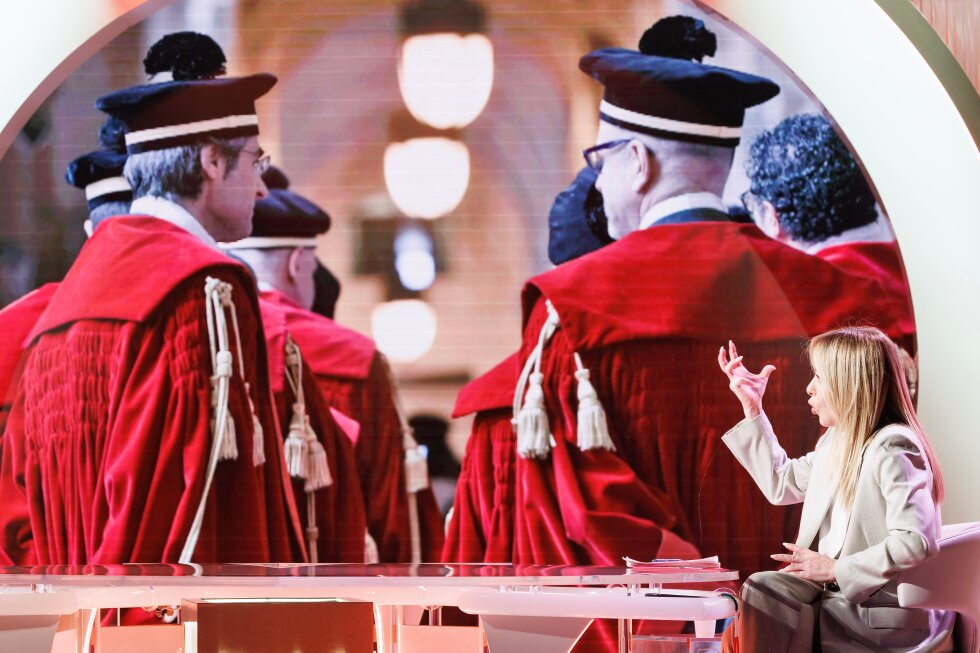
Italian Premier Giorgia Meloni confronts a decisive political milestone as citizens participate in a two-day judicial reform referendum commencing Sunday. What originated as a technical adjustment to the nation’s justice apparatus has evolved into a comprehensive evaluation of Meloni’s domestic governance and international standing, with recent polling indicating an intensely competitive contest.
The referendum encompasses several transformative provisions, including the separation of career trajectories for judges and prosecutors—prohibiting the transitional movement between these roles that currently exists in theory though seldom practiced. Additionally, it proposes restructuring the High Judicial Council into three distinct chambers and modifying selection procedures through randomized lotteries rather than internal elections.
Meloni has dramatically intensified her advocacy as polling margins narrowed, framing the referendum as essential for national security. She contends that judicial factions have obstructed governmental initiatives on immigration and public safety, cautioning that rejection would empower unaccountable magistrates and potentially release dangerous criminals. Her rhetoric has provoked substantial criticism from legal professionals and center-left opponents who assert the reforms jeopardize judicial independence and constitutional safeguards.
Political analyst Lorenzo Pregliasco observes that a defeat would deliver a substantial political message, potentially diminishing Meloni’s perception of invincibility while energizing opposition movements. The referendum also carries international implications, particularly regarding Meloni’s alignment with U.S. President Donald Trump, whose foreign policy approaches face growing disapproval among Italian voters.
While a negative outcome would not compel Meloni’s resignation—her mandate continues through 2027—it could impair her credibility within European Union circles, where she has cultivated an image as a stabilizing influence. The judicial reform debate revives longstanding tensions between Italy’s conservative leadership and magistrates, reminiscent of conflicts during Silvio Berlusconi’s administration.
Proponents argue the changes would modernize Italy’s notoriously sluggish judicial system and enhance accountability. Conversely, critics including prominent anti-Mafia prosecutor Nicola Gratteri maintain that the government has neglected more pressing judicial inefficiencies while implementing measures that complicate prosecuting corruption and white-collar crimes.
This referendum represents a defining juncture for Meloni’s premiership, with consequences extending beyond judicial restructuring to potentially reshape her government’s political trajectory.