
A shocking incident of fatal violence rooted in a long-simmering local rivalry has rocked the quiet Atlantic coastal resort town of Mimizan, in southwestern France, leaving one 68-year-old pétanque enthusiast dead and an 81-year-old suspect in custody. The tragedy unfolded on June 17 at the town’s indoor pétanque court, known locally as a boulodrome, amid an unusual heatwave that pushed many locals to seek relief from scorching temperatures.
标签: Europe
欧洲
-

Kate reflects on Italy tour in essay, as new pictures released
Marking her first official overseas trip since completing cancer treatment, the Princess of Wales has outlined a bold call to center early childhood development on the global policy agenda, while sounding a sharp warning about the erosion of genuine human connection in an increasingly digitized world.
The two-day visit to Reggio Emilia, northern Italy, last month forms the backdrop for a newly published reflective essay from Catherine, Princess of Wales, released this week by the Royal Foundation’s Centre for Early Childhood. Titled *Creating the conditions for love to flourish through nature and creativity*, the piece is the most prominent public contribution from the princess since she stepped back from full duties to undergo cancer treatment, and lays out a clear roadmap for her ongoing advocacy work.
During her time in Reggio Emilia – a region globally renowned for its child-centered, community-focused approach to early years education – the Princess toured local education projects, met with young children and their families, and observed firsthand how low-technology, connection-focused learning shapes childhood development. To accompany the essay, the Royal Foundation has published a series of new candid photos capturing the Princess interacting with local children during the trip.
In the essay, Catherine recalls a question posed by a fellow parent at her children’s school: If every person could change just one thing to improve the world, what would it be? Her answer, she writes, is simple: to prioritize love. She clarifies that this is not a call for grand, sentimental gestures, but rather a commitment to quiet, unconditional love built through consistent presence, shared time, and intentional patience.
The Princess’s reflection comes amid growing concern about the impact of pervasive screen use on childhood development and human interaction. She argues that in an era where nearly every part of daily life is mediated through digital devices, the need for unstructured, face-to-face human connection has never been more urgent. Catherine, who has spoken repeatedly about the power of human contact since her cancer diagnosis, expands on this theme in the essay, emphasizing the joy found in unremarkable everyday moments and what she calls the “everyday magic of life itself.”
“Children always give me hope. Their natural openness, their curiosity about the simplest of things, and their ability to wonder, dream and play remind me of the very best qualities of humanity,” the Princess writes. “The children I met on my recent trip to Reggio Emilia radiated such qualities. Their innate ability to connect and communicate in all sorts of different ways made me feel immediately welcome, as they accepted a complete stranger with confidence and joy.”
Christian Guy, Executive Director of the Royal Foundation Centre for Early Childhood, explained that the essay reflects the Princess’s long-running goal to elevate early childhood development to the status of a pressing global priority, on par with challenges such as climate change. “This essay gives a real insight into how passionately HRH feels about the unique importance of early childhood and its ability to shape society,” Guy said.
Sources close to the Princess describe the Italy trip as a key turning point in her gradual return to full public duties, which has been planned and paced carefully following her treatment. The overwhelmingly positive public response to the visit has confirmed that Catherine remains one of the most popular and influential figures in the British royal family, drawing large public interest and support for her advocacy work.
Following the success of the Reggio Emilia visit, the Princess’s team is now researching other global destinations with innovative, proven approaches to early childhood support, with plans for future study visits. The essay makes clear that supporting young families and nurturing healthy childhood connection will remain the core priority of Catherine’s public work moving forward.
“By allowing children to feel connected from an early age, we can help them carry that sense of balance into adulthood,” the Princess concludes. “If healing later in life is about rediscovering our most important connections, then perhaps the real task is to ensure that they are never lost in the first place.”
-
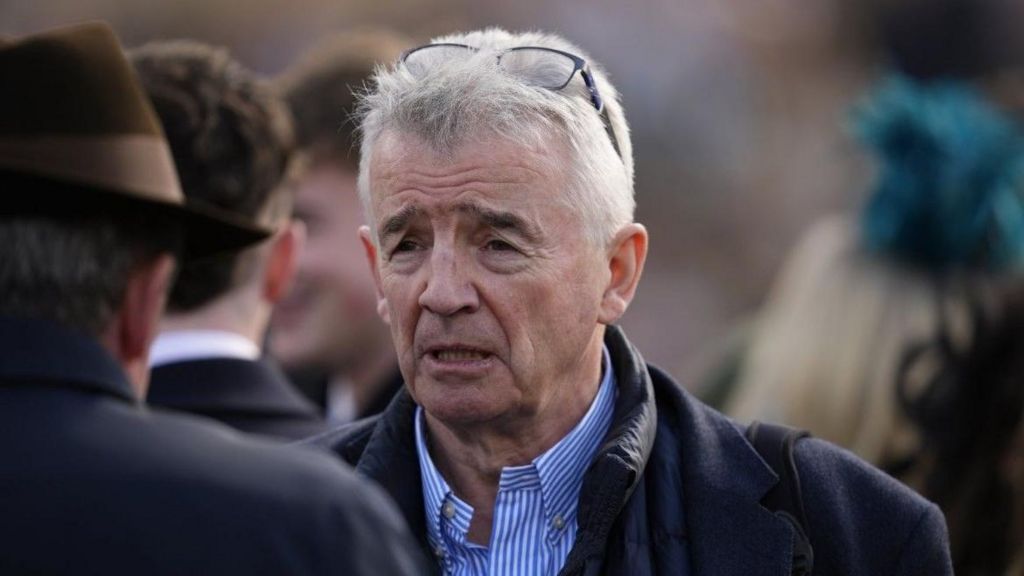
O’Leary extends Ryanair contract in deal that could net him over £130m
Michael O’Leary, the iconic chief executive who transformed Ryanair from a minor regional player into Europe’s undisputed leading low-cost airline after taking the role in 1994, has committed to leading the group for another six years, with his new contract now running through to April 2032. The agreement includes a lucrative performance-linked bonus scheme that could see O’Leary take home total compensation exceeding €150m, the Irish airline confirmed in an official statement.
Under the terms of the new deal, O’Leary will be eligible to exercise options to purchase 10 million Ryanair shares at a fixed strike price of €26.70 per share — a payout that will only activate if the company hits one of two demanding performance milestones. The options unlock if Ryanair achieves an annual group profit of €4 billion, or if its traded share price holds above €42 for 28 consecutive trading days. Ryanair emphasized that meeting these aggressive targets would generate significant long-term value gains for every investor holding shares in the company.
Group chairman Stan McCarthy revealed that the Ryanair board first opened contract discussions with O’Leary earlier this spring, and the negotiation process included in-depth consultations with the airline’s largest institutional shareholders to align on terms. McCarthy noted in his comment that the process concluded successfully, with O’Leary agreeing to extend his tenure to drive the group’s ongoing growth, a outcome that McCarthy said delivers benefits to all Ryanair stakeholders.
This latest bonus arrangement marks the second major performance payout O’Leary has been in line for in recent years. Last year, public reports confirmed that O’Leary was set to collect bonuses worth more than €100m after Ryanair shares closed above €21 per share for a 28th consecutive trading day in May 2025, meeting the performance threshold tied to his previous 2010s-era incentive scheme.
-
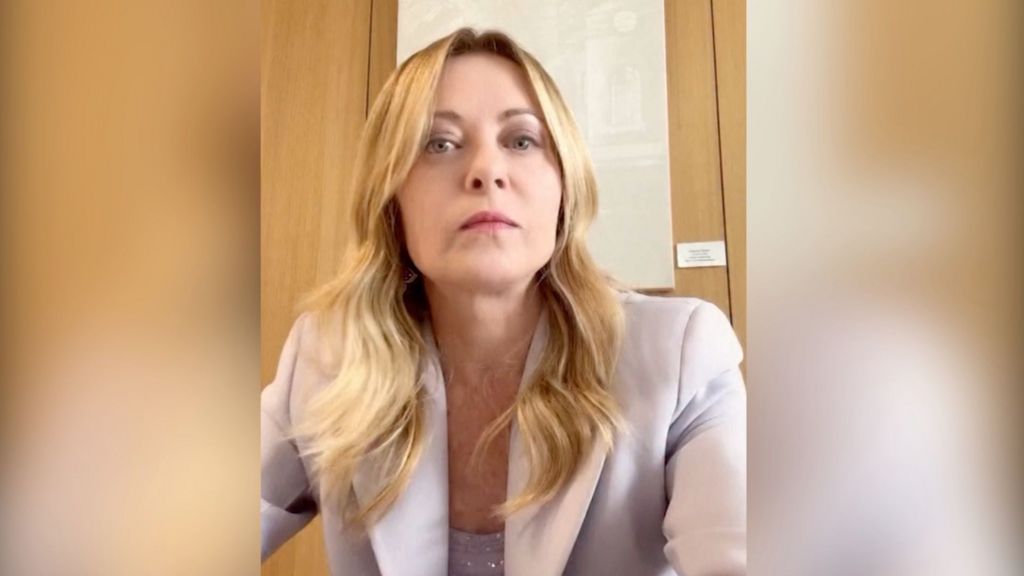
Italy’s Meloni says Trump ‘made up’ story that she ‘begged’ him for photo at G7
A high-profile diplomatic dispute between Italian Prime Minister Giorgia Meloni and former U.S. President Donald Trump has burst into the open following a baseless anecdote Trump shared in an Italian television interview, triggering swift backlash across Italy’s political landscape and upending once-closed political ties between the two leaders.
In a phone interview with Italy’s La7 TV network, Trump made the unsubstantiated claim that Meloni had “begged” him for a photograph during their recent meeting at the G7 summit hosted in Evian-les-Bains, France. “She begged me to take a photo with her; I felt sorry for her,” Trump told the outlet, adding that he believed Meloni was happy he had taken the time to speak with her. Multiple video and photo records from the G7 summit show the two leaders holding an extended, cordial-looking conversation on a small sofa, with Meloni smiling throughout the interaction. La7 did not release the original English audio of Trump’s comments, only airing a dubbed Italian translation.
Meloni issued a sharp, public rebuke of Trump’s claims just hours later, addressing the incident directly to her 7 million Instagram followers. She said she was “frankly stunned” by the fabricated story, questioning why the U.S. president would choose to target a close ally with such falsehoods. “I can only say it is regrettable he does not show the same determination towards the enemies of the West and towards the enemies of the US – [enemies] whose leaders he instead appears to be far more accommodating with,” she wrote. In a striking closing rebuke that emphasized Italian national dignity, she added: “But there is one thing he needs to remember: neither I nor Italy ever beg.”
In response to the escalating row, Italian Foreign Minister Antonio Tajani has canceled a planned trip to the United States scheduled for early next week. The BBC has reached out to the White House to request official comment on the incident, but no response has been issued as of yet.
This public confrontation is the latest sign that the once-close political alignment between Trump and Meloni has fractured badly in recent months, rooted in deep disagreements over Trump’s decision to launch a military conflict with Iran. Meloni, who was elected Italy’s prime minister in 2022, made history as the only European leader to attend Trump’s 2025 inauguration, and was widely viewed by European Union officials as a potential diplomatic bridge between Brussels and the new U.S. administration. But the relationship began to unravel after Meloni took a firm public stance opposing the Iran war. In April, Trump hit back at her criticism during an interview with Italian daily Corriere della Sera, saying “I thought she had courage, but I was wrong.” Tensions rose further when Meloni publicly rejected Trump’s critical remarks about Pope Leo XIV, calling his comments labeling the Pope “weak on crime and terrible on foreign policy” completely unacceptable.
In the wake of Trump’s latest remarks, Meloni has received unified support from across Italy’s political spectrum. Italian President Sergio Mattarella placed an immediate phone call to the prime minister to express his full backing. Filippo Sensi, a left-wing opposition senator from the Democratic Party, said no leader had the right to speak to an Italian prime minister in such an arrogant tone. Giuseppe Conte, leader of the Five Star Movement, added that Italy had been subjected to unnecessary humiliation, arguing that pursuing better relations with Washington should never come at the cost of national dignity or core national interests.
From Meloni’s own Brothers of Italy party, Senate group leader Lucio Malan framed the incident as part of a wider pattern of offensive remarks Trump has directed at multiple European leaders. He noted that the G7 footage tells a far different story than Trump’s false account, suggesting that the U.S. president’s anger actually stems from Meloni’s willingness to push back against Washington when Italian interests demand it. “Trump’s words damage his own image and authority above all,” Malan added. Matteo Salvini, leader of the League and a key government ally, issued a blunt statement of solidarity: “Whoever attacks Giorgia, attacks all of us.”
-
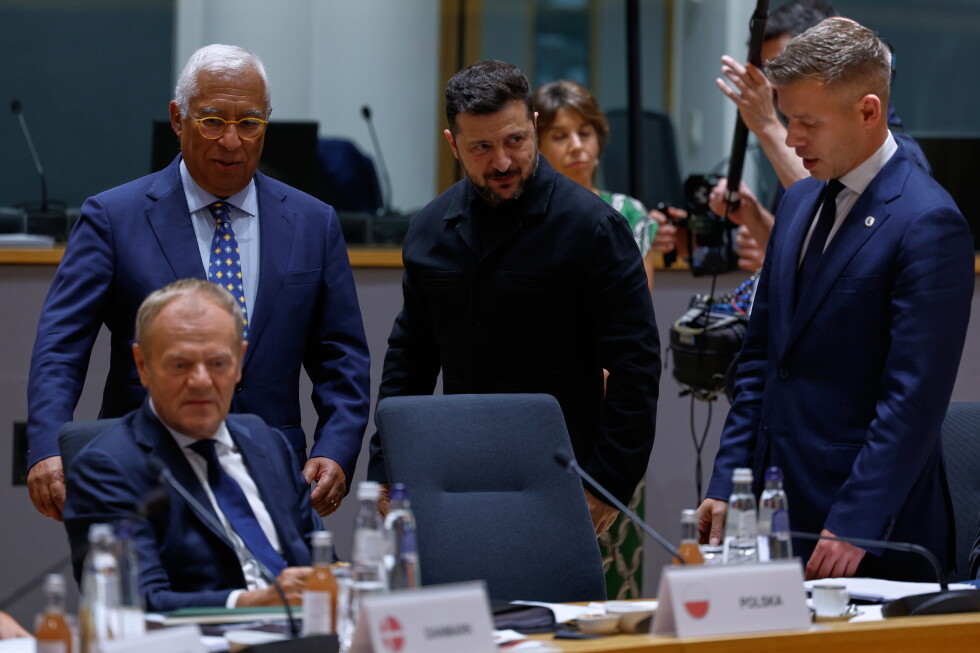
EU leaders squabble over outreach to Moscow as Ukraine war rages on
BRUSSELS – Deep internal divisions among European Union leaders have derailed a plan to open a discreet backchannel of communication with the Kremlin, a proposal designed to protect the bloc’s interests if any breakthrough emerges in ongoing talks aimed at ending Russia’s full-scale invasion of Ukraine, multiple senior leaders confirmed Friday.
The initiative was spearheaded by newly appointed European Council President António Costa, who chaired the bloc’s two-day flagship summit in Brussels. Costa had already instructed his personal office to initiate outreach to Moscow and put forward a senior EU official to lead the contact, framing the effort as an complementary step, not an attempt to replace or compete with the stalled U.S.-led negotiation track that has yielded little tangible progress in recent months.
For months, European capitals have debated the merits of appointing a dedicated EU mediator to reanimate talks between Moscow and Kyiv, but the idea has gained little traction among the 27 member states. A large bloc of countries argues that Russian President Vladimir Putin has shown no genuine willingness to negotiate a sustainable peace, making any overture premature at best and dangerous at worst. Instead, the EU’s unified position to date has centered on demanding key concessions from Russia as a precondition for any meaningful peace process.
Czech Prime Minister Andrej Babiš told reporters Friday that overnight discussions failed to bridge the gap between competing camps. “Europe is unable to agree even on whether there will be negotiations or who will lead them,” Babiš said, laying bare the depth of the bloc’s disunity on the critical foreign policy issue.
Not all leaders rejected the backchannel proposal, however. Irish Prime Minister Micheál Martin voiced support for Costa’s approach, noting that “opening up a channel is not a mistake in our view, and I trust António Costa.” He added that core principles remain intact: any final peace negotiations must be led directly by Ukraine and Russia, and right now there is no sign Russia is prepared to come to the negotiating table in good faith.
The Kremlin, for its part, signaled openness to restarting dialogue with the EU Friday, on the condition that Brussels abandons what it calls a “position of force” toward Moscow. “We are ready for contact, we were not the ones who initiated cutting such contacts, terminating them completely,” Kremlin spokesperson Dmitry Peskov told reporters. “If forces emerge that realize the need to resume dialogue with Russia, not to lecturing it or, worse, to issue ultimatums … then President Putin and the Russian side would certainly be open to it.”
Currently, Putin has prioritized direct negotiations with Washington over Ukraine’s future, intentionally sidelining both the EU and Kyiv from those discussions.
As leaders wrapped up their summit late Thursday, Belgian Prime Minister Bart De Wever lightened the tense mood with a tongue-in-cheek joke nominating Costa himself as the EU’s envoy to Moscow. Laughing as he shook Costa’s hand, De Wever said, “I was just talking about you, António. I was full of praise, saying you are the only one who can represent us and that we will send you to Moscow.”
Hardline opposition to the backchannel plan came from Estonia, one of the EU’s most hawkish eastern member states that shares a long border with Russia, has a history of Soviet occupation, and has repeatedly reported cross-border drone incursions linked to the war. Estonian Foreign Minister Margus Tsahkna said, “Europe must not assume the role of a neutral mediator” and instead should continue strengthening Ukraine’s negotiating position to “force the Kremlin into serious negotiations.”
The Associated Press contributed reporting from Prague, Czech Republic, with contributions from correspondents Karel Janicek and Stanislav Hodin.
-

Italy’s top diplomat cancels US trip as Meloni slams Trump’s claim she ‘begged’ for a photo with him
Diplomatic tensions between long-standing allies Italy and the United States erupted into public view this Friday, after former (current, 2026 second term) U.S. President Donald Trump made a false and inflammatory claim that Italian Prime Minister Giorgia Meloni had begged him for a photo during last week’s G7 summit in the French Alpine resort of Evian-les-Bains.
The false allegation first emerged Friday morning during an interview with Trump broadcast by Italian television network La7. While the conversation initially centered on the ongoing conflict in Ukraine, Trump shifted topics to bring up his one-on-one encounter with Meloni on the sidelines of the G7 gathering, an interaction that was captured on camera by summit photographers. According to La7, which has published a dubbed version of the interview (the original English audio has not been released), Trump claimed Meloni “begged” him for a photo opportunity, saying he agreed only out of pity despite having no obligation to do so.
The Italian government responded with swift, unprecedented pushback, signaling that years of behind-the-scenes friction with the Trump administration had reached a breaking point. In the most dramatic show of disapproval, Italian Foreign Minister Antonio Tajani called off a planned working trip to the United States scheduled for this coming weekend, labeling Trump’s remarks “serious and offensive” to both Prime Minister Meloni and the entire Italian nation.
Meloni personally addressed the controversy in a public video address released hours after the interview aired, rejecting the claim in unflinching terms. “Certain things deserve an immediate response,” she opened. “Donald Trump’s statements are completely fabricated. I am frankly stunned. I don’t know why the president of the United States behaves this way toward his own allies. After all, this isn’t the first time this has happened.”
Her reference pointed to a previous incident in April, when Trump used an interview with Italian daily newspaper Corriere della Sera to publicly criticize Meloni’s refusal to back the U.S.-led military campaign in Iran. Meloni declined to issue a public response at that time, but on Friday she made clear she would not back down this time, adding a sharp rebuke of Trump’s approach to global diplomacy: “I can only say that it’s a shame he doesn’t show the same resolve toward the enemies of the West, toward the enemies of the United States — toward leaders with whom he, on the other hand, is much more accommodating. But there’s one thing he must remember: Italy and I do not beg.”
The latest public row has laid bare the growing rift between Rome and Washington, despite Meloni’s early efforts to cement warm ties with the Trump administration after he won a second presidential term in 2024. Meloni, a right-wing leader who positioned herself as a key bridge between the U.S. and the European Union, was the only head of state from the EU to attend Trump’s inauguration. But relations have steadily frayed over a string of policy disagreements: Meloni has publicly labeled the U.S. military action in Iran illegal, Italy remains a staunch supporter of Ukraine’s territorial integrity in contrast to Trump’s softer stance toward Russia, and Trump’s trade tariffs on European goods and unwavering support for Israel’s campaign in Gaza have further strained bilateral ties.
Other senior Italian officials joined the condemnation of Trump’s claim this Friday, underscoring the unified front from Rome. Defense Minister Guido Crosetto took to social media platform X to reject the allegation outright, saying he could not imagine Meloni begging anyone for a photo “not even under threat.” He added: “I can, however, imagine how much it cost her to set aside what Trump had said weeks ago, to serve the interests of Italy, of Europe, and of the West. Jokes of this kind do no good to anyone: neither to the USA, nor to Italy, nor to the alliance.”
As of Friday evening, the White House had not issued an official response to Italy’s public rebuke, leaving the diplomatic rift unresolved ahead of any planned future bilateral talks.
-
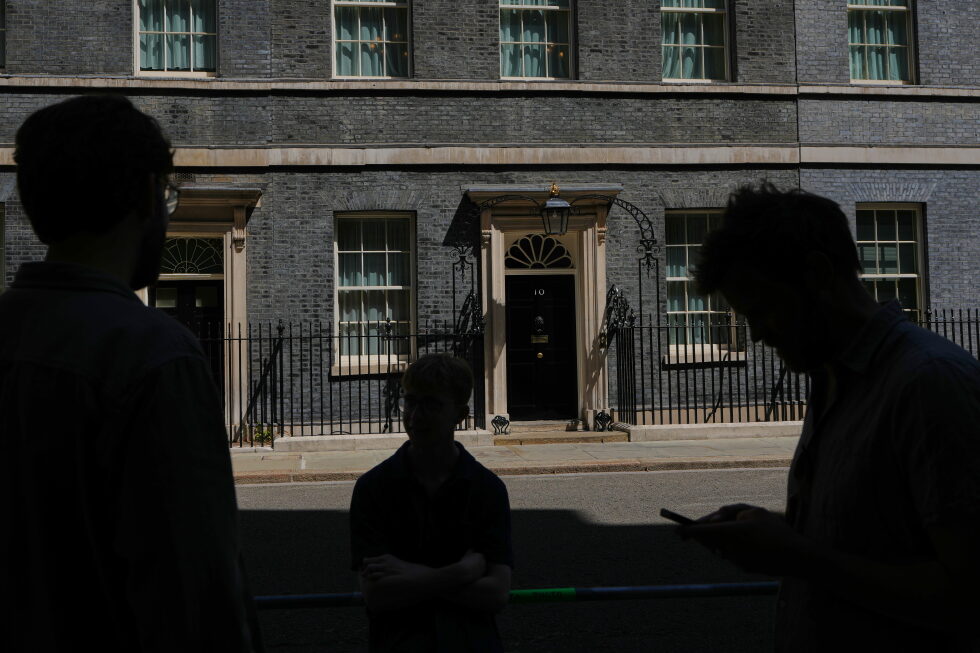
How Burnham’s resounding victory could lead to Starmer’s downfall
LONDON – A decisive landslide win for Andy Burnham in a UK House of Commons by-election has thrown the future of Prime Minister Keir Starmer’s premiership into grave doubt, triggering immediate speculation of an internal Labour Party leadership challenge that could end Starmer’s tenure less than two years after he swept the party back into power. The 56-year-old Burnham, a widely popular former mayor of Greater Manchester who held a seat in Makerfield, northwest England, delivered a stunning political upset that defied Labour’s months of plummeting national poll numbers and bruising local election losses.
Against all expectations, Burnham not only fended off a fierce challenge from the right-wing anti-immigration Reform UK, which had won nearly every local seat within the Makerfield constituency last month, but also grew Labour’s vote share to almost 55% – a result that political analysts describe as a clear public mandate for a change in party leadership. After nearly a decade serving outside Parliament as Greater Manchester’s mayor, Burnham’s return to the Commons puts him directly in position to mount a challenge to Starmer, who has seen his approval ratings sink to historic lows amid a string of high-profile policy failures and damaging controversies.
While Burnham has not yet formally declared a leadership bid, his public comments following the win leave little question of his ambitions for 10 Downing Street. Framing his victory as a watershed moment for British politics, Burnham said: “I think we need in this country right now for people to feel a sense of hope that there is something better to work towards on the horizon,” adding that his team aims to “lay out a new path” for the nation. Long nicknamed the “King of the North” for his regional popularity, Burnham is widely viewed as the frontrunner to replace Starmer should a leadership contest be called.
Under UK political rules, a sitting prime minister can be removed by their party mid-term without requiring an early general election, which is not scheduled to take place until 2029. Starmer, who led Labour to a landslide general election victory in July 2024 after 14 years in opposition, has become one of the most unpopular prime ministers in modern British history. His political standing collapsed most recently after the controversial and widely criticized appointment of Peter Mandelson as UK ambassador to Washington, over Mandelson’s longstanding personal links to convicted sex offender Jeffrey Epstein.
Political insiders are now predicting that senior figures within Starmer’s own Cabinet will approach him in the coming days to urge him to step down voluntarily, arguing that his resignation would be in the best interest of both Starmer and the Labour Party. Should Starmer choose to leave office immediately, Labour’s governing body and the Cabinet would install an interim prime minister from the party’s ranks, a role widely tipped to go to current Deputy Prime Minister David Lammy, who is not expected to run for the permanent leadership. Another possible outcome is that Starmer would announce his intention to resign ahead of Labour’s annual party conference scheduled for September.
If a leadership contest is called, Burnham has already made clear he will enter the race. Other potential challengers include former Health Secretary Wes Streeting, who resigned from the Cabinet last month and has already signaled he will run; former deputy leader Angela Rayner, who stepped down last year over an unpaid property tax scandal; and former Armed Forces Minister Al Carns, who resigned last week in protest of Starmer’s defense funding cuts. Many Labour lawmakers are already pushing for a unanimous coronation of Burnham, arguing that a unified party could install him in Downing Street as early as this summer before the annual conference.
In an awkward, paradoxical moment on Friday, Starmer was forced to publicly congratulate Burnham on his win even as the result amplifies growing pressure on his own leadership. When asked whether he would fight a challenge to his position, Starmer insisted he would not step down voluntarily. “Yes, I will run, I will stand. I’ve said repeatedly I’m not going to walk away from that,” he told reporters, confirming he would automatically appear on the ballot if a formal challenge is mounted.
Under Labour Party rules, any candidate seeking to challenge the incumbent leader must secure the backing of at least one-fifth of the party’s sitting Members of Parliament – that’s 81 lawmakers. Candidates that clear that parliamentary threshold must then win support from either 5% of local constituency Labour parties, or at least three affiliated groups such as trade unions and cooperative societies. After eligibility is confirmed, party members and affiliate representatives vote via a ranked-choice system, with the first candidate to win a majority of votes declared the new leader. The winner would then be formally invited by King Charles III to form a government and take office as prime minister. A full leadership contest would take between three and four months to complete, including a series of public town hall events for candidates before member voting opens.
-
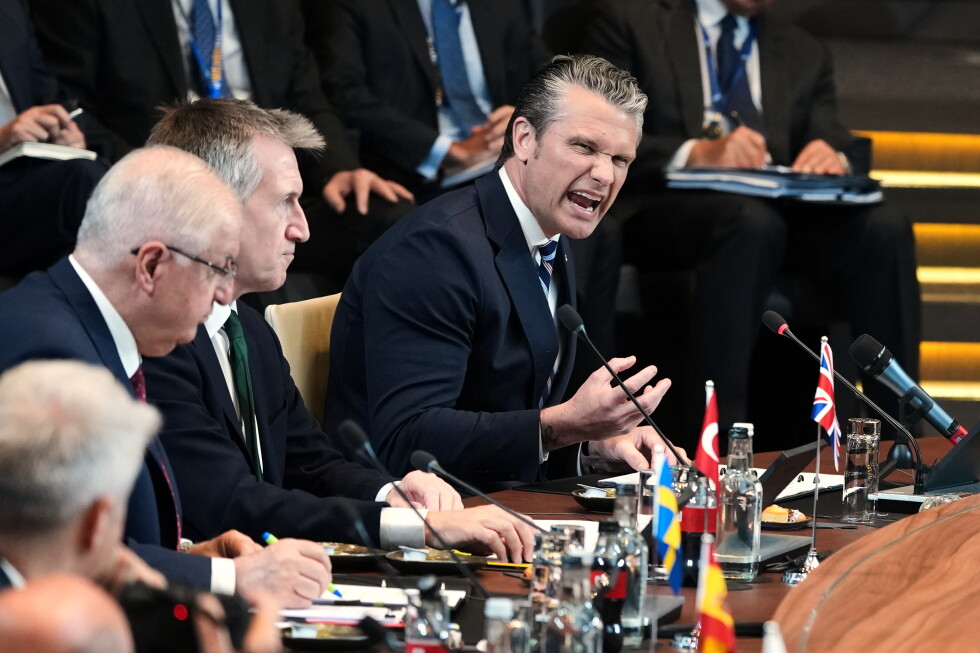
Pentagon chief’s review appears out of step with what NATO allies are already doing
BRUSSELS – Just hours after U.S. Defense Secretary Pete Hegseth delivered a scathing rebuke of NATO’s European members and unveiled a Pentagon-led performance review of the alliance, regional leaders were deep in discussions mapping out ongoing advances toward their core security goals at a recent Brussels summit.
Analysts and alliance insiders note that Hegseth’s criticism centered on long-acknowledged priorities that European leaders have been advancing since Russia’s full-scale 2022 invasion of Ukraine. The agreed-upon agenda items already guiding European defense planning include sustained increases in defense spending, industrial investments to ramp up military hardware production, integration of battlefield lessons from the Ukraine war, and accelerated acquisition or domestic development of drones, air defense systems and long-range strike weapons.
During the two-day summit concluding Friday, leaders also debated strategies to maximize joint European Union funding for defense, streamline bureaucratic red tape to speed up military procurement, enhance cross-border “military mobility” for faster troop and equipment deployment, and upgrade critical port and airport infrastructure across the continent. Participants reaffirmed their binding target of decisively strengthening European defense readiness by 2030, a goal that predates Hegseth’s latest intervention.
Intelligence assessments across Western capitals have long warned that Russian President Vladimir Putin could launch offensive military action against other European states before 2030, particularly if his forces achieve a decisive victory in Ukraine. European governments have already documented multiple instances of Russian sabotage and disinformation campaigns targeting the continent, adding urgency to defense modernization efforts.
With roughly two-thirds of EU member states also holding NATO membership, the growing unpredictability of U.S. policy under the second Trump administration has pushed European leaders to accelerate independent defense integration efforts. Hegseth’s surprise announcement of the Pentagon review is just the latest in a series of shifts that have altered transatlantic defense dynamics.
Hegseth, who rarely participates in regular NATO defense ministerial gatherings, departed Thursday’s ministerial meeting early, but his public comments have already left a lasting mark on alliance discussions. In his high-profile address to allies this week, following a major February 2025 speech, he labeled NATO a “paper tiger”, accused European members of “shameful” underperformance, and claimed too many allies failed a Trump administration test by refusing access to their European bases for U.S. strikes targeting Iran. He also criticized alliance focus on gender equity and climate action, and slammed European migration policies.
Following his broadside, Hegseth gave allies a six-month deadline to implement reforms ahead of the performance review, which will tie the continued forward deployment of U.S. troops in Europe and American defense investment in NATO to whether the U.S. deems allies are contributing their fair share. He also announced that U.S. contributions to NATO’s joint operating budget, which funds alliance headquarters and core facilities, will be reduced for members that do not accelerate defense spending.
“It is a protection racket framing that undermines NATO solidarity, erodes trust in U.S. commitment to the alliance, and ultimately harms U.S. own security interests,” explained Rachel Ellehuus, Director-General of the Royal United Services Institute and a former senior U.S. advisor to NATO. Ellehuus added that decisions on U.S. force positioning “should be driven by detailed threat assessments, operational requirements, and military planning – not used as a form of reward, punishment or revenge.” Such an approach, she noted, undermines allies already working to address defense gaps and signals to adversaries that U.S. security commitments come with conditional, negotiable terms.
Notably, the full scope and specific terms of Hegseth’s review remain undisclosed. Hegseth framed the review as a mechanism to push NATO toward an irreversible shift to European-led primary responsibility for the continent’s defense, saying “Some countries will fail and others will pass with flying colors.” The review is expected to take up to six months, with participation from U.S. military commanders, members of Congress and allied representatives. Speaking to reporters at Brussels Airport before departing, Hegseth added that the review will also evaluate U.S. basing arrangements across Europe to ensure Washington has guaranteed access and overflight rights when needed for its military operations.
NATO Secretary-General Mark Rutte acknowledged that alliance leadership has no clear insight into the review’s expected outcomes, telling reporters “There’s still no clarity on exactly what the outcome will be, because that will depend on the review. So, we’ll see what happens. Wherever we can be helpful, we will be helpful.” Rutte is scheduled to travel to Washington next week for further discussions, where he expects to gain more clarity on the U.S. plan.
Rutte pushed back on the harshest of Hegseth’s criticism, noting that European allies and Canada have already made substantial progress on defense spending. “What we are seeing is staggering amounts of money coming in,” he said, adding that “Europe and Canada are spending in 2025 more than $90 billion extra compared to 2024, which is almost a 20% increase in defense spending.” Rutte acknowledged that allies still need to convert this increased spending into operational military equipment, weapons and ammunition, but emphasized that progress is already well underway.
At the 2024 NATO summit, allies agreed to raise their defense budget targets to align with U.S. spending as a share of GDP, an outcome that left then-President Trump satisfied after the meeting. Even so, Hegseth’s new performance review has cast uncertainty over the upcoming NATO summit scheduled for July 7-8 in Turkey.
In recent months, senior European military officers have taken on more command roles within NATO’s command structure, and U.S. allies have taken lead responsibility for coordinating arms and funding transfers to Ukraine after the Trump administration drew back from its leading role in the campaign. Many European countries and Canada have also spent billions of dollars to purchase U.S.-made air defense systems that they have subsequently donated to Ukraine, which European leaders view as fighting an existential war for European security.
Many alliance analysts argue that European allies have already moved as quickly as possible to address defense gaps, with the only unmet demand from the Trump administration being full, unrestricted access to European airspace and bases for U.S. military operations in other regions such as the Middle East.
-
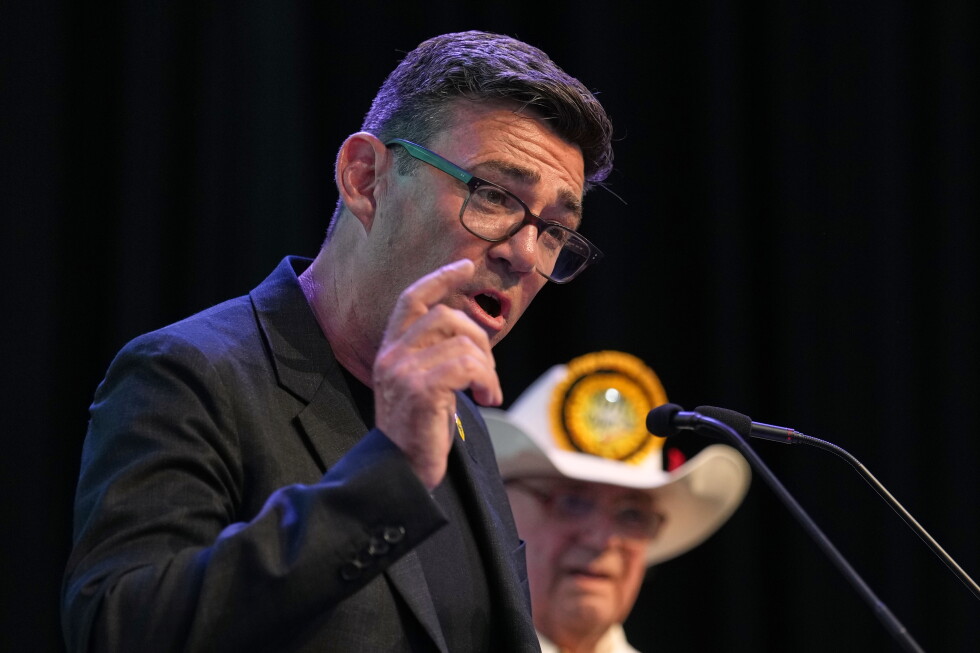
Andy Burnham is the ‘King of the North’ with his eyes on 10 Downing Street
LONDON — After a decades-long political career that has taken him from junior Parliament member to the widely popular mayor of Britain’s northern industrial powerhouse, Andy Burnham has cleared the final hurdle to mount a challenge for leadership of the Labour Party and the office of British prime minister, positioning himself as a populist alternative to incumbent Keir Starmer.
-

World shares are mixed and US futures fall after a tech-led rally on Wall St
Global equity markets delivered a mixed performance on Friday, with U.S. futures sliding downward as fading optimism over a recent U.S.-Iran war-ending ceasefire offset early market gains. The uptick in geopolitical risk came after high-stakes negotiations over Iran’s nuclear program and the full reopening of critical oil shipping lanes through the Strait of Hormuz were postponed at the last minute.
U.S. stock exchanges were closed Friday in observance of the Juneteenth federal holiday, leaving futures as the main indicator of market sentiment heading into next week’s trading session. Alongside the delayed Iran talks, fresh conflict erupted in the Middle East overnight: Israel’s military confirmed it carried out strikes across multiple targets in southern Lebanon, while the Lebanese militant group Hezbollah reported heavy combat in the same region, stoking broader fears of regional escalation.
While both Washington and Tehran have signaled willingness to negotiate a lasting peace settlement, analysts warn the current tentative agreement remains vulnerable on multiple fronts. “Both sides are trying to project good faith to markets,” noted Bas van Geffen, senior macro analyst at RaboResearch, in a market commentary Friday. “But even if surface tensions appear to have eased, powerful underlying risks remain. The ceasefire agreement remains fragile across multiple fronts.”
European equities closed the session with modest mixed moves. Germany’s benchmark DAX index gained 0.2% to end at 25,079.30, while France’s CAC 40 held nearly steady at 8,467.75, edging just a fraction of a percent lower. The UK’s FTSE 100 slipped 0.2% to close at 10,376.64. Across the Atlantic, S&P 500 and Dow Jones Industrial Average futures both fell 0.2% in early Friday trading, pointing to potential downward pressure when U.S. markets reopen next week.
In Asian markets, Japan’s Nikkei 225 swung between small gains and losses through the session before closing 0.3% higher at a fresh all-time record of 71,250.06. The benchmark close came days after the Bank of Japan made a historic policy shift, raising its benchmark interest rate to 1% — a 30-year high — after years of near-zero and negative rate policies meant to stimulate stagnant growth. The move was driven by mounting inflation pressures, which government data released Friday showed remained steady in the latest reading: core consumer prices, which exclude volatile fresh food costs, held steady from the previous month. Analysts forecast core inflation will likely tick upward in coming months even amid elevated global fuel costs.
Other major Asian indexes ticked downward to close out the week. South Korea’s Kospi shed 0.1% to end at 9,052.42, just below the record high it set in the previous session. Australia’s S&P/ASX 200 fell 0.9% to 8,828.70, while India’s Sensex dropped 0.8% from its previous close. Markets across greater China — including Hong Kong, Shanghai and Taiwan — were closed Friday for the Dragon Boat Festival public holiday.
The mixed Friday performance followed a strong rally on Wall Street Thursday, where major indexes erased most of the prior session’s losses to lock in weekly gains. The rally was led by blockbuster gains for large-cap technology stocks, which lifted the S&P 500 1.1% higher, the Nasdaq composite 1.9% higher, and the Dow Jones Industrial Average 0.1% higher. The Wednesday sell-off that preceded the rally had been driven by growing investor expectations that the U.S. Federal Reserve will raise interest rates before the end of 2025 to cool persistent inflation. The Fed held rates steady at its most recent policy meeting this week, but official commentary left the door open for a coming hike.
Semiconductor stocks led Thursday’s rally, after former U.S. President Donald Trump announced that Intel would manufacture cutting-edge chips for Apple entirely within U.S. facilities. Intel surged 10.6% on the news, pulling other major semiconductor players higher: Nvidia gained 3% and Micron Technology jumped 8.7%. One notable laggard was SpaceX, which fell for the second consecutive session following its highly anticipated public market debut last week. The Elon Musk-led aerospace and artificial intelligence firm dropped 3.6% Thursday after falling 4.9% in the previous session.
Energy markets also saw volatile trading this week, following the U.S.-Iran ceasefire agreement that reopened the Strait of Hormuz — the chokepoint through which roughly 20% of global oil shipments pass. Brent crude, the global benchmark, ended Thursday trading up 0.4% at $79.85 per barrel after spending most of the session in negative territory. U.S. benchmark West Texas Intermediate crude fell 0.2% to $75.85 per barrel. Early Friday, Brent was down 0.4% at $79.50 per barrel, while U.S. crude held steady at $75.85.
While oil prices remain well above the roughly $70 per barrel level seen before the U.S.-Iran conflict erupted, they are still far below the triple-digit prices recorded just a few weeks ago. Elevated energy costs have added significant pressure to already high global inflation, with U.S. gasoline prices dipping just below $4 per gallon in recent weeks but still holding 25% higher than year-ago levels. Broad-based cost pressures across shipping and energy have pushed prices higher for a wide range of consumer and industrial goods.
In currency markets, the U.S. dollar edged slightly lower against the Japanese yen early Friday, falling to 161.31 yen from 161.38 yen in the previous session. The euro held steady at $1.1458 against the greenback to close out the week.