标签: Europe

欧洲

  • Former RTÉ broadcaster Michael Lyster dies aged 71

    Former RTÉ broadcaster Michael Lyster dies aged 71

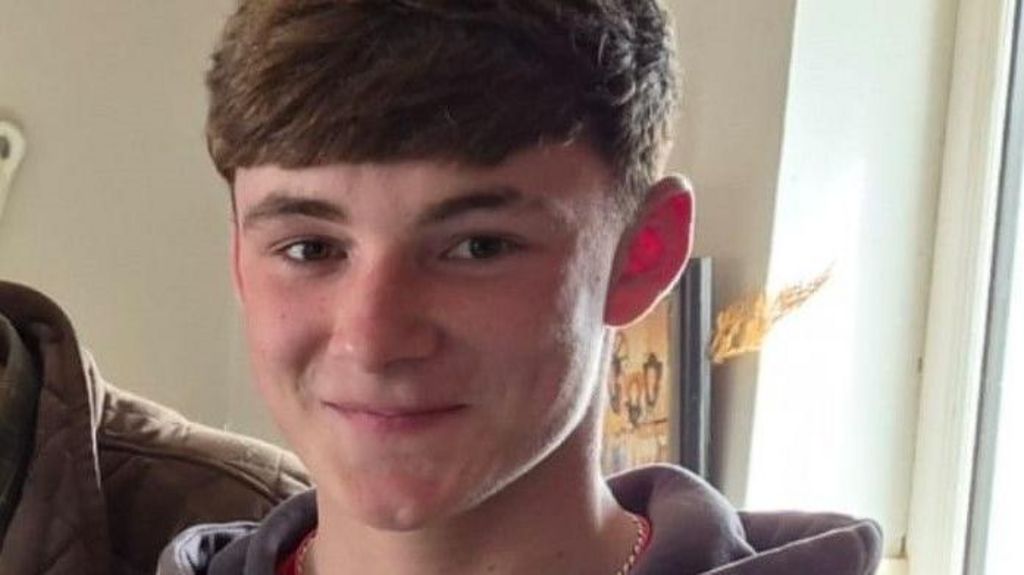
    The Irish broadcasting community is mourning the loss of Michael Lyster, the revered RTÉ Sport presenter who passed away at age 71. Lyster, whose career spanned nearly four decades, became a household name through his three-decade tenure hosting ‘The Sunday Game Live’, cementing his status as an institution in Irish sports media.

    Lyster’s broadcasting journey began in print journalism at The Tuam Herald in County Galway before he joined RTÉ in 1980 as a sports bulletin broadcaster on Radio 2. His inaugural year at the national broadcaster included coverage of the 1980 Moscow Olympics, marking the start of an illustrious career that would see him become the definitive voice of Gaelic games.

    In 1984, Lyster took the helm of ‘The Sunday Game’, where he would become synonymous with the network’s GAA coverage until his retirement in 2018 following that year’s All-Ireland Gaelic football final between Dublin and Tyrone. Beyond Gaelic games, Lyster demonstrated remarkable versatility, presenting coverage across diverse sporting disciplines including horse racing, athletics, rugby, football, motorsport and greyhound racing.

    An accomplished rally driver himself, Lyster once finished third in the Cork International Rally, reflecting his genuine passion for motorsports that informed his commentary.

    Taoiseach Micheál Martin led tributes, expressing being ‘deeply saddened’ by Lyster’s passing and praising him as ‘a moderniser of sport broadcasting’ and ‘an iconic anchor’ synonymous with Ireland’s most memorable sporting moments. RTÉ Director General Kevin Bakhurst remembered Lyster as ‘an absolute gentleman and a wonderful broadcaster who loved sport in general and Gaelic games in particular.’ Declan McBennett, RTÉ Sport’s group head, highlighted Lyster’s ‘calm, measured’ professionalism and his ability to guide panel discussions ‘with poise and grace’ during the most significant events in the GAA calendar.

  • Barcelona edges Rayo Vallecano to increase pressure on Real Madrid ahead of capital derby

    Barcelona edges Rayo Vallecano to increase pressure on Real Madrid ahead of capital derby

    Barcelona secured a crucial 1-0 victory against Rayo Vallecano at Camp Nou on Sunday, strengthening their position at the summit of Spain’s premier football division. The solitary goal emerged in the 24th minute when defender Ronald Araújo powerfully headed home from a João Cancelo corner, demonstrating aerial prowess by outjumping his marker.

    The match showcased exceptional goalkeeping from Barcelona’s Joan García, whose multiple critical interventions proved decisive in preserving the narrow lead. García’s performance included an early reflex save against Carlos Martín, a commanding block on Unai López’s header after the interval, and a dramatic late deflection to deny Jorge de Frutos.

    This victory propels Barcelona to a seven-point advantage over their closest rivals, Real Madrid, intensifying pressure on Los Blancos ahead of their pivotal derby encounter with Atlético Madrid. With merely nine fixtures remaining in the 38-game season, each match carries significant championship implications.

    Raphinha emerged as a persistent offensive threat for the hosts, coming agonizingly close to scoring on three separate occasions during the first half. The Brazilian international saw one breakaway attempt drift wide, forced an exceptional save from Rayo goalkeeper Augusto Batalla, and later struck the woodwork.

    The match carried profound personal significance for Araújo, marking his first league start since returning from a mental health hiatus taken between November and January. The Uruguayan defender had openly discussed his struggle with anxiety-related depression prior to taking this professional break.

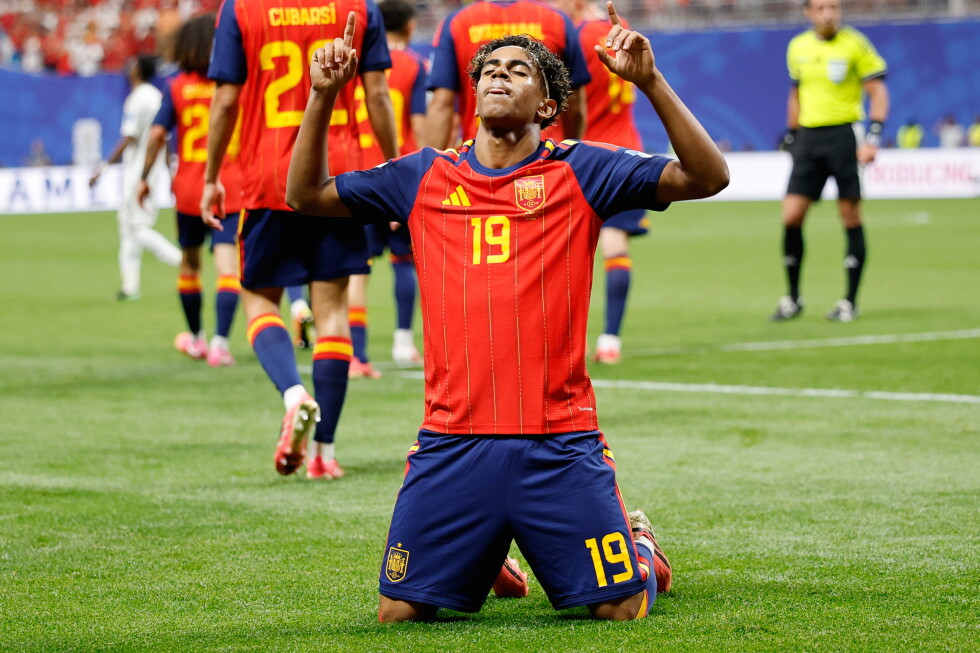
    Barcelona manager Hansi Flick specifically praised García’s impactful performance, referencing the €25 million acquisition from local rivals Espanyol as precisely the caliber of player needed for crucial matches. García’s club form earned him inaugural selection to the Spanish national team squad for upcoming World Cup preparation friendlies.

  • Qatari and Turkish citizens die in military helicopter crash

    Qatari and Turkish citizens die in military helicopter crash

    A tragic aviation incident has resulted in the complete loss of a military helicopter during training operations in Qatari territorial waters. According to official statements from Qatari authorities, all seven personnel aboard perished when the aircraft crashed due to an apparent technical malfunction on Sunday.

    The fatal crash involved four Qatari military personnel, one Turkish serviceman, and two technical specialists from Aselsan, a prominent Turkish defense corporation. Search and recovery operations successfully located all victims’ remains following the accident.

    This training mission was conducted under the framework of the Qatar-Turkey Joint Forces Command, reflecting the ongoing defense cooperation between the two nations. The partnership was formally established through a 2014 defense agreement that permits Turkey to maintain a military presence in Qatar.

    Both nations’ defense ministries have launched comprehensive investigations to determine the precise cause of the technical failure. Qatari authorities will lead the crash investigation while Turkish defense officials have pledged full cooperation.

    The Qatari Interior Ministry issued an official statement expressing profound sorrow and extending deepest condolences to the families of all victims. This tragedy occurs against a backdrop of heightened regional tensions, with recent military exchanges between the US, Israel, and Iran affecting security dynamics throughout the Gulf region.

  • Dominik Paris takes back-to-back wins as Italy goes 4-from-4 at World Cup finals in Norway

    Dominik Paris takes back-to-back wins as Italy goes 4-from-4 at World Cup finals in Norway

    Italian skier Dominik Paris achieved a remarkable double victory at the World Cup finals in Kvitfjell, Norway, capturing both the downhill and super-G titles in consecutive days. On Sunday, Paris demonstrated exceptional skill in the super-G event, outpacing Austrian competitors Vincent Kriechmayr by 0.07 seconds and Raphael Haaser by 0.38 seconds. This accomplishment marks Paris’s second consecutive year achieving multiple victories at the Norwegian resort, solidifying his status as a dominant force in alpine skiing. The Italian team enjoyed unprecedented success across the weekend competitions, winning all four available races. On the women’s circuit, Sofia Goggia and Laura Pirovano claimed victories in super-G and downhill events respectively, with both securing discipline titles. Despite Paris’s outstanding performance, Swiss skier Marco Odermatt had already clinched both the super-G and downhill World Cup championships the previous week, along with his fifth overall title. Odermatt experienced a disappointing final super-G run, finishing 1.97 seconds behind Paris in 19th place without scoring World Cup points. The competition continues with Tuesday’s giant slalom, where Odermatt aims to secure his fourth seasonal globe.

  • ‘Saturday Night Live UK’ aims to take a comedy hit across the pond. The first verdicts are in

    ‘Saturday Night Live UK’ aims to take a comedy hit across the pond. The first verdicts are in

    LONDON — The iconic American comedy franchise ‘Saturday Night Live’ has successfully launched its British adaptation, garnering unexpectedly favorable reviews from critics and audiences alike. This transatlantic venture has defied widespread skepticism about whether the 51-year-old comedy institution could resonate with UK viewers.

    The premiere episode of ‘Saturday Night Live UK’ maintained the original format with remarkable fidelity, featuring a 75-minute runtime that included topical sketches, satirical news segments, and musical performances. The show opened with a political skit portraying Prime Minister Keir Starmer seeking guidance from a Generation Z advisor on communicating with former President Donald Trump, followed by the program’s signature proclamation: ‘Live from London, it’s Saturday night!’

    Veteran ‘SNL’ alumna Tina Fey served as the inaugural host, delivering her opening monologue to an audience that included notable figures such as Michael Cera, Graham Norton, and ‘Bridgerton’ star Nicola Coughlan. Coughlan humorously cautioned Fey about British audiences’ tendency to ‘root for the failure of others,’ setting the tone for the evening’s self-aware humor.

    Despite initial predictions of failure, major British publications expressed pleasant surprise at the production’s quality. The Telegraph described the debut as ‘shockingly competent’ and ‘occasionally hilarious,’ while critics widely praised the ensemble cast of relatively unknown comedians including George Fouracres, Hammed Animashaun, and Emma Sidi among others.

    The program featured the trademark ‘Weekend Update’ news parody, unconventional sketches, fabricated commercials, and a musical performance by English band Wet Leg. Some humor pushed boundaries with references to sensitive topics including pedophilia allegations and the Epstein documents, though within acceptable broadcasting standards.

    Notable differences from the American original included British broadcasting regulations permitting stronger language, resulting in multiple instances of explicit vocabulary throughout the episode. The show benefits from the involvement of ‘SNL’ creator Lorne Michaels as executive producer, though it airs on the less mainstream Sky One channel and NOW streaming service.

    Social media platforms are expected to significantly amplify the show’s reach, with Fey’s opening monologue accumulating over 500,000 YouTube views within hours of broadcast. The initial commission consists of eight episodes, with future hosts including Jamie Dorman and Riz Ahmed. Critical reception remains mixed but generally optimistic, with The Guardian noting the program’s ambition and potential for growth despite some reviewers finding moments reminiscent of ‘tepid cosplay’ of the original format.

  • 1 dead in Istanbul after gas explosion collapses 2 buildings

    1 dead in Istanbul after gas explosion collapses 2 buildings

    A devastating natural gas explosion rocked Istanbul’s historic Fatih district on Sunday, resulting in the catastrophic collapse of two residential buildings. The incident has claimed at least one life and left ten individuals injured, one of whom is reported to be in critical condition, according to official statements from the Istanbul Governor’s office.

    Emergency search and rescue teams were immediately dispatched to the scene, where they worked tirelessly to extract survivors from the rubble. The swift response of first responders ensured that all injured parties were rapidly transported to nearby medical facilities for urgent treatment.

    Istanbul Governor Davut Gul personally surveyed the devastation at the blast site and subsequently visited hospitalized survivors to monitor their condition and oversee rescue operations. Preliminary assessments indicate the collapsed structures included one two-story building and a single-story adjacent property.

    The explosion highlights ongoing concerns about infrastructure safety and gas line maintenance in urban centers. Authorities have launched a comprehensive investigation to determine the precise cause of the blast and assess potential negligence or safety violations that may have contributed to the tragedy.

  • French voters head to the polls in municipal runoffs with Paris, Marseille and Lyon in focus

    French voters head to the polls in municipal runoffs with Paris, Marseille and Lyon in focus

    PARIS — French citizens headed to polling stations across the nation on Sunday for the decisive second round of municipal elections spanning more than 1,500 communes. This electoral exercise serves as a critical barometer of France’s evolving political landscape ahead of the anticipated 2027 presidential contest, with particular attention on whether far-right factions can translate their growing national influence into tangible control of major urban centers.

    The runoff elections feature numerous three-way contests following strategic alliances, candidate withdrawals, and tactical list mergers after the initial voting round. These developments have positioned France’s traditional left and right parties as competitive forces, while President Emmanuel Macron’s Renaissance movement maintains a notably subdued presence in many key races.

    Paris represents one of the most significant electoral battlegrounds, where Emmanuel Grégoire—leading a consolidated left-green coalition—secured a commanding first-round victory with 37.98% of votes. He faces conservative contender Rachida Dati (25.46%) and La France Insoumise candidate Sophia Chikirou, creating a volatile triangular contest.

    Marseille witnesses another intensely competitive race, with left-wing incumbent Benoît Payan (36.70%) holding a narrow advantage over far-right challenger Franck Allisio (35.02%), while conservative candidate Martine Vassal remains in contention.

    Lyon’s election has evolved into a direct two-candidate showdown after ecological incumbent Grégory Doucet (37.36%) marginally outperformed centrist opponent Jean-Michel Aulas (36.78%) in the initial round.

    Toulouse serves as testing ground for La France Insoumise’s urban appeal, where François Piquemal has united with broader left-wing forces to challenge conservative Mayor Jean-Luc Moudenc, who led the first round with 37.23% support.

    Additional major urban centers under close observation include Nice, where Eric Ciotti (43.43%) demonstrates the conservative movement’s internal division between mainstream and far-right alignment; Nantes, where Socialist Mayor Johanna Rolland begins the runoff with an advantage; and Bordeaux, where incumbent Pierre Hurmic leads a fragmented electoral field.

  • Italy’s justice referendum becomes a high stakes test for conservative Premier Giorgia Meloni

    Italy’s justice referendum becomes a high stakes test for conservative Premier Giorgia Meloni

    Italian Premier Giorgia Meloni confronts a decisive political milestone as citizens participate in a two-day judicial reform referendum commencing Sunday. What originated as a technical adjustment to the nation’s justice apparatus has evolved into a comprehensive evaluation of Meloni’s domestic governance and international standing, with recent polling indicating an intensely competitive contest.

    The referendum encompasses several transformative provisions, including the separation of career trajectories for judges and prosecutors—prohibiting the transitional movement between these roles that currently exists in theory though seldom practiced. Additionally, it proposes restructuring the High Judicial Council into three distinct chambers and modifying selection procedures through randomized lotteries rather than internal elections.

    Meloni has dramatically intensified her advocacy as polling margins narrowed, framing the referendum as essential for national security. She contends that judicial factions have obstructed governmental initiatives on immigration and public safety, cautioning that rejection would empower unaccountable magistrates and potentially release dangerous criminals. Her rhetoric has provoked substantial criticism from legal professionals and center-left opponents who assert the reforms jeopardize judicial independence and constitutional safeguards.

    Political analyst Lorenzo Pregliasco observes that a defeat would deliver a substantial political message, potentially diminishing Meloni’s perception of invincibility while energizing opposition movements. The referendum also carries international implications, particularly regarding Meloni’s alignment with U.S. President Donald Trump, whose foreign policy approaches face growing disapproval among Italian voters.

    While a negative outcome would not compel Meloni’s resignation—her mandate continues through 2027—it could impair her credibility within European Union circles, where she has cultivated an image as a stabilizing influence. The judicial reform debate revives longstanding tensions between Italy’s conservative leadership and magistrates, reminiscent of conflicts during Silvio Berlusconi’s administration.

    Proponents argue the changes would modernize Italy’s notoriously sluggish judicial system and enhance accountability. Conversely, critics including prominent anti-Mafia prosecutor Nicola Gratteri maintain that the government has neglected more pressing judicial inefficiencies while implementing measures that complicate prosecuting corruption and white-collar crimes.

    This referendum represents a defining juncture for Meloni’s premiership, with consequences extending beyond judicial restructuring to potentially reshape her government’s political trajectory.

  • How Ukraine’s front line became a laboratory for drone innovation

    How Ukraine’s front line became a laboratory for drone innovation

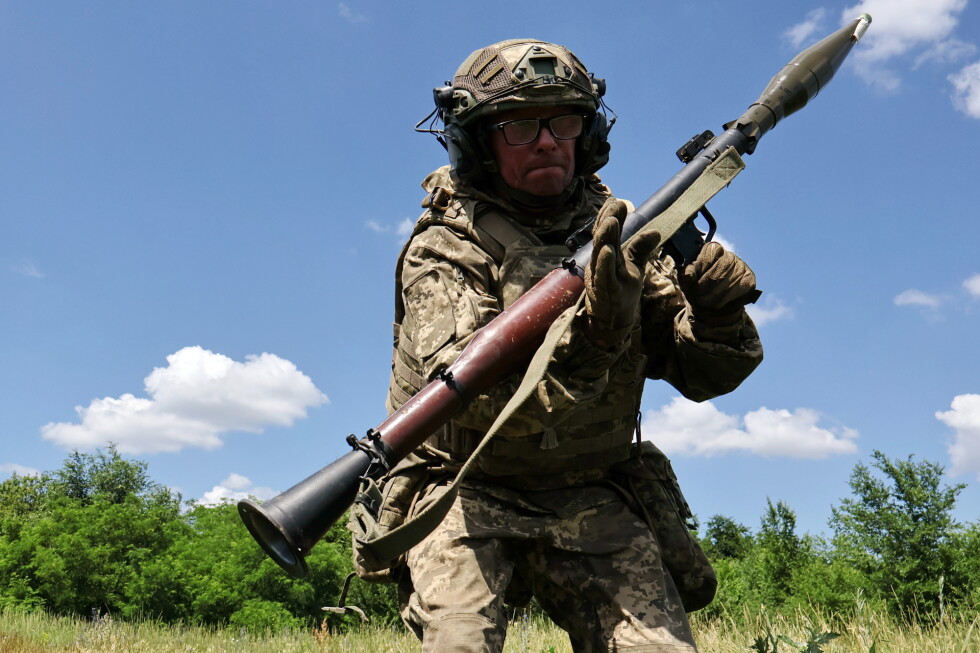
    KHARKIV, Ukraine — Under the starlit skies of eastern Ukraine, specialized military teams maintain vigilant watch for Iranian-designed Shahed drones—the low-cost loitering munitions that Russia has deployed by the tens of thousands in its four-year conflict. These mobile units represent the frontline of a remarkable military innovation story: Ukraine’s grassroots development of drone interception technology that has evolved from battlefield necessity into a globally significant defense solution.

    When Shahed drones first appeared in autumn 2022, Ukraine possessed limited capabilities to counter them. Today, through continuous adaptation and ingenuity, drone crews successfully intercept these aerial threats mid-flight using increasingly sophisticated homemade technology. The 127th Brigade exemplifies this transformation, with soldiers constantly testing and refining their interceptor drones during lulls in combat operations.

    The evolution began approximately two years ago when conventional air-defense missiles proved ineffective against agile reconnaissance drones. A pivotal moment occurred when a Ukrainian pilot successfully downed a Russian Orlan surveillance drone using another drone—an event that military personnel now recognize as the dawn of a new era in aerial warfare. “That’s when I realized—this is a drone war. It had begun,” recalled a 27-year-old captain leading the brigade’s efforts, who spoke anonymously due to military regulations.

    Ukraine’s domestic drone interceptor market has subsequently flourished, with key developers showcasing their products at international arms exhibitions. The collaboration between military units and defense companies has been particularly fruitful in Kharkiv, where soldiers work alongside local manufacturers to test and refine aircraft-style interceptor drones capable of matching Shahed speeds exceeding 200 kilometers per hour (124 mph).

    Civil society organizations have played a crucial bridging role in this innovation ecosystem. The Come Back Alive Foundation launched its “Dronopad” (Dronefall) initiative in summer 2024 to systematize early successful interception cases into scalable solutions. Project lead Taras Tymochko emphasized the importance of rapid feedback loops between battlefield testing and technical refinement: “It’s always action and counteraction. That cycle is what drives the evolution of drone warfare.

    The technology’s cost-effectiveness represents perhaps its most revolutionary aspect. While a Patriot missile system costs approximately $2 million per interceptor, these drone systems operate at roughly $2,200 per unit—with the added advantage of being reusable when missions prove unsuccessful. As one pilot noted: “The difference is huge. And the effect? Not any worse.”

    The success of Ukraine’s drone defense approach has attracted international attention, with President Volodymyr Zelenskyy confirming that U.S. allies in the Middle East have sought Ukrainian expertise in defending against Iranian drones—the same systems that have occasionally overwhelmed sophisticated Western air defenses in the region.

    What began as improvisation has matured into a formal military capability, with the 127th Brigade now establishing dedicated air defense units centered on interceptor drone crews—a model being adopted across Ukraine’s armed forces. Nearly two years after initial skepticism, these systems have demonstrated that sometimes, as Tymochko observed, “air defense for the poor can be more effective than air defense for the rich.”

  • Slovenia’s governing liberals face right-wing populists in a tight parliamentary election

    Slovenia’s governing liberals face right-wing populists in a tight parliamentary election

    Slovenians cast their votes on Sunday in a critically contested parliamentary election that represents a fundamental ideological clash for the nation’s future direction. This electoral battle positions incumbent Prime Minister Robert Golob’s liberal Freedom Movement against the right-wing Slovenian Democratic Party (SDS), led by former three-time premier Janez Jansa, whose political style echoes that of Donald Trump.

    The election outcome carries significance beyond Slovenia’s borders, potentially influencing the political equilibrium within the 27-member European Union. A victory for Golob would maintain Slovenia’s current liberal trajectory within the bloc, while a Jansa triumph would bolster Europe’s expanding populist movements, particularly given his established alliance with Hungarian nationalist leader Viktor Orbán.

    Recent polling indicates an exceptionally tight race, with neither major party projected to secure an outright majority in the 90-seat parliament. This electoral uncertainty positions smaller political factions as potential kingmakers in post-election coalition negotiations.

    The campaign has been notably marred by allegations of foreign interference, with claims emerging about covert video recordings purportedly showing government-linked corruption. Investigative findings reveal that representatives from Black Cube, a private intelligence agency operated by former Israeli intelligence officers, made multiple visits to Slovenia in recent months, including to locations near Jansa’s party headquarters. While Jansa acknowledges contacts with a Black Cube adviser, he vehemently denies involvement in election interference schemes.

    Prime Minister Golob has called for an EU-level investigation, emphasizing the need to protect electoral integrity across member states. The allegations have intensified existing political divisions in a country historically known for its moderate political landscape.

    The ideological contrast between the candidates extends to foreign policy, with Golob’s administration adopting a pro-Palestinian stance—including official recognition of Palestinian statehood and travel restrictions on Israeli officials—while Jansa maintains strongly pro-Israel positions.

    Since gaining independence from Yugoslavia in 1991, Slovenia has consistently alternated between liberal and conservative governance. This election continues that tradition of political oscillation, with the Alpine nation’s two million citizens determining whether Europe’s liberal democratic values or right-wing populism will guide their future.