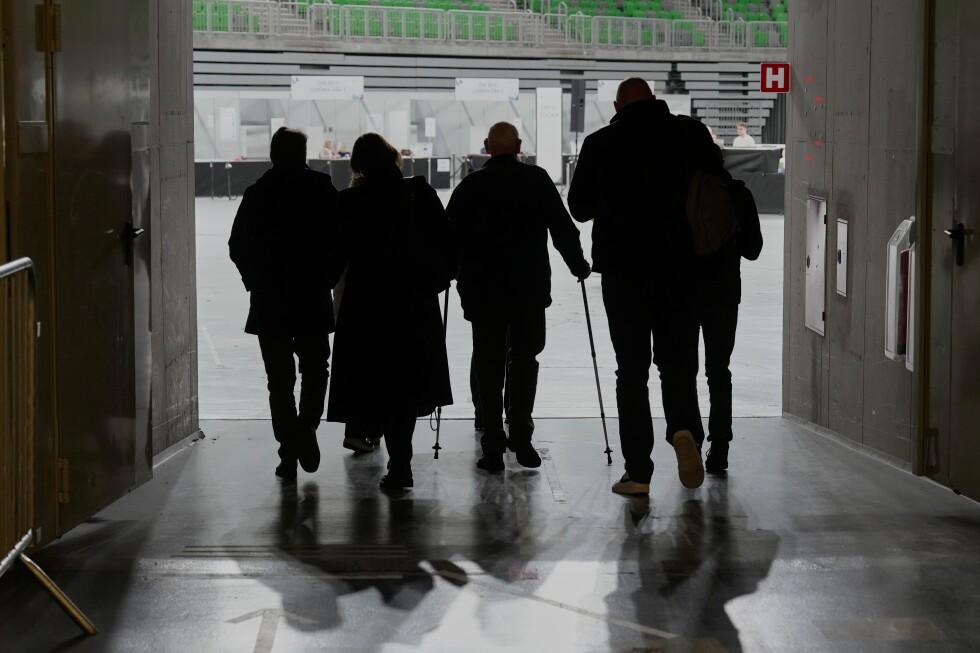
Slovenians cast their votes on Sunday in a critically contested parliamentary election that represents a fundamental ideological clash for the nation’s future direction. This electoral battle positions incumbent Prime Minister Robert Golob’s liberal Freedom Movement against the right-wing Slovenian Democratic Party (SDS), led by former three-time premier Janez Jansa, whose political style echoes that of Donald Trump.
The election outcome carries significance beyond Slovenia’s borders, potentially influencing the political equilibrium within the 27-member European Union. A victory for Golob would maintain Slovenia’s current liberal trajectory within the bloc, while a Jansa triumph would bolster Europe’s expanding populist movements, particularly given his established alliance with Hungarian nationalist leader Viktor Orbán.
Recent polling indicates an exceptionally tight race, with neither major party projected to secure an outright majority in the 90-seat parliament. This electoral uncertainty positions smaller political factions as potential kingmakers in post-election coalition negotiations.
The campaign has been notably marred by allegations of foreign interference, with claims emerging about covert video recordings purportedly showing government-linked corruption. Investigative findings reveal that representatives from Black Cube, a private intelligence agency operated by former Israeli intelligence officers, made multiple visits to Slovenia in recent months, including to locations near Jansa’s party headquarters. While Jansa acknowledges contacts with a Black Cube adviser, he vehemently denies involvement in election interference schemes.
Prime Minister Golob has called for an EU-level investigation, emphasizing the need to protect electoral integrity across member states. The allegations have intensified existing political divisions in a country historically known for its moderate political landscape.
The ideological contrast between the candidates extends to foreign policy, with Golob’s administration adopting a pro-Palestinian stance—including official recognition of Palestinian statehood and travel restrictions on Israeli officials—while Jansa maintains strongly pro-Israel positions.
Since gaining independence from Yugoslavia in 1991, Slovenia has consistently alternated between liberal and conservative governance. This election continues that tradition of political oscillation, with the Alpine nation’s two million citizens determining whether Europe’s liberal democratic values or right-wing populism will guide their future.