标签: Europe

欧洲

  • How Starmer went from Labour Party hero to calling it quits within 2 years

    How Starmer went from Labour Party hero to calling it quits within 2 years

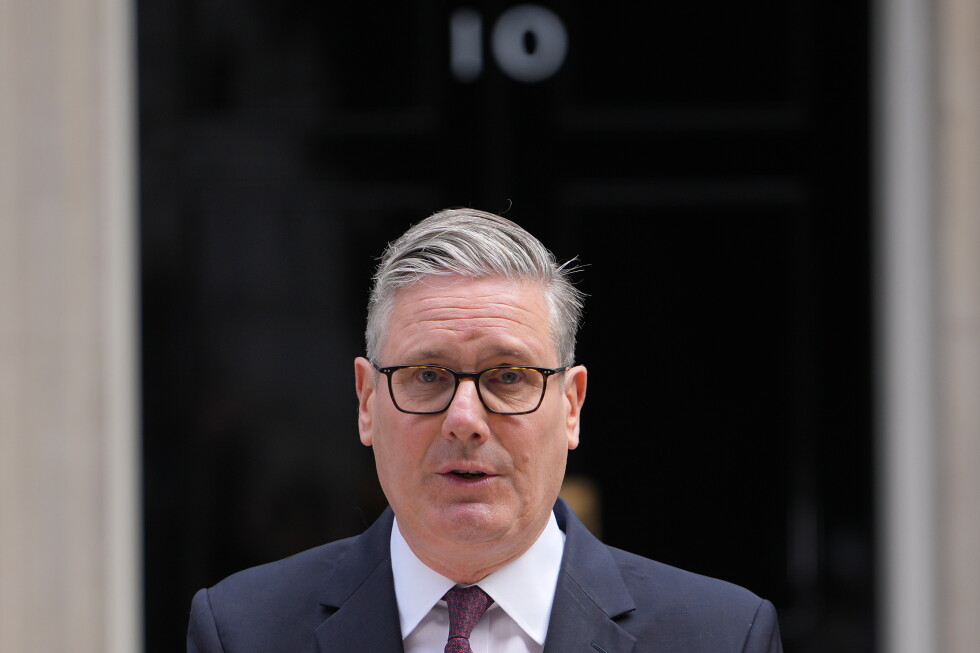
    LONDON – It is one of the most dramatic political reversals in modern British history: Keir Starmer, who led the Labour Party to a landslide general election victory in 2024 that ended 14 years of Conservative rule, announced his resignation as prime minister on Monday, forced out by a party rebellion triggered by catastrophic local election losses. His premiership lasted less than two years, unraveled by a toxic mix of economic stagnation, repeated policy missteps, a damaging controversial appointment, and widespread voter disillusionment over his perceived lack of a clear governing vision.

    Starmer’s political rise reached its peak on July 4, 2024, when Labour secured a commanding majority of 411 seats out of 650 in Parliament, a stunning turnaround from the party’s historic defeat in the previous general election. The victory ushered in a wave of national optimism, as Starmer positioned his government as a champion of working-class Britons drained by years of Conservative governance. In his triumphant victory speech, Starmer framed the win as a new beginning for the United Kingdom, saying, “Walk into the morning, the sunlight of hope, pale at first but getting stronger through the day, shining once again, on a country with the opportunity after 14 years to get its future back.” Home Secretary Shabana Mahmood even praised Starmer for pulling the party “from the brink, back to power.”

    That optimism faded far faster than even Starmer’s most vocal critics predicted. The new prime minister inherited an economy already reeling from the lingering fiscal damage of the COVID-19 pandemic and the inflationary shock of Russia’s full-scale invasion of Ukraine, leaving his government with little fiscal room for large popular spending programs. Voters had ousted the Conservatives over soaring household costs, but Starmer and Treasury chief Rachel Reeves stumbled early: their overly downbeat public assessments of the country’s economic situation eroded consumer and business confidence, prompting widespread spending cuts and hiring freezes that deepened economic stagnation.

    Policy missteps compounded the economic damage. Bound by an election manifesto pledge to rule out increases to income tax and value-added tax—the government’s two largest revenue sources—Starmer’s administration instead raised payroll taxes on businesses. The change was deeply unpopular, pushing countless companies to scale back hiring plans and worsening already elevated unemployment levels. This misstep was followed by a string of embarrassing policy U-turns that eroded public trust and gave opposition parties ample ammunition to claim Starmer lacked core convictions. The government was forced to backtrack on plans to cut winter home heating subsidies for millions of pensioners, reverse proposed deep cuts to welfare spending, and weaken a new agricultural inheritance tax after thousands of angry farmers blockaded central London with tractors. Even outside of economic policy, Starmer flipped positions on high-profile issues, most notably launching a national inquiry into organized child sexual abuse only after sustained pressure from opposition figures and billionaire Elon Musk.

    The most damaging blow to Starmer’s credibility came from his fateful decision to appoint veteran Labour figure Peter Mandelson—an open friend of convicted sex offender Jeffrey Epstein—as British ambassador to the United States. Initially, the pick was hailed as a shrewd strategic move: Mandelson, long nicknamed the “Prince of Darkness” for his hard-nosed political tactics, had deep trade experience and established relationships with U.S. business and political leaders, including then-President Donald Trump. His efforts ultimately delivered a bilateral trade deal with lower tariffs for Britain than most observers expected. But the appointment unraveled in September 2025, when new documents revealed Mandelson had been far closer to Epstein than he had publicly disclosed. Further revelations compounded the scandal: internal government records showed Mandelson had been flagged as a “reputational risk” before his appointment, failed a mandatory security background check, and was under investigation for allegedly passing sensitive cabinet information to Epstein more than 15 years earlier. Starmer ultimately fired Mandelson, but the scandal left his political judgment permanently in question. Mandelson has repeatedly denied all wrongdoing.

    The final collapse came this spring, when Starmer’s already plummeting popularity translated into a devastating rout for Labour in local elections across the country. The far-right, anti-immigration Reform UK party won the largest share of local seats, while the rising Green Party pulled large numbers of left-leaning voters away from Labour. In the wake of the losses, more than 100 Labour members of Parliament publicly called for Starmer to step down. Several senior cabinet ministers, including popular Health Secretary Wes Streeting, resigned in protest, fueling speculation that Streeting would launch a leadership challenge. Popular Greater Manchester Mayor Andy Burnham, another potential challenger, returned to Parliament after a sitting MP stepped down to clear his path to a leadership bid. When Burnham won the resulting by-election last week, the writing was on the wall for Starmer.

    After holing up at Chequers, the prime minister’s official country residence, over the weekend to weigh his options, an emotional Starmer announced his resignation Monday morning. Burnham was sworn in as prime minister later the same day in the House of Commons, where he received a rapturous welcome from Labour MPs. Labour’s national executive committee will open nominations for a permanent party leader on July 9, and it remains unclear whether any other candidates will step forward to challenge Burnham for the permanent role.

  • Kylian Mbappé scores 2 goals to lead France to 3-0 win over Iraq and into World Cup knockout stage

    Kylian Mbappé scores 2 goals to lead France to 3-0 win over Iraq and into World Cup knockout stage

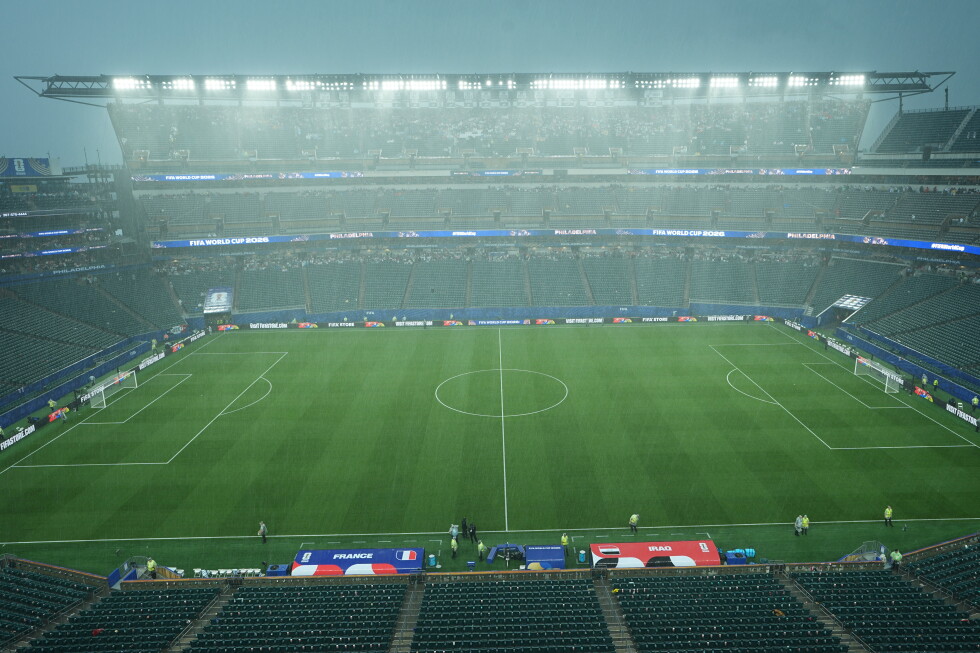
    PHILADELPHIA — Monday’s FIFA World Cup group stage match between France and Iraq made tournament history before delivering the kind of individual brilliance that has become synonymous with Kylian Mbappé, as Les Bleus weathered the first-ever rain delay in World Cup history to secure a 3-0 victory and a spot in the knockout round, with Mbappé netting twice to climb into elite company on the all-time tournament goalscoring list.

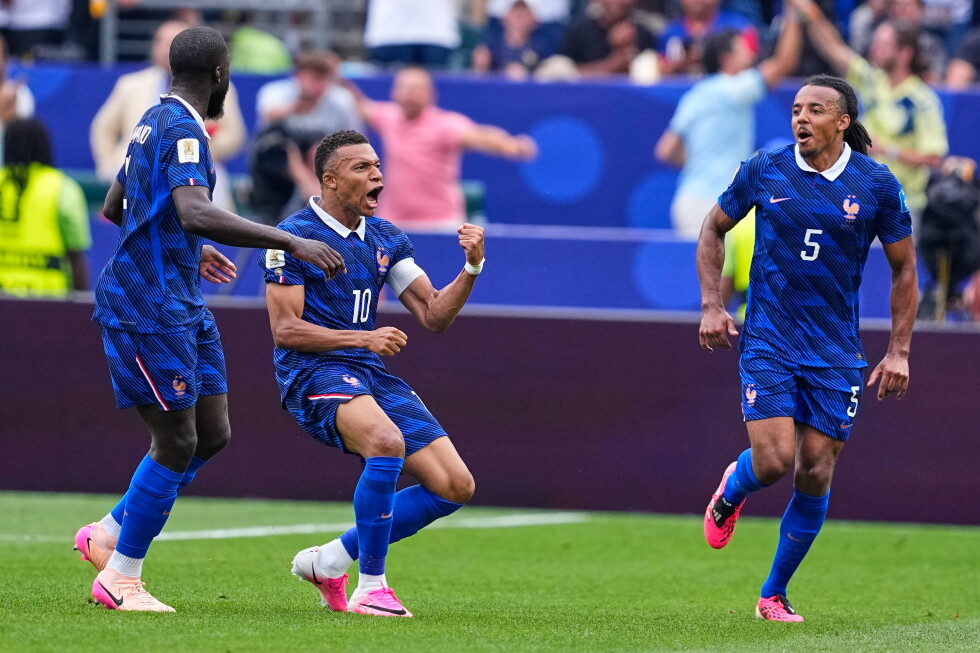
    The 27-year-old French superstar, playing his 100th senior international match under soggy conditions at Lincoln Financial Field, opened the scoring in the 14th minute, slotting a left-footed strike from the edge of the 18-yard box past Iraq starting goalkeeper Ahmed Basil. The goal gave France a 1-0 lead heading into halftime, just as a severe thunderstorm rolled into Philadelphia, triggering a 2-hour and 2-minute delay that upended the match schedule.

    Match officials ordered thousands of spectators to seek shelter in the stadium’s covered concourses and balconies as sheets of rain drenched the Kentucky bluegrass pitch, leaving grounds crews to squeegee standing water off the playing surface ahead of the second half. The venue, home of the NFL’s Philadelphia Eagles, has a history of weather-related disruptions: last season’s Eagles home opener was delayed 65 minutes by lightning, and Monday’s storm brought a familiar set of inconveniences for fans, from overpriced concession stands to unplanned breaks that extended the match long past its original end time. By the time play resumed, many fans had already headed for the exits, while the remaining French supporters waved tricolor flags and splashed through standing water in the concourses to pass the time. Iraq head coach Graham Arnold even had a viral moment wrestling with a rain poncho before retreating to the covered dugout.

    When play finally restarted, it did not take long for Mbappé to add to his tally. In the 54th minute, Iraqi defender Zaid Tahseen played a sloppy back pass directly to Ousmane Dembélé, who controlled the loose ball and found Mbappé open in front of goal. The French captain tapped home his second of the night with his right foot, pushing France’s lead to 2-0. The reigning Ballon d’Or winner Dembélé capped the scoring late for France, sealing the 3-0 win for Didier Deschamps’ side.

    The two goals moved Mbappé to 16 career World Cup goals, pulling him level with Germany’s Miroslav Klose for second on the all-time list, one clear Brazil’s Ronaldo and just two behind new record holder Lionel Messi. Messi, Mbappé’s long-time rival, had stretched his record to 18 goals earlier the same day, scoring twice in Argentina’s win over Algeria in Kansas City. Mbappé came close to claiming a hat trick on a late breakaway, but his final effort missed the target before he was substituted out in the 90th minute.

    Beyond the milestone, the win secures France’s place in the knockout round as one of the tournament’s co-favorites alongside Spain. Les Bleus could return to Philadelphia for a quarterfinal match against Germany on July 4 if results hold in the remaining group stage games.

    For Iraq, making just their second World Cup appearance in history after debuting in 1986, the match brought more than just a defeat. Star striker Aymen Hussein, who scored his 34th international goal in Iraq’s opening 4-1 loss to Norway, was forced off with an apparent injury just 26 minutes into the first half, replaced by Ali Al-Hamadi. Basil, who got his first start of the tournament in place of captain Jalal Hassan who conceded four goals against Norway, could not stop Mbappé and Dembélé’s attacking pressure on the night.

    For the fans that stayed through the entire two-hour rain delay and the final whistle, the night ended with a celebration of one of the game’s greatest players, who continues to chase history as the tournament progresses.

  • How 100 Romanian hospitals switched to pen and paper to defeat a national cyber-attack

    How 100 Romanian hospitals switched to pen and paper to defeat a national cyber-attack

    In early February 2024, a coordinated ransomware cyberattack swept through Romania’s healthcare network, triggering one of the most high-stakes responses to a global healthcare cyber incident in recent memory. What began as a quiet breach of a popular domestic medical software platform quickly grew into a crisis that put hundreds of thousands of patient lives at risk, and ultimately became a global case study for how nations can defend critical infrastructure against criminal hacking groups.

    The attack unfolded when criminals exploited a vulnerability in Hippocrates, a widely used medical management system developed by Bucharest-based software firm RSC. The system, used by more than 100 hospitals across Romania, handles every core function of hospital operations: from patient admissions and test result tracking to pharmacy inventory management and staff payroll. Cyber attackers deployed the BackMyData ransomware strain through the compromised software, quietly encrypting files across connected hospital networks before any IT team detected abnormal activity.

    The first alert came on a Sunday morning, when staff at Pitești Children’s Hospital, located northwest of Bucharest, spotted unexplained errors on their system. By dawn the next day, dozens of hospitals across the country reported that Hippocrates had gone completely dark, with all patient and operational files scrambled into unreadable gibberish. The attackers demanded a total ransom of €160,000 in bitcoin to unlock the encrypted data.

    At Romania’s national cybersecurity directorate (DNSC) in Bucharest, cyber chief Dan Cimpean faced an urgent, no-win decision. With the ransomware spreading rapidly from hospital to hospital through connected networks, Cimpean made the bold call to issue an immediate order: more than 100 affected and at-risk hospitals had to disconnect from the internet entirely to halt the attack’s progress.

    The decision stopped the hackers in their tracks, buying cybersecurity teams critical time to investigate the breach and contain the damage, but it threw day-to-day hospital operations into chaos. For frontline medical staff like surgeon Oana Goidescu, who was on shift at Buzău Hospital, 75 miles northeast of Bucharest, when the alert hit, losing digital access meant losing every tool the clinical team relied on.

    “An IT record is not just a list of patients,” Goidescu explained in the aftermath of the incident. “For every patient, we request lab tests, radiology scans, medicines and supplies. All of that was gone overnight.”

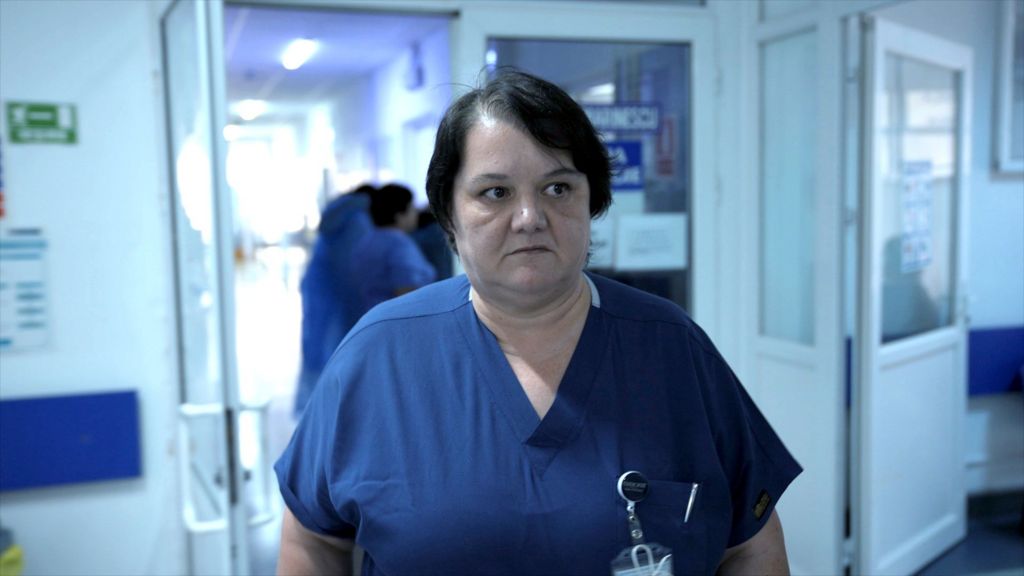
    Clinical teams across the country quickly improvised analogue workarounds to keep patient care running. Surgeons and doctors switched back to pen and paper for patient records. At Bucharest’s Carol Davila Hospital, medical director Vlad Paic said his team developed a custom offline registration system within hours, asked labs to deliver results on printed paper, and used offline spreadsheets to track care. Many clinicians noted that Romania’s relatively recent shift to full digital health records left many staff still comfortable with paper-based workflows, a surprising advantage during the blackout.

    While frontline staff managed patient care, cybersecurity investigators worked around the clock to map the damage and evict the hackers. Working closely with developers at RSC, the team confirmed that 26 hospitals had been fully infected with BackMyData, while the rest of the facilities had avoided encryption thanks to the early internet disconnection. DNSC leadership made a second critical, binding decision: no hospital would be allowed to negotiate with or pay the attackers, a stance that security experts widely back as a long-term deterrent to future ransomware attacks.

    The DNSC also leaned on open, consistent communication with the public and media to manage the crisis, a choice that DNSC leadership later cited as core to the response’s success. Public warnings urged patients to avoid non-urgent hospital visits to reduce strain on offline teams, though waiting rooms still filled with patients seeking care, and some frustrated visitors directed their anger at overstretched frontline staff.

    IT teams worked at breakneck speed to restore systems from existing backups. A key stroke of luck and preparation meant most hospitals maintained recent, intact offline backups of their patient data, allowing teams to restore systems much faster than many experts expected. Within five days of the attack being detected, nearly all hospitals were back online and operating near full capacity. Remarkably, there were no reported deaths or permanent serious harm to patients connected to the outage, though it took weeks for staff to re-input all the paper records generated during the blackout, and some small amounts of data were lost forever.

    In the months following the attack, Romania’s coordinated response has become a benchmark test case for disaster planners around the world. The incident also underscores a stark new reality for global healthcare: the FBI recently confirmed that healthcare has overtaken all other sectors as the most targeted area of critical national infrastructure for cyberattacks.

    Recent years have seen a string of devastating attacks on global healthcare systems that have caused measurable harm. In 2023, a breach of a UK blood testing firm that affected a dozen London medical centers was officially linked to a patient’s death, marking the first publicly confirmed fatalities from a healthcare cyberattack. The same year, U.S. healthcare payment platform Change Healthcare paid attackers a $22 million ransom after a widespread breach, and another major U.S. provider Ascension suffered a disruptive attack that shut down services across multiple facilities.

    Alina Bîzgă, a cybersecurity analyst at Bucharest-based global security firm Bitdefender, explained why criminal groups increasingly target hospitals over other sectors. “Hospitals handle time-sensitive, life-saving critical services, and criminals calculate that the more widespread disruption they cause, the more pressure hospital and government leaders face to pay a ransom quickly,” she said.

    Dan Cimpean, who led Romania’s response, noted that the risk of such an attack exists in every nation, regardless of size or development level. “The more technology you adopt, and the more digitized your healthcare system becomes, the greater your exposure to these risks,” he said. “This was not a problem unique to Romania — it could have happened anywhere.”

    As of mid-2024, Romanian police have declined to comment on the ongoing investigation into the identity of the attackers behind the BackMyData incident. In 2023, an international law enforcement operation took down the dark web website of a ransomware gang linked to the BackMyData strain, and four Russian suspects connected to the group were arrested outside of Russia, whose government does not cooperate with Western law enforcement on cybercrime prosecutions.

  • World Cup sees first weather delay as fans cleared from seats at France-Iraq match in Philadelphia

    World Cup sees first weather delay as fans cleared from seats at France-Iraq match in Philadelphia

    A sudden outbreak of heavy rain and an approaching severe thunderstorm disrupted the 202X FIFA World Cup group stage match between France and Iraq in Philadelphia on Monday, forcing thousands of spectators to evacuate their seats for shelter during the halftime break. This marked the first weather-related delay of the entire tournament, and forecast models also predicted heavy precipitation for the later scheduled match between Norway and Senegal in East Rutherford, New Jersey that same night.

    When the halftime interval began, France had already secured a 1-0 lead over Iraq. As storm clouds gathered rapidly, stadium officials triggered emergency safety protocols, posting alerts on the main venue scoreboard that instructed all attendees to move immediately to the stadium’s covered concourses and enclosed structures, with a clear warning that a severe thunderstorm system was imminent. Torrential sheets of rain poured down throughout the extended halftime, with crowds of fans huddling together in walkways and under concrete overhangs to wait out the downpour.

    Initially, game organizers anticipated the delay would add just 15 extra minutes to the standard 15-minute halftime break. But as unfavorable weather conditions persisted, the extension stretched on, and officials later updated the crowd that play would only resume once conditions were officially cleared as safe for players and spectators. FIFA’s official safety guidelines mandate that all matches must be halted and seating areas fully evacuated for a minimum of 30 minutes if lightning is detected within an 8-mile radius of the venue, with the 30-minute timer resetting after each new lightning strike.

    Long before the halftime evacuation order, the match had already been affected by wet conditions, as heavy rain began falling in the 37th minute of the first half. Many spectators pulled out waterproof ponchos to stay dry and chose to remain in their seats through the early downpour, only moving when the formal shelter order was issued at halftime. A small handful of attendees opted to ignore the initial warning and stay in their open seats, prompting stadium staff to issue a second public announcement requesting that they relocate to covered safety areas.

  • Kylian Mbappé of France scores his 15th World Cup goal, tying for 3rd most in history

    Kylian Mbappé of France scores his 15th World Cup goal, tying for 3rd most in history

    PHILADELPHIA – On a milestone Monday at the FIFA World Cup, French superstar Kylian Mbappé continued his chase of all-time World Cup scoring greats — including new record holder Lionel Messi — by notching his 15th career goal in the tournament, tying him for third on the sport’s most prestigious global scoring list.

    The strike came in the 14th minute of France’s group stage clash against Iraq, marking Mbappé’s 100th appearance for the French senior national team and putting Les Bleus ahead 1-0 early. Playing in his third consecutive World Cup at 27, the iconic forward matched Brazilian legend Ronaldo’s career tournament goal total, while moving past West Germany’s Gerd Müller in the all-time rankings. Only Germany’s Miroslav Klose, who sits second with 16 World Cup goals, and new record-holder Messi stand ahead of Mbappé at the top of the chart.

    Messi himself rewrote the record books earlier the same day, scoring twice for Argentina to push his career World Cup total to 18, the new all-time high. The Argentine captain had already drawn level with Klose the previous week, notching his first career World Cup hat trick in Argentina’s 3-0 victory over Algeria in Kansas City, Missouri.

    Mbappé’s 15th goal was a clinical 20-yard left-footed finish that beat Iraq goalkeeper Ahmed Basil, who earned his first start of the tournament after Iraq captain Jalal Hassan conceded four goals in the team’s opening 4-1 defeat to Norway.

    A proven winner at the international level, Mbappé was a key part of France’s 2018 World Cup title run and helped the side reach the 2022 final in Qatar, where he claimed the Silver Ball as the tournament’s second-best player. Entering this year’s World Cup, France entered as joint title favorites alongside Spain, with Mbappé leading a dynamic attacking line that also includes breakout young talent Désiré Doué and reigning Ballon d’Or winner Ousmane Dembélé.

    Mbappé is already one of just two players in history to score a hat trick in a World Cup final, having notched three against Argentina in the 2022 title match. He entered the clash against Iraq having already scored two goals in France’s opening 3-1 win over Senegal, bringing his 2024 tournament total to three ahead of the group stage’s second match.

    The goal against Iraq also pushed Mbappé to the top of France’s all-time international scoring chart. He now has 59 goals for Les Bleus, two clear of former teammate Olivier Giroud, who previously held the French record.

    Breaking down his 15 World Cup goals by tournament, Mbappé scored four times during France’s 2018 title run, notched eight to win the 2022 Golden Boot as top scorer, and has added three goals so far in this year’s edition — putting him well on track to challenge even Messi’s new record before the tournament concludes.

  • Political crisis deepens as Romanian lawmakers reject new government

    Political crisis deepens as Romanian lawmakers reject new government

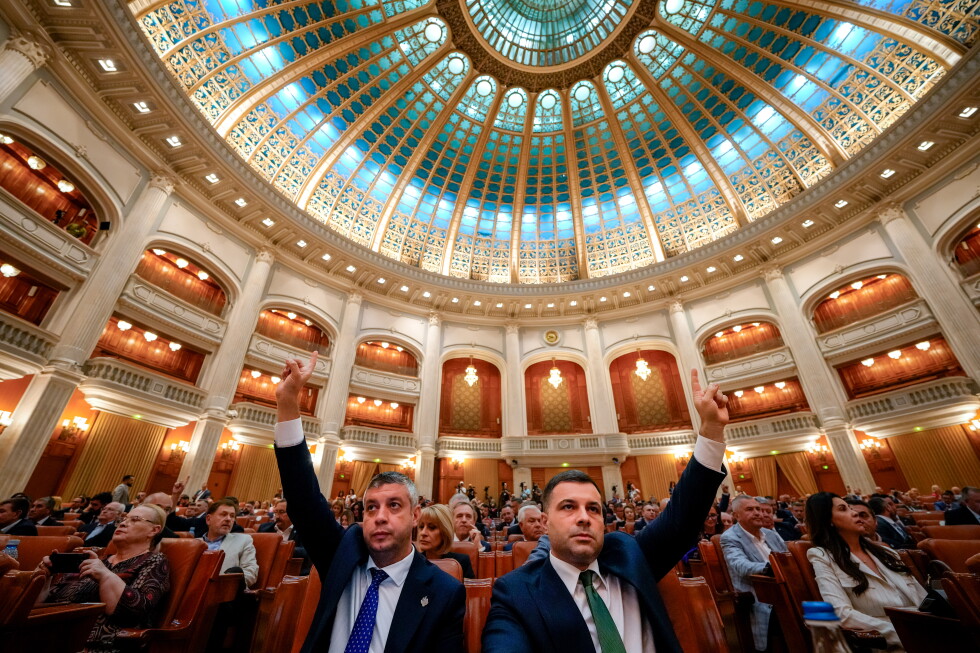
    BUCHAREST, Romania — In a development that extends Romania’s months of political gridlock, lawmakers voted down the newly proposed government led by Prime Minister-designate Adrian Vestea late Monday, throwing the Eastern European nation into further uncertainty amid mounting economic challenges.

  • Key dates in the history of the Titanic and the battles over its final resting place

    Key dates in the history of the Titanic and the battles over its final resting place

    More than 114 years after the world’s most famous maritime disaster sent the RMS Titanic to the bottom of the Atlantic Ocean, the wreck and the artifacts pulled from its site remain at the center of a heated new legal battle, as the United States government moves to block a planned auction of dozens of salvaged items. The long, fraught history of the Titanic has been marked by tragedy, discovery, and decades of debate over how to honor the more than 1,500 lives lost, while balancing commercial and historical interests.

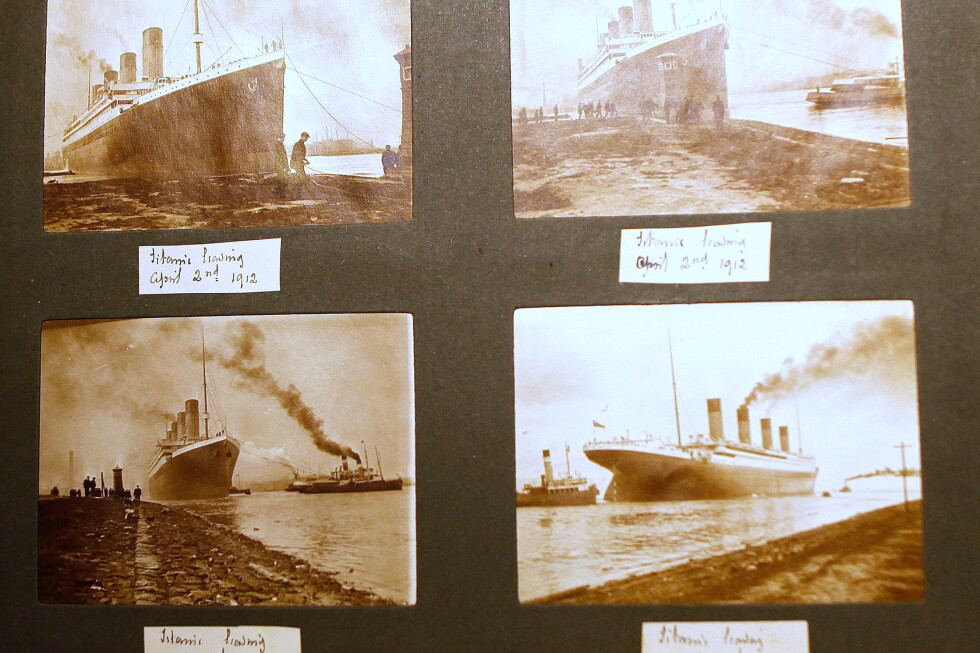
    The story of the Titanic began in early 1912, after two years of ambitious construction that billed the vessel as ‘unsinkable.’ On April 10 of that year, the ocean liner departed Southampton, England, making brief stops in France and Ireland before setting out across the Atlantic for New York City, carrying roughly 2,200 passengers and crew aboard. Just four days into the voyage, despite multiple repeated warnings of ice fields in the region, the Titanic struck an iceberg off the coast of Newfoundland, Canada, shortly before midnight on April 14. Within hours, by the early morning of April 15, the once-unsinkable ship had fractured and slipped 3.7 kilometers (2.3 miles) down to the ocean floor, leaving only around 700 survivors and claiming the lives of approximately 1,500 people.

    For more than seven decades, the exact location of the Titanic’s wreckage remained a mystery, until a joint team of French and American researchers finally located the vessel’s final resting place on September 1, 1985. Their discovery confirmed long-held speculation that the ship had split into two large pieces before sinking. The following year, in July 1986, a crew of researchers became the first people to directly observe the wreck since its sinking, using a manned submersible to complete 11 dives that captured thousands of photos and hours of video footage of the site, leaving all artifacts undisturbed. Just three months later, the U.S. government passed legislation to set formal guidelines for future expeditions and protect the wreck, but the law lacked the enforcement power to halt private salvage trips or the removal of artifacts from the site.

    The first artifacts were pulled from the wreck in 1987, when American firm Titanic Ventures partnered with a French research institute to recover passenger dishes and more than 1,800 total items in the months that followed. At the time, the group made a public promise not to sell the collection and to keep all recovered items intact as a single curated holdings. In May 1993, Titanic Ventures sold its salvage rights to RMS Titanic Inc., which launched a new expedition just one month later that pulled 800 additional artifacts from the wreck, ranging from personal passenger belongings like a pocket watch and leather suitcases to ship fixtures, decorative items, and unexpected finds including a complete set of bagpipes and original sheet music.

    Legal battles over control of the wreck and its artifacts began shortly after, when a U.S. federal court granted RMS Titanic Inc. exclusive salvage rights to the site in 1994, though the ruling stopped short of naming the company as the legal owner of the recovered items. Five years later, a federal appeals court further weakened the company’s exclusive claim, ruling it could not block other firms from visiting or photographing the wreck site. In 2000, the largest ever collection of Titanic artifacts opened to the public in Chicago, though the exhibition drew sharp criticism from multiple cultural institutions that argued retrieving artifacts from the wreck amounted to unethical archaeological plundering of a maritime grave site.

    A 2011 federal court ruling granted RMS Titanic Inc. formal ownership of more than 1,000 artifacts recovered between 1993 and 2004, with one critical binding condition: the entire collection had to remain intact, and no individual items could be sold separately. In 2017, the U.S. ratified an international treaty protecting the Titanic wreck, requiring any individual or organization under U.S. jurisdiction to secure formal approval from the National Oceanic and Atmospheric Administration (NOAA) before conducting any salvage or research activity that would disturb the site.

    The modern chapter of the Titanic’s story opened with a second devastating tragedy in June 2023, when the experimental submersible Titan imploded during a descent to the wreck, killing all five people on board. One of the victims was Paul-Henri Nargeolet, a veteran French underwater explorer who served as director of underwater research for RMS Titanic Inc. Just two months after the implosion, the U.S. government launched legal action to block the company from a planned salvage expedition to retrieve additional historically significant items from the wreck, citing the 1986 federal law and the 2017 international protection treaty.

    In July 2024, RMS Titanic Inc. carried out its first expedition to the wreck site since 2010, focused on documenting the deteriorating wreck and surveying remaining artifacts, no salvage work was conducted. By January 2025, the U.S. government dropped its 2023 legal challenge, confirming the company no longer planned dives that would violate federal protections. The peace was short lived: in March 2026, RMS Titanic Inc. revealed in court filings a proposal to auction 100 separate lots of artifacts first pulled from the wreck in 1987, with plans for a global public tour of the items ahead of the sale. Details of the proposed auction remain sealed under a court order, but in June 2026, a judge ordered the documents unsealed, making public the fact that both the U.S. government and NOAA are formally opposing the proposed sale, reigniting a century-long debate over the future of the Titanic’s legacy.

  • Mexico, Italy and others see up to two more months of heat stress than in the 1970s, study says

    Mexico, Italy and others see up to two more months of heat stress than in the 1970s, study says

    A landmark new study published in *Nature Climate Change* on Monday delivers stark, granular data confirming that decades of human-caused planetary warming have triggered a dramatic, widespread increase in dangerous heat stress across the globe. The research, which moves beyond standard temperature measurements to focus on “feels-like” temperatures that directly impact human health, finds that dozens of nations are now facing one to two additional months of heat stress annually compared to 60 years ago, with heat risk spreading even to regions that historically avoided such dangerous conditions.

    Unlike prior climate research that has largely focused on raw air temperature increases, the study led by Rebecca Emerton, a senior scientist at the U.K.-based European Centre for Medium-Range Weather Forecasts, uses the Universal Thermal Climate Index to assess how combined environmental factors—temperature, humidity, wind speed, and more—affect the human body’s ability to regulate its internal heat. This approach provides a far more accurate picture of actual public health risk, because high humidity disrupts sweat evaporation, the human body’s primary natural cooling mechanism, making humid heat waves far more deadly than dry heat events of the same temperature.

    The research categorized heat stress into three tiers of increasing risk: strong heat stress (index temperatures ≥ 32°C / 89.6°F), very strong heat stress (≥ 38°C / 100.4°F), and extreme heat stress (≥ 46°C / 114.8°F). Comparing modern data to baseline conditions from the 1970s, the team found that heat stress is intensifying in already warm regions and expanding into new geographic areas.

    Hard-hit regions include parts of Southern and Eastern Africa (Namibia, Angola, Tanzania, Kenya, and Uganda), Mexico, and Central America, which could see up to 50 additional days of strong heat stress annually compared to the 1970s. Southern European nations including Southern Spain, Italy, Greece, and Turkey face up to 40 extra days of strong heat stress, with most of Southern Europe recording nearly a full month of additional heat stress days relative to 60 years ago. In the United States, most of the country experiences 15 or more extra days of strong heat stress annually, with southern states like Texas and Florida recording close to 25 or more additional days of very strong heat stress.

    Beyond longer heat stress seasons, the study also found that overnight heat is warming faster than daytime heat: the 10 warmest annual nights have warmed by 0.32°C (0.58°F) per decade, compared to 0.27°C (0.49°F) per decade for the 10 warmest annual days. The rise in tropical nights—defined as nights with minimum temperatures of at least 20°C (68°F)—is particularly concerning, because it prevents people from cooling off and recovering from daytime heat exposure, raising the risk of heat-related illness and death. Overall, 1 billion more people around the world now experience at least one day of extreme heat stress annually than they did in the 1970s.

    Emerton noted that the expansion of heat stress into previously unaffected regions was one of the study’s most striking findings. “It’s striking to see heat stress not only intensifying in those places that we already consider as being hot or used to experiencing heat waves … but also to see this, we call it, expanding footprint of heat stress expanding into regions where it’s historically been rare or non-existent,” she said.

    Jennifer Francis, a climate scientist at the Woodwell Climate Research Center who was not involved in the study, emphasized that the new research adds critical granularity to existing understanding of climate change risks. “This study adds stark details about increasing dangers to billions of humans,” Francis said. “This analysis shows not only is temperature rising, but so is humidity, which makes high temperatures more deadly because our body’s air conditioning system — sweating — struggles to keep up.”

    Lead researcher Emerton stressed that the severity of future heat stress increases depends entirely on near-term climate action. The study underscores the urgent need for aggressive cuts to fossil fuel emissions to mitigate future warming, alongside targeted investments in adaptation measures including heat health action plans, early warning systems, and updated climate risk assessments to protect vulnerable communities from rising heat risk.

  • Giovanni Malagò elected president of the crisis-laden Italian soccer federation

    Giovanni Malagò elected president of the crisis-laden Italian soccer federation

    In a decisive electoral outcome for Italian soccer’s struggling governing body, Giovanni Malagò — the seasoned sports administrator who oversaw organization of the 2026 Milan Cortina Winter Olympics — has secured the top role at the crisis-hit Italian Football Federation (FIGC).

    Monday’s leadership vote delivered a clear mandate to Malagò, who claimed 68.58% of the ballots cast. His only challenger, former FIGC president Giancarlo Abete, captured just 29.17% of the vote, leaving Malagò with an overwhelming victory to steer Italian soccer through its current turbulent period.

    The incoming president faces an immediate high-stakes priority: filling the vacant head coaching position for Italy’s senior men’s national team. The role opened up after Gennaro Gattuso stepped down following the Azzurri’s failure to qualify for a third consecutive FIFA World Cup, a streak that has deepened frustration across the Italian soccer community. The exit follows the resignation of former FIGC president Gabriele Gravina, who left his post in the wake of Italy’s playoff defeat to Bosnia and Herzegovina in World Cup qualifying.

    Two familiar faces from previous Italian national team tenures have emerged as the leading contenders for the coaching job: Roberto Mancini and Antonio Conte. Mancini, who led Italy to a historic UEFA European Championship title in 2021, departed the Azzurri post shortly after the team failed to qualify for the 2022 World Cup to take the helm of Saudi Arabia’s national side. He left that role in 2024 and most recently parted ways with Qatari club Al-Sadd, leaving him available for the vacancy. Conte, who managed Italy at the 2016 European Championship, stepped down from his position at top Italian club Napoli earlier this year, making him another readily available candidate for the role.

    Beyond his recent work leading the Milan Cortina Olympics organizing committee, Malagò brings a long background in elite sports governance to the FIGC presidency. He previously served as president of the Italian National Olympic Committee and still holds a seat as a member of the International Olympic Committee, giving him deep connections and experience in global sports leadership as he takes on one of the most challenging roles in Italian soccer.

  • A look at the quick succession of British prime ministers in the past 10 years

    A look at the quick succession of British prime ministers in the past 10 years

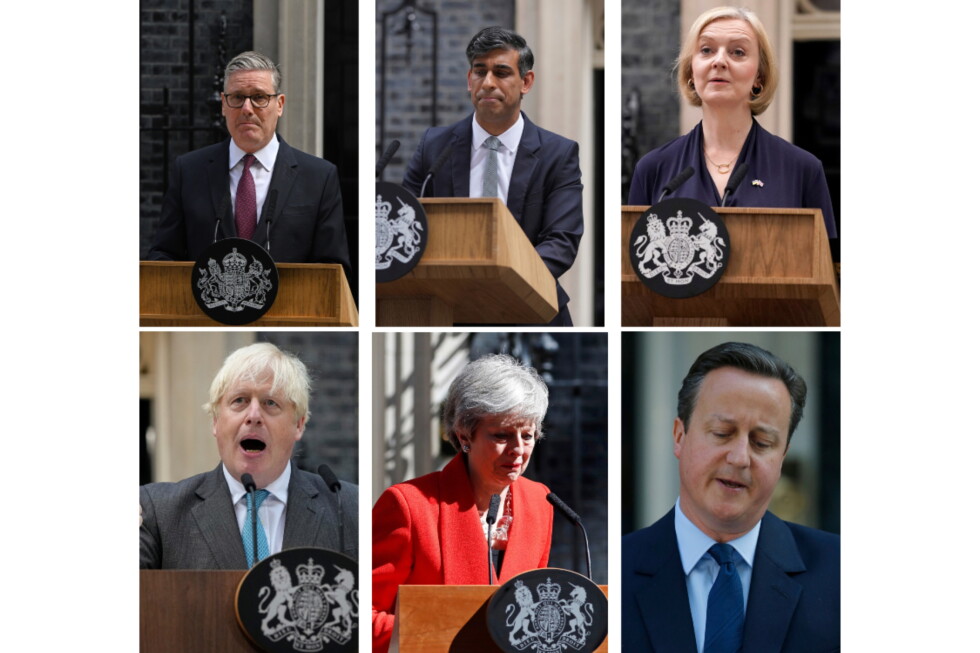
    LONDON – The announcement of Keir Starmer’s resignation as British Prime Minister this Monday has cemented a historic milestone for modern United Kingdom politics: over the past 10 turbulent years, six different leaders have stepped through the famous black door of 10 Downing Street — a turnover rate that matches the total number of prime ministers that served across the entire preceding four decades.

    Starmer’s ascent to power in the 2024 general election was a landslide victory for the Labour Party, ending 14 years of Conservative rule. Campaigned on a platform promising to undo the years of political chaos left by the previous Conservative government, deliver steady economic growth and repair Britain’s crumbling public services, Starmer rode a wave of widespread public discontent with the incumbent party to take office as the first Labour prime minister since 2010. The former director of public prosecutions framed his leadership as a fresh start for a nation worn thin by constant political upheaval.

    But just two years into his term, that promise of stability has crumbled. Plunging public approval ratings and repeated failures to deliver on his flagship “rebuild Britain” agenda left Starmer with little support within his own party, forcing his departure. In his announcement, he acknowledged that he no longer had the backing of his party to lead Labour into the next general election.

    To put this extraordinary wave of leadership turnover in context, the U.K. saw just six prime ministers hold office between 1976 and 2016. The current era of rapid change began in 2016, when the Brexit referendum upended the country’s political order.

    The first of the post-2016 departures came from Conservative Prime Minister David Cameron, who had called the historic Brexit referendum in a bid to defuse long-simmering internal tensions within his party over Britain’s membership in the European Union. After campaigning hard to remain in the bloc, voters defied his campaign and backed exit by a narrow margin. Cameron resigned the very next day, ending his six-year tenure in office.

    Cameron’s successor, Theresa May, took over with the unenviable task of negotiating Britain’s EU divorce. Over three years, May worked to secure a withdrawal agreement with Brussels, but the deal was repeatedly rejected by Parliament — derided by pro-EU lawmakers for pulling Britain out of the bloc, and dismissed by hardline Brexit-supporting Conservatives for leaving the U.K. too closely aligned to EU rules. After three devastating defeats for her proposal in the House of Commons, May stepped down in 2019, saying “I have done my best.”

    Next came Boris Johnson, the charismatic, polarizing Conservative leader who oversaw the finalization of Britain’s EU exit in January 2020 and guided the country through the initial waves of the COVID-19 pandemic. But his tenure collapsed under the weight of cascading ethics scandals: allegations of improper closeness to wealthy party donors, claims he protected allies facing bullying and corruption investigations, and most damagingly, evidence he misled Parliament about lockdown-breaching parties held in Downing Street during the pandemic. When dozens of government officials and his own allies resigned in protest, Johnson had no choice but to step down in 2022.

    Johnson’s departure ushered in Liz Truss, a libertarian Conservative who campaigned on a platform of radical free-market reform and small government. Promising to jumpstart Britain’s stagnant economy, Truss unveiled a sweeping stimulus package centered on massive, unfunded tax cuts just weeks into her term. The plan triggered market chaos, crashed the pound and erased all of Truss’s support within her party. After just 45 days in office, Truss resigned, making her the shortest-serving prime minister in British history.

    Rishi Sunak, the youngest prime minister to hold office in more than 200 years, stepped in to replace Truss in 2022, tasked with cleaning up the economic mess left by his predecessor. Sunak pledged to curb sky-high inflation, clear backlogs in the National Health Service and end the flow of irregular migration across the English Channel. But he never managed to reverse the Conservative Party’s plummeting poll numbers after the chaos of Truss and Johnson’s tenures, and he called an early general election in July 2024. When the Conservatives suffered the worst electoral defeat in their 200-year history, Sunak conceded defeat, stepped down, and said “I take responsibility for this loss.”

    Starmer’s subsequent landslide victory opened the door for Labour’s return to power, but his early exit after just two years proves that the political turbulence that has roiled Britain for a decade has yet to subside. As the country prepares to select its seventh prime minister in 10 years, the era of constant upheaval in British politics remains far from over.