标签: Europe

欧洲

  • Referendum defeat leaves Italy’s Meloni looking more vulnerable

    Referendum defeat leaves Italy’s Meloni looking more vulnerable

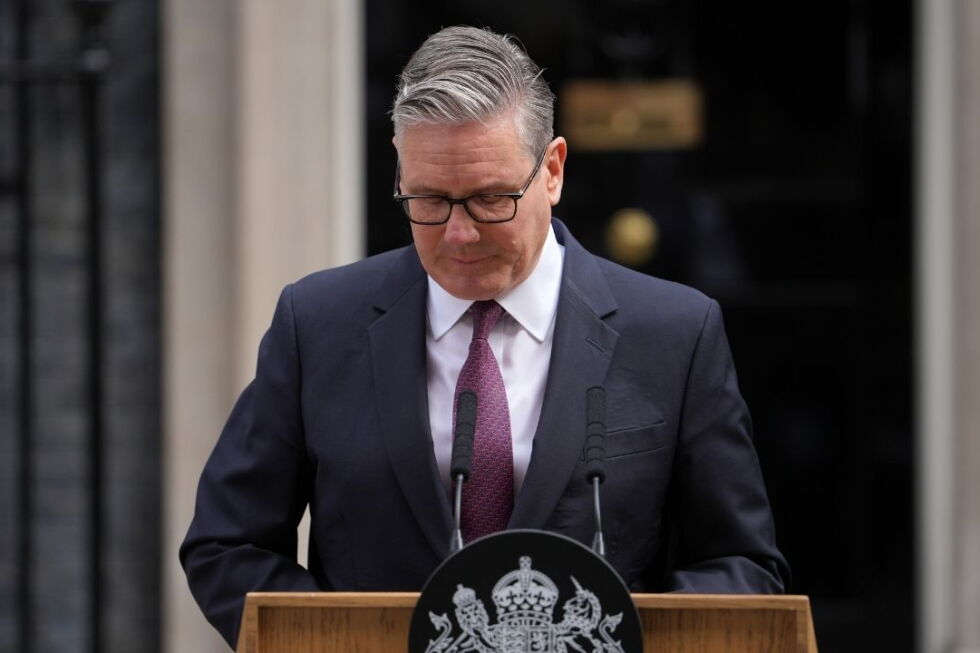
    Italian Prime Minister Giorgia Meloni has encountered her most significant political setback since taking office, with voters decisively rejecting her proposed constitutional reforms in a national referendum. The controversial judicial overhaul, which aimed to establish a strict constitutional separation between judges and prosecutors, was defeated by a substantial margin of 54% to 46%.

    Despite the technical nature of the proposed changes, the vote rapidly transformed into a broader plebiscite on Meloni’s nearly three-and-a-half-year administration. In a social media address delivered before final results were confirmed, the Prime Minister acknowledged the clarity of the Italian people’s decision while expressing regret over what she characterized as a ‘missed opportunity for modernization.’

    The referendum outcome represents the first major electoral defeat for Meloni’s right-wing coalition, which had previously presided over an unusual period of political stability in Italy. Opposition parties swiftly hailed the result as indicative of growing public desire for change, particularly with general elections scheduled for next year.

    Voter turnout reached nearly 60% despite the complex legal question posed, exceeding expectations. Preliminary exit polls had initially suggested a narrower margin of defeat before the count expanded to a more substantial rejection of the government’s proposal.

    The failed reform would have constitutionally mandated a complete separation between judicial prosecutors and sitting judges, creating distinct governing bodies for each branch and establishing a new disciplinary court. Government advocates argued these measures were essential for enhancing judicial independence, while opponents contended they would disrupt Italy’s carefully constructed post-fascist balance of powers and increase political influence over the judiciary.

    The timing proved particularly challenging for Meloni, who maintains close political ties with increasingly unpopular U.S. President Donald Trump. With Italy’s economy experiencing stagnation and public concern mounting over Middle East conflict impacts on energy costs, many voters appeared to use the referendum as an opportunity to express broader dissatisfaction.

    Unlike former Prime Minister Matteo Renzi—who resigned following his own failed 2016 constitutional referendum—Meloni had explicitly ruled out stepping down regardless of the outcome. Renzi subsequently advised that the government had lost its ‘magic touch’ and must better heed voter concerns.

    The defeat diminishes some of the political luster surrounding both Meloni’s coalition and her personal reputation as Italy’s seemingly invulnerable political strongwoman. Opposition Democratic Party leader Elly Schlein declared the result demonstrates ‘there is an alternative to this government’ as parties prepare for next year’s general election.

  • Slovenia becomes first EU country to introduce fuel rationing

    Slovenia becomes first EU country to introduce fuel rationing

    In an unprecedented move within the European Union, Slovenia has instituted nationwide fuel rationing measures in response to escalating energy market disruptions stemming from recent Middle Eastern conflicts. The geopolitical tensions between the US-Israeli coalition and Iran, along with subsequent retaliatory actions affecting Gulf energy producers, have triggered widespread fuel price surges across the continent.

    The new regulations establish distinct daily purchase limits: 50 liters for private motorists and 200 liters for commercial entities and agricultural operations. Fuel retailers bear the primary enforcement responsibility, requiring station employees to monitor compliance with the quantity restrictions. Prime Minister Robert Golob attempted to calm public concerns by emphasizing that “Slovenia’s fuel reserves remain at adequate levels with fully stocked warehouses, ensuring no actual shortages exist.”

    The policy primarily addresses ‘fuel tourism’ – a phenomenon where drivers from neighboring nations, particularly Austria, cross borders to capitalize on Slovenia’s government-capped prices. Austrian fuel prices currently approach €1.80 per liter for petrol and €2.00 for diesel, significantly exceeding Slovenia’s regulated maximums of €1.47 and €1.53 respectively.

    This price differential has transformed routine refueling into political theater. Herbert Kickl, leader of Austria’s far-right Freedom Party, publicly documented his cross-border refueling expedition, portraying it as evidence of economic failure. Meanwhile, Slovenian attitudes toward fuel tourists remain divided between those frustrated by localized shortages and businesses benefiting from increased cross-border commerce.

    Despite some stations experiencing temporary stockouts near border regions, the government maintains these are logistical challenges rather than supply chain failures. With price disparities expected to persist, both nations face ongoing adjustment to this new energy reality.

  • Europe’s far right backs Orbán as Hungary’s coming election puts his brand to the test

    Europe’s far right backs Orbán as Hungary’s coming election puts his brand to the test

    BUDAPEST, Hungary — In a significant demonstration of political solidarity, leaders from more than a dozen European far-right parties assembled in Budapest on Monday to rally behind Hungarian Prime Minister Viktor Orbán. This gathering occurs just three weeks before a pivotal national election that could potentially conclude Orbán’s 16-year administration.

    The event, organized under the banner “Patriots for Europe,” featured prominent figures including France’s Marine Le Pen, Italy’s Matteo Salvini, and the Netherlands’ Geert Wilders. This coalition, now the third-largest bloc in the European Parliament, represents parties from 13 EU nations united by their opposition to immigration, advocacy for national sovereignty over European integration, and commitment to conservative social values.

    Orbán, who regained power in 2010, has long been regarded as a pioneering figure in global nationalist politics, predating the rise of former U.S. President Donald Trump. His political achievements—including four consecutive electoral victories, extensive control over government institutions, media, and academia, and his emphasis on traditional values—have made him an inspirational model for conservative movements worldwide.

    However, recent polling data indicates Orbán’s Fidesz party trails behind a center-right challenger, suggesting his prolonged dominance may be weakening due to economic stagnation, deteriorating public services, and corruption allegations.

    Princeton University professor Kim Lane Scheppele noted the significance of Orbán’s potential defeat: “Hungary represents proof of concept that MAGA-style politics can work. If Orbán loses, the movement loses considerable credibility.”

    The Budapest assembly served as both a strategic coordination effort and a campaign event, with speakers urging Hungarian voters to support Orbán in the April 12 election. Le Pen praised Orbán’s stance on “immigration, identity and sovereignty,” describing Hungary as “an emblem of resistance against oppression.”

    Orbán himself declared the coalition’s ambition to “take control of the European Union” and “transform the center of Brussels,” reflecting his long-predicted vision of a far-right nationalist resurgence across Europe.

    The convergence of European and American conservative interests was further highlighted by Budapest’s recent hosting of the Conservative Political Action Conference (CPAC), where Orbán characterized current Western politics as undergoing “the greatest political realignment of the past hundred years.” Trump endorsed Orbán’s reelection bid via video message, commending his defense of “borders, culture, heritage, sovereignty, and values.”

    Analysts observe striking parallels between Orbán’s political trajectory in Hungary and the aspirations of Trump’s movement in the United States, noting their interconnected political networks and mutual reinforcement. As both leaders face electoral challenges, the April election in Hungary carries significant implications for the future of nationalist conservatism on both sides of the Atlantic.

  • Could Iranian missiles reach London and Paris?

    Could Iranian missiles reach London and Paris?

    A recent Iranian missile launch targeting the joint US-UK military base at Diego Garcia has revealed significant advancements in Tehran’s weapons capabilities while simultaneously exposing critical gaps in its long-range strike capacity. According to UK Defence Secretary John Healey, two missiles were launched last Friday toward the Indian Ocean base located approximately 4,000km from Iran—one failed in flight while the other was successfully intercepted.

    The attempted strike has triggered alarm across Western defense establishments regarding Iran’s missile range expansion. Previously, Tehran had claimed it unilaterally limited its missile range to 2,000km, but this incident suggests capabilities reaching up to 4,000km—potentially placing much of mainland Europe, including London, within theoretical striking distance.

    Defense analysts note that while Iran has demonstrated substantial short-range ballistic missile capabilities (with estimated ranges up to 3,000km), its intermediate-range program (3,000-5,500km) remains less developed. Sidharth Kaushal of the Royal United Services Institute suggests the launched missiles might represent modified versions of Iran’s Khorramshahr system, possibly derived from North Korean technology, or adapted rockets from Tehran’s space program which has successfully deployed satellites into orbit.

    The limited nature of the attack—only two missiles launched—suggests Iran’s long-range arsenal remains constrained. Western defense systems, including the US Space Force’s global monitoring capabilities from Buckley Space Force Base and NATO’s Aegis Ashore installations in Poland and Romania, provide substantial detection and interception capabilities against such threats.

    Multiple analysts emphasize that while Iran might theoretically reach European targets with lighter warheads, practical limitations including guidance inaccuracies, warhead design challenges, and sophisticated defense networks significantly reduce the immediate threat level. As research analyst Decker Eveleth noted, ‘It’s true that a missile can reach London, but it is not going to be particularly aim-able.’

    The broader strategic implication, according to intelligence expert Justin Crump, is that despite three weeks of sustained bombing campaigns against its military infrastructure, Iran retains the capacity to surprise Western powers with demonstrated resilience and continuing offensive capabilities.

  • Italian voters reject judicial reform in a setback for Premier Giorgia Meloni

    Italian voters reject judicial reform in a setback for Premier Giorgia Meloni

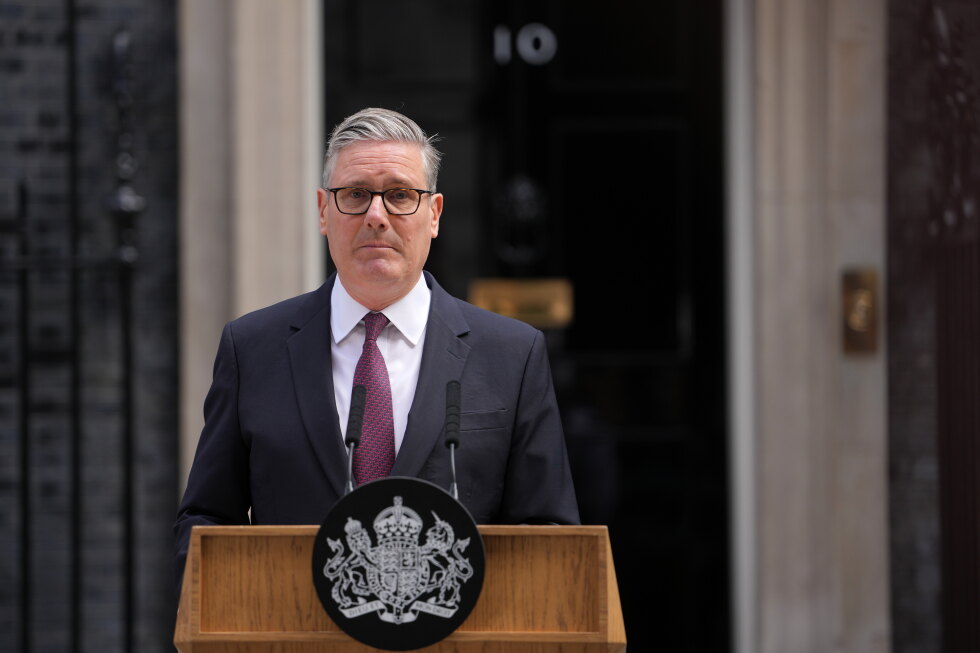
    Italian voters have overwhelmingly rejected a controversial judicial reform championed by conservative Prime Minister Giorgia Meloni, dealing a significant political blow to the right-wing coalition just one year before national elections.

    According to near-final data from Italy’s Interior Ministry, the opposition ‘No’ campaign secured approximately 54% of votes, decisively defeating the government-backed ‘Yes’ side which garnered about 46%. The two-day referendum witnessed unexpectedly high voter participation at nearly 59%, reflecting the intensely polarized nature of the political debate surrounding the proposed reforms.

    The judicial overhaul, which had been subject to extensive national discussion, proposed fundamental changes to Italy’s justice system. Central to the reform package was the complete separation of career tracks for judges and prosecutors, eliminating the traditional practice of professionals switching between these roles. Additionally, the legislation sought to restructure the High Judicial Council—the governing body responsible for judicial appointments and disciplinary actions—by dividing it into three distinct chambers and modifying its selection process from internal elections to a lottery system among eligible magistrates.

    The referendum outcome has exposed deepening fractures within Meloni’s governing coalition while energizing the center-left opposition. This electoral defeat poses substantial challenges to the Prime Minister’s domestic authority and international standing, potentially complicating her alignment with U.S. President Donald Trump and his administration’s contentious policies toward Iran.

  • Italy coach Gattuso says ‘no albis’ for World Cup playoff as he sends Chiesa home

    Italy coach Gattuso says ‘no albis’ for World Cup playoff as he sends Chiesa home

    Italian national team coach Gennaro Gattuso has openly acknowledged the immense pressure surrounding Italy’s crucial World Cup qualifying playoff against Northern Ireland, stating only “someone without blood running through their veins” wouldn’t feel nervous. The Azzurri face the daunting task of overcoming their recent playoff failures to avoid missing a third consecutive World Cup.

    The 2006 World Cup winner, maintaining the gritty demeanor that characterized his playing career, addressed several controversies ahead of Thursday’s decisive match in Bergamo. Most notably, Gattuso sent winger Federico Chiesa back to Liverpool despite the player’s recent return to the national team after a nearly two-year absence. The coach described the decision as mutual, citing Chiesa’s physical issues and mental state, though it marks a potential definitive break with the standout performer of Italy’s European Championship victory five years ago.

    Italy’s qualification hopes hinge on defeating Northern Ireland at home before facing either Wales or Bosnia and Herzegovina away next week. The team seeks to avoid extending their World Cup drought beyond 16 years, having suffered disappointing playoff eliminations against Sweden and North Macedonia in previous cycles.

    Gattuso emphasized the irrelevance of Italy’s historic achievements—four World Cups, two European Championships, and an Olympic title—in the current context. “There are no alibis,” he stated. “The only thing we should be thinking about is Thursday’s game.”

    Both teams face significant roster challenges. Beyond Chiesa’s departure, Italy remains without injured players Sandro Tonali, Gianluca Scamacca, and Alessandro Bastoni, though they remain with the squad. Northern Ireland suffered their own setback with center back Daniel Ballard ruled out due to a hamstring injury, joining captain Conor Bradley on the sidelines.

    Gattuso revealed extensive efforts to maintain team spirit, including dinners with players across Italy and visits to London, Saudi Arabia, and Qatar. The coach deliberately selected Bergamo’s 23,500-seat stadium to create a more supportive atmosphere than Milan’s San Siro, where he noted fans previously whistled at players from rival clubs.

    The playoff arrives amid a successful period for Italian sports across disciplines including Winter Olympics, Formula 1, tennis, volleyball, and baseball. Gattuso expressed motivation from these achievements, viewing Thursday’s match as an opportunity to reverse football’s current struggles. Should Italy qualify, they would join Group B with Canada, Qatar, and Switzerland for the North American World Cup.

  • Blast that injured two was ‘terrorist attack’, Ukrainian authorities say

    Blast that injured two was ‘terrorist attack’, Ukrainian authorities say

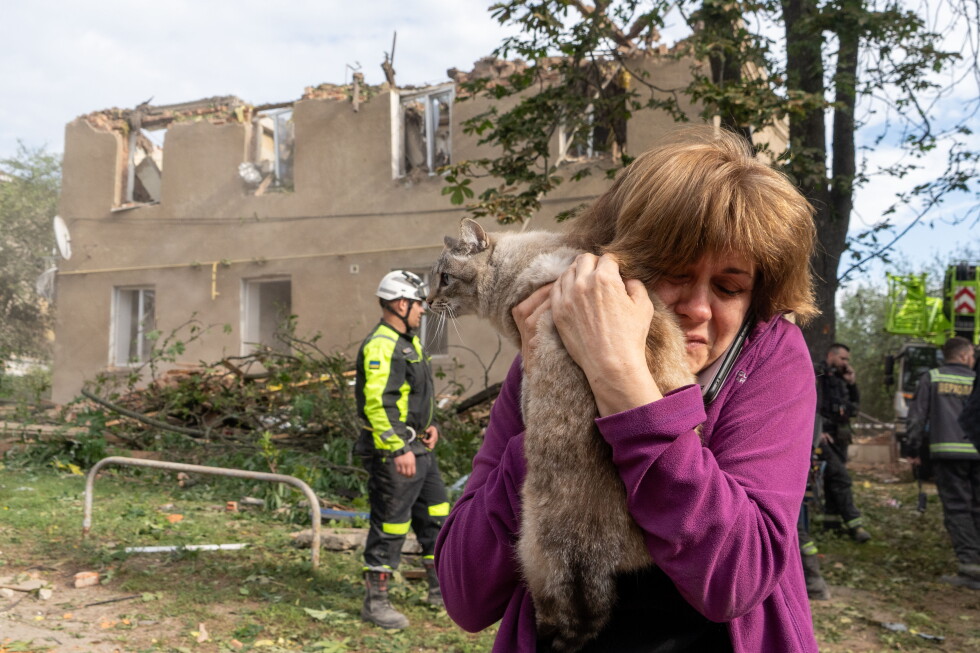
    Ukrainian authorities have confirmed a dual-phase explosive attack targeting police personnel in Bucha, approximately 30 kilometers from Kyiv, early Monday morning. The incident, labeled a terrorist act by officials, unfolded when responders investigating an initial residential area explosion were struck by a secondary detonation.

    Two law enforcement officers sustained non-life-threatening limb injuries during the coordinated attack. Security forces subsequently apprehended a 21-year-old local resident allegedly recruited through unconventional channels. While official sources withheld specific platform details, a security insider revealed the recruitment occurred via the online multiplayer game World of Tanks.

    According to Kyiv Region Criminal Investigations Directorate head Andriy Kravchuk, the suspect confessed to monetary motivations, having been promised 25,000 hryvnyas (approximately $570) per detonation. However, during interrogation footage released by police, the individual claimed coercion through threats against his mother’s safety, including alleged drone surveillance intimidation.

    The Ukrainian Security Service (SBU) identified the detainee as a Russian operative, though police investigators maintain they are still establishing the precise recruitment chain without confirming direct Russian involvement.

    Eyewitness accounts describe traumatic awakening to powerful blasts initially mistaken for domestic gas explosions. Local authorities confirmed prompt emergency response with palpable shock waves affecting the vicinity.

    This event mirrors escalating hybrid warfare tactics observed across Ukraine, including:
    – February 22 Lviv bombing: 1 officer killed, 20+ injured via Ukrainian woman allegedly recruited by Russian intelligence
    – February 23 Mykolayiv station attack: 7 officers wounded
    – Simultaneous Dnipro police station explosion same day

  • Orbán’s top opponent says Hungary’s alleged Russian backchannel ‘treason’ to be investigated

    Orbán’s top opponent says Hungary’s alleged Russian backchannel ‘treason’ to be investigated

    BUDAPEST — Hungary’s political landscape has been rocked by explosive allegations that Prime Minister Viktor Orbán’s government systematically provided Moscow with confidential intelligence from European Union Council meetings, prompting calls for treason investigations from opposition leaders.

    Péter Magyar, the leading opposition figure and frontrunner in upcoming parliamentary elections, declared the alleged backchannel between Budapest and Moscow constitutes “treason against Hungarian and European interests.” In a social media statement, Magyar specifically implicated Foreign Minister Péter Szijjártó in what he characterized as collusion with Russian officials.

    “Should these allegations be substantiated, this would represent high treason carrying potential life imprisonment,” Magyar asserted. “A future TISZA government will initiate immediate investigation into this matter upon taking office.”

    The allegations, originally reported by The Washington Post citing multiple European security officials, suggest Orbán’s administration has consistently granted Russia access to sensitive EU deliberations. According to these sources, Szijjártó regularly contacted Russian Foreign Minister Sergei Lavrov during breaks in EU meetings—including last Thursday’s summit of bloc leaders—to provide real-time updates on discussions and potential resolutions.

    One security official stated that “every single EU meeting for years has essentially featured Moscow’s invisible presence at the negotiation table” due to these communications. The report notes Szijjártó has made 16 official visits to Moscow since Russia’s full-scale invasion of Ukraine in 2022, including a recent March 4 meeting with President Vladimir Putin.

    In response, Orbán ordered an investigation into what he termed illegal “wiretapping” of his foreign minister rather than addressing the espionage allegations directly. “The surveillance of a government member represents a serious attack on Hungary’s sovereignty,” Orbán declared.

    The European Commission has formally requested clarification from Budapest, with spokesperson Anitta Hipper emphasizing that “trust between member states and institutions remains fundamental to EU operations. We anticipate the Hungarian government’s prompt transparency regarding these serious claims.”

    These developments occur amidst severely strained relations between Hungary and fellow EU members, particularly following Orbán’s withdrawal from a €90 billion Ukrainian loan agreement earlier this month. Polish Prime Minister Donald Tusk, a frequent Orbán critic, noted the allegations “should surprise nobody” given longstanding suspicions about Budapest-Moscow coordination.

    The political firestorm emerges just three weeks before parliamentary elections that could unseat Orbán’s nationalist Fidesz party after 14 years in power, with the opposition TISZA party currently leading in polls.

  • Trophy turns up in German team’s own basement after being reported stolen

    Trophy turns up in German team’s own basement after being reported stolen

    In an extraordinary twist to a months-long mystery, the prestigious championship trophy of Germany’s premier men’s handball team Fuechse Berlin has been discovered hidden within the club’s own basement storage facility. The silver dish, initially feared permanently lost after its disappearance last November, reappeared Monday following an intensive search operation.

    The valuable trophy, estimated at approximately €12,000 ($13,900) based on 2014 valuations, carries decades of champion team engravings representing one of German sports’ most celebrated traditions. Club officials theorize that perpetrators initially removed the award from organizational offices with criminal intent, but subsequently abandoned retrieval plans due to overwhelming media scrutiny surrounding the high-profile theft.

    ‘Even for seasoned criminals, the probability of detection ultimately proved excessively prohibitive,’ the club formally stated regarding the suspects’ apparent change of strategy.

    The development contradicts previous speculation from law enforcement authorities, who during January raids on multiple locations had uncovered a silver bar that prompted theories of the trophy’s destruction through melting. This discovery prompted the handball league to cancel replacement trophy production orders according to German press agency dpa.

    As one of northern Europe’s most passionately followed sports with extensive television coverage, German handball’s championship symbol remains in police custody for evidentiary purposes, temporarily delaying the team’s physical reclamation of their hard-earned silverware.

  • Shoulder injury rules Leipzig’s Yan Diomande out of Ivory Coast games

    Shoulder injury rules Leipzig’s Yan Diomande out of Ivory Coast games

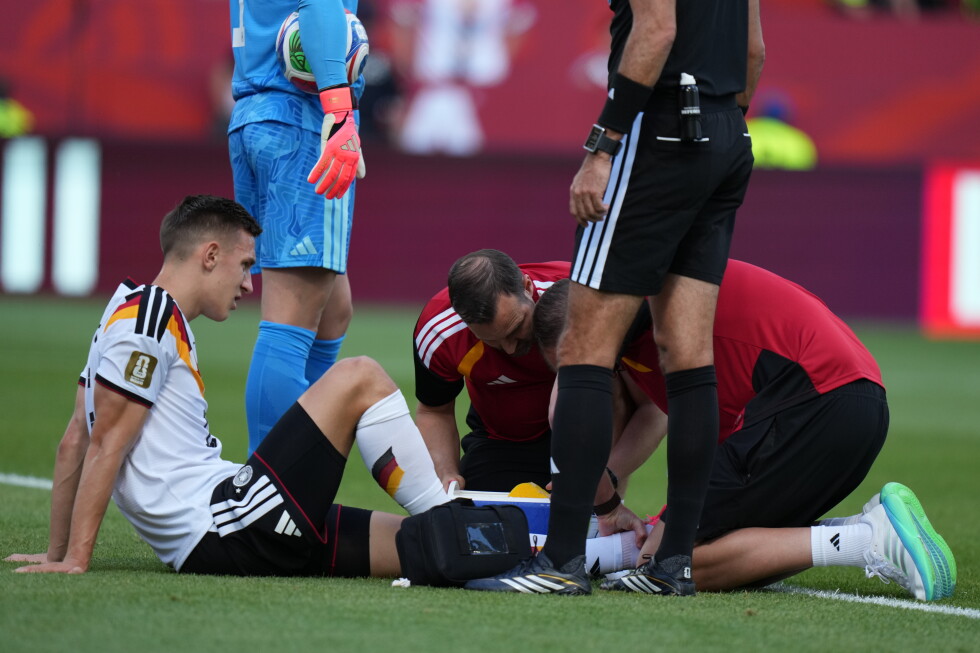
    LEIPZIG, Germany — In a significant blow to both club and country, RB Leipzig’s emerging winger Yan Diomande has been ruled out of Ivory Coast’s World Cup preparatory fixtures after sustaining a shoulder injury. The 19-year-old sensation suffered a capsular injury to his left shoulder during Leipzig’s commanding 5-0 Bundesliga victory over Hoffenheim last Friday.

    The American-born Ivorian international has taken German football by storm this season, delivering an impressive tally of 10 goals and 7 assists in just 26 league appearances since his summer transfer. His explosive performances had positioned him as one of Europe’s most sought-after talents, with numerous top clubs monitoring his development.

    Following comprehensive medical assessments, RB Leipzig announced in an official statement that Diomande will remain in Germany during the international break rather than joining the Elephants squad. This decision was mutually agreed upon by all parties to ensure the player’s complete focus on rehabilitation. The club has not yet provided a definitive timeline for his recovery, leaving his immediate football future uncertain.

    Diomande, who developed his skills in Florida before his professional career in Spain with Leganes, has already made significant contributions to the Ivorian national team with 3 goals in 9 appearances. His absence will be keenly felt during Ivory Coast’s upcoming friendlies against South Korea and Scotland.

    The timing proves particularly unfortunate as Ivory Coast prepares for World Cup Group E challenges against Ecuador, Germany, and Curacao. Diomande’s injury represents not just a personal setback but a strategic complication for national team management ahead of football’s premier international tournament.