标签: Europe

欧洲

  • France probes possible Iran link after bomb attack foiled outside Bank of America

    France probes possible Iran link after bomb attack foiled outside Bank of America

    French security forces have successfully disrupted a planned explosive attack targeting a Bank of America facility in central Paris, with authorities now investigating potential Iranian involvement in the foiled operation.

    Interior Minister Laurent Nuñez revealed Monday that three suspects were apprehended after Paris police officers observed two individuals carrying a suspicious shopping bag near the bank’s premises in the city’s 8th arrondissement on Saturday morning. The national anti-terrorism prosecutor’s office has initiated a formal investigation into terrorism-related charges.

    Minister Nuñez indicated that French authorities are establishing a ‘direct link’ to Iran based on operational similarities to recent attempted attacks across Europe. ‘The modus operandi is in every respect similar to actions that have been carried out in the Netherlands and in Belgium,’ Nuñez stated during an interview with French radio RTL.

    The investigation has identified connections to Harakat Ashab al-Yamin al-Islamia (Islamic Movement of the Companions of the Right), a pro-Iranian group that has claimed responsibility for multiple recent operations. This same organization reportedly claimed credit for an attack in London last week where four ambulances belonging to a Jewish charity were deliberately set ablaze.

    According to Nuñez, Iranian intelligence services typically employ proxy networks and criminal subcontractors to execute targeted operations against U.S. interests, Jewish community assets, and Iranian opposition figures. In response to escalating tensions following the February 28 commencement of hostilities between the United States, Israel and Iran, French authorities have enhanced security measures around high-profile personalities and sensitive locations, including providing personal protection for certain Iranian opposition figures.

  • Thieves steal paintings by Renoir, Cézanne and Matisse from Italian private museum

    Thieves steal paintings by Renoir, Cézanne and Matisse from Italian private museum

    In a sophisticated overnight operation, art thieves successfully executed a meticulously planned robbery at the prestigious Magnani Rocca Foundation near Parma, Italy, making off with three invaluable paintings by world-renowned artists. The targeted works include Auguste Renoir’s ‘Fish,’ Paul Cézanne’s ‘Still Life with Cherries,’ and Henri Matisse’s ‘Odalisque on the Terrace’—collectively valued at millions of euros.

    The burglary occurred during the night of March 22-23, with perpetrators forcing entry through the museum’s main entrance. According to local media reports, the entire operation was completed in under three minutes, demonstrating remarkable efficiency and precision. The thieves subsequently fled across the museum’s gardens, evading detection in the rural setting located approximately 20 kilometers from Parma.

    Museum authorities suspect the involvement of a highly organized criminal network specializing in art theft, noting that the robbery was abruptly cut short by the activation of the security alarm system. The Magnani Rocca Foundation, which houses the extensive private collection of art historian Luigi Magnani, remained closed on Monday with no official statement posted on its website.

    This incident marks the latest in a concerning pattern of high-profile art thefts across European cultural institutions. The heist follows October’s spectacular robbery at the Louvre in Paris, where thieves made off with jewels and artifacts valued at approximately €88 million ($101 million). Established in 1977, the Magnani Rocca Foundation boasts an impressive collection that includes works by Dürer, Rubens, Van Dyck, Goya, and Monet alongside the now-stolen masterpieces.

  • Kosovo, one of Europe’s poorest countries, struggles as Iran war drives up fuel prices

    Kosovo, one of Europe’s poorest countries, struggles as Iran war drives up fuel prices

    PRISTINA, Kosovo – In one of Europe’s most economically challenged nations, a successful snack production company exemplifies both Kosovo’s entrepreneurial potential and its vulnerability to global market disruptions. Pestova, a prominent food manufacturer operating in eastern Kosovo, manages nearly 100 acres of potato fields dedicated to its Vipa brand potato chips distributed domestically and exported to 23 countries.

    The company’s operations have been severely impacted by soaring fuel prices that skyrocketed from €1.10 to €1.70 per liter following geopolitical tensions stemming from the conflict in Iran. As a nation without domestic fuel production, Kosovo’s energy costs are entirely determined by importers working within government-mandated profit margins capped at 12%.

    Kushtrim Ajvazi, Pestova’s management representative, detailed the multifaceted challenges: “Our production and distribution networks are facing extremely high operational costs during critical planting season. While we maintained fertilizer reserves, the fuel price surge has created unsustainable pressure.”

    The company faces particular complications with export contracts, where 40% of production is committed at fixed prices that require 90-day advance notice for adjustments. This creates significant planning difficulties in an unstable market environment.

    Economic expert Safet Gerxhaliu warns that “there is not one sector unaffected by these price increases” and urges government intervention to prevent broader economic damage. Unlike neighboring Balkan nations including Romania, Hungary, and Serbia that have implemented special diesel pricing or tax reductions for agricultural producers, Kosovo’s administration has yet to enact supportive measures.

    The fuel crisis extends beyond industry to directly impact citizens like Bardh Mehmeti, an IT professional from Pristina, who now pays €100 instead of €80 to fill his tank and is considering switching to electric vehicle alternatives.

    Kosovo’s economic challenges are compounded by political complexities dating to its 2008 independence declaration from Serbia, which remains unrecognized by Belgrade, creating diplomatic stalemates that hinder European Union integration efforts. The current government under Prime Minister Albin Kurti faces additional governance challenges, including presidential election deadlock and opposition criticism regarding economic management.

    The Democratic Party, Kosovo’s main opposition force, has accused the government of inaction and advocated for temporary tax relief to support both businesses and citizens through the current crisis.

  • A youth-led push for change threatens Orbán’s 16-year rule in Hungary’s elections

    A youth-led push for change threatens Orbán’s 16-year rule in Hungary’s elections

    BUDAPEST, Hungary — A profound generational schism is reshaping Hungary’s political landscape as the nation approaches crucial April elections that could terminate Prime Minister Viktor Orbán’s 16-year authoritarian reign. Young Hungarians, mobilized by corruption scandals and economic stagnation, are overwhelmingly backing the surging center-right Tisza party led by reformist Péter Magyar.

    Across the Lake Balaton region and beyond, volunteers in their mid-20s are conducting door-to-door campaigns advocating for political transformation. Florian Végh, a 25-year-old student activist, encapsulates the movement’s sentiment: “We’ve lived our whole lives in this system and want to see what exists beyond it. This system is absolutely dysfunctional.”

    Recent polling reveals dramatic demographic polarization: Tisza commands 65% support among voters under 30, while Orbán’s Fidesz party retains just 14% youth backing. Conversely, Fidesz maintains 50% support among retirement-age Hungarians versus Tisza’s 19%, creating a stark generational divide.

    The political upheaval stems from February 2024’s presidential pardon scandal, where Orbán’s ally pardoned an accomplice in a child sexual abuse case. The controversy triggered mass resignations and nationwide protests organized by influential figures, marking what political scientist Andrea Szabó of Eötvös Loránd University calls “a new, active political generation unfolding before our eyes.”

    Magyar, a 45-year-old lawyer who broke with Fidesz following the scandal, has rapidly built Tisza into a formidable opposition force. His platform promises to restore Hungary’s Western orientation, reverse Orbán’s drift toward Russia and China, and recover billions in blocked EU funds withheld over rule-of-law and corruption concerns.

    Despite Orbán’s appeals to youth—including recent speeches pleading “Young people, wake up! These are not times for taking risks”—his illiberal governance model faces rejection from digitally-connected generations who compare Hungary’s development unfavorably with neighboring Austria’s infrastructure and social systems.

    The election outcome remains uncertain despite Tisza’s polling lead, as Orbán maintains strong rural and elderly support. The contest represents not merely a political battle but a fundamental clash between generations with radically different experiences of Hungarian democracy.

  • Trump says he has ‘no problem’ with Russian oil tanker bringing relief to Cuba despite blockade

    Trump says he has ‘no problem’ with Russian oil tanker bringing relief to Cuba despite blockade

    In a significant shift of policy stance, former President Donald Trump has expressed his approval for a sanctioned Russian oil tanker to deliver critical fuel supplies to Cuba despite an aggressive U.S. blockade. The announcement came aboard Air Force One on Sunday as Trump returned to Washington.

    Trump stated unequivocally, ‘I have no problem whether it’s Russia or not’ when questioned about the New York Times report regarding the Russian vessel. He emphasized humanitarian concerns, noting that Cubans ‘need to survive’ and require essential resources like heating and cooling.

    The Russian tanker Anatoly Kolodkin, which is under sanctions from the United States, European Union, and United Kingdom due to the Ukraine conflict, arrived at the Cuban port of Matanzas carrying approximately 730,000 barrels of oil labeled as ‘humanitarian supplies.’ Kremlin spokesman Dmitry Peskov confirmed Monday that Moscow had previously discussed the shipment with U.S. officials, describing it as Russia’s duty to assist ‘our Cuban friends.’

    This development occurs against the backdrop of severe energy shortages in Cuba that have resulted in island-wide blackouts and crippled transportation and healthcare systems. Experts estimate the Russian shipment could generate about 180,000 barrels of diesel—sufficient to meet Cuba’s daily energy demands for just nine to ten days.

    Trump dismissed suggestions that allowing the oil delivery would benefit Russian President Vladimir Putin, asserting that ‘Cuba’s finished’ regardless of external assistance due to what he characterized as ‘bad and corrupt leadership.’ The former president’s administration had implemented what experts describe as the most aggressive Caribbean policy in recent history, effectively cutting Cuba off from vital oil shipments in an effort to force regime change.

    The situation has created a humanitarian crisis for Cuban civilians, with images emerging of residents collecting potable water during blackouts and limited humanitarian aid arriving from other sources, including solar panels from Mexico.

    This event represents the latest chapter in the decades-long geopolitical struggle between the United States and Russia over influence in Cuba, dating back to the Cold War era.

  • Netanyahu says Latin Patriarch will have full access to holy site

    Netanyahu says Latin Patriarch will have full access to holy site

    In a significant reversal, Israeli Prime Minister Benjamin Netanyahu has granted the Latin Patriarch of Jerusalem “full and immediate access” to the Church of the Holy Sepulchre following widespread condemnation of the initial decision to bar the cardinal from celebrating Palm Sunday Mass at Christianity’s most sacred site.

    The controversy erupted when Israeli police prevented Cardinal Pierbattista Pizzaballa, head of the Catholic Church in the Holy Land, and Reverend Francesco Ielpo from entering the church to conduct a private ceremony marking the beginning of Holy Week. Church authorities described this as an unprecedented event, noting it was “the first time in centuries” a Latin Patriarch had been denied access on Palm Sunday.

    Israeli officials defended the initial restriction as a security precaution amid ongoing regional tensions. Netanyahu stated that Iranian ballistic missiles had “repeatedly targeted” Jerusalem’s holy sites in recent days, with missile fragments landing mere meters from the Church of the Holy Sepulchre in one instance. The Prime Minister emphasized that police acted out of “special safety concerns” rather than “malicious intent.”

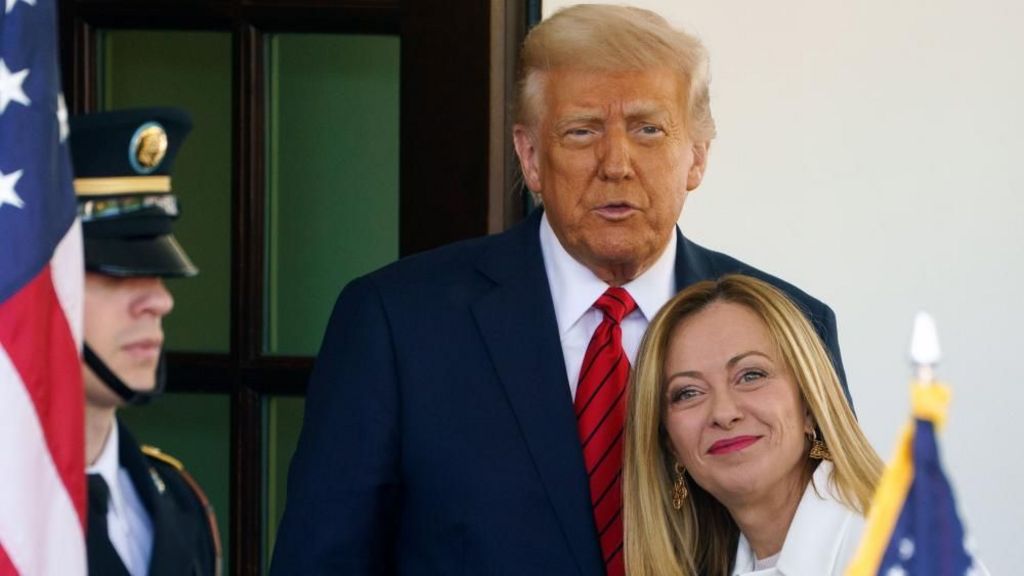
    The decision provoked strong international criticism. U.S. Ambassador Mike Huckabee characterized the move as an “unfortunate overreach” that was “difficult to understand or justify.” Italian Prime Minister Giorgia Meloni condemned it as “an offence against every community that recognises religious freedom,” while French President Emmanuel Macron expressed concern about “the worrying increase in violations of the status of the Holy Places in Jerusalem.”

    The Latin Patriarchate issued a statement calling the decision “a grave precedent” that disregarded “the sensibilities of billions of people around the world.” Cardinal Pizzaballa described the measure as “an extreme departure from basic principles of reasonableness, freedom of worship, and respect for the status quo,” while noting his office had followed all imposed restrictions since the conflict began.

    Following Netanyahu’s intervention, Israeli authorities are now developing a plan to facilitate worship at the site during Holy Week while maintaining security protocols. The incident has highlighted the complex balance between security concerns and religious freedom in Jerusalem’s contested holy sites.

  • Doué scores 2 goals and France downs Colombia 3-1 in World Cup tune-up

    Doué scores 2 goals and France downs Colombia 3-1 in World Cup tune-up

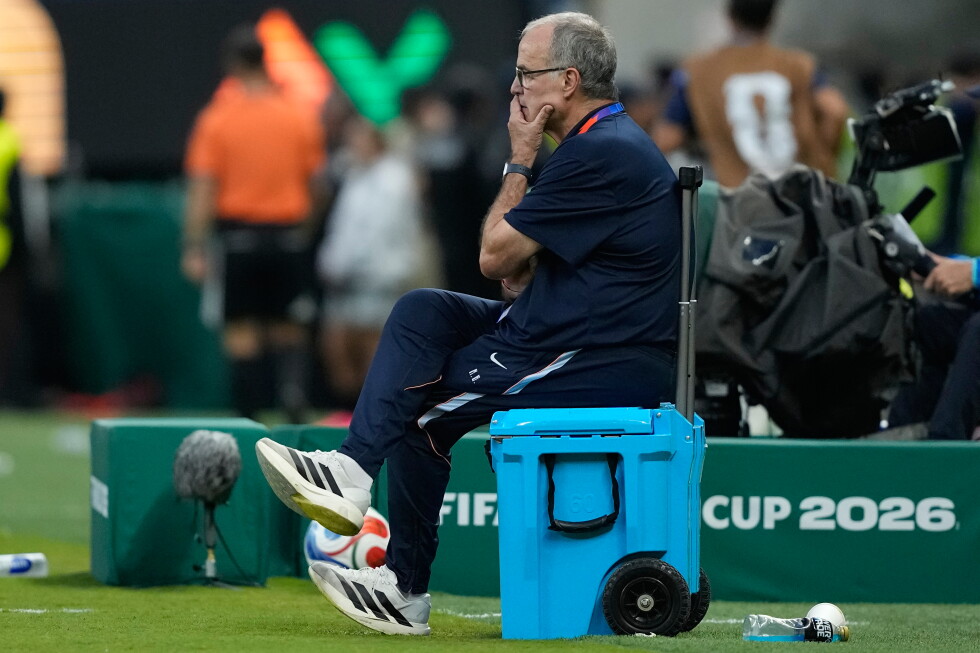
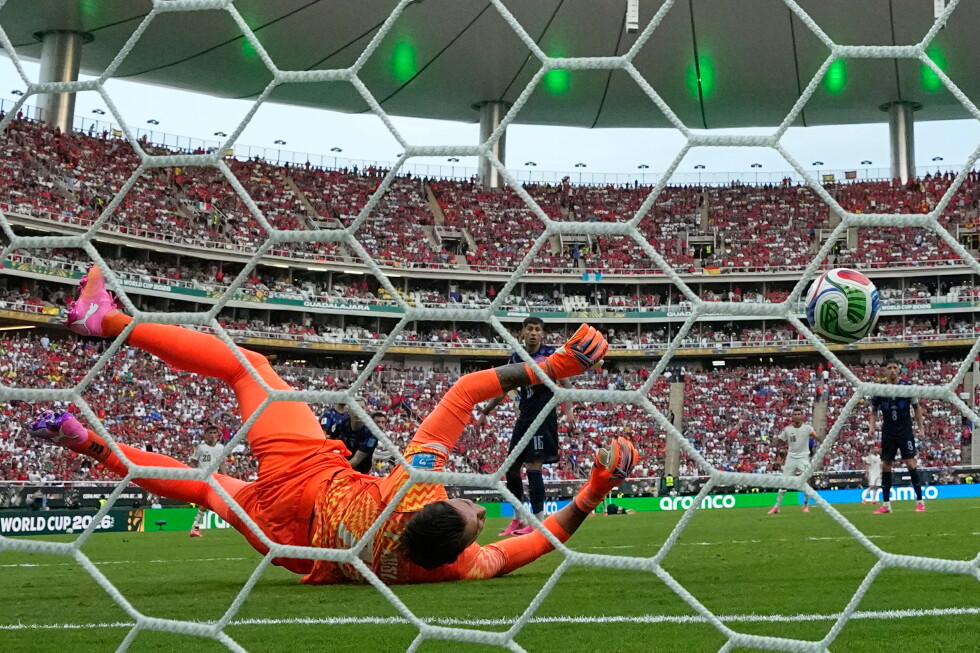
    In a commanding pre-World Cup exhibition match, France demonstrated their championship pedigree with a decisive 3-1 victory over Colombia on Sunday. The fixture, held at the Northwest Stadium in Landover, Maryland—home to the NFL’s Washington Commanders—drew an impressive attendance of 60,734 spectators.

    Emerging talent Désiré Doué emerged as the standout performer, netting a remarkable brace. He opened the scoring in the 29th minute before sealing the French triumph with his second goal in the 56th minute, courtesy of an assist from Marcus Thuram. Thuram himself found the net just before halftime, capitalizing on a precise cross from Maghnes Akliouche.

    Colombia managed a consolation goal in the 77th minute through Jáminton Campaz, but were ultimately outclassed by the reigning World Cup champions. The match also featured a notable 78th-minute appearance by global superstar Kylian Mbappé, who entered as a substitute while carefully managing his return from a recent knee injury sustained with his club team, Real Madrid. Mbappé remains poised to equal Olivier Giroud’s all-time French scoring record of 57 goals.

    This victory extends France’s unbeaten streak since June 2023, solidifying their status as one of the tournament favorites. Currently ranked second in FIFA’s world rankings, Les Bleus will commence their World Cup campaign against Senegal in East Rutherford, New Jersey on June 16. Colombia, ranked 13th globally and coming off a previous loss to Croatia, will open against Uzbekistan in Mexico City on June 17.

  • Renoir, Cézanne and Matisse paintings stolen in Italian job

    Renoir, Cézanne and Matisse paintings stolen in Italian job

    In a meticulously executed operation, armed thieves have stolen three invaluable paintings from the Magnani Rocca Foundation near Parma, Italy, marking one of the country’s most significant art thefts in recent years. The brazen robbery occurred on March 22nd when four masked individuals forced entry through the main door of the Villa dei Capolavori museum.

    The stolen artworks include Pierre-Auguste Renoir’s ‘Les Poissons’ (valued at approximately €6 million), Paul Cézanne’s ‘Still Life with Cherries,’ and Henri Matisse’s ‘Odalisque on the Terrace.’ The combined estimated value of the stolen masterpieces reaches €9 million (£7.8 million).

    According to Italian media reports, the entire operation was completed within a remarkably efficient three-minute timeframe. The thieves specifically targeted the French Room on the building’s first floor before making their escape by climbing over a perimeter fence. Museum officials described the perpetrators as ‘structured and organised,’ noting that additional artworks would likely have been stolen had the alarm system not been triggered, prompting immediate police response.

    The Magnani Rocca Foundation, established in 1984 following the death of art collector Luigi Magnani, houses an impressive private collection in his former family residence. The stolen Renoir painting, created around 1917, represents the artist’s Impressionist period. Cézanne’s watercolor still-life, completed circa 1890, is particularly rare as the artist predominantly worked in this medium during his final years. Matisse’s 1922 work depicts two figures—one reclining in sunlight while another holds a violin.

    Italy’s Carabinieri and the Cultural Heritage Protection Unit of Bologna have launched a comprehensive investigation into the theft. The incident follows last October’s daylight jewel robbery at the Louvre in Paris, highlighting ongoing security challenges facing European cultural institutions. News of the heist was deliberately withheld from public disclosure until Sunday to facilitate initial investigative efforts.

  • Italy investigates Sephora and Benefit over marketing skincare to children

    Italy investigates Sephora and Benefit over marketing skincare to children

    Italian regulatory authorities have initiated a formal investigation into luxury conglomerate LVMH’s beauty subsidiaries, Benefit Cosmetics and Sephora, over allegations of employing potentially deceptive marketing tactics directed at young children. The Italian Competition Authority (AGCM) is examining what it describes as a “particularly insidious” strategy involving youthful social media influencers to promote anti-aging skincare products to children under 10 years old.

    The investigation centers on concerns that these marketing practices may be contributing to ‘cosmeticorexia’—a growing phenomenon characterized by unhealthy preoccupation with skincare among minors. AGCM officials, accompanied by Italy’s financial police, conducted surprise inspections at LVMH and Sephora’s Italian corporate headquarters as part of the ongoing probe.

    According to regulatory filings, the companies allegedly employed “covert marketing strategies” utilizing micro-influencers with smaller but highly engaged followings to encourage the purchase of products not intended for children. The investigation specifically examines whether adequate safety warnings were “omitted or presented in a misleading manner” on products marketed through these channels.

    This scrutiny comes amid the viral ‘Sephora kids’ social media trend, where children showcase elaborate skincare routines and product hauls across platforms like TikTok and Instagram, where Sephora maintains substantial followings exceeding 25 million combined users.

    Medical experts, including the British Association of Dermatologists, have raised concerns about children using adult skincare products, noting risks of skin irritation, allergic reactions, and potential long-term damage. LVMH has issued a statement committing to “fully co-operate” with authorities while maintaining compliance with Italian regulations.

  • UK police arrest a man after a car hits pedestrians in the English city of Derby, injuring 7

    UK police arrest a man after a car hits pedestrians in the English city of Derby, injuring 7

    DERBY, England — A violent vehicular incident disrupted the evening calm in Derby’s city center on Saturday, resulting in multiple pedestrian casualties and triggering a significant police response. The episode unfolded at approximately 9:30 p.m. local time along Friar Gate, a renowned nightlife district in this Midlands city of 275,000 residents.

    Derbyshire Constabulary confirmed the arrest of a 36-year-old local man on suspicion of attempted murder following the collision. The suspect was apprehended near the scene and remains in police custody for questioning. Emergency services transported seven injured pedestrians to area hospitals for treatment, though their current conditions remain undisclosed.

    Chief Superintendent Emma Aldred addressed the public during a Sunday news conference, revealing that counterterrorism specialists have joined the investigation—a standard procedural measure for incidents of this nature. Despite this collaborative effort, authorities emphasized they have not classified the event as terrorism-related at this preliminary stage.

    “I must clarify that this procedural involvement does not indicate we are treating this as a terrorist incident,” Aldred stated. “Our investigators maintain an open-minded approach regarding potential motives as we continue gathering evidence.”

    The Derbyshire Constabulary has cordoned off the Friar Gate area for forensic examination while appealing to witnesses who might have captured footage or observed the events leading to the collision. The investigation continues as authorities work to establish the precise sequence of events and determine whether the act was intentional or accidental.