标签: Europe

欧洲

  • Prince Harry’s final suit against British tabloids could hang on private eye’s disputed statement

    Prince Harry’s final suit against British tabloids could hang on private eye’s disputed statement

    LONDON – After 11 weeks of high-stakes arguments in London’s High Court, the outcome of Prince Harry’s landmark privacy lawsuit against British tabloid publisher Associated Newspapers has boiled down to one critical question: can the court trust the conflicting accounts of private investigator Gavin Burrows?

    Duke of Sussex Prince Harry launched the legal action alongside six other high-profile claimants, including music icon Elton John, actors Sadie Frost and Elizabeth Hurley, anti-racism campaigner Doreen Lawrence, former lawmaker Simon Hughes, and David Furnish, Elton John’s husband. The group alleges that Associated Newspapers – owner of the Daily Mail and its Sunday sister title the Mail on Sunday – ran a coordinated, decades-long campaign of unlawful information gathering, targeting them through phone tapping, voicemail interception, and deceptive information-gathering tactics. For Harry, this trial marks the culmination of a years-long personal crusade to hold the British tabloid industry accountable for its intrusive practices and push for reform of what he has repeatedly called a toxic media culture.

    On Tuesday, defense lawyers for Associated Newspapers wrapped their closing arguments by centering their entire case on Burrows’ latest sworn testimony. Burrows, a private investigator who previously admitted on a BBC documentary that he had ruthlessly targeted a teenage Harry for tabloid outlets and even apologized to the prince for his actions, has now reversed course under oath. He testified that he never carried out any illegal surveillance or information-gathering work for either of the Associated Newspapers titles. He further claimed that a signed statement attributed to him – which said he “must have done hundreds of jobs” for the Mail between 2000 and 2005, and which formed the foundational catalyst for the entire lawsuit – was a fabrication, with his signature forged by the claimants’ legal team. Defense lead Antony White argued that if Burrows’ disavowal of the original statement is accepted, the entire claimants’ case collapses.

    Judge Matthew Nicklin, who is overseeing the bench trial, repeatedly pressed the claimants’ legal team over the course of the proceedings to clarify what would become of the case if the court rejected Burrows’ original statement. The claimants’ lead attorney, David Sherborne, pushed back against the defense’s narrative in his own closing arguments, insisting that the claimants hold a wealth of independent evidence that proves Associated Newspapers’ pattern of unlawful activity, beyond Burrows’ statement. Sherborne confirmed that the claimants are seeking substantial damages, including aggravated damages, for the invasion of their privacy; total legal costs for the high-profile trial have already been estimated at nearly £40 million ($52 million).

    Sherborne argued that payment records from the publisher to multiple private investigators align with the publication dates of the controversial articles in question, directly tying the paper to unlawful information gathering. He added that the evidence implicates not just Burrows, but a network of other investigators, staff journalists, and freelance reporters that the paper relied on to obtain private information through illegal means.

    Associated Newspapers has forcefully denied all allegations, dismissing the claims as preposterous. The publisher insists that all roughly 50 articles at the center of the case were sourced through lawful channels, including tips from associates, royal aides, and publicists who voluntarily shared information with reporters. It has also argued that many of the claims dating back to the 1990s are time-barred, having been filed far outside the legal statute of limitations.

    Defense lawyer White rejected the payment record evidence as pure conjecture, arguing that the claimants’ entire case relies too heavily on unproven inferences rather than concrete proof of unlawful activity. Multiple current and former Mail journalists and editors have also taken the stand to deny using illegal tactics to produce stories about Harry’s personal life, which ranged from his romantic relationships with ex-girlfriend Chelsy Davy to his role as a godfather and his connection to his late mother, Princess Diana.

    Former Mail on Sunday editor Katie Nicholl directly contradicted Harry’s claim that his inner social circle did not leak stories, telling the court: “I had very good sources in the inner circle… They were not all tight lipped.”

    When Harry took the witness stand at the opening of the trial in January, he gave emotional testimony about the lasting harm of tabloid intrusion. He told the court that repeated invasions of his privacy left him “paranoid beyond belief,” strained all of his close personal relationships, and caused severe long-term damage to his mental health. During cross-examination, he choked up as he described how relentless tabloid attacks made the life of his wife, Meghan Markle, “an absolute misery.”

    Harry has long linked his anger at the British press to the 1997 death of his mother, Princess Diana, who was killed in a car crash in Paris while being pursued by paparazzi. He has also said that the constant, vitriolic press campaign against Meghan directly led to the couple’s 2020 decision to step back from their senior royal duties and relocate to the United States.

    This is not Harry’s first legal battle with the British tabloid industry: he previously won a court judgment in a phone hacking trial against the publisher of the Daily Mirror, and secured a formal settlement and apology from Rupert Murdoch’s The Sun and the now-shuttered News of the World. Unlike the Mirror trial, this case against Associated Newspapers has featured dozens of witnesses – current and former reporters, editors, and investigators – all taking the stand to deny using any illegal methods to gather information on Harry. A written ruling from Judge Nicklin is expected at a later date.

  • Irish-language activist from Belfast appointed to advise Irish president

    Irish-language activist from Belfast appointed to advise Irish president

    In a landmark appointment that brings together decades of expertise in human rights, language advocacy, and academic scholarship, Irish President Catherine Connolly has named seven new members to the country’s Council of State, a constitutional advisory body that supports the president in fulfilling their official duties. Among the appointees are two prominent figures from Northern Ireland: celebrated Irish language activist Linda Ervine and leading human rights law academic Colin Harvey, whose selections mark a notable recognition of cross-border contributions to Irish public life.

    Linda Ervine’s journey to the Council of State is rooted in a lifelong mission to expand access to the Irish language in historically unionist communities. Born into a working-class Protestant family in east Belfast, Ervine has broken new ground throughout her career: she currently serves as manager of the first Irish language centre ever established in a Northern Irish loyalist area, and is the founder of Scoil na Seolta, Ireland’s first integrated school that delivers all instruction through the Irish language. Her trailblazing work has earned widespread acclaim and a string of honours in recent years: she received an MBE in 2021 for her contributions to Irish language promotion, an honorary doctorate from Queen’s University Belfast (QUB) in 2023, induction as a member of the Royal Irish Academy in 2024, an honorary degree from Trinity College Dublin in June 2025, and a second honorary degree from the Open University just last October.

    Colin Harvey, Ervine’s fellow appointee from Northern Ireland, brings decades of specialized experience in human rights law and policy to the council. A Professor of Human Rights Law at QUB’s School of Law, Harvey currently holds roles as a Commissioner with the Irish Human Rights and Equality Commission and a member of the Scientific Committee of the EU Fundamental Rights Agency. He previously completed two terms as a commissioner with the Northern Ireland Human Rights Commission and also served on the Northern Ireland Higher Education Council, building a track record of public service spanning both jurisdictions on the island of Ireland.

    The five additional new appointees bring deep expertise across law, equality studies, and academic leadership to the advisory body. Fionnuala Ní Aoláin, a leading international law and human rights scholar, holds a professorship in law at QUB and has held visiting appointments at globally renowned institutions including Harvard Law School, Yale University, Princeton University, and the Geneva Academy in Switzerland. Kathleen Lynch, an emerita Professor of Equality Studies at University College Dublin (UCD), is a sociologist with a background in education and previously served as a member of the Irish Human Rights and Equality Commission. Conor O’Mahony, Professor of Law and Dean of the School of Law at University College Cork, centers his research and teaching on constitutional law and children’s rights. Ciarán Ó hÓgartaigh, a former president of the University of Galway, hails from the same county as President Connolly. Donncha O’Connell, an Established Professor of Law at the University of Galway, has served two terms as a Commissioner of the Law Reform Commission, was a member of the Commission on the Future of Policing in Ireland, and previously sat on the board of the Legal Aid Board.

    Established under the Irish constitution, the Council of State holds a key advisory role in Ireland’s system of government. The body is called on to provide guidance to the president when requested on a range of constitutional matters, most notably reviewing whether draft legislation should be referred to the Supreme Court for a formal assessment of its compliance with the Irish constitution. Membership of the council is divided into three categories: current office holders, including the Taoiseach, Tánaiste, Chief Justice, and presiding officers of both houses of the Oireachtas (Irish parliament); former office holders, including all past presidents, taoisigh, and Chief Justices; and a cohort of up to seven members directly appointed by the sitting president to serve their term. The Constitution explicitly outlines scenarios in which the president is required to consult the council before taking official action, cementing its role as a core component of Ireland’s democratic governance framework.

  • Indonesia arrests Scottish man sought by Spain in connection with an international crime syndicate

    Indonesia arrests Scottish man sought by Spain in connection with an international crime syndicate

    Indonesian law enforcement officials announced Tuesday the capture of a high-profile Scottish organized crime figure immediately after his arrival at Bali’s Ngurah Rai International Airport, capping off a months-long cross-border manhunt tied to international criminal probes spanning multiple continents.

    Forty-five-year-old Steven Lyons, described by investigators as a top leader of a transnational criminal network, was taken into custody by immigration officials Saturday shortly after he landed in the popular Indonesian resort island from Singapore, confirmed Untung Widiyatmoko, head of Indonesia’s Interpol national central bureau.

    Indonesia’s automated immigration screening system flagged Lyons as the subject of an Interpol Red Notice — a global alert requesting cross-border law enforcement cooperation to locate and arrest a person pending extradition — which had been filed at the formal request of Spanish authorities. Widiyatmoko told reporters in Denpasar, Bali’s provincial capital, that Lyons is wanted by both Spain and the United Kingdom on charges including organized crime conspiracy, drug trafficking and money laundering. The suspect is scheduled to be extradited to Spanish authorities this coming Wednesday.

    According to Widiyatmoko, Lyons has been on Spain’s most-wanted list for roughly two years, linked to a 2024 murder investigation in the country. Bali Police Chief Daniel Adityajaya noted that Saturday’s arrest was the product of a coordinated joint investigation that brought together law enforcement agencies from Spain, Scotland and Indonesia.

    Investigators allege Lyons oversaw a sprawling criminal operation that leveraged a network of shell companies to launder illicit funds across jurisdictions in Europe and the Middle East, including Spain, Scotland, England, Dubai, Qatar, Bahrain and Turkey. Just last week, coordinated raids tied to the Lyons investigation were carried out by police in Scotland and Spain, with support from Europol — the European Union’s cross-border law enforcement coordination agency — and additional law enforcement partners in Turkey, the Netherlands and the United Arab Emirates. Those raids resulted in multiple arrests connected to the network, Widiyatmoko added.

    Scottish media records detail a long history tied to suspected gang activity for Lyons: he survived a 2006 shooting in Glasgow that claimed the life of his cousin, before relocating to Spain and later settling in Dubai, United Arab Emirates. Last May, his brother and a known associate were killed in a targeted gangland shooting at a beachfront bar in Fuengirola, southern Spain.

    At the time of his arrest, Lyons was accompanied by two other travelers who remain on Bali as of Tuesday, according to Bugie Kurniawan, a spokesperson for Bali’s immigration agency. Spanish Interpol has flagged both companions as additional members of Lyons’ criminal syndicate, though no active arrest warrants or Red Notices have been issued for the pair to date.

  • Here’s a look at birthright citizenship, and how the world sees it, as Supreme Court case looms

    Here’s a look at birthright citizenship, and how the world sees it, as Supreme Court case looms

    The U.S. Supreme Court has opened oral arguments in one of the most consequential constitutional immigration cases of recent years, challenging the century-long American tradition of birthright citizenship. The case centers on an executive order signed by former President Donald Trump on the first day of his second term, which seeks to roll back the longstanding policy that grants automatic U.S. citizenship to nearly all people born on American soil.

    The policy at the heart of the legal fight is rooted in the 14th Amendment of the U.S. Constitution, ratified in the years following the Civil War. Framed around the centuries-old legal principle of jus soli, or “right of soil,” the amendment explicitly states: “All persons born or naturalized in the United States and subject to the jurisdiction thereof, are citizens of the United States.” When it was adopted, its core purpose was to guarantee full citizenship to formerly enslaved people, who had long been denied legal personhood in the U.S.

    The scope of this constitutional guarantee was cemented by a landmark 1898 Supreme Court ruling, United States v. Wong Kim Ark. In that case, Wong Kim Ark, a man born in the U.S. to Chinese immigrant parents who were not U.S. citizens, was denied reentry to the country after a trip abroad. The nation’s highest court ruled that the 14th Amendment guarantees citizenship to every person born on U.S. soil, regardless of their parents’ immigration or citizenship status. To this day, only narrow exceptions to the policy exist: for example, children born to foreign diplomats stationed in the U.S. do not receive automatic citizenship.

    While birthright citizenship has been a cornerstone of American law for over 150 years, the policy is far from the global norm. Only around 36 countries worldwide, nearly all located in North, Central, and South America, offer unconditional automatic birthright citizenship. The vast majority of the world’s nations follow the opposing principle of jus sanguinis, or “right of blood,” which ties a child’s citizenship to the citizenship of their parents, rather than their place of birth. None of the 27 member states of the European Union grant automatic, unconditional citizenship to children born on their territory to non-citizen parents. Many nations across Asia, the Middle East, and Africa have similar policies.

    A growing number of countries have adopted mixed frameworks that blend elements of both principles. Australia, for example, maintained unconditional birthright citizenship until 1986, when it changed rules to require that at least one parent be an Australian citizen or permanent resident for a child to receive citizenship at birth. In a recent shift toward expanded access, Germany updated its own citizenship laws in 2024. For decades, the country relied exclusively on jus sanguinis, granting citizenship by birth only to children with at least one German parent. The 2024 reform allows children born in Germany to non-German parents to receive automatic citizenship if one parent has been a legal permanent resident in the country for at least five years. German officials justified the liberalization by noting research showing that children with migration backgrounds see improved educational outcomes when they receive citizenship early in life.

    The Trump administration’s legal argument for restricting birthright citizenship hinges on a narrow interpretation of one phrase in the 14th Amendment: “subject to the jurisdiction thereof.” Administration lawyers argue that this clause excludes children born to parents living in the U.S. without legal authorization, giving the federal government the power to deny them citizenship at birth.

    The executive order has already faced extensive legal challenges in lower courts, which have repeatedly paused implementation of the policy and ruled against the administration. The current case originated in New Hampshire, where a U.S. District Court judge ruled that Trump’s order “likely violates” both the U.S. Constitution and existing federal law. Trump has confirmed he will attend the Supreme Court’s oral arguments for the high-profile case, drawing additional attention to the legal fight that could reshape decades of U.S. immigration and citizenship policy.

  • Wolf bites woman in shock German attack in Hamburg shopping street

    Wolf bites woman in shock German attack in Hamburg shopping street

    In an unprecedented urban wildlife encounter, a woman sustained facial injuries from a wolf bite on Hamburg’s bustling Grosse Bergstrasse shopping thoroughfare Monday evening. The incident occurred near a central Ikea store in the Altona district, marking the first documented wolf attack on a human since the species’ reintroduction to Germany began in 1998.

    According to eyewitness accounts and official reports, the woman attempted to redirect the disoriented animal away from populated areas when the attack occurred. Emergency services transported her to a medical facility where she received treatment and was subsequently released.

    The same wolf was later located in Hamburg’s Binnenalster lake during late evening hours. Law enforcement personnel engaged in an extensive operation requiring approximately one hour to safely extract the animal from the water using specialized equipment. Matthias Hilge, spokesperson for Hamburg’s Ministry for the Environment, Climate, Energy and Agriculture (Bukea), confirmed the animal received veterinary care and remains in protective custody while authorities determine its future disposition.

    This incident coincides with recent legislative developments regarding wolf management. Germany’s Upper House (Bundesrat) recently approved amendments to the Federal Hunting Law that will permit controlled wolf hunting between July 1 and October 31 annually. The new measures aim to balance conservation efforts with population management and livestock protection.

    Federal Environment Minister Carsten Schneider emphasized the government’s commitment to coexistence, stating: ‘It is not a question of driving the wolf away again, but of finding viable ways to live peacefully alongside it.’

    Historical context reveals wolves vanished from German territories for approximately 150 years before beginning their natural recolonization through Polish migration routes following the fall of the Berlin Wall in 1989. Current estimates indicate established wolf populations now inhabit forested regions across multiple German states.

  • King Charles III will undertake state visit to the United States and Bermuda in late April

    King Charles III will undertake state visit to the United States and Bermuda in late April

    Buckingham Palace announced on Tuesday that King Charles III will embark on his inaugural state visit to the United States in late April, commemorating the 250th anniversary of American independence while reinforcing the enduring alliance between the two nations. This diplomatic milestone follows former President Donald Trump’s elaborate state visit to the United Kingdom in September, which featured ceremonial grandeur including ceremonial tiaras, military brass bands, and an opulent banquet served on centuries-old silverware. Such meticulously orchestrated state visits serve as crucial diplomatic instruments for strengthening international bonds, particularly during periods of geopolitical complexity.

    The upcoming visit carries additional significance given the monarch’s previous 19 trips to American soil, though none carried the formal status of a state visit. By comparison, his late mother Queen Elizabeth II conducted four official state visits to the United States during her historic reign. The journey will also include His Majesty’s first official trip to Bermuda as sovereign, marking another milestone in his reign.

    Political dynamics add nuanced layers to this diplomatic engagement. While former President Trump maintained well-documented admiration for the British royal family, his relationship with Prime Minister Keir Starmer remained notably strained, particularly regarding Britain’s cautious support of American military strategy in Iran. This backdrop emphasizes how royal diplomacy often transcends political administrations to preserve foundational international partnerships.

  • Kissing a woman’s hand can be sexual assault, Spanish court finds

    Kissing a woman’s hand can be sexual assault, Spanish court finds

    Spain’s Supreme Court has delivered a landmark ruling establishing that non-consensual hand kissing can qualify as sexual assault, marking a significant interpretation of the country’s consent laws. The decision stems from a 2023 incident where a man approached a woman at a Madrid bus stop, kissed her hand without permission, and made suggestive gestures indicating she should follow him for payment.

    The court rejected the defendant’s argument that his actions merely constituted sexual harassment rather than assault, emphasizing the clear sexual component of the encounter. In its ruling, the court stated that ‘a woman cannot tolerate being subjected to a man taking her hand and kissing her without consent in acts that have a clear and obvious sexual connotation.’

    The convicted individual had appealed his initial guilty verdict and €1,620 fine, arguing that the incident involved neither violence nor intimidation and occurred in a public space near a police station during daylight hours. He maintained that the victim might have felt bothered or offended but never faced genuine risk to her sexual integrity.

    Two magistrates filed dissenting opinions, characterizing hand kissing as an obsolete cultural greeting rather than a sexual act. They argued that such gestures, along with cheek kissing or handshakes, lack inherent sexual nature.

    This ruling reflects Spain’s ongoing transformation regarding sexual consent standards, particularly following the 2022 ‘Only Yes Means Yes’ legislation that eliminated requirements to prove violence or intimidation in sexual assault cases. The law gained prominence during the high-profile case involving former football federation president Luis Rubiales, who was convicted of sexual assault for non-consensually kissing player Jenni Hermoso during World Cup celebrations.

  • Inflation increases to 2.5% in Europe as Iran war boosts energy prices

    Inflation increases to 2.5% in Europe as Iran war boosts energy prices

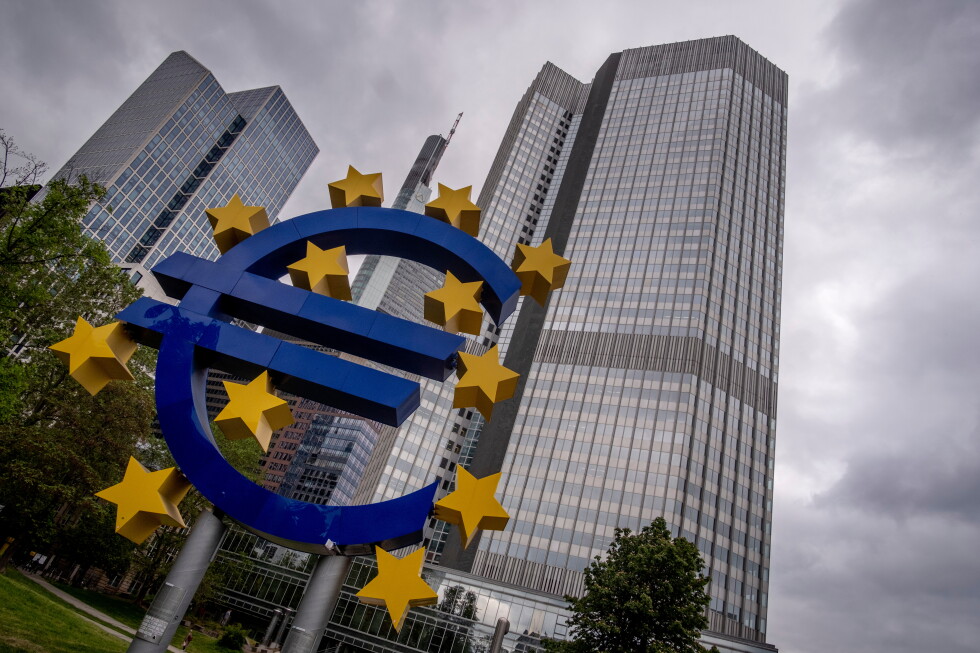
    FRANKFURT, Germany — Escalating geopolitical tensions in the Middle East have triggered a significant surge in European inflation, with official data revealing a jump to 2.5% in March from February’s 1.9%. The conflict involving Iran has severely disrupted energy supplies, precipitating a sharp increase in fuel costs that is now permeating the broader economy.

    The statistical office of the European Union, Eurostat, reported a dramatic reversal in energy price trends, with March witnessing a 4.9% increase compared to February’s 3.1% decline. This energy shock has created immediate ripple effects across consumer markets, particularly affecting transportation and agricultural sectors.

    At Rome’s Trionfale market, vendors are experiencing firsthand the economic consequences of the conflict. Anna Caruso, a vegetable stand operator, explained the direct correlation between fuel costs and produce pricing. “When transportation expenses rise, these increases are inevitably passed along to consumers through higher prices for vegetables like zucchini, eggplant, and seasonal fruits,” she noted, adding that customers are increasingly opting for more affordable alternatives.

    Market merchant Paola Ianzi confirmed that while seasonal factors contribute to some price increases, the conflict has significantly exacerbated the situation through its impact on diesel and transportation costs that suppliers must recoup.

    Beyond energy, the inflation picture shows varied sector performance with food prices rising at a relatively moderate 2.4% while services—encompassing healthcare to personal services—increased by 3.2%.

    European Central Bank President Christine Lagarde has expressed concern that businesses might be quicker to implement price increases during this inflationary episode, drawing from recent memories of the 2022 inflation crisis when prices reached double digits following Russia’s energy supply reductions.

    The current crisis stems from Iran’s obstruction of tanker traffic through the Strait of Hormuz, a critical maritime passage for approximately 20% of global oil and gas shipments. This blockade has created expectations of substantially tighter fuel markets in the coming months.

    Financial analysts are now anticipating monetary policy responses, with many predicting the ECB will implement interest rate increases to prevent inflationary expectations from becoming entrenched in the economy. ABM AMRO’s Head of Macro Research Bill Diviney stated: “We expect the ECB to raise rates already at the April and June governing council meetings to pre-empt any de-anchoring of inflation expectations.” This sentiment is echoed by Oxford Economics analysts, who similarly forecast two rate increases this year. The ECB maintained its key rate at 2% during its most recent meeting on March 19, with rate hikes remaining the central bank’s primary anti-inflation instrument.

  • Czech police arrest a man who claimed responsibility for attack on a Russian center in Prague

    Czech police arrest a man who claimed responsibility for attack on a Russian center in Prague

    PRAGUE — Czech law enforcement authorities have apprehended a foreign citizen who voluntarily surrendered and confessed to orchestrating a Molotov cocktail assault against the Russian House cultural center in Prague. The suspect, whose identity and nationality remain undisclosed by police, turned himself in on Monday.

    According to official statements, the individual admitted to planning the attack since summer 2023. The incident occurred last Thursday evening when multiple incendiary devices were launched at the Russian-state-funded facility. While photographic evidence shows significant window damage and smoke residue on the building’s exterior, the structure avoided catching fire.

    Igor Girenko, director of the cultural center, provided details to Russian state media, indicating that six Molotov cocktails were deployed during the attack, with three failing to detonate. The center, which organizes cultural, educational, and scientific programs while offering Russian language courses, does not hold diplomatic status despite its Russian government funding.

    The incident has triggered diplomatic responses from both nations. Russian Foreign Ministry spokeswoman Maria Zakharova characterized the assault as “barbaric,” while Russia’s embassy in Prague formally requested enhanced security measures for Russian institutions and personnel within the Czech Republic. The Czech Foreign Ministry has simultaneously issued condemnation of the violent act.

    Investigation into the motives and precise circumstances surrounding the attack continues as authorities process evidence and evaluate potential security implications.

  • Wolf bites woman in a shopping area in Germany’s 2nd-biggest city

    Wolf bites woman in a shopping area in Germany’s 2nd-biggest city

    In an unprecedented incident that has captured national attention, a wolf attacked a woman in Hamburg’s commercial district near Altona station before being subsequently retrieved from the city’s Binnenalster lake. The event, which occurred on Monday evening, represents the first documented wolf attack on a human since the species’ reintroduction to Germany nearly three decades ago.

    According to Hamburg authorities, emergency services transported the injured woman to a local medical facility following the unusual confrontation. While specific details regarding her condition and the precise nature of her injuries remain undisclosed, the incident has prompted significant concern among wildlife experts and urban planners alike.

    The wolf, believed to be the same specimen sighted previously in the suburban Blankenese area over the weekend, was extracted from the urban waterway by police officers responding to multiple public reports. Wildlife specialists hypothesize that the animal was likely a young wolf displaced from its natural habitat while searching for territorial boundaries, inadvertently venturing into the metropolitan environment.

    Hamburg’s regional government emphasized that wolf behavior typically involves avoiding human interaction, suggesting the high-stress urban setting may have contributed to the anomalous attack. The animal has since been relocated to a secured enclosure on the city’s outskirts for further observation and assessment.

    This incident occurs against a backdrop of evolving wildlife management policies across Europe. Recently, the German parliament enacted legislation facilitating the controlled hunting of wolves responsible for livestock predation, reflecting growing tensions between conservation efforts and agricultural interests. The European Parliament similarly voted last year to reclassify wolves from ‘strictly protected’ to ‘protected’ status in response to increasing concerns from farming communities.