标签: Europe

欧洲

  • Devastated Italians reckon with ‘third apocalypse’ of World Cup failure

    Devastated Italians reckon with ‘third apocalypse’ of World Cup failure

    On a crisp spring morning in central Rome, 65-year-old Tommaso Silvestri leaned against a brick wall beside a neighborhood newsstand, his eyes drifting across bold, gloomy front pages dominated by headlines labeling Italy’s latest international football exit an “apocalypse,” “scandal,” and “disaster.”

    “We’ve made a real mess of it,” Silvestri told reporters, shaking his head in quiet disappointment. “We had players who couldn’t even find the target. The golden days of Italian football are well and truly gone.”

    The heartbreak unfolded Tuesday night in Zenica, where four-time World Cup champions Italy fell to a devastating 4-1 penalty shootout defeat against Bosnia and Herzegovina, sealing the nation’s third consecutive elimination from World Cup qualification. The match turned against the Azzurri before halftime, when defender Alessandro Bastoni was sent off with a red card, reducing Italy to 10 men for the rest of regulation. A late equalizer from Moise Kean briefly sent Italian fans into a frenzy of hope, forcing the contest to penalties — only for Pio Esposito to miss the team’s opening spot kick, setting the stage for elimination.

    Italy’s run of international disappointment stretches back nearly two decades, dating to the team’s iconic 2006 World Cup title. Outside of a shock, beloved European Championship victory over England at Wembley in 2021, the Azzurri have consistently underperformed in major global tournaments, leaving long-time fans disheartened.

    “We are what our results say we are,” Silvestri said. “When you shoot and can’t even hit the goal, you’re not going to go far. When it comes to taking the game home, Italy just doesn’t get there anymore.”

    The defeat sparked immediate, fierce reaction across Italian political and civic circles. Senate president Ignazio La Russa, a senior leader of Prime Minister Giorgia Meloni’s far-right Brothers of Italy party, lamented the outcome in a public post on X.

    “Everything has a limit,” La Russa wrote. “We’re not going to the World Cup. We supported them, we hoped, we even railed against a couple of questionable refereeing decisions… but deep down we feared it. In fact, we knew it.”

    Prominent anti-mafia author Roberto Saviano, best known for *Gomorrah*, went further, pointing to deep-rooted systemic failures across every layer of Italian football, from top-level club governance to grassroots youth development.

    “Clubs are corrupt and at the mercy of criminal organisations. True laundering vaults,” Saviano wrote in an Instagram post. “No investment in young players, no care for second-generation talent. It’s easier to buy foreign players than to develop new athletes.”

    Across Rome, a city steeped in decades of Azzurri triumph, long-time supporters expressed deep anger and disillusionment. Seventy-one-year-old Giovanni Colli, sipping espresso at a sidewalk café near the Pantheon, told reporters he felt “betrayed” by the result.

    “Not going to the World Cup three times in a row, how on earth did it happen?” Colli said. “What a huge disappointment. Everyone should resign. Give the young players a chance.”

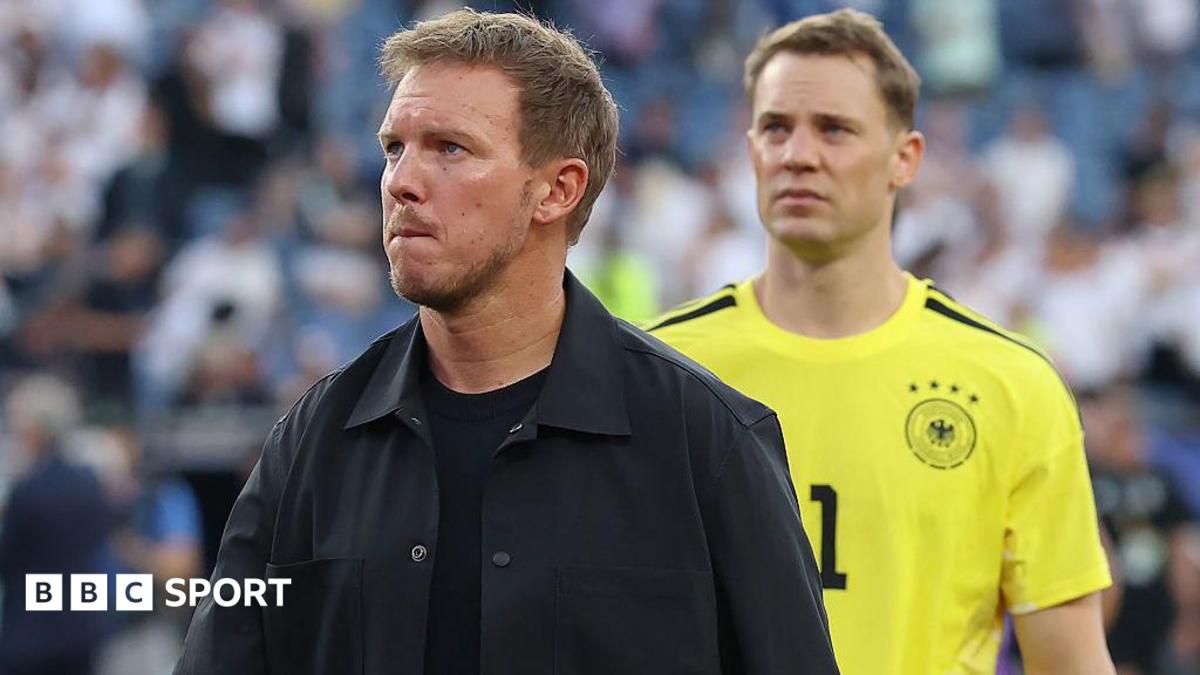
    The grief of the moment was captured by Azzurri head coach Rino Gattuso, a 2006 World Cup-winning midfielder who only took the national team job last June. A teary-eyed Gattuso struggled to hold back his emotions as he addressed reporters after the match, before retreating to the dressing room.

    “We don’t deserve this, it’s not fair. I’m sorry I couldn’t make it happen,” Gattuso said, his voice breaking. Despite the crushing defeat, he added that he remained proud of his team’s effort: “I’m proud of my boys and what they gave on the pitch.”

    Gattuso acknowledged the team’s missed opportunities, a recurring theme of the night. “When you have chances and don’t take them, football punishes you,” he said. “This hurts. We gave everything we could. It’s a real shock.”

    Elisabetta Esposito, a veteran sport journalist with leading Italian outlet *La Gazzetta dello Sport*, told the BBC that the defeat exposes a broader, long-running crisis in Italian football that will not be fixed with quick fixes. Esposito noted that loyalty to top domestic clubs increasingly overshadows national team pride, a shift that has eroded public support for the Azzurri.

    “The risk is that this third consecutive failure to qualify will deepen young people’s disengagement from the Azzurri,” Esposito said. “The disappointment is profound, but the country is not only disappointed but almost disillusioned. It’s as if a new generation no longer knows what it means to cheer for their country.”

    From a technical perspective, Esposito added, every part of the game broke down for Italy. The team lacked consistent chemistry built through long-term work together, and rushed, short-sighted decisions focused on immediate wins will not fix the underlying issues. “Rebuilding will require a long-term strategy,” she emphasized.

    Even casual observers across Italy acknowledged the weight of the moment. Walking her dog through a busy central Rome street, 56-year-old Teresa expressed surprise when told of the result, echoing the national sense of gloom. “Oh, we are not going to the World Cup? I don’t know much about football, but that’s a bit of disaster, isn’t it?”

  • Indonesia delays deportation of Scottish crime boss to Spain for murder and drug trafficking charges

    Indonesia delays deportation of Scottish crime boss to Spain for murder and drug trafficking charges

    In a last-minute adjustment to law enforcement proceedings, Indonesian authorities have postponed the deportation of 45-year-old Steven Lyons, a high-profile alleged Scottish transnational crime leader taken into custody last week on the popular Indonesian resort island of Bali. Lyons, who is accused of overseeing an international criminal syndicate linked to large-scale drug trafficking, cross-border money laundering, and gang-related violence, was initially scheduled to be extradited via a Qatar Airways flight from Bali to Spain, with a layover in Doha, on Wednesday evening.

    Husnan Handano, a spokesperson for Bali’s regional immigration office, confirmed the delay in a statement Wednesday, announcing that the deportation will now proceed on Thursday. Handano did not offer any explanation for the last-minute schedule change.

    The fugitive suspect was apprehended this past Saturday shortly after he landed at Bali’s Ngurah Rai International Airport, arriving from Singapore. Automated immigration screening flagged Lyons based on an Interpol Red Notice, an international police alert that requests the global law enforcement community to locate and provisionally arrest a suspect pending extradition. The alert was filed at the formal request of Spanish authorities, who have sought Lyons for approximately two years.

    As the alleged head of the so-called Lyons Crime Family, a transnational criminal network originally based in Scotland, the suspect is accused of controlling major drug trafficking routes that move narcotics from Spain into the United Kingdom. His syndicate is also suspected of operating an elaborate money laundering scheme that uses registered shell companies across multiple jurisdictions, including Spain, Scotland, England, Dubai, Qatar, Bahrain, and Turkey to obscure the origins of criminal proceeds.

    Prior to Lyons’ arrest in Bali, coordinated law enforcement raids led by Scottish and Spanish investigators had already resulted in multiple arrests connected to the syndicate’s activities. Additional suspects linked to the network have been taken into custody in Turkey, the Netherlands, and the United Arab Emirates.

    Public records and local Scottish media reporting have documented Lyons’ long ties to organized crime: he survived a 2006 shooting in Glasgow that left his cousin dead. Following the attack, he relocated first to Spain, and later settled in Dubai, the United Arab Emirates. Last May, Lyons’ brother and a known criminal associate were shot and killed in a suspected gangland targeted killing at a beachfront bar in Fuengirola, a coastal town in southern Spain. Lyons has also been linked to a 2024 murder in Spain, according to Spanish law enforcement records.

    Bali Police Chief Daniel Adityajaya confirmed that Lyons’ arrest was the product of a long-running joint transnational investigation involving law enforcement agencies from Spain, Scotland, and Indonesia. Interpol’s global alert system was critical in flagging the suspect as he attempted to enter Indonesia, allowing local officers to take him into custody immediately upon arrival.

  • Amsterdam celebrates 25 years since the world’s first same-sex weddings

    Amsterdam celebrates 25 years since the world’s first same-sex weddings

    AMSTERDAM — A quarter-century after the Netherlands made global history by becoming the first country to legalize same-sex marriage, the Dutch capital kicked off silver anniversary celebrations early Wednesday with a special midnight ceremony at Amsterdam City Hall, where three new same-sex couples exchanged wedding vows officiated by Mayor Femke Halsema.

    The moment echoed the landmark 2001 ceremony, when then-Mayor Job Cohen married the world’s first legally recognized same-sex couples. That groundbreaking step 25 years ago blazed a trail for equal marriage legislation that has since been adopted by nearly 40 nations across the globe. Today, same-sex weddings are a fully normalized part of life across the Netherlands: official Dutch statistics show more than 36,000 same-sex couples have tied the knot in the country since 2001.

    The anniversary comes as the Netherlands prepares for another milestone for LGBTQ+ representation: Prime Minister Rob Jetten, the nation’s first openly gay head of government, announced he will soon marry his partner Nicolás Keenan, an Argentine field hockey star who claimed bronze at the 2024 Paris Olympic Games. Speaking to reporters at the overnight Amsterdam celebration, Jetten reflected on how the 2001 legalization shaped his own journey. “As a prime minister, I’m very proud that we celebrate 25 years of universal marriage here in the Netherlands,” he said. “Also for me personally, I can still remember when I was 14 years old watching TV, seeing the first couples getting married here in Amsterdam. That was also very inspiring and emancipating for me, personally, as it has been for so many others.”

    While the Netherlands led the global push for equal marriage, progress and acceptance have spread unevenly across the world. The United States granted nationwide recognition of same-sex marriage via a 2015 U.S. Supreme Court ruling, after years of state-by-state legalization. A 2023 study estimates more than 800,000 same-sex couples are now married across the country.

    Amy Quinn, deputy mayor of Asbury Park, New Jersey, and her wife Heather Jensen were among the first same-sex couples to marry in New Jersey when the state legalized same-sex marriage in 2013. For the pair, legal marriage was not just symbolic: when they planned to start a family, their attorney confirmed marriage would grant both partners equal parental rights, allowing both names to appear on their child’s birth certificate, granting hospital visitation access, and enabling both to sign school documents. “It’s shocking to me in terms of really how recently we got it,” Quinn said of the right to marry.

    Even as more countries have embraced equal marriage, the past decade has brought growing backlash against LGBTQ+ rights in many regions. In the U.S., advocacy group Human Rights Campaign has tracked bills in at least nine state legislatures that seek to roll back federal recognition of same-sex marriage, most calling on the U.S. Supreme Court to overturn its 2015 landmark ruling. Though none of these measures have advanced to date, and could not force the high court to reverse its decision, the proposals have sparked concern among LGBTQ+ communities. “I don’t think it’s a time for people to be afraid,” said Kelley Robinson, president of the Human Rights Campaign. “It’s a time to be aware, to protect our families, to protect our kids and to protect our lives.”

    Last week alone brought two new signs of growing anti-LGBTQ+ pushback in the U.S. The U.S. Supreme Court ruled against a Colorado ban on conversion therapy for LGBTQ+ youth, siding with opponents who argued the ban violated free speech rights and sending the case back to a lower court for re-evaluation. Separately, the Chicago Bulls cut guard Jaden Ivey from the team roster following anti-LGBTQ+ comments he posted to Instagram alongside statements about his religious beliefs.

    Across much of the globe, particularly in parts of Asia and Africa, same-sex marriage remains illegal, and a growing number of countries have implemented harsher repressive policies targeting the LGBTQ+ community. Just one day before the Dutch anniversary celebration, Senegal’s president signed a new law that increases criminal penalties for same-sex relations, making it the latest African nation to enact harsh restrictions on LGBTQ+ people.

    Even in the Netherlands, which is widely seen as a global leader in LGBTQ+ equality, advocates warn progress has stalled. Philip Tijsma, spokesperson for COC Netherlands, the country’s oldest and largest LGBTQ+ advocacy organization, noted that while the 25th anniversary is a moment to celebrate the 2001 milestone, the Netherlands has fallen behind peer nations in advancing new protections for the community. “We have become a little bit lazy,” Tijsma said. He pointed out that many other European countries have enacted far stronger protections for transgender people, and that anti-LGBTQ+ harassment remains common in the Netherlands: LGBTQ+ people still face bullying in schools and verbal or physical harassment for public displays of affection like holding hands on the street.

    In the U.S., the backlash has been particularly sharp against transgender rights in recent years. A majority of U.S. states have now barred transgender girls and women from participating in some women’s sports, and restricted access to gender-affirming health care for transgender youth. Restrictions on puberty blockers, hormone therapy, and gender-affirming surgery for minors have also spread to other countries around the world. Former U.S. President Donald Trump and his administration have spearheaded many of these policy efforts, pushing aggressively for broad restrictions on rights and protections for transgender people.

    Despite these widespread challenges, the mood at Amsterdam’s anniversary celebration remained joyful and hopeful. Gert Kasteel and Dolf Pasker, one of the four original couples who married in the 2001 landmark ceremony, joined Wednesday’s event to mark their 25 years of marriage. “We’re very happy!” Kasteel said. “It’s unbelievable, 25 years,” added Pasker. “It’s so beautiful that there’s so much attention for it.”

    This report features contributions from Corder, reporting from The Hague, Netherlands, and Mulvihill, reporting from Haddonfield, New Jersey.

  • Russian military plane crash kills 29 in Crimea

    Russian military plane crash kills 29 in Crimea

    A fatal aviation disaster has claimed the lives of all 29 passengers and crew on board a Russian military An-26 transport plane that crashed in Crimea, Russia’s Defence Ministry has confirmed to state-run media outlets.

    Contact was lost with the aircraft while it was conducting a standard operational flight, triggering an urgent search-and-rescue mission that eventually located the plane’s wreckage. According to initial statements from the ministry, the crash was likely triggered by on-board technical issues that led the aircraft to impact a cliff. All six crew members and 23 passengers aboard died in the incident, with no survivors reported.

    Crimea, a peninsula whose 2014 annexation by Russia remains unrecognized by most of the international community, has been the site of consistent military engagement between Russian and Ukrainian forces since Russia launched its full-scale invasion of Ukraine in 2022. Crucially, the Defence Ministry confirmed there was no external damage to the aircraft, ruling out attacks by missiles or drones, as well as bird strikes as potential causes of the crash.

    Timeline details released by Russian state news agency Tass indicate that communication with the An-26 was cut off at approximately 18:00 local time (15:00 GMT) on Tuesday, with wreckage recovered hours later after search teams swept the area.

    The An-26, a twin-engine turboprop transport aircraft dating back to the Soviet era, was originally designed and built by Ukraine’s Antonov aerospace manufacturer. Entering widespread service in the late 1960s, the model was primarily engineered for short-to-medium range military operations, capable of carrying heavy cargo alongside small groups of personnel. Despite its long operational history, the aircraft platform has a well-documented record of fatal incidents in recent years.

    Notable previous deadly crashes involving the model include a 2020 incident in Ukraine’s Kharkiv region that killed 26 people, most of whom were military cadets; a 2021 crash in Russia’s Far East that left 28 people dead; and a 2022 crash in Ukraine’s Zaporizhzhia region that resulted in one fatality.

    In recent months, Crimea has become a frequent target of Ukrainian long-range strikes, with Ukrainian forces regularly targeting Russian military infrastructure across the peninsula, which shares a border with the partially Russian-occupied Kherson region in southern Ukraine. Ukrainian President Volodymyr Zelenskyy has repeatedly made full Russian withdrawal from Crimea a non-negotiable condition for any permanent ceasefire agreement, though a November peace proposal backed by the United States suggested Kyiv could defer claims to Crimea in the near term to advance negotiations.

  • Coach Gattuso not interested in talking about his future after Italy miss out on World Cup again

    Coach Gattuso not interested in talking about his future after Italy miss out on World Cup again

    For the four-time World Cup winning Italian men’s national football team, a historic and devastating streak has been confirmed: the Azzurri will miss a third consecutive World Cup tournament, following a cruel penalty shootout defeat to 66th-ranked Bosnia and Herzegovina in the European qualifying playoffs on Tuesday. The result compounds decades of growing turmoil for Italian football, leaving head coach Gennaro Gattuso’s future up in the air even as the Italian Football Federation (FIGC) has publicly pushed for him to remain in the role.

    Tuesday’s match was a rocky encounter from the start, with Italy reduced to 10 players for the majority of the clash. Despite the disadvantage, the side pushed the game to penalties, only to fall at the final hurdle and end their 2026 World Cup dreams. Speaking immediately after the final whistle, a clearly shaken Gattuso said he refused to discuss his own contract or future in the role, arguing that the national team’s failure far outstripped any personal questions.

    “It hurts, it really hurts. More than hurting me, it hurts to see this group which has really given everything in these months and I think we deserved to get back what we put in,” Gattuso told reporters. “I honestly think it is too reductive and too immature to be talking about my future today. Here we should be talking about Italy, about the national team shirt, that it is yet another blow even though this time we didn’t deserve it. We deserved more, and that is why my future doesn’t matter.”

    Gattuso was only appointed to the role last June, brought in to replace the dismissed Luciano Spalletti when Italy’s qualifying hopes were already fading. His short-term contract ran through the end of the 2026 World Cup, built in with an automatic five-year extension through 2028 if the side secured qualification. The streak of missed tournaments stretches back to 2018, when Italy fell to Sweden in qualifying playoffs, then repeated the upset loss to North Macedonia ahead of the 2022 tournament in Qatar.

    While Gattuso has not yet announced whether he will step down or stay, FIGC president Gabriele Gravina made the federation’s stance clear in comments Tuesday: he has directly asked Gattuso to remain at the helm. “I have to praise Gattuso. I think he’s been a great coach, he is a great coach,” Gravina said. However, Gravina’s own position is now under intense scrutiny, as calls for his resignation grow. He called a FIGC council meeting for next week to review the situation and evaluate possible changes at the administrative level. Gravina took over the federation in 2018, after predecessor Carlo Tavecchio stepped down following Italy’s first 2018 qualifying exit, and has overseen both of the latest two disappointing qualifying campaigns.

    For many Italian fans, the problem extends far beyond individual coaching or administrative roles. Speaking to reporters outside a Rome bar, 30-year-old fan Federico Barbieri argued the entire Italian football system is fundamentally broken. “I feel really bad, the system is rotten, the football system in Italy is rotten,” Barbieri said. “A country which is made for football and lives for football and now, like, everything is rotten. We knew that the team has its limits but … not going to the World Cup three times in a row? Sweden, North Macedonia and Bosnia. What else can I say?”

    The aftermath of qualifying failures has not followed a fixed pattern for the federation in recent cycles. Gian Piero Ventura was fired immediately after the 2018 loss to Sweden, but Roberto Mancini retained his job despite the shock 2022 defeat to North Macedonia. That decision came just eight months after Mancini had led Italy to a surprise European Championship title, and the federation opted to retain the manager who had reinvigorated the national program. Mancini ultimately resigned just over a year later, moving to take the top job with the Saudi Arabian national side, and Spalletti was appointed in his place. After a disappointing Euro 2024 campaign, Spalletti was dismissed after just one World Cup qualifier in charge, clearing the way for Gattuso’s appointment.

    For long-time fans of Italian football, the current streak feels like an unthinkable nightmare. Fifty-six-year-old Rome-based building contractor Roberto Silvi, who grew up watching Italy consistently compete for World Cup titles, called the result impossible to process. “I grew up with an Italy that always came in the top four at the World Cup,” Silvi said. “I’ve seen Italy as world champion twice, and close another couple times. I took Italy’s qualifications for granted and now it seems like a nightmare to me. I don’t even believe it. The Italy that misses a World Cup is outside of the world. The Italy that misses three, if they had told me, I never would have believed it.”

  • Trump criticizes European allies for not helping fix the damage his war against Iran has caused

    Trump criticizes European allies for not helping fix the damage his war against Iran has caused

    In the aftermath of a unilateral U.S. war of choice against Iran launched without prior consultation with global allies, President Donald Trump is now demanding international partners step in to resolve the unforeseen fallout of the conflict, as he signals he is poised to wind down American military operations soon.

    The president’s frustration has mounted in recent days over Europe’s refusal to back the U.S.-Israeli war effort, with Trump launching a blistering public attack on two of America’s closest transatlantic allies—France and the United Kingdom—via social media on Tuesday. Even as Iran has effectively choked off most oil traffic through the strategic Strait of Hormuz, a development that has roiled global energy markets, Trump has continued to claim Iran’s military and infrastructure have been “decimated.”

    In his social media posts, Trump targeted the U.K. first, which had declined to participate in direct offensive operations against Iran. He suggested countries facing jet fuel shortages from the closed strait should turn to U.S. oil supplies, and challenged European nations to “build up some delayed courage, go to the Strait, and just TAKE IT.” Minutes later, he accused France of being “very unhelpful” for denying overflight rights to U.S. military planes carrying weapons bound for Israel.

    Trump’s sharp rebuke of NATO members for failing to join the war effort and address its spillover effects has been echoed by top officials in his administration, amplifying longstanding questions about the future of the transatlantic alliance—an institution whose core value Trump has openly questioned since taking office. Top Cabinet members including Secretary of State Marco Rubio, Treasury Secretary Scott Bessent, and Defense Secretary Pete Hegseth have all ramped up anti-NATO rhetoric in recent days, indicating the administration’s skeptical posture toward the alliance is hardening, even as Trump hints at an early exit from the Iran conflict.

    Speaking at a Pentagon press briefing Tuesday, Hegseth argued the U.S. had already done the “heavy lifting on behalf of the free world” to counter the Iranian threat. He stressed that securing the Strait of Hormuz, a waterway critical to global oil trade, should not fall exclusively to Washington, noting that other dependent nations, including the U.K. with its historic Royal Navy, must contribute to security efforts. “There are countries around the world who ought be prepared to step up on this critical waterway as well,” he said.

    Later that day, during an Oval Office meeting with reporters, Trump confirmed the timeline for U.S. offensive operations, estimating that American strikes on Iran would wrap up within two to three weeks. He made clear that securing the strait long-term would be the responsibility of other nations that rely on the shipping lane. “That’s not for us,” he said. “That’ll be for France. That’ll be for whoever’s using the strait.” The president added that while he is not yet prepared to withdraw the thousands of U.S. troops massed near the strait, that move will come soon.

    Despite the sharp diplomatic friction between the U.S. and its European allies, U.S. investors reacted positively to Trump’s timeline for ending the conflict. The S&P 500 jumped 2.9% to notch its largest single-day gain since the previous spring, while the Dow Jones Industrial Average climbed more than 2.5%, as Wall Street shifted from uncertainty over prolonged conflict to renewed optimism for a quick de-escalation.

    Even so, weeks of sustained criticism of NATO have left European capitals on edge about the alliance’s future, already strained by Trump’s earlier cuts to U.S. military support for Ukraine and his open threat to seize Greenland from Denmark. Multiple NATO members, including France and Spain, have already banned or restricted U.S. use of their airspace and joint military facilities for operations related to the Iran conflict. While these nations have signaled willingness to join an international coalition to secure the strait once the war ends, the details of their participation and the coalition’s overall stability remain unresolved.

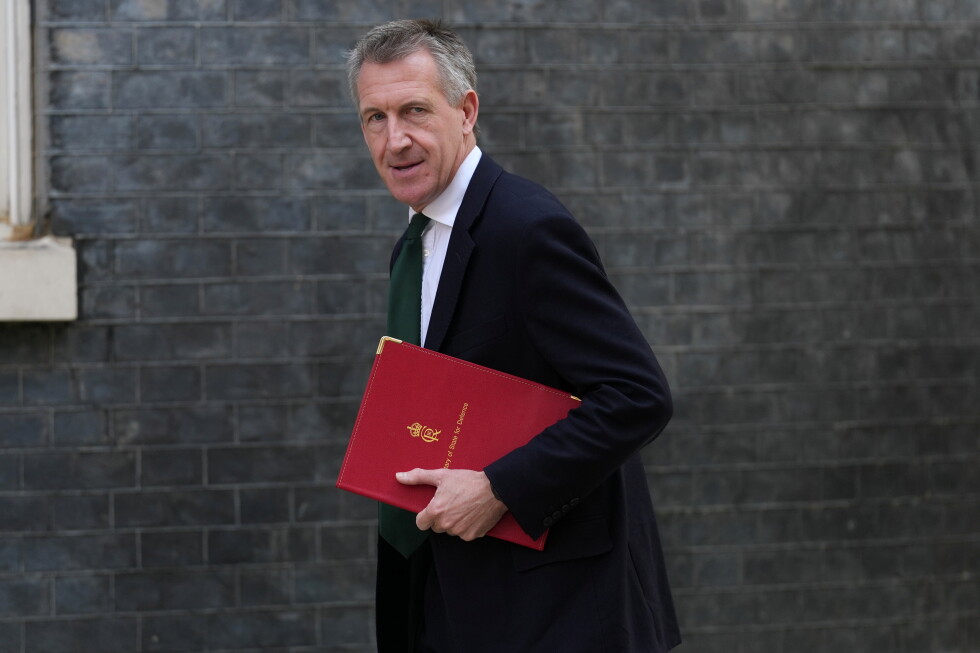
    On Tuesday, both France and the U.K. sought to downplay Trump’s verbal attacks. A spokesperson for French President Emmanuel Macron expressed surprise at the criticism, noting “France has not changed its position since day one.” British Defense Secretary John Healey acknowledged the U.S. remains a critical ally despite the rebuke, and outlined steps the U.K. is already taking to support Gulf security. During a visit to Qatar, Healey announced the U.K. would deploy additional missile and air defense systems to Bahrain, Kuwait, and Saudi Arabia, and extend the deployment of Royal Air Force Typhoon fighter jets to Qatar. “The U.S. is a uniquely close ally to the U.K.,” Healey said. “We do things as two nations that no other militaries or intelligence services do.”

    Analysts note that while European nations have distanced themselves from the offensive, they have strong incentives to remain engaged and push for a quick end to the conflict to prevent broader regional escalation. More than a decade of civil war in Syria already pushed over 5 million people to flee their homes, with hundreds of thousands seeking asylum in Europe and generating lasting social and political disruption across the continent. More recently, Yemen’s Iran-aligned Houthi movement launched its first direct missile attacks on Israel over the weekend and has threatened to disrupt shipping through the Red Sea—a major trade artery for European economies.

    Yasmine Farouk, Gulf and Arabian Peninsula Project director at the International Crisis Group, argued the moment presents a key opportunity for Europe to cement its role as a regional security partner. “I think this is a true opportunity for Europe to show the Gulf that it can be a partner,” she said. “And I think they have already been showing that in the defense (weapons they’ve provided to Gulf nations), they need now to make it more into the diplomatic side in terms of offering offramps and working on a deal.”

    Jeremy Shapiro, U.S. programs director of the European Council on Foreign Relations, wrote in a Tuesday analysis that European negotiators can advance their goals by focusing on the war’s economic costs, pushing for a ceasefire tied to a maritime security mission, and crafting an exit that aligns with Trump’s political priorities. “Trump will claim victory no matter how this war ends,” Shapiro wrote. “Europeans should want that to happen sooner rather than later.”

  • Pope Leo XIV urges an Easter end to the US-Israel war on Iran, calling for dialogue

    Pope Leo XIV urges an Easter end to the US-Israel war on Iran, calling for dialogue

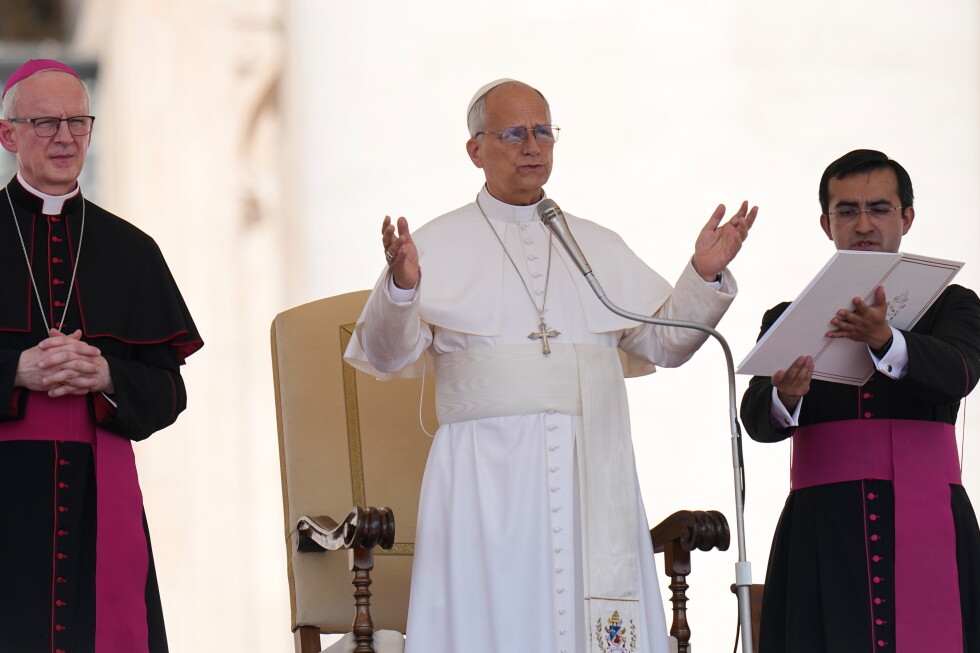
    VATICAN CITY – On Tuesday, as Pope Leo XIV departed the papal summer retreat of Castel Gandolfo on the outskirts of Rome, the U.S.-born pontiff shared a message of urgent hope with reporters: that the ongoing U.S.-Israel war on Iran could reach a ceasefire before the start of Easter celebrations, the most sacred observance on the Christian calendar.

    Citing recent public comments from former U.S. President Donald Trump indicating a desire to wind down the conflict, Pope Leo expressed his expectation that the administration would seek an exit path to de-escalation. “Hopefully he’s looking for a way to decrease the amount of violence, of bombing, which would be a significant contribution to removing the hatred that’s being created, that’s increasing constantly in the Middle East and elsewhere,” the pontiff told reporters.

    The pope’s appeal came during Holy Week, the period leading up to Easter that centers on reflection, penance, and preparation for the commemoration of Jesus Christ’s crucifixion and resurrection. Reflecting on the disconnect between the holy season and global conflict, Pope Leo noted that what should be a time of quiet peace and self-examination has been overshadowed by widespread suffering. “It should be the holiest time of the year. It is a time of peace, a time of reflection. But as we all know, again, in the world, in many places we are seeing so much suffering, so many deaths, even innocent children,” he said. “We constantly make the call for peace, but unfortunately, many people want to promote hatred, violence, war.”

    Pope Leo’s latest remarks extend a broader public push against the misuse of religion to justify armed conflict, a message he first laid out earlier this month during Palm Sunday Mass in St. Peter’s Square. During that service, the pontiff declared that God rejects the prayers of leaders who wage war and invoke religious belief to legitimize their violence, offering special intercession for Christian communities across the Middle East grappling with the fallout of regional conflict.

    Recent weeks have seen multiple global leaders on different sides of active conflicts twist religious doctrine to back their military actions. U.S. Defense Secretary Pete Hegseth has repeatedly leaned on his personal Christian faith to frame the war on Iran as a struggle between a Christian nation and its purported evil enemies. Meanwhile, Russia’s Orthodox Church has characterized Moscow’s full-scale invasion of Ukraine as a “holy war” against a Western world it decries as morally corrupt.

    As Holy Week progresses, Pope Leo will carry forward the centuries-long traditions of the papacy leading into Easter. On Holy Thursday, he will perform the traditional foot-washing rite at the Basilica of St. John Lateran, a ritual that honors Jesus’ act of humility toward his disciples before his crucifixion. On Good Friday, he is set to lead the annual Way of the Cross procession through Rome’s iconic Colosseum, an event commemorating Christ’s suffering and death, where he will personally carry the processional cross. The Easter Vigil, held after dark on Holy Saturday, will see the pope baptize new converts into the Catholic Church, before he leads the main Easter Sunday Mass in St. Peter’s Square and delivers his iconic Urbi et Orbi blessing to the city of Rome and the world from the basilica’s central loggia.

  • Italian Christmas meal tragedy turns into murder inquiry

    Italian Christmas meal tragedy turns into murder inquiry

    In a quiet small municipality of Pietracatella, located 161 miles southeast of Rome, a tragic pre-Christmas gathering last year has sparked an ongoing murder probe after investigators discovered deadly ricin poisoning in the bodies of a mother and her teenage daughter who died days after the meal.

    Fifty-year-old Antonella Di Ielsi and her 15-year-old daughter Sara Di Vita began showing severe symptoms of illness shortly after sharing the holiday lunch at the family home. Di Ielsi’s husband Gianni, a former mayor of Pietracatella, also fell ill after the meal and was hospitalized, but ultimately made a full recovery. The couple’s oldest child did not attend the gathering, and escaped any exposure to the toxin.

    When the pair first arrived at the hospital, attending doctors misdiagnosed their condition as common food poisoning. Suspecting the illness came from contaminated fish or wild mushrooms, medics discharged Di Ielsi and Di Vita after initial observation. But their condition deteriorated dramatically just a short time later, forcing emergency readmission to the intensive care unit at Cardarelli Hospital in nearby Campobasso.

    Dr. Vincenzo Cuzzone, head of the hospital’s intensive care unit, described to local media how the toxin attacked the victims’ bodies at an extraordinary rate. “Liver failure developed first, followed by complete multi-organ failure at a truly unparalleled speed,” he explained. Without any known antidote to counteract the ricin, medical teams were powerless to stop the progression of the poisoning, and both victims eventually died.

    Initially, authorities linked the deaths to errors in the initial diagnosis, opening a manslaughter investigation into the doctors who approved the discharge of the two patients. That narrative shifted dramatically after comprehensive laboratory testing, conducted at facilities in both Italy and Switzerland, confirmed the presence of ricin, a naturally occurring potent toxin derived from castor beans. Even a tiny dose of ricin can trigger fatal organ failure, and there is currently no effective antidote for ricin poisoning.

    With this new evidence in hand, Italian prosecutors have reclassified the case as a murder investigation. As of the latest updates, law enforcement has not yet identified any persons of interest or established a clear motive for the poisoning.

  • Oil and gas prices won’t immediately return to normal even if the Iran war ends, the EU warns

    Oil and gas prices won’t immediately return to normal even if the Iran war ends, the EU warns

    NICOSIA, Cyprus – The European Union’s top energy official issued a stark warning Tuesday that the crippling surge in European oil and gas prices driven by the ongoing Iran conflict will not return to pre-war levels in the near term, even if a peace agreement is reached immediately.

    Speaking to reporters following a gathering of EU energy ministers, Commissioner Dan Jørgensen clarified that while the 27-nation bloc currently faces no immediate shortfall in crude oil or natural gas supplies, critical bottlenecks have emerged for diesel and jet fuel. Persistent tightening constraints across global natural gas markets are also pushing electricity prices sharply higher across the continent.

    “It is extremely important that I state this as clearly as possible: even if peace is achieved tomorrow, we will not see a return to normal energy prices in the foreseeable future,” Jørgensen emphasized.

    The ongoing war has sent energy costs soaring across Europe, with natural gas prices jumping roughly 70% and crude oil prices rising around 60% since hostilities began. Jørgensen noted that the EU’s total import bill for fossil fuels has ballooned by an extra 14 billion euros since the conflict started.

    To buffer households and businesses from these unprecedented cost spikes, Jørgensen revealed that the European Commission, the EU’s executive branch, is currently finalizing a broad package of targeted support measures. Coordinated action across all member states is critical, he stressed, to avoid fragmented national policies that could send confusing and destabilizing signals to global energy markets.

    The full set of policy tools, which Jørgensen said will be released publicly “quite soon,” includes provisions to make it easier for national governments to decouple retail electricity prices from volatile natural gas market rates. The commission is also actively evaluating a proposal from Commission President Ursula von der Leyen to cut taxes on electricity for consumers.

    While Jørgensen said he does not expect a repeat of the 2022 European natural gas crisis, when energy firms recorded extraordinary windfall profits from skyrocketing prices, he confirmed that a one-time windfall profit tax on energy sector companies remains on the table as a policy option.

    Jørgensen added that the commission is working to expand and simplify existing avenues for member states to provide direct financial support to vulnerable households and energy-intensive industries that are facing extraordinary financial pressure from rising costs.

    In addition to structural support measures, Jørgensen encouraged EU countries to adopt the International Energy Agency’s 10-point energy reduction plan, which includes policy measures like expanded work-from-home arrangements, lowered highway speed limits to cut fuel consumption, expanded subsidies for public transit, and incentives for carpooling.

    Turning to the bloc’s long-term energy transition strategy, Jørgensen reaffirmed the EU’s commitment to its ban on Russian natural gas imports, a policy implemented to cut Moscow’s revenue for its ongoing invasion of Ukraine and reduce European dependence on Russian fossil fuels. He reported that the bloc’s reliance on Russian gas has already fallen sharply from 45% before the Ukraine war to just 10% today, and will drop to zero as import infrastructure for alternative suppliers is scaled up, most notably from the United States. The EU is also pursuing expanded energy imports from Azerbaijan, Algeria, Canada, and smaller producing nations across the globe.

    Jørgensen concluded by stressing that the bloc must not repeat the overreliance on Russian energy that allowed President Vladimir Putin to weaponize energy exports as a political tool against European nations. “It would be totally unacceptable for the EU to continue purchasing energy that indirectly helps finance the terrible war that Putin is conducting in Ukraine,” he said.

  • Prince Harry’s final suit against British tabloids could hang on private eye’s disputed statement

    Prince Harry’s final suit against British tabloids could hang on private eye’s disputed statement

    LONDON – After 11 weeks of high-stakes arguments in London’s High Court, the outcome of Prince Harry’s landmark privacy lawsuit against British tabloid publisher Associated Newspapers has boiled down to one critical question: can the court trust the conflicting accounts of private investigator Gavin Burrows?

    Duke of Sussex Prince Harry launched the legal action alongside six other high-profile claimants, including music icon Elton John, actors Sadie Frost and Elizabeth Hurley, anti-racism campaigner Doreen Lawrence, former lawmaker Simon Hughes, and David Furnish, Elton John’s husband. The group alleges that Associated Newspapers – owner of the Daily Mail and its Sunday sister title the Mail on Sunday – ran a coordinated, decades-long campaign of unlawful information gathering, targeting them through phone tapping, voicemail interception, and deceptive information-gathering tactics. For Harry, this trial marks the culmination of a years-long personal crusade to hold the British tabloid industry accountable for its intrusive practices and push for reform of what he has repeatedly called a toxic media culture.

    On Tuesday, defense lawyers for Associated Newspapers wrapped their closing arguments by centering their entire case on Burrows’ latest sworn testimony. Burrows, a private investigator who previously admitted on a BBC documentary that he had ruthlessly targeted a teenage Harry for tabloid outlets and even apologized to the prince for his actions, has now reversed course under oath. He testified that he never carried out any illegal surveillance or information-gathering work for either of the Associated Newspapers titles. He further claimed that a signed statement attributed to him – which said he “must have done hundreds of jobs” for the Mail between 2000 and 2005, and which formed the foundational catalyst for the entire lawsuit – was a fabrication, with his signature forged by the claimants’ legal team. Defense lead Antony White argued that if Burrows’ disavowal of the original statement is accepted, the entire claimants’ case collapses.

    Judge Matthew Nicklin, who is overseeing the bench trial, repeatedly pressed the claimants’ legal team over the course of the proceedings to clarify what would become of the case if the court rejected Burrows’ original statement. The claimants’ lead attorney, David Sherborne, pushed back against the defense’s narrative in his own closing arguments, insisting that the claimants hold a wealth of independent evidence that proves Associated Newspapers’ pattern of unlawful activity, beyond Burrows’ statement. Sherborne confirmed that the claimants are seeking substantial damages, including aggravated damages, for the invasion of their privacy; total legal costs for the high-profile trial have already been estimated at nearly £40 million ($52 million).

    Sherborne argued that payment records from the publisher to multiple private investigators align with the publication dates of the controversial articles in question, directly tying the paper to unlawful information gathering. He added that the evidence implicates not just Burrows, but a network of other investigators, staff journalists, and freelance reporters that the paper relied on to obtain private information through illegal means.

    Associated Newspapers has forcefully denied all allegations, dismissing the claims as preposterous. The publisher insists that all roughly 50 articles at the center of the case were sourced through lawful channels, including tips from associates, royal aides, and publicists who voluntarily shared information with reporters. It has also argued that many of the claims dating back to the 1990s are time-barred, having been filed far outside the legal statute of limitations.

    Defense lawyer White rejected the payment record evidence as pure conjecture, arguing that the claimants’ entire case relies too heavily on unproven inferences rather than concrete proof of unlawful activity. Multiple current and former Mail journalists and editors have also taken the stand to deny using illegal tactics to produce stories about Harry’s personal life, which ranged from his romantic relationships with ex-girlfriend Chelsy Davy to his role as a godfather and his connection to his late mother, Princess Diana.

    Former Mail on Sunday editor Katie Nicholl directly contradicted Harry’s claim that his inner social circle did not leak stories, telling the court: “I had very good sources in the inner circle… They were not all tight lipped.”

    When Harry took the witness stand at the opening of the trial in January, he gave emotional testimony about the lasting harm of tabloid intrusion. He told the court that repeated invasions of his privacy left him “paranoid beyond belief,” strained all of his close personal relationships, and caused severe long-term damage to his mental health. During cross-examination, he choked up as he described how relentless tabloid attacks made the life of his wife, Meghan Markle, “an absolute misery.”

    Harry has long linked his anger at the British press to the 1997 death of his mother, Princess Diana, who was killed in a car crash in Paris while being pursued by paparazzi. He has also said that the constant, vitriolic press campaign against Meghan directly led to the couple’s 2020 decision to step back from their senior royal duties and relocate to the United States.

    This is not Harry’s first legal battle with the British tabloid industry: he previously won a court judgment in a phone hacking trial against the publisher of the Daily Mirror, and secured a formal settlement and apology from Rupert Murdoch’s The Sun and the now-shuttered News of the World. Unlike the Mirror trial, this case against Associated Newspapers has featured dozens of witnesses – current and former reporters, editors, and investigators – all taking the stand to deny using any illegal methods to gather information on Harry. A written ruling from Judge Nicklin is expected at a later date.