标签: Europe

欧洲

  • Zelenskyy says Ukraine waiting on US and Russia to set next round of talks

    Zelenskyy says Ukraine waiting on US and Russia to set next round of talks

    Ukrainian President Volodymyr Zelenskyy has declared readiness for renewed trilateral peace negotiations to resolve Russia’s prolonged invasion, though the initiative remains contingent on agreement between Washington and Moscow regarding venue and timing. In a media briefing on Saturday, Zelenskyy revealed that while the United States proposed hosting the next round of talks involving American, Ukrainian, and Russian delegations—including envoys Steve Witkoff and Jared Kushner—Moscow has declined to participate.

    The scheduling of U.S.-sponsored dialogue has faced further complications due to escalating Middle Eastern hostilities, particularly the Iran conflict that erupted on February 28 following U.S.-Israeli strikes. This diversion of international attention comes at a critical juncture for Ukraine as it continues defending against Russia’s superior military forces.

    Zelenskyy concurrently expressed grave concerns about the Iran war potentially depleting vital air defense resources Ukraine relies upon to counter Russian missile attacks. Following discussions with French President Emmanuel Macron in Paris, he explored whether SAMP/T systems could supplement or replace U.S.-made Patriot batteries for ballistic missile interception, emphasizing Ukraine’s willingness to be ‘first in line’ for testing viable alternatives.

    The Ukrainian leader also addressed technology exchange dynamics, revealing that Washington had repeatedly sought defense assistance from Ukraine for unspecified purposes through military channels. Zelenskyy disclosed details of a proposed $35–50 billion defense cooperation package that would grant the U.S. administration access to advanced technologies from approximately 200 Ukrainian companies specializing in drones, artificial intelligence, and electronic warfare—with half of production allocated to partners, primarily the United States.

    Despite reported interest from American military officials and even receptiveness from President Donald Trump, the agreement remains unsigned. Zelenskyy noted the puzzling absence of formal commitment, stating, ‘We received a message from them, and directly from the president as well, that they are interested. We did not sign the document with President Trump. I do not have an answer as to why.’
  • Orbán and challenger Magyar summon rival rallies in show of strength before Hungary’s April election

    Orbán and challenger Magyar summon rival rallies in show of strength before Hungary’s April election

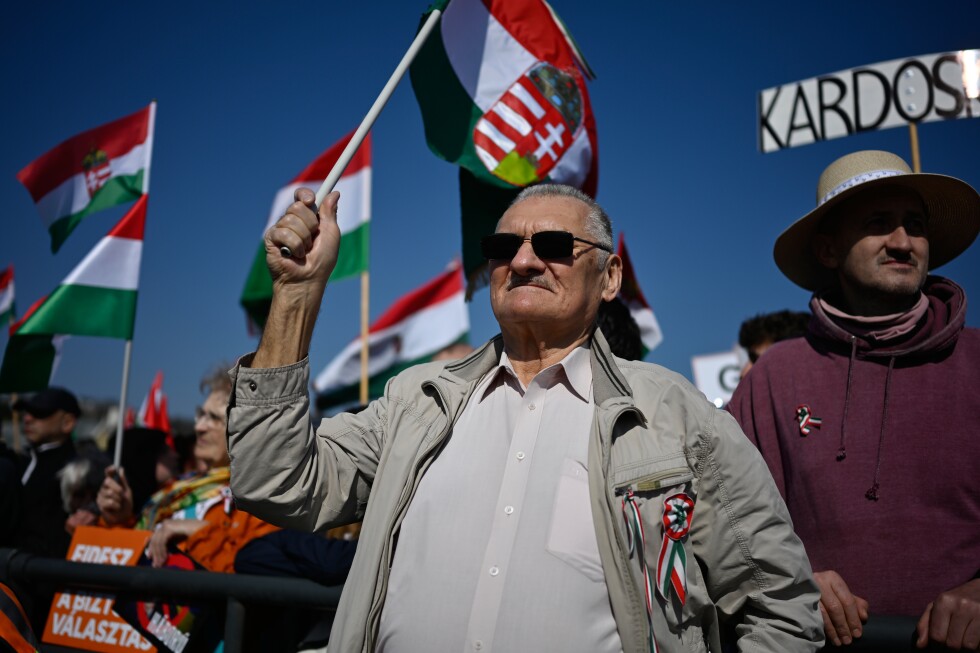
    BUDAPEST, Hungary — The Hungarian capital witnessed a dramatic political confrontation on Sunday as Prime Minister Viktor Orbán and his emerging challenger Péter Magyar staged competing mass rallies, setting the stage for what promises to be the most competitive election in two decades.\n\nOn the national holiday commemorating Hungary’s 1848 revolution against Habsburg rule, both leaders mobilized their bases in a critical test of political strength just four weeks before the April 12 parliamentary elections. Orbán, seeking an unprecedented fifth consecutive term, faced his most formidable challenge yet from Magyar, a former Fidesz insider who has rapidly transformed Hungary’s political landscape.\n\nThe pro-government demonstration, featuring Orbán’s signature nationalist rhetoric, drew devoted supporters who echoed his traditional values platform. \”Only this government is able to secure these three things for the future: God, homeland, family,\” stated Anikó Menyhárt, a participant in the Fidesz rally.\n\nMeanwhile, Magyar’s Tisza party organized what they predicted would be Hungary’s \”biggest ever political event,\\” with the center-right movement gaining remarkable momentum through relentless campaigning in traditionally pro-Orbán rural territories. The 44-year-old lawyer has capitalized on widespread dissatisfaction with Hungary’s stagnating economy, deteriorating public services, and mounting corruption allegations against the Orbán administration.\n\nWhile Orbán has centered his campaign on portraying the European Union and Ukraine as existential threats to Hungarian sovereignty, Magyar has focused on domestic issues, promising to restore democratic institutions and reorient Hungary toward its Western partners after years of drifting toward Moscow.\n\nRecent polling indicates a significant shift, with Tisza holding a 20-point advantage over Fidesz among decided voters according to February’s Medián survey. However, the election outcome remains uncertain due to Fidesz’s extensive rural network and dominance over public broadcasters and loyal media outlets.\n\nThe campaign has been marked by heightened tensions, with Magyar warning supporters about potential disinformation campaigns using manipulated recordings. Orbán’s government simultaneously announced it would declassify a national security report allegedly proving Tisza received illegal Ukrainian financing—claims Magyar vehemently denies.\n\nOrbán’s campaign has increasingly relied on aggressive anti-Ukraine rhetoric, alleging a conspiracy between Kyiv, the EU, and Tisza to overthrow his government. His messaging has featured artificial intelligence-generated content suggesting a new administration would bankrupt Hungary by supporting Ukraine against Russian aggression and send Hungarian youth to fight on the front lines.

  • French voters head to polls in early municipal test before 2027 presidential election

    French voters head to polls in early municipal test before 2027 presidential election

    French citizens participated in nationwide municipal elections on Sunday, casting ballots to determine local leadership from rural villages to major urban centers. This electoral exercise serves as a critical barometer for political organizations preparing for the 2027 presidential election, which will determine President Emmanuel Macron’s successor upon completion of his second and final term.

    While these elections primarily address community-level governance issues, political analysts are meticulously examining the outcomes for early indicators of party strength ahead of the forthcoming presidential contest. The electoral process will conclude with a second-round runoff scheduled for March 22nd in constituencies where no clear majority emerges.

    Significant attention centers on high-stakes contests in France’s principal metropolitan areas. Paris witnesses an open race following incumbent Socialist Mayor Anne Hidalgo’s decision not to pursue a third term after steering the capital through both the 2015 terrorist attacks and the successful organization of the 2024 Olympic Games.

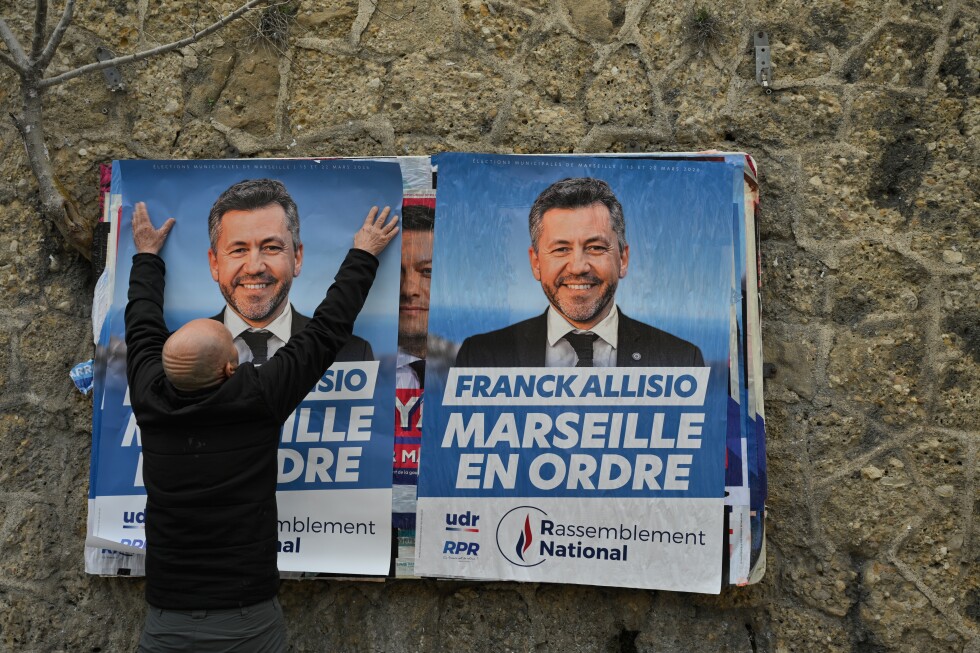
    Marseille, France’s second-largest city, appears headed for a tightly contested battle between sitting left-wing Mayor Benoît Payan and Franck Allisio, representing the far-right National Rally party. The performance of Marine Le Pen’s National Rally in these local elections undergoes particular scrutiny as observers assess whether the party maintains momentum despite potential complications surrounding its leader’s presidential eligibility.

    Le Pen faces significant legal obstacles following her 2023 conviction on embezzlement charges, resulting in a five-year ban from public office. As the daughter of controversial National Front founder Jean-Marie Le Pen—multiple times convicted for antisemitism and incitement to racial hatred—Marine Le Pen’s political future hinges on an appellate court decision scheduled for July 7th. An unfavorable ruling would substantially undermine her presidential aspirations.

    Over 904,000 candidates competed for municipal positions across approximately 35,000 French communities during this initial voting phase.

  • Espresso shots, pricier wine and an unbeaten Italy now bound for the WBC semifinals

    Espresso shots, pricier wine and an unbeaten Italy now bound for the WBC semifinals

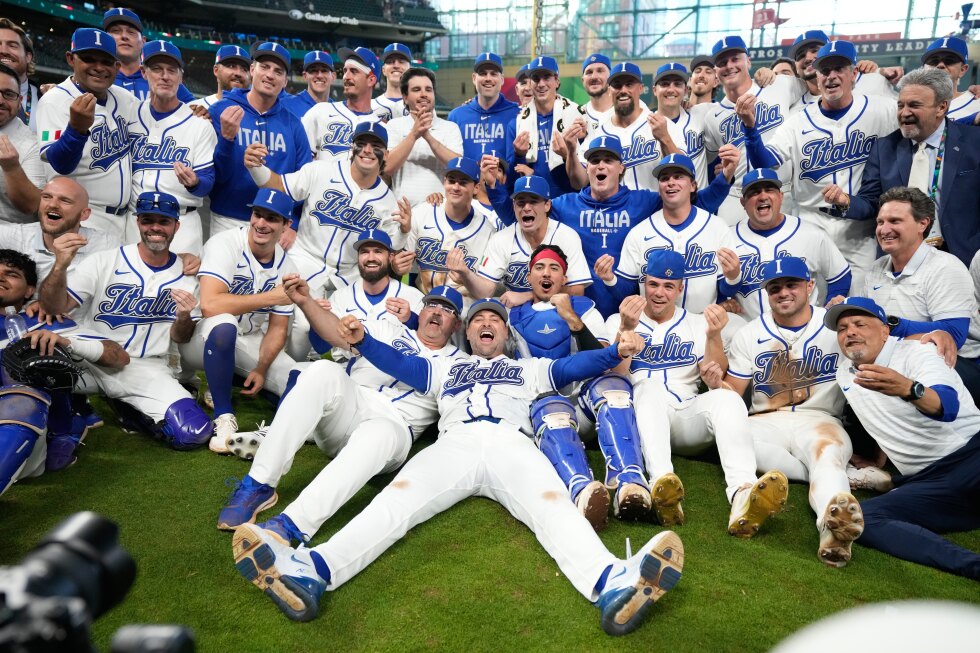
    HOUSTON — In a stunning display of athletic prowess, Italy’s national baseball team has achieved an unprecedented milestone by securing their first-ever appearance in the World Baseball Classic semifinals. The Azzurri maintained their flawless tournament record with a hard-fought 8-6 victory against Puerto Rico on Saturday, catapulting the traditionally underdog nation into the international baseball spotlight.

    Team manager Francisco Cervelli described the achievement as “phenomenal,” emphasizing the significance of this moment in his career. The Italian squad now advances to face either defending champions Japan or Venezuela in Miami on Monday night, marking a dramatic turning point for baseball in a nation where the sport has historically taken a backseat to soccer and other athletic pursuits.

    Despite departing from their characteristic power-hitting approach that produced twelve home runs in previous matches, Italy’s offense demonstrated remarkable adaptability. The victory eliminated Puerto Rico from quarterfinal contention for the sixth time in tournament history.

    The team has developed distinctive celebratory traditions throughout their remarkable run, including post-game espresso shots following home runs and increasingly sophisticated wine selections after each victory. First baseman Vinnie Pasquantino noted the special bottles uncorked after Saturday’s historic win, with the team’s celebration wines having appreciated significantly in quality and value since their initial matches.

    This semifinal qualification follows Italy’s surprising 8-6 upset against the United States during pool play, which players and staff identify as the pivotal confidence-building moment in their tournament journey. Cervelli highlighted the psychological impact of defeating “one of the best teams in the world” as fundamental to their current success.

    The team’s composition, predominantly featuring Italian-American players, has drawn some criticism regarding their authentic connection to Italy. However, players have embraced the opportunity to connect with their heritage, with Pasquantino expressing pride in representing his family’s roots and their immigration story.

    Andrew Fischer, who contributed two RBIs in Saturday’s victory, exemplifies this dual identity—proudly representing both his New Jersey origins and Italian ancestry. Fischer’s tattoos paying homage to his home state notably feature Frank Sinatra, symbolizing the intersection of these cultural influences.

    As Italy prepares for their semifinal matchup, the team remains focused on maintaining their undefeated streak while acknowledging the growing significance of their achievement for baseball’s development in Italy. Cervelli emphasized the need for continued humility and concentration as they advance deeper into the tournament against increasingly formidable opponents.

  • An eccentric new friend entered her life. Then things took a strange, expensive turn

    An eccentric new friend entered her life. Then things took a strange, expensive turn

    The glamorous façade of Ekaterina Barrett, once a familiar presence in Mayfair and Monaco’s most exclusive circles, has dramatically crumbled under the weight of multiple international legal battles. The 69-year-old, known for her flamboyant designer wardrobe and high-stakes gambling, now faces allegations of being a sophisticated fraudster from numerous former associates.

    The case centers on Bridget Hutchcroft, a 66-year-old London boutique owner who alleges Barrett manipulated her into providing over £1.6 million in loans during a vulnerable period in her life. Their relationship began innocently in 2017 when Hutchcroft offered to dog-sit for Barrett, then a occasional client at her Knightsbridge second-hand designer shop, Pandora Dress Agency.

    What began as casual acquaintance quickly intensified. Hutchcroft, who was recovering from a breakdown and recently diagnosed with bipolar disorder, found herself increasingly drawn into Barrett’s world of luxury apartments and high society events. Within three months, Barrett allegedly began requesting financial assistance, claiming temporary cash flow problems after her business manager’s sudden death.

    The requests escalated to over £1 million—funds Hutchcroft had earmarked for her grandson’s education, tax payments, and retirement. Only after friends intervened and her mental health stabilized did Hutchcroft realize the full extent of the transactions.

    Legal proceedings began in earnest when police declined to investigate, labeling the matter civil rather than criminal. The subsequent court battle revealed a pattern of deception: Barrett countersued, denied knowledge of Hutchcroft’s mental health struggles, and eventually settled out of court in 2021 without admitting wrongdoing, agreeing to repay £1 million plus interest through the sale of her London flat.

    When Barrett failed to honor the settlement, the High Court issued a final judgment of £1.6 million in 2022. Hutchcroft received only £100,000 before payments ceased. Barrett’s Mayfair apartment was subsequently repossessed for mortgage non-payment.

    The case took another dramatic turn in July 2024 when Barrett received a four-month suspended sentence for perjury and forgery after lying under oath about her assets and submitting falsified documents, including forging Hutchcroft’s signature. She was additionally fined £100,000, which remains unpaid.

    Parallel legal troubles emerged in Monaco, where Barrett was convicted in March 2025 of stealing Balenciaga boots worth €1,000 from a luxury store and €1,550 from an acquaintance’s bag at the Hotel Metropole. Though fined €5,000, she is appealing the convictions.

    Barrett now faces eviction from her Monaco residence after failing to pay its mortgage, with the court ordering the property seized and auctioned. Multiple international creditors are pursuing her, including another former friend who successfully sued for £2.7 million in Liechtenstein.

    Despite the mounting evidence and judgments, Barrett maintains her innocence, claiming allegations stem from “false and misleading information provided by hostile or malicious parties.” Hutchcroft, meanwhile, continues her pursuit through legal channels in Israel, believing Barrett has hidden assets somewhere internationally.

    The case exposes the vulnerabilities that sophisticated alleged fraudsters can exploit, particularly when targeting individuals during periods of personal difficulty, and demonstrates the challenges of international debt recovery even with court judgments in hand.

  • France praised for retaining the Six Nations crown but leaky defense is a worry

    France praised for retaining the Six Nations crown but leaky defense is a worry

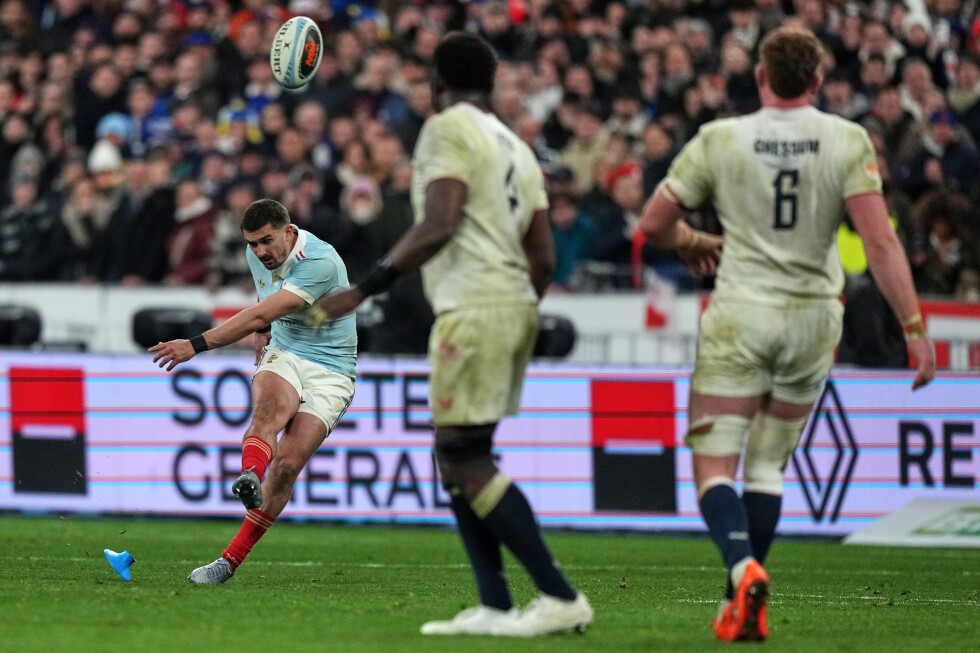
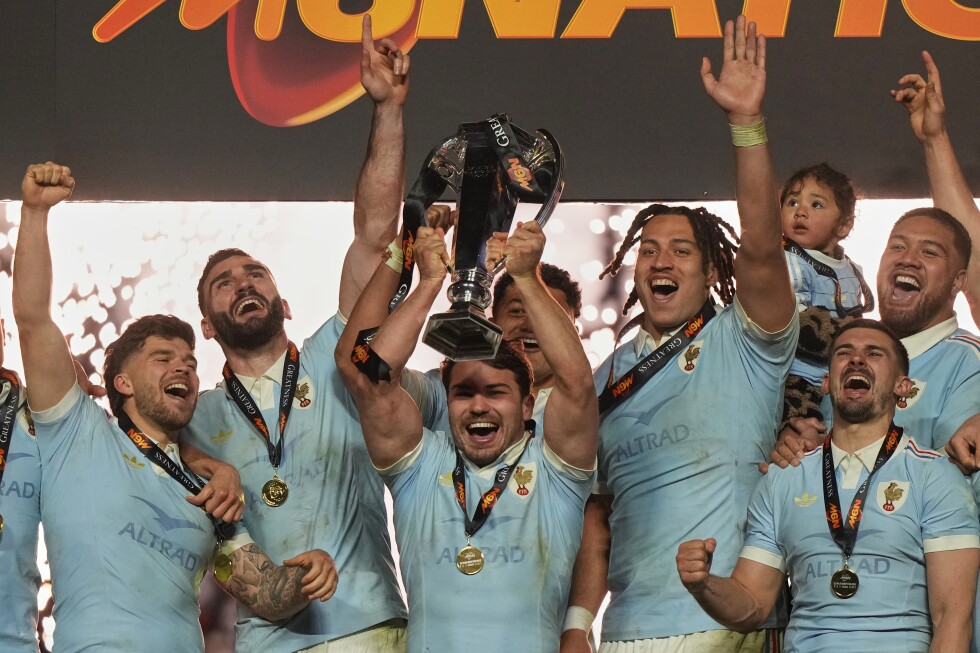
    In a breathtaking conclusion to the Six Nations tournament, France secured back-to-back championships with a heart-stopping 48-46 victory over England on Saturday. The match, played before an electrified crowd at Stade de France, was decided by a last-second penalty kick from fullback Thomas Ramos, cementing France’s record eighth title in the Six Nations era.

    The victory marks France’s first consecutive championship win since 2006-07, though it comes with significant defensive concerns. Despite conceding 96 points and 14 tries in their final two matches against Scotland and England, the French team managed to clinch the title through offensive brilliance and resilience.

    England delivered an impressive performance, scoring seven of the game’s 13 tries and securing a bonus-point fourth try by the 35th minute. The match represented a dramatic turnaround from France’s previous outing, where Scotland had similarly exploited defensive weaknesses in a 50-40 victory that ended France’s Grand Slam aspirations.

    French players acknowledged the mixed emotions surrounding their championship. Flyhalf Matthieu Jalibert fought back tears after the final whistle, recognizing that while “everything wasn’t perfect,” the team had “given everything we could.” Lock Thibaud Flament described the contest as a “crazy match” that tested their composure against an English side that “would give everything.”

    A critical turning point occurred when England prop Ellis Genge received a sin-bin penalty for collapsing a maul just before halftime. France capitalized with a penalty try and rallied from a 27-17 deficit to establish a 38-27 lead during Genge’s absence.

    Despite the defensive vulnerabilities, defense coach Shaun Edwards remained philosophical, noting that high-scoring games have become commonplace in modern rugby. “Rugby at the moment, particularly the Six Nations, is just phenomenal,” Edwards remarked, contrasting current trends with past defensive achievements.

    The championship provides crucial momentum for France as they continue rebuilding a youthful squad with ambitions of claiming their first Rugby World Cup title in Australia next year.

  • Italy’s unbeaten WBC run rolls on with an 8-6 win over Puerto Rico and semifinal berth

    Italy’s unbeaten WBC run rolls on with an 8-6 win over Puerto Rico and semifinal berth

    In a stunning display of resilience and offensive firepower, Italy’s national baseball team secured an historic 8-6 victory over Puerto Rico in the World Baseball Classic quarterfinals on Saturday. The undefeated Azzurri (5-0) have now advanced to their first-ever semifinal appearance in tournament history, where they will face either defending champion Japan or Venezuela in Miami on Monday.

    The game began dramatically with Puerto Rico’s Willi Castro launching a leadoff home run into left field’s Crawford Boxes off Italian starter Sam Aldegheri. However, Italy responded explosively in the bottom of the first inning, scoring four runs to seize control. The offensive surge featured RBI singles from Dominic Canzone and Jac Caglianone, along with a game-tying single from Vinnie Pasquantino—who had set a WBC record with three home runs in Italy’s previous contest.

    Italy expanded their lead through strategic hitting and fortunate circumstances. In the fourth inning, Andrew Fischer was credited with a controversial double on fan interference when a spectator reached over the right-field fence, resulting in two RBIs. J.J. D’Orazio immediately followed with a ground-rule double that drove in two additional runs, finishing with three RBIs total.

    Puerto Rico mounted a formidable comeback attempt in the eighth inning, scoring four runs through Eddie Rosario’s run-scoring forceout, a wild pitch from Joe La Sorsa, and Christian Vázquez’s two-run single. However, reliever Greg Weissert entered to secure a five-out save, allowing just one hit while closing the game with a clutch inning-ending groundout from Nolan Arenado.

    This defeat marks another disappointing quarterfinal exit for Puerto Rico, who now hold a 1-2 record against Italy in World Baseball Classic competition. The Italian squad continues their remarkable tournament performance, combining timely hitting with determined pitching to extend their magical run in international baseball’s premier event.

  • France wins back-to-back Six Nations titles after beating England 48-46 on last-second penalty

    France wins back-to-back Six Nations titles after beating England 48-46 on last-second penalty

    In an extraordinary climax that will be remembered as one of rugby’s most dramatic finishes, France secured back-to-back Six Nations championships with a breathtaking 48-46 victory over England at Stade de France on Saturday. The championship-deciding match reached its pinnacle when fullback Thomas Ramos executed a flawless penalty kick from over 40 meters in the 83rd minute, sending the French squad into rapturous celebration.

    The match represented a statistical anomaly with 13 total tries and six lead changes throughout the intense contest. England had seemingly snatched victory in the 77th minute when they converted their seventh try to establish a 46-45 advantage. Had England maintained this narrow lead, Ireland would have claimed the championship based on tournament standings.

    France’s triumph was particularly impressive considering they finished the match with only 14 players after prop Demba Bamba received a sin-bin penalty. The victory marks France’s first consecutive Six Nations title in nearly two decades, breaking a 19-year drought for back-to-back championships.

    Winger Louis Bielle-Biarrey emerged as an offensive powerhouse for France, scoring four of the team’s six tries and extending his championship record scoring streak to 10 consecutive matches. His performance broke his own previous tournament record of eight tries established last year.

    Despite the heartbreaking loss, England established several notable achievements, including their highest-ever score against France on French soil. The match coincided with the 120th anniversary of the historic ‘Le Crunch’ rivalry between the two nations. England captain Maro Itoje acknowledged the disappointment while emphasizing the team’s progressive development, stating, ‘We showed the spirit of this team. I truly believe we are going places and will be better for this experience.’

    The championship outcome remained uncertain until the final moments due to Ireland’s commanding 43-21 victory over Scotland earlier in the day, which temporarily placed them atop the tournament standings before France’s last-second triumph.

  • Russia exploiting Iran war, Zelensky says after fresh bombardment

    Russia exploiting Iran war, Zelensky says after fresh bombardment

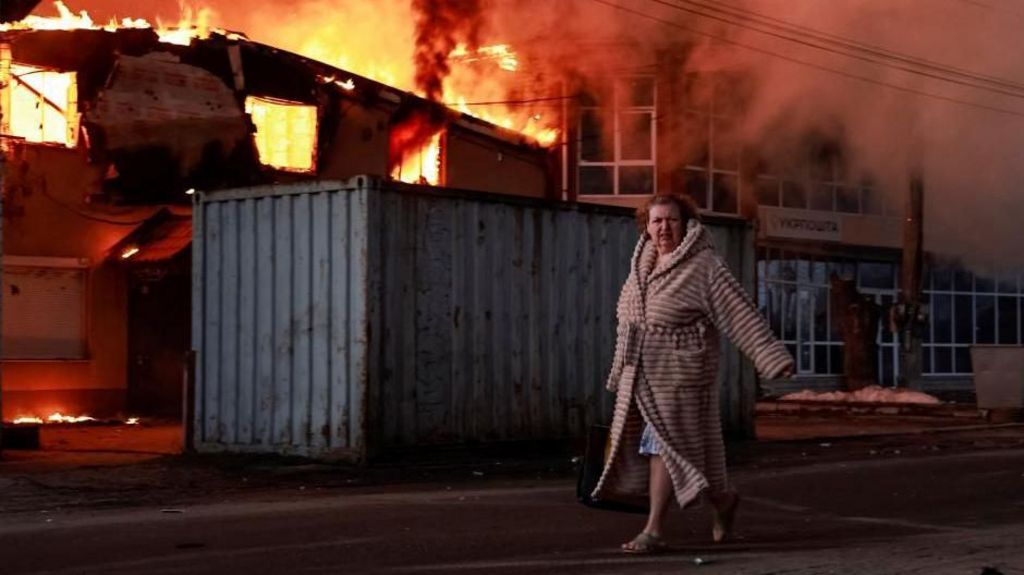
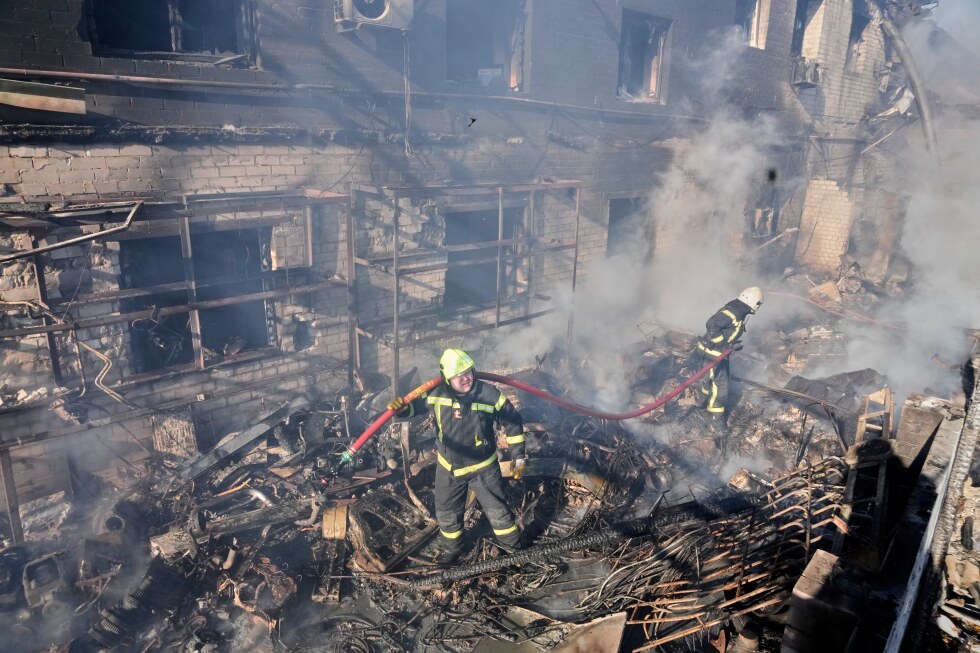
    Ukrainian President Volodymyr Zelensky has issued a stark warning that Russia is capitalizing on the ongoing Middle East conflict to escalate its assault on Ukraine, creating what he described as an opportunity for “even greater destruction” in Europe. This statement followed Russia’s latest large-scale aerial offensive overnight into Saturday, which resulted in significant casualties and infrastructure damage across multiple regions.

    The coordinated assault involved approximately 500 drones and missiles targeting Ukrainian territory, with interception systems successfully neutralizing most projectiles. Despite these defensive efforts, the attacks claimed at least five lives and left numerous civilians injured. The Kyiv region suffered particularly severe impacts, with energy infrastructure serving as the primary target alongside civilian structures including residential buildings, educational facilities, and businesses.

    President Zelensky emphasized the critical need for enhanced air-defense capabilities, characterizing them as a “daily necessity” for Ukraine’s survival. His urgent appeal for accelerated weapons deliveries comes amid concerns that missile depletion in the Middle East—where U.S.-aligned Gulf states are countering Iranian attacks—could severely impact Ukraine’s defensive capabilities.

    The geopolitical ramifications extend beyond immediate security concerns. Iran’s effective blockade of the Strait of Hormuz has triggered global oil supply disruptions, driving prices to approximately $100 per barrel. In response, the Trump administration temporarily suspended sanctions on Russian oil already loaded onto vessels, a move that has drawn criticism from Zelensky and European leaders while receiving Moscow’s endorsement.

    Furthermore, U.S.-led peace initiatives aimed at resolving the four-year conflict in Ukraine have been effectively derailed by the expanding Middle East hostilities, creating additional diplomatic complications for all involved parties.

  • Anti-war protests in Italy and Spain as high-stakes referendum on Italian judges looms

    Anti-war protests in Italy and Spain as high-stakes referendum on Italian judges looms

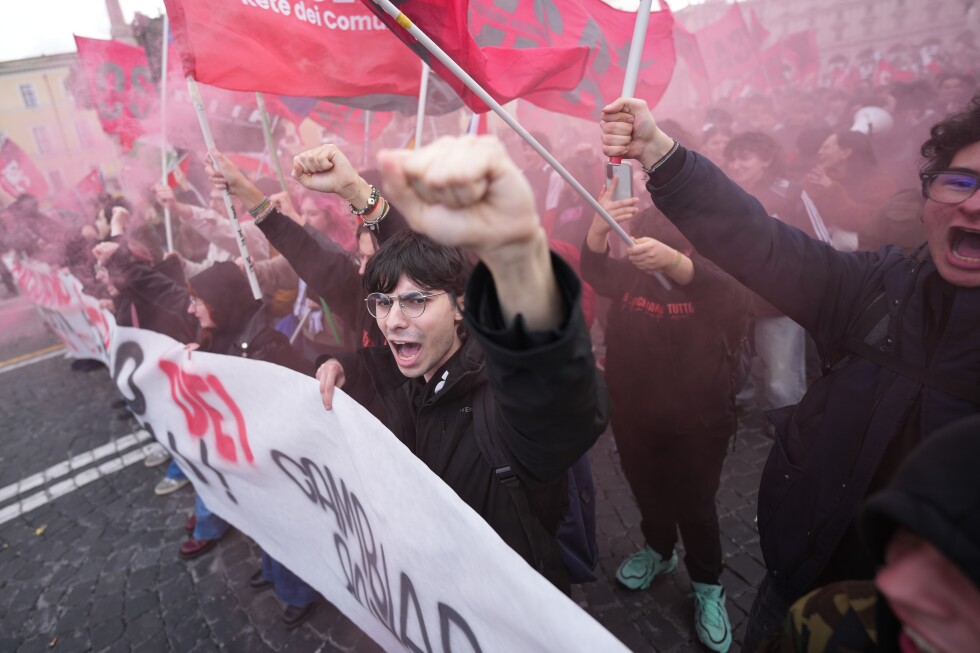
    ROME — Tens of thousands of demonstrators flooded Rome’s city center on Saturday, staging a dual protest against Italy’s proposed judicial reforms and escalating military conflicts in the Middle East. The massive gathering represented a convergence of domestic political tensions and international concerns that have placed Prime Minister Giorgia Meloni’s government under intensified scrutiny.

    The protests occurred against the backdrop of an upcoming national referendum scheduled for March 22-23, which will determine the fate of controversial judicial system reforms. This referendum has evolved into a critical political battleground for Meloni’s conservative administration, occurring just months before national elections.

    Protesters waving trade union banners alongside Palestinian and Cuban flags filled the streets, chanting demands for the government’s resignation. Sandra Paganini, one participant at the rally, expressed widespread concerns: “The United States and Israel are systematically dismantling international law principles. Their actions are dragging us toward global conflict while targeting innocent populations and sovereign nations.”

    Meloni has vigorously defended the judicial reforms, arguing they are essential to address chronic delays within Italy’s court system and restore public trust in legal institutions. During a campaign speech in Milan last Thursday, she emphasized: “When justice becomes inefficient, slow, or unfair, the entire societal machinery falters, and every citizen bears the consequences.”

    Opponents counter that these changes could dangerously undermine judicial independence and subject the judiciary to political influence. The demonstration remained peaceful throughout, reflecting organized dissent rather than civil unrest.

    The protests also connected to broader international concerns, particularly following large-scale U.S. and Israeli airstrikes against Iranian targets that began February 28. These military actions have triggered retaliatory measures that continue to destabilize global markets and international relations.

    Similar anti-war demonstrations occurred simultaneously across Spain, with coordinated rallies in dozens of cities organized by civic coalitions demanding an end to Middle Eastern conflicts. Earlier protests also took place in Athens and various Greek cities, indicating a pattern of European public dissent against current foreign policies.

    The convergence of domestic judicial reforms and international military actions has created a complex political challenge for Meloni’s government, which now faces simultaneous pressure on both domestic and international fronts as it approaches crucial electoral tests.