标签: Europe

欧洲

  • Investigators believe antisemitism was motive in vandalism at Israeli restaurant in Munich

    Investigators believe antisemitism was motive in vandalism at Israeli restaurant in Munich

    MUNICH — Law enforcement officials in southern Germany have confirmed they are working under the assumption that an antisemitic motive lies behind a destructive overnight attack on an Israeli-owned restaurant in the heart of Munich, local police announced Friday. The incident unfolded in the early hours of the morning, when unknown perpetrators damaged the eatery by shattering its glass windows. No individuals present or nearby were harmed in the attack, authorities confirmed.

    Multiple law enforcement sources shared details with German national news agency DPA, noting that the restaurant’s owners identify as Jewish. While official police statements did not publicly name the targeted establishment, photos and footage of the post-attack scene confirm the location as Eclipse Grillbar. According to the restaurant’s official website, it holds the distinction of being Munich’s first fully authentic Israeli dining establishment. Representatives from the eatery did not immediately respond to media requests for comment in the immediate aftermath of the incident.

    Investigators’ preliminary assessments indicate the attackers used pyrotechnic devices – most likely commercial fireworks – which were thrown into the restaurant space. The projectiles left three separate broken window panels in their wake. Emergency dispatch received the first report of the attack at approximately 12:45 a.m. local time, and responding officers conducted a immediate sweep of the surrounding area, but were unable to locate any suspects at the scene. As of Friday’s update, the identity of the perpetrator or group of perpetrators remains unknown, and the investigation remains active. Early estimates place the total property damage from the attack at several thousand euros, equivalent to a similar amount in U.S. dollars.

    This incident comes against a well-documented backdrop of sharply rising antisemitic incidents across Germany, a shift that followed the October 7, 2023, cross-border attack on Israel by Hamas-led militant groups. During that attack, Hamas fighters killed roughly 1,200 people, the vast majority of whom were unarmed civilians, and abducted 251 additional people to hold as hostages in Gaza. While a two-week ceasefire between Israeli forces and Hamas is currently in effect, and both Israel and the U.S. have carried out targeted strikes against Iranian-linked assets in recent weeks, the broader regional conflict remains tense. Israel has notably ramped up its military offensive against the Iran-backed militant group Hezbollah in southern Lebanon even during the current ceasefire with Hamas, keeping regional tensions elevated and contributing to a polarized environment that has fueled anti-Jewish and anti-Israel sentiment across Europe.

  • Irish fuel protests enter fourth day as government seeks to head off shortages, open blocked roads

    Irish fuel protests enter fourth day as government seeks to head off shortages, open blocked roads

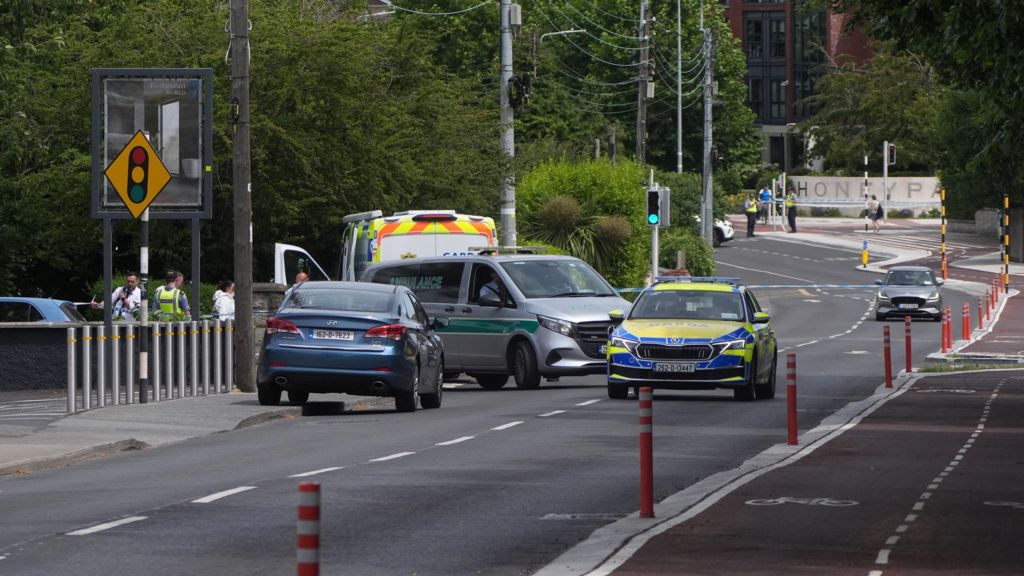
    DUBLIN, Ireland – Anti-high-fuel-price demonstrations across Ireland have stretched into their fourth consecutive day on Friday, leaving the nation bracing for worsening supply disruptions and risks to critical emergency services, after three days of road blockades and targeted access restrictions to energy infrastructure. The unrest, which first erupted on Tuesday, has been fueled by relentless upward pressure on gasoline and diesel prices, a trend that traces its roots to tightened oil exports from the Middle East amid ongoing regional conflict.

    When the protests launched, demonstrators organized slow-moving vehicle convoys that choked traffic on key thoroughfares in Dublin, Ireland’s capital, and successfully cut off access to major fuel depots – facilities that collectively distribute around half of the nation’s entire fuel supply. Many participants remained overnight, sleeping in their vehicles, to maintain their blockades and amplify their core demand: direct negotiations with the Irish government over relief from spiking energy costs.

    Per local industry data, the disruptions have already triggered widespread fuel scarcity. Ireland’s national public broadcaster RTE, quoting data from Fuels for Ireland, the country’s leading fuel industry association, reported Friday that more than 100 service stations have already completely run out of stock. If blockades continue to prevent deliveries, industry analysts project that number could surge past 500 by the end of Friday.

    Worsening supply chaos has already put critical emergency response operations at risk. With police, fire crews, and ambulance services facing growing delays reaching urgent calls, the Irish government took the unusual step Thursday of authorizing the national army to clear blocked roads and remove demonstrator vehicles. The government has already highlighted that it previously implemented a slate of policy measures to rein in skyrocketing fuel costs: these include a temporary cut to excise taxes on motor fuels, expanded rebate programs for commercial diesel users such as trucking and bus companies, and an extension of energy assistance initiatives for low-income households struggling with heating bills.

    A key development is scheduled for Friday, with Irish government leaders set to hold talks with representatives from the key protesting groups: farmers, long-haul truckers, and agricultural contracting firms. While protest organizers have publicly stated they will stand down their coordinated blockades immediately if the government agrees to open negotiations, uncertainty remains over whether all participating groups will earn a seat at the table in the planned talks.

  • Travellers told to allow more time for journeys as Irish fuel protests continue

    Travellers told to allow more time for journeys as Irish fuel protests continue

    Four straight days of disruptive fuel price protests have thrown transportation across the Republic of Ireland into chaos, with gridlock forcing travelers to take drastic measures and triggering a fierce standoff between protesters and government officials.

    On Thursday, the disruption reached a striking new level when commuters heading to Dublin Airport were captured on camera walking their carry-on and checked luggage along the northbound lane of Dublin’s busy M50 motorway. Persistent blockades had left traffic at a complete standstill, leaving many with no other option to make their flights on time. In response to the ongoing unrest, Dublin Airport issued an urgent advisory Friday urging all passengers to allocate far more time than usual for their trips to and from the terminal.

    The demonstrations, organized by farmers and transport workers, are rooted in skyrocketing fuel costs driven by geopolitical instability in the Middle East. The ongoing conflict between the United States, Israel and Iran has disrupted global energy trade, with an estimated 20% of global oil supply held up by the closure of the Strait of Hormuz, a critical global shipping chokepoint. In recent weeks, this disruption has pushed diesel prices in Ireland from roughly €1.70 per litre to €2.17, while petrol prices have jumped as much as 25 cents per litre at many retail outlets. Protesters are calling for major government intervention, including cuts to fuel taxes and a reevaluation of overly rapid climate policy rollouts that they say have added to cost burdens.

    As protests entered their fourth day, the Irish government has moved toward a hardline response. On Thursday, officials requested military support to remove vehicles blocking public roads, with Gardaí (the Irish national police service) classifying blockades at fuel storage depots as illegal obstructions. In a statement Thursday, a Gardaí spokesperson warned that the force would enter an active enforcement phase if protesters did not step back and disperse from critical infrastructure, noting that ongoing blockades already threaten access to essential supplies including food, drinking water, fuel and animal feed. Irish Justice Minister Jim O’Callaghan has also warned that participants in illegal blockades will face legal consequences, including potential impacts on their driving licenses, saying penalties may not be immediate but will be enforced over time.

    The mounting disruption has already put severe strain on Ireland’s fuel supply network. Fuels for Ireland, the national fuel industry body, confirmed that as of Friday, 100 retail garage forecourts — mostly in the Munster region and western Ireland — have already completely run out of fuel. Chief Executive Kevin McPartlin told national broadcaster RTÉ that the total number of dry forecourts could reach 500 by Friday night, with half of the country’s incoming fuel shipments currently trapped behind protest barricades.

    Government officials have moved to open talks with industry representative groups Friday, with Agriculture Minister Martin Heydon and Minister of State Timmy Dooley set to meet with sector leaders. The Irish Road Haulage Association, one of the groups participating in the talks, has drawn a line at the disruptive blockades: while the association supports the protest over unsustainable costs, Deputy Vice President Eugene Drennan confirmed the group will not bring participating protesters to Friday’s meeting, and called for an immediate end to road blockades, noting they are hurting ordinary Irish citizens more than decision makers. Sinn Féin, Ireland’s main opposition party, has criticized the government’s handling of the crisis, with leader Mary Lou McDonald calling on the Taoiseach (Prime Minister) and Tánaiste (Deputy Prime Minister) to open direct talks with protesters rather than leaning on enforcement.

    For ordinary Irish residents, the crisis is already spilling over into critical public services. The Health Service Executive has issued an urgent appeal for all access routes to medical facilities to be kept clear, to ensure patients can reach life-saving treatment. Across the country, key transport routes including the M50 and N1 remain heavily congested, with traffic updates published continuously on the Transport Infrastructure Ireland website for affected travelers. Speaking Thursday, Taoiseach Micheál Martin called the blockades of public infrastructure an unfair form of protest, while Defence Minister Helen McEntee said the actions of some demonstrators have already crossed into criminal behavior.

    One participating protester, Mark Maguire, a farmer based on the Monaghan-Fermanagh border, told BBC Radio Ulster that demonstrations are a last resort for working producers facing unmanageable costs. “There’s not one farmer in Ireland or Northern Ireland that wants to be out protesting. They have enough to do,” Maguire explained, adding that the only demand from participating farmers is an end to punitive fuel taxation that has made operating impossible for many small operations.

  • Zelenskyy says Ukrainian forces shot down Shahed drones in Middle Eastern countries during Iran war

    Zelenskyy says Ukrainian forces shot down Shahed drones in Middle Eastern countries during Iran war

    In a groundbreaking public disclosure that illuminates Ukraine’s expanding global defense partnerships, President Volodymyr Zelenskyy has confirmed that Ukrainian military forces have shot down Iranian-designed Shahed drones during active operations across multiple unspecified Middle Eastern countries. The mission, Zelenskyy explained, is rooted in shared experience: Kyiv is helping regional partners counter the exact same unmanned weapons that Russia has relentlessly deployed against Ukrainian civilian and energy infrastructure since the start of its full-scale invasion.

    Zelenskyy first shared details of the operations with reporters on Wednesday, with a media embargo holding the announcement until Friday. He emphasized that these were not routine training exercises or simulated drills, but live defensive action. Ukrainian personnel used domestically produced interceptor drones, a system that has already been battle-tested in defending Ukrainian airspace against the Shahed drones Russia launches on a near-daily basis.

    “This was not about a training mission or exercises, but about support in building a modern air defense system that can actually work,” Zelenskyy stated. The operations took place ahead of the tentative ceasefire reached this week between Iran, the United States and Israel, the Ukrainian leader confirmed. While he declined to name the specific host countries involved, Zelenskyy noted that Ukrainian personnel operated across several nations to reinforce local air defense capabilities. He had previously revealed that 228 Ukrainian defense experts were already deployed to the Middle East region.

    In exchange for this defensive support, Zelenskyy said Ukraine receives tangible benefits that strengthen its own war effort: weapons systems designed to protect critical energy infrastructure, supplies of crude oil and diesel fuel, and in some arrangements, direct financial support. The agreements, he argued, do more than just fill immediate gaps: they shore up Ukraine’s long-term energy stability and lay the groundwork for Kyiv to expand its role as a formal exporter of defense technology and expertise to global partners.

    “We are helping strengthen their security in exchange for contributions to our country’s resilience,” Zelenskyy said. “This is far more than simply receiving money.”

    The public confirmation of Ukraine’s Middle East operations comes at a delicate moment, as widespread concerns have grown that escalating conflict in the region will draw international focus and divert critical Western military aid away from Ukraine, particularly the air defense interceptors Kyiv relies on to fend off Russian drone and missile strikes. But Zelenskyy sought to ease these worries, noting that international support for Ukraine’s air defense remains steady. He confirmed that a new shipment of missiles for U.S.-provided Patriot air defense systems arrived in Ukraine in recent days, and that Kyiv continues to work closely with all allies to maintain robust air defense coverage across the country.

    In additional remarks, Zelenskyy revealed that he has extended an open invitation to U.S. envoys Steve Witkoff and Jared Kushner to visit Kyiv, an offer extended before the recent Middle East ceasefire took hold. “I told them: ‘Come to us, and then go to Moscow. Let’s hold a trilateral meeting in this format,’” Zelenskyy recounted. He said the pair were receptive to the idea, but ultimately chose not to travel far from U.S. President Donald Trump at this time. It remains unclear whether the visit will still take place, or if any potential talks would be moved to a neutral third country, he added.

    On the diplomatic front, Zelenskyy said Ukraine is actively finalizing security guarantee proposals to present to the United States, and holds out hope that diplomatic progress can be made. To date, U.S.-led talks have failed to advance on core issues, with Washington’s policy focus having shifted to the Middle East even as Russian and Ukrainian forces remain locked in intense positional combat along the roughly 1,250-kilometer front line stretching across eastern and southern Ukraine.

    In a separate policy note, Zelenskyy called on Western allies to fully reimpose all sanctions on Russian crude oil, warning that any loosening of restrictions would allow Moscow to continue funding its war machine and offload critical energy assets. He pointed out that Russia has already seen a major boost in energy revenue, driven by spiking global oil prices triggered by recent damage to Gulf energy infrastructure and Iran’s temporary blockage of the Strait of Hormuz, the world’s most critical chokepoint for global oil shipments.

  • Croatian fishermen feel the strain after Iran war ramps up fuel prices

    Croatian fishermen feel the strain after Iran war ramps up fuel prices

    Along the sun-drenched Adriatic coast of Croatia, where turquoise waters meet rolling Istrian peninsulas, 55-year-old fisherman Marijan Jakopovic continues the daily routine he has kept for three decades: readying his vessel and casting nets as dusk falls. But this year, the generational trade he inherited has grown more punishing than ever, as cascading crises driven by geopolitical conflict push Croatia’s small-scale commercial fishing sector toward collapse.

    The root of the latest crisis traces back to the ongoing war in Iran, which has sent global energy prices soaring. For Croatia’s fishermen, who rely on discounted “blue diesel” reserved exclusively for agricultural and maritime fishing work, the spike has been staggering: official data shows the price of this specialized fuel jumped 70% in just one month, climbing from €0.80 ($0.94) per liter on March 8 to €1.36 ($1.59) per liter by April 7. While the Croatian government imposed an emergency temporary price cap to stem the surge, senior Ministry of Economy official Vedran Spehar confirmed that even with intervention, prices have risen dramatically; without government action, Spehar noted, blue diesel would have hit at least €2 ($2.34) per liter, though state intervention did prevent widespread supply shortages.

    Croatia, which joined the European Union in 2013 and adopted the euro as its currency in 2023, was already grappling with steep economic pressure long before the latest Iran-driven fuel spike. The economic fallout from the war in Ukraine pushed energy and food costs upward across the bloc, and Croatia currently holds the unenviable title of having the EU’s highest annual inflation rate at 4.8%. The euro adoption transition itself also coincided with broad-based price increases across nearly every domestic sector, squeezing household and business budgets alike.

    For fishermen like Jakopovic, the fuel price surge is the final straw added to a web of long-standing challenges that have eroded profit margins for years. As an EU member, Croatia adheres to the bloc’s strict sustainable fishing regulations, which include seasonal catch bans, species-specific limits, and large protected marine zones designed to reverse declining fish populations and preserve endangered species. While these rules are critical for long-term ecological health, they have forced commercial fishermen to travel much farther from shore to reach legal fishing grounds, increasing their time at sea and overall fuel consumption—creating a vicious cycle of rising costs that many can no longer outrun.

    Compounding these structural pressures is the influx of cheap frozen seafood imports that have undercut domestic fishermen’s pricing, all while Croatia’s booming coastal tourism industry, which drew more than 20 million visitors in 2023, has failed to translate to higher earnings for local fishing crews. Even though local fishermen are the primary suppliers of fresh fish to the restaurants and markets that cater to summer tourists, their operating costs now far outpace the revenue they earn from their catch. Jakopovic explains that depending on vessel size, some fishermen now spend up to 70% of their total gross income on fuel alone, before covering expenses for crew wages, boat maintenance, and fishing equipment.

    With costs spiraling, fishermen are warning that a further escalation of the Iran conflict, which could lead to another round of fuel price surges if planned ceasefire talks fail, would push many operations into insolvency. “This is turning into an almost hopeless situation,” Jakopovic says of his small Lanisce village fishing community on the Istrian Peninsula. “We don’t know how much longer we will be able to keep working.”

    The ripple effects of the crisis are already set to impact consumers across Croatia, with higher fresh fish prices likely to hit markets and restaurants in 2024. Almira Raimovic, a former fisherman turned vendor at Pula’s central market, who now repurposed her old fishing boat for more profitable tourist excursions, says higher fuel costs will force fishermen to pass price increases up the supply chain. She predicts that Mediterranean consumers, who have long centered fresh seafood in their diets, will shift their purchasing habits toward cheaper small species like sardines and anchovies as premium fresh catches become unaffordable.

    Raimovic emphasizes that the impact will extend far beyond the fishing sector, adding to already high living costs across the country: “Rising fuel prices will affect everyone, inflating the cost of living and of food across all sectors, not just fishing.”

    The crisis is not unique to Croatia: neighboring countries in the Adriatic region have also faced similar pressure on their fishing industries, even with state subsidies and price caps in place to offset fuel costs. For thousands of Croatian fishermen whose families have worked the Adriatic for generations, the coming months will determine whether the centuries-old trade can survive the dual pressures of geopolitical volatility and the long-term structural challenges of EU-regulated fishing.

  • Citizen ‘Frog Patrol’ helps amphibians survive a dangerous road journey in Poland

    Citizen ‘Frog Patrol’ helps amphibians survive a dangerous road journey in Poland

    Each wet, rainy spring night in a quiet forest 30 kilometers west of Warsaw, Poland, an extraordinary grassroots volunteer initiative swings into action: the citizen “Frog Patrol,” a group of local nature lovers dedicated to guiding thousands of migrating amphibians safely across a deadly highway that cuts through their ancient mating route.

    When rising spring temperatures thaw Mlochowski Forest, thousands of toads and frogs emerge from months of winter hibernation to begin their arduous annual journey to the shallow marshes where they have reproduced for millennia. The trek is an unequal one: far smaller male toads cling tightly to the backs of their larger female partners, clinging on to avoid being displaced by rival males once the group reaches the spawning waters. For generations, this migration proceeded uninterrupted — but a new highway carved across the path just over a decade ago turned the seasonal journey into a massacre. At the start of each mating season, thousands of migrating amphibians were crushed under vehicle tires, leaving roadsides lined with decomposing bodies that shocked local nature enthusiasts.

    Four years ago, those shocking scenes pushed local resident Łukasz Franczuk and a group of friends to action. Three years ago, they formally organized the Frog Patrol, mobilizing hundreds of local volunteers to intervene during migration season. Because amphibians breathe through their skin, which requires constant moisture, they only migrate during rainy nights — which is when patrol members spring into action. Wearing reflective yellow vests marked with the group’s name, equipped with headlamps and buckets, volunteers fan out along the narrow forest road each rainy evening, collecting amphibians from the roadside and carrying them safely to the marshside on the other side of the highway. Even local residents out during the day, including children, now carry gloves to rescue any migrating frogs they find in harm’s way.

    For participants, the work is as much about connection as it is about conservation. “It’s really impressive to see whole families with kids walking in the rain, with buckets, in these lovely jackets to make them visible because it’s pretty unsafe, this road is narrow, and they carry the frogs from one side of the road to the other,” said Katarzyna Jacniacka, a long-time patrol participant. “When the frogs are migrating, there are a lot of people here.” Fellow volunteer Aleksandra Tkaczyk added that the patrol offers “the kind of connection with nature about which some of us care deeply.” Since the initiative launched three years ago, local volunteers estimate they have saved more than 18,000 amphibians from being killed on the road.

    Biologists confirm the volunteer effort is critical to protecting this local amphibian population. Krzysztof Klimaszewski, a biologist at Warsaw University of Life Sciences who has joined multiple patrols, noted that the work “actually allows this local population of amphibians to survive” in an ecosystem increasingly fragmented by human infrastructure.

    Poland’s Frog Patrol is far from unique: similar citizen-led conservation efforts to protect migrating amphibians have popped up across the globe. In the U.S. state of New Hampshire, volunteers with the Harris Center for Conservation Education rescue a wide range of amphibian species, including salamanders, from busy roads. In Bavaria, Germany, conservation group BUND Naturschutz reports rescuing up to 700,000 frogs, toads, newts and salamanders from traffic every year. Even in France, where frog legs are a traditional culinary delicacy, local volunteer groups protect wild migrating populations; in the southern Provence-Alpes-Côte d’Azur region, volunteers have installed roadside nets to collect amphibians before they reach busy roadways. In Tallinn, the capital of Estonia, city authorities recently broke ground on new amphibian fencing along a busy migration route, designed to guide frogs and other wildlife to safe underground crossing tunnels and cut down on traffic-related deaths.

  • Britain celebrates late Queen Elizabeth II as a style icon to mark her centenary

    Britain celebrates late Queen Elizabeth II as a style icon to mark her centenary

    LONDON — Long before her decades-long reign as Britain’s sovereign, Queen Elizabeth II understood a core truth of constitutional monarchy: for the public to trust their monarch, they first needed to see her. Even when Britain’s notoriously unpredictable rainy weather threatened to block public view, she broke new ground by adopting a clear plastic raincoat, rather than hiding behind a thick dark umbrella that would have kept her obscured from crowds. That iconic raincoat now takes its place among nearly 300 garments and fashion artifacts opening to the public Friday at Buckingham Palace’s King’s Gallery, in the most complete exhibition of Queen Elizabeth II’s sartorial choices ever assembled. Tied to the upcoming centenary of her birth, the show traces her life from childhood to her decades on the throne, while unpacking her lasting impact on British fashion and public diplomacy.\n\nCurator Caroline de Guitaut, who organized the exhibition, notes that the late monarch had a sharp, intentional sense of what looked and felt appropriate for her role. “She absolutely knew how she wanted to appear,” de Guitaut explains.\n\nAs one of the most photographed public figures in modern history, many of the queen’s pieces are instantly recognizable to audiences around the world — but seeing her signature tweed suits, ball gowns, and patterned headscarves displayed on museum mannequins still offers a new, striking perspective for visitors. Among the collection are truly one-of-a-kind pieces with fascinating backstories, including two matching dresses crafted for the 2012 London Olympic Games opening ceremony. When the 86-year-old queen filmed her iconic skit alongside Daniel Craig’s James Bond, appearing to parachute into the Olympic stadium, a stunt double wore one version of the design — complete with matching bloomers and a large back zipper to fit a parachute harness. Moments after the stunt, the queen herself appeared in the stadium stands in an identical second dress, both created by her long-time personal dressmaker Angela Kelly. Now, the two garments are displayed side-by-side for exhibition guests.\n\nDrawn from a personal collection of more than 4,000 items once owned by the queen, the exhibition explores how the late monarch turned fashion into one of her most effective tools for public engagement and diplomacy, as she grew from a young princess into Britain’s longest-serving ruler. A perfect example of this intentional sartorial diplomacy is the green and white Norman Hartnell ball gown she wore to a 1961 state banquet during an official visit to Pakistan: she chose the design specifically to match the host nation’s colors, extending a gesture of respect before she ever spoke a word.\n\n“The queen had an intimate understanding of how fashion could lend itself to diplomacy, a trait which, while its origins certainly lay in earlier reigns, the queen developed into nothing short of an art form,” de Guitaut says. “Color or embellishment communicated messages of respect to her host nation before she had even uttered a word in her speech.”\n\nLater in her reign, she intentionally chose bright, eye-catching hues for large public gatherings, making it easy for crowds to spot her, fulfilling her core belief that the monarch had to be seen to connect with the public. The exhibition also devotes space to the queen’s off-duty wardrobe, showcasing the tweed suits she wore while staying at Balmoral Castle, the royal family’s Scottish summer retreat, alongside riding gear, hiking clothing, and outdoor apparel. Pieces range from a thick wool coat designed by Kelly to designs by iconic British brands Burberry and Hardy Amies.\n\nMany of the exhibition’s most meaningful pieces are tied to the defining milestones of the queen’s 96 years of life, stretching from a christening robe first commissioned by Queen Victoria for the baptism of King Edward VII, to the gowns she wore for her 1947 wedding and 1953 coronation. Curators have also included original design sketches and handwritten notes that reveal how closely involved the queen was in every step of creating her wardrobe.\n\nNaomi Pike, commissioning editor for Elle UK, notes that the exhibition finally gives the queen long-overdue recognition as a bona fide fashion icon, a title that was often granted to other high-profile royals during her lifetime — from her younger sister Princess Margaret to her daughter-in-law Princess Diana — while she was overlooked. “I think we’re very quick in this day and age to afford people icon status. … It’s thrown around so easily,” Pike says. “But I think in the case of the queen, she was an icon and so much of that comes down to having a very strong sense of personal style.”\n\nBeyond the iconic formal gowns that draw the largest crowds, the exhibition holds thoughtful small surprises, including a well-worn children’s fairy costume made from a tutu with cloth fairy wings. The piece is a favorite of Cecilia Oliver, a textile conservator at the King’s Gallery who spent months preparing the collection for display, who calls it “the cutest thing in the world.” “I think what I love most about it is that it was bought for Elizabeth as a child, and to think of her as this tiny little girl that then grew up into this magnificent woman with all this weight of responsibility on her shoulders, it just feels very, sort of sentimental,” Oliver says.\n\nOliver spoke of the unique privilege of working so closely with the collection, which gave her an intimate connection to a figure known to billions but understood by very few. “As a conservator, I have a really intimate knowledge of these pieces. I’ve been able to touch them. I’ve been able to smell them. I’ve been able to understand them,” she says. “And through that, I felt really close to her.”\n\nQueen Elizabeth II: Her Life in Style will run at the King’s Gallery, Buckingham Palace, through October 18.

  • Co-leader McIlroy’s golf does the talking after busy Masters build-up

    Co-leader McIlroy’s golf does the talking after busy Masters build-up

    The opening round of the year’s first men’s major championship, the Masters at Augusta National Golf Club, has delivered a stunning statement from defending champion Rory McIlroy, who silenced pre-tournament doubts about his form and focus to climb into a share of the first-round lead alongside American Sam Burns.

    In the lead-up to this year’s tournament, most of the media and fan attention surrounding McIlroy centered on the ceremonial duties that come with being the reigning champion – headlining the iconic Champions’ Dinner, participating in pre-tournament traditions, and navigating the packed schedule of engagements that come with wearing the Green Jacket. Far less discussion focused on whether the Northern Irish star would have his game sharp enough to pull off a rare back-to-back Masters victory, a feat only accomplished by Jack Nicklaus, Nick Faldo and Tiger Woods in the tournament’s history.

    But when McIlroy stepped between the competition ropes on Thursday, the 36-year-old five-time major winner quickly reminded the golf world that he did not travel to Augusta simply to fulfill ceremonial roles. He came to compete, and he came to win. Carding a five-under-par 67, McIlroy enters the second round tied atop the leaderboard with Burns, waking up any observers who had counted out his chances of repeating last year’s historic win.

    McIlroy’s triumph at Augusta last year was particularly meaningful, marking the completion of his career Grand Slam after more than a decade of near-misses and heartbreak at the tournament. In the immediate aftermath of that win, McIlroy said finally claiming the Green Jacket would “free” him from the weight of historical pressure, allowing his mind and body to operate with more autonomy at major championships. That mental liberation did not show up immediately in his results in the months after, however, sparking questions about whether he would be able to hit his stride at his title defense.

    Those questions began to get answered early in his opening round. After a tentative start, McIlroy found his rhythm, reeling off five birdies between the 8th and 15th holes, including three consecutive birdies that pushed him up the leaderboard. His 67 marks his lowest opening round at Augusta since 2011, and only the third time in his 18-year Masters career that he has broken 70 on day one.

    A testament to McIlroy’s veteran savvy, his opening round was a masterclass in low scoring despite inconsistent ball striking. He only hit five of 14 fairways and 12 of 18 greens in regulation, but he repeatedly recovered from errant tee shots to save or pick up strokes. Critically, he birdied all four of Augusta’s iconic par-fives even without hitting a single fairway on those holes. When he found himself in the trees on three different holes, he avoided reckless gambles, chipped back into position and still walked away with birdies. His only mistake came on the par-four third, where he overcooked his approach shot and carded a bogey after three putts.

    Pre-tournament concerns had also centered on whether McIlroy’s packed schedule of defending champion duties – more interviews, more public appearances, more ceremonial obligations – would leave him short on preparation time and drained mentally. But a relaxed McIlroy vowed ahead of the round that he would lock in once the Champions Dinner and Par 3 Contest were in the rearview mirror, and he delivered on that promise on Thursday. While it remains to be seen if the busy schedule will lead to fatigue as the week progresses, McIlroy noted he is already far better positioned than he was 12 months ago, when he started with a 72 and entered the second round seven shots off the pace.

    “It’s a great start but there is a long way to go,” McIlroy told reporters after the round. “I still have high expectations of myself, but my expectations are more focused on whether I made good decisions, whether I was committed, whether I trusted my swing. It wasn’t my expectation that I’d go out and shoot 65. I think winning a Masters makes it easier to win your second one. It’s still hard, because there are still shots where you feel a little tight, and you just have to stand up and commit to making a good swing and not worry about where it goes. But it’s easier for me to do that when I know I can go to the champions’ locker room and put on my Green Jacket.”

    Just three shots off the lead sits a stacked chasing pack, headlined by England’s Justin Rose and world number one Scottie Scheffler, both of whom carded two-under-par 70. For Rose, the 2024 runner-up who was agonizingly beaten by McIlroy in a playoff last year, a strong opening round keeps alive his quest to finally claim his first Green Jacket, which would make him the second-oldest winner in Masters history at 45. Rose dropped back slightly after bogeys on his final two holes, but he said he was pleased with his start on a tough day for scoring.

    “I look at the big picture,” Rose said. “It was a good round of golf on a day which was challenging. Small margins but overall a good start to the tournament and I can build on it.”

    Scheffler, the two-time major champion, has struggled with inconsistent form in the weeks leading into the Masters, but he got off to a blistering start with an eagle on the second hole and a birdie on the third. While he could not add any more birdies over the final 16 holes, his signature consistency held up to deliver a solid opening round that keeps him firmly in contention heading into Friday.

    Other notable names in the chasing pack include 2024 runner-up Patrick Reed, Australian Jason Day and American Kurt Kitayama, all of whom carded three-under 69 to sit one shot behind the co-leaders. England’s Tommy Fleetwood climbed high on the leaderboard early with four birdies in his first nine holes, but four bogeys on the back nine pulled him back to a one-over 71, leaving him tied for 18th going into round two.

    Not all top contenders got off to a strong start. Scotland’s Robert MacIntyre, who was labeled a dark horse contender after top-two finishes in his last two events, carded a disastrous eight-over-par 80 that includes a quadruple-bogey nine on the 15th, where he hit two consecutive tee shots into the water. 2023 champion Jon Rahm of Spain, another pre-tournament favorite, also had a day to forget, shooting a six-over 78 – the worst round of his Masters career. Fellow LIV Golf competitor Bryson DeChambeau carded a four-over 76, with most of his damage coming from a triple-bogey seven on the 11th after he needed three shots to escape a greenside bunker. Defending U.S. Open champion Matt Fitzpatrick of England ended the day at two-over, while last year’s runner-up Ludvig Aberg of Sweden also carded a two-over 74.

    Only 16 of the 91-player field finished the opening round under par, with tournament officials expecting conditions to get even firmer and faster over the remaining three days, making low scoring even more of a premium. McIlroy’s five-under opening round gives him an early edge as he chases a rare piece of Masters history, but all eyes will be on whether he can keep his momentum through the weekend as he chases his second consecutive Green Jacket.

  • Russia and Ukraine agree to truce for Orthodox Easter

    Russia and Ukraine agree to truce for Orthodox Easter

    In the heart of Kyiv’s St. Michael’s Cathedral on April 9, 2026, a solemn yet hopeful ceremony unfolded days before Orthodox Easter. Metropolitan Epiphanius I, the primate of the Orthodox Church of Ukraine, performed a blessing by sprinkling holy water over stacks of Easter cakes, all bound for Ukrainian troops holding defensive positions along the country’s frontlines. This quiet act of spiritual support comes as both Moscow and Kyiv have formally announced a temporary ceasefire set to coincide with the religious holiday, a rare break in a conflict that has stretched on for years.

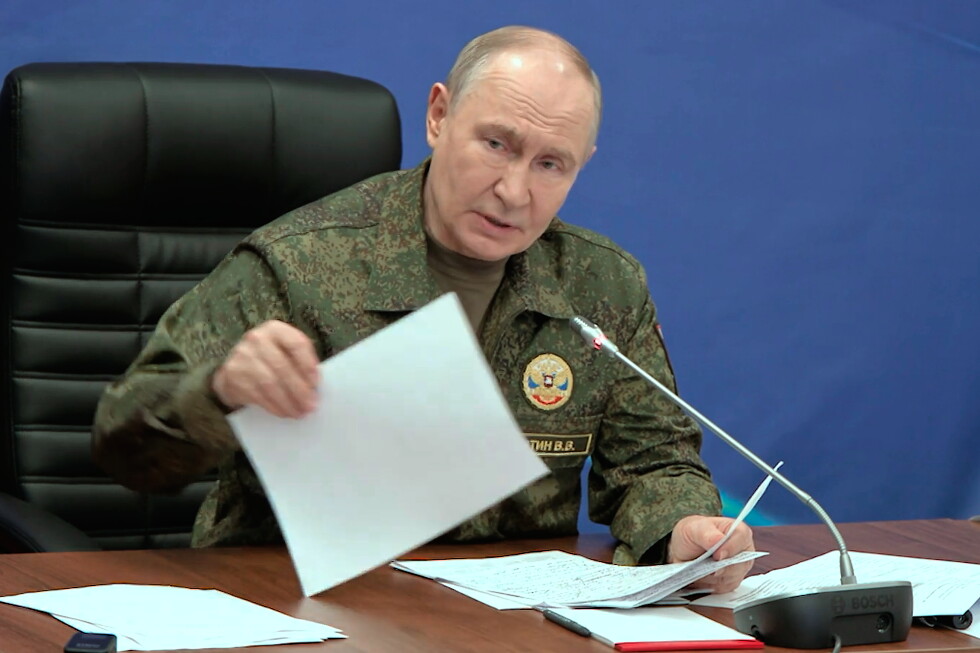
    The path to this truce began with repeated ceasefire appeals from Ukrainian President Volodymyr Zelensky, all of which were previously rejected by the Kremlin. In an unexpected shift, Russian President Vladimir Putin announced that he had ordered all Russian military forces to hold their fire across the entire frontline from 16:00 local time (14:00 BST) on April 11 through Easter Sunday. Putin added that he expected Ukraine to mirror Russia’s gesture, while also ordering his troops to remain on high alert to respond to any perceived Ukrainian provocations or aggressive actions.

    This framing of the truce, which positions Russia as the initiator to seize diplomatic initiative, has historically created friction with Ukrainian officials, but Kyiv moved quickly to confirm its willingness to match the pause. Shortly after Putin’s announcement, Zelensky published a post on X confirming Ukraine would take reciprocal steps. “People need an Easter free from threats and real movement toward peace,” he wrote, adding that Russia had an opportunity to extend the pause beyond the holiday weekend rather than resuming offensive strikes.

    Days earlier, Zelensky revealed he had asked the United States to relay his proposal for a holiday truce to Moscow, framing the temporary pause as a small but critical first confidence-building step toward broader peace talks. For frontline soldiers who face constant harassment from Russian attack drones along the hundreds of kilometers of eastern front, any halt to active fighting would bring much-needed relief. The truce would also grant a rare reprieve to civilians across Ukraine, where daily air raid sirens, regular Russian missile and drone strikes have become a normalized part of life, with civilian casualties reported just days before the truce announcement.

    Just last week, multiple civilians were killed when a drone struck a passenger bus in Nikopol, a southeastern Ukrainian city near the frontline. In Zhytomyr, a city west of Kyiv, a woman died when a Russian missile landed adjacent to her home in the middle of a weekday morning. Even moments after the truce was publicly announced, air raid sirens blared again across Kyiv, a stark reminder that the conflict remains active. In recent weeks, Ukraine has also ramped up its own cross-border drone campaign against Russia, with strikes focusing heavily on Russian energy export infrastructure, though Moscow claims residential areas have also been hit in the attacks.

    Despite the announcement of a temporary pause, many Ukrainians remain deeply skeptical that this truce will hold beyond the holiday weekend. Past Russian-declared ceasefires have been short-lived and marred by violations, reinforcing Kyiv’s distrust of Moscow’s intentions. Earlier this year, Putin announced a so-called “energy truce” that paused Russian strikes on Ukraine’s critical power infrastructure during the coldest months of winter. That pause only lasted long enough for Russia to reposition and rearm for a new wave of large-scale missile attacks. In May 2025, Russia declared a unilateral ceasefire to mark the 80th anniversary of the Soviet Union’s victory over Nazi Germany; Ukrainian officials recorded hundreds of Russian ceasefire violations during that planned pause.

    For Ukraine, the end goal remains unchanged: Kyiv has repeatedly pushed for a full, permanent ceasefire as the first step toward formal negotiations to end Russia’s full-scale invasion. Moscow, by contrast, has insisted that a final peace agreement be reached before any lasting ceasefire can take effect, a position that has led Kyiv to accuse the Kremlin of acting in bad faith and lacking genuine commitment to ending the war. Multiple rounds of peace talks mediated by the United States have taken place over the course of the conflict, but negotiations have been stalled since the Trump administration redirected its diplomatic focus to the ongoing crisis in the Middle East.

  • Russia’s Putin declares a ceasefire in Ukraine for Orthodox Easter

    Russia’s Putin declares a ceasefire in Ukraine for Orthodox Easter

    As Russia’s full-scale invasion of Ukraine enters its fifth year of active conflict, Russian President Vladimir Putin has ordered a 32-hour unilateral ceasefire across all front lines to coincide with the Orthodox Easter weekend, a move that follows an earlier holiday truce proposal from Ukrainian President Volodymyr Zelenskyy. The Kremlin officially published Putin’s decree on Thursday, outlining that the pause in hostilities will begin at 4 p.m. local time on Saturday and extend through the end of Easter Sunday.

    Zelenskyy had first floated a limited truce proposal earlier that same week, calling on both Moscow and Kyiv to halt attacks on one another’s energy infrastructure exclusively for the duration of the religious holiday. The Ukrainian leader noted the offer was transmitted through U.S. diplomatic channels, which have served as the main mediating body for discussions between Russian and Ukrainian delegations throughout the ongoing invasion.

    As of Thursday evening, Kyiv had not issued an immediate public response to Putin’s broader ceasefire announcement. The Kremlin’s statement accompanying the decree made clear that while Russian forces have been ordered to stop all offensive actions across the entire front line for the truce period, troops remain on high alert. “Troops are to be prepared to counter any possible provocations by the enemy, as well as any aggressive actions,” the document reads, adding that Moscow expects Ukrainian forces to match the ceasefire.

    This latest unilateral truce announcement comes against a backdrop of failed past ceasefire efforts. Last Orthodox Easter, Putin declared a 30-hour pause in fighting, but both sides quickly traded accusations of violations that left the truce effectively meaningless. Broader international ceasefire proposals have also stalled: last year, Kyiv and Washington put forward a proposal for a 30-day unconditional truce as a first step toward peace negotiations, but Russia rejected the plan, insisting that any pause must be tied to a comprehensive long-term settlement.

    U.S.-mediated talks between the two delegations have failed to deliver tangible progress on core outstanding issues in months. In recent months, U.S. diplomatic and security focus has shifted largely to the ongoing conflict in the Middle East, leaving the 1,250-kilometer front line between Russian and Ukrainian forces locked in a costly stalemate of incremental positional battles.