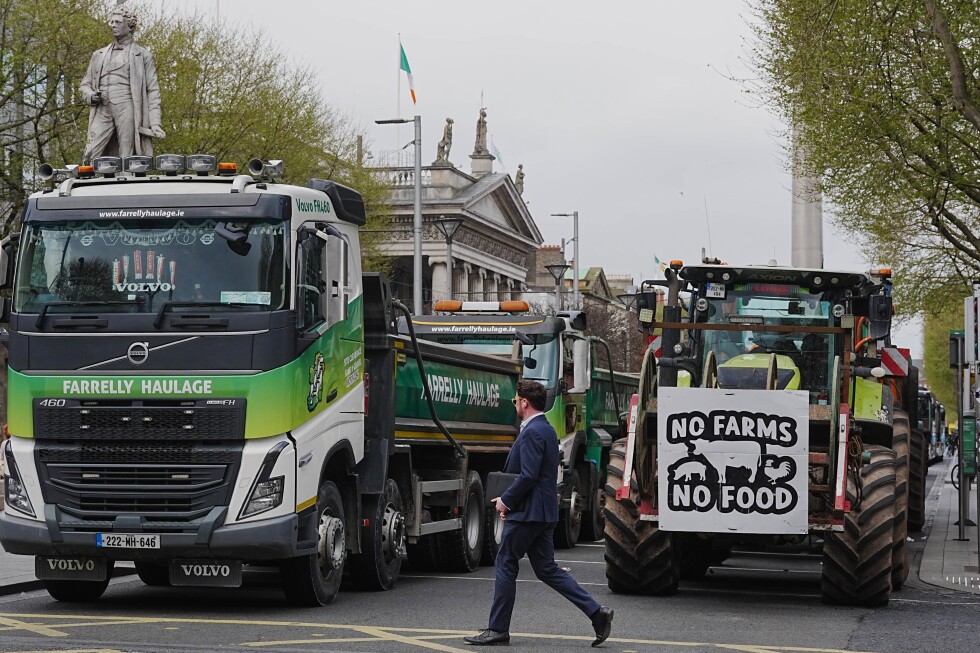
DUBLIN, Ireland – Anti-high-fuel-price demonstrations across Ireland have stretched into their fourth consecutive day on Friday, leaving the nation bracing for worsening supply disruptions and risks to critical emergency services, after three days of road blockades and targeted access restrictions to energy infrastructure. The unrest, which first erupted on Tuesday, has been fueled by relentless upward pressure on gasoline and diesel prices, a trend that traces its roots to tightened oil exports from the Middle East amid ongoing regional conflict.
When the protests launched, demonstrators organized slow-moving vehicle convoys that choked traffic on key thoroughfares in Dublin, Ireland’s capital, and successfully cut off access to major fuel depots – facilities that collectively distribute around half of the nation’s entire fuel supply. Many participants remained overnight, sleeping in their vehicles, to maintain their blockades and amplify their core demand: direct negotiations with the Irish government over relief from spiking energy costs.
Per local industry data, the disruptions have already triggered widespread fuel scarcity. Ireland’s national public broadcaster RTE, quoting data from Fuels for Ireland, the country’s leading fuel industry association, reported Friday that more than 100 service stations have already completely run out of stock. If blockades continue to prevent deliveries, industry analysts project that number could surge past 500 by the end of Friday.
Worsening supply chaos has already put critical emergency response operations at risk. With police, fire crews, and ambulance services facing growing delays reaching urgent calls, the Irish government took the unusual step Thursday of authorizing the national army to clear blocked roads and remove demonstrator vehicles. The government has already highlighted that it previously implemented a slate of policy measures to rein in skyrocketing fuel costs: these include a temporary cut to excise taxes on motor fuels, expanded rebate programs for commercial diesel users such as trucking and bus companies, and an extension of energy assistance initiatives for low-income households struggling with heating bills.
A key development is scheduled for Friday, with Irish government leaders set to hold talks with representatives from the key protesting groups: farmers, long-haul truckers, and agricultural contracting firms. While protest organizers have publicly stated they will stand down their coordinated blockades immediately if the government agrees to open negotiations, uncertainty remains over whether all participating groups will earn a seat at the table in the planned talks.