标签: Europe

欧洲

  • UK says Russia ran submarine operation over cables and pipelines

    UK says Russia ran submarine operation over cables and pipelines

    Tensions between the UK and Russia have escalated sharply after UK Defence Secretary John Healey publicly accused three Russian submarines of carrying out a covert surveillance operation targeting critical undersea cables and pipelines in waters north of the British mainland. In a press briefing held at Downing Street on Thursday, Healey said the incident represented a deliberate act of malign activity by Moscow, and confirmed British naval and air assets had been immediately deployed to intercept and monitor the Russian contingent, with no evidence of damage to UK Atlantic infrastructure found to date.

    Addressing Russian President Vladimir Putin directly, Healey issued a stark public warning: “We see you. We see your activity over our cables and our pipelines, and you should know that any attempt to damage them will not be tolerated and will have serious consequences.” According to Healey’s account, Russia deployed one Akula-class attack submarine as a diversionary distraction, while two special-purpose spy submarines operated by Russia’s secretive GUGI deep-sea research directorate conducted surveillance of the undersea infrastructure networks. He added that the diversionary attack submarine returned to Russian waters after being tracked by British forces, while the two GUGI vessels remain in the wider region.

    Moscow has rejected the UK’s allegations outright. In a report carried by Russia’s state-owned news agency Tass, the Russian Embassy in London stated that Russia “is not threatening underwater infrastructure, which is truly critical to the UK. We are not using aggressive rhetoric in this regard.”

    To counter the Russian operation, the Royal Navy deployed the Type 23 frigate HMS St Albans, Royal Fleet Auxiliary fuel tanker RFA Tidespring, and anti-submarine Merlin helicopters to continuously track all three submarines. Norway also joined the monitoring effort, though Healey did not disclose details of contributions from other allied nations. “Our armed forces left [Russia] in no doubt that they were being monitored, that their movements were not covert, as President Putin planned, and that their attempted secret operation had been exposed,” Healey told reporters. “We watched them, we were able to track them, we dropped sonar buoys to demonstrate to them that we were monitoring every hour of their operation.”

    Little known to the general public compared to Russia’s iconic KGB or domestic intelligence service FSB, GUGI – the Main Directorate for Deep Sea Research – is one of Moscow’s most formidable and secretive military units. Officially part of the Russian Navy, the agency operates with such a high level of classification that it reports directly to Russia’s defence minister and the president. Headquartered in St. Petersburg on the Baltic coast, GUGI maintains a key Arctic deployment base at Olenya Bay on the Kola Peninsula, which also hosts Russia’s strategic nuclear submarine fleet.

    GUGI’s core mandate covers deep-water underwater surveillance, reconnaissance and sabotage operations. Global military analysts note that only the United States matches GUGI’s unique capability to operate advanced military hardware at extreme ocean depths. This hardware includes small uncrewed mini-submarines, which experts believe were the assets deployed by Russia during the recent operation near UK cable routes. These mini-subs can be launched covertly under cover of darkness from larger mother ships such as the Russian spy vessel Yantar, which has previously been spotted operating near critical infrastructure in the English Channel. The systems have the technical capability to cut undersea cables, or tap into them to intercept data traffic passing through the networks.

    This type of activity falls under the framework of modern hybrid warfare: hostile acts carried out by a state that fall short of a clearly attributable, lethal attack that would trigger a formal declaration of war. UK and NATO military planners have long raised concerns that widespread covert Russian surveillance of Western undersea infrastructure is intended to give Moscow a strategic advantage in the event of a future open conflict. If hostilities were to break out, the Kremlin could activate pre-positioned devices to sever or disrupt critical data and energy networks, causing widespread disruption to civilian and military operations.

    Healey argued that Putin chose to launch the operation at a moment when global attention is heavily focused on the ongoing war in the Middle East, and reaffirmed that Russia remains the “primary threat to UK security.” While acknowledging the persistent threat Moscow poses, Healey expressed confidence in UK forces’ ability to track future Russian activity and expose any covert operations that threaten British national interests.

    Prime Minister Keir Starmer echoed Healey’s stance, saying he was “determined to protect the British people from paying the price for Putin’s aggression in their household bills.” He added that the UK would not “shy away from taking action and exposing Russia’s destabilising activity that seeks to test our resolve.”

    The incident has quickly become a point of domestic political debate in the UK. Opposition Conservative Party leader Kemi Badenoch called on Starmer to immediately publish the government’s long-promised Defence Investment Plan, posting on social media platform X that “We stand shoulder to shoulder on Russian aggression. To be strong abroad we need clarity on spending at home. Without the investment plan, Starmer’s strategy is just words.” Reform UK leader Nigel Farage, referencing recent reports of Russian navy vessels escorting Russian oil tankers through the English Channel, claimed “If we have learnt one thing in the last month, it is that we do not have an operational Royal Navy at any level in this country and that for us needs to be a massive wake-up call.”

    Some retired defence officials have also questioned the UK’s ability to counter persistent Russian threats. John Foreman, a retired Royal Navy officer and former UK defence attaché to Moscow, told the BBC that “the rhetoric is a bit tired by now. We’re well aware of the Russian threat. The question is whether we’re doing something about it.” Foreman pointed to the recent decommissioning of two Royal Fleet Auxiliary tankers, RFA Wave Knight and RFA Wave Ruler, as evidence that the UK is “hard-pressed” to maintain maritime security. “I don’t know how we are going to dig ourselves out of this nadir of maritime security that we have found ourselves in,” he said.

    Undersea cables and pipelines are among the most critical but overlooked pieces of global infrastructure. More than 600 undersea cables crisscross the world’s oceans spanning more than 870,000 miles, carrying global internet traffic and electrical power between continents, with landing points often located in remote, lightly protected coastal areas. For the UK specifically, the infrastructure is existential to daily life: roughly 60 undersea cables come ashore at multiple points along the UK coast, with concentrations in East Anglia and South West England, and more than 90% of the country’s daily internet traffic relies on these systems. The UK also depends on North Sea undersea gas pipelines, most notably the 724-mile Langeled pipeline connecting Norway to the UK, for 77% of its gas imports.

    Military analysts say the challenge of countering GUGI operations is significant. Dr Sidharth Kaushal, a sea power researcher at the Royal United Services Institute (RUSI), explained that GUGI’s deep-diving mini-submarines are purpose-built to avoid detection, with engineered reductions in acoustic noise, water displacement and magnetic signature that make them “complex targets” for anti-submarine forces. Kaushal told BBC Verify that it is likely the Russian submarines were still able to gather useful intelligence on the UK’s cable network despite continuous monitoring by the Royal Navy, noting that the UK’s ability to restrict such operations during peacetime is “limited” – particularly as military monitoring activity in international waters is legally permitted. Even so, Kaushal added that the British operation was not without benefit: by tracking the Russian deployment, the Royal Navy likely gathered valuable intelligence on Russian tactics, network mapping priorities, and may even have been able to recover any surveillance equipment left behind by the Russian units.

    This incident aligns with a broader pattern of Russian hybrid activity that the BBC first exposed in 2025, when it reported that Russia was waging a campaign of hybrid warfare against the UK and Western Europe intended to pressure Western nations to end their military support for Ukraine.

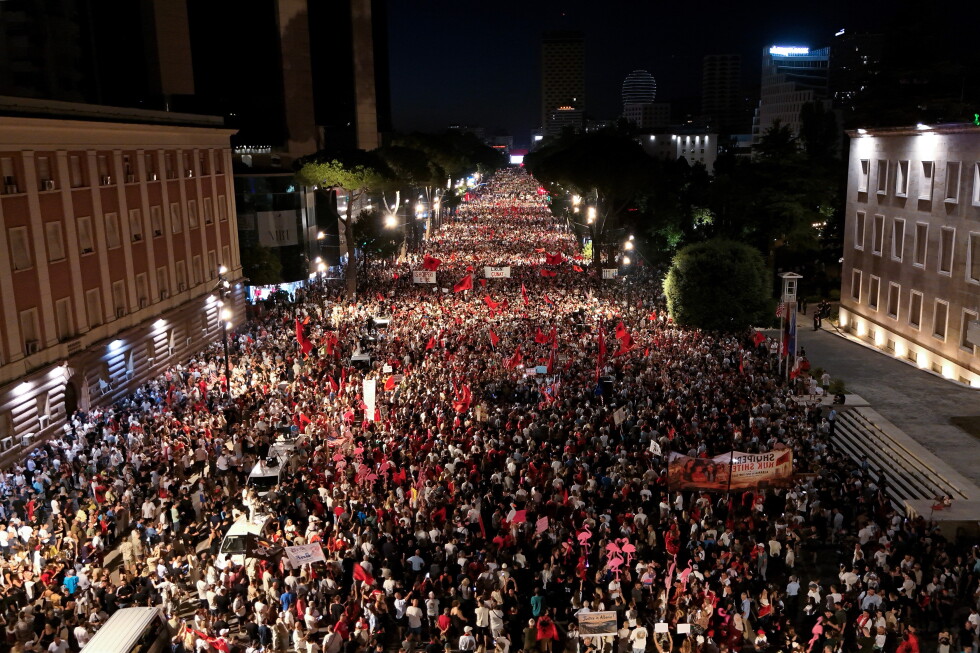
  • Orbán’s rural base is still behind the Hungarian leader ahead of Sunday’s pivotal vote

    Orbán’s rural base is still behind the Hungarian leader ahead of Sunday’s pivotal vote

    As Hungary prepares for one of its most consequential national elections in recent decades on Sunday, long-serving Prime Minister Viktor Orbán, who has held power for 16 years and secured four consecutive electoral victories, is facing the most significant challenge to his rule from center-right challenger Péter Magyar, leader of the Tisza party. Magyar has spent months crisscrossing Hungary’s rural regions in a bid to erode Orbán’s traditional stronghold of support, but many small-town and older voters remain unwavering in their loyalty to the incumbent.

    While most public opinion polls indicate a growing appetite for change among Hungarian voters, with a significant share having walked away from Orbán’s populist-nationalist Fidesz party, the prime minister retains deep popularity in the country’s smallest settlements and among older demographics. A recent Medián poll underscored this divide: among voters over 65, 47% back Fidesz, compared to just 29% who support Magyar’s Tisza. Support for Orbán also grows consistently as community size shrinks, cementing his rural advantage.

    In the small central Hungarian city of Cegléd, 63-year-old local entrepreneur István Vároczi, who runs a market stall selling handbags and other goods, says he dismisses all polls that forecast Orbán could lose. Having backed Orbán for nearly four decades, Vároczi plans to cast his vote for the incumbent once again. “I’ve never been disappointed in him. His biggest strength is that he didn’t forget where he came from — he always remained a normal person,” Vároczi said. “I’m sure he has flaws, but who doesn’t? Fidesz is the only party I trust, and his performance as prime minister is unparalleled.” Even with years of stagnant economic growth, Vároczi blames external pressures rather than government mismanagement, arguing the administration “is doing what it can for us, for the people.”

    Similar devotion can be found in Albertirsa, a central Hungarian town of roughly 14,000, where retired pipe fitter János Falajtár grew emotional when describing his support for Orbán. Fighting back tears, Falajtár insisted the prime minister has always “acted for the people.” “The decisions don’t matter. Common sense and heart matter,” he said. For Falajtár, Orbán’s greatest achievement has been advancing unity for Hungarians both within the country’s modern borders and across neighboring regions where millions of ethnic Hungarians reside, following the post-World War I territorial changes that stripped Hungary of nearly 72% of its original land. “We are now beginning to unite the Greater Hungary in Vojvodina, Slovakia, Transcarpathia, Transylvania, and even in Austria,” Falajtár said. “They only took a small piece from us, but it’s still ours.”

    Magyar and the Tisza party have seen their support surge in recent years, fueled by widespread public frustration over four years of economic stagnation. Much of that economic strain has been tied to the freezing of billions of euros in European Union development funding, which Brussels halted over ongoing concerns about rule of law breakdowns and systemic corruption under Orbán’s administration.

    But Orbán has worked aggressively to shore up support ahead of the vote with targeted pre-election policies tailored to his core base. Backed by Hungary’s continued reliance on discounted Russian oil and gas, the prime minister implemented a widely popular utility bill reduction program that keeps household energy costs far below European averages. He has also expanded pension benefits, adding a mandatory 13th month pension payment for retirees and rolling out a new 14th month supplement ahead of the election. Other popular initiatives for small communities include a nationwide program to renovate aging local pubs and historic churches, alongside the elimination of income tax for young mothers with multiple children.

    Beyond policy, Orbán’s enduring political charisma, his consistent focus on protecting Hungarian cultural traditions, and his unapologetic push to bolster national pride resonate more deeply with his base than any specific government program. On the campaign trail, Orbán has also framed the election as a battle for national survival, warning voters that a host of external threats — most notably the ongoing war in neighboring Ukraine, which he claims would drag Hungary into direct conflict and bankrupt the nation — await if he does not win a fifth term. For committed supporters like Vároczi and Falajtár, that message, paired with decades of demonstrated loyalty to their communities, is more than enough to secure their vote once again.

  • Greece moves to protect minors from social media with new ban for kids under 15

    Greece moves to protect minors from social media with new ban for kids under 15

    ATHENS, Greece – Greece has stepped into a growing pan-European push for minor online protection by becoming the latest European Union member state to announce draft legislation that would fully block access to social media platforms for all users aged 15 and younger. Greek Prime Minister Kyriakos Mitsotakis framed the national initiative as a deliberate pressure tactic to push the 27-nation bloc to adopt formal, unified age restrictions across all EU member states.

    The proposed rules will apply to all major social media services that allow users to create public or private profiles, engage in cross-user interaction, and share user-generated content – covering industry leaders including Meta-owned Facebook and Instagram, as well as ByteDance-owned TikTok.

    Once the bill is enacted into law, the obligation to enforce the restriction will fall directly on social media companies, which will be required to complete a full re-verification of the ages of all existing Greek users to remove anyone under the age of 15 from their platforms. Greek regulatory authorities note that the state will only play an oversight role: it will monitor platform compliance and only intervene when violations are reported. Reports of non-compliance will be forwarded either to the regulatory body in the country where the platform is headquartered or directly to the European Commission, the EU’s executive governing branch. Potential penalties for violators are steep, including maximum fines equal to 6% of a company’s annual global turnover, recurring daily fines until the platform comes into compliance, and even temporary or permanent restrictions on operations within Greek territory.

    In a pre-recorded video address posted to his own social media channels Wednesday, Mitsotakis spoke directly to young people to explain the rationale behind the ban. He acknowledged that excessive social media use has been linked to rising rates of stress, anxiety, and sleep disruption among adolescents, noting that both parents and young people have privately shared these concerns with him.

    “I know many young people will be angry with this decision. If I were your age, I would probably feel the same way too,” Mitsotakis said in the address. “But our job, my job, is not always to be popular. If something makes us more anxious, makes us feel worse about ourselves, less than we really are, then it is better to put an end to it.”

    The prime minister emphasized that the new law is not an attempt to cut young Greeks off from digital technology as a whole. Instead, he argued, the regulation targets the inherently addictive design of many major social platforms, whose business models are built on maximizing screen time – a model that he says robs young people of their childhood innocence and personal freedom.

    Under the current legislative timeline, the bill will be formally introduced to Greek parliament this summer, with enforcement scheduled to begin on January 1 of next year. Greece is not the first EU country to take this step: it follows similar legislation passed earlier this year by France that also imposes a national ban on social media use for children 15 and under.

    In a formal letter sent to European Commission President Ursula von der Leyen, Mitsotakis called for the establishment of a unified regulatory framework for minor online protection across the entire European Union by the end of 2024, to complement national-level protection measures that member states have already enacted. His proposal includes an EU-wide ban on social media access for users 15 and younger, a bloc-wide standardized age verification process that requires platforms to re-verify all user ages every two years, and the creation of a joint body made up of representatives from member states and the commission to review compliance incidents and impose penalties rapidly.

  • European leaders urge a negotiated settlement as Iran closes the Strait of Hormuz

    European leaders urge a negotiated settlement as Iran closes the Strait of Hormuz

    As the escalating military confrontation between the U.S., Israel and Iran continues to roil the Middle East, European powers find themselves caught in a precarious diplomatic balancing act this Thursday. While steering clear of direct participation in the conflict, key European leaders and EU institutions are actively pushing diplomatic efforts to solidify a fragile ceasefire, de-escalate deadly fighting in Lebanon, and restore unimpeded access through the strategic Strait of Hormuz.

    This conflict has placed Europe in an deeply uncomfortable position. The bloc remains committed to backing the United States, its core NATO ally, but it has faced repeated public criticism from U.S. President Donald Trump over its refusal to join combat operations and its limitations on access to European military bases. European leaders have pushed back on this criticism in increasingly blunt terms: French President Emmanuel Macron noted last week that Washington has no grounds to complain about a lack of European backing for a military operation that the U.S. chose to launch unilaterally, without any prior consultation with allies.

    The current ceasefire framework emerged at the eleventh hour on Tuesday, brokered by Pakistan, after Trump issued a dramatic threat that “a whole civilization will die tonight.” The agreement, which initially called for a two-week halt to hostilities, was meant to reopen the Strait of Hormuz — a waterway that carries roughly a fifth of the world’s daily oil supplies, making it critical to global energy security. That fragile truce quickly unraveled, however, after Israel launched a wave of air strikes in Lebanon targeting Iran-backed Hezbollah forces. In response, Iran reclosed the strait, arguing that the ceasefire agreement was supposed to cover all fronts including Lebanon. Both Israel and the U.S. reject this interpretation of the deal.

    Iran has also drawn sharp international condemnation over its demand to collect shipping tolls as a precondition for reopening the strategic waterway, a move that has united European leaders in opposition.

    ### Pushing for a Broad Negotiated Peace
    On Wednesday, a large bloc of European nations — including France, Italy, Germany, the United Kingdom, Spain, the Netherlands, Denmark, Canada, and the European Union collectively — issued a joint statement calling for rapid progress toward a substantive negotiated end to the conflict, a call later joined by leaders from Norway, Sweden, Greece and Finland. The group emphasized that a diplomatic resolution is “crucial to protect the civilian population of Iran and ensure security in the region,” adding that a negotiated settlement “can avert a severe global energy crisis.”

    Macron, who held separate calls with both Iranian President Masoud Pezeshkian and Trump on Wednesday, reiterated the call for all warring parties to fully uphold the existing ceasefire and open the door to comprehensive negotiations.

    ### Demand for Ceasefire to Extend to Lebanon
    European leaders have uniformly pushed for the truce to be expanded to Lebanon, after the deadliest single day of fighting in the country Wednesday left nearly 200 people dead. German Chancellor Friedrich Merz warned that the intensity of Israel’s military campaign in Lebanon threatens to derail the entire peace process, an outcome that cannot be allowed. British Foreign Secretary Yvette Cooper told reporters she was “deeply troubled” by Israel’s military onslaught, noting that any ceasefire that excludes Lebanon would risk destabilizing the entire Middle East region. “That escalation that we saw from Israel yesterday, I think, was deeply damaging and we want to see an end to hostilities in Lebanon,” Cooper told Times Radio.

    Spanish Prime Minister Pedro Sánchez, who has emerged as Europe’s most outspoken critic of U.S. and Israeli military action in the region, went further, calling on the European Union to suspend its longstanding association agreement with Israel. In a post on X, Sánchez slammed Israeli Prime Minister Benjamin Netanyahu, writing “His contempt for life and international law is intolerable. The international community must condemn this new violation of international law.”

    ### Preparing to Secure Free Navigation Through Hormuz
    French Foreign Minister Jean-Noël Barrot confirmed Thursday that European nations and their global partners are finalizing plans to deploy naval vessels to escort commercial shipping through the Strait of Hormuz once active hostilities cease. Macron confirmed that roughly 15 nations have already committed to participate in the coordinated escort mission.

    European leaders have unanimously rejected Iran’s demand for shipping tolls, warning that any restriction on free navigation through the strait would carry severe global consequences. Italian Prime Minister Giorgia Meloni told parliament that any unilateral imposition of extra duties by Iran would have “unpredictable economic consequences” for the global economy. “Full restoration of freedom of movement in the Strait of Hormuz is needed, and it must not be subject to any restrictions, as appears to have happened in recent hours,” she said. Cooper echoed that sentiment, saying it is “crucial” that Iran not be allowed to impose tolls on shipping passing through the waterway. Merz confirmed that Germany will contribute to the effort to restore free navigation, though German officials have declined to elaborate on what form that contribution will take.

    ### Navigating Rising Tensions Within NATO
    The conflict has exacerbated existing frictions within the NATO alliance, after Trump once again raised the prospect of a U.S. withdrawal from the trans-Atlantic military bloc. Trump has publicly lashed out at European allies for failing to come to Washington’s aid in the conflict, going so far as to label NATO allies “cowards” and dismiss the alliance as a “paper tiger.” After meeting with NATO Secretary-General Mark Rutte at the White House on Wednesday, Trump reiterated his claim that NATO failed to support the U.S. during this conflict, and would fail to do so again if the U.S. faced a future crisis.

    Merz framed the current conflict as a critical “trans-Atlantic stress test” for the alliance, saying he is determined to prevent the dispute from further damaging relations between the U.S. and its European NATO partners. “We don’t want, I don’t want a split in NATO,” Merz said. “NATO is a guarantor of our security, also and above all in Europe. We must continue to keep a cool head here.”

    Reporting for this article was contributed by Giada Zampano in Rome, Jill Lawless in London, Sylvie Corbet in Paris and Geir Moulson in Berlin.

  • French far-right leader romantically linked to Italian princess

    French far-right leader romantically linked to Italian princess

    French far-right presidential candidate-in-waiting Jordan Bardella’s romantic relationship with Italian aristocrat and socialite Princess Maria Carolina of Bourbon-Two Sicilies has been formally revealed in a high-profile exclusive by celebrity publication Paris Match, ending months of swirling public speculation about the pairing.

    The relationship, which the 30-year-old leader of the Rassemblement National (RN) had long guarded as private, was unveiled on this week’s Paris Match front page. The issue features candid new photos of the couple vacationing together on the French island of Corsica, under the headline “The idyll that no-one expected” — a reveal that many media observers have framed as a calculated, staged announcement rather than an accidental scoop.

    Rumors of the romance first emerged back in January, when the pair were spotted attending a Paris event together celebrating the 200th anniversary of French newspaper Le Figaro. For months, Bardella repeatedly declined to answer questions about his personal life, telling reporters that his private affairs remained his “last space of liberty.” The Paris Match exclusive confirms the couple has now made the voluntary decision to go public with their relationship.

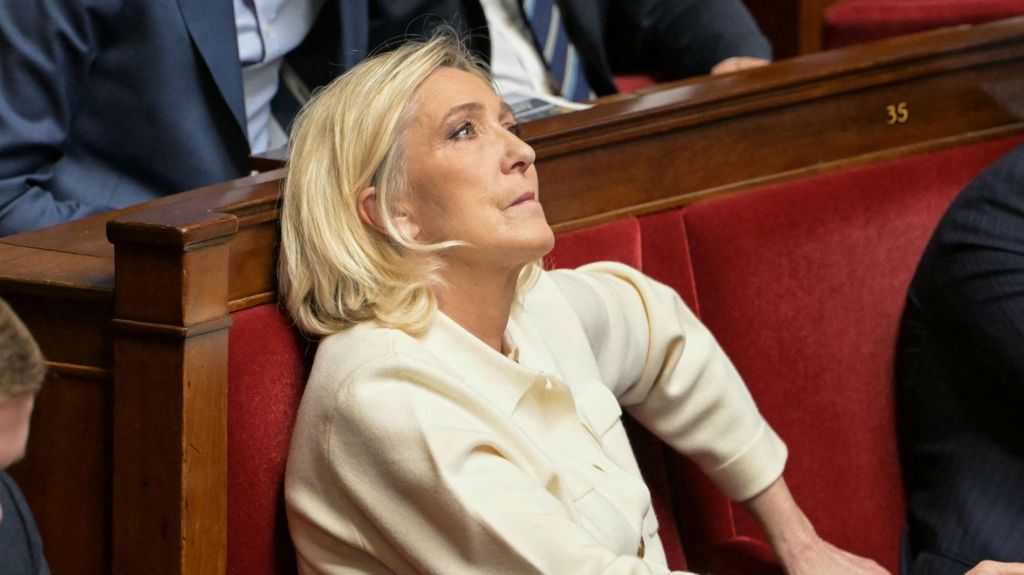
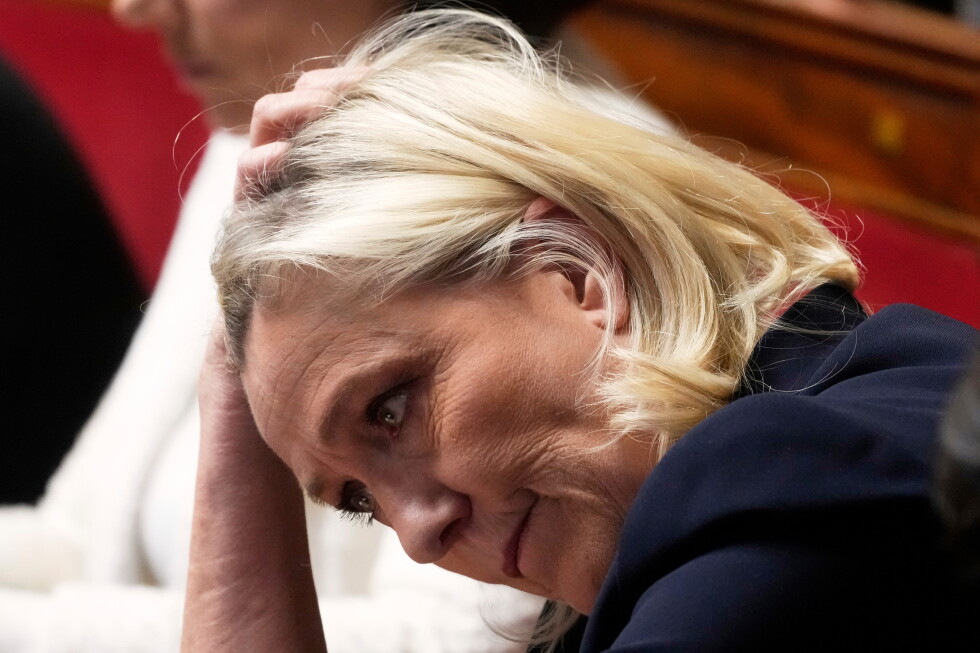
    Bardella is set to stand as RN’s candidate in the 2027 French presidential election if a July court ruling bars RN’s historic party leader Marine Le Pen from running over her conviction for misappropriation of European Union parliamentary funds. Recent polling indicates that any RN candidate would be a strong contender to win the presidency, making details of Bardella’s personal life a matter of significant political interest.

    Political commentators speaking on Thursday noted two core political rationales for the timed announcement. First, they say it is critical for Bardella to enter a potential presidential campaign with full transparency around his personal life, including clarity about who would join him in the Elysée Palace as first lady if he wins. Second, the announcement is seen as a proactive move by RN to defuse potential backlash from working-class and lower-income voters, who may raise questions about the party’s populist positioning amid its leader’s connection to a member of one of Europe’s wealthiest aristocratic families.

    At 22 years old, Princess Maria Carolina holds the additional noble titles of Duchess of Calabria and Palermo. She is the daughter of Prince Carlo, Duke of Castro, one of two claimants to the headship of the House of Bourbon-Two Sicilies — the royal dynasty that ruled southern Italy and Sicily through much of the 19th century, before the unification of Italy stripped the family of its throne. While her royal title holds no official legal status in the modern Italian Republic, she is a distant direct descendant of King Louis XIV, France’s iconic 17th-century “Sun King.”

    According to her official public profile, Maria Carolina grew up across Rome, Monte Carlo and Paris, and currently leads a range of cultural, social and humanitarian initiatives aligned with her family’s historic heritage and values. She also collaborates on creative and philanthropic projects with her sister, Princess Maria Chiara. Fluent in six languages, she has built a social media following of more than 350,000 and maintains a close public connection to the global fashion industry. In a break from centuries of royal tradition, her father abolished the Salic law that restricted succession to male heirs, meaning she is positioned to become the next head of the Bourbon-Two Sicilies royal house.

    Paris Match’s coverage has framed the couple as a strikingly unconventional 21st-century pairing, describing them as “reinventing courtly love” for the modern era. The publication notes the stark contrast between their backgrounds: while Maria Carolina was raised in the opulence of elite European capitals, Bardella was born in a public housing flat in the working-class Paris suburb of Saint-Denis, with no inherited aristocratic title, and climbed the political ranks through his own ambition — fitting into France’s long tradition of self-made political leaders. According to the magazine’s reporting, the pair first crossed paths at the Monaco Grand Prix in May of last year, where Bardella had accompanied his father, a lifelong motor racing fan.

    It should be noted that Paris Match is owned by Bernard Arnault, the French billionaire who chairs the luxury goods conglomerate LVMH.

  • Irish government to consider Creeslough explosion inquest

    Irish government to consider Creeslough explosion inquest

    Nearly two years after a devastating explosion ripped through a small rural service station in Creeslough, County Donegal, claiming 10 lives, families of the victims are still fighting for clear answers and official accountability — and Irish officials have now signaled a potential path forward. On Thursday, 10 family representatives of those killed traveled to Dublin’s Department of Justice to meet with Justice Minister Jim O’Callaghan for a 90-minute discussion about their long-held demand for a public inquest into the disaster.

    The October 7, 2022 blast killed 10 local residents from Creeslough and its surrounding communities, cutting short lives across generations: 5-year-old Shauna Flanagan-Garwe, her 50-year-old father Robert Garwe, 14-year-old Leona Harper, 13-year-old James Monaghan, his mother Catherine O’Donnell, Jessica Gallagher, Martin McGill, James O’Flaherty, Martina Martin, and Hugh Kelly. To date, investigators have not released any official public explanation for what caused the explosion. While multiple arrests have been made in connection with the ongoing investigation, no one has faced criminal charges.

    Following the closed-door meeting, O’Callaghan confirmed that he would review the request for a formal inquest, echoing a longstanding government concern that launching an inquest too early could jeopardize the active criminal probe. But legal representatives for the families have pushed back, arguing that preliminary inquest work can proceed in parallel with the criminal investigation without disruption, pointing to the 1981 Stardust fire disaster inquest as a successful model that paired independent judicial review with ongoing criminal processes.

    “Two years ago, these families asked for an independent investigation. We are still waiting for a decision,” Darragh Mackin, a solicitor with Phoenix Law representing several families, told reporters outside the department. He added that there is “absolutely no prohibition” on starting preparatory work for the inquest immediately, saying “the ball is now in the minister’s court.”

    For the families left behind, the delay has meant being frozen in grief, unable to move forward without clarity about what caused the tragedy that took their loved ones. Donna Harper, whose 14-year-old daughter Leona died in the blast, pointed to the unmarked milestones her daughter will never get to experience — “She should have been 18 in January, she should have been making her prom” — and expressed frustration that almost four years will pass from the date of the explosion by the time any decision may come.

    Harper also noted that the disaster, one of the deadliest in modern Irish history, has yet to even receive an official public memorial. “We’re going down there every year, we’re just laying flowers at the side of the road. We’re stuck on the 7th of October 2022. How do you begin to move on when you have all this in front of you? We just need some answers,” she said.

    Damien Tierney, another legal representative for the families, said O’Callaghan’s primary concern is that any sworn public inquiry launched before the criminal investigation concludes could lead to injunctions filed by parties connected to the case. Tierney pushed for a timeline, asking “At what point will the government say, enough time has passed? Something now needs to be done.”

    Currently, multiple Irish state bodies are conducting overlapping investigations into the explosion. Aine Flanagan, who lost her partner Robert Garwe and daughter Shauna in the blast, confirmed that a completed health and safety investigation file will be sent to the Director of Public Prosecutions (DPP) this coming July. By standard process, the DPP typically takes between three and six months to make a decision on whether to pursue criminal prosecution after receiving case files.

    Anne Marie Boyle, who lost her sister Catherine O’Donnell and 13-year-old nephew James Monaghan in the disaster, said even launching preliminary inquest work now would help bring families closer to closure. “If preliminary work can get under way on the inquest it would speed things up,” she said. After two years of waiting, families remain firm in their demand for transparency, saying nothing less than a full independent inquiry will allow them to begin healing.

  • Four people die trying to board boat in Channel crossing attempt

    Four people die trying to board boat in Channel crossing attempt

    A deadly incident on the northern coast of France has left four migrants dead after dangerous currents swept them away as they attempted to board a smuggling vessel bound for the United Kingdom across the English Channel, local authorities confirmed Thursday. The fatal event unfolded off the shore of Saint-Etienne-au-Mont, located south of Boulogne-sur-Mer in the Pas-de-Calais region, between the Ecault and Équihen-Plage beaches, an area increasingly used by people smuggling gangs to avoid law enforcement patrols.

    Officials from the Pas-de-Calais prefecture told reporters that the four deceased—two men and two women—had already ventured a significant distance into the water when the strong local currents pulled them under. The death toll remains classified as provisional as of Thursday’s update. In the aftermath of the incident, rescue teams launched a large-scale response operation that got underway at approximately 7:30 a.m. local time, right after dawn, and included specialist diving firefighter units deployed to the scene. A total of 38 people were pulled from the water, three of whom required emergency medical care. Two children were transported to a local hospital as a safety precaution, while the smuggling vessel that was meant to carry the group continued its journey toward the UK with roughly 30 passengers still on board.

    This tragedy pushes the total number of confirmed migrant deaths linked to Channel crossing attempts this year to six, according to data from the United Nations’ International Organization for Migration, which recorded two earlier fatalities in 2026. Recent weeks have seen a sharp uptick in attempted crossings, driven by unusually calm sea conditions that smuggling gangs exploit to launch their perilous voyages. The incident comes on the heels of reports that French authorities rejected a new proposal from UK Home Secretary Shabana Mahmood that would have allowed British Border Force vessels to operate in French territorial waters to intercept and turn back small migrant boats.

    Political reactions to the tragedy have highlighted deep divides over how to address the ongoing Channel crossing crisis. Conservative shadow home secretary Chris Philp blamed the ruling Labour government’s approach for the loss of life, arguing that weak border enforcement has created incentives for smugglers to continue operating. “Crossing the Channel on often faulty and defective dinghies is immensely dangerous and puts lives at risk,” Philp said. “Labour’s weak approach which allows these crossings to continue is causing lives to be lost, and their unwillingness to take decisive action on illegal immigration is fuelling this crisis. Stopping the crossings requires more than disruption on the beaches. It requires the swift removal of those who enter illegally so the incentive to make these dangerous journeys disappears.”

    By contrast, refugee advocacy groups have framed the tragedy as a consequence of insufficient safe and legal pathways for migration to the UK. Imran Hussain, director of external affairs at the UK’s Refugee Council, argued that policing alone cannot stop dangerous crossings. “A lack of safe routes to the UK has left people feeling they have no other choice to rebuild their lives,” Hussain said. “Policing the Channel alone is not enough to prevent dangerous crossings. The government should work closely with our European neighbours to share responsibility and create more safe pathways for people to come to the UK without taking dangerous journeys.”

    Officially, a UK government spokesperson said officials were “deeply saddened” by the deaths, noting that every fatality in the Channel is a preventable tragedy. “Every death in the Channel is a tragedy and a stark reminder of the dangers posed by criminal gangs exploiting vulnerable people for profit,” the spokesperson said. “We will continue working relentlessly with the French and our partners overseas to prevent these perilous journeys.” The UK Home Office has been approached for additional comment on the incident and the rejected interception proposal.

    Long-term data shows that overall small boat arrivals have fallen slightly year-over-year in 2026, even as smuggling gangs have adapted their tactics to evade patrols. Over the full year of 2025, more than 41,000 people arrived in the UK via small boat crossings, marking a three-year trend of growing activity. Between January 1 and April 8 this year, 5,062 people completed the crossing, a 30% drop from the 7,228 recorded during the same period in 2025.

    To avoid detection by coastal patrols, smuggling networks have recently shifted to a new “water taxi” tactic, where larger smuggling vessels are launched from hidden locations dozens of kilometers from traditional departure points. These vessels then cruise along the coast to pick up groups of migrants who wait for them in shallow water out of sight of land-based police, rather than assembling and inflating boats on public beaches near patrol routes.

  • Russian court criminalizes the activities of the Nobel Prize-winning rights group Memorial

    Russian court criminalizes the activities of the Nobel Prize-winning rights group Memorial

    On Thursday, Russia’s highest judicial body delivered a landmark ruling that effectively outlaws all operations of Memorial, the Nobel Peace Prize-honored human rights organization, marking the most severe escalation yet in the Kremlin’s sustained crackdown on independent civil society and opposition voices amid its ongoing military campaign in Ukraine. The ruling came following a closed-door hearing on a petition filed by Russia’s Justice Ministry, which requested that the court label the so-called “Memorial international civic movement” an extremist organization and implement a full ban on its activities across Russian territory.

    In a pre-ruling statement, Memorial representatives noted that the specific entity named in the government’s petition does not actually exist as a formal registered body in the country. Even so, the organization warned that the sweeping extremist designation would give Russian law enforcement and regulatory authorities broad legal authority to target any ongoing Memorial-linked projects, as well as persecute their participants and public supporters.

    Founded in the late 1980s during the final years of the Soviet Union, Memorial emerged as one of Russia’s oldest and most widely respected human rights organizations, built originally on a mission to preserve the memory of millions of people killed or persecuted during the Soviet Union’s era of political repression. Over decades of operation, it grew into a sprawling global network of smaller independent groups spanning Russia and dozens of other countries, expanding its mandate to document ongoing human rights abuses across the region.

    Less than a year after Moscow launched its full-scale military invasion of Ukraine in 2022, Memorial was awarded the Nobel Peace Prize in recognition of its decades-long work advancing human rights and accountability. It shared the prize with imprisoned Belarusian pro-democracy activist Ales Bialiatski and Ukraine’s Center for Civil Liberties, another prominent regional human rights organization.

    This latest legal action is not the first attempt by Russian authorities to shut down the group. In 2021, Russian courts ordered the dissolution of Memorial’s two core Russian entities: its national human rights center and the original International Memorial. The government had already labeled the group a “foreign agent” years earlier, a regulatory designation that imposes strict government surveillance, carries a heavy public stigma, and subjected the organization to repeated crippling fines for alleged violations of Russia’s restrictive foreign agent legislation. Undeterred by the 2021 shutdown order, Memorial activists continued their work through loosely structured, decentralized projects across the country.

    In 2023, former members formally established a new International Memorial Association based in Geneva, Switzerland, to coordinate the group’s global work. Earlier this year, Russian authorities designated the new Geneva-based association “undesirable” — a legal classification that allows the government to prosecute any Russian citizen found collaborating with the group. Thursday’s extremist designation raises the stakes even further: under Russian law, participating in activities linked to an extremist organization is a criminal offense punishable by multi-year prison sentences.

    The Norwegian Nobel Committee, which awards the prestigious peace prize, pre-emptively spoke out against the Russian government’s actions in a statement released one day ahead of the ruling. The committee condemned the crackdown on Memorial as “an affront to the fundamental values of human dignity and freedom of expression” and called on Russian authorities to immediately end all forms of harassment against the organization and its members.

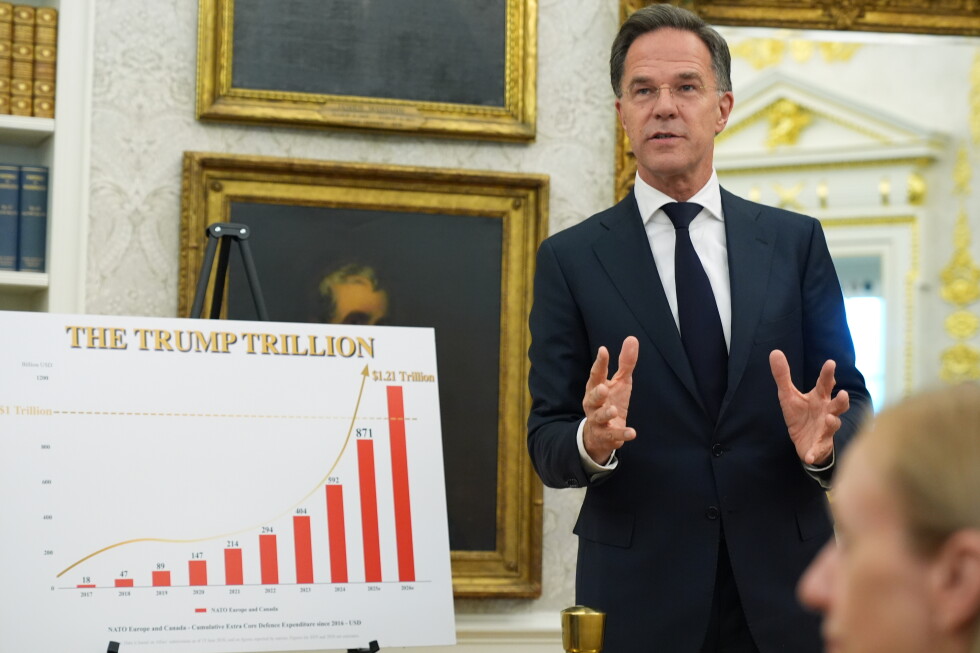
  • Rutte the ‘Trump whisperer’ faces a fresh test as Trump turns on NATO over Iran

    Rutte the ‘Trump whisperer’ faces a fresh test as Trump turns on NATO over Iran

    BRUSSELS – Tensions between Washington and its trans-Atlantic allies have reached a new boiling point, as NATO Secretary-General Mark Rutte finds himself once again managing diplomatic fallout from U.S. President Donald Trump’s anger over the Iran conflict – a war that the 31-nation defensive alliance was never consulted on, and which falls far outside its core defense mandate. Since the U.S.-led war against Iran began, Trump has launched a series of scathing attacks against U.S. allies, labeling many of them cowards, dismissing NATO itself as a toothless paper tiger, and drawing a damaging comparison between British Prime Minister Keir Starmer and Neville Chamberlain, the former UK leader widely associated with failed appeasement policy toward Nazi Germany. This latest confrontation only adds to a growing rift that has already been stretched thin by Trump’s repeated threats to annex Greenland, a move that has alarmed European allies and sparked fears that a unilateral U.S. power grab could unravel the alliance entirely. The current friction centers on Trump’s frustration that NATO allies refused to back the U.S. after Iran shut down the Strait of Hormuz, the strategically critical global oil and trade chokepoint. Following Wednesday’s closed-door talks between Rutte and Trump, the U.S. leader made his disappointment public in a fiery social media post, writing: “NATO WASN’T THERE WHEN WE NEEDED THEM, AND THEY WON’T BE THERE IF WE NEED THEM AGAIN.” When pressed by CNN reporters on whether Trump planned to pull the U.S. out of the trans-Atlantic alliance – a threat he first issued during his first term in 2018 – Rutte acknowledged Trump’s deep dissatisfaction, admitting “He is clearly disappointed with many NATO allies, and I can see his point.” Known widely as a skilled “Trump whisperer” who has managed to keep the mercurial U.S. leader engaged with the alliance since taking the top NATO job in 2024, Rutte has previously scored diplomatic wins: he helped broker a deal that saw European allies and Canada purchase U.S. weapons for Ukraine, keeping the U.S. invested in managing Europe’s largest armed conflict in 70 years. Keeping the U.S. anchored in NATO has become Rutte’s top priority, especially as Washington has increasingly shifted its strategic focus to other global flashpoints, from the Indo-Pacific to Venezuela and now the Middle East. To maintain goodwill, Rutte has leaned into flattery, praising Trump for pushing NATO allies to meet their mandatory 2% GDP defense spending targets, congratulated the U.S. leader on the Iran war, and refused to push back on Trump’s apocalyptic warning that “a whole civilization will die” if Iran does not reopen the Strait of Hormuz. Describing his meeting with Trump as “very frank, very open discussion but also a discussion between two good friends,” Rutte declined to confirm unreported claims that Trump is weighing pulling U.S. troops out of European nations that refuse to back the war. When asked if the world is safer following the U.S.-Iran war, Rutte replied plainly: “Absolutely.” What makes this dispute particularly unusual is that NATO has no natural role in the conflict. As a defensive alliance built to protect the collective territory of its Euro-Atlantic members, NATO only stepped in once to back member Turkey after Iranian retaliatory missile strikes targeted Turkish soil. The war itself was launched unilaterally by the U.S., a NATO member, but no attack on the alliance prompted it. Rutte has repeatedly stated NATO will not join the conflict, and there is no public evidence that the U.S. formally brought the request for alliance support to NATO’s Brussels headquarters, though informal discussions have not been ruled out. When asked about security efforts for the Strait of Hormuz, NATO declined comment, referring all questions to the United Kingdom, which is leading a standalone non-NATO initiative to secure the waterway once a ceasefire holds. Smaller NATO allies have signaled they are open to discussions if a formal request is submitted. Estonian Foreign Minister Margus Tsahkna told CNBC Thursday that “If the U.S. or any other NATO ally is asking (for) our support, we are always ready to discuss it. But for that, we need of course the official ask to discuss then what is the mission, what is the goal? If allies need our support, then we need to plan together.” Rutte has doubled down on his position that NATO will only act to defend its own territory, and will avoid entanglement in conflicts outside the Euro-Atlantic area. “This is Iran, this is the Gulf, this is outside NATO territory,” he explained. While NATO has launched out-of-area operations in the past – most notably in Afghanistan and Libya – the alliance has little appetite for new foreign deployments after the chaotic 2021 U.S.-led withdrawal from Afghanistan, which former NATO Secretary-General Jens Stoltenberg openly labeled a defeat. Much of Trump’s anger has been directed specifically at two NATO members, Spain and France, rather than the alliance as an institution. Spain has already closed its airspace to U.S. military aircraft involved in the Iran war and blocked U.S. forces from accessing shared military bases on Spanish territory. After a two-week ceasefire was announced, Spanish Prime Minister Pedro Sánchez took to social media to criticize the war, writing that his government “will not applaud those who set the world on fire just because they show up with a bucket. What’s needed now: diplomacy, international legality, and PEACE.” France has also taken a critical stance, arguing the war was launched in violation of international law and that Paris was never consulted ahead of time. While France has not issued blanket restrictions on U.S. use of shared bases or French airspace, authorities have confirmed they will review all requests on an individual, case-by-case basis.

  • Films by Almodovar, Pawlikowski and Hamaguchi lead an auteur-heavy Cannes Film Festival lineup

    Films by Almodovar, Pawlikowski and Hamaguchi lead an auteur-heavy Cannes Film Festival lineup

    The 79th annual Cannes Film Festival, one of the most prestigious and influential film gatherings on the global cultural calendar, is set to kick off next month from May 12 to 23 on the French Riviera. Organizers officially announced the highly anticipated 2025 lineup at a Paris press conference Thursday, assembling a slate packed with award-winning international auteurs that reaffirms the festival’s reputation as a launching pad for the year’s most acclaimed cinematic works. This year’s edition, however, marks a stark shift: major Hollywood studios are largely absent, a trend festival leadership has acknowledged as reflective of larger shifts in global film production and distribution.

    The festival’s most prestigious category, the main competition for the coveted Palme d’Or, features 21 competing films from established and beloved filmmakers across the globe. Multiple previous Palme d’Or winners are returning to contest the top prize this year, adding extra prestige to the 2025 lineup. Polish filmmaker Paweł Pawlikowski, who earned international acclaim for *Ida* and *Cold War*, will premiere *Fatherland*, a Cold War-era drama starring Oscar-nominated performer Sandra Hüller. Japanese director Ryusuke Hamaguchi, whose *Drive My Car* won the Oscar for Best International Feature Film after its Cannes debut, will present *All of a Sudden* — his first French-language feature. Spanish cinematic icon Pedro Almodóvar’s *Bitter Christmas*, which has already launched in Spanish cinemas, will also make its world premiere in competition.

    Past Palme recipients returning to the lineup include Romanian director Cristian Mungiu, whose 2007 winner *4 Months, 3 Weeks and 2 Days* remains a landmark of global art house cinema. His 2025 entry *Fjord*, set in Norway, stars recently Oscar-nominated Renate Reinsve and Sebastian Stan. Japanese filmmaker Hirokazu Kore-eda, who took home the Palme in 2018 for *Shoplifters*, will debut a new sci-fi work, *Sheep in the Box*, which follows a grieving couple in the near future who welcome a humanoid android into their home as their late son. Other notable returning competitors include Russian auteur Andrey Zvyagintsev, whose previous works *Loveless* and *Leviathan* both earned Oscar nominations after Cannes premieres, with his new drama *Minotaur*. Additional competition entries come from two-time Oscar winner Asghar Farhadi with *Parallel Stories*, Lukas Dhont with *Cowboy*, and László Nemes with *Moulin*.

    American filmmakers are underrepresented in competition this year, with only a small handful of U.S. projects selected. The lone American competitive entry is Ira Sachs’ *The Man I Love*, a 1980s New York-based drama centered on the AIDS crisis, starring Rami Malek. In the festival’s Un Certain Regard sidebar, Jane Schoenbrun will premiere *Teenage Sex and Death at Camp Miasma* — their follow-up to 2024’s cult hit *I Saw the TV Glow* — a story about the production of a 1980s slasher film starring Hannah Einbinder and Gillian Anderson. Two prominent American directors will screen documentaries in special out-of-competition screenings: Steven Soderbergh’s *John Lennon: The Last Interview* and Ron Howard’s *Avedon*, a portrait of iconic fashion and fine art photographer Richard Avedon. John Travolta’s directorial debut *Propeller One-Way Night Coach* will also screen in the Cannes Premiere section.

    Independent U.S. distribution company Neon has already secured distribution rights to three of the most anticipated competition titles: *Fjord*, *Sheep in the Box*, and *All of a Sudden*. The acquisition puts Neon in a position to extend an unprecedented historic streak: the distributor has won the Palme d’Or six consecutive years, most recently with Jafar Panahi’s *It Was Just an Accident* in 2024. Neon is also backing Nicolas Winding Refn’s out-of-competition thriller *Her Private Hell*, starring Sophie Thatcher and Charles Melton, which marks Refn’s first feature film since 2016’s *The Neon Demon*.

    Festival leadership used the press conference to reaffirm the core mission of Cannes in a turbulent global era. “In this moment, bringing together films and artists from around the world is not a luxury, it’s a necessity,” festival president Iris Knobloch said. “Because when the world darkens, we lose our bearings. Showcasing films from all horizons is not a trivial act. It is defending what is most precious to humanity, its ability to dream and think freely.” Artistic director Thierry Frémaux added that 2,541 feature films were submitted for consideration this year, and that Thursday’s announcement covered roughly 95% of the official selection, with a small number of additional entries to be revealed in the coming weeks. He addressed the absence of major Hollywood studios, noting that while American filmmakers are still present, reduced studio participation reflects a broader retreat from the type of prestige theatrical cinema that once defined major studio output. Large studio blockbusters that made splashy Cannes debuts in recent years, such as *Top Gun: Maverick* and *Mission: Impossible — The Final Reckoning*, will not be on the 2025 lineup.

    True to longstanding festival rules, all competition entries require a theatrical release in French cinemas, a stipulation that has excluded streaming platforms such as Netflix from the competitive lineup since 2017, aligned with France’s strict theatrical window protection laws. The festival will open with the 1920s French drama *The Electric Kiss*, screening out of competition, which will meet the requirement of opening day-and-date in French theaters this May.

    This year’s Palme d’Or will be decided by a nine-member jury led by iconic Korean filmmaker Park Chan-wook. The festival will also bestow honorary Palme d’Or awards to two entertainment legends: singer, actor and filmmaker Barbra Streisand, and New Zealand director Peter Jackson, the visionary behind *The Lord of the Rings* trilogy. Coming off a 2024 edition that launched multiple Oscar contenders, including two Best Picture nominees Joachim Trier’s *Sentimental Value* and Kleber Mendonça Filho’s *The Secret Agent*, the 2025 Cannes Film Festival is positioned to uphold its status as the global premier stage for ambitious cinematic storytelling.