标签: Europe

欧洲

  • What to know about Atlanta-area attacks that killed 2, including a federal worker

    What to know about Atlanta-area attacks that killed 2, including a federal worker

    ATLANTA — A 26-year-old British immigrant and former U.S. Navy service member who obtained American citizenship in 2022 is now facing serious criminal charges for a string of coordinated violent attacks that left three people dead or injured, including a U.S. Department of Homeland Security employee, and spread fear across residential and commercial areas of Atlanta’s northern and eastern suburbs.

    Olaolukitan Adon Abel, whose name is documented in multiple spelling variations across official court and government records, stands accused of two counts of murder and one count of aggravated assault, along with additional firearms violations, for the series of shootings and stabbings that unfolded in the early hours of Monday. Authorities confirmed the attacks, which spanned nearly 20 miles across three different jurisdictions, are definitively linked, and at least one of the victims is believed to have been targeted at random.

    The wave of violence began shortly after 1 a.m. in Decatur, where local police responded to reports of gunfire near a neighborhood restaurant and found 31-year-old Prianna Weathers suffering from multiple gunshot wounds. Despite urgent transport to a regional trauma center, Weathers died from her injuries, DeKalb County Police Chief Gregory Padrick confirmed.

    Roughly one hour later, roughly 19 kilometers northwest of the first attack in Brookhaven, a 49-year-old homeless man was shot multiple times while sleeping outside of a local grocery store. Brookhaven Police Chief Brandon Gurley said the unnamed man remains in critical condition at an area hospital as of Tuesday.

    The final attack was discovered more than five hours later, approximately 16 kilometers south of the Brookhaven incident in Panthersville, where 40-year-old Lauren Bullis, a DHS Office of Inspector General employee, was found with gunshot and stab wounds while out walking her dog around 7 a.m. Bullis died at the scene, Padrick said.

    Bullis, who served DHS for years in multiple roles including auditor and innovation team lead, has been remembered by colleagues and family as a deeply kind, generous public servant. “She brought a genuine sense of care to her colleagues each day,” DHS wrote in an official social media tribute following her death. Her family added in a statement that Bullis loved running, reading and traveling, and “her warmth and generosity touched everyone surrounding her.” Ashley Toillion, a fellow DHS auditor based in Denver, called Bullis “the nicest, sweetest, most encouraging person I’ve ever met.”

    Court and military records paint a troubling picture of the suspect’s history in the U.S. armed forces and prior run-ins with law enforcement. Adon Abel enlisted in the U.S. Navy in 2020, and was most recently stationed with the Helicopter Maritime Strike Squadron in Coronado, California, where he held the rank of petty officer and even received a Navy “E” Ribbon for superior performance in battle readiness.

    But court records from California show Adon Abel pleaded guilty just last October to charges of assaulting two police officers with a deadly weapon and attacking a third civilian while stationed at the Coronado base. Additional court records from Chatham County, Georgia, show that a person matching Adon Abel’s name and birth date pleaded guilty to four misdemeanor counts of sexual battery in June 2024. DHS Secretary Markwayne Mullin, a member of President Donald Trump’s second cabinet, called the deadly attacks “acts of pure evil” and publicly raised questions about how Adon Abel was granted U.S. citizenship in 2022, during Democratic President Joe Biden’s administration. Under longstanding U.S. immigration rules, people convicted of most violent felonies are strictly barred from obtaining naturalized citizenship, and it remains unclear whether Adon Abel had any criminal convictions on his record prior to his 2022 citizenship approval.

    Following his arrest, Adon Abel faces charges including malice murder, aggravated assault, and unlawful firearms possession. He waived his right to an initial court appearance on Tuesday, and the public defender assigned to his case has not yet responded to requests for comment on the charges.

  • New discovery solves mystery of the location of Shakespeare’s London house

    New discovery solves mystery of the location of Shakespeare’s London house

    For centuries, William Shakespeare fans and historians have anchored the legendary playwright’s origins to Stratford-upon-Avon, the idyllic riverside Warwickshire town that still draws millions of tourists annually to visit the preserved cottage where he spent his childhood. While Shakespeare built his legendary career and rose to fame in London, almost no physical traces of his life in the British capital have survived to the modern day. Now, a newly unearthed 17th-century map is reshaping what scholars know about the Bard’s life in London, pinpointing for the first time the precise location of the only home he ever purchased in the city – a space where experts believe he may have drafted his final works.

    The groundbreaking discovery was made by Lucy Munro, a Shakespeare and early modern literature professor at King’s College London, who stumbled across the map by chance while researching unrelated materials in the London Archives. Munro describes the find as a long-missing piece of the puzzle that fills critical gaps in the fragmented historical record of Shakespeare’s adult life. “It supplies extra bits of the jigsaw puzzle” of Shakespeare’s life, she explained of the document, which was publicly disclosed by King’s College London this week.

    Historians have confirmed since the 19th century that Shakespeare purchased a Blackfriars district property near the Blackfriars Theatre in 1613, but the exact coordinates of the dwelling had remained a centuries-old mystery. Up until now, only a vague plaque on a 19th-century building in the area marked that the playwright once had lodgings “near this site.” The detailed precinct plan Munro uncovered clearly maps out Shakespeare’s home: a substantial L-shaped dwelling converted from a section of a former 13th-century Dominican medieval monastery, including its original gatehouse.

    Following King Henry VIII’s dissolution of the monasteries in the mid-1500s, the former friary grounds were redeveloped for secular use. The wider Blackfriars precinct already held the Blackfriars playhouse, an indoor theatre that Shakespeare co-owned. In the decades after the dissolution, the neighborhood was a desirable enclave populated by nobility, high-ranking courtiers and royal officials. By the time Shakespeare purchased his property there, however, the area was gradually becoming more accessible to wealthy non-aristocrats, even as prominent local residents continued to protest the presence of the playhouse, dismissing it as a public nuisance. Munro notes that Shakespeare, while financially successful, was associated with the somewhat disreputable world of professional theatre, making his ownership of a Blackfriars home a revealing snapshot of his social status in early 17th-century London.

    Unlike the grand family home Shakespeare built with his play profits in Stratford-upon-Avon (where he died in 1616 at age 52), the London property has been lost to history. Scholars have long debated whether Shakespeare used the home as a personal residence or simply rented it out to generate income. But Munro argues that the home’s size and its location just a five-minute walk from the Blackfriars Theatre suggests the playwright spent far more time in London in the final years of his career than historians have previously assumed. It is very likely, she says, that he wrote his final collaborative works – *Henry VIII* and *The Two Noble Kinsmen*, both co-created with playwright John Fletcher – within the walls of this long-lost house.

    Will Tosh, director of education at Shakespeare’s Globe, the modern reconstruction of the open-air Elizabethan playhouse where many of Shakespeare’s works premiered, praised the discovery as a transformative contribution to Shakespeare scholarship. “Munro’s discovery provides a dazzling new sense of Shakespeare the London writer,” Tosh said. “She’s helped us to understand how much the city meant to our greatest ever dramatist, as a professional and personal home.”

    After Shakespeare’s death, the property passed to his daughter Susanna, and remained in the Shakespeare family for more than 50 years. Along with the map, Munro also uncovered two additional archival records that detail the sale of the home by Shakespeare’s granddaughter Elizabeth Hall Nash Barnard in 1665. Just 12 months after the sale, the entire structure burned to the ground in the Great Fire of 1666, the devastating blaze that destroyed most of medieval London.

    Today, the site of Shakespeare’s home sits within London’s modern financial district. Only a handful of faint traces of its history remain: a small fragment of the original medieval friary wall still stands, the nearby street name Playhouse Yard honors the long-gone theatre, and the Cockpit pub sits directly across from the property’s coordinates. The 1600s map labels the pub’s current location as “the Sign of the Cock,” a documented 17th-century tavern. Historians say it is easy to imagine Shakespeare and his fellow actors and playwrights gathering there for drinks after performances – a theory supported by contemporary archival complaints that local playhouses encouraged the spread of “tippling houses” in the neighborhood.

  • Back to books – Sweden’s schools give up digital learning

    Back to books – Sweden’s schools give up digital learning

    Long celebrated as one of Europe’s most digitally advanced nations, Sweden is now undergoing a dramatic reversal of its decades-long push to integrate screens into every level of classroom learning. The country’s current right-wing coalition government, elected in 2022, has launched a high-profile initiative under the slogan ‘från skärm till pärm’ — ‘from screen to binder’ — that prioritizes traditional pen-and-paper learning, physical textbooks and analogue tools in an effort to reverse years of declining national literacy scores. This policy has sparked fierce debate across education, tech and political circles, dividing experts, students and stakeholders over what balance of analogue and digital learning best serves Sweden’s youth.

    Sweden’s rapid adoption of digital education tools began more than 15 years ago. Laptops entered mainstream classroom use across the country in the late 2000s and early 2010s, and official data from 2015 shows roughly 80% of students at state-funded municipal high schools had individual access to a personal digital device by that point. In 2019, the previous Social Democrat-led administration went a step further, mandating tablet use in pre-schools as part of a broader strategy to equip even the youngest Swedes for a fully digital workforce and personal life.

    But that era of universal digital expansion has come to an abrupt end under the new government. Joar Forsell, education spokesperson for the Liberal Party — whose leader heads Sweden’s education ministry — made clear the administration’s core goal: ‘We’re trying, actually, to get rid of screens as much as possible. With higher ages in school you might use them a little bit more, but with lower ages, or in school, I don’t think we should use screens at all.’

    Policy changes have already rolled out across the country. Starting in 2025, pre-schools are no longer required to integrate digital tools into their curriculum, and tablets are no longer distributed to children under the age of two. Later this year, a full ban on mobile phones in schools — even for educational purposes — will go into effect. To support the transition to analogue learning, the government has allocated more than 2.1 billion Swedish krona ($200 million) in grants for schools to purchase new physical textbooks and print teaching materials, and a revised national curriculum centered on textbook-based instruction is scheduled to launch in 2028.

    The policy shift directly responds to Sweden’s sliding performance in the Programme for International Student Assessment (PISA), the OECD’s global benchmark for core academic skills. Once a top-performing nation in global education rankings, Sweden saw its PISA scores plummet in 2012. After a short period of modest recovery, the country recorded another significant drop in reading and mathematics scores in 2022. While Sweden still scores slightly above the OECD average, it now trails peer Nordic nations including Denmark and Finland, as well as the UK and the U.S., in literacy. Alarmingly, 24% of 15- to 16-year-old Swedish students fail to reach a basic level of reading comprehension.

    Government supporters and some researchers argue that excessive screen use is the core cause of these declining results. Dr. Sissela Nutley, a neuroscientist affiliated with Stockholm’s Karolinska Institute, is one of the leading academic voices backing the shift. She notes that screen-based learning creates constant distractions, as students are distracted by peer activity on other devices. ‘There’s been an increased awareness of the disruption that technology is causing in classrooms,’ Nutley explained, adding that a growing body of international research shows digital text reading impairs information processing for children, and heavy screen exposure may negatively impact brain development in younger learners. Forsell echoed this view, arguing: ‘Reading real books and writing on real paper, and counting with real numbers on real paper, is much better if you want kids to get the knowledge they need.’

    The OECD, however, has taken a more nuanced stance. A January 2024 OECD report on Swedish education concluded that, overall, Swedish students derive net benefits from access to digital learning tools. The report did acknowledge the widespread problem of digital distraction in Swedish classrooms, and found that heavy, unstructured device use in math classes correlated with lower test scores — though even those students still outperformed peers who had no access to digital tools at all. Andreas Schleicher, the OECD’s director for education, warned against drawing simple cause-and-effect conclusions, but noted that Sweden’s earlier tech adoption was unusually unplanned compared to other countries: ‘It just put a lot of devices and technology into classrooms without clear pedagogical intent, without clear goalposts.’

    The government’s policy has drawn particularly sharp criticism from Sweden’s powerful tech and edtech sectors. Jannie Jeppesen, CEO of industry trade group Swedish Edtech Industry and a former teacher, warned that a wholesale shift to analogue learning will leave Swedish students underprepared for the modern workforce. ‘Everybody needs digital basic skills in order to enter the workforce,’ Jeppesen said, pointing to a recent EU estimate that 90% of all jobs will require baseline digital skills in the near future.

    Jeppesen also warned that the policy threatens Sweden’s status as Europe’s leading tech unicorn hub per capita — home to global successes including Spotify and AI legal platform Legora. If Swedish schools fail to train students in core digital skills, she argues, growing tech companies will relocate to other regions where they can access a skilled workforce: ‘These types of companies will move elsewhere if they can’t find the right IT competences in Sweden.’

    Critics also point to growing concerns around AI literacy and equity. While the government has announced plans to introduce AI lessons in secondary schools, many education experts argue that excluding AI education from primary school curricula will widen the digital divide between wealthy and low-income students. Professor Linnéa Stenliden, of Linköping University’s Department of Behavioral Sciences, explains that children from affluent households are far more likely to get access to AI learning support from their parents at home, leaving lower-income students further behind. ‘Without such measures, younger children from richer families, whose parents are more likely to be able to help them understand how to use AI tools, will gain an advantage,’ Stenliden warned.

    Forsell rejects these criticisms, arguing that basic literacy and numeracy skills must come before advanced digital training, and denies the policy will widen inequality: ‘You can only give people the opportunities that inequality is taking away from them, by giving them proper education.’ Jeppesen dismisses this framing as populist, arguing that the focus on digital versus analogue learning distracts from more pressing issues impacting Swedish education outcomes, including unequal distribution of educational resources and inconsistent teaching quality highlighted in a March 2024 report from Sweden’s National Education Agency.

    On the ground at a Nacka high school just outside Stockholm, where the policy shift is already being implemented, student opinions mirror the national divide. Final-year student Sophie, 18, says the shift is already visible in daily classes: ‘I now go home from school with new books and papers often. One teacher has started printing all the texts that we use during the lesson, while a digital learning platform in maths lessons has been swapped out for textbook-only teaching.’

    Eighteen-year-old Alexis, another final-year student, supports the change, saying he has watched younger generations lose focus due to constant internet access: ‘The internet has kind of taken over the younger generations, and I’ve noticed them kind of lose focus easier. I don’t want my younger siblings to use digital tools in school as much as my generation did.’ But 19-year-old Jasmine disagrees, arguing that digital learning better reflects the reality of modern life: ‘Let’s focus more on computers. Because if we are being realistic, the whole world is using computers.’

    As the policy rolls out across the country over the next three years, all sides will be watching closely to see whether returning to pen and paper can reverse Sweden’s declining literacy — or whether it will leave a generation of Swedish students ill-prepared for an increasingly digital global economy.

  • British lawmakers are in a jam over changes to the definition of marmalade

    British lawmakers are in a jam over changes to the definition of marmalade

    LONDON — A decades-old cultural icon of British breakfast tables has ignited a fiery political debate, as questions swirl over how post-Brexit alignment with European Union food regulations could reshape the definition of Britain’s beloved citrus marmalade.

    For generations, marmalade — the tangy, orange-peel infused spread slathered on morning toast across the nation — has held far more than culinary significance in British life. It is forever linked to Paddington Bear, the globally adored fictional Peruvian bear who counts the spread as his favorite snack, and gained even more royal cachet during Queen Elizabeth II’s 2022 Platinum Jubilee, when the monarch starred in a viral comedy sketch alongside the character sharing her own love of the preserve.

    The current controversy erupted after recent media reports claimed that Prime Minister Keir Starmer’s push for closer post-Brexit trade ties with the EU would force traditional British orange marmalade to be rebranded as “citrus marmalade” under new labeling rules. The story quickly tapped into long-running British Euroskeptic sentiment: tabloid newspaper the Daily Mail exclaimed “What would Paddington think!” earlier this month, while senior Conservative Party lawmaker Priti Patel accused the ruling Labour government of “attacking the great British marmalade.”

    Like many so-called “euromyths” — sensationalized stories about EU overregulation that have long been a staple of British press coverage — the controversy holds a kernel of factual context. Decades ago, when the UK was still an EU member, British negotiators successfully pushed for a bloc-wide rule that restricted the term “marmalade” exclusively to citrus-based fruit preserves. All other fruit conserves had to be labeled as jam, a regulation that clashed with longstanding naming conventions across much of continental Europe: for example, the general term for all fruit spreads in German is “marmelade.”

    After the UK’s departure from the EU in 2020, the bloc voted to relax the original rule, allowing member states to permit the use of “marmalade” for non-citrus spreads, so long as the fruit type is clearly marked on packaging. Now, as Starmer’s government seeks to align British food regulation with EU standards to smooth post-Brexit trade frictions, the issue has landed squarely in Westminster.

    During Wednesday’s debate in the House of Commons, Democratic Unionist Party legislator Jim Shannon framed the change as unwanted overreach, decrying it as a case of “EU labeling interfering with our produce.” Liberal Democrat lawmaker Tessa Munt, who called the debate, argued that the change threatens the integrity of what she called a “distinctly British product.” Munt said she had already encountered non-citrus products labeled as “strawberry marmalade” and “pear marmalade” at high-end grocers, dismissing the offerings as an affront to tradition: “This is rubbish. There’s no such thing.” She urged the government to enshrine a rule that only citrus-based spreads can carry the marmalade name.

    UK officials have moved to calm public fears, noting that most marmalade sold in Britain is already labeled with its citrus variety — such as “orange marmalade” or “Seville orange marmalade” — meaning most products already meet the proposed EU-aligned standards. Food Security Minister Angela Eagle acknowledged “a small change to our marmalade description rules,” but stressed that “the real-world impact would be minimal and consumers are unlikely to notice any difference.”

    The debate has shone a light on how even the most seemingly minor regulatory changes can spark fierce political passions in the UK, years after the Brexit split, as the current government navigates a delicate path between mending trade ties with Brussels and protecting beloved national cultural traditions.

  • Liverpool forward Hugo Ekitike to miss the World Cup for France with leg injury

    Liverpool forward Hugo Ekitike to miss the World Cup for France with leg injury

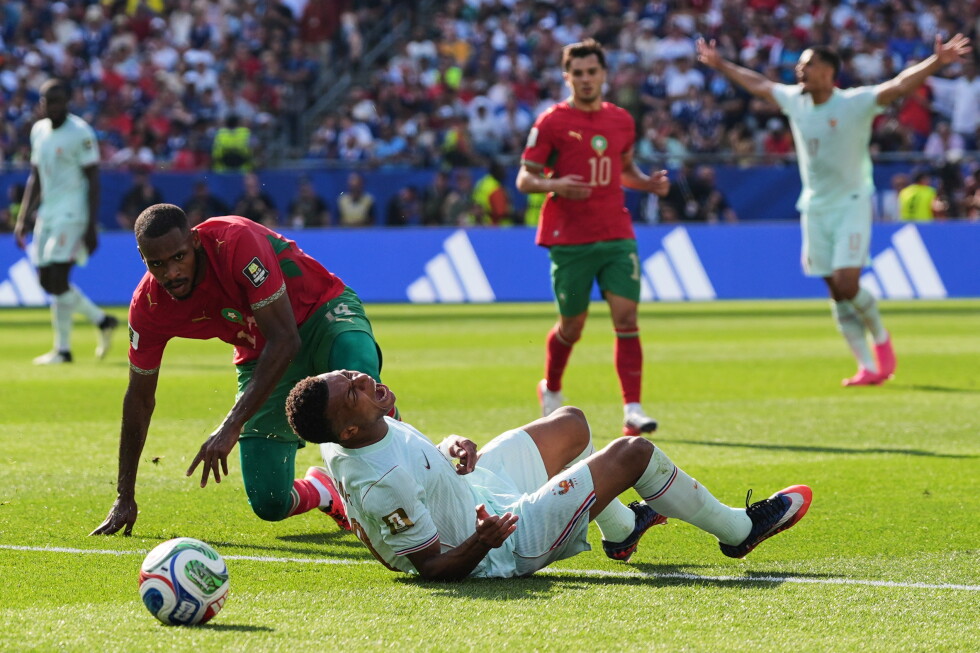
    LIVERPOOL, England — A devastating injury has dashed the World Cup dreams of Liverpool and France forward Hugo Ekitike, France men’s national team head coach Didier Deschamps officially confirmed Wednesday. The 26-year-old striker suffered a severe suspected Achilles tendon injury during the first half of Tuesday’s high-stakes Champions League clash between Liverpool and Paris Saint-Germain, leaving the pitch on a stretcher in the 27th minute after the incident.

    Deschamps confirmed in a statement that the severity of the damage will not only cut Ekitike’s current club season short with Liverpool, but also rule him out of the upcoming 2026 FIFA World Cup co-hosted by the United States, Canada and Mexico. Medical standards for severe Achilles tendon injuries typically require a recovery timeline of at least six months, making it impossible for Ekitike to regain full match fitness in time for the global tournament.

    Liverpool’s club hierarchy has not yet issued an official confirmation of the injury timeline, but Reds head coach Arne Slot acknowledged immediately after Tuesday’s match that the injury appeared “really bad,” hinting at the grim outcome that was later confirmed by Deschamps.

    This season, Ekitike has emerged as one of Liverpool’s most impactful attacking players, cementing his place as a locked-in starter for the Premier League side. Entering this week, he had notched 19 goals across all competitions for both club and country, including a critical strike in France’s 2-1 friendly win over Brazil just one month ago. His strong form had all but secured him a spot on Deschamps’ final World Cup squad heading into the summer tournament.

    Deschamps praised Ekitike’s rapid integration into the French national setup, noting that the striker is one of around 10 promising young talents who have earned their first senior international caps for Les Bleus over the past several months. “He had integrated perfectly into the group, both on and off the pitch,” Deschamps said. “This injury is a huge blow for him, obviously, but also for the French national team. His disappointment is immense.”

    Despite the crushing setback, Deschamps expressed unwavering confidence in Ekitike’s ability to return to top form, saying: “Hugo will get back to his best, I’m convinced of it. But I wanted to express my full support for him, as well as that of the entire national team staff.”

  • BBC plans to cut 2,000 jobs to reduce costs by about 10% over next 2 years

    BBC plans to cut 2,000 jobs to reduce costs by about 10% over next 2 years

    The British Broadcasting Corporation (BBC) announced Wednesday that it will eliminate up to 2,000 roles over the next two years as part of a sweeping plan to slash £500 million ($677 million) — or 10% of its annual operating budget. The layoffs, revealed during an internal staff briefing call, mark the largest workforce reduction at the UK’s public national broadcaster in over a decade.

    In a mass email sent to employees following the announcement, interim Director-General Rhodri Talfan Davies acknowledged that the decision would create widespread uncertainty for staff, but emphasized the broadcaster’s commitment to transparency around the severe fiscal challenges it faces. Davies outlined the multiple overlapping pressures driving the cost-cutting push: persistent high inflation across the UK media sector, ongoing debates and constraints over the broadcaster’s core license fee funding model, declining commercial revenue streams, and broader volatility in the global economy.

    The restructuring plan aligns with a fiscal framework the BBC laid out earlier this year, when it first disclosed it was facing “substantial financial pressures” and targeted 10% in total budget cuts by 2029. The majority of the cost savings are scheduled to be implemented in the 2027-2028 fiscal year, which begins April 1, 2027. The announcement comes just weeks before a leadership transition at the top of the organization: former Google executive Matt Brittin is set to take over as the new permanent Director-General next month, stepping into the role vacated by Tim Davie.

    Brittin’s appointment follows a high-profile controversy that led to the resignation of then-head of news Deborah Turness, who stepped down over a misleading edit made to a documentary covering former U.S. President Donald Trump’s January 6, 2021 speech shortly before his supporters stormed the U.S. Capitol. That controversy was followed by a $10 billion defamation lawsuit brought against the BBC by Trump.

    As a public cultural institution, the BBC has long been both celebrated by audiences and scrutinized by critics, funded primarily by an annual television license fee that currently stands at £180 ($244). Every UK household that watches live broadcast television or accesses BBC content is required by law to pay the fee, a funding model that has faced growing criticism in the age of on-demand digital streaming. Opponents of the license fee, which include competing commercial broadcasters, have ramped up their calls for reform as more consumers abandon traditional linear television viewing and forgo owning dedicated TV sets entirely.

    The current UK center-left Labour government has pledged to secure “sustainable and fair” long-term funding for the BBC, but has not ruled out scrapping the existing license fee model in favor of an alternative funding structure. First founded in 1922 as a radio broadcaster with the core mission to “inform, educate and entertain,” the BBC has grown into a sprawling media entity. It currently operates 15 national and regional television channels across the UK, multiple international broadcast channels, 10 national radio stations, dozens of local radio outlets, the globally distributed World Service radio network, and a large portfolio of digital products including the popular iPlayer streaming platform.

  • Sweden blames pro-Russian group for cyberattack last year on its energy infrastructure

    Sweden blames pro-Russian group for cyberattack last year on its energy infrastructure

    In a new public statement released Wednesday, Swedish authorities have formally attributed a 2023 cyberattack targeting a critical western Swedish heating plant to a pro-Russian faction with direct ties to Russia’s national intelligence and security apparatus. This official designation marks the first time Sweden has publicly acknowledged the breach, and it aligns with a growing cascade of warnings from other European nations that Moscow is systematically targeting continental critical infrastructure.

    Carl-Oskar Bohlin, Sweden’s Minister for Civil Defense, confirmed in the announcement that the attempt to compromise the heating plant’s operations ultimately failed, though he declined to share additional specific details about the incident or the facility involved. Bohlin drew a direct parallel between the Swedish attack and coordinated cyber intrusions that hit Polish energy infrastructure in December 2023. Those Polish attacks disrupted services at combined heat and power facilities that serve nearly 500,000 residential and commercial customers, alongside targeting wind and solar energy generation sites. Following the incident, Polish investigators concluded that the hackers responsible held direct connections to Russian state intelligence services.

    Bohlin emphasized that cross-border cyber operations targeting the control systems of European critical infrastructure, including both the Swedish and Polish incidents, pose severe, tangible risks to the stability of European societies. He characterized the sustained campaign of intrusions as evidence of reckless, high-risk behavior by Russian-linked actors that threatens everyday life across the continent.

    This string of attacks is not an isolated trend. An Associated Press investigation has tracked more than 150 separate incidents of sabotage and hostile malign activity across Europe since Russia launched its full-scale invasion of Ukraine in February 2022, all of which Western officials have linked to Moscow. Western intelligence and security assessments outline that the core strategic goals of this campaign are threefold: to erode public support for Ukraine among European populations, sow widespread fear and social division across the continent, and divert law enforcement and investigative resources away from other pressing priorities.

    The Kremlin has repeatedly and categorically denied allegations that it oversees any campaign of sabotage or hostile cyber activity across European territory.

    In the months leading up to Sweden’s announcement, other European capitals have already flagged similar Russian-linked attacks on their own critical infrastructure. In December 2023, Danish authorities disclosed that 2024 cyberattacks carried out by Russian actors against a national water utility left hundreds of residential properties without running water. In August 2023, Norwegian police confirmed that pro-Russian hackers remotely exploited a vulnerability to open a flood valve on one of the country’s dams, triggering uncontrolled water discharge. Earlier last year, Latvia’s State Security Service reported that arson attacks targeting train cars and railway infrastructure were carried out by operatives acting on behalf of Russian interests.

    This report was contributed by Ciobanu, reporting from Warsaw, Poland.

  • After criticizing the pope, Trump slams Italy’s Meloni over lack of support for Iran war

    After criticizing the pope, Trump slams Italy’s Meloni over lack of support for Iran war

    The once-anticipated role of Italian Prime Minister Giorgia Meloni as Europe’s primary bridge to U.S. President Donald Trump now teeters on collapse, after a series of public broadsides from the American leader over her refusal to back his administration’s war on Iran and her condemnation of his criticism of Pope Leo XIV.

    In an interview with leading Italian national newspaper Corriere della Sera, Trump made clear his disillusionment with Meloni, who had long been counted among his closest European allies. “I thought she had courage,” Trump told the outlet. “I was wrong.” The verbal rebuke came after Meloni publicly labeled Trump’s attack on the pope “unacceptable,” and maintained Italy’s firm refusal to join the U.S.-led military campaign against Iran – a stance that included blocking U.S. bombers from accessing a key Italian air base in Sicily last month.

    Meloni has yet to issue a direct public response to Trump’s attacks, but foreign policy analysts widely agree the split could work to her political advantage, as she navigates the aftermath of a lopsided referendum defeat last month and seeks to insulate her government from backlash over the deeply unpopular Iran war, which has sent domestic energy prices soaring across Italy.

    “I actually think this is a godsend for her,” explained Nathalie Tocci, director of the International Affairs Institute and a professor at Johns Hopkins SAIS Europe. “Trump has become completely toxic across Europe, across much of the world, including Italy.”

    Trump doubled down on his criticism during an appearance on Fox News Wednesday, confirming what insiders had hinted at for months: the once-close personal and political bond between the two nationalist leaders has definitively frayed. “She’s been negative,” Trump said. “Anybody that turned us down to helping with this Iran situation, we do not have the same relationship.”

    The breakdown of the alliance follows a 15-month arc that began with high expectations. Meloni was the only European Union leader invited to Trump’s second inauguration, and political observers widely predicted she would leverage her close personal ties to advance Italian interests after he returned to office. Both leaders share nationalist ideological leanings and hard-line positions on immigration, creating what was seen as a natural alignment. But the relationship began to sour almost immediately, when Italy was hit hard by Trump’s global tariffs, leaving Meloni with little tangible gain to show for her overtures to the White House. When asked if the two leaders had spoken this month, Trump told Corriere della Sera, “No, not in a long time.”

    Tensions grew after an awkward Oval Office meeting one year ago, where Meloni avoided direct confrontation over Trump’s tariff policies. The rift widened sharply over the Iran war, with Meloni holding firm to Italy’s neutral position. Her public rebuke of Trump’s comments on the pope marked the most direct public criticism she has leveled at the U.S. president to date.

    Tocci argues the split is not the result of a deliberate shift by Meloni away from Trump, but rather a consequence of the U.S. president’s increasingly erratic public posture. “It’s been building up over time, not so much because she is moving away from him but because he has become increasingly unhinged,” she noted.

    Senior members of Meloni’s government have sought to downplay the public dispute, emphasizing that the broader U.S.-Italy transatlantic alliance remains intact. Adolfo Urso, a cabinet minister from Meloni’s far-right Brothers of Italy party, told Italian outlet Radio 24 that the row would not shake the longstanding partnership between the two nations. “Italy and the United States are allied countries and maintain their relationship and alliance within international institutions, starting obviously with the Atlantic Alliance,” Urso said, adding that the Catholic Church’s moral teachings “cannot crack relationships consecrated in alliances signed a few decades ago.”

    Mariangela Zappia, president of the Italian think tank ISPI and a former Italian ambassador to the United States, framed Trump’s heated reaction as symptomatic of broader frustration with Europe, not just Italy. Beyond failing to secure unified European backing for the Iran war, Trump recently lost one of his most loyal far-right European allies after Viktor Orbán’s electoral defeat in Hungary over the weekend.

    Even so, Zappia stressed that Trump’s personal attack on Meloni should not be interpreted as a permanent fracture to the broader transatlantic alliance. “Europe absolutely considers the United States its historic ally, but in some way wants to be involved in the decisions that are taken,” Zappia said. For Trump, she added, the takeaway is clear: “this European Union is not easy to dismantle. We are different, we react differently. Some are clearly anti-Trump, some are pro-Trump but in the end, destroying the European project, separating us on the things on which we see as our future, that is very difficult.”

    For Meloni, the immediate priority is shoring up domestic political support after last month’s referendum defeat, which functioned as an informal confidence vote on her leadership. She recently embarked on a high-profile two-day tour of three Gulf states, seeking to secure new long-term gas and oil deals to ease Italy’s ongoing energy crisis driven by the Iran conflict, but returned to Rome without any binding formal agreements. Earlier this week, she announced Italy would not automatically renew its defense cooperation agreement with Israel, after warning shots struck an Italian UN peacekeeping convoy in southern Lebanon. Analysts widely view the move as a symbolic gesture driven by domestic politics, rather than a substantive shift in Italian foreign policy, given deep public opposition to Israel’s actions in the region among Italian voters.

    “The Gulf tour was a way to show public opinion that she was being proactive. The fact it didn’t actually lead to anything is beside the point,” Tocci explained. Of the non-renewal of the Israel agreement, she added: “substantively is rather meaningless because there is not much in this agreement but symbolically it helps because Israel has become just so unpopular in Italian public opinion.”

    Even with these political calculations working in her favor, some political analysts predict a challenging remaining 18 months of Meloni’s mandate before national elections scheduled for 2027, with the economic fallout of the Iran war continuing to weigh on household finances. Roberto D’Alimonte, a professor of government at Rome’s LUISS University, noted that Italian voters are focused on tangible relief from rising energy costs, not just symbolic political gestures. “People want to see their gas bills go down, not just see Meloni talk about gas,” D’Alimonte said. “What matters are the bills you get every month.”

  • Mbappé’s France faces Haaland’s Norway, Senegal and Iraq in World Cup Group I

    Mbappé’s France faces Haaland’s Norway, Senegal and Iraq in World Cup Group I

    As the 2026 FIFA Men’s World Cup kicks off, the tournament’s opening Group Stage clash between defending runner-up France and Senegal at New Jersey’s MetLife Stadium carries far more than just preliminary points – it revives one of the biggest upsets in World Cup history. Twenty-four years ago, at the 2002 tournament’s Seoul opener, Senegal’s “Lions of Teranga” stunned defending champion France 1-0, a result that sparked chaotic, joyful street celebrations across Dakar that are still remembered by soccer fans worldwide.

    Heading into the 2026 tournament, France enters as one of the clear title favorites, chasing its third World Cup crown following victories in 1998 and 2018. Led by 27-year-old superstar Kylian Mbappé – currently in the peak of his career – Les Bleus’ roster boasts a deep lineup of elite talent, including strikers Hugo Ekitike, winger Ousmane Dembélé and attacking midfielder Michael Olise. In their final pre-tournament warm-up matches before June, France turned in strong performances, beating Brazil 2-1 and Colombia 3-1 to build momentum.

    Mbappé, who claimed the 2022 World Cup Golden Boot after scoring eight goals in Qatar, made history in that tournament’s final by becoming just the second men’s player ever, after England’s Geoff Hurst in 1966, to net a hat trick in a World Cup final. Heading into the 2026 June friendlies, Mbappé sits on 56 international goals, just one goal away from breaking Olivier Giroud’s all-time French scoring record. The emotional sting of France’s 2022 penalty shootout loss to Argentina remains fresh for the star. “Personally, I’m never going to get over it,” Mbappé has said of that final defeat.

    Since lifting the World Cup trophy in 2018, France has endured a string of near-misses and early exits in major tournaments: they fell to Switzerland in the Euro 2020 round of 16, lost the 2022 World Cup final to Argentina, and were knocked out by Spain in the Euro 2024 semifinal. A third World Cup title in 2026 would cement France’s place among the global soccer elite, making it just the fifth nation to earn three or more World Cup championships, joining Brazil (five), Germany and Italy (four each) and Argentina (three).

    Longtime head coach Didier Deschamps, who has led the French national team since 2012, has confirmed he will step down from his role following this tournament. During the team’s preparation in the United States, Deschamps publicly raised concerns about logistics affecting the team’s readiness, particularly highlighting frustrating delays caused by heavy traffic and overlong security lines. During a March friendly against Brazil held in Foxborough, Massachusetts – the same city that will host France’s first-round match against Norway – Deschamps noted, “The hardest part is the roads that take a long time, too long, and so to come to the stadium it took us an hour and 15 minutes before a match. It’s not easy.”

    France’s first-round opponent Norway is making its first World Cup appearance in 28 years, having last qualified in 1998, and just its fourth trip to the tournament overall. The side is led by 25-year-old Erling Haaland, one of the most prolific strikers in world soccer, who has scored more than 30 goals in four consecutive club seasons for Manchester City. Heading into June 2026, Haaland already holds Norway’s all-time international scoring record with 55 national team goals. Haaland has acknowledged the heavy weight of expectation on his shoulders as his country’s driving force toward a deep run. “It’s a great responsibility to bring Norway to the World Cup,” he said. “It’s a lot on my shoulders and that’s what I’ve been working to do.” Haaland follows in his father Alfie’s footsteps – the elder Haaland represented Norway at the 1994 World Cup, which was also hosted by the United States.

    Norway’s attacking depth is bolstered by 30-year-old striker Alexander Sørloth, another consistent goalscorer, while captain and star midfielder Martin Ødegaard has been hampered by knee and shoulder injuries through the 2025-26 club season. This tournament marks Norway’s first major international competition since it exited in the group stage of its only European Championship appearance in 2000.

    Senegal, for its part, is heading to its third consecutive World Cup, but enters the tournament mired in controversy over its 2025 Africa Cup of Nations title. The Lions of Teranga defeated Morocco in the AFCON final in January 2025, but were stripped of the championship title after Senegal’s coach Pape Thiaw pulled his team off the pitch for 15 minutes to protest a late penalty awarded to Morocco. The Confederation of African Football ruled the move a forfeit, and Senegal has since filed an appeal to reverse the decision. Regardless of the ongoing title dispute, Senegal remains one of the top-ranked teams in African soccer, having won the 2021 AFCON title, when it beat Egypt on penalties after a scoreless draw. That decisive penalty was scored by 32-year-old veteran Sadio Mané, who is still Senegal’s all-time leading scorer with 53 international goals, including five goals in 2026 World Cup qualifying. Other key players for Senegal include goalkeeper Édouard Mendy, midfielder Idrissa Gueye and defender Kalidou Koulibaly.

    Completing the four-team group, Iraq is making its first World Cup appearance in 40 years, having last qualified for the 1986 tournament in Mexico, where the side lost all three of its group stage matches. The “Lions of Mesopotamia” secured their 2026 spot with a playoff win over Bolivia, and are led by coach Graham Arnold, a native Australian who is serving his third stint with the side. Iraq’s top threats include 30-year-old striker Aymen Hussein, who ranks fifth on the country’s all-time scoring list with 33 international goals, forward Mohanad Ali, and midfielder Amir Al-Ammari.

    As kickoff at MetLife Stadium approaches, all four teams will look to turn preparation into results, with France aiming to exorcise the demons of 2022 and Senegal hoping to repeat its historic 2002 upset against Les Bleus.

  • House Democrats will try anti-corruption message to gain traction against Trump

    House Democrats will try anti-corruption message to gain traction against Trump

    In a strategic move shaped by a recent opposition upset in Hungary, House Democrats are rolling out a new anti-corruption task force aimed at targeting former President and current presidential candidate Donald Trump ahead of the upcoming midterm elections, seeking to flip control of Congress from Republican hands. The plan draws direct inspiration from the opposition coalition that ousted Hungarian Prime Minister Viktor Orbán earlier this year, where a sweeping anti-corruption messaging campaign formed the core of the victorious electoral strategy.

    The new cross-ideological task force, set to be officially announced Wednesday, will focus on two key priorities: overhauling federal ethics rules and rolling back policies that restrict access to voting. Beyond legislative reforms, the group will center its public messaging on scrutinizing the Trump family’s controversial business dealings and the sweeping changes Trump has made to the federal government during his current second term. Democrats have repeatedly labeled Trump’s second administration the most corrupt in U.S. history, a claim the White House has not yet responded to as of this reporting.

    Leading the initiative is Representative Joe Morelle, the highest-ranking Democrat on the House Administration Committee and a long-time close ally of House Minority Leader Hakeem Jeffries. Morelle outlined that Jeffries’ core motivation for forming the task force stems from growing concern that public trust in U.S. governing institutions is eroding, as policy decisions are increasingly made to advance the personal financial and political interests of officeholders — including the president — rather than serving the needs of ordinary American citizens.

    Among the key policy proposals being floated by task force leadership are a complete ban on stock trading for all federal officials, covering members of Congress, the executive branch, and sitting federal judges. Additional potential reforms include a formal code of ethics for the U.S. Supreme Court and binding term limits for sitting Supreme Court justices.

    To build broad appeal for the initiative, Democratic leadership has assembled a task force that balances ideological and regional representation, blending progressive and moderate party factions. The membership includes prominent progressive figures such as Congressional Progressive Caucus leader Greg Casar of Texas, Representative Alexandria Ocasio-Cortez of New York, House Oversight Committee top Democrat Robert Garcia of California, and House Judiciary Committee ranking member Jamie Raskin of Maryland. It also includes moderate leadership, such as Brad Schneider of Illinois, head of the centrist New Democrat Coalition. While this diversity creates an opportunity for a broad base of support, it also presents a challenge: forging a cohesive, unified messaging and policy agenda that satisfies all factions of the party.

    Outside group advisors backing the strategy echo the lessons learned from the Hungarian election. Ben Raderstorf, a strategist for Protect Democracy — a nonpartisan group combating U.S. authoritarianism that is consulting Democrats on the plan — noted that Orbán’s opposition won by running a loud, engaging, attention-grabbing anti-corruption campaign that cut through crowded media cycles, rather than relying on dry, conventional congressional hearings that rarely capture public interest. Justin Florence, co-founder of Protect Democracy, added that the task force will need to prioritize a narrow set of key issues to avoid being spread too thin by the wide range of possible ethics reforms.

    The shift to a front-and-center anti-corruption message comes as House Democrats assess their electoral messaging after the 2024 presidential election. While party members debated whether previous warnings about threats to American democracy resonated with voters, many now agree that Trump’s own actions have shifted public opinion in the party’s favor. Task force co-chair Representative Nikema Williams of Georgia framed the effort as a response to what she calls Trump’s active meddling in U.S. elections and push for voter suppression, which she labeled a modern “Jim Crow 2.0.” Williams vowed the task force would hold Trump accountable for what she calls his corrupt schemes, expose his actions to the American public, and advance the substantive ethics reform that voters deserve.

    Government watchdog groups have welcomed the initiative, but are pressing Democrats to turn rhetoric into actionable policy. Robert Weissman, president of progressive watchdog group Public Citizen, which has held talks with task force members, said the hope is that the effort produces serious, broad policy change rather than just empty campaign talking points. The ultimate goal, Weissman emphasized, is not just to address the extreme corruption of the Trump administration, but to fix the long-standing systemic flaws that have allowed the Washington political process to be rigged in favor of special interests.

    Anti-corruption campaign promises are not new to modern U.S. politics. Trump himself ran for president in both 2016 and 2024 on a pledge to “drain the swamp” of Washington corruption. House Democrats similarly won control of the chamber in the 2018 midterm elections, during Trump’s first term, running on a similar anti-corruption platform. For the current iteration, Morelle acknowledged that the party starts with low levels of public trust in institutions, but said Democrats are prepared to put significant work into earning that trust from voters ahead of election day.