BUDAPEST, Hungary – Just three days after his center-right Tisza Party secured a historic landslide victory that ended Viktor Orbán’s 16-year hold on Hungary’s premiership, opposition leader Péter Magyar has confirmed an accelerated timeline for the handover of power, with the new government set to take office in the first week of May. Magyar’s win came on the back of broad voter support that delivered Tisza a two-thirds supermajority in Hungary’s parliament – a threshold that gives the incoming administration the legal power to rewrite the constitution and dismantle core elements of Orbán’s long-standing political framework. In a press briefing outside the Budapest presidential palace Wednesday, Magyar told reporters that following a closed-door meeting with Hungarian President Tamás Sulyok, the head of state has committed to scheduling the new parliament’s inaugural session for either May 6 or 7, putting the transition nearly a week ahead of the legal deadline of May 12 required by Hungarian election law. Sulyok, who was appointed to the presidency by Orbán’s outgoing parliamentary majority, also confirmed he will nominate Magyar as the country’s next prime minister, a formal step required to confirm his appointment. “All parties agree that after such a clear, overwhelming mandate from Hungarian voters, it serves the best interests of the nation for this government and regime change to take place as quickly as possible,” Magyar told reporters Wednesday. The accelerated transition caps a dramatic political upset that saw Orbán, one of Europe’s longest-serving incumbent leaders, ousted from power after 16 consecutive years in office, with youth turnout and widespread discontent with Orbán’s governance driving the opposition’s historic win. Since Sunday’s result, Magyar has moved quickly to lay out his policy and institutional overhaul plans, including a commitment to restructure Hungary’s cabinet system to reestablish standalone ministries for health, environmental protection, and education – three portfolios that were merged into larger government departments under Orbán’s administration. In his first appearance on Hungary’s public state broadcaster in nearly two years Wednesday morning, Magyar announced a sweeping immediate change to the outlet’s operations: once his government takes office, all existing news programming will be suspended until new, independent governance structures can be put in place to guarantee objective, unbiased coverage. For over a decade, the public broadcaster has been widely criticized as a propaganda mouthpiece for Orbán’s Fidesz party, a flaw Magyar has made a core target of his reform agenda. “One of the central promises of our campaign is that this factory of lies will be shut down the moment the Tisza government is formed,” he told the broadcaster’s host Wednesday. Magyar has also called on Orbán’s outgoing administration to serve only as a caretaker government during its final weeks in office, warning the departing leadership against making any last-minute policy decisions that could harm national interests or create obstacles for the incoming government. A key point of tension between the incoming leadership and the presidency remains Sulyok’s future in office: Magyar has formally asked Sulyok to step down once the new government is installed, arguing the president, as an appointee of the Orbán regime, is unfit to represent national unity and uphold the rule of law. Sulyok has said he will consider the resignation request. If Sulyok refuses to step down voluntarily, Magyar confirmed Wednesday that his supermajority-controlled parliament will pass constitutional changes to remove Sulyok along with other political appointees installed by Orbán’s government. “I reiterated to the president that he is unworthy of embodying the unity of the Hungarian nation, and unfit to be the guardian of the law,” Magyar said. The early inauguration schedule clears the way for Magyar’s administration to begin its wide-ranging reform agenda sooner than initially expected, marking a definitive end to Orbán’s era of populist governance in Hungary.
标签: Europe
欧洲
-

Ukraine’s Zelenskyy pursues more arms deals with allies to help check Russia’s invasion
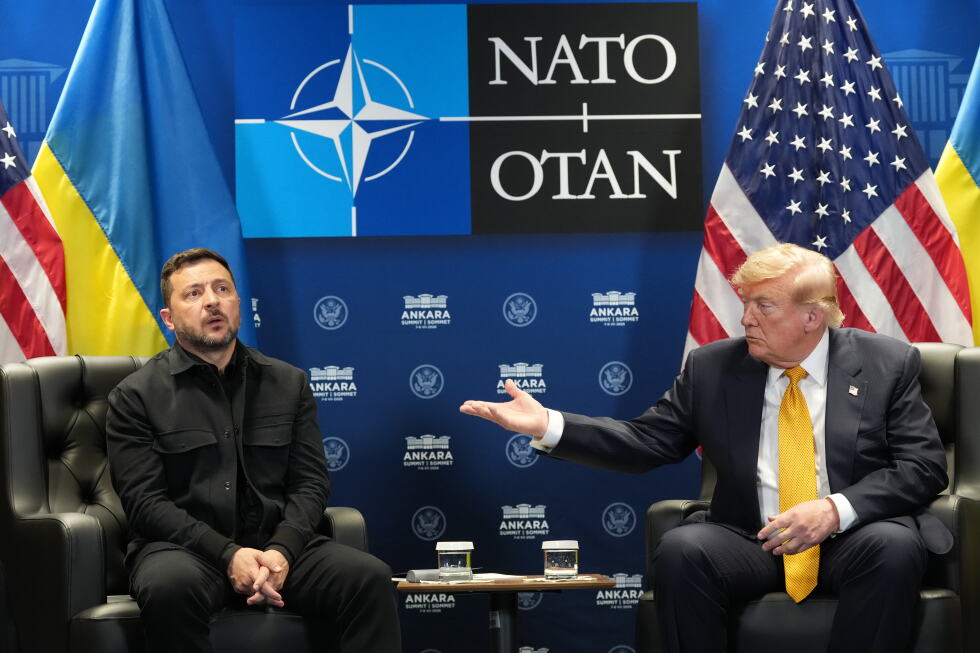
As Russia escalates deadly targeting of Ukrainian civilians and critical public infrastructure, Ukrainian President Volodymyr Zelenskyy has made securing Western backing for expanded air defense capabilities his nation’s top diplomatic priority during a urgent three-capital tour of Europe this week.
Zelenskyy’s trip, which unfolded across 48 hours with stops in Berlin, Oslo, and Rome, comes amid a fresh wave of Russian long-range attacks that left at least two civilians dead this week, including an 8-year-old boy killed in the central Cherkasy region and a woman killed in a strike on a bus stop kiosk in southern Zaporizhzhia. The strikes hit more than six rear-area regions far from the front lines between Tuesday and Wednesday, extending a relentless campaign of bombardment that has stretched Ukraine’s existing air defense stocks thin.
“Every day we need air defense missiles — every day Russia continues its strikes,” Zelenskyy wrote in a post on the Telegram messaging platform Wednesday. More than four years into Russia’s full-scale invasion, Ukraine has built combat-proven expertise in drone interception and even developed innovative indigenous air defense technologies. But Kyiv has been blocked from leveraging these advances by a critical gap in funding that prevents scaling up domestic production to meet the constant demand for defensive systems.
Ahead of Wednesday’s online coordination meeting of over 50 defense partners supporting Ukraine — chaired by German Defense Minister Boris Pistorius and British Defense Secretary John Healey, with NATO Secretary-General Mark Rutte in attendance — the United Kingdom announced a major new weapons package: 120,000 drones set to be delivered to Ukraine this year, marking the largest single drone commitment London has made to date. The shipment includes long-range strike platforms, intelligence and reconnaissance drones, logistics support drones, and maritime-capability systems, though officials have not yet specified a timeline for deployment.
The latest Russian assault on Wednesday included the largest single drone barrage Ukraine has faced in nearly two weeks: the Ukrainian Air Force confirmed that Russia launched 324 drones and three ballistic missiles into Ukrainian territory overnight, 309 of which were successfully intercepted by existing air defenses. Before dawn Wednesday, Russian forces also dropped a 1.5-ton FAB-1500 glide bomb on central Sloviansk, destroying a landmark children’s sports facility the city relied on for youth programming. A separate overnight strike on Dnipro, a major southeastern Ukrainian city, hit two university campuses, damaging academic buildings, student dormitories, and adjacent residential homes. Dnipro Mayor Borys Filatov confirmed that over 1,000 windows in surrounding structures were shattered by the blast wave, and emphasized that no military targets were located in the strike zone.
On the opposite side of the front, Russian air defenses claimed to have intercepted 85 Ukrainian drones overnight across multiple western and southern Russian regions, the annexed Crimean Peninsula, and the waters of the Black and Azov Seas. Local authorities in Sterlitamak, a Russian industrial city roughly 1,300 kilometers east of the Ukrainian border, confirmed that downed drone debris sparked a fire at a facility in the city’s industrial zone. Radiy Habirov, governor of the Bashkortostan region that hosts Sterlitamak, did not release additional details on the extent of damage or any casualties from the incident.
During his European tour, Zelenskyy has already secured new pledges of military and financial support from Germany and Norway, and is pushing two key priorities to address Ukraine’s air defense gap: first, urging European nations to continue contributing to a shared fund dedicated to purchasing American-made air defense systems, particularly Patriot batteries capable of intercepting Russian cruise and ballistic missiles that regularly target civilian areas. Second, he is advocating for accelerated joint weapons production agreements with European partners for drones and interceptors, while pressing the European Union to quickly disburse a promised €90 billion ($106 billion) support loan that has faced political delays in recent months. No new U.S.-mediated peace talks between Kyiv and Moscow have been announced amid the ongoing escalation.
-

Ye postpones Marseille concert after French authorities say they will seek a ban
In a development that follows growing international backlash against the rapper formerly known as Kanye West, who now goes by Ye, the artist has announced he will postpone his planned June 11 performance at Marseille’s iconic Stade Vélodrome, after top French officials confirmed they would pursue every legal avenue to ban the event entirely.
The artist’s announcement arrives just seven days after UK officials barred him from entering the country, where he was scheduled to headline July’s Wireless Festival. That ban came in response to sustained public outrage over Ye’s long-documented history of antisemitic comments and hate speech.
Ye shared his decision with the public via a post on the social platform X on Wednesday, framing the postponement as his own independent choice. “After much thought and consideration, it is my sole decision to postpone my show in Marseille, France until further notice,” the 48-year-old wrote. “I know it takes time to understand the sincerity of my commitment to make amends.”
Long before Ye’s announcement, local and national French leaders had already made their opposition to the concert clear. Laurent Nuñez, France’s interior minister, confirmed through his office that the government was prepared to leverage “all possibilities” to stop the performance from moving forward as originally scheduled.
Marseille Mayor Benoît Payan was among the earliest and most vocal critics of the planned concert, arguing that the multicultural port city — which has centuries of deep-rooted immigration history and one of the largest Jewish communities in France — should not platform a figure who spreads hate. “I refuse to let Marseille be a showcase for those who promote hatred and unabashed Nazism,” Payan said in a previous statement. “Kanye West is not welcome at the Vélodrome, our temple of community and home to all Marseillais.”
Ye’s planned Marseille show is the latest in a string of canceled or blocked events across the globe stemming from his inflammatory remarks. Last year, he drew near-universal international condemnation after releasing a song titled “Heil Hitler” and listing a swastika-printed T-shirt for sale on his personal website. By the following July, Australian authorities revoked his performance visa and blocked him from entering the country, forcing the cancellation of a planned tour stop.
In January of this year, Ye issued a public apology for his actions, publishing a full-page open letter in The Wall Street Journal. In the apology, he attributed his harmful behavior to a four-month manic episode tied to his bipolar disorder, writing that the episode left him acting in “psychotic, paranoid and impulsive behavior that destroyed my life.”
In his latest social media post, Ye attempted to frame the postponement as a gesture of respect for his supporters. “I take full responsibility for what’s mine but I don’t want to put my fans in the middle of it. My fans are everything to me. Looking forward to the next shows. See you at the top of the globe.”
As of Thursday, no new date for the Marseille performance has been announced, and it remains unclear whether the concert will be rescheduled at a later date, or if it will be canceled entirely.
-

Magyar meets Hungarian president as Trump says next PM ‘a good man’
After ending Viktor Orbán’s 16-year grip on power in Hungary with a historic electoral landslide, incoming prime minister Péter Magyar has moved quickly to lock in a speedy handover of government, meeting with President Tamás Sulyok this week to formalize his transition to office. Sunday’s general election delivered a staggering rebuke of Orbán’s long-ruling Fidesz party, with Magyar’s newly formed Tisza Party securing a two-thirds supermajority in parliament — a result that upends more than a decade of Hungarian politics.
-

Ukraine’s military to get biggest-ever shipment of UK drones
As the war in Ukraine enters its fifth year, unmanned aerial systems have rapidly grown into one of the most decisive battlefield technologies shaping conflict dynamics on both sides. Against this backdrop, the United Kingdom has announced what its Ministry of Defence (MoD) calls the single largest drone donation Ukraine has received to date: a package of 120,000 unmanned aerial vehicles that marks a major expansion of Western military support for Kyiv.
The comprehensive donation includes multiple categories of drones tailored to diverse operational needs: long-range strike variants, reconnaissance models, logistics support drones, and maritime-capable systems, with the majority of the aircraft manufactured by UK-based defense firms. The MoD confirmed that delivery of this cutting-edge battlefield technology began earlier this month, describing the shipment as a transformative boost to Ukraine’s frontline capabilities.
British Defence Secretary John Healey framed the donation as a deliberate response to what he says is Russian President Vladimir Putin’s attempt to divert global attention from the war in Ukraine amid rising tensions in the Middle East. “Putin wants us to be distracted by events in the Middle East in recent weeks, but we will not be pulled off course,” Healey emphasized in an official statement. “Ukrainians continue to fight with huge courage and nothing will distract us from continuing to stand with them for as long as it takes to secure a just and lasting peace.”
Healey is scheduled to co-chair a high-stakes meeting of the Ukraine Defence Contact Group in Berlin later this week, alongside NATO Secretary General Mark Rutte and the defense ministers of Ukraine and Germany. The 50-nation coalition, which coordinates Western military support for Kyiv, is expected to discuss further long-term assistance commitments at the gathering. Separately, British Chancellor of the Exchequer Rachel Reeves is set to outline additional financial support measures for Ukraine during an upcoming meeting of international finance ministers in Washington, D.C.
The UK’s announcement comes on the heels of a landmark operational milestone claimed by Kyiv: last week, Ukrainian President Volodymyr Zelenskyy confirmed that Ukrainian forces had captured a Russian-held position using only a combination of ground-based and aerial drones, marking the first time such an operation has been conducted entirely with unmanned systems. The donation also follows public comments from Zelenskyy, who told reporters that U.S. peace negotiators currently “have no time for Ukraine” as they refocus their efforts on the escalating conflict between Israel and Iran.
Meanwhile, frontline violence has intensified across Ukraine following the expiration of a touted Russian Orthodox Easter ceasefire that expired at the end of Sunday. Ukraine’s national emergency services reported that overnight Russian strikes targeted an industrial zone in the northern city of Sumy, carrying out three separate attacks even as first responders were already working to clear damage from initial bombardments. Additional Russian strikes hit areas near the strategic port city of Odesa in southern Ukraine, sparking large fires in port-adjacent infrastructure.
Negotiations to end the 4-year conflict have stalled in recent weeks, after the United States — acting as a key mediator in talks between Kyiv and Moscow — shifted its diplomatic focus to the escalating crisis in the Middle East following the election of Donald Trump’s second term. The two sides remain deadlocked on core procedural terms for a lasting truce: Ukraine has repeatedly pushed for a full and permanent ceasefire as the first step toward negotiations on a final peace agreement, while Moscow insists that a final peace deal be agreed upon before any ceasefire takes effect. Kyiv has repeatedly cited this mismatch as evidence that Russia has no genuine intention of ending the invasion through diplomatic means.
-

Homeric hangover cure: Greek claim over ancient bovine belly broth stirs feud with rival Turks
A decades-long culinary rivalry between Greece and Turkey has reignited over a humble, hearty offal soup, with both nations staking competing claims to the dish as Greece pushes to have it recognized as an official intangible cultural heritage by UNESCO.
In the northern Greek port city of Thessaloniki, Dimitris Tsarouhas, a third-generation restaurateur who has spent decades perfecting the recipe for what Greeks call patsa, is leading the charge for UNESCO registration. The dish, a slow-simmered broth made from bovine bellies and trotters, has long been a beloved staple in Greek culture — particularly as a soothing morning meal that locals swear eases the discomfort of hangovers and even treats chronic stomach ailments. Proponents of the Greek claim trace the dish’s origins all the way back to 8th century BCE, referencing a mention in Homer’s *Odyssey* that describes a similar preparation served at a feast for Penelope’s suitors, moments before Odysseus reveals his identity after 10 years of travel. According to Tsarouhas, the epic describes a dish of stuffed bovine belly mixed with suet and blood — a description he says matches the core of modern Greek patsa perfectly.
Tsarouhas has not undertaken this effort alone. Working alongside a local Thessaloniki cultural association and Lena Oflidis, the only historian to have published a full book on the soup’s history, he has compiled a comprehensive dossier to submit to UNESCO outlining Greece’s historical and cultural connection to the dish. For the chefs who prepare patsa daily, the recipe’s lineage is clear: 22-year veteran patsa chef Pantazis Koukoumvris explains that ancient Greek cooks developed the preparation, which was later adopted by Byzantine chefs, passed to the Ottoman Empire, and preserved through generations in Greek cooking.
Beyond its legendary roots, regular patrons and proponents point to the dish’s practical and cultural place in modern Greek life. Dozens of customers flock to Tsarouhas’ restaurant at all hours, starting at dawn, to enjoy a bowl, customized to preference with coarsely or finely chopped meat, topped with mustard, hot pepper flakes and sesame seeds. Tsarouhas, citing medical research, notes that the slow-cooked trotters contain nearly 33.4% consumable collagen, making it a popular remedy for joint pain after surgery, stomach ulcers and other digestive issues linked to alcohol consumption. Long-time patron Christos Mousoulis emphasizes that regardless of any similarities between the Greek and Turkish versions, patsa has been a fixture in Greek family life for generations. “We grew up with Greek patsa,” he explained. That shared cultural connection, he argues, is the foundation of Greece’s claim.
But across the Aegean Sea, Turkish chefs, restaurateurs and members of the public are pushing back hard against the Greek bid, calling it an attempt to appropriate a dish that Turks have called iskembe çorbası, or simply iskembe, as a national staple for centuries. Unlike Greek patsa, which includes both tripe and trotters, Turkish iskembe is made exclusively with slow-cooked tripe, simmered for 8 to 9 hours overnight before being served in a rich garlicky broth.
Ali Turkmen, a 59-year-old Istanbul restaurateur who has specialized in iskembe for decades, says the dish is inherently tied to Turkish cultural identity. “It’s been a staple in our culture for centuries. Tripe soup is something specific to Turks,” he said, echoing the long-running pattern of culinary disputes between the two neighbors that have already included competing claims to baklava, stuffed grape leaves, and Turkish coffee, all legacies of centuries of shared Ottoman history.
Turkish historical evidence points to 17th-century writings from famed Ottoman traveler Evliya Celebi, who documented street vendors selling tripe and trotter soup in the streets of Istanbul in his *Book of Travels*, proving a 400-year recorded history of the dish in Turkish lands. Turkish media has widely framed the Greek bid as cultural appropriation, and members of the public are calling for official pushback. “Tripe soup is one of the dishes we should be promoting to the world,” said Murat Pajik, a regular customer at Istanbul’s iconic Alem Iskembe restaurant. “Measures need to be taken to protect our heritage.” Another patron, Engin Cakar, called the Greek claim futile: “This tripe dish is from our grandfathers, our mothers. It belongs to us.”
Despite the public friction, Tsarouhas remains confident in Greece’s case, striking a conciliatory tone amid the dispute. “Nobody’s stopping them from making their own claim,” he said. “We believe that we have all the documentation to secure certification for patsa as Greek heritage. We don’t have anything to divide with our neighbors — rather the taste unites us.”
The UNESCO registration process is expected to take months, leaving the question of which nation can lay claim to the beloved soup still very much up in the air.
-

Nazi search engine shows if ancestors were in Hitler’s party
Eight decades after the collapse of Nazi Germany, a newly launched online search tool is opening unprecedented access to millions of historical Nazi Party membership records, allowing ordinary people to uncover long-buried truths about their family’s past connections to the Hitler regime.
Developed by leading German newspaper *Die Zeit* in partnership with German and U.S. archival institutions, the platform lets users search the full collection of the NSDAP-Mitgliederkartei — a comprehensive set of roughly 10.2 million Nazi Party membership cards compiled between 1925 and 1945. For many descendants of Nazi-era Germans and Austrians, the tool is turning long-held family myths and unconfirmed suspicions into concrete, often shocking facts.
One of the early users, Austrian former news editor Christian Rainer, told reporters he located his grandfather’s entry within seconds of launching his first search. His grandfather joined the Nazi Party just five days after the Anschluss, Hitler’s 1938 annexation of Austria into the Third Reich — a timeline that caught Rainer off guard, even though he had long suspected his grandfather held Nazi sympathies. Rainer, who never met his grandfather, who died shortly before he was born in 1961, expressed particular surprise that his grandfather, an academic who should have been aware of the Nazi regime’s violent ideology, moved so quickly to formalize his membership. Rainer added that the search also brought him relief: it cleared other members of his family, including his father, who was drafted into the Wehrmacht in 1941 and repeatedly wounded in combat, of any suspected Nazi Party affiliation.
The story of how these membership records survived to be digitized is itself remarkable. As Allied forces closed in on Munich in the final days of World War II, Nazi leadership ordered the entire card collection destroyed by pulping. The records were saved by Hanns Huber, director of a local paper mill, who disobeyed the order and turned the documents over to U.S. occupying forces after Germany’s surrender. The cards played a critical role in post-war de-Nazification efforts, helping Allied officials identify former Nazi members and bar them from positions of power in West Germany’s new democratic government.
For nearly 50 years, the records were held by U.S. authorities at the Berlin Document Center. In 1994, the full collection was transferred to Germany’s Federal Archives, with microfilm copies sent to the U.S. National Archives in Washington, D.C. Until this year, accessing the records required submitting a formal written request to German archival authorities — a time-consuming process that put research out of reach for most casual users, particularly private individuals investigating their own family histories. That barrier was removed earlier this year, when the U.S. National Archives made its full set of digitized microfilm records available online. *Die Zeit* acquired the dataset, optimized it for public search, and launched the free public platform in early April 2025.
Public response to the tool has been far greater than organizers expected, with *Die Zeit* spokesperson Judith Busch describing user interest as “overwhelming.” In the weeks following launch, the platform has been accessed millions of times and shared across social media thousands of times as word of the resource spread. Many users have shared deeply personal reactions to their findings: one 71-year-old user commented on *Die Zeit*’s website that discovering two close relatives in the membership records dismantled generations of family denials, calling the shifted perspective “a bitter shock.”
Historians and users alike emphasize that the tool marks a major shift in how modern societies engage with the legacy of the Nazi era. For decades, public and academic research focused heavily on high-ranking Nazi officials and prominent figures who held posts in post-war German institutions. The new search engine puts the power of historical investigation into the hands of ordinary people, allowing them to confront personal and family histories that have remained hidden for generations. As Rainer put it, “Eight decades on, after the end of the World War, you can still find out truth that you haven’t known before.”
-

Man wins €1m Picasso painting in €100 charity raffle
A lucky Paris-based engineer and lifelong art lover has walked away with a priceless original Pablo Picasso masterpiece, valued at more than €1 million ($1.2 million), after having his name drawn at random from a pool of over 120,000 global participants in a charity fundraising raffle. Fifty-eight-year-old Ari Hodara first learned of his win during a video call with officials from Christie’s Paris auction house on Tuesday, his initial reaction one of healthy skepticism rather than unbridled joy. When informed he was now the owner of the 1941 work by the iconic Spanish modernist, Hodara asked the auction team: “How do I know this isn’t a prank?”
Organized to accelerate research into Alzheimer’s disease, this year’s raffle sold 120,000+ entries at €100 apiece to buyers across dozens of countries around the world. The draw ultimately generated approximately €11 million in total proceeds, a major milestone for the fundraising initiative that has delivered impactful global grants across its previous two editions.
This year’s top prize was *Tête de Femme* (Head of a Woman), a gouache-on-paper portrait created in Picasso’s instantly recognizable cubist style that depicts Dora Maar, his partner and frequent creative muse who was a prominent French surrealist artist in her own right. In a post-draw interview with auction staff, Hodara shared his reaction to the life-changing win. “I was surprised, that’s it,” he explained. “When you bet on this, you don’t expect to win… But I’m very happy because I’m very interested in painting, and it’s great news for me.” Hodara purchased his winning ticket — number 94,715 — just days before the draw, after stumbling on information about the raffle by chance over the preceding weekend.
The charity initiative, dubbed “1 Picasso for 100 euros”, was founded in 2013 by French journalist Peri Cochin, and has received official backing from the Picasso family and the Picasso Foundation throughout its history. Cochin noted that it was an especially happy outcome that the winner was a local Paris resident, eliminating complex international logistics for the handover of the valuable artwork. “It’s going to be very easy for us to deliver the painting, so we’re happy,” she said. The selection of Paris also holds special cultural resonance: the city was Picasso’s primary home and creative base for most of his adult career, and Parisian museums hold thousands of the artist’s works in their permanent collections.
Of the total funds raised in this year’s draw, €1 million will go to the Opera Gallery, which owned the portrait prior to the raffle. The remainder of the proceeds will be donated to France’s Alzheimer’s Research Foundation to advance clinical and academic research into the neurodegenerative condition. Olivier de Ladoucette, head of the foundation, called the initiative a critical step forward in the global fight against Alzheimer’s. “This Picasso initiative is one more building block so that one day Alzheimer’s will be nothing more than a bad memory,” he told the AFP news agency.
This year’s draw marks the third installment of the recurring charity event, which has supported different good causes across its history. The inaugural 2013 raffle, which raised funds for preservation work at the UNESCO World Heritage Site of Tyre in Lebanon, awarded the Picasso prize to a 25-year-old participant from Pennsylvania in the United States. The second edition, held in 2020, was won by a 58-year-old Italian accountant after her son gifted her a raffle ticket as a Christmas present. Proceeds from that draw funded public sanitation infrastructure projects in schools and rural communities across Cameroon, Madagascar and Morocco.
-

England beats Spain again, winning 1-0 in Women’s World Cup qualifier
LONDON – In a highly anticipated rematch between two of women’s soccer’s global powerhouses, European champion England secured a dramatic 1-0 victory over top-ranked Spain in a 2027 FIFA Women’s World Cup Group A3 qualifier at iconic Wembley Stadium on Tuesday. The only goal of the match came just three minutes after kickoff, when forward Lauren Hemp poked the ball into the net from an early corner kick. Although Spanish star Alexia Putellas made a last-ditch attempt to clear the ball off the goal line, replays confirmed the effort had already crossed the boundary, giving England an early lead that it never relinquished.
Tuesday’s clash marked the latest in a string of high-stakes meetings between the two elite sides. It mirrored the matchups of both the 2022 UEFA Women’s Euros final and the 2023 FIFA Women’s World Cup final, two of the biggest matches in recent women’s soccer history. In the 2022 Euros final, England claimed victory to defend their continental title, securing back-to-back European championships. Just one year later, Spain flipped the script at the 2023 World Cup, lifting the trophy for the first time in their history after defeating England in the final.
With the result, England maintains a perfect winning record through its qualifying campaign so far and sits firmly at the top of Group A3. Heading into the next round of matches, the three points gained from this marquee win give the Lionesses a major boost in their bid to qualify for the 2027 Women’s World Cup, which is scheduled to be hosted by Brazil. Fourth-ranked England’s defeat of world number one Spain also serves as a powerful statement of intent ahead of the upcoming tournament, reigniting debate over which side enters the global event as the favorite.
This report was compiled from original wire coverage of the match, part of ongoing international soccer qualifying action for the 2027 cycle.
-

Italy suspends defence agreement with Israel
In a significant shift that underscores growing rifts in Italy’s longstanding alignment with Israel and changing political tides ahead of next year’s national election, Italian Prime Minister Giorgia Meloni has announced her government will not renew the bilateral five-year defense cooperation agreement between Rome and Tel Aviv. The decision was framed as a response to “the current situation” in the region, though no further specific details were provided by the prime minister’s office.
While Italy and Israel have maintained historically solid diplomatic and security ties, relations have deteriorated sharply in recent weeks amid a series of escalating diplomatic spats. Last week, Italian officials summoned Israel’s ambassador to Rome after Israeli forces fired warning shots at a convoy carrying Italian UN peacekeepers deployed in southern Lebanon. The incident left one Italian vehicle damaged, though no peacekeepers were injured. Just days later, Israel reciprocated by calling in Italy’s top diplomat to protest harsh comments from Italian Foreign Minister Antonio Tajani, who publicly condemned what he called Israel’s “unacceptable attacks” on Lebanese civilians.
According to data compiled by the Stockholm International Peace Research Institute (SIPRI), Italy ranks as the third-largest supplier of arms to Israel, though Italian exports accounted for just 1.3% of all Israeli arms imports between 2021 and 2025. The United States and Germany hold the top two positions as Israel’s leading arms providers. Meloni’s announcement puts Italy in line with a growing bloc of European nations that have already paused or restricted arms exports to Israel since the launch of Israel’s large-scale military offensive in Gaza, which began after the October 7, 2023 Hamas attack that killed roughly 1,200 people in southern Israel and took 251 hostages into Gaza. As of the latest update from Gaza’s Hamas-run Ministry of Health, more than 72,330 Palestinians have been killed in Israeli military operations across the territory, including 757 fatalities recorded since a fragile ceasefire took effect in October 2025.
Domestically, the decision to end the defense pact renewal comes after months of mounting public pressure on Meloni’s administration. Hundreds of thousands of Italian citizens have participated in mass street protests and general strikes across the country demanding an end to arms sales and security cooperation with Israel, a call that has gained growing traction among voters. Until recently, Meloni’s right-wing coalition government had stood as one of Israel’s firmest allies in Europe, refusing to join the expanding group of nations that have formally recognized Palestinian statehood.
However, a key turning point came in late March, when Meloni’s coalition lost a high-profile national referendum on judicial constitutional reform. Political analysts widely framed the result as a de facto vote of no confidence in the government’s overall popularity, particularly its unpopular alignment with Israel and the current U.S. administration under President Donald Trump. With just 18 months remaining before Italy holds its next general election, Meloni has begun systematically adjusting her policy rhetoric to distance herself from these increasingly unpopular political associations.
In recent weeks, the rift between the Italian prime minister and the U.S. president has widened publicly. After the referendum defeat, Meloni described ongoing military escalations between the U.S.-Israel alliance and Iran as part of a dangerous pattern of international intervention that operates “outside the scope of international law”. Earlier this week, she issued a rare public rebuke of Trump, calling his recent disparaging remarks about Pope Leo XIV “unacceptable” and confirming the pontiff had her full solidarity.
The comment drew an immediate and harsh response from Trump, who told leading Italian daily *Corriere della Sera* that he was “shocked at her” conduct. “I thought she had courage, but I was wrong,” Trump said, adding that Meloni “does not care whether Iran has a nuclear weapon and would blow Italy up in two minutes if it had the chance.”
For months, Trump’s public support for Meloni was seen as a key political asset for the prime minister, with her supporters framing it as a unique opportunity for Italy to gain privileged influence in Washington as a leading interlocutor for the European Union. But as Trump’s approval rating has plummeted among Italian voters — a January public opinion survey found 63% of Italian electorate holds a negative view of the U.S. under his leadership — that close association has become a significant political liability. Meloni’s decision to distance herself from both Trump and Israel is widely interpreted as a calculated move to rebuild support among centrist and left-leaning voters ahead of the 2027 election.
In the days following the public exchange between Meloni and Trump, senior members of her government have rushed to defend the prime minister’s position while reaffirming the core of the Italy-U.S. alliance. “Italy’s alliance with the U.S. is built on mutual loyalty, respect, and honesty,” Foreign Minister Tajani wrote on social media platform X. “On Pope Leo XIV she said exactly what all of us Italians think. The prime minister and the government defend and will always defend only and solely the interests of Italy.” Defense Minister Guido Crosetto echoed that framing, noting: “Being allies does not mean accepting everything in silence, but having the courage to clearly state what one believes to be right.”
Italian defense ministry officials told the BBC that they are still assessing what concrete legal and operational changes the decision to scrap the defense pact renewal will bring to existing security cooperation frameworks between Italy and Israel.