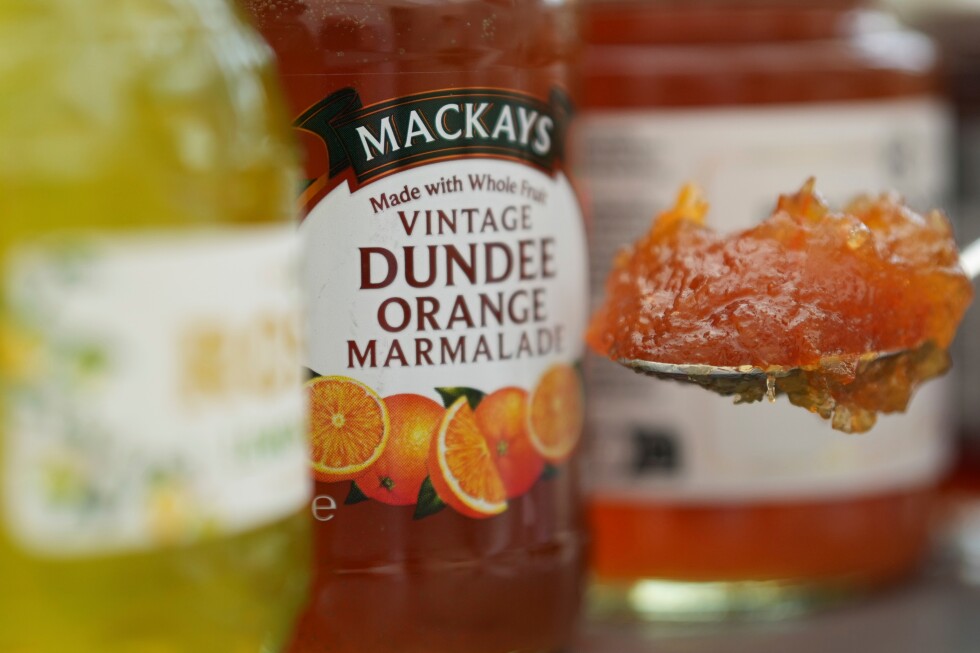
LONDON — A decades-old cultural icon of British breakfast tables has ignited a fiery political debate, as questions swirl over how post-Brexit alignment with European Union food regulations could reshape the definition of Britain’s beloved citrus marmalade.
For generations, marmalade — the tangy, orange-peel infused spread slathered on morning toast across the nation — has held far more than culinary significance in British life. It is forever linked to Paddington Bear, the globally adored fictional Peruvian bear who counts the spread as his favorite snack, and gained even more royal cachet during Queen Elizabeth II’s 2022 Platinum Jubilee, when the monarch starred in a viral comedy sketch alongside the character sharing her own love of the preserve.
The current controversy erupted after recent media reports claimed that Prime Minister Keir Starmer’s push for closer post-Brexit trade ties with the EU would force traditional British orange marmalade to be rebranded as “citrus marmalade” under new labeling rules. The story quickly tapped into long-running British Euroskeptic sentiment: tabloid newspaper the Daily Mail exclaimed “What would Paddington think!” earlier this month, while senior Conservative Party lawmaker Priti Patel accused the ruling Labour government of “attacking the great British marmalade.”
Like many so-called “euromyths” — sensationalized stories about EU overregulation that have long been a staple of British press coverage — the controversy holds a kernel of factual context. Decades ago, when the UK was still an EU member, British negotiators successfully pushed for a bloc-wide rule that restricted the term “marmalade” exclusively to citrus-based fruit preserves. All other fruit conserves had to be labeled as jam, a regulation that clashed with longstanding naming conventions across much of continental Europe: for example, the general term for all fruit spreads in German is “marmelade.”
After the UK’s departure from the EU in 2020, the bloc voted to relax the original rule, allowing member states to permit the use of “marmalade” for non-citrus spreads, so long as the fruit type is clearly marked on packaging. Now, as Starmer’s government seeks to align British food regulation with EU standards to smooth post-Brexit trade frictions, the issue has landed squarely in Westminster.
During Wednesday’s debate in the House of Commons, Democratic Unionist Party legislator Jim Shannon framed the change as unwanted overreach, decrying it as a case of “EU labeling interfering with our produce.” Liberal Democrat lawmaker Tessa Munt, who called the debate, argued that the change threatens the integrity of what she called a “distinctly British product.” Munt said she had already encountered non-citrus products labeled as “strawberry marmalade” and “pear marmalade” at high-end grocers, dismissing the offerings as an affront to tradition: “This is rubbish. There’s no such thing.” She urged the government to enshrine a rule that only citrus-based spreads can carry the marmalade name.
UK officials have moved to calm public fears, noting that most marmalade sold in Britain is already labeled with its citrus variety — such as “orange marmalade” or “Seville orange marmalade” — meaning most products already meet the proposed EU-aligned standards. Food Security Minister Angela Eagle acknowledged “a small change to our marmalade description rules,” but stressed that “the real-world impact would be minimal and consumers are unlikely to notice any difference.”
The debate has shone a light on how even the most seemingly minor regulatory changes can spark fierce political passions in the UK, years after the Brexit split, as the current government navigates a delicate path between mending trade ties with Brussels and protecting beloved national cultural traditions.