标签: Europe

欧洲

  • Russian drone attack kills 3 in southern Ukraine as further US-led peace talks approach

    Russian drone attack kills 3 in southern Ukraine as further US-led peace talks approach

    A lethal Russian drone offensive in Ukraine’s southern Zaporizhzhia region has resulted in three fatalities, with additional casualties reported in central Dnipropetrovsk, according to Ukrainian authorities. The overnight assault ignited significant fires in residential structures, necessitating extensive emergency response operations.

    Ukrainian President Volodymyr Zelenskyy has issued a grave warning regarding intelligence indicating Russia’s preparation for another massive aerial bombardment. Historical patterns reveal these coordinated attacks frequently involve hundreds of drones combined with cruise and ballistic missiles, systematically targeting Ukraine’s energy infrastructure.

    These persistent aggressions occur despite anticipated diplomatic engagements, with U.S.-mediated peace negotiations scheduled to resume this weekend. Zelenskyy emphatically stated that each Russian strike fundamentally undermines the credibility of these peace talks.

    The relentless bombardment of civilian territories behind the extensive 1,000-kilometer frontline continues unabated, despite widespread international condemnation nearly four years following Russia’s full-scale invasion.

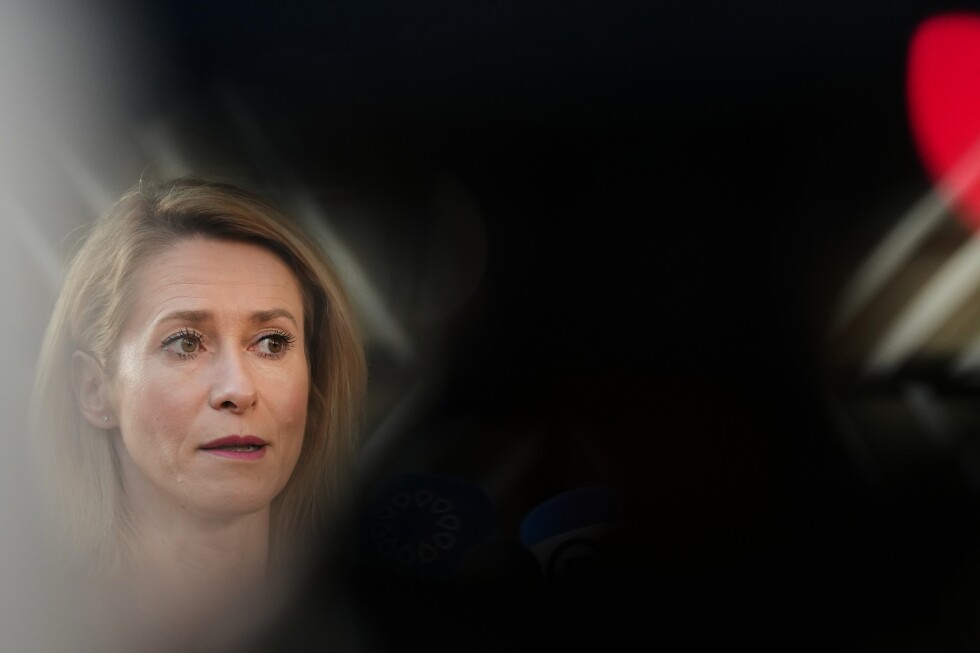
    European leadership has expressed deepening skepticism regarding Moscow’s commitment to genuine diplomacy. EU foreign ministers convened in Brussels, with Estonian Prime Minister Kaja Kallas accusing Russia of escalating civilian attacks due to battlefield stagnation. European officials emphasize the necessity of their involvement in settlement discussions, particularly given concerns that U.S.-led negotiations might overlook European security interests.

    A recently published think tank assessment projects combined military casualties may approach two million by spring, representing the highest troop mortality rate for any major power since World War II. Ukrainian Defense Minister Mykhailo Fedorov disclosed that Russia has launched over 6,000 drones during the past month alone, continuously refining both technology and tactics, compelling Ukraine to adapt its defensive strategies accordingly.

  • Man dies in crash near Irish border

    Man dies in crash near Irish border

    A fatal single-vehicle collision near the Irish border has claimed the life of a man in his 30s, with Irish police launching a witness appeal following the Wednesday evening incident.

    The tragedy occurred at approximately 19:30 local time along the Inishammon roadway connecting Monaghan town and Rosslea, County Fermanagh. According to Gardaí authorities, the victim was traveling alone when the crash occurred, resulting in immediate fatality at the scene.

    Preliminary investigations indicate no other vehicles were involved in the incident, though the precise circumstances leading to the collision remain under active investigation. The victim’s body has been transported to Our Lady’s Hospital in Navan, County Meath, where post-mortem examinations will be conducted to determine the exact cause of death.

    The roadway remains closed as forensic collision investigators continue their examination of the scene. Gardaí have issued a public appeal for any witnesses or individuals with relevant information to come forward, particularly those who may have traveled the route around the time of the incident or possess dash-cam footage that could assist the investigation.

    The border region community has been deeply affected by the tragedy, with local representatives expressing condolences to the victim’s family and urging motorists to exercise caution on the route, which has seen previous safety concerns raised by residents.

  • German leader hails Europe as an ‘alternative to imperialism and autocracy’

    German leader hails Europe as an ‘alternative to imperialism and autocracy’

    BERLIN — German Chancellor Friedrich Merz articulated a robust vision of the European Union’s global role on Thursday, characterizing the bloc as a compelling “alternative to imperialism and autocracy” in an increasingly competitive international landscape. Addressing the German parliament during a significant foreign policy address, Merz emphasized the EU’s capacity to establish partnerships with like-minded democracies through mutual respect and reliability rather than coercion.

    The Chancellor’s remarks came precisely one week after U.S. President Donald Trump retracted tariff threats against Germany and seven other European nations—a pressure tactic initially deployed to advance American claims over Greenland, the semi-autonomous territory of Denmark. Merz noted this episode demonstrated the EU’s capacity for rapid, unified response, stating unequivocally that the bloc “would not be intimidated again by tariff threats.”

    Merz acknowledged the emerging “world of great powers” where “a harsh wind is blowing,” but positioned this reality as creating opportunities for European leadership. He contended that open democracies with expanding markets actively seek what Europe offers: partnerships grounded in mutual respect rather than domination.

    While reaffirming Germany’s commitment to NATO and trans-Atlantic cooperation, Merz established clear parameters for this relationship. “We will always reach out the hand of cooperation to the United States of America,” he stated, while simultaneously asserting that “as democracies, we are partners and allies and not subordinates.”

    The Chancellor indirectly addressed recent controversial remarks by President Trump regarding NATO allies’ military contributions. Without directly referencing Trump’s claims that non-U.S. NATO forces avoided front-line positions in Afghanistan, Merz highlighted Germany’s significant sacrifices—59 troops killed and over 100 wounded during their nearly two-decade deployment. He firmly declared that Germany “will not allow this deployment, which we also performed in the interest of our ally, the United States of America, to be disparaged and demeaned today.”

    Merz advocated for European strategic autonomy through enhanced defense capabilities, technological independence, and economic growth, urging the continent to “learn the language of power politics.” Simultaneously, he endorsed expanding the EU’s network of trade agreements, specifically mentioning recently concluded deals with Mercosur and India, while maintaining that existing alliances like NATO remain fundamentally valuable.

  • EU appears poised to sanction Iran’s Revolutionary Guard over protest crackdown

    EU appears poised to sanction Iran’s Revolutionary Guard over protest crackdown

    BRUSSELS — The European Union is preparing to impose unprecedented sanctions against Iran’s paramilitary Revolutionary Guard, designating the powerful military force as a terrorist organization in response to Tehran’s brutal suppression of nationwide protests. This decisive move represents a significant escalation in Western pressure on the Islamic Republic, which already faces severe economic strain from existing international sanctions.

    The EU’s top diplomat, Kaja Kallas, announced the landmark decision, stating that Iran’s Revolutionary Guard would be placed “on the same footing with al-Qaida, Hamas, and Daesh” in the bloc’s terrorist designation list. “If you act as a terrorist, you should also be treated as a terrorist,” Kallas declared, underscoring the EU’s hardening stance toward Tehran’s human rights violations.

    This development occurs against a backdrop of heightened military tensions in the Middle East. The United States has deployed the USS Abraham Lincoln aircraft carrier group and several guided-missile destroyers to the region, capable of launching sea-based attacks. Iran has responded with counter-threats, including warnings of preemptive strikes against American military bases and Israeli targets.

    The protests, initially sparked by economic grievances, have evolved into a broader challenge to Iran’s theocratic government. According to activist reports, at least 6,373 people have been killed during the crackdown on demonstrations. Iran’s economic situation continues to deteriorate, with its rial currency plummeting to a record low of 1.6 million to one U.S. dollar on Thursday.

    French Foreign Minister Jean-Noël Barrot emphasized that “the unbearable repression that has engulfed the peaceful revolt of the Iranian people cannot go unanswered.” Despite initial reservations from France regarding potential risks to detained French citizens and diplomatic missions, President Emmanuel Macron’s administration has now endorsed the sanctions decision.

    Under EU legislation, sanctions require unanimous approval from all 27 member states, a requirement that has previously complicated the bloc’s ability to leverage its economic influence in international crises, including responses to Russia’s invasion of Ukraine.

  • Trubin’s ‘miracle’ – how Mourinho’s Benfica stunned Real Madrid

    Trubin’s ‘miracle’ – how Mourinho’s Benfica stunned Real Madrid

    In an extraordinary climax to the Champions League group stage, Benfica goalkeeper Anatoliy Trubin authored one of European football’s most dramatic moments with a stoppage-time header that eliminated 15-time champions Real Madrid while salvaging his team’s continental campaign.

    The defining moment unfolded deep into added time at Estadio da Luz with Benfica clinging to a 3-2 lead. Despite the advantage, mathematical elimination loomed until the Ukrainian goalkeeper’s unprecedented intervention. Sent forward for a final free-kick, Trubin connected perfectly with a bullet header that sparked pandemonium throughout the Lisbon stadium.

    “A fantastic goal, a historic goal, a goal that nearly brought the whole stadium down,” declared manager José Mourinho, who secured his first victory against Real Madrid since returning to Benfica 25 years after his brief initial tenure. “For Benfica, it’s incredible prestige to beat Real Madrid.”

    The victory proved particularly crucial given the tournament’s revamped league format, with 18 matches concluding simultaneously. Trubin’s goal propelled Benfica from elimination to the playoff round at Marseille’s expense, completely altering the competition’s landscape in the closing seconds.

    The 24-year-old goalkeeper admitted initial confusion about the mathematical situation: “I didn’t understand what we needed. I see everyone start to point at me and I go. We need one more goal. I don’t know what to say—a crazy moment.”

    The victory carries special significance for Mourinho, whose Benfica tenure had faced skepticism despite remaining unbeaten domestically. The Portuguese giants trail league leaders Porto by 10 points, making European success particularly valuable for the veteran manager.

    The dramatic conclusion attracted attention throughout football, with Manchester City manager Pep Guardiola monitoring events closely. City needed Benfica’s victory to secure a top-eight finish, with Guardiola noting: “We didn’t know Benfica needed a goal to qualify. But it was good strategy for Jose to score the fourth goal!”

    With Real Madrid finishing ninth and Benfica 24th in the league phase, statistical probability suggests a 50% chance of the teams meeting again in the playoff round. Alternatively, Benfica could face Inter Milan—the club where Mourinho achieved his historic treble in 2010.

    Trubin’s goal places him among only five goalkeepers to score in Champions League history, creating an instant legend that might surpass even Mourinho’s renowned capacity for scripting dramatic narratives.

  • At least five killed after Storm Kristin hits Portugal

    At least five killed after Storm Kristin hits Portugal

    A catastrophic weather system identified as Storm Kristin has inflicted severe damage across central and northern Portugal, resulting in at least five confirmed fatalities. The Portuguese government has characterized this event as an “extreme climactic occurrence,” which precipitated extensive flooding, destructive landslides, and significant structural collapses.

    Emergency response teams reported over 3,000 weather-related incidents nationwide, with wind velocities reaching unprecedented speeds of 178 km/h at the Monte Real air base in Leiria—believed to be the storm’s primary entry point to mainland Portugal. The tempest caused a university roof collapse in Figueira da Foz that damaged multiple vehicles and overturned a Ferris wheel, while falling trees and debris claimed several lives across affected regions.

    Critical infrastructure suffered substantial impairment, with Portugal’s primary north-south transportation corridor blocked by debris and more than 850,000 households experiencing power outages. Maritime authorities issued red alerts for ten coastal zones anticipating waves exceeding 14 meters in height.

    Prime Minister Luis Montenegro extended official condolences to victims’ families while announcing comprehensive damage assessment initiatives. Meanwhile, Leiria Mayor Goncalo Lopes appealed for national emergency designation, describing the devastation as comparable to explosive detonations within urban centers.

    The storm system subsequently advanced into eastern Spain, generating comparable disruptions including school closures, transportation interruptions, and approximately 2,000 emergency incidents reported in Andalusia alone. Spanish meteorological services issued hurricane-force wind warnings with red alerts activated in southeastern Almeria province.

  • Rubio says technical talks with Denmark, Greenland officials over Arctic security have begun

    Rubio says technical talks with Denmark, Greenland officials over Arctic security have begun

    WASHINGTON — The United States has initiated formal technical discussions with Denmark and Greenland concerning a potential Arctic security arrangement, Secretary of State Marco Rubio confirmed Wednesday. This development follows a Washington meeting earlier this month between US officials and the foreign ministers of Denmark and Greenland, which resulted in the establishment of a dedicated working group to resolve diplomatic differences.

    The working group represents a diplomatic response to previous calls by President Donald Trump for the United States to acquire Greenland—a semi-autonomous Danish territory—as a strategic measure against growing Russian and Chinese influence in the Arctic. These earlier proposals faced strong opposition from Greenland, Denmark, and European allies.

    Secretary Rubio, testifying before the Senate Foreign Relations Committee, emphasized the confidential nature of the talks, stating, “The process begins today and will continue regularly. We intend to conduct these discussions away from media scrutiny to create greater flexibility for both sides in achieving positive outcomes.”

    The Danish Embassy in Washington declined to comment on the commencement of negotiations.

    Recent weeks have seen renewed tensions in US-European relations following Trump’s revived suggestions about annexing Greenland, which prompted the president to threaten tariffs against Denmark and several other European nations. These economic threats were subsequently withdrawn after NATO Secretary-General Mark Rutte helped broker a preliminary framework agreement regarding US access to Greenland’s mineral resources, though specific details remain undisclosed.

    Following significant pushback from European allies and concern from financial markets, Trump further de-escalated tensions by publicly removing the option of military force to acquire Greenland during the World Economic Forum in Davos, Switzerland. The president’s softened stance came after Wall Street experienced substantial losses driven by concerns that his Arctic ambitions could trigger a trade war and damage NATO cohesion.

    During Wednesday’s hearing, Rubio addressed an exchange with Senator Tim Kaine (D-Va.) regarding Trump’s verbal confusion between Greenland and Iceland at Davos, noting that presidents throughout history have experienced similar verbal missteps.

  • King Charles III’s documentary sets out his philosophy for saving the planet

    King Charles III’s documentary sets out his philosophy for saving the planet

    WINDSOR, England — In a strategic move to shape his historical legacy, King Charles III has launched a groundbreaking documentary titled “Finding Harmony: A King’s Vision” through Amazon Prime. The film, premiered at Windsor Castle with celebrity attendees including narrator Kate Winslet, articulates the monarch’s lifelong environmental philosophy that humanity must recalibrate its relationship with nature to address climate change and sustainable development.

    The documentary presents Charles’ core belief that humans are intrinsically part of the natural world rather than separate from it—a concept he initially explored in his 2010 book “Harmony: A New Way of Looking at Our World.” The production systematically connects the king’s diverse advocacy areas including sustainable agriculture, urban planning, interfaith dialogue, and traditional crafts as interrelated components of holistic environmental stewardship.

    Notably, the film addresses historical criticisms of the monarch’s environmental activism, particularly the 1986 media mockery of his revelation about speaking to plants. Through interviews with collaborators like Ian Skelly (co-author of Harmony) and environmentalist Tony Juniper, the documentary defends Charles as a pioneering voice who championed ecological causes decades before they gained mainstream traction.

    Analyst Ed Owens, author of “After Elizabeth: Can the Monarchy Save Itself?,” suggests the timing represents a deliberate effort by the 77-year-old monarch to refocus public attention on his defining mission after recent distractions including his cancer treatment, tensions with Prince Harry, and the scandal involving Prince Andrew’s associations. The documentary premieres globally on Amazon Prime starting February 6, potentially reaching unprecedented audiences through streaming platforms.

  • Valentino opens post-Garavani couture with somber note, then high drama

    Valentino opens post-Garavani couture with somber note, then high drama

    PARIS — Alessandro Michele’s highly anticipated debut as Creative Director at Valentino Couture unfolded as a masterclass in theatrical tension, staged against the poignant backdrop of founder Valentino Garavani’s recent passing. The presentation, attended by luminaries including Sir Elton John, Dakota Johnson, and Kirsten Dunst, transformed fashion spectacle into intimate revelation.

    Guests navigated through near-total darkness to discover minimalist stools positioned before circular pods, each featuring a small viewing window. As the show commenced, blinds retracted to reveal models framed like curated artifacts behind glass, while a classical soundtrack abruptly gave way to aggressive animal sounds. This sterile, futuristic environment created an unsettling yet captivating atmosphere that redefined the couture viewing experience.

    Michele, renowned for maximalist instincts at Gucci, demonstrated remarkable restraint in his Valentino debut. The collection presented disco-inspired elements—sparkling gems, bedazzled headwear, and layered gold collars with subtle circus references—yet overall conveyed a cautious approach. Notable highlights included dramatically proportioned leg-of-mutton sleeves, light-catching sequined surfaces, and billowing skirts that deliberately overwhelmed the human form.

    The presentation’s emotional weight was amplified by its timing, following immediately after Garavani’s funeral in Rome. Fashion critic Suzy Menkes, who attended both events, emphasized the significance: “People feel emotional because it is an end of an era.” She noted Garavani’s unique position as “a designer that everybody could understand,” whose influence extended far beyond industry insiders to global clients and celebrities.

    While acknowledging Michele’s exceptional showcraft capabilities, Menkes reflected on the irreplaceable nature of iconic designers: “It’s not the same character… it doesn’t seem to be the same person who was there before.” The collection thus represented both a respectful homage to Valentino’s legacy and a careful calibration of how far Michele can reinterpret house codes while honoring their essence.

  • Deutsche Bank offices raided in money laundering probe

    Deutsche Bank offices raided in money laundering probe

    German law enforcement authorities conducted simultaneous raids on Deutsche Bank’s Frankfurt and Berlin offices Wednesday as part of an expanding money laundering investigation targeting Germany’s largest financial institution.

    The Office of the Federal Prosecutor confirmed the operation, stating the investigation involves “unknown individuals and employees” at Deutsche Bank who allegedly maintained business relationships with foreign companies suspected of money laundering activities. The coordinated operation included personnel from the Federal Criminal Police Office (BKA).

    While Deutsche Bank officials acknowledged the searches had occurred, both the bank and prosecutors remained tight-lipped about specific details regarding the individuals or foreign entities under scrutiny. The prosecutor’s office explicitly stated it could not disclose “background of the business relationships, the transactions processed through Deutsche Bank AG, their scope, or the companies themselves.”

    German media outlets have reported potential connections to sanctioned Russian billionaire Roman Abramovich, whose legal representatives vehemently denied any awareness of German investigations. “Mr. Abramovich has always acted in accordance with applicable domestic and international laws and regulations,” stated his legal team, adding that “any suggestion to the contrary is false and defamatory.”

    The timing proves particularly sensitive for Deutsche Bank, which is scheduled to release its full-year financial results Thursday. Market reaction was immediately negative, with shares closing nearly 2% lower following news of the investigations.

    This represents not the first but the second major money laundering probe targeting Deutsche Bank in recent years. In 2018, approximately 170 police officers and officials raided the bank’s Frankfurt headquarters and five additional city locations investigating whether staff facilitated offshore accounts for transferring illicit funds between 2013-2018.

    The current investigation emerges against the backdrop of increased Western scrutiny on Russian oligarchs following the 2022 invasion of Ukraine. Abramovich, who accumulated wealth through oil and gas ventures, faced sanctions from both the UK government and European Union in March 2022 over alleged ties to Russian President Vladimir Putin—connections he consistently denies.