标签: Europe

欧洲

  • What to know if your flight is canceled amid rising jet fuel costs

    What to know if your flight is canceled amid rising jet fuel costs

    A wave of flight cancellations is spreading across the globe, sparked by jet fuel supply strains and sharp price hikes tied to ongoing conflict in the Middle East – and the ripple effects are leaving travelers navigating inconsistent, confusing rules for compensation and rebooking that shift dramatically depending on their departure and destination regions. What makes this wave of disruptions particularly impactful is its timing: it comes as the summer travel season begins to ramp up, with high-profile global events set to put additional strain on already stretched airport and airline infrastructure.

    “These pressures are arriving at a time when summer travel demand is ramping up, with major events such as the World Cup expected to put additional strain on airports,” explained Eric Napoli, chief legal officer at AirHelp, a passenger rights advocacy organization that supports travelers seeking compensation for disrupted travel plans.

    Unlike sudden weather-related cancellations that often leave passengers stranded with little advance notice, most fuel-linked flight cuts are being announced weeks or months ahead of schedule to give travelers time to adjust plans. German aviation giant Lufthansa Group, for example, recently confirmed it would cut 20,000 short-haul flights across its entire network through October, one of the highest-profile industry adjustments to date.

    If your flight is canceled, industry experts say the first step is to check your carrier’s official digital channels immediately. For passengers flying with U.S.-based airlines, the airline’s app or website typically offers the fastest, most streamlined path to rebooking, according to Tyler Hosford, security director at International SOS, a leading global risk and travel security firm. For non-U.S. carriers, however, digital self-service tools are often less robust, so Hosford advises travelers to pursue multiple channels simultaneously, including dedicated customer service phone lines and in-person assistance at airport check-in desks.

    In nearly all cases, passengers are guaranteed at minimum a choice between a full refund or a rebooking on the next available flight, though exact regulatory requirements differ by country. For example, under U.S. consumer protection rules, if a cancellation leads a passenger to choose to abandon their trip entirely, the airline is legally required to issue a full cash refund, regardless of the reason for the cancellation. While carriers may offer travel credits as an alternative, passengers are legally entitled to full repayment for unused airfare and add-on fees, including checked bag charges and paid seat upgrades.

    Passenger protection rules are not uniform across the world, ranging from the cross-border liability standards set by the Montreal Convention, which applies to over 140 countries, to individual national regulatory frameworks in the U.S., Canada, the EU, UK, Turkey and Brazil.

    Europe boasts some of the strongest passenger protections globally, including mandatory compensation for eligible disrupted flights. These rules apply to all flights departing from any EU airport, regardless of where the airline is based, as well as all inbound flights to the EU operated by EU-based carriers, even for journeys starting outside the bloc. The United Kingdom retains a nearly identical regulatory structure to the EU.

    By comparison, the U.S. and Canada offer far more limited statutory protections for passengers facing cancellations. Across Asia, rules vary wildly from country to country, and in many markets, travelers must rely on individual airline policies rather than binding formal government regulations. To avoid confusion, experts recommend researching the passenger rights rules of your departure country before starting your trip.

    The question of whether you are entitled to additional compensation beyond rebooking or refund usually hinges on whether local regulators classify the disruption as within the airline’s control. Even if airlines cite fuel shortages or price spikes as the reason for cancellation, Napoli notes that EU regulations still require carriers to fulfill their duty of care to stranded passengers, which includes providing necessary support such as accommodation, meals and rebooking assistance.

    “While airlines are citing fuel shortages as a reason for upcoming cancellations, travelers need to know that this does not automatically waive their rights” under EU laws, Napoli emphasized.

    To minimize stress and complications if disruptions occur, travel experts recommend a handful of proactive steps before your departure. First, always sign up for official flight alerts from your carrier to get real-time updates, and book your ticket directly through the airline rather than third-party online travel agencies: resolving issues directly with the carrier is far faster and simpler than going through an intermediary. Mapping out backup options ahead of time can also cut down on stress if your original plans fall through.

    If you need to file a compensation claim or formal complaint, thorough documentation is non-negotiable. Travelers should save every relevant document, including original boarding passes, receipts for extra expenses incurred due to the cancellation, official cancellation notices, and all communication with airline representatives. Experts advise taking screenshots of all digital updates and messages, writing down key details from phone calls with customer service, and requesting a written confirmation of the disruption from the airline that includes the official stated reason for the cancellation.

    One common mistake travelers make is accepting the first alternative flight offered by the airline without exploring other options. Experts advise checking other flights, alternate routes, and even nearby airports to find a faster or more convenient connection that fits your schedule.

    If the airline’s offered rebooking does not meet your needs – particularly if the next available flight is days after your original departure – you are permitted to book an alternative flight independently and request a refund from the original airline. However, travelers should be aware that they will likely need to cover any fare difference upfront, and there is no guarantee that the difference will be reimbursed later.

    Additional practical tips to avoid getting stuck include booking the earliest flight possible on your travel day, which leaves more time to rebook the same day if your flight is canceled; setting up independent flight alerts through third-party tracking apps like Flighty, which often notify users of cancellations or delays before the airline sends out an official alert; and maintaining a calm, polite demeanor when interacting with airline staff, who are far more likely to go out of their way to help respectful passengers.

    “Ultimately, the shortage is squeezing the entire system, from travelers to airlines, and is something to watch as the industry looks for any relief ahead of the summer travel season,” Napoli said.

  • Headscarf with a beret: Muslim designers showcase floral dresses and boxy streetwear in Paris

    Headscarf with a beret: Muslim designers showcase floral dresses and boxy streetwear in Paris

    Against the backdrop of longstanding debates over religious attire in French public life, Paris made history this week with its first-ever Modest Fashion Week, bringing together nearly 30 international designers specializing in loose, full-coverage garments and modest headwear. The event, held at the historic Hôtel Le Marois steps from the Champs-Élysées, showcases the rapidly expanding global modest fashion movement while challenging prevailing narratives around religious clothing in a country with strict secular policies.

    Modest clothing, defined by designs that cover arms, legs, and often the hair, is most commonly worn by Muslim women adhering to religious modesty principles, but its appeal has expanded far beyond this demographic in recent years. For organizers, holding the groundbreaking event in France carried unique symbolic weight. France is home to an estimated 5 to 7.5 million Muslims, and Özlem Şahin, head of the organization behind Modest Fashion Week, calls Paris “one of the leading modest fashion capitals in Europe.”

    Runway collections spanned a wide range of aesthetics, blending global cultural influences with contemporary design trends. Nature-inspired palettes dominated many presentations: Turkish label Miha founder Hicran Önal centered her collection on romantic themes, pairing fluid silhouettes with water-like teals, soft blues, and delicate floral pinks. Indonesian designer Nada Puspita offered a modern take on modest design with cleaner, more structured lines, while Australian brand Asiyam creator Aisa Hassan drew from warm, earthy natural tones—deep forest greens and autumnal reds—adding a nubby bucket hat as a nod to her Australian heritage. Hassan’s soft, flowing designs stood in stark contrast to the sporty streetwear aesthetic that has grown popular in modern modest fashion, a trend already embraced by global sportswear giants Nike and Adidas.

    Local French brands brought a distinctly Parisian Gen Z edge to the event. Soutoura and Nour Turbans presented boxy, jewel-toned nylon streetwear silhouettes, with Nour Turbans making a striking cultural statement by styling a model’s headscarf beneath a classic French beret. Turkish swimwear label Mayovera showcased burkinis—full-coverage swimwear that leaves only the face, hands, and feet exposed—a garment currently banned from most French public swimming pools despite being permitted on public beaches.

    The global modest fashion industry has expanded exponentially over the past decade, with research firm DinarStandard projecting global consumer spending on modest clothing will surpass $400 billion by 2025. While the segment initially launched to serve Muslim women, it has increasingly gained traction among other faith groups and secular shoppers seeking full-coverage, stylish clothing options.

    For participating designers, the event represents far more than a fashion showcase—it is a milestone for inclusion in a country where religious clothing has faced decades of restrictions. France’s strict interpretation of secularism, known as laïcité, has banned religious symbols including hijabs in state-run schools for over 20 years, with abayas (loose full-length robes) added to the school ban in 2023. Public sector workers including teachers and civil servants are also prohibited from wearing visible religious attire.

    Fatou Doucouré, founder and creative director of French label Soutoura, shared that she has long faced challenges related to wearing her hijab in France, but presenting her work at the Paris event left her feeling hopeful. “Exhibiting my designs in Paris made me feel that women who wear headscarves could take on any role in society,” she said. That sentiment was echoed by attendees, many of whom spoke to the BBC about the event’s transformative impact. One young attendee of Malian heritage, who has faced discrimination for wearing a hijab, said the historic event in central Paris filled her with joy and made her “never want to leave France.” Another attendee noted a visible shift in French culture: for the first time, her hijab no longer felt like the center of political debate, both at the event and on city streets, as people are starting to see her as more than her clothing.

  • Retiring Kentucky AD Mitch Barnhart won’t take new high-paying role at school

    Retiring Kentucky AD Mitch Barnhart won’t take new high-paying role at school

    In Lexington, Kentucky, a sudden reversal has unfolded around outgoing University of Kentucky Athletic Director Mitch Barnhart, who has walked back plans to take a high-profile, six-figure post-retirement position at the public institution just days after Kentucky’s governor openly questioned the school’s leadership and decision-making around the appointment.

    Barnhart and UK President Eli Capilouto released joint confirmations Thursday that the long-serving athletics leader will not step into the proposed role of executive-in-residence for the UK Sport and Workforce Initiative. According to previously released contract details, the position was set to pay Barnhart an annual salary of $950,000 running through August 2030.

    In his statement, Capilouto explained that Barnhart approached him earlier this week to share his worry that public debate over his planned future role had overshadowed the university’s core work. “Mitch and his family care deeply about this institution and our state, and they want the focus to return to the work that matters most for our students and the Commonwealth,” Capilouto said.

    Barnhart, who has held the position of athletic director since 2002 — making him the longest-tenured AD in the history of the Southeastern Conference — will still officially retire from his current role on June 30. Capilouto clarified that all contractual exit compensation for Barnhart will be covered by newly raised private donations, explicitly ruling out the use of general university funds, athletics department budgets, or money earmarked for Name, Image and Likeness (NIL) opportunities for student athletes.

    Barnhart echoed the sentiment that the ongoing controversy made the current moment a poor fit for the new role. “Work has already begun on the Initiative but recently it has become apparent that now is not the right time and we would never stand in the way of what we deem best,” he said.

    The about-face came only 48 hours after Democratic Gov. Andy Beshear issued a public statement voicing growing alarm over leadership decisions at the state’s flagship public university. Beshar said he was “losing confidence and growing increasingly concerned” about both Barnhart’s planned role and broader governance choices at UK. Beyond the proposed executive post, the governor’s criticism extended to another high-profile personnel decision: the appointment of a new law school dean who was the only finalist not recommended by the school’s faculty. Beshear specifically called out the undefined nature of Barnhart’s planned new position, noting it was a newly created role paying nearly $1 million per year with no clear set of core responsibilities.

  • Woman killed by bear in Polish forest, son and local government say

    Woman killed by bear in Polish forest, son and local government say

    A tragic wildlife encounter has left a 58-year-old woman dead after a brown bear attack in a remote forested mountain area of southeastern Poland, local authorities and the victim’s family have confirmed. The fatal incident unfolded near the small town of Płonna, located in the Bieszczady region – an area home to the vast majority of Poland’s small wild brown bear population – when the woman and her 27-year-old son were exploring the woodland separately.

    Details of the attack emerged from accounts provided by the victim’s son, who was on a phone call with his mother when the encounter began. A firefighter who responded to the emergency told Polish news channel TVN24 that the son heard his mother scream “Bear, bear!” before the connection cut out abruptly. After raising the alarm, emergency teams set out for the remote site, but first responders faced significant delays: rough, uneven terrain and spotty mobile phone coverage slowed access to the area where the attack occurred.

    Local emergency services spokesperson Paweł Giba confirmed that the first alert came in around 10:30 a.m. local time (8:30 a.m. GMT). By the time fire crews and police reached the woman, she had already succumbed to her injuries. Responders found she had suffered severe, extensive lacerations to the head, according to the on-scene firefighter.

    Local police sergeant Anna Oleniacz offered a slightly different account to Polish news outlet Onet, saying the son had stepped away from his mother briefly moments before the attack. When he returned and found her injured, he immediately called for emergency support. The victim’s other son told TVN24 that the encounter was likely accidental: he believes his mother unknowingly stepped on the bear, which was resting on the forest floor, where its dark fur blended in with surrounding mounds of earth. “Once it hits, there’s no escape,” he told the network.

    Investigators were on site by Thursday afternoon to document the incident and confirm the cause of death. Izabela Jurkowska-Hanus, district prosecutor for Sanok – which oversees the affected Bukowsko Commune – told TVN24 that as of Thursday afternoon, there was no evidence pointing to any cause of death other than the bear attack.

    Local forestry officials confirmed that the mother-son pair had been in the forest to collect shed antlers, a common activity during the annual spring stag shedding season. Wojciech Jankowski, spokesperson for the Lesko Forest District where the attack happened, explained that spring is a time when brown bears, which have just emerged from months of hibernation, often venture close to residential areas and popular walking trails in search of food. “This was an unexpected encounter for both the bear and the human,” Jankowski noted.

    In response to the fatal incident, Bukowsko Commune issued an urgent public warning via social media, urging local residents and visitors to avoid all nearby forest areas until further notice.

    Poland is home to an estimated 100 wild brown bears in total, with roughly 90% of that population residing in the Bieszczady Mountains. Deadly conflicts between brown bears and humans are extremely rare in the country: the last recorded fatal bear attack in Poland dates back to 2014, local media reports confirm.

  • Could Italy replace Iran at the 2026 World Cup?

    Could Italy replace Iran at the 2026 World Cup?

    Speculation over a surprising last-minute reshuffle for the 2026 FIFA World Cup has been swiftly shut down by governing body sources, who confirm there is no intention to remove Iran from the tournament and replace it with Italy. The rumor of a potential switch began after the idea was publicly put forward by a senior diplomatic representative of former US President Donald Trump. The proposal immediately triggered global football discussion, with fans and pundits debating the logistics and ethics of mixing political diplomacy with international sporting competition. However, multiple insiders close to FIFA have made clear that the organization will not revisit Iran’s already confirmed qualification status for the 2026 tournament, putting an end to the short-lived speculation surrounding a major lineup change ahead of the global showpiece.

  • Italy dismisses replacing Iran at the World Cup after suggestion by Trump official

    Italy dismisses replacing Iran at the World Cup after suggestion by Trump official

    A controversial proposal floated by a senior Trump administration official to replace Iran’s men’s national soccer team with four-time World Cup champion Italy at the upcoming 2026 World Cup co-hosted by the U.S. has been firmly rejected by top Italian sports and political leaders, drawing sharp condemnation from Iranian officials as well.

    The idea of a last-minute roster swap was first reported by the Financial Times, which revealed that Paolo Zampolli, the U.S. Special Envoy for Global Connections appointed by former President Donald Trump, had pitched the swap directly to Trump and FIFA President Gianni Infantino. Zampolli, a long-time associate of the Trump family who famously introduced Melania Knauss to Donald Trump at a 1998 New York Fashion Week event, argued that Italy’s four World Cup titles and legacy in the sport justified giving the four-time champions a spot at the U.S.-hosted tournament, calling it a dream for all Italian soccer fans.

    However, Italian leaders across the board have dismissed the proposal outright. Italian Sports Minister Andrea Abodi laid out the clear Italian position Thursday, noting two core objections: first, the swap is logistically and procedurally impossible, and second, it is a fundamentally bad idea. Luciano Buonfiglio, president of the Italian Olympic Committee which oversees all national sporting programs, went further, saying he would personally feel offended by the suggestion. “You need to deserve to go to the World Cup,” Buonfiglio stated, echoing a widespread sentiment that berths in the tournament must be earned through qualifying, not political deal-making. Italian Finance Minister Giancarlo Giorgetti even labeled the proposal “shameful.”

    Crucially, Iran has given no indication it plans to withdraw from the tournament. Despite ongoing regional military conflict and public comments from Trump discouraging Iran’s participation over safety concerns, the Iranian national team continues preparations for its group-stage matches, with a government spokesperson confirming this week the squad is getting ready for “proud and successful participation” in the June tournament. FIFA has repeatedly reaffirmed that Iran’s scheduled matches in the Los Angeles area and Seattle will proceed as originally planned, and has refused to entertain proposals to relocate Iran’s games to co-host Mexico.

    The Iranian Embassy in Rome issued a scathing rebuke of Zampolli’s suggestion on the social platform X, arguing that soccer should belong to athletes and fans, not political maneuvering. “Italy earned its soccer prowess on the field, not thanks to political maneuvers,” the embassy’s statement read. “The attempt to exclude Iran from the World Cup shows only the ‘moral bankruptcy’ of the United States, which fears even the presence of 11 young Iranians on the field of play.”

    Procedurally, FIFA’s tournament rules leave limited room for a swap outside of qualifying protocols. Iran qualified for the tournament as one of eight AFC (Asian Football Confederation) allocated berths. Under standard precedent, if Iran were to withdraw, the next highest-ranked unqualified Asian team — the United Arab Emirates — would be first in line to replace it. While FIFA’s official rules do grant the governing body discretionary power to replace a withdrawing team with “another association” without explicitly requiring the replacement to come from the same confederation, that provision has never been used to facilitate a politically driven swap of this nature.

    As of publication, the White House has not issued any formal response to requests for comment on the proposal. FIFA also declined to comment on the reported suggestion, while the Department of Homeland Security’s World Cup task force also offered no statement on the matter. Italy, meanwhile, failed to qualify for the 2026 tournament, marking the third consecutive World Cup where the four-time champions missed out on qualification. The failure already led to the resignations of both the Italian national team head coach and the president of the Italian Soccer Federation following the qualifying campaign.

  • Why the European Union’s wartime loan is a vital lifeline for cash-strapped Ukraine

    Why the European Union’s wartime loan is a vital lifeline for cash-strapped Ukraine

    KYIV, Ukraine — Cash-strapped Ukraine, locked in its second major year of defensive war against Russian invasion, has secured a landmark 90 billion-euro ($106 billion) multi-year loan from the European Union, a financial lifeline that will keep the country’s core state functions and wartime military operations running through 2027.

    The massive financial package received formal unanimous approval from EU member states on Thursday, marking the end of a months-long political deadlock that nearly left Kyiv facing catastrophic resource shortages as early as this spring. The final green light came just days after Ukrainian President Volodymyr Zelenskyy confirmed full repairs to the Ukrainian segment of the Druzhba oil pipeline, with oil transit resuming to landlocked Slovakia and Hungary — a key precondition Budapest and Bratislava had tied to the release of the funds.

    Negotiations over the package had stalled for months due to internal political friction within the 27-nation bloc, most notably staunch opposition from outgoing Hungarian Prime Minister Viktor Orbán, a longstanding Kremlin ally within the EU. Orbán’s electoral defeat earlier this month removed the single biggest barrier to progress, clearing the path for final negotiations to resume and reach a successful conclusion.

    ### The Urgent Rationale for the Package
    The timing of the approved loan could not be more critical for Kyiv. The International Monetary Fund projects that Ukraine will face a total financing gap of approximately 136 billion euros ($158 billion) over the 2026–2027 period, as the country’s tax base remains gutted by war and most of its export infrastructure remains blocked by Russian naval forces. The EU loan is expected to cover around two-thirds of this total shortfall. Without the funding, senior Ukrainian and EU officials warned that Kyiv could have exhausted the resources needed to keep basic public services running and sustain frontline military operations as early as the coming spring.

    Funding will be disbursed in two equal installments: 45 billion euros ($53 billion) will be made available for the remainder of 2026, with an equal 45 billion euros allocated for the full 2027 calendar year. Under the terms of the agreement, roughly one-third of the total package will go toward stabilizing Ukraine’s national budget to fund pensions, public sector salaries, healthcare and other core government services. The remaining two-thirds will be directed to defense priorities, including the procurement of foreign weapons systems and the expansion of Ukraine’s domestic arms manufacturing capacity. The first disbursement of funds is expected to reach Kyiv within the next several months.

    ### What Caused the Months-Long Delay
    EU leaders initially reached a political agreement on the loan framework back in December 2025, but implementation was put on hold amid a bitter dispute over the Druzhba oil pipeline. In a compromise reached that same month, the Czech Republic, Hungary and Slovakia had agreed not to block the EU from raising the full amount on global capital markets, on the condition that the three countries would not be required to contribute any financial guarantees to the package.

    The dispute escalated in late January, when the Ukrainian segment of the Druzhba network — which carries Russian crude oil to refineries in Slovakia and Hungary — was knocked offline after an alleged Russian drone attack. Both the Hungarian and Slovakian governments publicly accused Ukraine of deliberately cutting off oil supplies to pressure their leaders, turning a technical infrastructure issue into a broader political standoff within the bloc and holding up the loan approval.

    The impasse was only broken earlier this week, when Hungary and Slovakia confirmed that Ukraine had fully restored oil transit through the pipeline. Zelenskyy’s announcement that all repair work was complete removed the final outstanding barrier to the deal. Thursday’s formal vote, which unanimously approved adjustments to the EU’s 10-year long-term budget to accommodate the new spending, was the final procedural step required to release the package.

    ### Repayment Terms Tied to Russian War Reparations
    In a departure from earlier proposals that would have used billions in frozen Russian central bank assets to back the loan, EU leaders agreed to a more cautious framework that will tie Ukraine’s repayment obligation directly to future war compensation from Moscow. Under the new terms, Ukraine will not be required to begin repaying the loan until after Russia formally compensates Ukraine for the massive physical and economic damage caused by its full-scale invasion.

    EU leaders opted against mobilizing frozen Russian assets to back the loan after widespread concerns over potential Russian retaliation against European financial institutions and complex international legal challenges that could block the seizure of the assets. The bloc has opted to keep the estimated $300 billion in Russian central bank assets frozen until Moscow agrees to end its invasion and pay full reparations for the damage inflicted on Ukraine.

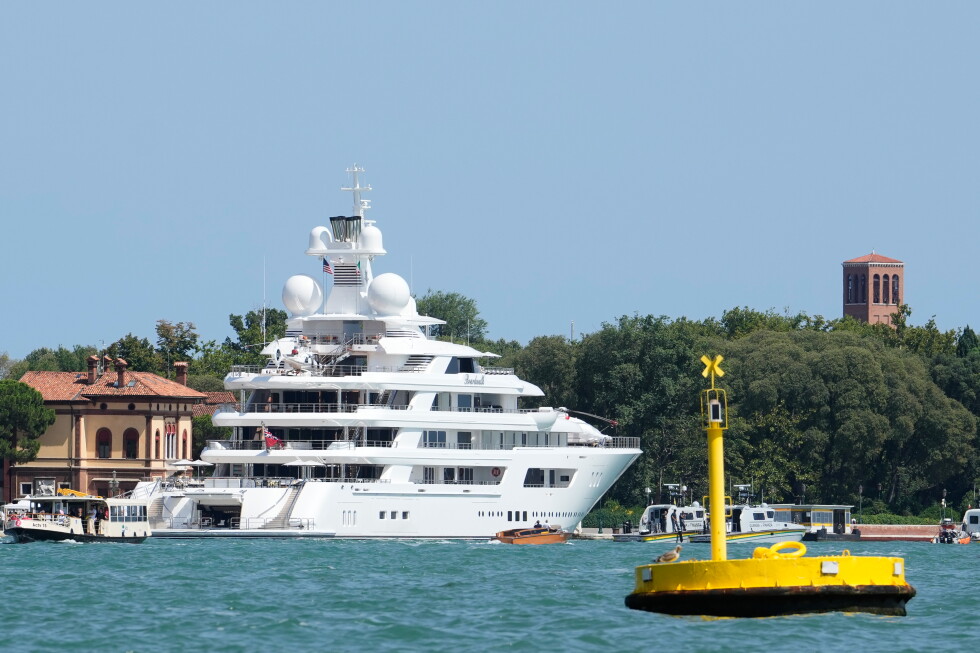
  • EU pulls $2.4 million from Venice Biennale over Russia’s return

    EU pulls $2.4 million from Venice Biennale over Russia’s return

    BRUSSELS/MILAN – The European Commission has followed through on its earlier threat to slash a €2 million ($2.4 million) grant to the Venice Biennale, one of the world’s most prestigious and long-running contemporary art events, after organizers confirmed Russia would participate in the 61st edition opening to the public on May 9. The funding cut was formally announced Thursday, with commission officials confirming the Biennale foundation has been officially notified of the decision and given 30 days to submit a formal defense of its choice to readmit Russian participation, the first since Moscow’s full-scale 2022 invasion of Ukraine.

    European Commission spokesperson Thomas Regnier reiterated the bloc’s firm opposition to the move in comments to reporters Thursday. “We are strongly condemning the fact that the Fondazione di Biennale has allowed for the Russian Pavilion to open again,” Regnier said.

    This return of Russian representation marks a sharp break from recent editions of the exhibition. Russian artists voluntarily withdrew from the 2022 Biennale, and Russia opted not to mount an exhibition in its permanent Giardini pavilion for the 2024 iteration, instead loaning the space to Bolivia. Russia’s last official participation in the International Art Exhibition before this year came in 2019.

    In an official statement responding to the EU’s funding cut, Biennale organizers pushed back against the bloc’s pressure, arguing they lack the legal and institutional authority to bar a recognized nation from participating. Under the event’s long-standing rules, any country that holds formal diplomatic recognition from the Italian Republic is eligible to request a spot at the exhibition. Compounding this, the Russian government has held full ownership of its purpose-built pavilion in the historic Giardini park since the structure was completed in 1914, meaning organizers were only required to acknowledge Russia’s formal notice of participation, rather than approve or deny the request.

    Sticking to its long-held principles of cultural openness, the Biennale emphasized its commitment to keeping art and culture free from exclusion and political censorship. “La Biennale di Venezia rejects any form of exclusion or censorship of culture and art. The Biennale, like the city of Venice, continues to be a place of dialogue, openness and artistic freedom, encouraging connections between peoples and cultures, with the constant hope for an end to conflicts and suffering,” the statement read.

    Founded in 1895, the Venice Biennale is widely regarded as the most influential contemporary art event on the global calendar. The exhibition’s structure pairs a large-scale central curated show with independent national pavilions, each organized and funded by the participating countries. For the 2025 61st edition, a total of 99 countries will mount national exhibitions, with 29 hosted in purpose-built pavilions in the Giardini, and the remainder spread across the historic Arsenale shipyard and other venues throughout Venice. This is not the first time the Biennale has rejected international pressure to exclude a participating nation; organizers have previously refused calls to bar both Iran and Israel from taking part amid geopolitical controversy.

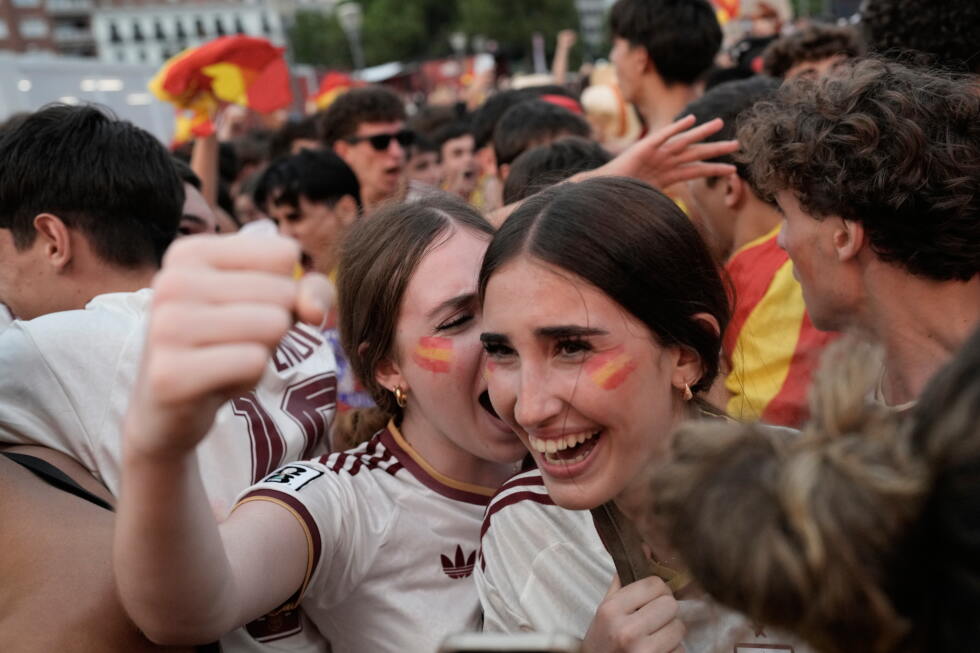
  • Injured Lamine Yamal ‘expected to be fit’ for World Cup

    Injured Lamine Yamal ‘expected to be fit’ for World Cup

    One of European football’s most exciting young talents has suffered a season-ending setback, as 18-year-old Barcelona and Spain forward Lamine Yamal confirmed a left hamstring injury that will rule him out for the remainder of Barcelona’s 2024-25 La Liga campaign. Fortunately for both club and country, initial medical assessments indicate Yamal will be fully fit in time to represent Spain at this summer’s FIFA World Cup.

    The injury occurred during Barcelona’s hard-fought 1-0 win over Celta Vigo this past Wednesday, just moments after Yamal scored the game’s opening goal from the penalty spot in the 40th minute. Immediately after converting the kick, the teenage prodigy began signaling to the Barcelona bench that he was in discomfort, before collapsing to the pitch clutching his injured left hamstring. Medical staff assisted Yamal off the field, and he left the stadium’s playing area straight for the club’s medical tunnel for immediate evaluation.

    Barcelona officially confirmed the details of Yamal’s injury and treatment path in a statement released Thursday. The club confirmed that the winger will undergo a conservative, non-surgical treatment plan to rehabilitate the tear, and while he will miss all six of Barcelona’s remaining league matches this season, the projected recovery timeline puts him on track to be ready for the World Cup kickoff in June.

    Yamal himself addressed the injury in a public post on his official Instagram account Thursday, opening up about the disappointment of missing the club’s run-in to the title. “This injury leaves me off the field at the time I most wanted to be, and it hurts more than I can explain,” he wrote. “It hurts not being able to fight with my team-mates, not being able to help when the team needs me. But I believe in them and I know they’re going to drop their souls in every game.”

    The young star also emphasized that he will remain engaged with the squad throughout his recovery, saying, “I’ll be there, even if it’s from the outside, supporting, encouraging and pushing as one more. This is not the end, this is just a break. I’ll come back stronger, more eager than ever, and next season will be better.”

    As defending La Liga champions, Barcelona currently hold a commanding position at the top of the league table, holding a nine-point lead over second-place rivals Real Madrid. The two Spanish giants are set to face off in a high-stakes clash at Barcelona’s Camp Nou on May 10, one of the six remaining matches Yamal will miss while recovering.

    For the Spanish national team, the timeline of the injury is a major relief. La Roja will kick off their 2025 World Cup Group H campaign against Cape Verde on June 15, followed by group stage matches against Saudi Arabia on June 21 and Uruguay on June 27. Yamal, one of Spain’s most dynamic attacking talents, is expected to play a key role in the team’s World Cup run, and his projected timely recovery removes a major source of concern for national team coaching staff.

    The report was first published by BBC Sport on August 16, 2025.

  • US still delivering weapons to Ukraine, Zelenskyy says, as Prince Harry visits Kyiv

    US still delivering weapons to Ukraine, Zelenskyy says, as Prince Harry visits Kyiv

    As the Russian full-scale invasion of Ukraine enters its third year, Kyiv has ramped up long-range drone and missile attacks deep inside Russian territory, targeting critical energy and industrial infrastructure in a coordinated campaign to erode Moscow’s war funding, Ukrainian President Volodymyr Zelenskyy confirmed Thursday. The update came as Britain’s Prince Harry made a surprise third visit to Kyiv in 12 months, using a high-profile appearance to praise Ukraine’s enduring unity and resilience against Russian aggression.

    In voice messages shared with reporters Thursday, Zelenskyy stressed that U.S. military aid deliveries have not been disrupted by the outbreak of conflict in the Middle East, despite widespread international concern that shifting global attention could divert weapons support from Ukraine. “Of course, we are hitting what is painful for Russia, and it is very painful,” Zelenskyy said, estimating that Ukrainian strikes have caused tens of billions of dollars in Russian losses to date. While independent verification of Zelenskyy’s claim is not available, Russian officials have previously confirmed that Ukrainian attacks have reached infrastructure more than 1,000 kilometers (600 miles) inside Russia’s borders, matching the Ukrainian leader’s account of deep strikes.

    Unlike earlier phases of the war that relied heavily on Western-supplied weapons, Ukraine is now combining Western defense support with domestically developed drone and missile technology to carry out these deep attacks. Ukrainian forces currently use U.S.-made Patriot air defense systems to intercept Russian strikes against Ukraine’s own cities and energy networks, while domestic drone capabilities enable long-range hits on Russian infrastructure. Zelenskyy framed the recent escalation of strikes as a direct response to ongoing Russian attacks on Ukrainian civilian and energy targets: “We see that the Russians do not want to stop — they are hitting our energy sector and our people. We will respond.”

    Just hours before Prince Harry arrived in Kyiv, a Russian drone strike on the central Ukrainian city of Dnipro left three civilians dead and 10 more wounded, regional military administration head Oleksandr Hanzha confirmed via the Telegram messaging app. The strike damaged a 13-story residential apartment building and a nearby administrative building, adding to the mounting civilian death toll from months of consistent Russian attacks across Ukrainian territory. On the Russian side of the front line, the Russian Defense Ministry reported that its air defense systems intercepted 154 Ukrainian drones over Russian regions, the Russian-annexed Crimea Peninsula, and the Azov and Black Seas Thursday.

    Prince Harry, the Duke of Sussex, entered Kyiv via an overnight train journey from Poland — the only secure route for civilian travel into the Ukrainian capital — for his third visit to the country in a year. Speaking at a Kyiv security conference, he offered renewed public praise for Ukraine’s resistance against Russia’s much larger invading force. “Ukrainians have demonstrated strength not just in bravery and capability, but in unity, in trust,” Harry said. “Ukraine continues to hold together, and hold together you must.” It remains unclear whether Harry met with Zelenskyy, who was scheduled to travel to Cyprus for a European Union leaders’ summit Thursday evening.

    The surge in Ukrainian long-range strikes has focused heavily on Russia’s oil and energy sector, which is the largest single source of revenue for the Russian federal budget that funds its invasion. For the second consecutive night, Ukraine targeted infrastructure in Russia’s Samara region, located roughly 600 miles east of the Ukrainian border. A drone strike on an industrial facility in the Samara city of Novokuybyshevsk killed one civilian, and falling drone debris damaged the roof of a residential building in the regional capital of Samara, wounding multiple people — one of whom was hospitalized, regional governor Vyacheslav Fedorishchev confirmed. Unconfirmed media reports identify the targeted facility as a petrochemical plant owned by Russian state oil giant Rosneft.

    Andriy Kovalenko, head of Ukraine’s Center for Countering Disinformation, confirmed that Ukrainian forces hit multiple key energy sites across Samara and Russia’s Nizhegorodskaya region this week, including a major oil pipeline that carries crude from Western Siberia to Tatarstan. A senior anonymous official from Ukraine’s Security Service (SBU) also claimed responsibility for a nighttime drone attack on the Gorky oil pumping station in Nizhny Novgorod region, located east of Moscow. The strike damaged three large oil storage tanks and ignited a massive blaze, the official said, noting that the attack disrupts main oil pipeline operations, reduces refining output, and drives up transportation costs for Russian energy firms — all of which cut into the budget revenues Russia uses to fund its war.

    As of Thursday, firefighters in the Black Sea port of Tuapse, Russia were working their third consecutive day to extinguish a large blaze ignited by a Ukrainian drone attack earlier this week. The Krasnodar regional emergency headquarters confirmed that toxic materials from the fire have fallen with rain, covering multiple residential districts in a layer of black soot. Air concentrations of harmful chemicals from the blaze have exceeded legally allowed safety limits, prompting officials to urge local residents to remain indoors to avoid exposure.