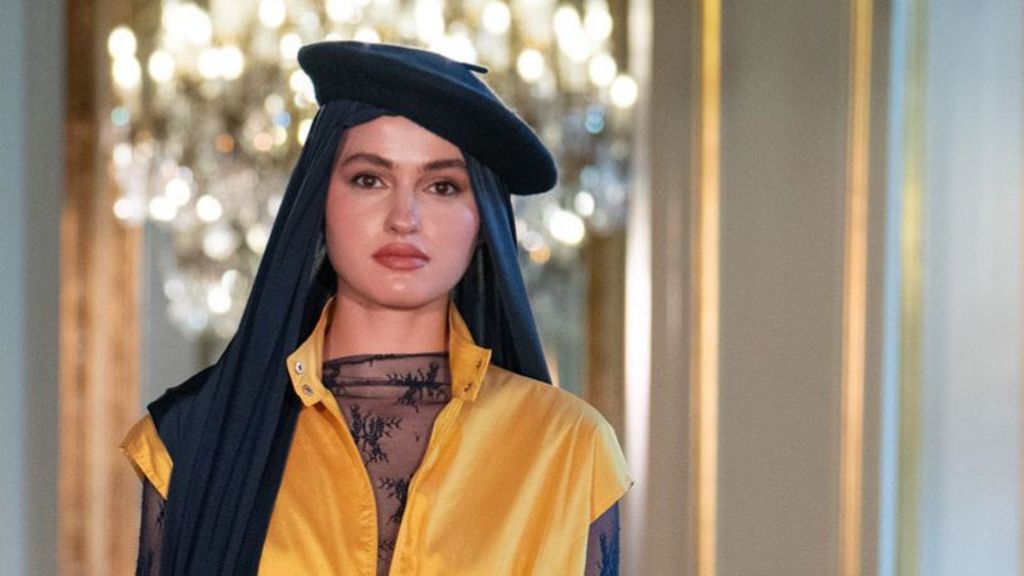
Against the backdrop of longstanding debates over religious attire in French public life, Paris made history this week with its first-ever Modest Fashion Week, bringing together nearly 30 international designers specializing in loose, full-coverage garments and modest headwear. The event, held at the historic Hôtel Le Marois steps from the Champs-Élysées, showcases the rapidly expanding global modest fashion movement while challenging prevailing narratives around religious clothing in a country with strict secular policies.
Modest clothing, defined by designs that cover arms, legs, and often the hair, is most commonly worn by Muslim women adhering to religious modesty principles, but its appeal has expanded far beyond this demographic in recent years. For organizers, holding the groundbreaking event in France carried unique symbolic weight. France is home to an estimated 5 to 7.5 million Muslims, and Özlem Şahin, head of the organization behind Modest Fashion Week, calls Paris “one of the leading modest fashion capitals in Europe.”
Runway collections spanned a wide range of aesthetics, blending global cultural influences with contemporary design trends. Nature-inspired palettes dominated many presentations: Turkish label Miha founder Hicran Önal centered her collection on romantic themes, pairing fluid silhouettes with water-like teals, soft blues, and delicate floral pinks. Indonesian designer Nada Puspita offered a modern take on modest design with cleaner, more structured lines, while Australian brand Asiyam creator Aisa Hassan drew from warm, earthy natural tones—deep forest greens and autumnal reds—adding a nubby bucket hat as a nod to her Australian heritage. Hassan’s soft, flowing designs stood in stark contrast to the sporty streetwear aesthetic that has grown popular in modern modest fashion, a trend already embraced by global sportswear giants Nike and Adidas.
Local French brands brought a distinctly Parisian Gen Z edge to the event. Soutoura and Nour Turbans presented boxy, jewel-toned nylon streetwear silhouettes, with Nour Turbans making a striking cultural statement by styling a model’s headscarf beneath a classic French beret. Turkish swimwear label Mayovera showcased burkinis—full-coverage swimwear that leaves only the face, hands, and feet exposed—a garment currently banned from most French public swimming pools despite being permitted on public beaches.
The global modest fashion industry has expanded exponentially over the past decade, with research firm DinarStandard projecting global consumer spending on modest clothing will surpass $400 billion by 2025. While the segment initially launched to serve Muslim women, it has increasingly gained traction among other faith groups and secular shoppers seeking full-coverage, stylish clothing options.
For participating designers, the event represents far more than a fashion showcase—it is a milestone for inclusion in a country where religious clothing has faced decades of restrictions. France’s strict interpretation of secularism, known as laïcité, has banned religious symbols including hijabs in state-run schools for over 20 years, with abayas (loose full-length robes) added to the school ban in 2023. Public sector workers including teachers and civil servants are also prohibited from wearing visible religious attire.
Fatou Doucouré, founder and creative director of French label Soutoura, shared that she has long faced challenges related to wearing her hijab in France, but presenting her work at the Paris event left her feeling hopeful. “Exhibiting my designs in Paris made me feel that women who wear headscarves could take on any role in society,” she said. That sentiment was echoed by attendees, many of whom spoke to the BBC about the event’s transformative impact. One young attendee of Malian heritage, who has faced discrimination for wearing a hijab, said the historic event in central Paris filled her with joy and made her “never want to leave France.” Another attendee noted a visible shift in French culture: for the first time, her hijab no longer felt like the center of political debate, both at the event and on city streets, as people are starting to see her as more than her clothing.