标签: Europe

欧洲

  • Inter Milan has been routed and defeated in Europe yet remains a force at home in Italy

    Inter Milan has been routed and defeated in Europe yet remains a force at home in Italy

    ROME – In what has shaped up to be one of the most surprising domestic turnarounds in top-tier Italian soccer this campaign, Inter Milan has positioned itself on the cusp of a long-awaited Serie A championship, even as its recent European performances have been marked by devastating high-profile defeats. The 2024-25 season marks Cristian Chivu’s debut at the helm of the Nerazzurri, and the rookie head coach has already guided the club to not just a near-certain title push but also a spot in the Italian Cup final, putting an unprecedented domestic double within Inter’s reach with just four matches remaining on the league calendar.

    If Inter secures three points against Torino this coming weekend, and neither second-place Napoli nor city rival AC Milan claim a victory in their own fixtures, the club will lift the Scudetto weeks before the regular season concludes. This dominant domestic run stands in stark contrast to Inter’s fortunes in continental competition this year: the club was knocked out of the 2024-25 Champions League by unfancied Norwegian side Bodø/Glimt, a result that echoed the humiliating 5-0 defeat to Paris Saint-Germain in the 2023-24 Champions League final.

    Should Inter go on to claim both the Serie A trophy and the Italian Cup, it will mark the first time the club has earned a domestic double since 2010, when legendary manager José Mourinho led Inter to a historic treble that also included the Champions League title. Fittingly, Chivu was a member of that 2010 squad, and the former defender has rapidly emerged as one of the most promising new coaching talents in Italian soccer, just one year after steering Parma to a successful relegation escape last season.

    When pressed about comparisons between his current run and Mourinho’s iconic 2010 treble campaign, Chivu struck a humble tone. “I’m just Cristian. My only responsibility is to these players,” he said. “I’m just trying to do my job in the best manner possible for those who believed in me, for these wonderful players, and I hope to achieve some of our objectives.”

    Chivu’s side booked its Italian Cup final spot after a dramatic 3-2 comeback win over Como in the semi-finals, where Inter overturned a two-goal deficit to secure victory. The club will face Lazio in the title decider on May 15.

    Beyond Inter’s title push, this weekend’s Serie A fixture list holds extra intrigue: a crucial clash between second-place AC Milan and fourth-place Juventus carries far more than just stakes for Champions League qualifying spots. The match will also pit two of the top United States men’s national team players plying their trade in Italy against each other. AC Milan winger Christian Pulisic has endured a notable goal drought stretching back to December across both club and international play, while Weston McKennie has become a core fixture for Juventus following Luciano Spalletti’s appointment as head coach last October. After Sunday’s meeting, the pair will not reunite until the U.S. gathers for training camp ahead of the 2026 FIFA World Cup, which the United States will co-host.

    In pre-match notes for Inter’s weekend trip to Torino, second-choice goalkeeper Josep Martínez has drawn attention for an unorthodox technique he used to great effect during the semi-final win over Como: Martínez pulled off multiple stunning saves using a butterfly positioning method borrowed from ice hockey goaltenders. By dropping to his knees and extending his arms wide to cover more of the goal frame, the backup keeper made high-pressure reflex saves look routine. Despite the standout performance, starting keeper Yann Sommer is still expected to get the nod between the posts for Sunday’s pivotal title clash against Torino.

    Inter will still be without one key contributor, however: captain and Serie A top scorer Lautaro Martínez remains sidelined with a lingering muscle injury, a major absences for Chivu’s side as they close out the season.

    Off the pitch, authorities in Milan are continuing an investigation into an alleged prostitution ring linked to more than 70 active professional soccer players. Four people have been arrested on charges of operating the illegal escort service, though no players have yet been formally named as targets of the investigation.

  • Man dies after being hit by bus at Dublin Airport

    Man dies after being hit by bus at Dublin Airport

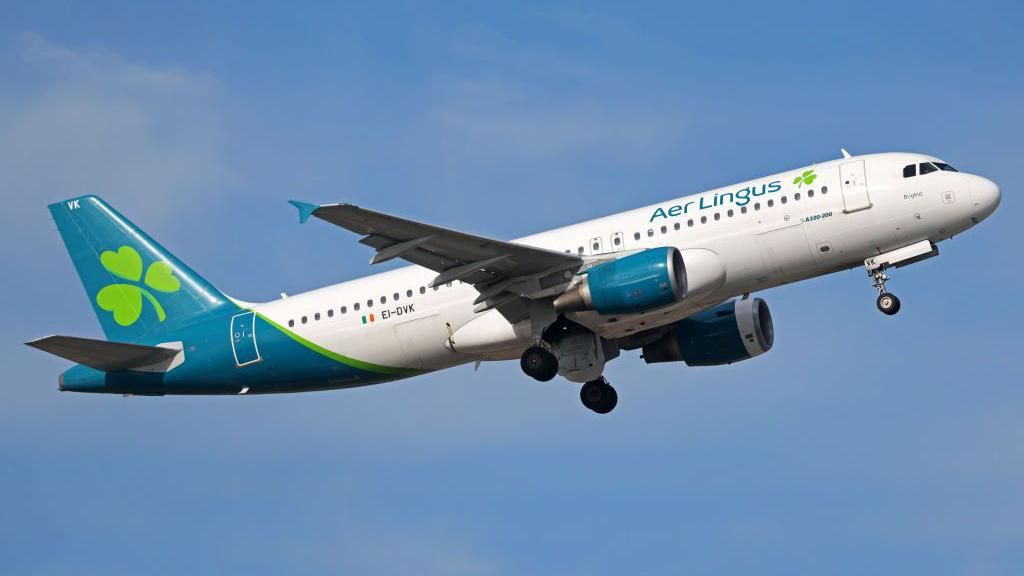
    A tragic traffic incident has claimed the life of a man in his 60s after he was struck by a bus on the grounds of Dublin Airport, Irish authorities confirmed Thursday.

    The collision occurred just after midnight on Corballis Road, a key route located within the airport’s boundary, according to official updates. Members of Gardaí, the Republic of Ireland’s national police service, responded to the emergency alongside local first responders and medical teams. Upon arrival at the scene, emergency personnel pronounced the man dead.

    In the wake of the incident, law enforcement has implemented a partial closure of the main access road leading into Dublin Airport, one of the busiest travel hubs in the country. Official traffic management plans have activated detour routes for drivers heading to and from the airport, and Gardaí have issued a public advisory urging motorists to allocate additional travel time when planning journeys through the area to avoid unexpected delays.

    As investigations into the circumstances of the collision get underway, Gardaí are calling on members of the public who may have witnessed the incident, or who hold relevant dashcam footage or other information related to the event, to reach out to official lines to assist with the inquiry. No further details about the identity of the victim, the bus driver, or the specific context of the collision have been released to the public as of yet.

  • Russian oil to Slovakia resumes flowing through pipeline that crosses Ukraine

    Russian oil to Slovakia resumes flowing through pipeline that crosses Ukraine

    BRATISLAVA, SLOVAKIA – Three months after Russian oil deliveries through the key Druzhba pipeline were unexpectedly halted, supplies have finally resumed flowing to Slovakia, the country’s economy chief confirmed Thursday. The resumption of oil transit, which got underway at 2 a.m. local time, brings an end to a tense standoff that has rippled across European Union politics and strained ties between Kyiv and two of its neighboring EU states. The disruption, which began back in January, put Hungary and Slovakia at sharp odds with Ukraine, worsening an already fraught geopolitical environment on the continent. Unlike the vast majority of European Union member states that have drastically cut their reliance on Russian fossil fuels since Russia’s full-scale invasion of Ukraine, both Central European nations have retained deep dependence on Russian crude for their domestic energy systems. When the cross-border pipeline crossing Ukrainian territory was shut down, the two governments quickly placed blame on Kyiv, accusing Ukrainian authorities of dragging their feet on repairs to the damaged section of infrastructure. The halt in deliveries triggered tangible political fallout across the bloc: Hungary moved to block a large-scale EU financial aid package designed to support Ukraine’s war effort, while Slovakia publicly refused to back a new round of proposed European sanctions targeting Moscow until pipeline operations returned to normal. After weeks of diplomatic wrangling and technical work, the flow of oil is once again moving along the strategic route, bringing a temporary resolution to a dispute that threatened to undermine EU unity on policy toward Russia.

  • ‘The Devil Wears Prada 2′ puts a spotlight on Italy’s fashion capital

    ‘The Devil Wears Prada 2′ puts a spotlight on Italy’s fashion capital

    MILAN (AP) — As ‘The Devil Wears Prada 2’ prepares for its Italian premiere in the country’s iconic fashion capital on Thursday, the luxury Italian brand Prada takes pride of place in the film’s title, while the global fashion industry steps into the broader spotlight and Milan itself claims a key supporting role. Though the motion picture draws its name from the legendary fashion house that has become inseparable from Milan’s identity, the story does not center on the century-old brand itself. To pay homage to the franchise’s deep ties to the label, both lead star Meryl Streep and Vogue editor-in-chief Anna Wintour donned Prada designs for a recent Vogue cover celebrating the new film, which follows the story of a notoriously demanding high-fashion editor.

  • 2 trains collide in Denmark, prompting a massive emergency response north of Copenhagen

    2 trains collide in Denmark, prompting a massive emergency response north of Copenhagen

    A collision between two passenger trains in northern Denmark early Thursday has sparked a large-scale emergency deployment, with authorities describing the incident as a serious major accident. The crash unfolded at approximately 6:30 a.m. in the vicinity of Hillerød, a town located roughly 40 kilometers, or 25 miles, north of Denmark’s capital city Copenhagen.

    A spokesperson for North Zealand police confirmed that all passengers and crew have been successfully evacuated from both damaged trains. As of the latest update, officials have declined to release any information regarding the count of injured people or the severity of harm sustained by those involved in the collision.

    Visual imagery captured at the accident site shows significant destruction to the front carriages of both trains, with the crumpled front ends clearly visible. Despite the heavy impact, both trains have remained upright on their rail tracks, avoiding a more catastrophic derailment.

    Trine Egetved, mayor of the nearby municipality Gribskov, shared preliminary details about the incident in a public post on her official Facebook page. Egetved confirmed that a number of injured people from the crash were airlifted to nearby hospitals for urgent medical treatment. She also noted that the collision took place on a busy local commuter line that hundreds of Gribskov residents rely on daily, including commuting workers and students traveling to schools in the region. As of Thursday morning, no further details on the cause of the crash, identity of those involved, or updated injury counts had been released by investigating authorities.

  • European Union ramps up crisis testing, convinced that Trump’s security priorities lie elsewhere

    European Union ramps up crisis testing, convinced that Trump’s security priorities lie elsewhere

    BRUSSELS – As European leaders grow increasingly concerned about the reliability of long-standing U.S. security guarantees for the continent under former U.S. President Donald Trump, the European Union is moving forward with expanded drills to test the bloc’s mutual defense clause that requires all 27 member states to come to one another’s aid during a crisis.

    The discussions will take center stage at a two-day EU summit kicking off Thursday in Cyprus, where heads of state will aim to finalize an operational framework to leverage the EU’s full range of military, security, trade and diplomatic resources when a member faces emergency, Cypriot President Nikos Christodoulides confirmed in an interview with the Associated Press.

    In mid-May, EU diplomatic envoys will launch table-top simulation exercises designed to walk through how the bloc’s Treaty Article 42.7 could be activated to deliver collective support to a member state targeted by invasion or armed attack — specifically, scenario planning that accounts for potential aggression from a major power like Russia. Several weeks later, EU defense ministers will run their own parallel simulation drills. Crucially, the exercises focus only on streamlining political decision-making workflows, and do not deploy active military units or mobilize on-the-ground government assets.

    To understand the purpose of these drills, it helps to compare Article 42.7 to NATO’s better-known collective security guarantee, Article 5. NATO’s core rule states that an armed attack against any single ally counts as an attack against the entire alliance, requiring a coordinated collective response that can include military action. Article 5 has only been invoked once in NATO’s 75-year history: in 2001, to back the United States following the September 11 terror attacks, a commitment that ultimately led to NATO’s 18-year, ultimately unsuccessful stabilization mission in Afghanistan.

    For its part, Article 42.7 of the EU’s founding treaties was explicitly crafted to avoid overlapping or conflicting with NATO commitments, and has only been triggered once to date. That invocation came in 2015, after Islamic State terror operatives carried out coordinated attacks across Paris that killed more than 130 people and wounded hundreds more.

    The text of Article 42.7 holds that if an EU member “is the victim of armed aggression on its territory,” all other member states are bound to provide “aid and assistance by all the means in their power.” The clause also enshrines exceptions for neutral member states such as Austria and Ireland, and requires all actions to align with the United Nations Charter and respect existing NATO obligations.

    When France called for support under the clause in 2015, EU members moved quickly to express solidarity and reallocated counterterrorism resources to help France, allowing the French government to deploy additional security forces domestically for the emergency response.

    While small-scale tests of Article 42.7 have been carried out periodically over the past 10 years, a combination of shifting U.S. policy and the war in Ukraine has added unprecedented urgency to these preparations. Doubts about the future of U.S. commitment to NATO collective defense have intensified in recent years, sparked by a series of controversial moves from Trump. One turning point came when Trump threatened to annex Greenland, the semiautonomous territory owned by NATO member Denmark. When several European countries deployed small symbolic troop contingents to Greenland to demonstrate solidarity with Denmark, Trump threatened punitive tariffs on participating nations before ultimately backing down.

    Fears were further stoked after Trump signaled openness to launching a joint military conflict against Iran alongside Israel, a move that culminated in an Iranian retaliatory strike in March targeting a British military base stationed in Cyprus — the current holder of the EU’s rotating Council presidency.

    Unlike NATO, which is structured exclusively as a collective security alliance, the EU has a far broader toolkit of response options at its disposal during a crisis, ranging from traditional military deployments to economic sanctions, enhanced border controls, trade restrictions, and visa policy changes. As ongoing conflicts in Ukraine and the Middle East continue to divert U.S. global security attention, European leaders are moving to map out exactly how these tools can be coordinated in an emergency.

    Despite the planning, significant questions remain unresolved about how the clause would work in practice. “We don’t know what is going to happen if a member state triggers this article,” Christodoulides told the AP. “There are a number of issues.”

    Menelaos Hadjicostis contributed reporting from Nicosia, Cyprus.

  • Pet owners hit with steep bills after EU passport rule change

    Pet owners hit with steep bills after EU passport rule change

    A sweeping update to cross-border pet travel regulations has thrown British pet owners into chaos, with hundreds facing unexpected steep fees, cancelled pre-planned holidays and widespread confusion just days after the new rules took effect this Wednesday.

    Previously, UK residents could use the long-standing EU pet passport scheme, a one-time vet-issued document that remained valid for an animal’s entire life. The passport included all required records such as microchip details, up-to-date rabies vaccinations, owner contact information and issuing vet data, allowing for seamless repeated travel across EU borders. Under the revised regulations, however, this system is no longer available for Great Britain-based residents — even holders of EU passports who split their time between the UK and the EU no longer qualify. All pre-existing EU pet passports issued to GB residents are now invalid.

    Instead, pet owners must now apply for a brand new Animal Health Certificate (AHC) for every single cross-border trip, creating recurring costs and logistical hurdles that many say are unmanageable. Multiple pet owners shared their frustration with the BBC, noting that poor advance communication about the rule change left many caught off guard, with pre-booked, non-refundable trips now forced to be scrapped.

    Sixty-three-year-old Jane Keles, who owns a mobile home in Picardy, northern France with her husband, was scheduled to travel next week with her two dachshunds, Otto and Lola. She only learned of the rule change this Monday, just days before her departure, and discovered her existing EU pet passports were no longer accepted. After already arranging time off work and booking a cat sitter for the trip, Keles was forced to cancel. Rescheduling for June will cost an extra £500 in rebooking fees alone, she says, and the recurring cost of AHCs for her two dogs is pushing the couple to consider selling their French mobile home entirely, as they make regular cross-border trips. For each trip, Keles estimates the new documentation will cost £80 per dog for required rabies boosters plus a £155 fee for the certificates themselves, creating a significant new financial burden.

    Seventy-seven-year-old Mike Walton, a UK resident near Manchester who holds an Irish passport and splits his year between the UK and Portugal, is facing a similar dilemma. His two Bichon Frisés already hold EU pet passports that contain all the same health and identification information required for an AHC, but the documents are no longer accepted. When he reached out to his long-time vet of 10 years — who knows his dogs well — he was told the clinic does not issue AHCs. Other local clinics only offer the service to their own registered clients, forcing Walton to either switch vets against his wishes or abandon his travel plans. He has been quoted roughly £300 in total fees and rabies booster costs for his two dogs for a single trip.

    The new rules have also had a severe impact on assistance dog owners. Guide Dogs for the Blind, a leading charity supporting visually impaired people, issued a statement saying the new regulations underscore the critical need for the UK to rejoin the EU pet passport scheme. The organization noted that the repeated cost and administrative complexity of obtaining an AHC for every journey has already stopped many guide dog owners from working, attending critical professional and personal events, and travelling independently.

    Many pet owners say they received no advance notice of the rule change, only learning of the update within days of it taking effect. The lack of clear communication has left even seasoned cross-border travellers confused, with some owners even questioning whether the rules will be strictly enforced at border crossings.

    In response to the growing outcry, the Animal and Plant Health Agency (APHA) has confirmed the new rules are in effect as of April 22, and advised all GB residents travelling to the EU with pets to obtain an AHC before departure to avoid delays or being denied entry. The UK’s Department of Environment, Food and Rural Affairs (Defra) has updated its official guidance to note that EU pet passports are now only issued to and valid for individuals whose primary residence is within the EU, excluding even those who own holiday property or visit the EU seasonally. APHA urged all pet owners to check the latest official guidance on the GOV.UK website as well as entry requirements for their specific EU destination before making any travel plans, and noted that pet travel to the EU remains possible with the correct new documentation.

  • Airline company Lufthansa cuts 20,000 flights as war squeezes fuel prices and supplies

    Airline company Lufthansa cuts 20,000 flights as war squeezes fuel prices and supplies

    LAS VEGAS — A growing energy crisis triggered by the ongoing conflict around Iran has pushed one of Europe’s largest airline groups to slash thousands of scheduled flights, as carriers across the globe scramble to cope with skyrocketing jet fuel costs and looming supply shortages. Lufthansa Group, the parent company of Lufthansa Airlines and five other major European carriers, announced Tuesday that it will cut 20,000 short-haul flights from its schedule through the end of October, a move designed to conserve fuel and reduce exposure to volatile energy markets.

    The bulk of the canceled routes are low-profit short-haul services centered on the group’s two main hub airports in Germany, Frankfurt and Munich. The company estimates the flight cuts will save roughly 40,000 metric tons of jet fuel, a critical buffer as supplies tighten across the continent. The cuts are just the latest cost-cutting measure from the group: just last week, it shut down regional subsidiary CityLine to reduce operational overhead. The ongoing consolidation of the group’s European network will impact all of its operating carriers, including Austrian Airlines, Brussels Airlines, SWISS and ITA Airways, as well as secondary hubs across Brussels, Rome, Vienna and Zurich.

    The root of the crisis traces back to the outbreak of hostilities between the U.S.-Israel coalition and Iran in late February. Conflict near the Strait of Hormuz, the strategic Gulf waterway through which roughly 20% of the world’s daily oil supply transits, has roiled global energy markets and sent jet fuel prices soaring. In some regional markets, jet fuel prices have more than doubled since early March. For airlines, which count fuel as one of their largest single operating expenses, this sudden price shock has created immediate financial pressure.

    That pressure is already being passed on to consumers ahead of the peak summer travel season. Travelers are facing fewer available route options, alongside broad increases in fares, fuel surcharges and checked baggage fees across most major carriers.

    Warnings over looming jet fuel shortages in Europe have been growing more urgent in recent weeks. On April 16, the head of the International Energy Agency estimated that the continent only has roughly six weeks of jet fuel stockpiles remaining, and warned that carriers would be forced to cut schedules if additional supplies were not secured quickly. EU Energy Commissioner Dan Jørgensen reinforced that warning Wednesday, noting that the energy crisis sparked by the conflict could keep prices elevated for months, or even years.

    “This is not a short-term, small increase in prices,” Jørgensen told reporters in Brussels. The conflict is currently costing the European Union roughly 500 million euros ($600 million) every single day, he added. “Even in a best-case scenario, it’s still bad.” Jørgensen confirmed that EU national governments are deeply concerned about the risk of widespread jet fuel shortages, and while the European Commission is taking all available action to mitigate the crisis, the bloc is currently operating in a defensive posture focused on avoiding major disruptions.

    For its part, Lufthansa has stated that it has secured enough fuel to meet its operational needs for the coming weeks, and is pursuing a range of long-term measures to stabilize supply ahead of the busy summer travel period, including targeted bulk procurement of jet fuel.

    Lufthansa is far from alone in cutting back its flight schedule. Data from aviation analytics firm Cirium shows that 19 of the world’s 20 largest airlines have already canceled scheduled May flights across every major global region. Major carriers joining the cuts include U.S. giants Delta Air Lines, United Airlines and American Airlines, as well as Air Canada, Emirates, Qatar Airways, Air China, British Airways and Air France-KLM.

    Other smaller and mid-sized carriers have already announced deep, targeted cuts to their summer schedules. Last week, Swiss-based leisure carrier Edelweiss Air said it would drop all planned summer service to Denver and Seattle, and reduce frequency on its Las Vegas route through early autumn. New Zealand’s flag carrier Air New Zealand is consolidating approximately 4% of its scheduled services across May and June, with management noting that local jet fuel prices are currently double the normal seasonal average.

    Global market data underscores the severity of the price shock: benchmark jet fuel prices jumped from roughly $99 per barrel at the end of February to a peak of $209 per barrel in early April. Beyond canceling existing flights, many carriers are also rolling back plans for capacity growth this year to keep costs contained. Delta Air Lines, which opened U.S. airline first-quarter earnings season in early April, said it was scrapping planned capacity increases for June, leaving 3.5% fewer seats available for the month than it had initially projected.

    As U.S. carriers continue to release first-quarter earnings results, the uncertainty around future fuel prices has already hit corporate financial outlooks. Multiple major U.S. carriers have cut their full-year profit forecasts or declined to update projections amid the ongoing market volatility. On Wednesday, Southwest Airlines said it expects second-quarter earnings to come in well below Wall Street analyst estimates, citing persistent high fuel prices, and held its 2026 long-term outlook steady. A day earlier, United Airlines revised its full-year adjusted earnings forecast down to $7 to $11 per share, from an earlier projection of $12 to $14.

  • Germany forward Gnabry says his ‘World Cup dream’ is over

    Germany forward Gnabry says his ‘World Cup dream’ is over

    MUNICH — One of German men’s football’s most impactful attacking talents will not take the global stage this summer, as Bayern Munich forward Serge Gnabry has officially ruled himself out of the 2026 FIFA World Cup co-hosted by Mexico, Canada, and the United States following a serious thigh injury sustained in club training.

    The injury was first announced by Bundesliga champions Bayern Munich this past Saturday, when the club confirmed that Gnabry had suffered a tear to the adductor muscle in his right thigh. The statement only noted that the winger would be sidelined “for a longer period” and offered no additional specifics about the timeline of his recovery, prompting widespread speculation about his World Cup eligibility over the following days.

    On Wednesday, the 29-year-old ended all uncertainty with a personal announcement posted to his official Instagram account, confirming that the injury would force him to miss the June tournament. “The last few days have been tough to process. A Bayern season which still holds much to play for after securing another Bundesliga title on the weekend,” Gnabry shared in his post. “As for the World Cup dream with Germany. That’s sadly over for me.”

    The forward added that he plans to cheer on his national teammates from his home base in Germany while he focuses on rehabilitating the injury, with the goal of returning to full fitness in time for pre-season preparations ahead of the next club campaign. “Like the rest of the country, I’ll be supporting the boys from home. Now it’s time to focus on recovery and getting back for pre-season. Thank you for all the messages,” he wrote.

    Gnabry’s absence leaves a major gap in Germany’s attacking depth ahead of the tournament, after he turned in a standout campaign for Bayern Munich en route to the club’s latest Bundesliga title last weekend. He contributed eight goals and seven assists for the Bavarian side this season, as Bayern broke the league’s all-time record for total goals scored in a single campaign on their way to claiming the crown.

    At the international level, Gnabry was a core contributor to Germany’s qualifying campaign, starting every single World Cup qualifier for the national side. He also featured in two friendly matches for Die Mannschaft back in March, and was widely expected to be a key member of manager Julian Nagelsmann’s 26-man tournament squad. Germany is set to kick off their 2026 World Cup campaign in Group E, where they will face off against Curacao, Ivory Coast, and Ecuador.

    The 2026 World Cup, the first 48-team edition in tournament history, is scheduled to run from June 11 to July 19 across 16 host cities spread across the three North American co-hosts.

  • PSG bounces back to open 4-point lead in Ligue 1, Strasbourg reaches French Cup final

    PSG bounces back to open 4-point lead in Ligue 1, Strasbourg reaches French Cup final

    In a rescheduled Ligue 1 fixture held at the Parc des Princes on Wednesday, Paris Saint-Germain bounced back emphatically from a recent upset defeat to Olympique Lyonnais, securing a dominant 3-0 victory against a Nantes side fighting to avoid relegation this season. The match was originally scheduled for mid-March but pushed back to give PSG extra preparation time for their Champions League round of 16 tie against Chelsea, and the three points from this win have preserved the French champions’ comfortable lead at the top of the table. With just four matchdays left in the domestic campaign, PSG now sits four points clear of second-placed Lens, putting them in a strong position to retain their league crown.

    Georgian winger Khvicha Kvaratskhelia was the star of the night, notching a brace to lead PSG’s charge. He opened the scoring in the 13th minute from the penalty spot, after a VAR review judged Nantes defender Frédéric Guilbert to have handled Marquinhos’ looping header inside the box. The visitors thought they had leveled the score shortly after when Louis Leroux slotted home a loose ball following a poorly cleared PSG free kick, but another VAR intervention ruled the effort out for an offside infringement after a lengthy review.

    PSG doubled their advantage in the 37th minute through a stunning individual finish from young attacker Desiré Doué. Full-back Achraf Hakimi played a perfectly weighted through ball to release Doué into the area, and the winger struck a blistering effort into the far top corner from a tight angle, a finish that left Nantes goalkeeper Anthony Lopes with no chance. Kvaratskhelia put the result beyond all doubt after halftime, dancing past two Nantes defenders before poking a low finish past Lopes to grab his second of the game. Late in the match, Guilbert caught Doué with a heavy tackle, but the young PSG winger was able to stay on the pitch without needing substitution.

    Off the pitch, the match was marred by unrest between traveling Nantes supporters and match stewards. Stewards moved in to remove large protest banners unfurled by the fans that targeted Qatari ownership of PSG and criticized the French Football League (LFP). The banners, printed in large yellow capital letters, read: “Qatar demands, the LFP obeys, French football suffers, we’re sick of you.” After the banners were removed, clashes broke out between fans and stewards, and some supporters lit flares in the stands.

    The result sets PSG up perfectly for their upcoming high-stakes European fixture: the club will face Bayern Munich in the first leg of the Champions League semi-finals at home in Paris next Tuesday. In other French soccer news from midweek, the final spot in this season’s French Cup final was claimed by Strasbourg, who defeated Nice 2-0 at home courtesy of a brace from striker Elye Wahi, including a late penalty. Strasbourg will face Lens in the May 22 title decider at the Stade de France, after Lens booked their place in the final with a 4-1 victory over Toulouse in the first semi-final held on Tuesday.