标签: Europe

欧洲

  • 7 killed and more than 50 wounded in Ukrainian drone attack on Russian regions

    7 killed and more than 50 wounded in Ukrainian drone attack on Russian regions

    In a significant escalation of Ukraine’s long-range aerial offensive against targets inside Russian territory, seven people were killed and 51 more injured in a wave of overnight drone attacks, Russian regional and federal officials confirmed Saturday. The strikes mark a continued push by Kyiv to bring the costs of the Kremlin’s full-scale invasion of Ukraine, now in its third year, home to Russian civilians and disrupt Moscow’s military supply chains.

    Multiple sites across central and western Russia were targeted, including two large storage warehouses operated by Wildberries, Russia’s largest e-commerce retailer. One warehouse was located in Kotovsk, a town in the Tambov region roughly 360 kilometers (220 miles) north of the Ukraine-Russia border, while the second sat in Elektrostal, an industrial city just 50 kilometers (30 miles) east of the Russian capital.

    Ukrainian President Volodymyr Zelenskyy confirmed the strikes in a social media post on Telegram Saturday, noting the two targeted logistics hubs were being used by Russian forces to source sanctioned electronic components for Russian drone manufacturing and navigation systems. He added that an oil processing and storage facility was also hit in the coordinated attacks, alongside additional strikes against Russian military targets in the Sea of Azov and Russian-occupied Ukrainian territory.

    Casualty reports released by regional officials confirm all seven fatalities were night shift workers at the Kotovsk Wildberries facility, where 25 additional people were wounded. In Elektrostal, 24 people were injured in the strike on the second warehouse, according to Moscow region governor Andrei Vorobyov. A separate drone attack on an oil depot in Noginsk, a city north of Elektrostal, sparked a large fire that forced precautionary evacuations of a nearby maternity hospital and one adjacent residential building, with two additional people wounded in that incident.

    Further east in Vladimir, a city 180 kilometers (110 miles) east of Moscow, a drone struck a residential apartment building causing a small fire, with no reported casualties, regional governor Alexander Avdeyev confirmed.

    The Russian Ministry of Defense reported in a statement Saturday that its air defense systems intercepted and destroyed 379 Ukrainian drones overnight across 19 Russian regions, as well as over the illegally annexed Crimean Peninsula, the Sea of Azov, and the Black Sea. Kyiv’s ongoing aerial campaign targets both energy infrastructure and military-linked logistics assets across Russia, part of a strategy to erode Moscow’s ability to sustain its full-scale invasion by forcing Russian society to confront the ongoing conflict directly.

  • Helicopters dump water as huge Norway fire destroys homes

    Helicopters dump water as huge Norway fire destroys homes

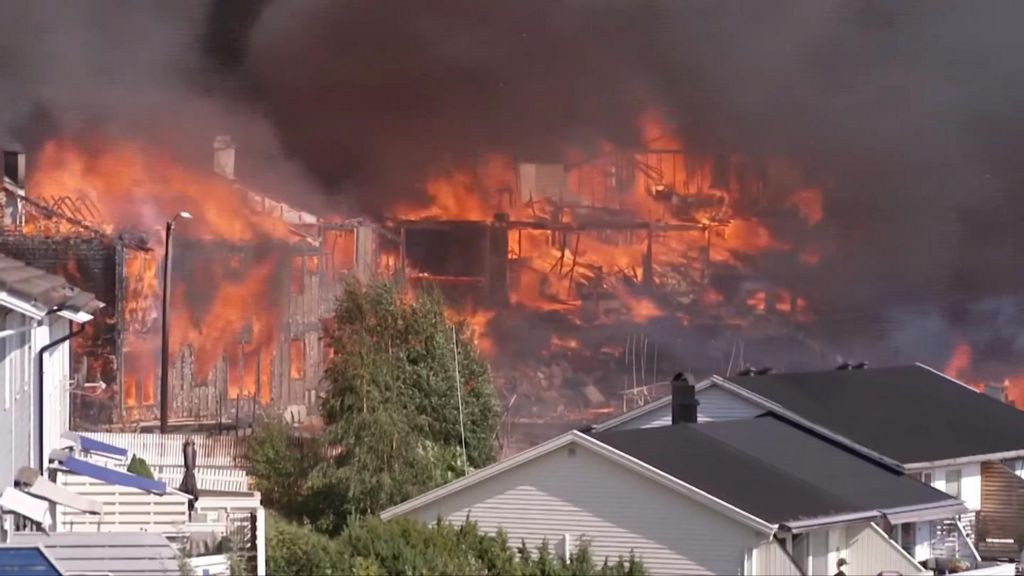
    A devastating large-scale wildfire has torn through the Norwegian city of Drammen, leaving a trail of destruction that has forced residents to flee and destroyed more than 100 residential properties, local emergency authorities confirmed this week. The fast-moving blaze, which ignited in a built-up area of the city, quickly outpaced initial ground containment efforts and spread into adjacent forested land, creating a dual threat to both communities and local ecosystems.

    In response to the rapidly growing emergency, regional disaster management agencies deployed a fleet of helicopters to mount an aggressive aerial assault on the fire, dumping thousands of liters of water over hot spots in an effort to slow the fire’s advance and protect remaining unburned structures.

    Emergency crews have not yet released information on any reported casualties, but local officials have activated evacuations for multiple neighborhoods in the fire’s path, opening emergency shelters to accommodate displaced residents. The cause of the blaze is still under investigation, with authorities yet to announce a confirmed timeline for when the fire is expected to be fully contained. The disaster has already upended the lives of hundreds of people in the Drammen area, marking one of the most destructive urban-adjacent wildfires to hit southern Norway in recent years.

  • Mount Olympus, home of the ancient Greek gods, is a candidate for the UNESCO World Heritage List

    Mount Olympus, home of the ancient Greek gods, is a candidate for the UNESCO World Heritage List

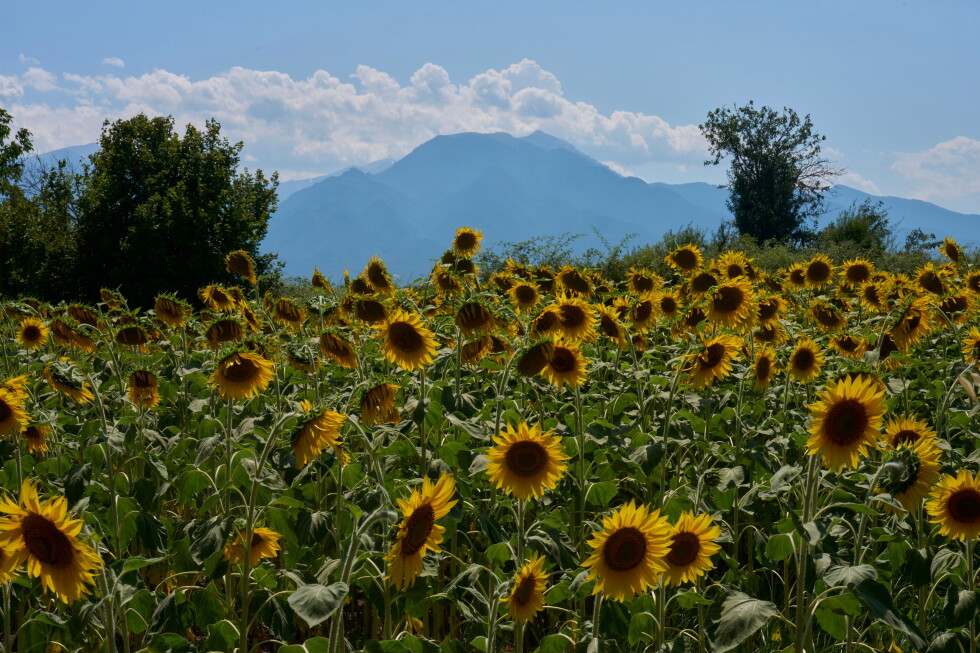
    For thousands of years, the snow-dusted peaks of Mount Olympus – the fabled ancestral home of the 12 Olympian gods of ancient Greek mythology – have captivated human imagination across the globe. Towering 2,918 meters above sea level, with its highest jagged, mist-enveloped peak long believed by ancient Greeks to hold the throne of Zeus, king of the gods, the mountain is now on the cusp of a global recognition that could cement its cross-cultural legacy for generations.

    This month, Greece’s highest peak is up for consideration as a mixed natural and cultural UNESCO World Heritage Site, with the World Heritage Committee set to deliberate the nomination during its annual session running from July 16 to 29 in Busan, South Korea. For local communities that have built their lives around the mountain, the designation is far more than an honor – it is recognition of Olympus’ unmatched blend of mythic history, cultural continuity, extraordinary biodiversity, and stunning natural beauty.

    “Olympus is our life. It is the place we grew up in,” shared Evagelos Geroliolios, mayor of the Dion-Olympus municipality that is centered in Litochoro, the main gateway town to the mountain. “It is the place we see every day, but at the same time, it carries with it myth, history, biodiversity, extraordinary beauty and a very great cultural weight.”

    Few locations hold as central a place in Western cultural mythology as Mount Olympus. Legend holds that after Zeus waged a 10-year war to overthrow his father Cronus and end the reign of the Titans, he established his divine court on the mountain’s highest peaks. This year, public interest in Olympus is also getting a major pop culture boost: Christopher Nolan’s new big-screen adaptation of Homer’s *The Odyssey*, which frames the mountain as the seat of Zeus and the Olympian gods that shape Odysseus’ legendary journey, hit theaters this week.

    Archaeological excavations on one of Olympus’ lower slopes have already uncovered an open-air sanctuary, with the earliest artifacts dating back to the Hellenistic period (323 BCE to 30 BCE). Greece’s UNESCO nomination file notes the sanctuary is widely believed to be the same site referenced by 2nd-century philosopher and historian Plutarch, who recorded regular religious processions to the peak to carry out animal sacrifices to Zeus. The mountain’s religious significance persisted through the Christian era: a chapel dedicated to the Prophet Elias sits at 2,803 meters, making it the highest-altitude Orthodox Christian chapel in the world. Near the mountain’s Enipeas Gorge, the ruins of a 16th-century monastery remain standing, just a short walk from the Holy Cave of St. Dionysios, a cliffside chapel fed by a small spring whose waters are considered holy by Orthodox believers.

    Beyond its deep cultural roots, Olympus’ slopes, which descend almost directly to the Aegean Sea, support an extraordinary wealth of plant and animal life, including multiple species found nowhere else on Earth. It is this rare combination of tangible cultural heritage, millennia of mythic meaning, unique ecosystems, and dramatic natural landscapes that local leaders hope will convince the committee to approve the designation.

    “It is a place we love. It is a place that many people from all over the world visit to see, to live, to experience. We want to protect it,” Geroliolios said. A UNESCO listing, he added, would carry global significance that extends far beyond Greece’s borders. “It is something that concerns the entire world. It is very important.”

    Despite widespread local support, Olympus’ path to World Heritage status is not guaranteed. Greece first launched the nomination process back in 2014, when it added the mountain to UNESCO’s Tentative List – the required first step for any prospective site, where properties remain eligible for formal nomination over a 5 to 10 year window. After a preliminary assessment and the submission of a full nomination dossier, the proposal underwent a 14-month evaluation by advisory bodies including the International Council on Monuments and Sites (ICOMOS) and the International Union for Conservation of Nature. Final votes are cast by representatives of 21 member states on the World Heritage Committee during the annual session. Preliminary meeting agenda documents indicate the committee is poised to refer the nomination back to Greek authorities to request additional technical information, leaving the final outcome uncertain for now.

    Still, local stakeholders hold out hope that approval will bring stronger, more coordinated protections for the mountain’s fragile ecosystem – a priority that has grown more urgent as visitor numbers have surged in recent years. Babis Marinidis, a veteran mountain guide and president of the Alpine Club of Litochoro, explained that while a UNESCO listing would likely draw even more tourists, the mountain’s ecosystem already has a limited carrying capacity.

    “How many people can this mountain, this ecosystem, bear?” he asked. Though much of Olympus was designated a national park decades ago with formal conservation rules in place, Marinidis said regulations against unauthorized camping, swimming in protected watersheds, and off-trail hiking are regularly ignored by visitors. As crowds have grown, local authorities have begun considering mandatory visitor registration and entrance fees to manage foot traffic – a measure Marinidis once opposed but now supports. “But now with so many people, I believe some limit must be imposed,” he said.

    As a world-renowned mountaineering and hiking destination, Olympus draws thousands of adventurers annually from across the globe. While reaching the summit does not require advanced technical climbing skills, the mountain’s rapidly shifting weather and uneven, treacherous terrain make it a serious challenge that has claimed dozens of lives over the years. Just this month, a 64-year-old Greek hiker died after collapsing on a hiking trail, and in May, rescue teams recovered the body of a 25-year-old Spanish hiker who went missing while attempting a winter summit attempt.

    First-time visitor Triantafyllos Giannospyros, 32, noted that while proper preparation and caution are non-negotiable, the mountain is accessible for careful hikers. “You need to be careful, and safety measures must always be kept in mind,” he said. “But with care and with good organization, it isn’t something you should be afraid of.”

    Stavroula Vourou, a Litochoro hotel owner whose business caters to hikers setting off for the peak, echoed that respect for the mountain. “Everyone sets off to go up and conquer a mountain that needs respect,” she said. “You respect this mountain, it respects you too.”
  • Why Britain is getting a new prime minister without a general election

    Why Britain is getting a new prime minister without a general election

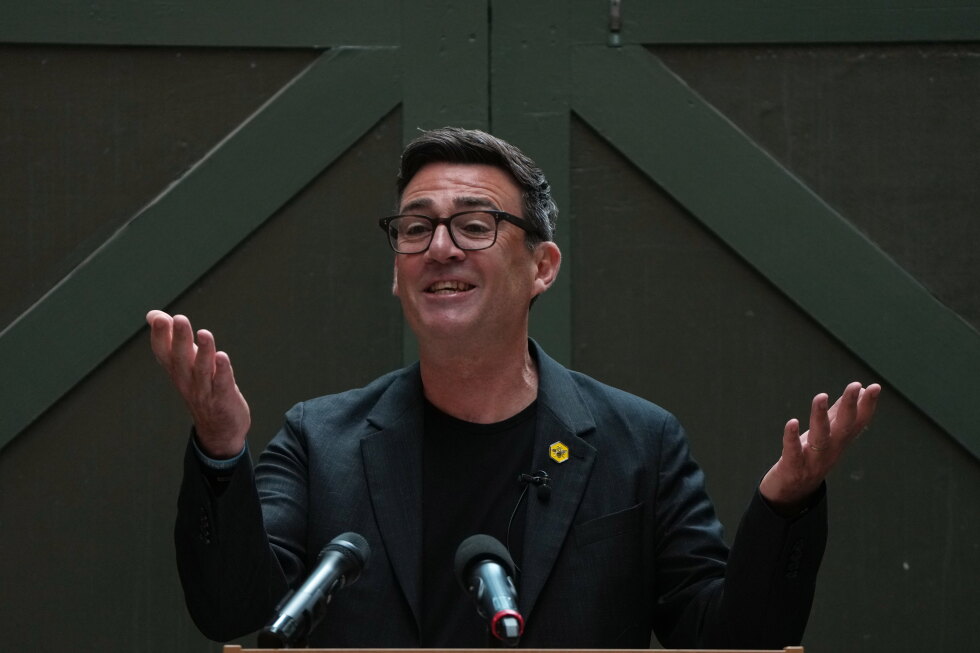
    LONDON — A new chapter is set to open in British politics on Monday, when veteran Labour Party figure and widely popular former Greater Manchester Mayor Andy Burnham will formally take office as the United Kingdom’s next prime minister, succeeding outgoing leader Keir Starmer who stepped down from his role last month. Burnham stood unopposed in the Labour leadership race, as he was the only contender to meet the required threshold of backing from sitting Labour lawmakers. Since Labour holds a parliamentary majority, the party’s leader automatically becomes prime minister under the UK’s parliamentary system.

    Official results confirmed that 349 of the 401 sitting Labour Members of Parliament threw their support behind Burnham, who was officially named the new Labour leader during a special party conference held Friday. Per constitutional convention, he will not assume the office of prime minister until Monday, when he is scheduled to meet King Charles III at Buckingham Palace to receive formal royal approval to form a new government. Outgoing prime minister Keir Starmer will remain in the role as a caretaker until the formal handover is complete.

    This leadership transition comes just two years after Starmer led the Labour Party to a landslide general election victory in 2024, leaving many questioning the circumstances of this midterm change. Unlike a general election that replaces the entire government, the UK’s parliamentary democracy permits ruling parties to replace their leader mid-term, with the new party leader becoming prime minister without requiring a new national vote. This process is triggered when an incumbent prime minister resigns as party leader, or is removed through an internal leadership challenge. Under current law, the next scheduled general election does not need to be held until 2029, five years after the 2024 vote.

    Starmer announced his resignation as Labour leader on June 22, ending a two-year tenure plagued by repeated political missteps. The most damaging controversy came from his decision to appoint a figure with close personal ties to deceased convicted sex offender Jeffrey Epstein as the UK’s ambassador to the United States. Matters came to a head in May, when the Labour Party suffered heavy losses in nationwide local midterm elections, sparking widespread demands from within the party for Starmer to step down. When Burnham, who had long been viewed as a favorite among party members to lead, won a special by-election to secure a seat in Parliament, the pressure on Starmer became unstoppable, and he announced his exit.

    Starmer’s resignation automatically triggered a leadership contest under Labour Party rules. The rulebook states that any sitting Labour MP can launch a leadership challenge if they secure the backing of at least one-fifth of the party’s House of Commons members. Burnham easily surpassed this threshold, and no other candidate chose to enter the race, leaving him the uncontested winner.

    The ascent of Burnham means he will become the seventh UK prime minister to take office in just 10 years, a statistic that underscores the deep political turbulence that has followed the UK’s 2016 vote to leave the European Union. Far from an unprecedented scenario, midterm leadership changes through internal party contests have become the norm for UK politics in recent years: four of the six prime ministers who held office over the past decade gained the role through internal party leadership races, rather than a general election. In the 2010s, both Theresa May and Boris Johnson took the top job after winning Conservative Party leadership contests to replace predecessors who resigned mid-term. When Johnson resigned in 2022, Liz Truss won the Conservative leadership race to replace him, only to step down after just 49 days in office, paving the way for Rishi Sunak to take over through the same internal process. All of these successive leaders struggled, to varying degrees, to navigate the ongoing political and economic fallout of Brexit, contributing to the rapid turnover in the top office.

    Monday’s handover of power will follow a decades-old well-worn constitutional ritual that Britons have become familiar with after years of repeated leadership changes. The day will begin with Starmer delivering a public farewell address, before traveling to Buckingham Palace for a brief audience with the King to formally tender his resignation. After Starmer’s departure, Burnham will arrive at the palace, where King Charles will formally invite him to form a new government. This traditional private ceremony is known as the “Kissing of Hands,” a historic title that does not reflect the modern reality: no kissing of hands actually takes place, and the pair typically exchange a standard handshake.

    Once Burnham leaves the palace, he will officially become the 59th prime minister of the United Kingdom. He will then travel by motorcade to 10 Downing Street, the official residence and workplace of British prime ministers, where he is expected to deliver his first public address as the country’s new leader. The entire constitutional sequence will be broadcast live across major UK television networks, and the full transfer of power will be completed within a matter of hours.

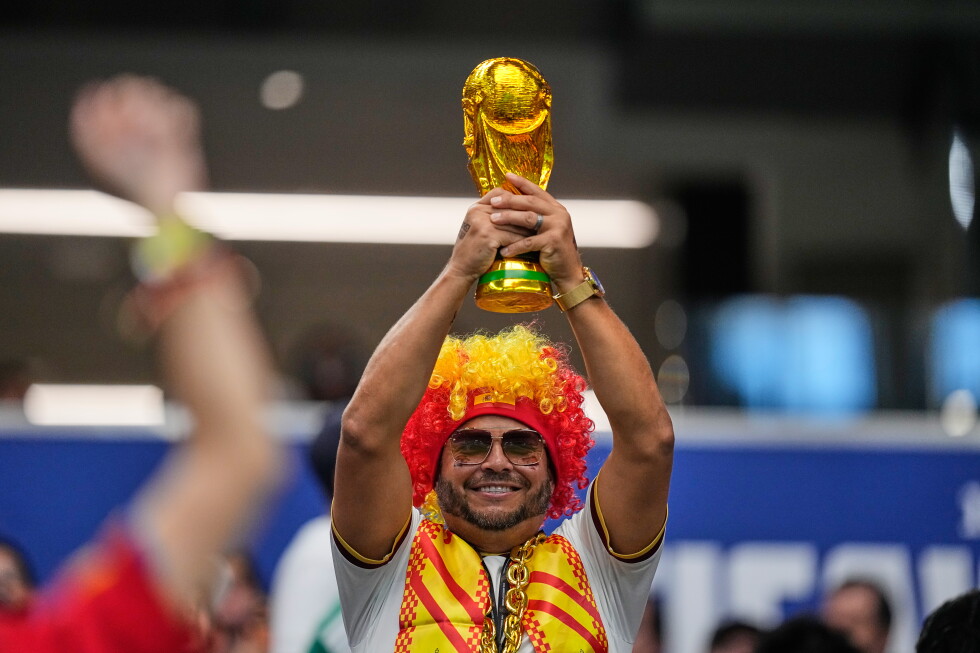
  • Spain has built its team for several years and tournaments to reach the World Cup final

    Spain has built its team for several years and tournaments to reach the World Cup final

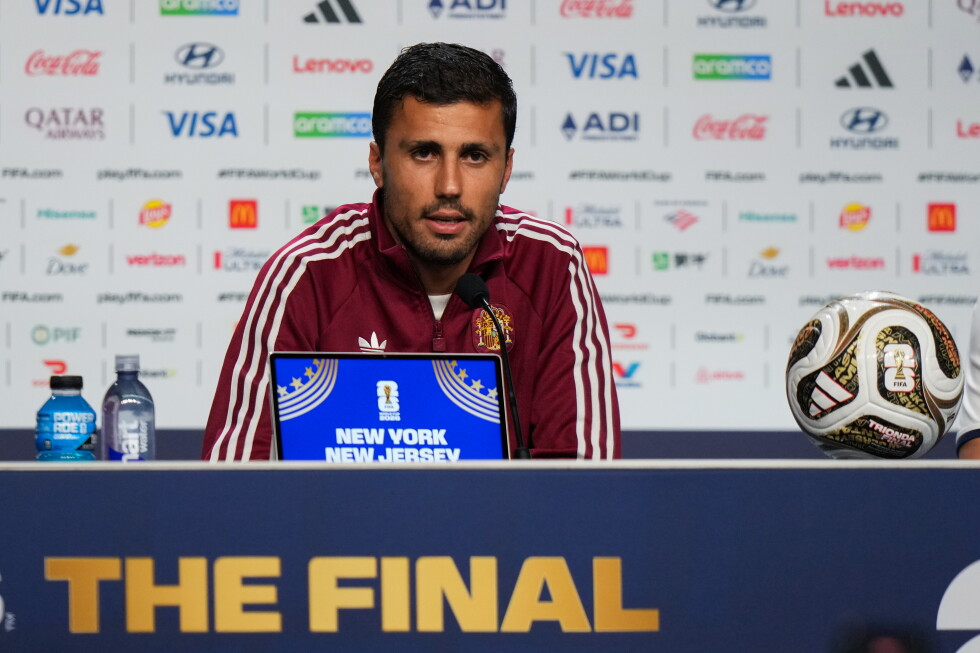
    NEW YORK – For Spanish men’s football, reaching the FIFA World Cup final remains a rare milestone. This Sunday’s clash with defending champion Argentina marks only the second time in the nation’s history that La Roja has advanced this far in the tournament, but according to captain and 2024 Ballon d’Or winner Rodri, this run is the product of half a decade of intentional, incremental growth.

    The foundations for Spain’s 2024 World Cup run were laid in previous major tournament triumphs: a 2023 Nations League title and 2024 European Championship victory forged the cohesion and mental toughness that has carried the team through the past five weeks of knockout football. Ahead of the biggest match of his career, Rodri has emphasized one core message to his squad: approach the final with hunger for victory, not fear of defeat.

    “We have been gradually growing as a group over the past five years,” Rodri told reporters on Friday. “This entire run is the result of that long process, and we just need to stick to what has worked for us so far.”

    Spain’s defensive solidity has been the standout story of their tournament run. Through seven matches, the side has conceded just one single goal, following a 2-0 semi-final victory over France that booked their place in the final. After a surprising opening-game draw against Cape Verde, La Roja has dominated its opponents, outscoring the competition by a 13-1 margin across the campaign. Late match-winner Mikel Merino stepped up to break ties in both the round of 16 and quarter-finals to keep Spain’s run alive, while goalkeeper Unai Simón has recorded nine crucial saves to anchor the league’s stifling defensive structure.

    When it comes to long-term ambitions, Rodri says the side never hid its goal of lifting the trophy. “From the moment we arrived at this World Cup, our goal was to win the title, and we have always been convinced we could do it,” he said. “We have proven that this team can beat the very best opponents in world football.”

    Rodri pushed back against the widespread narrative that Spain only relies on one rigid style of play, highlighting the side’s tactical flexibility as a key strength heading into the physical test against Argentina. “I don’t think any two matches from us have looked the same this tournament,” the 30-year-old Manchester City midfielder explained. “Sunday will be a very different game, it will be far more physical than what we have faced so far, and we are ready to adapt. If there is one thing this national team is known for, it is that we can adjust our game to any situation. We can defend deep, hit on the counter, or dominate possession and attack – we are a complete side, and that is why we are standing in the final today.”

    Sixteen years have passed since Spain won its first ever World Cup title, and Rodri acknowledged that the grit of that 2008 champion squad remains an inspiration for the current group. Still, he stressed that this run has been forged by the unique development of this current generation of players. He added that he believes the side can still raise its game another level ahead of the Argentina match, pointing to the dominant semi-final performance against France as proof of what the team is capable of.

    “Against France, we put in one of the best team performances in our history,” Rodri said. “But against Argentina, we have to rise to an even higher level, because they are the defending champions. I am incredibly confident that we can do that.”

    Off the pitch, much of the pre-final attention has centered on the fitness of 19-year-old breakout star Lamine Yamal, who was spotted with a wrap on his left thigh after taking a knock in the semi-final against France. But Spain head coach Luis de la Fuente moved quickly to ease concerns over the young winger’s status, confirming that Yamal participated in full team training on Friday and is fit to play.

    Yamal, who infamously was photographed as an infant alongside Argentina captain Lionel Messi back in 2007, is widely tipped as a potential future Ballon d’Or winner and the heir to Messi’s title as the world’s best player. Many have framed Sunday’s final as a symbolic passing of the torch between the two generations, but de la Fuente says he has urged Yamal to ignore that narrative and focus on playing his own game.

    “Messi is a once-in-history player, and he is a perfect role model for young players for his attitude and professionalism,” de la Fuente said. “Lamine is already having a spectacular World Cup at 19 years old, which is incredible. But Lamine just needs to be Lamine Yamal. The best support we can give him is to let him be the player he is, because he has extraordinary potential and a bright future ahead of him.”

    For de la Fuente, the only thing sparking anxiety ahead of the final isn’t the quality of Argentina’s attack, poor air quality or the condition of the match pitch – it’s the helicopter ride back to New Jersey after Friday’s media appearances in New York.

    “I’m nervous because we have to go back by helicopter,” the coach admitted with a laugh. “I’m serious – we flew here by helicopter, and we have to fly back, and that makes me really anxious. Everything else? I’m completely calm. I feel so lucky to be in this position, and we are just going to enjoy this incredible moment.”

  • Disappointed France and England meet for third place in the World Cup

    Disappointed France and England meet for third place in the World Cup

    MIAMI GARDENS, Florida — For two elite soccer powerhouses that entered the 202X FIFA World Cup with trophy dreams dancing in their heads, the next match is not one either side ever imagined they would be playing. After bowing out in the semifinal round, France and England will share an unwanted stage Saturday, contesting the World Cup’s third-place playoff while Argentina and Spain prepare to battle for the sport’s biggest prize in Sunday’s final.

    Neither side hid their disappointment at falling just one win away from a spot in the final, a result that ends their pursuit of the global title they came into the tournament chasing. France entered the competition as one of the pre-tournament favorites to lift the trophy, while England was gunning to end its 58-year wait for a second World Cup crown, following its historic 1966 victory.

    “None of us wanted to play in this game for third place,” French defender Ibrahima Konate shared with reporters on Friday. “But we don’t have a choice to play. France and England have a big story together. And yeah, we are looking forward for the game tomorrow, and let’s see what will happen.”

    While the third-place match offers no path to the World Cup title, it still carries meaningful subplots for both sides. For England manager Thomas Tuchel, the game presents an opportunity to rebuild public standing after widespread criticism of his tactical decisions in the Three Lions’ tight semifinal loss to Argentina. For French superstar Kylian Mbappé, he still has a shot at claiming the tournament’s Golden Boot, awarded to the top goalscorer across the competition.

    Mbappé currently sits level on eight goals with Argentine captain Lionel Messi atop the scoring leaderboard. Messi holds a narrow advantage on the tiebreaker, however, having notched four assists to Mbappé’s three. England’s Harry Kane and Jude Bellingham remain in the hunt as well, with six goals each.

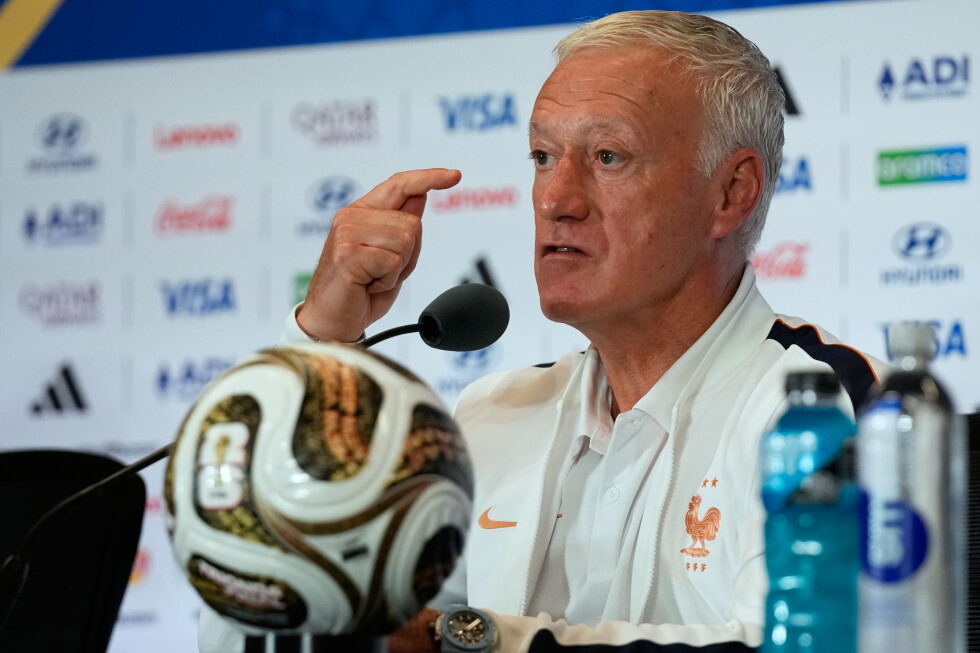
    Didier Deschamps, France’s head coach, confirmed that Mbappé will be available for selection on Saturday, though he plans to rotate his regular starting lineup for the fixture. “We do have a match for the third place playoff, and there’s a duty,” Deschamps said. “We have duties. I have duties, my staff has duties and so do the players. We have a responsibility to wear this jersey for all the French people who are cheering for us.”

    Beyond individual accolades and team pride, Saturday’s match will mark a historic capstone: it is the final game in charge for Deschamps, who has led the French national team for 14 years. Konate said the French squad is determined to send their manager out with a victory as a tribute to his tenure. “He carried many French players,” Konate said. “We had some disappointing moments, but he brought a lot of joy.”

    Deschamps’ legacy with France is already cemented: he led the nation to a World Cup victory in 2018, suffered a heart-wrenching penalty shootout loss to Argentina in the 2022 final, and saw his side undone by a solid Spanish defensive block that neutralized France’s potent attacking trio of Mbappé, Ousmane Dembele and Michael Olise in this year’s semifinal. The manager’s only major title is the sport’s biggest prize, though he also led France to a runner-up finish at the 2016 European Championship on home soil.

    “I know it will be the last match and I also know that the French national team will be missed,” Deschamps said. “I had the privilege for 15 years to be up here with this jersey, to experience magnificent moments, more difficult moments. The French national team is the most beautiful thing that has ever happened to me in my professional career.”

  • Argentina and Spain will play for the World Cup trophy and, in a first, the winner gets rings

    Argentina and Spain will play for the World Cup trophy and, in a first, the winner gets rings

    As the 2026 FIFA World Cup final between Argentina and Spain approaches this Sunday in New York, the sport’s global governing body is introducing a historic first that blends a beloved North American sports tradition with soccer’s most prestigious championship. Beyond lifting the iconic World Cup trophy, Sunday’s victors will walk away with another unique commemorative honor: official championship rings, a milestone never before seen in World Cup history.

    Championship rings have long been a cornerstone of championship celebration across North American amateur and professional sports, with roots stretching back to the late 19th century. Yet this tradition has remained largely outside of common practice for international soccer and global football championships, making FIFA’s new initiative a notable shift for the world’s biggest single-sport event. The rollout of this new honor, tied to a World Cup final hosted on U.S. soil, is widely viewed as a deliberate nod to the long-standing championship tradition familiar to North American sports audiences.

    Under the new framework, the traditional gold medals that have long been awarded to World Cup-winning squads will remain in place. Immediately after the final whistle confirms a champion, the winning team’s captain and head coach will receive their temporary rings to mark the moment of victory. The full squad will ultimately receive 30 fully customized permanent rings, crafted to honor the win. FIFA confirmed that one face of each ring will feature the classic World Cup trophy design, while the opposite side will be customized specifically to capture the unique identity of the winning 2026 squad.

    In a limited production run that nods to the 2026 host year, only 2,026 individually numbered rings will be produced. Each ring will be custom-fitted for its recipient and comes with an official certificate of authenticity to guarantee its origin. Of the total production run, 30 rings are reserved for the winning squad, leaving the remaining 1,996 rings to be made available for purchase by general fans. FIFA has not yet released any details about the pricing of these limited-edition collectible rings.

    To understand the significance of this new addition, it is important to trace the origins of the championship ring tradition. Historians trace the practice back to at least 1893, when the Montreal Hockey Club claimed the Dominion Hockey Challenge Cup — the precursor to today’s Stanley Cup — and commissioned simple commemorative bands etched with tiny hockey stick designs at the top. By the 1920s, Major League Baseball franchises had adopted the practice of awarding rings to World Series champions. When the National Basketball Association was founded in the late 1940s, championship rings became a standard part of title celebrations almost from the league’s launch. The National Football League has also awarded rings to every Super Bowl champion since the first iteration of the game in the 1960s.

    Today, the tradition extends far beyond North America’s top professional leagues. Halls of fame across the U.S. award honorary rings to inducted members, and U.S. Olympic and Paralympic athletes receive championship rings as part of the official recognition package for competing at the Games. The custom is now widespread across all levels of U.S. sports, from top professional leagues down to collegiate programs, high school teams and even youth sports leagues, where rings serve as a tangible lifelong memento of a championship run. With this new initiative, FIFA brings that longstanding tradition to the biggest stage in global soccer for the first time.

  • One anti-war critic fined, another held as Russia clamps down on opponents

    One anti-war critic fined, another held as Russia clamps down on opponents

    In the latest crackdown on the shrinking remnant of domestic political dissent within Russia, two prominent critics of the Kremlin have been targeted with detention and legal restrictions designed to bar them from political participation, just weeks before the country’s September parliamentary elections. The simultaneous actions against former Putin supporter turned dissident blogger Ilya Remeslo and veteran pro-peace politician Boris Nadezhdin mark the newest chapter in a years-long campaign to eliminate organized opposition to the Kremlin’s domestic and foreign policies.

    The detention of Remeslo, once a high-profile pro-Putin commentator, marked a striking capstone to his dramatic political reversal earlier this year. Last March, the blogger published an explosive blog post on Telegram titled Five reasons why I stopped supporting Vladimir Putin, in which he labeled the sitting president a “war criminal and thief” and called for his immediate resignation. The public about-face shocked Russian political circles, as Remeslo had spent years backing Putin’s leadership, supporting the full-scale invasion of Ukraine and publicly denouncing opposition figures, including the late Alexei Navalny.

    Within days of publishing his critical post, Remeslo was involuntarily committed to a psychiatric hospital for a month, a move he has decried as retaliation for his views. Just hours before his court appearance on Friday, he was arrested at his home in St. Petersburg and transferred to Moscow for processing. A judge has since ordered he be held in pre-trial detention for two months on charges of spreading false information about the Russian military, an accusation routinely used to target dissenting voices in the country. On the eve of his arrest, Remeslo published one final Telegram post warning that domestic conditions for the Kremlin were deteriorating rapidly, pointing to an ongoing national energy crisis fueled by repeated Ukrainian strikes on Russian oil infrastructure that have sparked fuel shortages as far as the Moscow region, and growing friction among Russia’s ruling elite. He argued that even a small disruption could lead to the collapse of Putin’s hold on power.

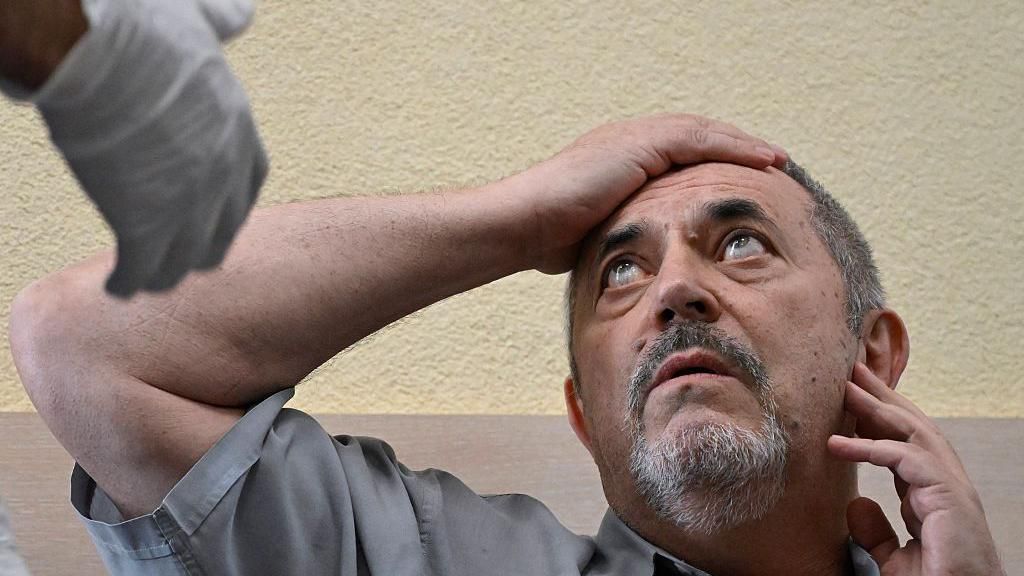
    In a separate, coordinated crackdown on political opposition, former Duma candidate Boris Nadezhdin, a 63-year-old pro-peace politician who gained international attention for his 2024 anti-war presidential bid, has been convicted of “displaying extremist symbols” in a ruling that strips him of his last legal path to run for September’s parliamentary election. Nadezhdin first attempted to run for the Russian presidency two years ago on an explicit anti-war platform, but was ultimately barred from the ballot after electoral officials claimed signature gathering irregularities invalidated his candidacy.

    Last week, Nadezhdin was formally designated a “foreign agent” by Russian authorities, a label that typically disqualifies individuals from running for public office. A last-minute legal loophole still allowed him to collect signatures to qualify for the ballot, however, a path that was closed off by Friday’s extremist symbols conviction. The charges stem from a 2023 video Nadezhdin reposted that briefly showed an image of Alexei Navalny, the most prominent Russian opposition leader, who died suddenly in an Arctic penal colony in February 2024. While Russian authorities maintain Navalny died of natural causes, the United Kingdom and four major European nations have confirmed they believe he was poisoned with a lethal toxin. Nadezhdin was also detained earlier this week and barred from leaving the country.

    During Friday’s court hearing in his hometown of Dolgoprudny, just north of Moscow, Nadezhdin—who lives with chronic high blood pressure and diabetes—briefly collapsed and required emergency medical attention. He has rejected all charges against him, telling the court the ruling is an open political retaliation intended to silence him and prevent his candidacy for the Duma. He added that he cannot pay the 1,000 rouble ($13 USD) fine levied against him because Russian authorities have already frozen all of his financial accounts. Nadezhdin retains the right to appeal the conviction, though political analysts say an overturn is highly unlikely.

    The crackdown comes as new public opinion polling shows Putin’s national approval rating has fallen to its lowest point since the start of the full-scale invasion of Ukraine in February 2022. Two separate Russian pollsters released data this month showing a measurable decline in support: the independent Public Opinion Foundation (FOM) recorded a five-point drop over one week ending July 12, pushing Putin’s approval rating to 66%, while state-run pollster VTsIOM recorded a more modest decline that still put his rating at 65.1%, the lowest in more than four years. Today, nearly all major genuine opposition figures in Russia have been forced into exile, imprisoned, or killed, leaving almost no open space for anti-government or anti-war political organizing inside the country.

  • Many Ukrainian soldiers outraged over removal of defence minister, troops tell BBC

    Many Ukrainian soldiers outraged over removal of defence minister, troops tell BBC

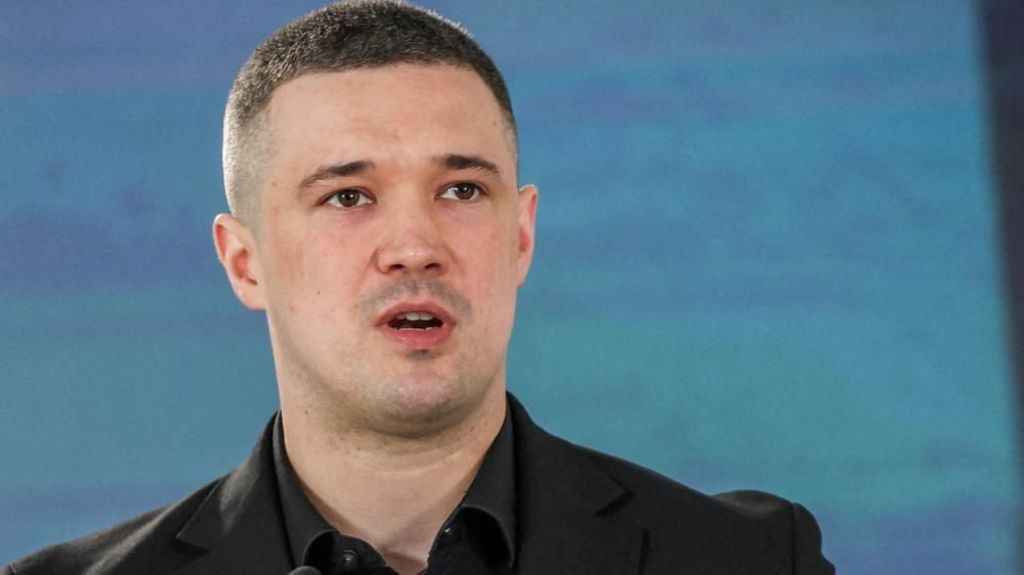
    On Thursday, thousands of demonstrators filled central Kyiv’s streets, their anger simmering after Ukrainian President Volodymyr Zelensky removed the popular, reform-minded Defense Minister Mykhailo Fedorov in a sweeping cabinet reshuffle. The decision has split the country’s military community, sparked open accusations of authoritarian drift from critics, and raised urgent questions about the future of Ukraine’s military innovation agenda amid ongoing war with Russia.

    For many of Ukraine’s frontline soldiers and wounded veterans, the removal of the 35-year-old Fedorov feels like a personal betrayal. A disfigured infantry soldier, recovering from combat injuries ahead of scheduled reconstructive surgery, captured the widespread despair in a viral Telegram video. “I hope when I wake up after the anaesthetic, Fedorov will be back at the Ministry of Defence,” he said. “Otherwise, everything I was fighting for will have been in vain.”

    Maryna, an active-duty soldier who spoke on condition of anonymity to avoid disciplinary action, called the decision a deliberate insult to all Ukrainian service members. “It is a blatant slap in the face to all service members,” she told reporters. “It is truly difficult to put this into words without venting in frustration.” Like many critics, she fears the reshuffle signals a growing authoritarian turn in Kyiv: “A dictatorship is already unfolding here, with its own petty tyrants who think they have caught God by the beard.”

    Military leadership has reportedly ordered rank-and-file soldiers to avoid public political commentary, forcing most serving personnel to speak only under pseudonym. Opinion even among soldiers is not uniform: Natasha, a frontline servicemember stationed near the Donbas front, noted that daily Russian multiple launch rocket system attacks on Ukrainian positions leave little bandwidth for political outrage over cabinet changes. Even so, she acknowledged widespread respect for Fedorov’s work, and blamed entrenched old-guard military leadership for his ousting. “If you can’t come to an agreement with the old fossils, they’ll eat you alive,” she said.

    That old guard, in the view of many of Fedorov’s supporters, is led by 60-year-old Commander-in-Chief Gen. Oleksandr Syrskyi, a veteran officer shaped by the Soviet-era top-down military system. Once celebrated as a national hero for leading the 2022 defense of Kyiv, Syrskyi has become increasingly unpopular among frontline troops for his human-cost-heavy approach to warfare, earning him derogatory nicknames like “General 200” (a reference to the Soviet military code for combat casualties) and “The Butcher.” Still, some military insiders defend him: Andrii, a former frontline soldier now serving on the General Staff, argues there is currently no qualified replacement for Syrskyi’s experience leading large-scale combat operations.

    What is undeniable is that the rift between Fedorov and Syrskyi had grown unresolvable ahead of Zelensky’s decision. Zelensky himself acknowledged the two men could no longer even share a room, while Fedorov has openly blamed Syrskyi for systematically blocking all his military reform and modernization efforts. “It was snowballing. Everyone knew about it. Zelensky had to make a decision,” Andrii said.

    The generational and ideological clash between the two men encapsulates a broader divide running through modern Ukraine. Military analyst and former intelligence officer Ivan Stupak framed the divide in starkly technological terms: “Fedorov is an iPhone 16, Syrskyi is a telephone from the 1980s. You know, the same purpose but with different approaches.”

    Fedorov first rose to prominence as Ukraine’s Minister of Digital Transformation, where he built a reputation as a relentless innovator committed to modernizing Ukraine’s public and military institutions. During his six-month tenure as Defense Minister starting in January 2026, he delivered a string of high-impact wins: he negotiated with Elon Musk to cut Russian frontline forces off from Starlink satellite internet, a move that disrupted Russian command and control and helped Ukrainian forces repel major Russian advances. He accelerated the integration of artificial intelligence and low-cost drone interception systems to defend Ukrainian cities from Russian drone attacks, and launched a sweeping bureaucratic overhaul of the Ministry of Defense to cut red tape and speed up weapons procurement. His signature “Army of Drones: Bonus” program, which offered frontline units financial incentives for destroying Russian equipment and personnel, was widely credited with boosting troop initiative and accelerating innovation in drone warfare, a capability that has allowed Ukraine to gain an edge over its much larger Russian adversary.

    But even before his removal, Fedorov faced deep institutional resistance from the decades-old military bureaucracy. Stupak described the Ministry of Defense as a “swamp” resistant to change: “It’s made of very solid material and it’s very difficult to establish new technologies because lots of people have been there for decades and they don’t share his vision of digitalisation.”

    Critics and observers now warn that Fedorov’s departure risks halting his ambitious modernization agenda entirely, despite Zelensky’s public assurances that reforms will continue. With autumn and winter approaching, Russia is widely expected to launch a new large-scale assault on Ukraine’s energy infrastructure, leaving the country more vulnerable without Fedorov’s leadership on drone and air defense innovation. Daria Kaleniuk, executive director of Ukraine’s Anti-Corruption Action Centre, called the decision a devastating setback for Ukraine’s war effort. “I’m very upset that all this progress, which was built by Fedorov, will be just destroyed and reversed in one of the most critical periods of the war,” she said. She also argued the move reveals a troubling authoritarian streak in Zelensky’s leadership, saying it sends a message that the president does not care about public opinion and rejects independent, effective leaders within his government: “That is very destructive for Ukraine.”

    The decision to oust Fedorov fits a pattern of Zelensky sidelining or removing popular, effective officials, leading many critics to accuse him of concentrating power and moving toward authoritarian rule. Stupak noted the irony: as a comedian before entering politics, Zelensky built his career lampooning the authoritarian, self-serving post-Soviet political elite. Now, Stupak says, he has adopted the very traits he once mocked: “He’s collected all the factors which were the subject for his jokes. Maybe it’s because he’s been in his position for seven years.”

    For activists like Kaleniuk, the recent street protests evoke a strong sense of deja vu. Exactly one year ago, massive anti-government protests – the first since Russia’s 2022 full-scale invasion – forced Zelensky to backtrack on a bill that would have gutted the power of two leading Ukrainian anti-corruption agencies. Today’s protesters are hoping for a similar reversal, even though Zelensky has already appointed acting Security Service head Yevhenii Khmara as interim defense minister.

    While current protests are smaller in scale than last year’s demonstrations, Kaleniuk says the stakes are far higher: “These events are even more dangerous, because they directly impact our war effort.”

    Maria Berlinska, founder of an NGO that trains volunteer aerial reconnaissance teams, summed up the widespread fear among reformists that even the most successful, loyal leaders are not safe from political sidelining. “You can become a key architect of the strategy of technological victory over the enemy,” she wrote in a Facebook post. “No matter how cool you are, it will not help you. At some point, you will simply be removed from the field.”

  • EU proposes slowing down cuts to carbon emissions for businesses

    EU proposes slowing down cuts to carbon emissions for businesses

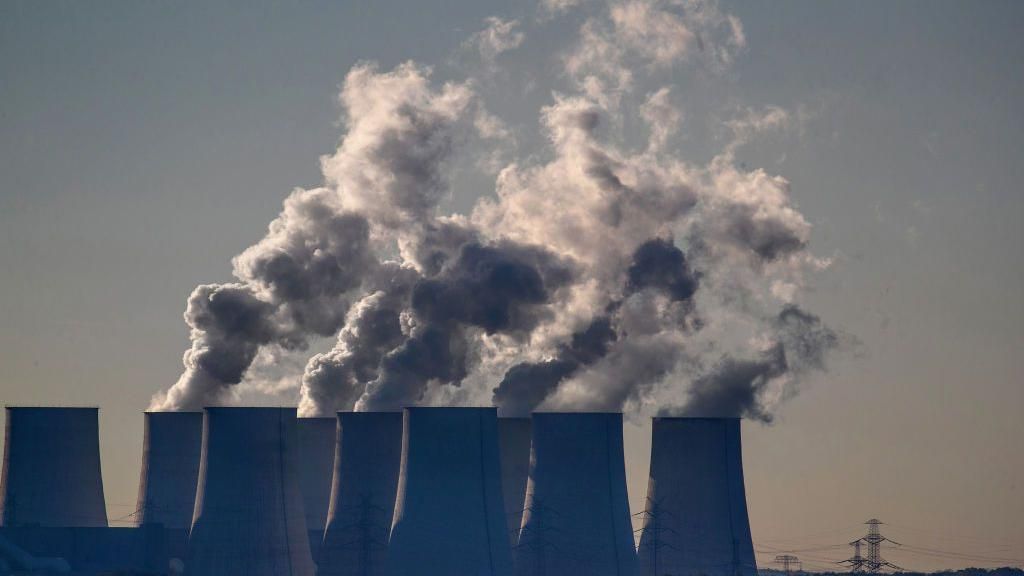
    The European Union has put forward a revised set of climate policy changes that would ease the pace of emissions reductions required for industrial operators under the bloc’s signature cap-and-trade program, the Emissions Trading System (ETS). First launched in 2005, the ETS has stood as the EU’s core regulatory mechanism for cutting greenhouse gas output for nearly two decades, creating a financial incentive for heavy emitters to shift to cleaner energy by requiring permits for every tonne of carbon dioxide released.

    Under the newly proposed reforms, the annual rate at which the ETS’s total cap on emissions is lowered will be reduced. Currently, the cap shrinks by 4.3% each year; starting in 2031, that rate would drop to 3.7%, and fall further to 1.7% by 2036. The reforms also extend the availability of free emission allowances for qualifying industries by four years, from the previously scheduled phase-out date of 2034 to 2038. For companies that formalize decarbonization investment plans within the EU, 80% of these free allowances will be allocated upfront, with the remaining 20% released only after the committed upgrades are completed. A carbon border adjustment mechanism on carbon-intensive imports, originally set to replace free permits in 2034, will also be delayed to match the new timeline.

    EU Climate Commissioner Wopke Hoekstra framed the adjusted rules as a pragmatic, business-friendly approach that remains aligned with the bloc’s broader climate target of cutting total emissions by 90% from 1990 levels by 2040. The proposal comes after years of criticism from several member states, most notably Italy, which has argued that the ETS acts as an implicit tax that has driven up energy costs for businesses and consumers alike.

    Reaction to the plan has been sharply divided along political and national lines. Polish Climate Minister Paulina Hennig-Kloska celebrated the proposal as a breakthrough, noting it marks the first time the EU has softened rather than tightened ETS rules, and committed Poland to pushing for even further concessions. On the opposite side, green lawmakers have decried the reforms as a major step backward for climate action. German Member of the European Parliament Michael Bloss argued the changes will lock in decades of “gigantic climate pollution” and erode quality of life for future generations.

    Before the reforms can take effect, they must gain formal approval from all EU member states and the European Parliament, a legislative process that is expected to take approximately one year to complete.